Feeds:
Posts
Comments

We have two options to manage AF.Rate or rhythm control .(Of course , in the strict sense , rhythm control also confers  rate control that is built in-situ with SR ) .There was an initial confusion which strategy would fare better .For a decade or so rhythm control was thought to be supreme. That’s logical to expect as we restore physiology in the later .” We know, medical science  often disrespects logic , and  scientists reinvent this harsh fact in regular fashion” Now , we have clear, consistent data that proved  rate control is a better strategy in most situations of AF .(AFFIRM, RACE 1 and 2 studies). The aim of treatment of AF are the following .

  1. Improve symptoms of palpitation
  2. Improve hemodynamics
  3. Reduce MVO2 and hence avoid ischemia
  4. Prevent tachycardic cardiomyopathy in the long-term
  5. Avoid stroke .

Unfortunately or fortunately rate control strategy was able to fulfill all these aims with fair degree of success. There are at-leaset  3 reasons why rhythm control fared poorly .

  1. Rhythm control is actually a myth. Only about 35 % patients  remained in SR at any time in rhythm control .Runs of transient AF can occur at  any given day* and make a mockery of the much hyped rhythm control !(*Due to heightened adrenergic tone or adverse biochemistry/ hypoxia)
  2. The drugs used to maintain SR are far more toxic . The complex EP procedures to convert to SR has not helped either.
  3. Most importantly , rate control with anticoagulants were able to achieve better  stroke reduction than rhythm control group.The reason being stroke risk was unabated even if rhythm is back to sinus,  as risk of ischemic stroke continue to emanate  from as many  sites like aorta, aortic arch and carotid. Hence, in a stroke prone population with AF  , it is the meticulous anticoagulant that’s is going to prevent strokes  rather than rhythm control .Since the rhythm  control patients would  need  to  continue anticoagulants , they lose  a  presumed logical therapeutic advantage.

A short systolic murmur over pulmonary area (ie Left second inter coastal space ) is listed among 6 other auscultatory  feature  of pulmonary arterial hypertension.Though it is an accepted sign  many would question  the existence of such a murmur or its relevance in PHT.

Why does it occur  ?

Acoustics  principle  tells us whenever  velocity of blood  flow exceeds a critical point(Raynolds number*) in a specific anatomical territory , a  turbulent zone is created  and  a murmur could be generated .This is why many physiological situations like pregnancy, anemia, and some benign outflow murmurs occur.


In pulmonary hypertension , three things are thought to contribute for the murmur generation

  1. Dilated pulmonary artery  promotes Raynauld turbulence
  2. Increased flow velocity (This is correlated with pulmonary artery acceleration time in Doppler)
  3. RV contractility  (A normally functioning   RV is required to generate the murmur .Once RV dysfunction sets the  murmur of pulmonary hypertension usually disappear , of course a TR murmur may appear and confuse the picture )

Reference

* Reynolds number is a way to predict under ideal conditions when turbulence will occur. The equation for Reynolds number is:

Reynolds number(Where v = mean velocity, D = vessel diameter, ρ = blood density, and η = blood viscosity )

Originally used in early 1990s,  self expanding coronary stents (Wall stent from Boston scientific )  subsequently lost interest because of delivery related issues. Many feel , it makes cardiologist judgment tentative and delivery system prevail over our hand skills. It is possible stents can longitudinally jump with high radial force making a geographical miss more likely.While it could be true with any technique till we master it, one should recall ,most endo-vascular work other than coronary still involve self expandable techniques.

Balloon expandable  stent is ruling the PCI field  for more than 2 decades. There has been recent surge of interest in the self expanding  technique and it could make a great difference in the PCI arena provided we take the proper cues.

Self expanding stents have some unique advantage

  • It has  high radial force.
  • Approximation with lesion is best
  • It tends to take the shape of the vessel than any other stent
  • Since the mal-opposition and gap between stent and vessel wall is minimal stent thrombosis is theoretically is  lower.

Where is self expanding stent useful ?

  • Ectatic and very irregular lesions
  • Bifurcation lesions where multi dimensional vessels with different shaped ostia converge.
  • Eccentric lesions (Non calcified) may be benefited by self expanding stents
  • Self expanding covered self (Is it available >)  may be the best bet for perforations and for thrombus  to be plastied against the wall.
  • In some small vessels PCI
  • Finally it may have a  role in primary PCI (APPOSITION 1 to 5 )

What are the self expanding stents available ?

  1.  Devax system   ( 2003)
  2.  Stentys
  3.  Radius (Boston scientific)
  4. Capella Sideguard.
  5. Cardiomind Sparrow
  6. vProtect luminal shield.

Final message

For some reason , self expanding stents were not tested widely  and  large scale data is not available. However ,  they are unique modalities in metal delivery and must be mastered and many patient subsets will be benefited by it. They are not obsolete yet, APPOSITION 5 study will answer some of the issues.

Reference

1. Agostoni P, Verheye S. Novel self-expanding stent system for enhanced provisional bifurcation stenting: examination by StentBoost and intravascular ultrasound. Catheter Cardiovasc Interv 2009;73:481
2.Jsselmuiden A, Verheye S. First report on the use of a novel self-expandable stent for treatment of ST elevation myocardial infarction. Catheter Cardiovasc Interv 2009;74:850
3.Verheye S1, Grube E, Ramcharitar S, Schofer JJ,.First-in-man (FIM) study of the Stentys bifurcation stent–30 days results.

EuroIntervention. 2009 Mar;4(5):566-71
4. van Geuns  R.-J., Tamburino  C., Fajadet  J.,  Self-expanding versus balloon-expandable stents in acute myocardial infarction: results from the APPOSITION II study: Self-expanding stents in ST-segment elevatation myocardial infarctiion. J Am Coll Cardiol Intv. 2012;5:1209-1219.

Heart by development  originates from near  the same spot , where the brain develop (Neuralcrest) .Hence there is no surprise  to note,  heart being a primary  vascular organ still retain many neural connections with brain .Eyeballs with it’s  extensive neural inputs  can be considered as adirect extension of brain.

Oculo cardiac reflex .

When the eyeballs or the ocular muscles are manipulated or massaged slowing of heart rate can occur .This is due to  a reflex called  Oculo cardiac reflex mediated by  vagal stimulation .This phenomenon is also referred to as  Aschner phenomenon

The circuit

  • Afferent _Trigeminal branch of opthalmic nerve
  • Center- Medulla : Trigeminal  neural signal  spill over signals  to Vagal nucleus
  • Efferent- Vagus -SA node

Biochemical mediator -Acetyl choline

Prevention

  • Adequate local anesthesia
  • Retro bulbar block of ciliary ganglion
  • Prompt Atropine injection
oculo cardiac reflex

Courtesy :Indian journal of Ophthalmology


Clinical scenarios

  1. Opthalmic surgery : Serious bradycardia  even  asystole can occur as a rare complication especially in elderly and very young (Cataract /Squint surgery) .
  2. Cardiac events and  strokes  are clustered around opthalmic surgery in many elderly  for some unknown reason ( OCR triggered ?)
  3. OCR can unmask hidden sinus node dysfunction in elderly.Routine cardiac evaluation before eye surgery may be recommended .
  4. Orbital fracture especially Medial orbit can elicit dangerous bradycardia (BMJ Case Rep. 2014 Apr 15;2014.)
  5. Rarely sudden death has been reported (Smith R (1994). “Death and the occulocardiac reflex.”. Can J Anaesth 41 (8): 760. )
  6. OCR for termination of SVT/AVNRT : , One can use the eyeballs  to stimulate the brain stem nucleus of vagus to terminate a rapid supraventricular tachycardia (Like carotid sinus message) .Cold water immersion of eye is effective way to stimulate the vagus.(Diving  reflex -Mathews 1981)

Neural control of heart how Important it is ?

Many sudden cardiac deaths are now believed to be neurogenic in origin . Though,  somatic nerve  supply of heart is least important except over pericardium , extensive sympathetic and parasympathetic nerve supply is present . They can  now be visualized by  adrenergic receptor imaging  . Neuro cardiology is distinct developing field. A hyperbole:  Of course  one could argue , these connection has less overall significance as a person can live with an entirely new donor heart with zero neural connection with brain.

Reference

1.Lang S, Lanigan D, van der Wal M (1991). “Trigeminocardiac reflexes: maxillary and mandibular variants of the occulocardiac reflex.”. Can J Anaesth 38 (6): 757–60

2.Mathew PK (January 1981). “Diving reflex. Another method of treating paroxysmal supraventricular tachycardia”. Arch. Intern. Med. 141 (1): 22–3.

3.Borumandi F1, Rippel C, Gaggl A.BMJ Case Rep. 2014 Apr 15;2014.Orbital trauma and its impact on the heart.


William  I am Harvey first discovered human circulatory system in the year 1628 .Published his work in  De Motu Cordis” (otherwise known as “On the Motion of the Heart and Blood”) as a 72 page booklet in Frankfurt book fair. The world of medicine changed  forever , and new system of human circulation was born.

Read this now

Who first invented human circulation william harveyExcerpts  from   Chinese classic of Internal medicine , written  2000 years before William Harvey,

All the blood is under the jurisdiction of the heart .Twelve blood vessels are deeply hidden between the muscles and cannot be seen.Only on the outer ankles are visible because there is nothing to cover. All other blood vessels that are on the surface are  veins. The harmful effects of wind and rain enter the system first through the skin , being conveyed to the capillaries. When these are full , the blood goes in and turn empty into the big vessels .The blood current flows continuously in a circle and never stops

Post-amble

Of course , this in no way takes credit away from any body .William Harvey collected  every data on circulation available at that time , and  came with that classic De Moutu Cordis ,  the importance of which is undisputed. But ,history time and again tell us there are silent restless brains pondering over important  concepts all over the globe .Whoever has the access to scientific  facility , proves the same  point ,  publishes first and gets attention . After all thoughts are never rewarded in human domain ! (God , does it I guess  !)

Reference

1.Hume E.H Medicine in china ,old and new,American medical history 1930; 2;272-280

We know,management of STEMI is a race against time.It’s rather a group race run by the patient, his close relatives / associates , the ambulance driver, the ER physician, cath lab staff and finally the  treating cardiologist .While the race is on , continuous monitoring and critical decisions are made.

Every minute gone could be a missed opportunity. While a patient is being moved to the hospital, a decision is to be taken whether its going to be primary PCI or lysis or combination of both.

Now,In India, as we embrace the quirky world of medical insurance  and   glamor based medicine , we have one more participant in this race of human life! The coronary flow dynamics in STEMI  appears  to be determined not only by thrombus load the residual plaque but also by the quantum, type and brand of  insurance the patient is blessed with !

I wish , one could hear the silent howls made by the myocardium under distress even as their loved ones are anxiously waiting for insurance  clearance from the  myocardial reperfusion  centers located in the far away back offices of urban metros !

Things won’t stop with that. Once the  PCI is on,and the cardiac team is confronted with a multi-vessel  CAD ,wondering which is true culprit ?, whether to consider  multi-vessel  stenting or early CABG  . Meanwhile the cath lab  liaison officer would desperately struggle to call the insurance guys again and upgrade the request to a newer therapeutic strategy !

Life was simple for every one till recently ,  when we would treat thousands of MI patients with conventional modality with a well proven reduction in mortality , comparable to the current bests .The concept of primary PCI has made things artificially complex without adding on to significant advantage except in some complicated subsets.

I still keep wondering , achieving a near  TIMI -3  flow in a timely fashion  by thrombolysis  in CCU will far exceed the hype of documented TIMI 3 flow in cath lab in  terms of absolute number and of course favorable outcome .Please realise acute myocardial salvage requires a minimum of  TIMI 2 and not TIMI 3 flow !

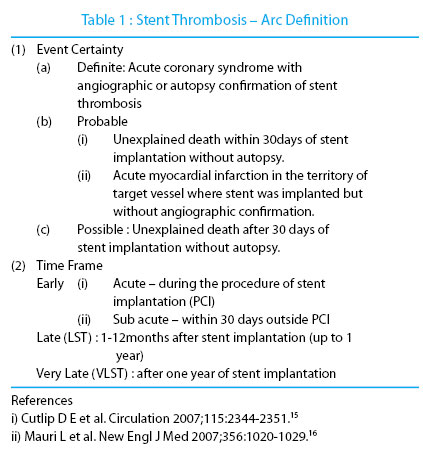
Stent thrombosis is a dreaded complication as the number  of PCIs are increasing in exponential fashion.The key issue is to take care of the stented segment till it gets fully endothleised. We  have excellent , time tested  dual anti-platelet protocol to take care of this . Still , they are  not  infallible . ARC has classified  stent thrombosis with reference to the timing  of implanting the stent .

stent thrombosis

The funny aspect of this classification is , it  hides a fact , whenever a stent concludes suddenly it is acute for that patient and his myocardium . So in a given patient who presents with ACS every stent thrombosis is acute. Of course , chronic thrombotic process can occur in  few  and present as as CTOs within the stent . Generally stent thrombosis is considered resistant to lysis . This  more on our perception than on sound scientific data. Every cardiologist would  have experienced at least few cases of  acute stent occlusion that had been successfully lysed.

Underlying mechanism of acute stent thrombosis.

The single important cause for stent thrombosis is not primarily hemo-rheological  but  related to  the some technical insufficiency at the time of stent deployment (Apart from poor compliance of anti platelet agents )

  • Improper stent placement ( Mal-apposition / Geo Miss / under or oversize)
  • Edge effects
  • Plaque prolapse between struts
  • Fresh lesion eruption  (Another true ACS  is always possible)

FInal message

Though , it is risky to rely on lysis alone it is always worth a try . Lysis is easily available and can be instantly  administered without a need of special expertise . Few lives can be saved  while one ponders over shifting the patient  to a bigger center. Pharmaco-invasive approach  can be perfect for this situation.

And now , a provocative comment

Experience suggest , It may be wise , even if  cath lab is available on site or in the vicinity , the option of thrombolysis  is to be considered first for patients with suspected  acute stent thrombosis , if the patient is otherwise stable .

References thrombolysis for stent thrombosis instent streptokinase tenecteplace http://www.ncbi.nlm.nih.gov/pmc/articles/PMC2722500/

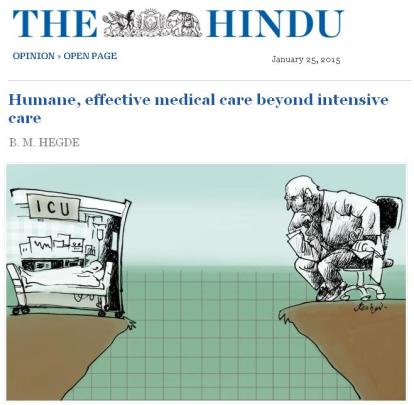
As I was mulling about  the misplaced  priorities  in modern health delivery  , today’s (25-01-2015) edition  of  “The Hindu” , India’s National newspaper carries an exact article by Dr B.M.Hegde .

No doubt  ,his articles are constantly criticized  by the scientific community for  the simple reason, he is forcibly  trying to add wisdom to science !


A patient with near 90% LAD disease who had a significant TMT/EST positivity with no clinical angina  was  subjected to FFR by a scientific  cardiac physician. Since FFR was recorded as  .9 , he was adviced against a stent and sent home with drugs.

Now , in the  physiological assessment of a coronary lesion ,  which one you are going to trust , TMT positivity or FFR ?

FFR  measures trans-lesional pressure drop  by creating a artificial exercise physiology  in a particular coronary bed by injecting just one of coronary vasodilators  namely Adenosine. FFR assessment can never be considered truely  physiological .There has been huge discrepancy in the amount , rate and route of administration and the hyperemic response to Adenosine.

Final message

In a single vessel disease population , if TMT is positive the lesion is to be taken as significant, irrespective of FFR.(Provided Anemia and other systemic factors are excluded )

*Read this and get ready to get  confused further , single vessel disease with TMT positivity  doesn’t mean medical management is never an option .OMT ,(optimal medical therapy ) even though a battered concept is not yet dead for SVD !


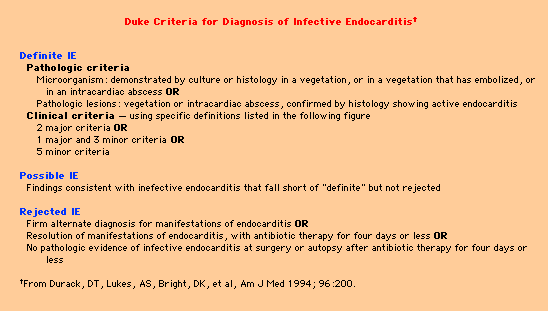
Traditionally , vegetations are sine qua- non for diagnosing Infective endocarditis.

The following  are major criteria to diagnose IE

  1. Evidence for endocardial involvement in the form of  visible vegetation or New onset regurgitant murmur.
  2. Positive blood culture

There are six minor criteria .

To diagnose IE we need

  • Two major or
  • One major and 3 minor or
  •  5 minor criteria alone

Duke criteria for infective endocarditis


duke_ie1

Now ,we realise  IE do  occur in the absence of visible vegetation.This happens because, vegetation can appear late, it is too  small and missed , burroughs inside tissue plane instead of entering cavity , may form  micro abscess or vegetation growth is prevented by prompt empirical antibiotics.

Final message

Vegetation is still a prime sign  to diagnosis of IE. However , please do not insist  on it .There can be significant endocardial infection  without formation of vegetation.The current criteria allows us to make a diagnosis of IE without documenting a clear cut visible vegetation.