Eight point summary
1.PREVENT-ASCVD Equations: Replaces the older Pooled Cohort Equations with more accurate, contemporary equations for adults aged 30–79, establishing new risk thresholds to guide lipid-lowering therapy.
2.Reintroduction of Lipoprotein Goals: Returns to using absolute target goals for low-density lipoprotein cholesterol (LDL-C) and non-high-density lipoprotein cholesterol (non-HDL-C) to effectively monitor and guide treatment intensity.
3.Preferred LDL-C Estimation: Mandates the use of either the Martin/Hopkins or Sampson/NIH equations over the traditional Friedewald calculation to ensure superior accuracy across varying triglyceride levels.
4.Universal Lipoprotein(a) Screening: Recommends measuring Lp(a) concentration at least once in all adults to refine cardiovascular risk assessment, recognizing levels ≥125 nmol/L as a key risk-enhancing factor.
5.Targeted ApoB Measurement: Recommends measuring Apolipoprotein B to guide further treatment intensification once standard lipid goals are met, particularly in patients with diabetes, CKM syndrome, or elevated triglycerides.
6.CAC Score : Upgrades Coronary Artery Calcium (CAC) scoring to a Class 1 recommendation to guide decisions to withhold, postpone, or initiate therapy when primary prevention decisions remain uncertain.
7.Severe dyslipidemia : Standardizes the addition of non-statin therapies like ezetimibe, PCSK9 monoclonal antibodies, or bempedoic acid to maximally tolerated statins to reach aggressive absolute lipid goals.
8.Dietary Supplements Discouraged: Recommends against using over-the-counter dietary supplements (such as fish oil, cinnamon, garlic, or turmeric) to lower lipids due to inconsistent data and lack of proven clinical benefit.
Three questions
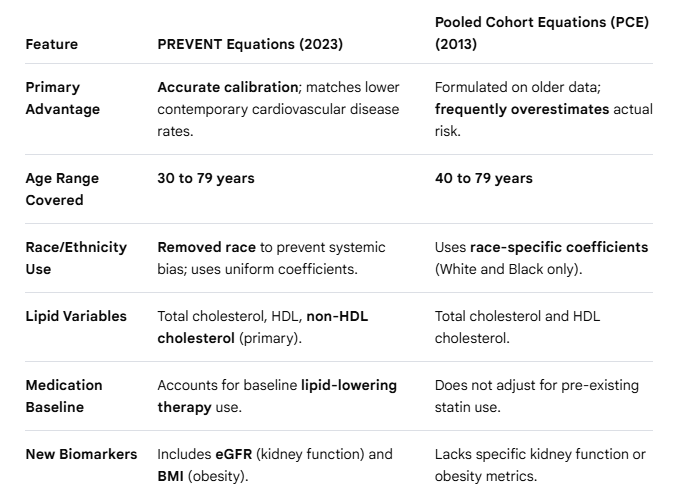
1.What are key difference between PREVENT vs PCE equations?
2.Which can be ranked as the the most important change in the new guidelines ?
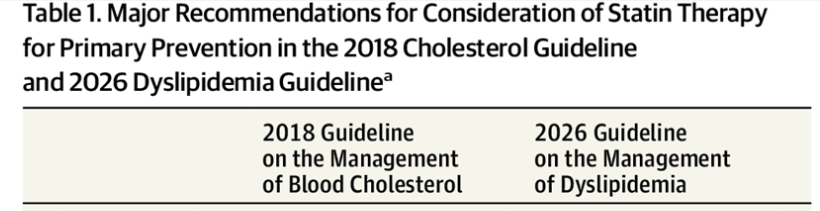
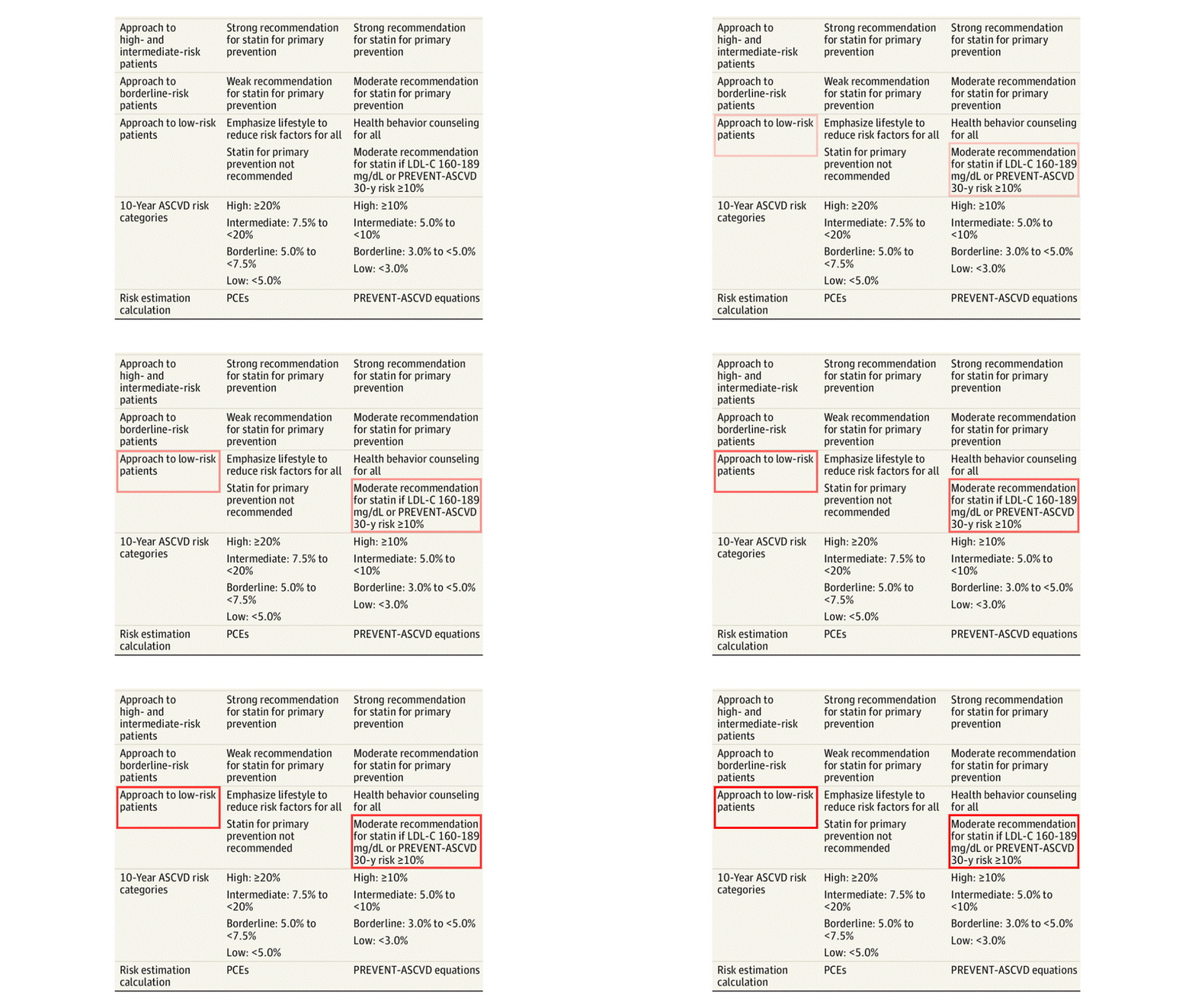
LDL reduction with statins as primary prevention in low risk individuals , is a major change
3.Which can be termed as the most questionable recommendation ?
CT calcium scoring for identifying candidates for primary prevention.A CAC score Zero only is safe . The new guidelines say even if it is 1 , a moderate-intensity statin is reasonable to achieve a ≥30% to 49% reduction in LDL-C
Reference




