Feeds:
Posts
Comments

Posts Tagged ‘nejm’

“Every Interventional Cardiologist, realistically, need to be a preventive neurologist too!”

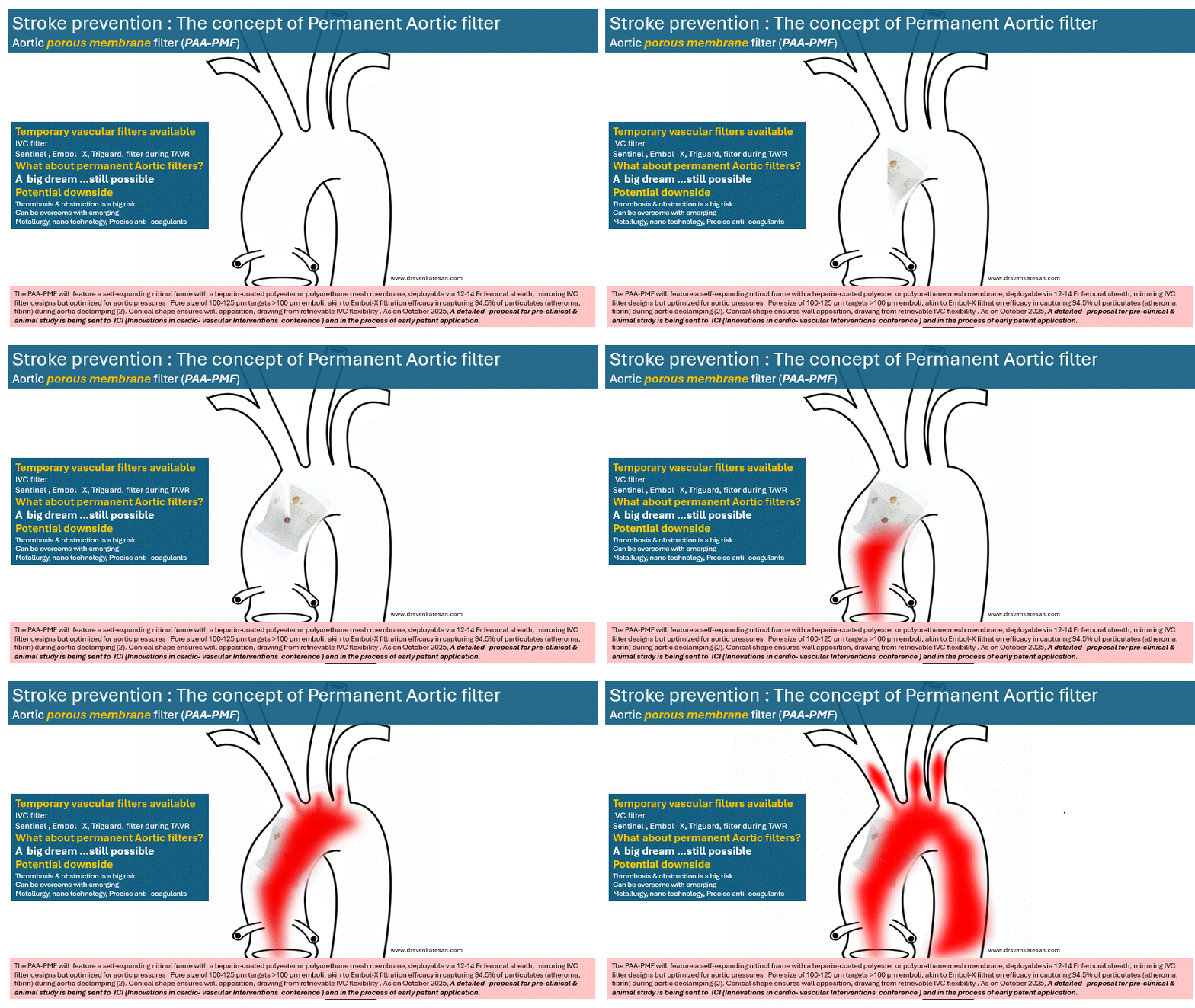
The concept a permanent ascending aortic porous membrane filter (PAA-PMF) is an extrapolation of the idea of mechanical thrombus capture, as proven by IVC filters for venous embolism prevention . Also we do have and temporary intra-aortic filters like Sentinel , Embol-X for arterial particulate capture.

Device Concept

The PAA-PMF would feature a self-expanding nitinol frame, with a fully porous head end. The device can be heparin-coated polyester or polyurethane mesh membrane, deployable via 12-14 Fr femoral sheath, similar to IVC filter designs but should be optimized for aortic pressures. Suggested pore size of 100-125 μm targets >100 μm emboli, akin to Embol-X filtration efficacy in capturing 95% of particulates (atheroma, fibrin) during aortic declamping. The essential requirement is that the porous membrane should not create an impedance gradient. How feasible it is, to be tested. Conical shape, the radial force will ensure good ascending aortic wall apposition.

Device location site

Site of placement is critical. Proximal ascending aorta, 2-3 cm distal to sinotubular junction/proximal to brachiocephalic trunk, as in Embol-X for maximal cardiac/aortic debris interception without coronary/arch compromis

Potential indications

(Only in patients with very high risk of cardioembolic stroke)

1.Chronic stroke reduction in patients with MVR/AVR/TAVR/MAVR

2.High-risk mobile LV mural thrombus

3.Chronic AF with visible and invisible clots in LA

4..High-risk procoagulant conditions with recurrent embolism

Definite Risks

*Occlusion and hemodynamic compromise is the most crucial issue. However, when compared to the incidence IVC filter clogging, the high pressure aortic flow is likely to self-wash the device (as happens in a prosthetic aortic valve)

Trapped emboli may enter into coronary circulation is a possibility. Putting a filter at ascending aorta precludes left heart catheterization.

*Migration , Hemolysis are other expected complications.

Intense anticoagulation would be required to prevent occlusion of the filte . (Still, stopping it temporarily doe not not increase the risk of stroke)

Final message : Is it Worth for a Preclinical trial ?

We do have temporary aortic filters. The concept of permanent or semi-permanent filters is largely theoretical, with potential risks being more than benefits. The device can take care of only cardio-aortic embolic stroke.

However, considering so many complex, risky intracardiac and intravascular devices being tested on a daily basis, it is not a big deal for the current generation of interventional cardiologists to try this.

More than our interventional appetite, we really need a device that prevents stroke in a permanent fashion. It is definitely worthy to do initial studies in a porcine model. Would be glad , if Edwards, Abbot or Medtronic and other new Innovators respond to this.

References

  1. Shammas NW, et al. Intra-Aortic Filtration: Capturing Particulate Emboli during Cardiopulmonary Bypass. NIH. 2004. Available from: https://pmc.ncbi.nlm.nih.gov/articles/PMC1351822/
  2. Shammas NW, et al. Embol-X Intra-Aortic Filtration System: Capturing Particulate Emboli in the Cardiac Surgery Patient. NIH. 2004. Available from: https://pmc.ncbi.nlm.nih.gov/articles/PMC4682540/
  3. PCI Mag. Revolutionary Anti-Thrombogenic Coating for Stents Promises Safer, Faster Healing. 2024. Available from: https://www.pcimag.com/articles/112641-revolutionary-anti-thrombogenic-coating-for-stents-promises-safer-faster-healing
  4. Kaufman JA, et al. Radiologists’ Field Guide to Retrievable and Convertible Inferior Vena Cava Filters. AJR. 2019. Available from: https://ajronline.org/doi/10.2214/AJR.19.21722
  5. Cleveland Clinic. Vena Cava Filters: Purpose & Placement. 2025. Available from: https://my.clevelandclinic.org/health/treatments/17609-vena-cava-filters
  6. Bilal H, et al. Complications of Inferior Vena Caval Filters. NIH. 1997. Available from: https://pmc.ncbi.nlm.nih.gov/articles/PMC3036364/
  7. Alpaslan M, et al. Embolic Protection Devices in Transcatheter Aortic Valve Implantation. NIH. 2025. Available from: https://pmc.ncbi.nlm.nih.gov/articles/PMC12194329/
  8. Almanza DC, et al. Comparative Review of Large Animal Models for Suitability of Cardiovascular Devices. IJMS. 2024. Available from: https://ijms.info/IJMS/article/view/763/1645
  9. Mohammadi H, et al. Simulation of blood flow in the abdominal aorta considering hyperelasticity of the wall. J Carme. 2021. Available from: https://jcarme.sru.ac.ir/article_1223.html
  10. Ketha S, et al. Comparative Review of Large Animal Models for Suitability of Cardiovascular Devices. IJMS. 2019. Available from: https://ijms.info/IJMS/article/download/763/1644?inline=1

Read Full Post »

It is predicted, (or already happening ) atleast 30 % of clinical consults happen with AI assistsnce or with completely with machines.

The Initial work up is suggested by the AI bots, even in ER rooms. They may be right in 80% of times. But, who is it to filter and grab those remaining 20%. No one , except a astutely learnt clinician. Unfortunately, there is no super AI to do this job.

Final message

This is the beginning of, a new exciting & dangerous era, for the medical profession. If we are not vigilant or loose our common sense, these bots will soon reach their next destination, ie patient’s bed side.

Reference

BMJ in its current Issue address these  aspects of increasing AI usage in the clinical consults

1. Clinical competencies for using generative AI in patient care BMJ 2025; 391 doi: https://doi.org/10.1136/bmj-2025-085324 

https://doi.org/10.1136/bmj-2025-085324

Read Full Post »

Read Full Post »

.


Post-amble

Are you a professional physician doctor ?

Honestly I am struggling to become one , it is still a long way to go.


Read Full Post »

An Awakening Call to the Guardians of Medical Science

Dr. Venkatesan Sangareddi MD, Former professor of cardiology, Madras medical college,Chennai .India

Medical science remains a cornerstone of human progress, and what we have achieved in the last 100 years is unprecedented. Every one of us is aware that the trust placed in medical research is sacred. Also, the medical profession is expected to remain noble as long as human beings exist. However, as in all walks of life, there must be trade-offs to any positives. Yes, this trust has increasingly become vulnerable, threatened by the pervasive and often subtle influence of conflicts of interest (COI). This is especially explicit in the current medical research landscape.

While the scientific community has made strides in acknowledging and requiring disclosure of COIs, particularly from authors , the measures are proving insufficient. There is a big irony sitting right across us. It is made to look, as if conflicts of Interest (COI) exist only with the authors.

The following article written by the author (Ref 1) calls for an  awakening to every medical journal publishers, regardless of their prestige or impact factor, to recognize their vulnerability . We are expected to adopt a new paradigm of transparency in declaring COI, that extends to every participant in the publication process, including the scientific or ethical committies that approve the study ,the peer reviewers, the publishers and finally to the industries that fund the research.

Reference

1,Click here to download the full paper: A caution: It is a fairly lengthy article. (15 minutes read) Hope the suggestions made in the article are not labeled as unrealistic and possibly crazy as well.

Read Full Post »

Read Full Post »

How can we use AI as a tool of knowledge distillation ?

Here is a deep discussion with Grok 3, on the merits, limitations & validity of DANAMI 2 and PRAGUE 2 , the two old studies on pPCI. Curiously , we don’t have any other studies to quote. As on 2025 , superiority of pPCI hangs precariously on these two decade old studies, which has some serious omissions in the primary end point and its Interpretation. To get into the facts , please go through the following link.

https://grok.com/Is primary PCI really superior to lysis in a global perspective /

It is a long chat, I am sure most of you can’t spare your vital time. But, the truth comes out only at the fag end of the conversation.

Read Full Post »

Absolutely yes. The number of studies with such wrong aims is staggeringly higher than we could imagine. “Wrong aim” is probably not the right word to describe them. Rather, we can call them obsolete, duplicate, illogical, unproductive, intentionally fraudulent studies, or studies with a prefixed conclusion.

There is an estimate, that says 95% of papers in nearly 5,000 medical journals, is either junk or written for the sake of publication related to mandatory academic positions or promotions as a budding scholar or faculty. Science has to survive on the shoulders of those rare & genuine 5% souls.

Final message

What is the true “Aim for your study” , I want a very honest answer ?

Yes sir, I agree ,the primary aim is to publish my damn paper and get that promotion !

A related post

There was a brief post about this in the year 2008, 15 years ago. Is it still relevant? Find out for yourself.

Read Full Post »

In one sense, meta-analysis would come closer to a milder form of ethical plagiarism”


Can meta-analysis really be called as original scientific research ?

No it is not, but some may say yes. It is very difficult to dispute either. But, the fact of the matter is, meta-analyses are not a true science of innovation. It is using some others’ work( sort of intellectual steal ?) done by a group of scientists interested in the same research topic, trying to squeeze more info from these studies. It is a glorified group journal club activity.

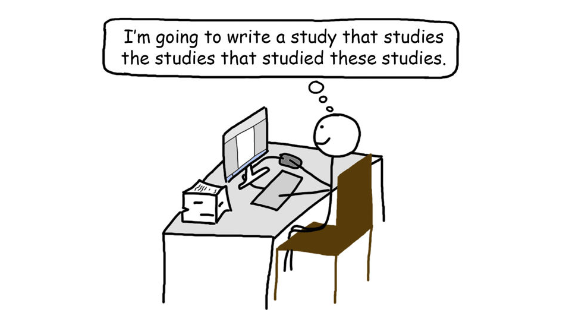
Image source & Courtesy http://www.inquasar.com

At best, meta-analysis can be referred to as knowledge and evidence aggregation. Surprisingly, mostof the academia seems to give more weight to meta-analysis, disproportionately more than the original researchers. This is because meta-analytic scientists backed by big journals claim, they can bring out more info out of the original. The assumed scientific superiority of meta-analysis is expected to be downgraded soon, as these sort of evidence aggregation can be done easily by any AI-powered engines. Network meta analysis, by dedicated medical scholastic AI networks can do this in a fraction of a second.

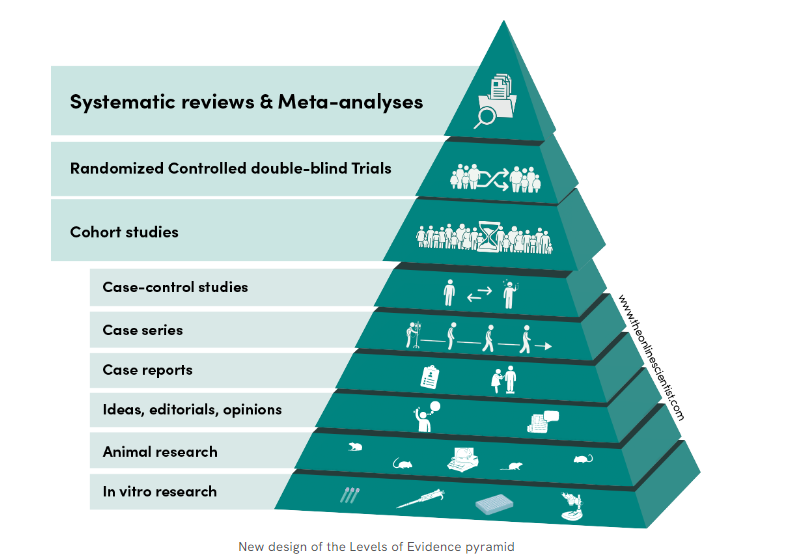
Meta analyses as of now is sitting proudly as crowning glory at the top of evidence pyramid. This is one of the reasons for the false glory surrounding anyone (or anything ) associated with meta-analyses. I doubt whether it really deserve the top slot. (An excellent debate between RCT vs metanalysis) Wish, the meta-analysis taste its own medicine at least once. We need to have a meta-analysis to show it is really superior to other forms of evidence. I cant find one as yet.

What about systematic review ? This looks better, as it has less statistical content , and the researcher is at least compelled to go deep and get enlightened on the topic as they spend months together on the topic.

How is meta analysis different from original research?

There is no new data collection ,no primary hypothesis testing . It primarily focus on summarizing existing evidence. To do it properly, there are certain standards.

  1. PRISMA (Preferred Reporting Items for Systematic Reviews and Meta-Analyses)
  2. Cochrane Handbook for Systematic Reviews of Interventions
  3. MOOSE (Meta-analysis of Observational Studies in Epidemiology)

Ref :Finckh A, Tramèr MR. Primer: strengths and weaknesses of meta-analysis. Nat Clin Pract Rheumatol. 2008 Mar;4(3):146-52.

Positive side of metanalysis

While meta-analyses aren’t original research, it’s a crucial tool for evidence synthesis, research translation informed decision-making.

Flaws of metanalysis

It is a academic business with done studies. So it is 100% retrospective. It might come with irreversible errors. Unless every error in the past studies is accounted for and curated the result of meta-analysis, it can never be foolproof.

Should we get permission from all the authors who did their original studies before doing a meta-analysis?

As long as fair use criteria applies there is no need , but a moral obligation is definitely there . Other wise metanalyses will come closer to a milder form of academic plagiarism of others’ work. (Of course legally and scientifically approved)

Final message

In the world of true scientific research, meta-analyses can not be considered as great scientific work. It is just evidence aggregation, which of course could be meaningful if and only if the studies taken were done properly.

However, meta-analysis has undisputed value in aggregating rare cases, scenarios, diseases, and problems where there are very few published studies. Collecting them together in an organized fashion serves a real good purpose.

Reference

1.Pearson K. Report on certain enteric fever inoculation statistics. Br Med J. 1904;3:1243–6.

2 Smith, Mary L.; Glass, Gene V. (1977). “Meta-analysis of psychotherapy outcome studies”. American Psychologist32 (9): 752–760. doi:10.1037/0003-066X.32.9.752.

3. Eysenck, H. J. (1978). “An exercise in mega-silliness”. American Psychologist33 (5): 517. doi:10.1037/0003-066X.33.5.517.a.

Read Full Post »

Read Full Post »

« Newer Posts - Older Posts »