Feeds:
Posts
Comments

Archive for the ‘cardiac physiology’ Category

  1. The concept of  FFR is based on pressure gradient  alone.In any hydraulic model (Both biological and non biological systems ) pressure difference  is the least   important parameter  that determines flow.
  2. FFR  is unphysiological  as hyperemia   is  artificially induced one .(Adenosine  is not the only parameter that determines it !)
  3. Serial obstructions and branch point hemodynamics are  conveniently ignored.
  4. Reproducibility  remains a big question mark .
  5. On safety  issues  FFR  is a suspect.( Often times , it  requires expertise comparable to  that of a  complex  PCI !) .Beware , the FFR unit has stiff catheter system and is an additional health hazard .  I have witnessed   atleast two cases  where  insignificant lesions were  made significant by  FFR related Injury .
  6. And  now the  knock out punch ,  ! Probably the most vital  issue for which FFR should be banished * , it is not taking into account of vulnerabilty of a plaque .( An FFR > .9 with a hanging , eccentric , mid LAD lesion was left alone by one of the  academically up to date ,  evidence  based interventional cardiologist!  )
           (*If perfomed  in isolation without IVUS/OCT  )
I am still wondering how this concept came into cardiologist domain and into the cath lab .It should have  never been let out of theoretical physics labs !
Final message
The best way to assess physiological significance of an anatomical obstruction is  to  do  exercise  stress test .
If  the lesion is  able to sustain good exercise capacity , it  can be deemed physiological unimportant.
While , this is an explicit  proof  in single vessel disease  ,  even  in   multivessel  CAD ,   EST  is   a  collective  measure of  coronary  reserve flow .( Something like instantaneous equivalent of virtual  multivessel  FFR  )
Moderated After thought
FFR is a highly specialized theoretical  tool , that has very limited role in cath lab .
The two major practical (Non academic)  use of FFR   is to shun away  those   internet fed ,  annoying, pseudo  intellectual patients ,  who constantly ask for  angioplasty  for  obliviously insignificant lesions !
FFR comes very handy  to  bail out  cardiologists at  times of distress   ! (To escape  from the wrath of our patients   after a sub optimal &  technically inferior   PCIs   and   in  the  long term confabulations  in   restenosis  after stenting !  )

//
Read Full Post »

The mechanical atrial function   during atrial fibrillation remain a mystery . In fact , the general  belief  is during  AF  the mechanical function of atria is zero. This is why AF  is promotes stasis and   LA clot formation. It may appear theoretically correct  , still   AF especially coarse  still imparts some amount of  mechanical motion .But this usually does not translate to any useful hemodynamic function .

If atrial booster pump is lost (which is said to be 25 % of  LV filling )  suddenly one expects dramatic symptoms  especially if there is associated LV dysfunction or aortic valve disease .

But in real world AF is well tolerated arrhythmia in most  .  We know by land  mark trials AF  is as good as sinus rhythm  if the rate is  is under control

This is a definite evidence the AF  may not compromise  LV filling   even if   it nullifies  the  atrial contractility .

There is one  more evidence for  retention of atrial mechanical activity in spite of AF .It is well recognised , pre-systolic accentuation is preserved  in many cases of mitral stenosis with AF.

*Crazy hemodynamics : For an attached LA clot to  dislodge ,   one needs some amount of LA contraction isn’t ?  Unfortunately  a fibrillating  atria always  tend to  have this one ! This again is a senseless  proof for some  mechanical activity of LA during AF !

How is this possible ?

Is it a  purely volume dependent filling   ? ( Or )  is it  the  Intrinsic LA starling forces that do not depend electrical atrial activation .

This is definitely an  issue to ponder over . A good LV contraction makes the atria empty more completely . This would  somehow  mean , LV relaxation  is facilitating atrial function . During  AF the LV  handles effectively  the additional burden  imposed by the loss of   25  %  booster pump of atria ( Accelerated LV relaxation ? )  A  constantly  changing  RR interval makes LV diastolic function a more complex event .

Final message

Atrial fibrillation is  a well tolerated  arrhythmia in vast  majority of patients  . This  implies either of the two things.

  1. The so called  physiological atrial  booster pump is redundant  or dispensable in otherwise healthy heart
  2. The booster pump is indeed important  . . . but it is less  affected by AF as long as the rate is under control !

It is to be  strongly emphasized , Heart rate and  LV function  will ultimately determine  , how one is going to tolerate the AF  !

It is  a small gesture  from LV  to LA  at it’s hour of crisis  . . . in return  for  it’s lifetime assistance  as a booster pump ! 

Postamble

How  rate control  prevails over rhythm control in spite  zero atrial contractility in the  former  ?

Comments welcome !

//

Read Full Post »

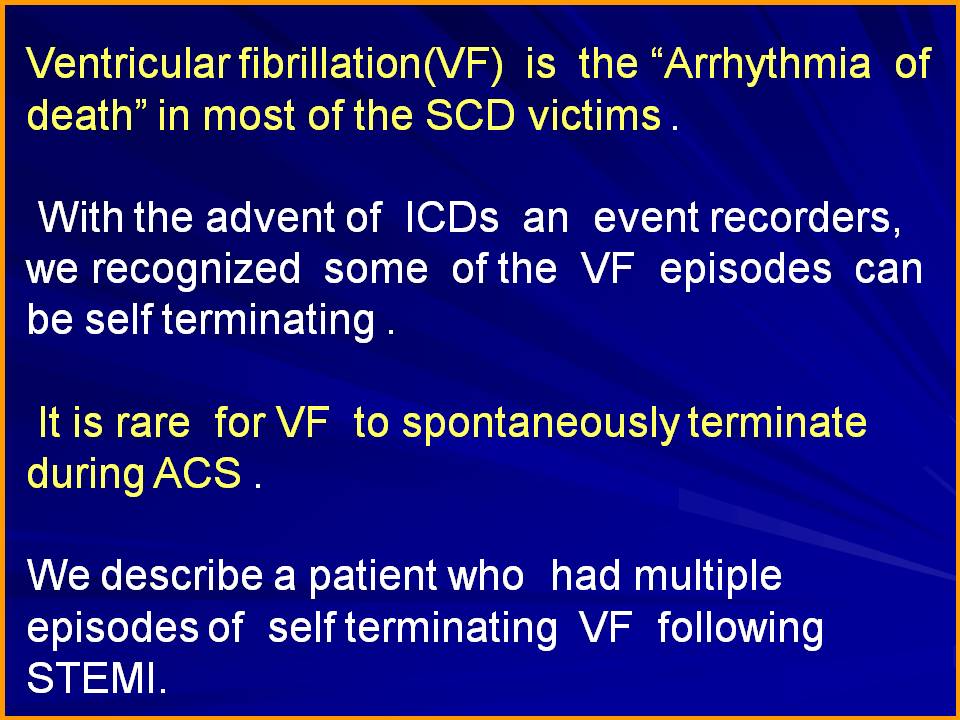
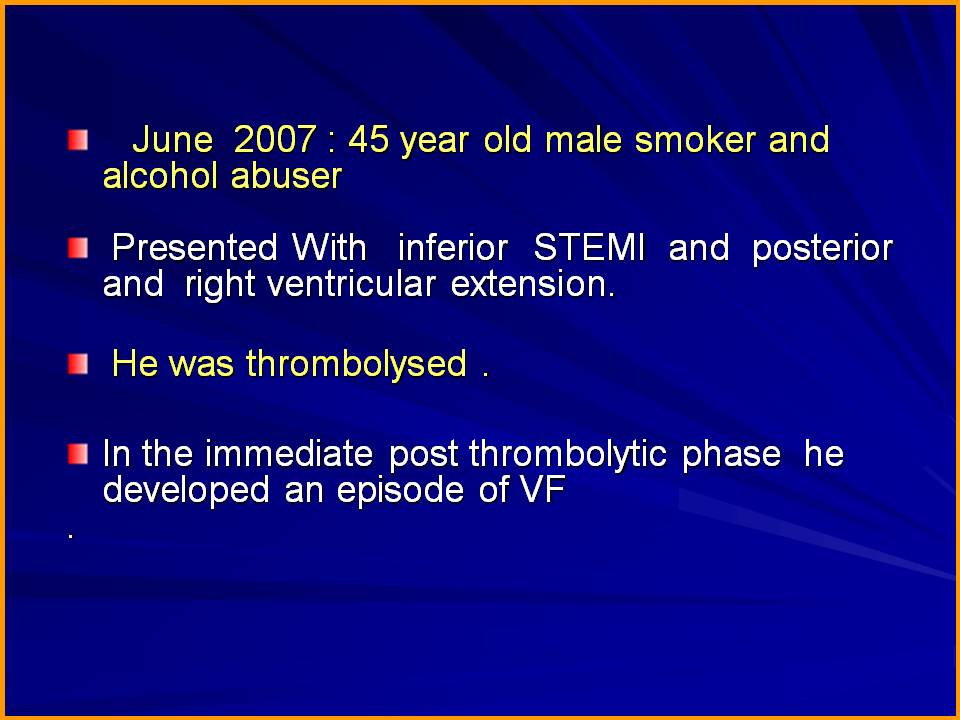
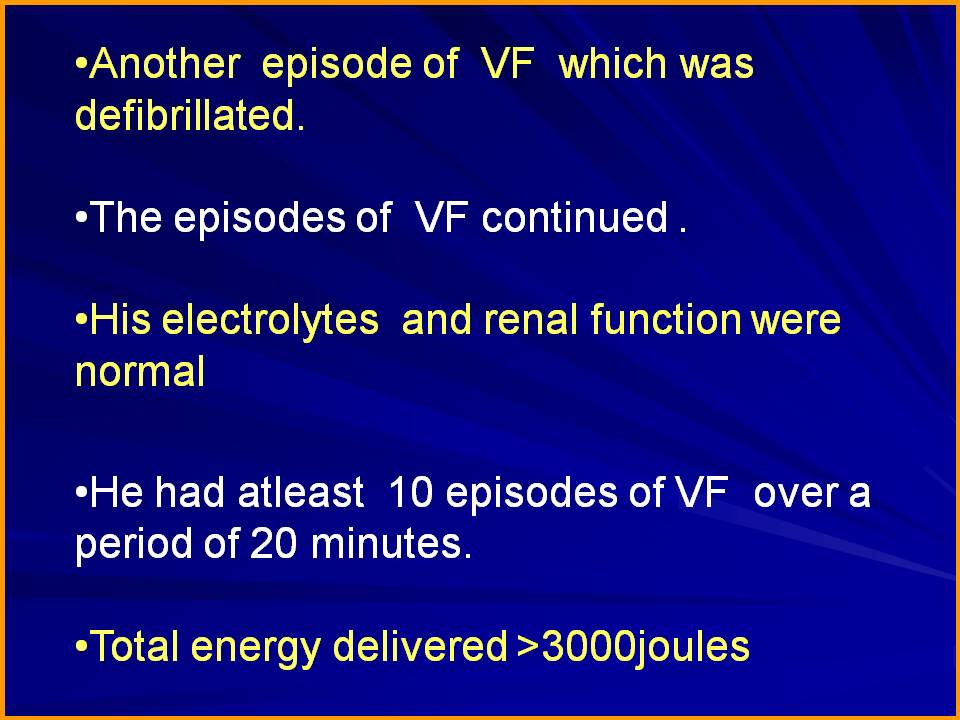
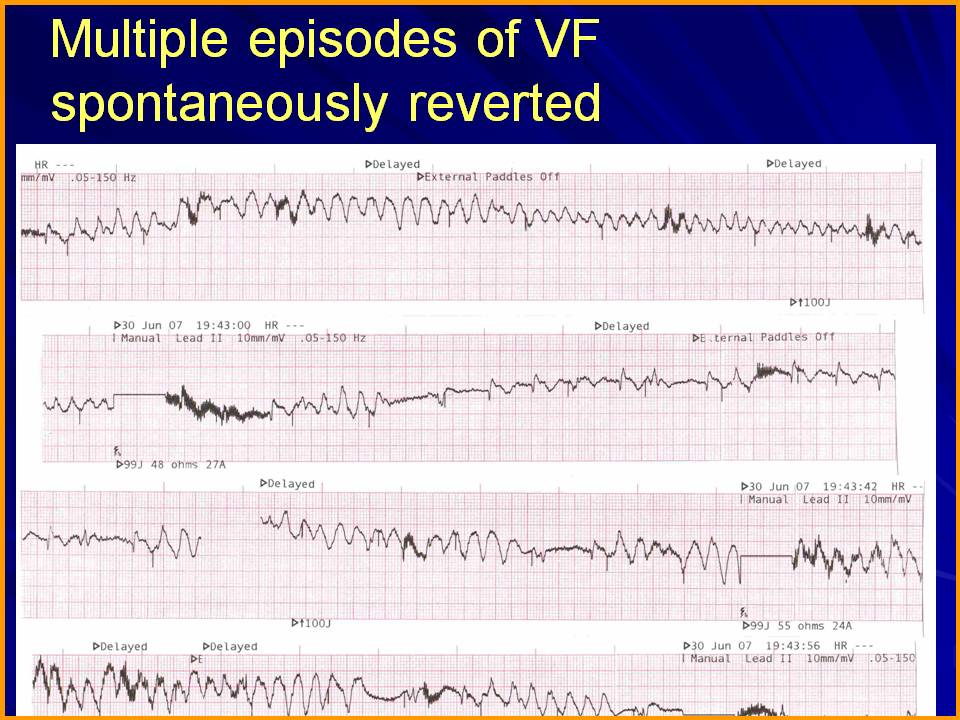
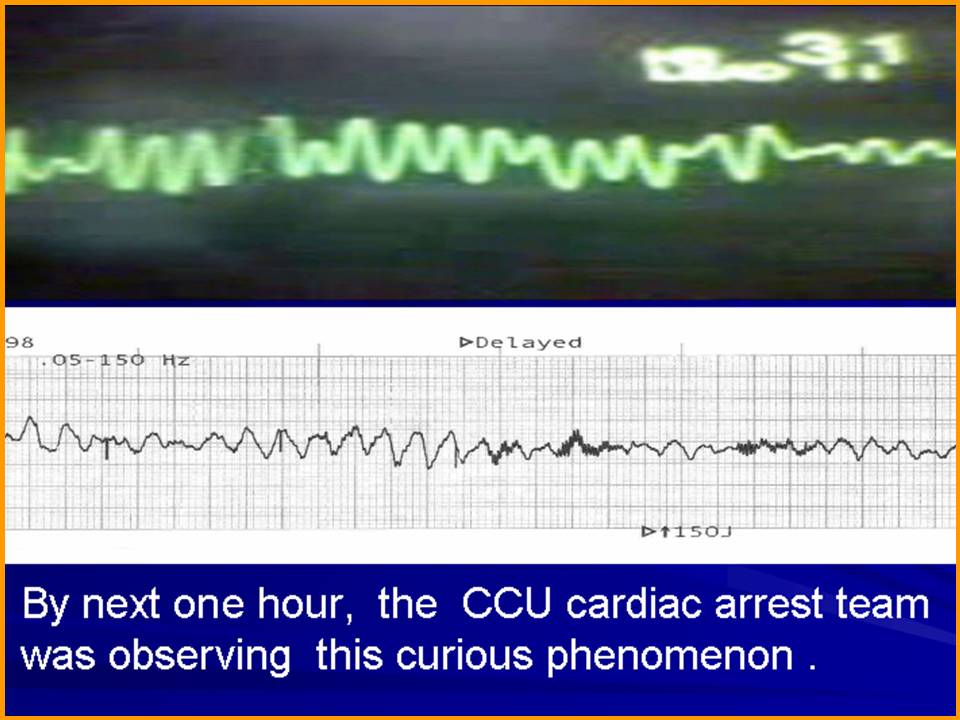
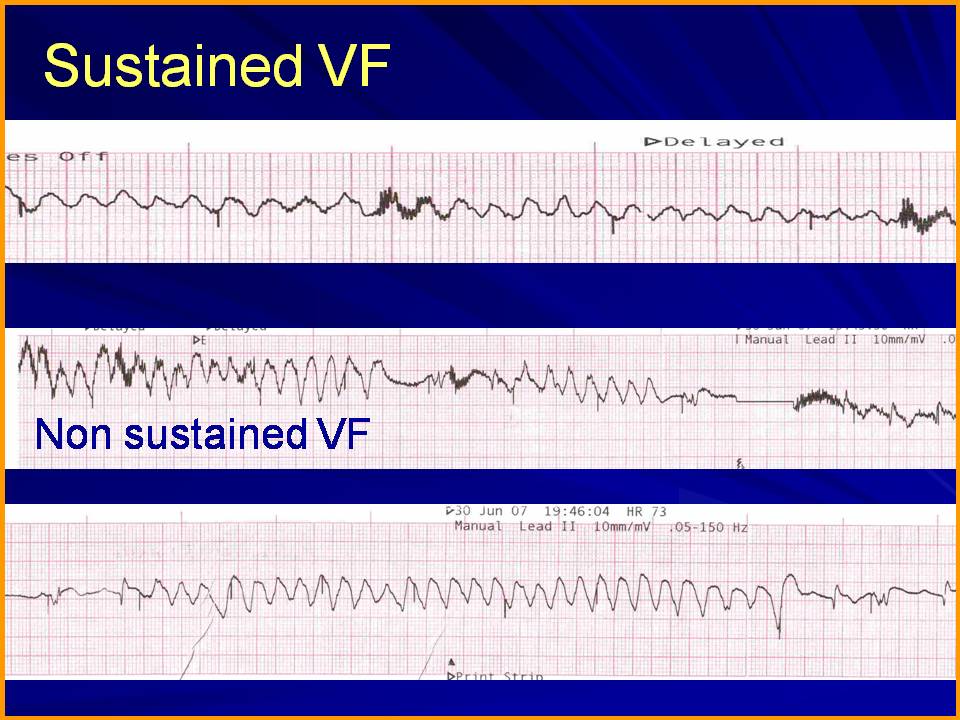
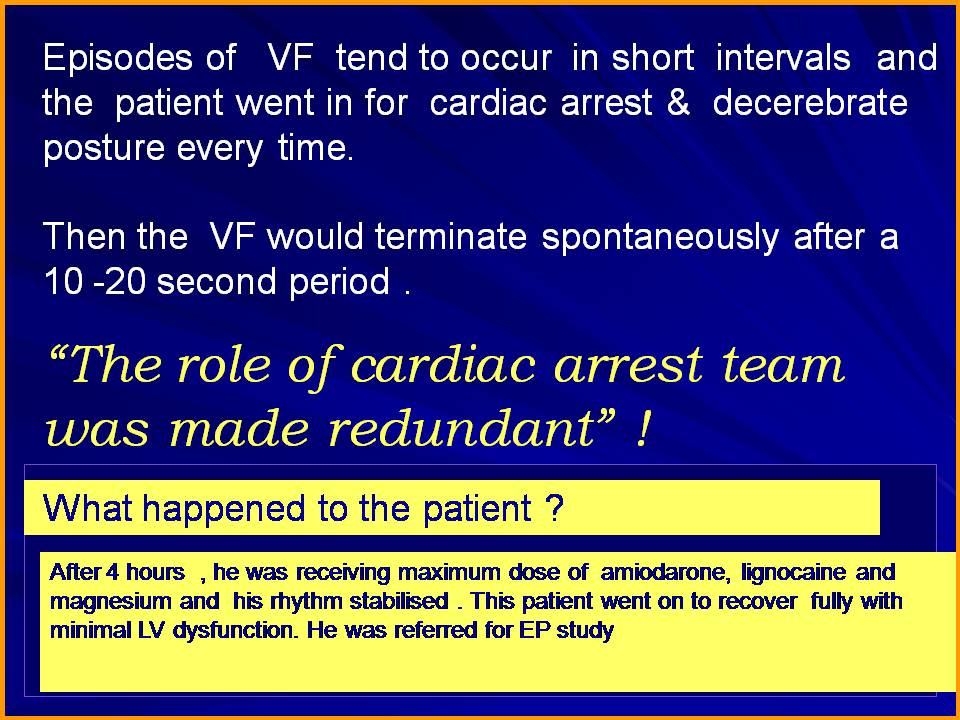
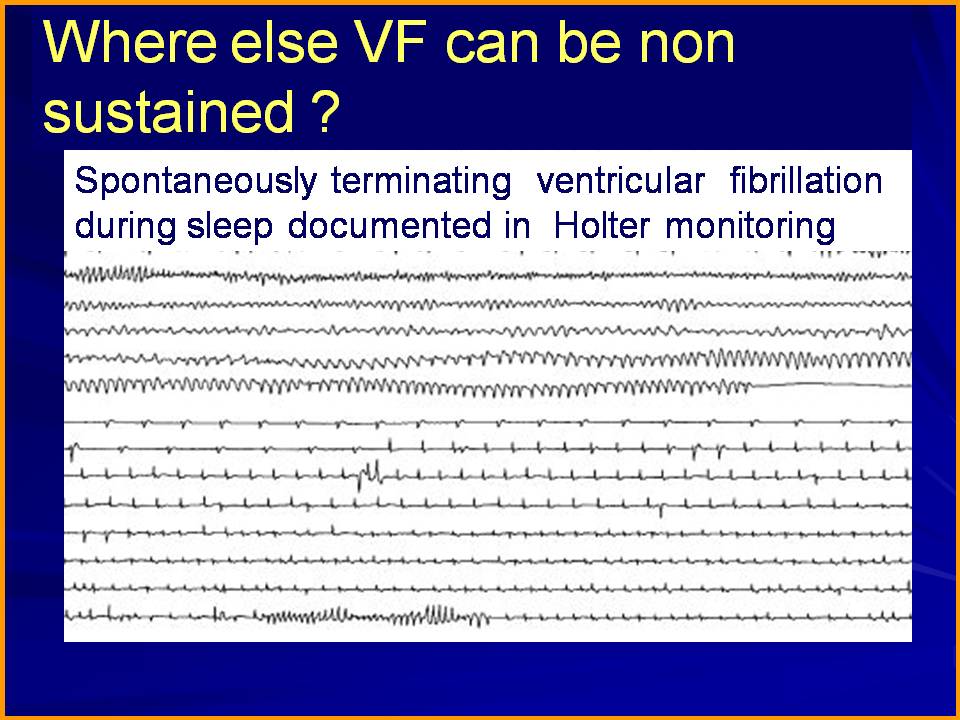
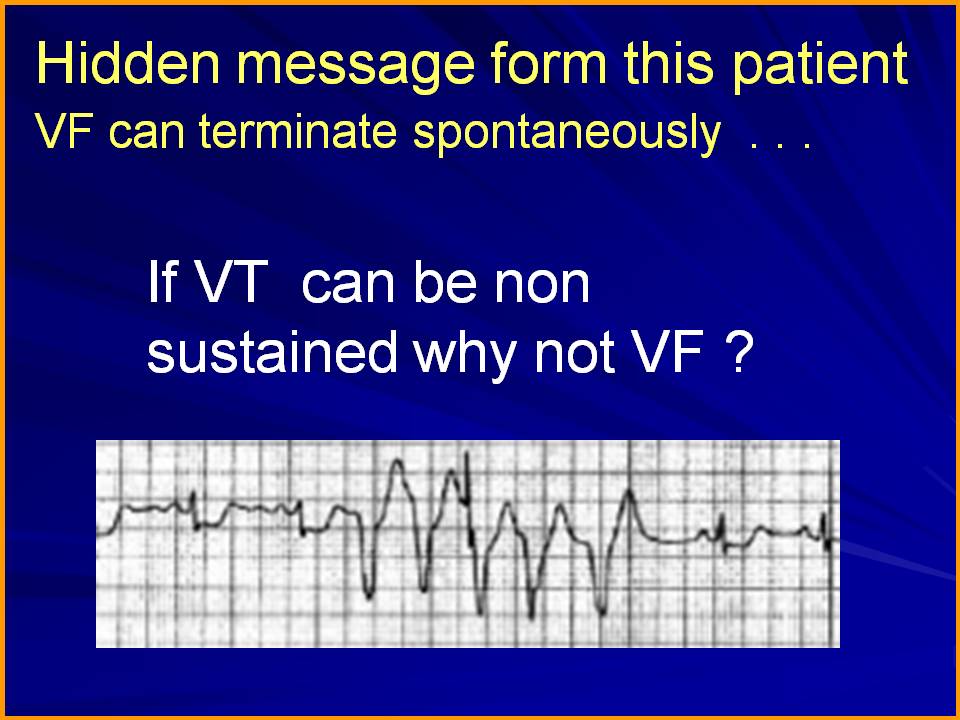
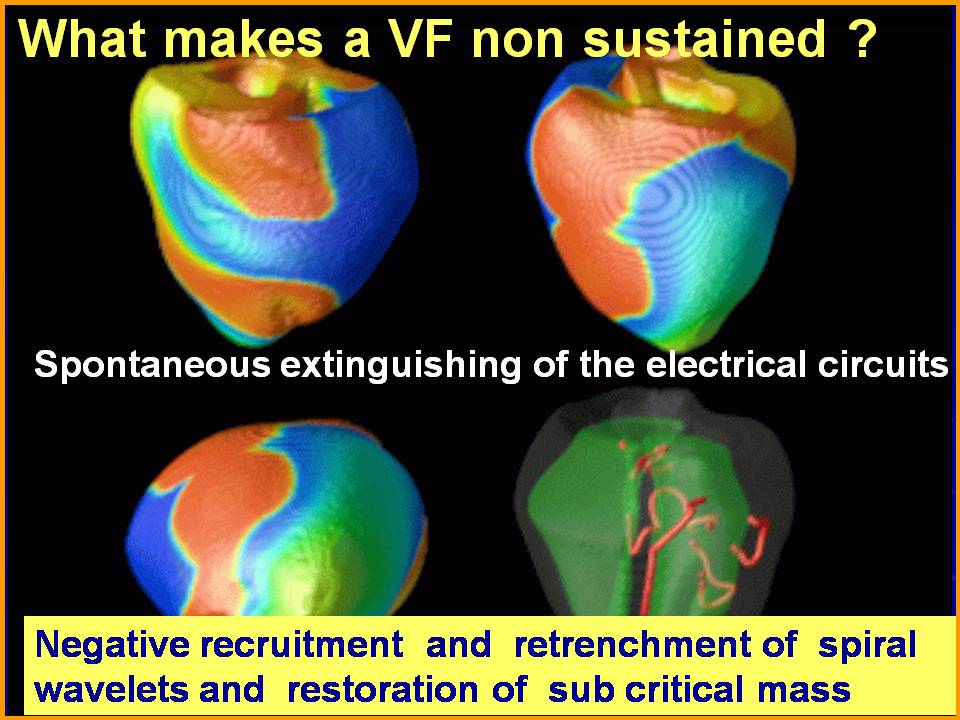
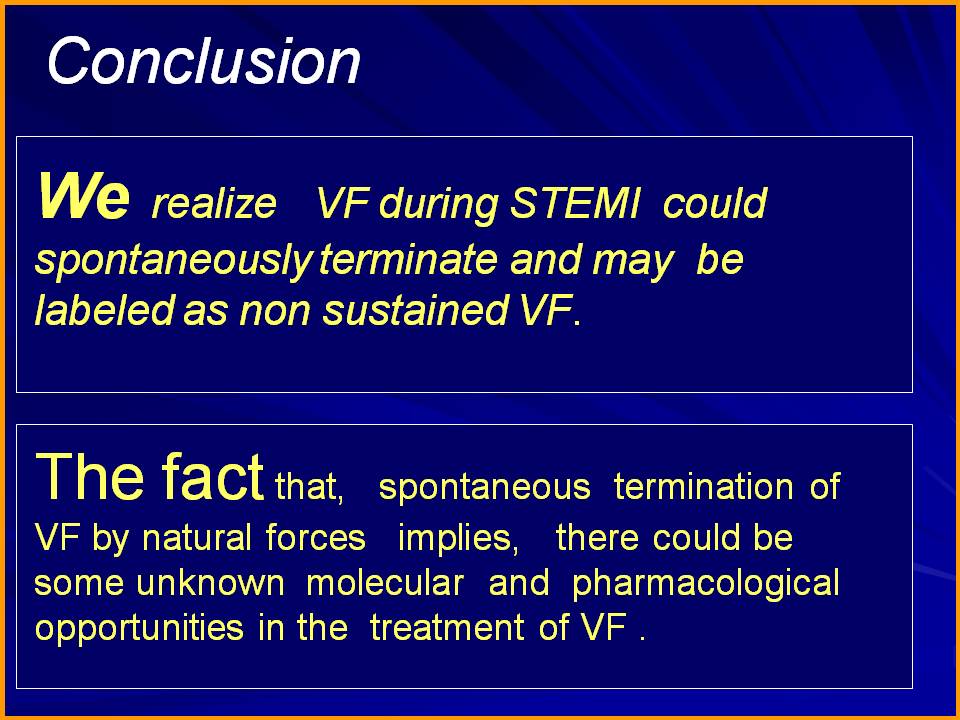
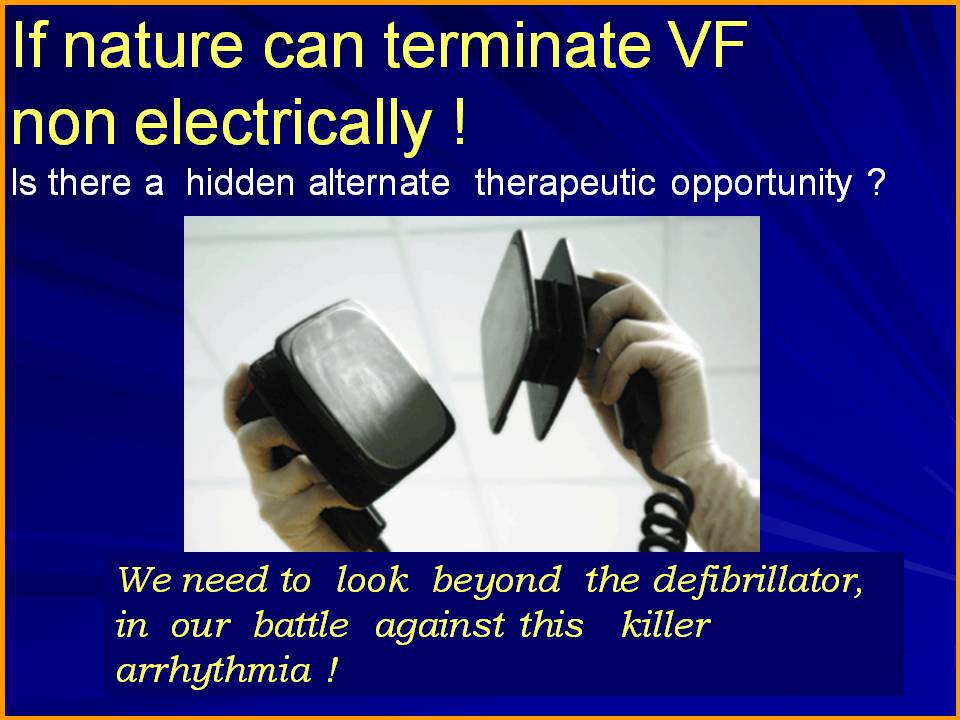
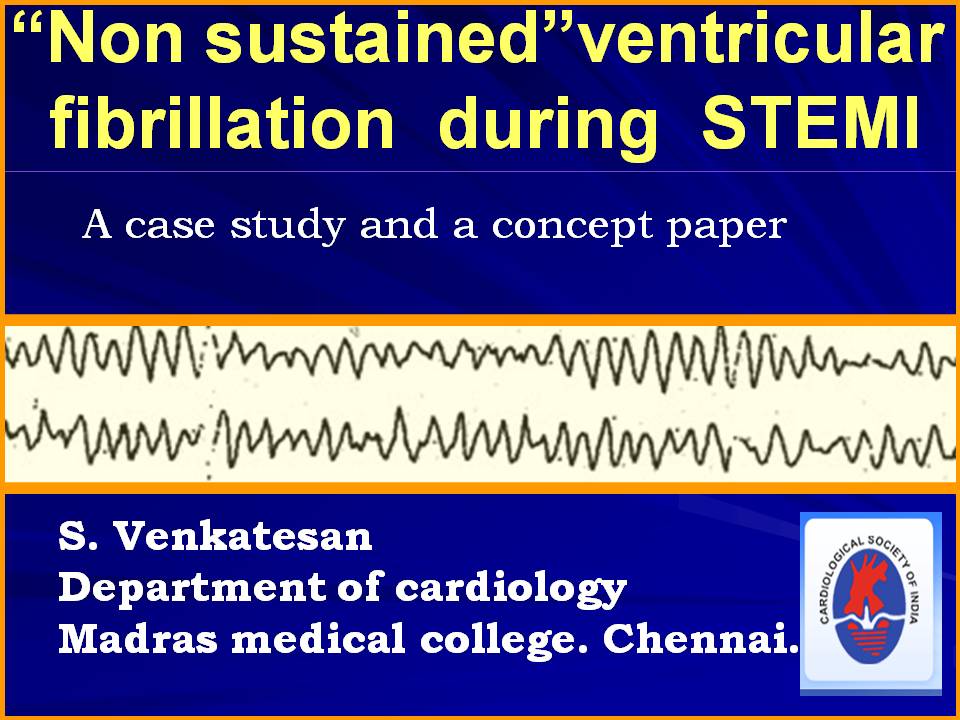
Can VF be a non sustained  arrhythmia ?   This question was raised and a single case report was presented

in the annual scientific sessions of  Cardiological society of India Meet in  year 2008 in  Chennai.

I am just reposting it from my archives .

Slide1 Slide2 Slide3 Slide4 Slide5 Slide6 Slide7 Slide8 Slide9 Slide10 Slide11 Slide12 Slide13

Slide14

Read Full Post »

Answer

Each of the above can be important in diseased heart .The most important component seems to be Inter- ventricular  synchrony .This is closely followed by AV synchrony .In dysfunctional  ventricles Intra-ventricular  synchrony  also becomes important .In  structurally  normal hearts  none seems to be important  (This statement can be debated  )

VVI pacemakers causes  both AV  and Inter-ventricular (VV ) dys-synchrony

DDD pacemaker  may still  induce  Inter-ventricular ( VV ) dys-synchrony  whenever  RV is paced for any reason .This may happen up to 60 % of pace making time in real world.

Some more facts

*Chronic VVI pacing may  induce adverse  remodeling of both atria and may worsen LV dilatation. In contrast isolated chronic organic LBBB is well tolerated and with paradoxical septal motion rarely worsen the LV function.

**Please note the paradoxical septal motion , which is  noted in  all LBBBs is  same as inter-ventricular  dyssynchrony .

***Inter atrial synchrony is a less discussed issue .It becomes  important in diseased atria which manifest gross   intra atrial conduction blocks  , atrial inhomogeneity and AF .Onset and offset  of AF has a major impact in the way DDD pacing is going to fire .

Read Full Post »

Under physiological condition ,  pre-load , after load , and cardiac  contractility should be a sequentially matching parameters . After load mismatch is an important concept , where myocardial contractility is temporarily  depressed due to  lack of adequate pre-load for a given level of after load .

This is also  referred to as descending limb LV function paradox .

The three  common clinical situation  AL mismatch  occurs

  1. Critical Aortic stenosis              (High aortic after load )
  2. Acute Hypertension                   (High after Load -Normal and  low pre-load)
  3. Severe diastolic dysfunction  (Pre-load is high -After load is normal )

If it happens acutely the myocardium becomes dyfunctional  due to  mechanical non ischemic stunning .Once the after load comes down the contractility improves .

What  is the chronic adoptive response to after load mismatch ?

LVH is the major  chronic adoptive response to AL mismatch.

LVH reduces the wall stress which will reduce the after load  indirectly .

So LVH neutralises the   high  after load .Laplace law at work . (Wall stress is equal to  2 times the radius divided by thickness of the wall )

Here  is the Link to the great lecture by John Ross Jr  in LA Jolla , California in one of the annual scientific session of AHA   more than 25 years ago . http://www.ncbi.nlm.nih.gov/pubmed/966366 .The concept is alive and kicking even today .I am sorry to  note   this  important physiological concept   never received the attention it deserves .  I would vouch , it  can be as   important as Frank starling  principle .

Reference :

https://content.onlinejacc.org/data/Journals/JAC/22702/04186.pdf

//

Read Full Post »

Why Junctional rhythm has huge variation in P wave morphology ?

P waves in junctional rhythm can be

  1. Upright
  2. Iso-electric
  3. Inverted
  4. or  even absent

It depends upon the origin of junctional focus

  1. Site of  entry into RA
  2. Ability to capture inter -nodal pathways  and inter -atrial pathways ,
  3.  VA conduction velocity

Further ,the appearance and timing of P waves will be determined by the underlying structural heart disease also.

Final message

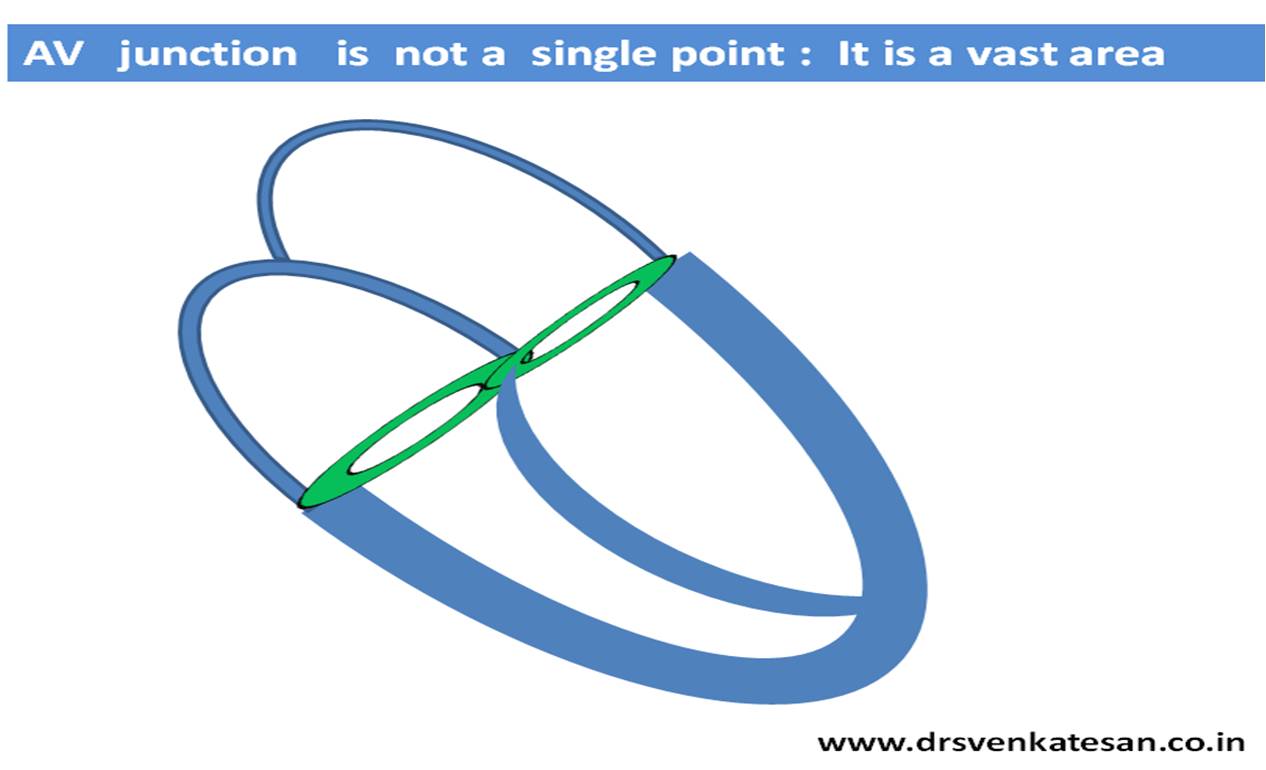
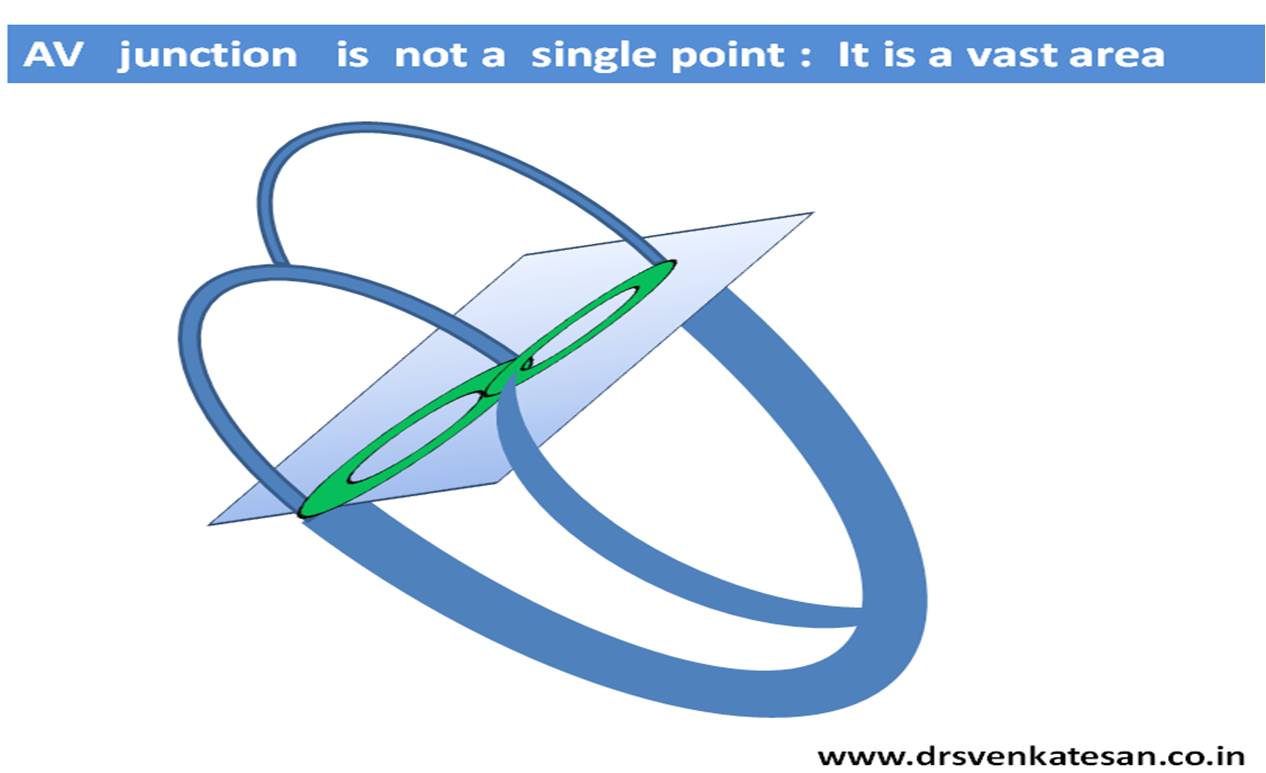
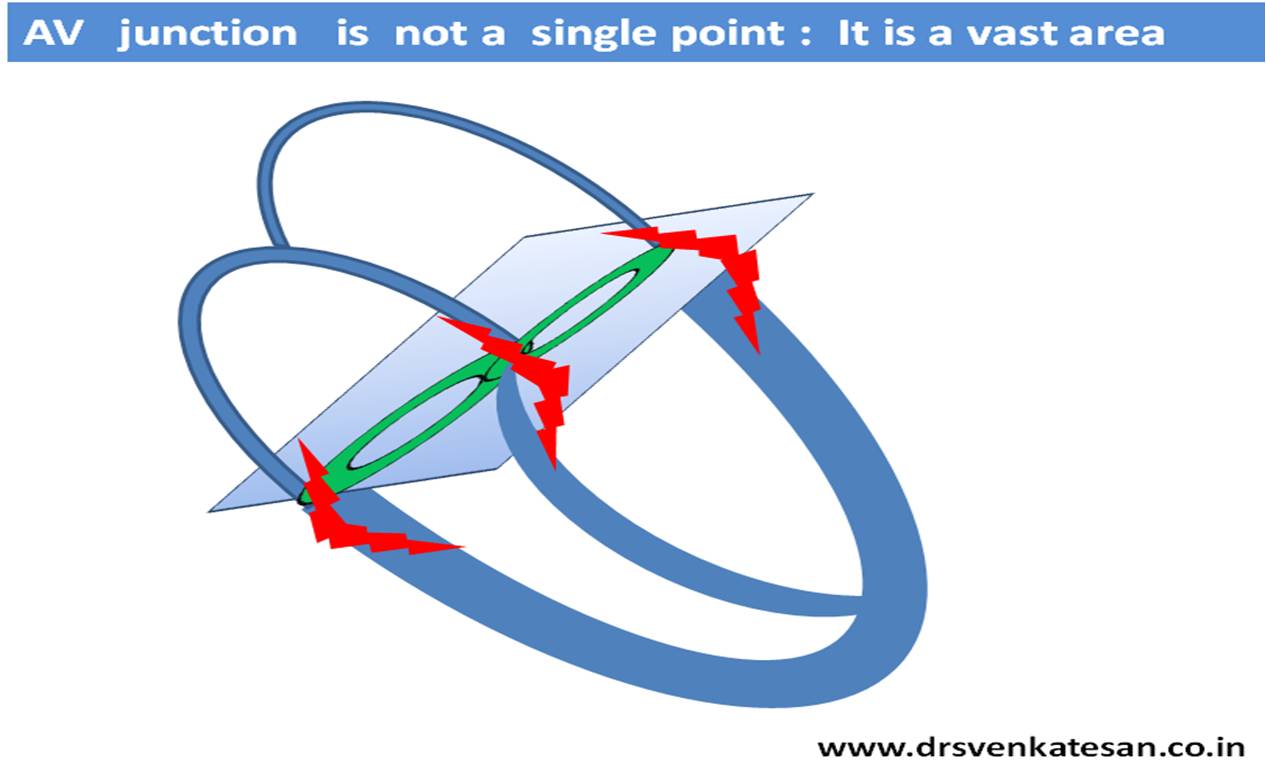
Medical  students  have  grown  up with the belief that  AV junction is a single  focused point .It is  true  in terms  of electrical circuitry  of  normal AV conduction .However  during pathological electrical disorders ( Which arise often because of structural disorder) it should be realised   the AV junction is a huge plane   .   Arrhythmia can occur anywhere from this plane .The entire plane  can become electrically active which may also  acquire the  ability to conduct bi-directionally .

Read Full Post »

The primary determinant of pulmonary artery systolic pressure is . . . ?

  1. Pulmonary arterial tone
  2. Pulmonary venous pressure
  3. RV contractility
  4. Pulmonary blood flow

Answer : All of the above

But what is the relative contribution of each ?

I am  100 %  sure  ,  no  one can answer this question  correctly !

It is  true  , in some  pathological situations  one can  be  fairly certain about  cause of   elevated pulmonary arterial pressure .

When we confront a patient  with left heart disease  it is the transmission of  mean venous pressure .

Whatever be  our understanding ( Pre/Post capillary pulmonary hyper tension and the related stuff !  ), the one parameter that makes mystery contribution  to PA pressure is RV contractility !

In physiology  RV   generates  about 30mmhg systolic pressure that becomes the  pulmonary systolic  pressure .The  diastolic pressure  will be around 15 and mean around 20 . During exercise  contractility of both RV and LV increase .There has been documented PASP up to 50 mmhg in normal healthy adults during   exertion .

Here one can assume RV contractility is causing  a entity called transient Isolated  systolic  pulmonary arterial  hypertension.(ISPAH)

Consider a entirely different situation

A patient with COPD  with raised  PASP .  The right ventricle pressure has to equilibrate with PASP  during systole .For this to happen   it has to generate the 60mmhg .  If the RV fails  to augment it’s contractility for some reason ,  will the  ineffective RV contraction will  lower the  PASP  ? This is the perplexing question !

While the popular understanding is ,  RV dysfunction will under- estimate the severity of   pulmonary hypertension   . . . still  . . .  we are not sure whether RV dysfunction will  reduce the PASP   per-se  ( and  subsequently PA  diastolic pressure as well )

We often see a  good example  . A patient who develops tricuspid valve disease and RV  dysfunction get symptomatic relief  from  lung congestion .

Final message

The relationship between RV function and pulmonary artery pressure is a real enigma. Though hyper functioning  RV is expected to elevate PASP  and hypo functioning  RV would pull  it down  , the relationship  is not that simple. If only we decode this  mysteries   we can try  specific  RV negative inotropic  agents  as a  modality to treat pulmonary hypertension .

After thought

Total artificial hearts  are going to come in a big way in the coming decades .It  will specifically address this issue  ,  as RV and LV contractility  need to  be individually tuned to avoid pulmonary congestion.

Coming soon

While  RV function is critical for human survival  ,  Fontan  principle  simply says entire RV is dispensable . How ?

Read Full Post »

A pulse wave is generated  with each heart beat  when  the potential energy is converted into kinetic energy.

  • For the pulse wave  to travel from the heart to periphery  Aortic integrity is vital.
  • The pulse wave travels through the walls of arterial tree  , in the process the wall itself is set into oscillations .
  • Whether the  moving blood imparts the  pulse  on the walls or the walls itself  vibrate  independently is not clear .

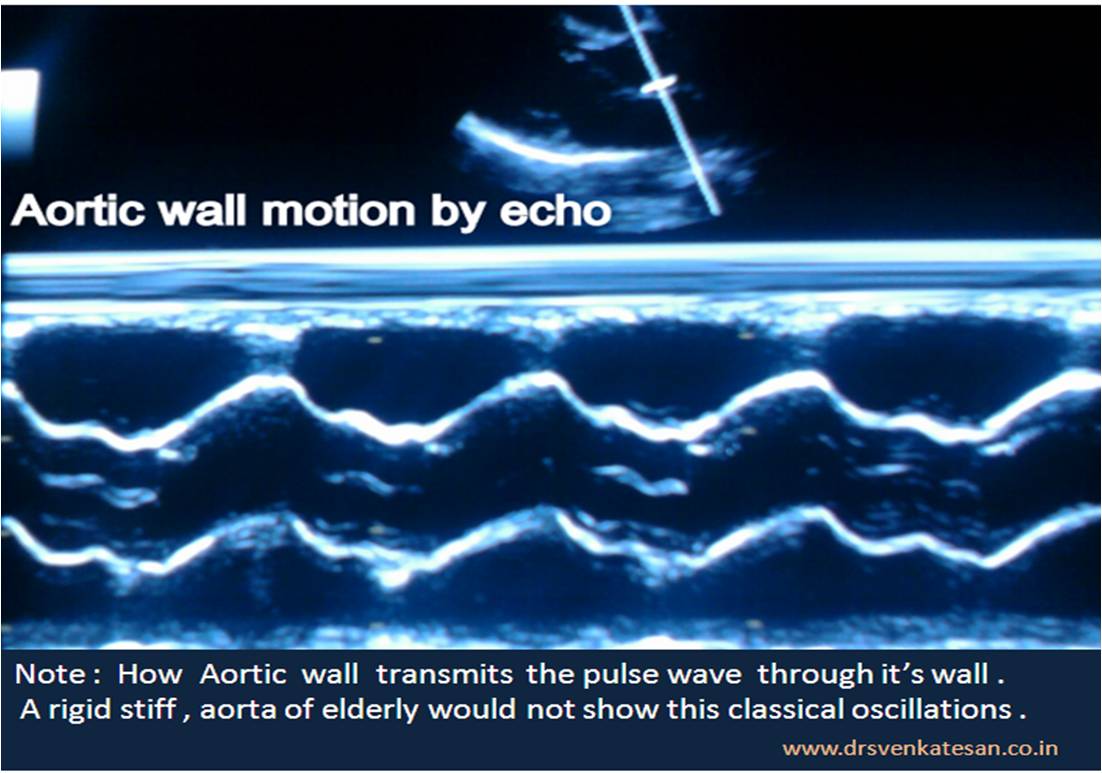
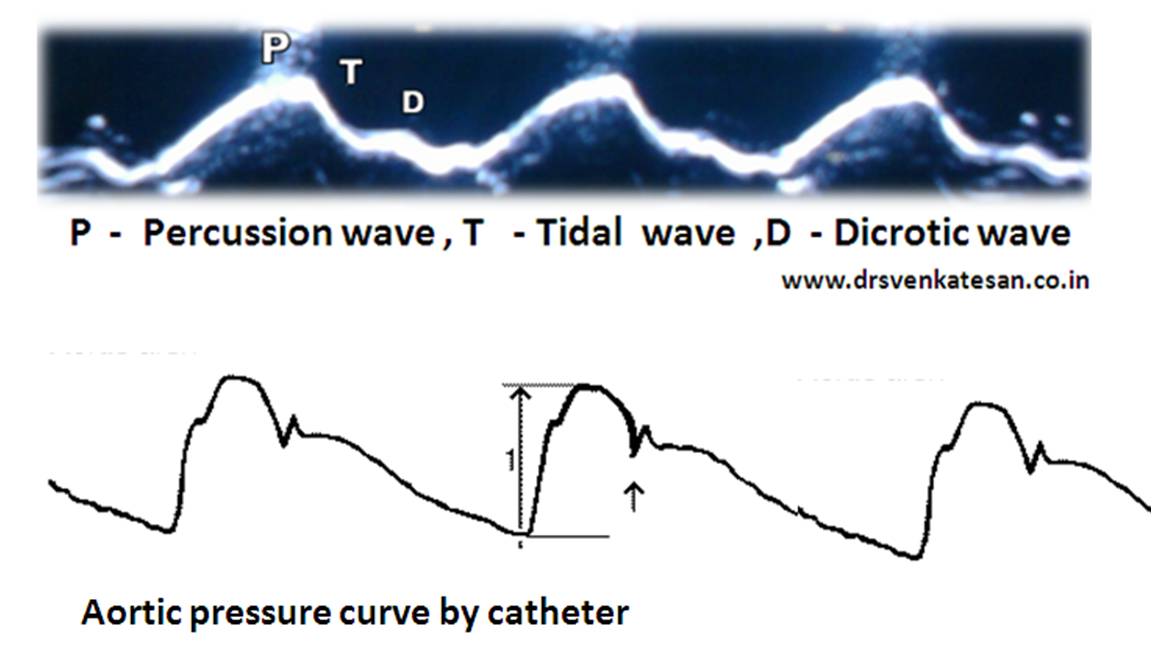
The following   M -Mode  echocardiogram  of  aorta from young man   stunningly  documents  the  morphology  of  central aortic  pulse  wave . Note how closely it resembles the  Intra- aortic  pressure curve recorded with a catheter.

The anterior aortic wall motion was sliced from the above motion image  to create a non invasive recording of aortic   pulse wave

This simple observation was made in  a crowded  echo lab our hospital. Cardiology fellows can explore  further  ,  the link between aortic pulse transduction (From mechano -hemodynamics)

Further studies are warranted regarding the  rate of raise (Slope)  of aortic  wall motion  , and the quantum of motion ,its correlation with central aortic pressure etc. This would unravel the the mechanisms  of Isolated systolic  hypertension  , where a stiff aorta amplifies  the systolic pressure due to loss of elasticity .

Read also

Rail roading of  Aorta in Severe  LV dysfunction

Wind Kessel effect

Read Full Post »

RR interval in Atrial fibrillation is irregular because . . .

  1. The Atria  fires irregularly
  2. AV node conducts irregularly
  3. Atria confuses the AV node  with  its random firing  and varying penetration *
  4. The ventricle just reflects  irregular  response of atria .

The answer is all of the above. Response 3  explains  best.

*Please note , the AV nodal property is predominantly  responsible for the irregular RR interval in AF  . Atria confuses the AV node  with its random firing .The varying penetration into different depths of AV nodal structure and  the resultant concealed conduction make the   the AV nodal refractory period into continuous oscillation .This  random delays in AV node  is reflected in RR interval as irregularity   )

The response we get in ventricles  in AF  can be summed up as  “A filtered atrial rhythm”

Paradoxically,  amidst the chaos in atria  the rate  is fairly constant within the atria (Fibrillatory   wave firing  at up-to 600/mt )  Of course  , the FF interval in the atria will also be varying  .  At a rate of 450-600 this is difficult to quantitate  especially in fine AF.

When does RR interval becomes regular in AF ?

  • When the patient develops complete heart  block.
  • Digoxin toxicity
  • Associated Sinus node dysfunction

For advanced readers in EP : A mystery explanation for irregular  rhythm in AF  in the offing ?

AV node is a physiological and electrical sink .

When atria fires at 600/mt it absorbs about 60-70  % of the atrial response .Whether it releases the original impulse or initiate a new rhythm in the junction  is not clear.

There is some evidence to suggest the rhythm that control the ventricle in AF may not be  filtered original rhythm from the atria .Instead it could be a fast junctional  escape rhythm (Is that a junctional fibrillation ?)


Read Full Post »

What will be the  pulmonary capillary wedge pressure ( PCWP ) in grade 1 LV diastolic dysfunction ?

  1. Significantly elevated
  2. Marginally elevated
  3. Usually Normal
  4. It depends upon  age, LA size and LV  function.

Answer is 3 . (Of course  it depends on  4 )  Normal PCWP  is  4-12mmhg

Are these patients with grade  1 LV diastolic dysfunction  are at  risk for  acute pulmonary congestion at times of stress ?

Probably not ( in  most )*

                                             The grade 1  LV diastolic dysfunction or defect is the most used (abused ! )  echo terminology .The diagnostic simplicity of this condition namely  a simple documentation of “a”velocity more than “e” , has made it  as an epidemic in echo labs  world wide. After all  , it reflects a simple  fact that  left ventricle  has  summoned   the atria  for assistance   (Which is  all the more  physiological   at times  of stress   !)

When does this physiology becomes pathology ?

As long as  the atria is  doing its job of assisting the LV without any fuss  ,  the mean pressure of LA(PCWP) is maintained  within  normal level . Only if the atrial function is stretched  beyond the limits ,  PCWP begins to raise.  It can happen  in a variety of  ways . Most commonly it happens   elderly hypertensive /Diabetics  especially with LVH .

It can also occur in healthy individuals when they become physically deconditioned. (Left ventricle   goes  for  disuse and find it difficult to relax)

Final  message

Isolated  grade 1 LV diastolic dysfunction in people  > 40 years   generally do  not indicate a serious  abnormality.

Only if they have DM/HT and myocardial  disease they need to be evaluated further.

One practical clue is ,  if LA size is normal one can rule out  significant  diastolic dysfunction.

Caution

* In elderly population ,   when they undergo any major  surgery ,  presence of even grade 1 LV diastolic dysfunction can be a marker for peri -operative LVF and  lung congestion .

Read Full Post »

« Newer Posts - Older Posts »