Feeds:
Posts
Comments

Archive for the ‘Cardiology – Clinical’ Category

AV nodal reentrant tachycadia(AVNRT) is the commonest mechanism of SVT. It is divided into slow-fast, fast-slow, slow-slow , representing the two limbs of he circuit.

Slow -Slow circuit is  the rarest  type of AVNRT.  It should be appreciated  ,  the scientific validity of  slow-slow circuit is  applicable  only in relative terms . A virtually  similar antegrade and retrograde limbs with identical conduction velocity and refractory  properties  , can neither  initiate  nor  sustain an AVNRT.

Caveat in the definition of slow -slow AVNRT.

Even though ,  we call it   a  slow-slow  tachycardia , one of the limbs need to be faster than the other.  So , every slow -Slow AVNRT in reality will have  two types

  • Slow- Slow ( Still , faster than antegrade slow) mimic a slow-fast physiology
  • Slow( Faster than retograde slow )  -Slow closely mimic typical  fast slow .

Implication for electrophysiologists  and   points of contention for the ablationist !

  • In Slow -Slow AVNRT ablation we do not know exactly ,  which of the slow pathway is being ablated , unless we specifically  analyse  the post ablative  data.
  • Very often it is not done.Every one in the lab is happy , for breaking the tachycardia circuit. Only after the procedure is over , we may realise the tachycardia is not really killed as it finds an alternate highway to complete  the short circuiting of heart.
  • We need to  suspect this type of AVNRT   prior to the  procedure .Electrophysiologist  shall  spend little   more time and a wide area ablation done , in the vicinity  of coronary sinus ostium can be attempted. .

It is not a smart practice to advocate  wide area ablation as a routine protocol in all AVNRT

as it directly  increase the rate of complication >

Final message

A   hurriedly  done slow pathway ablation  which  may  temporarily terminate the AVNRT ,only to recur later as  the retrograde  slow pathway may again form  a substrate  .The area of slow conduction  acts as a turnaround gateway and capture  the  retrograde fast  pathway which  could be  available in plenty in the anterior aspects of AV node  .   (Note : The unablated  slow pathway  now  form the antegrade  circuit )
Read Full Post »

Bradycardia is a common cardiac arhythmia. Sinus bradycardia  is  often considered an arrhythmia from a disciplined heart. It denotes high vagal tone .  A  heart rate  of  40 , some times even 35 is well tolerated . But bradycardia due to heart blocks are dangerous.

Sinus bradycardia can not get lower than 30/mt or so , as invariably either the  junction or the  ventricle , escapes with its own rhythm. Near syncope, dizziness , giddiness followed by  syncope  occur as the  heart rate  slows progressively below this level .It is often taught humans can not survive  when the heart  rate  goes below 10/mt .

Case report :

Here is middle-aged man who  presented  with a history of  recurrent syncope over a period of  3 days . He has no  history of CAD.

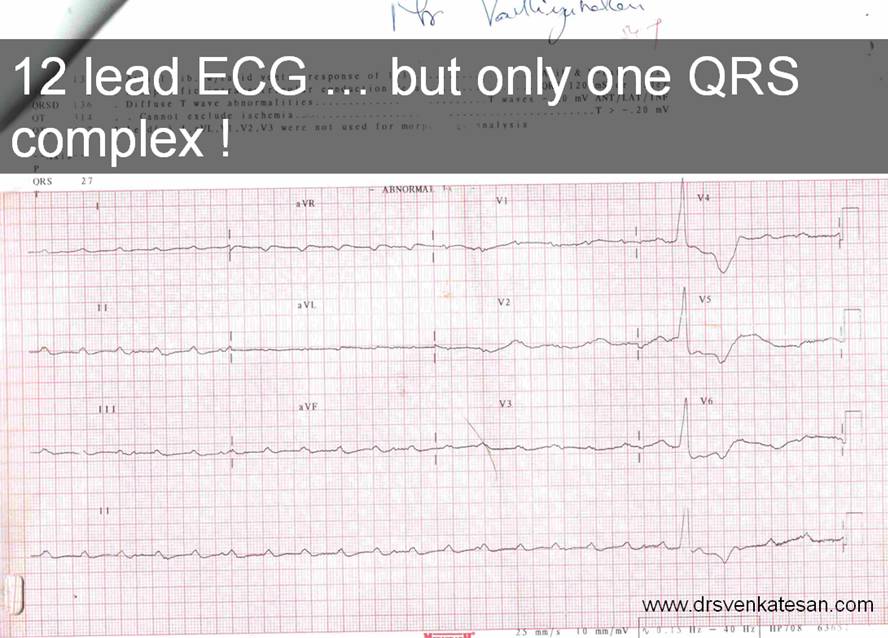
As he entered  the ER, this ECG was recorded.

At this pint of time  , when the ECG was recorded,  he was  conscious and talking ,  only to complain  of  little dizziness. After seeing this ECG , he was immediately put on a  temporary pacemaker.

Note : The ECG shows a single qrs complex per tracing of 10  sec duration .Ie HR of 6 /mt.One qrs complex for 50 large squares !  .Divide  300/50 and HR is 6 . Note also the p waves fire at 150/mt due to atropine effect .

The procedure  took 15 minutes to perform  , he was comfortable  and was administered atropine , and isoprenaline *, which increased his heart rate  from  6/mt to 10/mt .

Later he went on to receive a permanent pacemaker a week later.

* Temporary trans-cutaneous pacing using paddle stickers  is  an another  modality available in such situations where trans-venous pacing is  likely to be delayed  .

Message from this case

Cardiology’s  ultimate  moment of glory and truth  is experienced  when a  life  is saved with  a pacemaker.

Extreme bardycardias are  often  fatal , but here is a patient with  dangerously  low heart rate , still not resulting in asystole  or brady induced VT/VF . We had adequate  time to plan a strategy . Severe bradycardias  need not result in cardiac  arrest always.  Some hearts  have amazing capacity   and their  fighting spirit   amazes  us !  .It should be noted that , the above example may be  an exception than a rule .

Read Full Post »

Anemia is one  of the earliest human diseases  that was identified. Traditionally  heart disease and anemia have a  close relationship.(Is it a true relation ?)  .Most of  us  are made  to  believe so, by meager speculation !

In what way anemia is linked to heart failure?

The answer is explicit  in the definition of cardiac failure . There are two components to cardiac failure

  1. It is  the  inability or reduced capacity to pump  that affect the tissue oxygenation.
  2. Or able to do so only at the cost of elevated  filling pressure.

Do they  happen in severe Anemia ?

Even though anemia partially and indirectly   fulfills    first  half of the definition , it fails to result in elevated filling pressure of the heart. Hence anemia per se ,  may never* result in cardiac failure by definition.  

*Is there an exception to this ?

Severe anemia( Hb <  5 grams ) is often  thought to result in cardiac   dilatation .At this point of time ,  some consider cardiac failure to be present.

When does anemia produce a hypoxic injury to myocardium ?

Hypoxic injury to myocardium due to extreme anemia is possible .In clinical practice it is rarely experienced.

What is the effect of anemia on ECG ?

Anemia is probably the commonest cause for the so-called non specific or( non ischemic) ST depression and T wave inversion. These changes are more pronounced in females. When sinus tachycardia also co exists (Usually it is )   ECG can perfectly mimic an acute coronary  emergency.One should watch out for this possibility.

Anemia and  echocardiography.

  • Anemia causes mild enlargement of all cardiac chambers.This is  first seen right-sided chambers.
  • The ejection fraction is  in the   higher ranges of normal ,  often hyper functioning  and super normal EF (75%) are recorded.(Anemic heart contracts vigorously  ! where is the question of failure ?)
  • Diastolic dysfunction is almost unheard in  anemia .As quick relaxation must be there to augment  the next contractile beat.
  • Anemia can cause high velocity turbulence across LV outflow( or even in the AV inflows.) This turbulence is seen as color variance in color doppler. But , since it is physiological , the flow velocities are not elevated much .

Anemia and coexisting CAD .

This is a distinct possibility , as both entities are quiet common in general population. In fact, anemia  will worsen the underlying CAD. Anemia is an important  cause of   secondary unstable angina.Here, one should realise it is almost impossible for anemia alone (without CAD )to produce unstable angina .Even stable angina is rare in isolated anemia .If it occurs, anemia unmasks silent CAD.

Anemia and associated cardiac failure.

This has probably confused us a lot. They are often associated but the former plays an amplifier role  than an etiological role.

Cardiac failure triggered anemia

It would be a surprise , when the discussion here is “Anemia causing cardiac failure”  the reverse situation   could be much  more common. ie  “Anemia occurring due to prolonged congestive failure” .  The bulk of the knowledge we have is related to this question . It is  similar to  anemia of chronic disease (Hypochromic , microcytic )  as in rheumatoid arthritis,  CKD etc. This fact is  being  exploited by the industry  for quiet  some time now  (Oh , a mouth watering role  for erythropoitin in CHF ! ) .It (Amgen EPO )  miserably failed according to  available inputs.

Anemia begets cardiac failure and cardiac failure begets anemia

There could be some truth in this conceptualization  even though anemia can not make a myocardial contraction directly.

Final message

Anemia  with cardiac failure is not a  true cardiac  failure . In fact , it is not cardiac failure at all in many  situations. Only in terminal state , the heart begins to dilate .Till that time the heart is actually in the hyper functioning mode.

So , to call anemia as cause of cardiac failure is a misnomer . Ironically, in patents with  isolated severe anemia the heart   more often succeeds in its  assigned job of  supporting  the  heamic system in it’s  hour of crisis.

Reference

1. Anemia in heart failure :A review

Read Full Post »

Stable angina is graded by Canadian cardiovascular society classification ( CCSC ) by 4 grades. Angina at rest  usually  denotes unstable angina. But,  patients with stable angina  may also experience rest angina according to CCSC ,  still this is   not considered as  unstable angina by many . Post prandial angina is one such  example.

Few consider post prandial angina as unstable angina . This sort of reasoning can not be faulted .

In  the logical sense ,  we are dealing with varied  categories of unstable angina.  The importance of diagnosing unstable angina is to intervene early ,  so that we can avoid  major adverse outcome .

The problem in CAD is , often , the plaques and angina do not  obey the conventional  rules  !

.The following permutations and combinations could be  observed in any coronary care unit .

  1. Unstable angina –  stable plaques  – stable ECG – stable patient
  2. Unstable angina – unstable plaques  –  unstable patient
  3. Unstable Angina  – unstable plaque  –  stable patient
  4. Stable Angina –  unstable plaque  –  unstable patient
  5. Stable angina  –  stable plaque  –    stable patient
  6. Stable angina –  unstable  plaque  – stable patient

Among the above 6 categories  2nd  is   probably  the most dangerous group and category 5 is most benign.

Post prandial angina is a serious  form of angina.It implies  , even   diversion of  little blood to GI system immediately after a meal can provoke an episode of  ischemia  .This infers a  very tight  lesion somewhere in the coronary tree,  very often it could be the  left main or proximal LAD.

Of course ,  there is  another mechanism for post prandial angina, namely GI neurotransmitters  like gut peptides acting as a coronary vasoconstrictor.

Snippets on  post prandial angina  .

It is also recognised , post prandial angina occurs more often during dinner, followed by lunch and breakfast. Carbohydrate foods are  more likely to precipitate it .

Does PPA cause ST depression ?

Logically it should .In reality It happens in few .

How to manage it ?

It is very important to recognise , even though this article  argues  for including  PPA  as UA, there is no acute thrombotic process during  an   episode of  post prandial angina . In fact , it is  more of a secondary UA due to altered  blood flow pattern.

So , do not admit these patients  in CCU and administer  heparin or 2a 3b blockers.  (Unless of course ,they have other forms of rest angina )

Link to reference

1 PP angina angiographic correlation

2.Effect of carbohydrate diet on postprandail angina

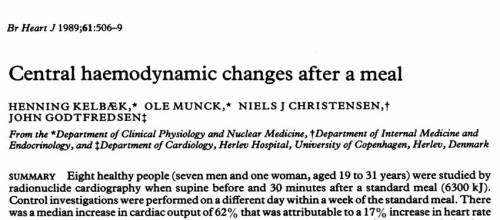
3.Hemodynamics of eating !

Final message

Post prandial angina has all the characters  of a severe form of angina  .There  is every reason to label it as UA .It is suggested , ACC,ESC, AHA  should consider including  post prandial  angina as  UA or at least  UA equivalent .This would help intervene this entity early.

Read Full Post »

A combination of  low voltage  qrs  and high voltage  qrs is a well known marker of dilated cardiomyopathy . classically patients with  severe forms  of  dilated cardiomyopathy show high voltage qrs complex in V1 to V6 and significantly low voltage in limb leads.

Why this happens ?

This happens due to two reasons.

1 .We know , chest leads are unipolar and picks up the electrical activity directly beneath the lead. In dilated  cardiomyopathy the enlarged heart (Usually more than 6 cm in diastole , may reach 9cm ) brings the myocardium closer to chest .This increases the electromotive forces reaching the lead.

2. The enlarged LV increases the  residual  end systolic and  end diastolic  volume , this increase in blood volume independently increases the electrical  conductivity and inscribes a high voltage complex.

This is some  times called as Brody effect .The same phenomenon occurs  in physiological conditions  as in stress testing  where excercise increases the qrs voltage due to increased

Why  limb leads do not show this high voltage ?

The limb leads are bi polar leads  hence as a rule , they record a smaller voltage than chest leads.In many patients with cardiomyopathy , the muscle mass  is  replaced by fibrotic tissue (Interstitial fibrosis ) and this brings down the net electrical energy draining from the heart.

Note : In spite of this, a dilated LV  records high voltage in precardial leads as explained above

When can limb leads  record high voltage in cardiomyopathy ?

It should be realised conduction defects can cause an increase in qrs voltage irrespective of the status of the muscle .This happens due to LAFB,LBBB, non specific IVCD. Because  , these conduction defects are very common in cardiomyopathy ,  there is very poor correlation of LV mass verses  high  voltage  qrs .

What is the correlation of low voltage to LV muscle mass ?

This has better correlation a very poor voltage < 5 mm( the largest qrs ) in the limb leads  predicts a very badly scarred LV .

Read Full Post »

“Time is muscle” is  the often quoted “sermon”  in emergency cardiology , implying ,  every patient with STEMI should be taken up for   thrombolysis or primary PCI at the earliest  after the onset of symptoms.

While thrombolysis is the proven method of reperfusion for over 25 years , Primary PCI , a costly , risky but better  alternative is struggling to prove it’s impact in the world of acute coronary syndrome ! (Some may  see non- sense in this statement !  But it still can make sense  !)  In India hardly 3 -5 % of STEMI is taken for primary PCI .This includes the much hyped corporate cardiology centres.

If primary PCI is a revolutionary reperfusion strategy  , why it has not invaded the cardiology field  by strom  ?(A pathetic 5% growth over 15 years will tell the true story !).

We know 6 hours is the acceptable time window before which some form of repefusion must be attempted. A time limit of 90minutes   for the   “door to  balloon”   is  fixed  as optimal for primary PCI .

In other words ,  if primary PCI can be arranged within 60-90 minutes   one  can afford to lose the golden hour !  How does this logic works ?

In fact it does not work ! in many .

The 90 minute criteria is not strictly followed . Common  sense would have it ,  this 90 minute time frame for primary PCI  would  logically be the   “symptom to  balloon time”,

But in reality  the time window of STEMI   is a collection of  following

  1. Symptom recognition  and 911/108 alert
  2. Ambulance arrival time
  3. Ambulance  to ER time (Traffic delays)
  4. ER to Fellow
  5. Fellow to consultant
  6. Consultant decision-making time
  7. Insurance clearance time
  8. ER to Cath lab door time
  9. Cath lab to needle time(Femoral /Radial )
  10. Needle to Balloon time

Where does the   90 minute  rule  for performing primary PCI stand ? It  can  mean many things

After all those hectic  activity  any one of the following is achieved !

Coronary flow – TIMI  3 ?  TIMI  2 ? TIMI 1 ,  Slow flow, Low flow ? No flow , No re-flow ?

* Prehospital thrombolysis avoids atleast   8  (No 3-10)  components  of time delay in our goal to salvage myocardium.

This is the simple reason, why primary PCI is not reaching it”s logical conclusion all over the world.

Summary

In simple terms ,  one  do not require a double blinded multicentred trial  to  show  primary PCI  performed at 2 hour time ( 2 hour  + 90 minute door to balloon time )  window   would be  far inferior to   pharmacological thrombolysis done at   15 -30  minute time window  (An ambulance driver can do it !).

Finally the most important fact , the often ridiculed thromolytic agent does not show  discrimination in it’s  effetiveness whoever  administers  it ! A  lay person or an ambulance driver with 10th grade education can open up the coronary artery 70% times  while  a cardiologist with a 20 year training  does the  slightly  improved version of the same job  costing   nearly 100   times( Rs  25oo for streptokinase vs  2 lakh for a PCI )  more  . In  the process  often  the   golden hour is lost ! Apart from this,  primary PCI is fraught with a risk of  procedure related  hazard  and  it is a hugely expertise driven procedure .

One more message  is ,  poor countries need not  feel dejected for not having those sophisticated country-wide cathlabs  and emergency air dropping of patients.What we  need is good transport systems and quick access to a near by   coronary care units with support staff.

Always remember  at any given time frame  , a well equipped  CCU can save  thousand lives more than a cath lab

Note of caution :

This article is written in the  overall interest of cardiac patient in the developing and non developing and Primary PCI can make merry in all those rich countries for the simple reason they can afford to  do that (Not necessarily  cost-effective !) . Still , primary PCI/surgery  is the only option for patients coming with a electrical or mechanical complication.

Reference

All that glitters is not Gold !

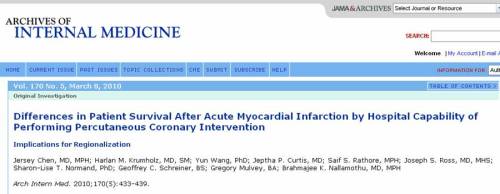
Know , how even high volume centers  struggle to prove he worthiness of primary PCI !

This is not a small study ,  it  is a huge study involving 5 lakh patients with STEMI spread all over the United states.

The conclusion from  his article indirectly supports the view , an early non PCI approach in STEMI can be superior  even if  infra structure and technical expertise are available  for PCI.

Read Full Post »

Human heart is a vital bundle of muscle  weighing  about 300-400 grams. The blood  supply of this muscle  mass  is highly variable . Some areas are abundantly  vascularised ( eg -IVS.) Some areas have a balanced blood supply  or   twin blood supply (Often the  LCX and RCA in the  crux of the heart ). Certain areas have a precarious blood supply . They are  some times called as water shed areas or  the vulnerable  (The Bermuda triangle of the heart ) overlapping zones of   of  LV apex,  LV free wall and  the anterior surface. This  is  often a  no man’s  land .Every major arterial branch  ignores  this area  and shrug of their responsibility .

This  is the reason ventricular free wall and IVS rupture is more common in this area  making the  mechanical complication  a leading cause of mortality in STEMI.

Similarly , even among the survivors , this area is more prone for aneurysmal  dilatation and adverse remodelling .Though . this  is related more to the LV stress distribution (Laplace law)  , early softening  due to watershed infarct of LV apical zone , also play  a major role .

Read Full Post »

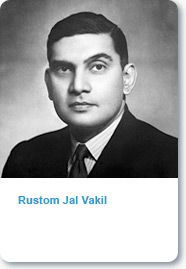
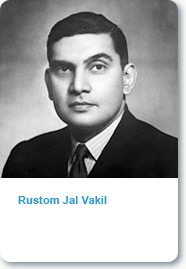
When the concept of acute  coronary syndrome was at infancy, when there was no echocardiography , when there was no coronary angiogram   when there was no coronary care units either , this man was able to identify a group of patients who are high risk to develop acute MI

These pateints are now refered to as  famous entity  unstable angina !

Serving in  Goverment institution of KEM hospital Bomay , he was instrumental in isolating reserpine which was a powerful anti hypertensive drug those days.

Realise , He is not a official cardiologist as the much hyped DM degree was not there  those days.His life is an strong evidence that , meticulous observation and documentation of simple facts from the bedside  is the many times greater than research done in  sophisticated laborataries !

Life history of Dr.Vakil (1911 -1974)

http://medind.nic.in/jac/t02/i1/jact02i1p100.pdf

His famous article on Intermediate coronary syndrome

http://circ.ahajournals.org/cgi/reprint/24/3/557.pdf

Read Full Post »

Probably , this is  most important question  for a  modern-day cardiologist.

Q : Clinical cardiology as a speciality is  . . .

A.Hale and healthy

B.Dying slowly  and steadily

C.Terminally ill

D.Dead long ago

If your answer is A , it would be a  blatant lie ! If the answer is D , you are a pessimist .

The  real answer could be  somewhere between C and D , more towards  D “

 Why  clinical cardiology has  plunged  in  to  such a sorry state of  affairs  ?

 Why it has become an objectionable sub -speciality among current generation cardiologists ?

You blame it on anything, but the real culprits are pseudomodernity , commercial onslaught and the glamourous mindset of  many cardiologists. In every walk of life  tradition, culture and heritage of the past is preserved except in medicine .There  is rarely a backward journey in medicine  . This ,  in spite  of the fact there are lots of hidden treasures  left by our elders.

Image courtesey : Jupeter Images

Now , cardiology  as a specialty is  in a miserable  state .It has almost become synonymous with putting stents across the obstructive coronary arteries. There is a perception among  juniors (  seniors too ! )  Choosing  clinical cardiology is an inferior  pursuit of cardiology .

Many belive clinical cardiology  means ,  measuring blood pressure , looking at JVP , apical impulse, S1 S2 etc  .Clinical approach  does not end with  Inspection , palpation and auscultation of the  heart .

Then , what could be the defintion for clinical  cardiology in the current era ?

It is the process of application of our mind in toto on the patients symptom and it’s  impact on the overall health  with specific reference to cardiovascular system  .It also refers to  the thought process that will decide the optimal  managemnt strategies .( That puts the patient’s interest first )

In simple terms being clinical , is being sensible  and ethical

For example, a comfortable post MI patient with near normal LV function should be sent home for a later evaluation (If , and only if  he develops significant symptom ) This  is clinical cardiology working at it’s best .

If such a patient is sent to cath lab directly  , clinical cardiology is deemed to have doomed !

Similarly , a patient with Atrial fibrillation with the rapid ventricular rate should receive  digoxin or a beta  or calcium  blocker for rate control as a first measure . If a physician refers such a patient to an  university EP  lab ,  clinical cardiology is deemed to have doomed !

If a patient with ASD with less than 2:1 shunt is adviced device  closure clinical cardiology is considered  failed.

If a patient with renal artery stenosis is blindly stented ,  clinical cardiology is in the highway to death .

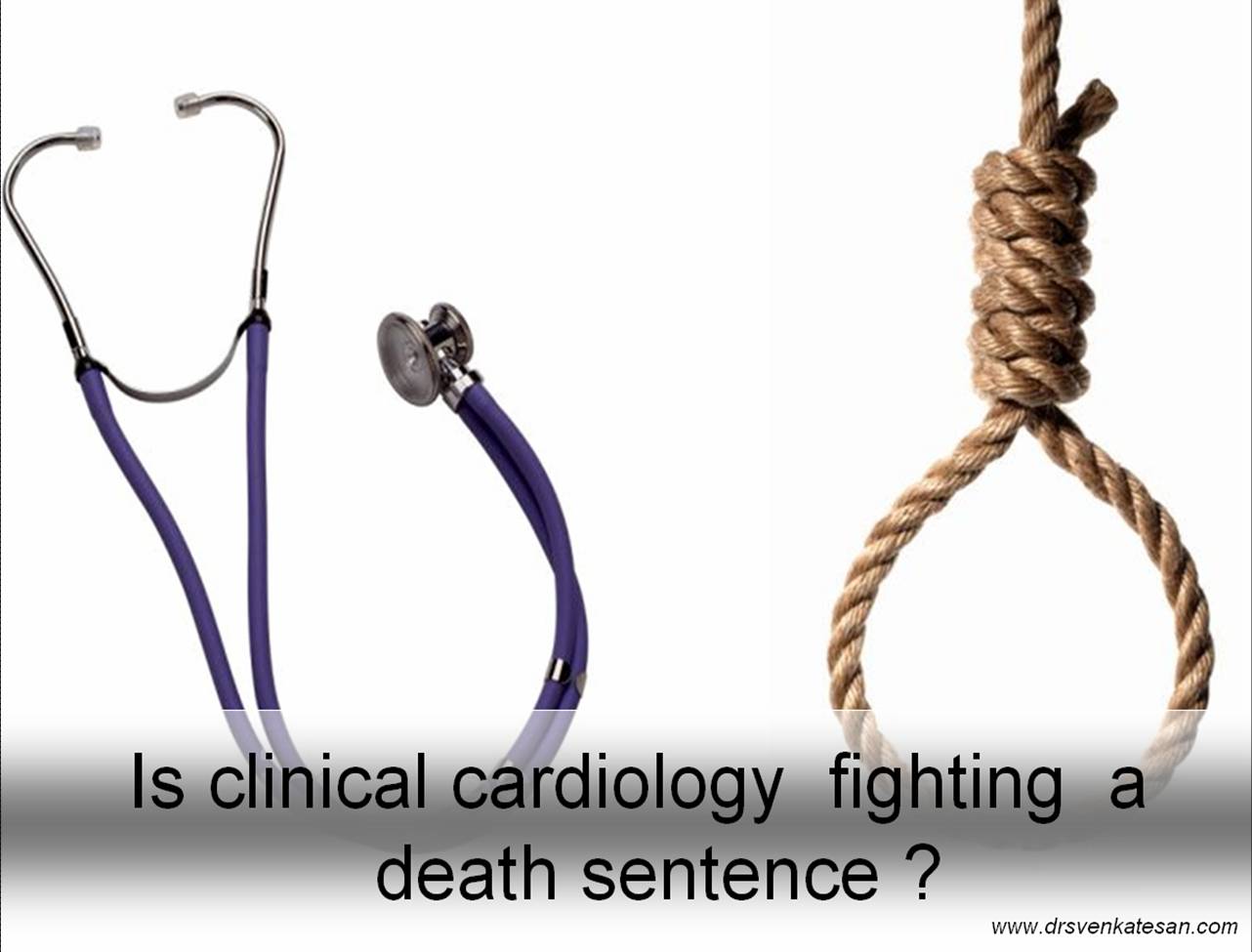
If you prescribe a latest generation sartan for your hypertensive patient instead of advising physical activity, diet and lifestyle modification , it implies  clinical cardiology is  given a death sentence and being publically hanged.

 Finally ,   it is the ultimate  mockery of clinical cardiology ,  when a physician diagnoses  cardiac failure  by pro BNP and CVP  , even as the  patient’s lungs are sounding with crackles and the neck veins are violently pounding .

Worse still ,  the same patient miay be  ruled out of cardiac failure  , if  the BNP level  is within normal levels  !

As you  come across   any of  the above situations ,  too often , one  can predict the future of clinical cardiology.

My impression is ,  the mortality  of  clinical cardiology at this point  of time  is ,  it may not survive too long and the  5 year survival  rate appear dismal. Of course ,  in many institutions    especially  the corporate ones ,   it is  already  been packed and sent to the  mortuary !

Read Full Post »

What will be the pulse rate in a patient who has ventricular bigeminy in ECG with a heart rate of 90 ( 45 sinus beats 45 VPDS/minute ) ?

A.Exactly Same as HR , ie 90/mt

 B.Exactly half of HR , ie  45/mt

C.Can be anything between 45 to 90/mt

D.Any of the above can be true

 The  answer is D . 

I have  noted  ,this simple question in cardiology resident examinations cause great anxiety among students .

Why is it difficult to arrive at an easy answer to this question ?

Traditionally , ventricular ectopic beat were also called extrasystole , implying every ectopic beat shall produce a peripheral pulse .Since ,  we learnt this is not true , we started refering them as VPDs.(Simple ventricular depolarisation which may or may not have a mechanical activity ) So , in a patient whose alternate beat is a VPD  , things become little complicated.

What determines a VPD to acquire  mechanical  energy  or simply  remain as an  electrical event ?

  •  Timing of the VPD* .
  • LV residual volume(LVEDV ) at the onset of  VPD
  • Force of contractility of LV( Of course ,  it is directly related to LVEDV)
  • Temporal relation to  aortic valve opening**

If  the VPD is too early or too late it can not have a mechanical activity . It should be optimally timed midway between two sinus beat to have a good mechnically active VPD. Some refer this as an interpolated VPD .Here, the VPD  becomes a  true extra systole for that individual. So , in patient with ventricualr bigeminy in ECG the pulse rate is usually half , can be same as HR when the coupling interval is optimal or it can be totally irregular as someof the  VPDS gain a mechanical activity and some do not (as often occurs multifocal VPDs. )

* Among the above  four factors timing of the VPDS is the most crucial as it can influence all the other three factors.

** Whatever be the timing or force of contraction aortic valve should be opened to generate a pulse wave. If for some reason this does not happen  there can be intermittent mechanial activity what  we refer to as pulse deficit .

Read a related phenomenon:  Ventricular  paired pacing

Read Full Post »

« Newer Posts - Older Posts »