Feeds:
Posts
Comments

Archive for the ‘Cardiology -Interventional -PCI’ Category

This term is quiet often used in the  main stream cardiology journals  ,  in work places , conferences  , hospitals and even among lay persons . No body bothers to define this terminology.   What exactly this term means ?

It  may  not mean anything  . . . to most  of us  even  as the percentage of inappropriate angioplasty is steadily  increasing over the years .

Picture courtesey : Jupeter Images

What does the term  Inappropriate angioplasty  mean ?

(Choose the correct answer  . . . one or more  may be  true )

A.It simply  means doing  unnecessary angioplasties and has no major implication  to  any one.

B.A form of medical ignorance  or  an unethical act and should be strongly condemned.

C. An acceptable cardiology practice ,  need not be discouraged , as  it improves the quality of life of physicians !

D. A  sure act  of  “error by  commission”   that amounts to   medical negligence .

E.It is a decent term for a major  guideline violation

E. It can be  termed  as medical malpractice as it amounts to harming the patient with or without intention.

Read Full Post »

For  a police officer who visits a crime site  every one looks like   a culprit. For a cardiologist  sitting in coronary  care unit  all chest pain  will have to look like  an infarct  !  Then only he is a cardiologist !

A rare , but costly mistake occasionally  happens . When a  patient with severe chest pain in the  retro sternal region with ST elevation in ECG , enters the ER  there is little  reason to suspect any condition other than STEMI !

This is how medical  errors takes place

Medicine is an art , we can not take it as granted .Acute MI can present with normal ECG and a dramatic ST elevation need not be MI

Here  was  a patient who presented with this ECG and one our fellows correctly diagnosed the condition .

Most  physicians would have thromolysed this patient or  might have wheeled into cath lab.  We have such events reported from primary  PCI registry .

Key differentiating points

  • Diffuse ST elevation not confining to a arterial territory
  • Absence of reciprocal changes
  • ST  segment with concavity upwards.
  • Echocardiogram and enzymes will be useful

iFAQs  in pericarditis

What is the mechanism of ST elevation  pericarditis ?

It is actually a zone of epicardial or Sub epicardial injury.

What will be the ECG finding if STEMI is associated with fibrinous pericarditis ?

Double dose of ST elevation .Mimics  a re infarction.

What are the dangers of thrombolysing a patient with diffuse pericarditis ?

It can bleed into pericardial  space

What happens

What will be the ECG finding in localised pericarditis ?

Read Full Post »

ASD device closure as a modality is constantly improving  . . . but  the consensus is  , it is  yet to catch up with  of  good old surgical  outcome . The key to success is not only in the device but hugely dependent on the technique and pre-procedure evaluation  .In fact , the pre procedure TEE imaging technique  is as important as the procedure itself.

There are lots of discussion about this particular issue. TEE is mandatory we know  but now we realise it is  still better to have a  Real time 3dimensional  (RT3D ) TEE . Rim  size  and ASD  morphology estimation is  the primary aim.

There are  at least 6 named rims for ASD. For a circular  orifice  it  may not be logical to have a fixed number of  6  rims . Ideally the entire circumference must have a rim .( This happens in  central defects )In many,  the complex anatomy of IAS does not allow this. So we are compelled to fix the number of rims to six.

  1. Aortic (Superoanterior),
  2. Mitral (AV valve/ Inferoaterior)
  3. SVC  (Superoposterior),
  4. IVC  (Inferoposterior),
  5. Posterior ( Atrial free wall ).
  6. Coronary sinus rim

One can realise how important these rims are , as  they are the   foundation tissues on which the device is going to be seated for the rest of the patients life.

When do you call a rim is adequate sized ?

5mm is  considered suffice. But it varies depending upon the device and expertise.

Can we deploy an ASD device  in patients   with deficient rims?

Logically the answer is expected  is   “No” but  , many have liberalized the criteria now , after realizing   one may  not have 5mm rim in all six sites in a given patient. If you follow this criteria strictly   you can’t do more than few devices a year !

What is the resolution power of TEE can it miss a 3mm rim  ?

TEE has a good resolution it should pickup any thing equal to 2mm or more.

Which is most important rim and which is the least important rim ?


What are the potential complications that can arise if ASD device is deployed with a critically low rim ?

Having discussed  that every rim is equally vital  ,  we  need to answer this sort of questions  often .  I am waiting to get the  practical tips for the above issue from  my experienced colleagues .  I shall post it soon .

It is sometimes assumed Aortic rim may not be that important .Here is a   good discussion  for  ASD closure with deficient aortic rim from Saudi Arabia  . http://www.rmsolutions.net/rmfiles/SHA21/028002.pdf

Meanwhile let us learn . . .

How to perform the “all important” pre- procedure TEE ?

The following article which also  includes video clippings will be immensely useful for all those enthusiastic cardiologists.Thanks to JACC  for making this link free .

Three cheers to AMRITA team from India

http://imaging.onlinejacc.org/cgi/content-nw/full/2/10/1238/

A stylish article on the topic

Read Full Post »

Coronary artery dilatation is a less discussed entity in clinical cardiology .It is important to realise  coronary artery has one more behavioral pattern in response to atherosclerosis .  Atherosclerosis not necessarily means obstructive disease . Dilatation is also  a common  expression of coronary atherosclerosis .

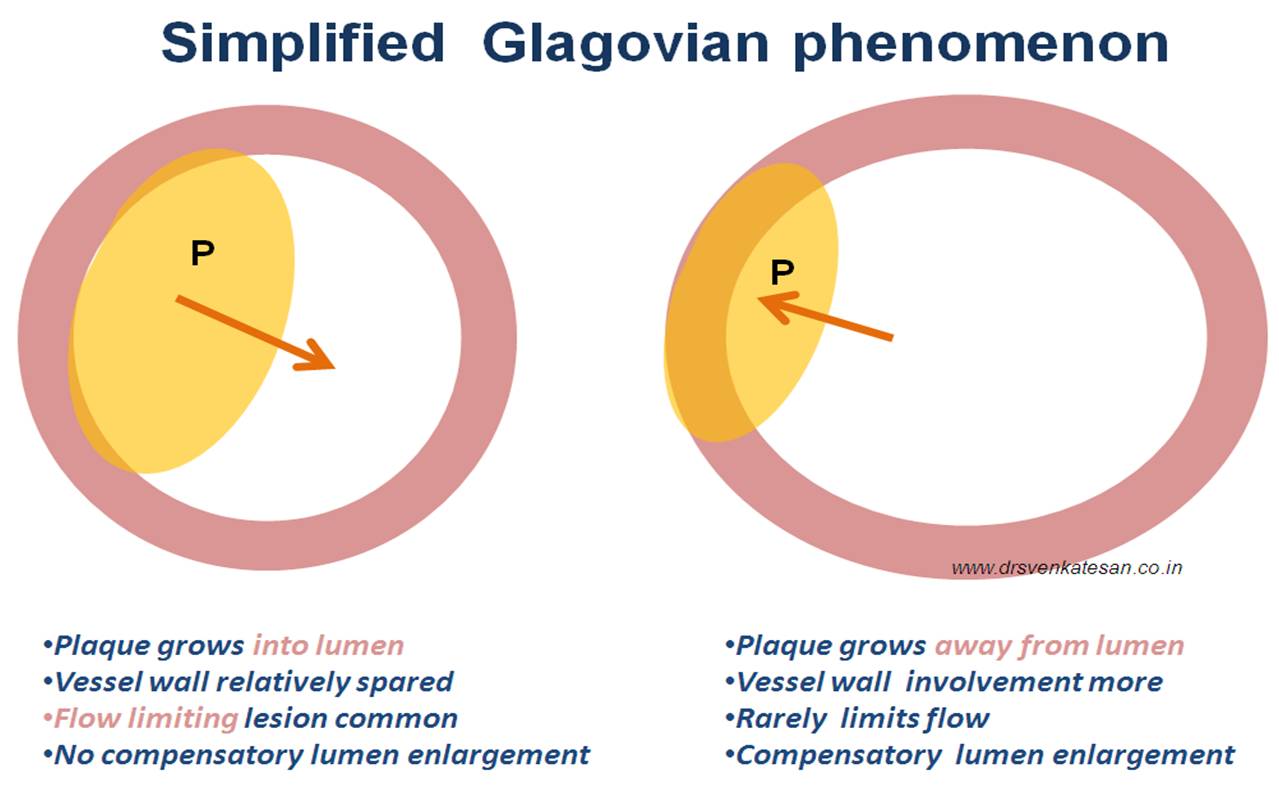
It all depends upon the medial weakness and resistance.If the medial weakness  is more plaque grows inwards ,  if the resistance  is more plaque grows out.(Read the related topic -Glagovian phenomenon )

What is the difference between aneurysm and ectasia?

The difference between ectasia, aneurysm are often subtle and  mainly  semantic. . If the length of the dilated segment is more than 50 % of diameter it is called ectasia. When  the diameter is more than 50 % of length it is termed aneurysm .( With a  minimal enlargement of 150 % of the reference segment.  To add to the  complexity both can occur in the same vessel.

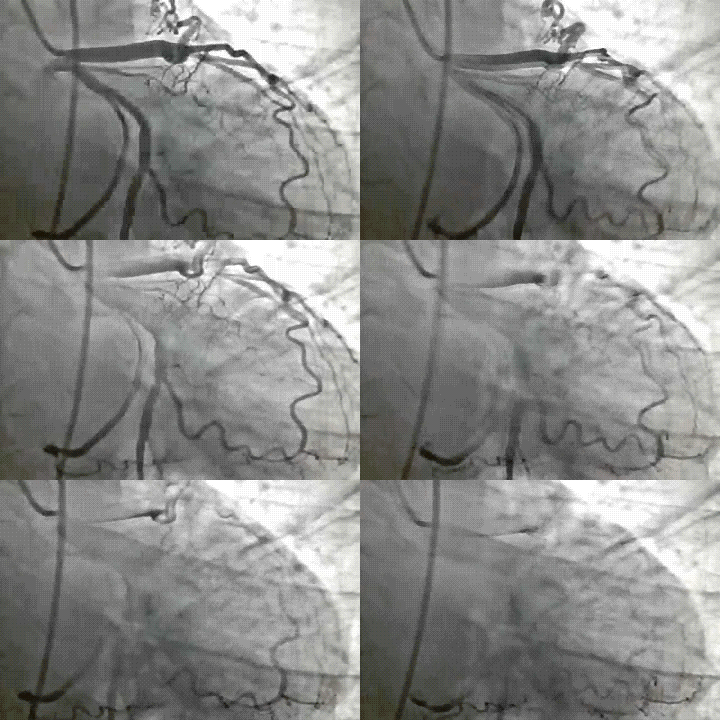
Here is the patient from our institute  who has an Aneurysm in LAD and ectasia in RCA.


Clinical Implication

  • Ectasia generally do not limit blood flow.
  • Thrombus formation in the walls can be  common.

*Obstructive Ectasia.This can happen  either when ectasia develops in  an obstructive  lesion or a ectatic lesion getting obstructed .

Stenting and ectasia .

Ectasia creates special  challenges in the Interventional era. Stenting an ectatic segment confers  a real danger ,   as  these stents are prone for  dislodgement   or  even collapse  into the lumen or  migrate downstream   triggering an  ACS. In fact , such complications of PCI are never recognised  and hence not  reported.

Final message

Coronary artery dilatation is also an  important pathological state like coronary  stenosis . Since it rarely limits the blood flow  in  isolation  , it is a less respected lesion.

But , interventional cardiologists beware :  PCI in a ectatic vessels can give you (And your patients too !)  sleepless nights .

Treatment of isolated ectatic segments is controversial .Less aggression is always better . CAD risk factor profile management  is adviced . If severe ectatic changes  are present   it is a good practice to add  oral anticoagulants like Warfarin. Surgical excision of aneurysm is rarely required.

Kawasaki disease is a distinct entity that need to be addressed separately in pediatric population.

Read Full Post »

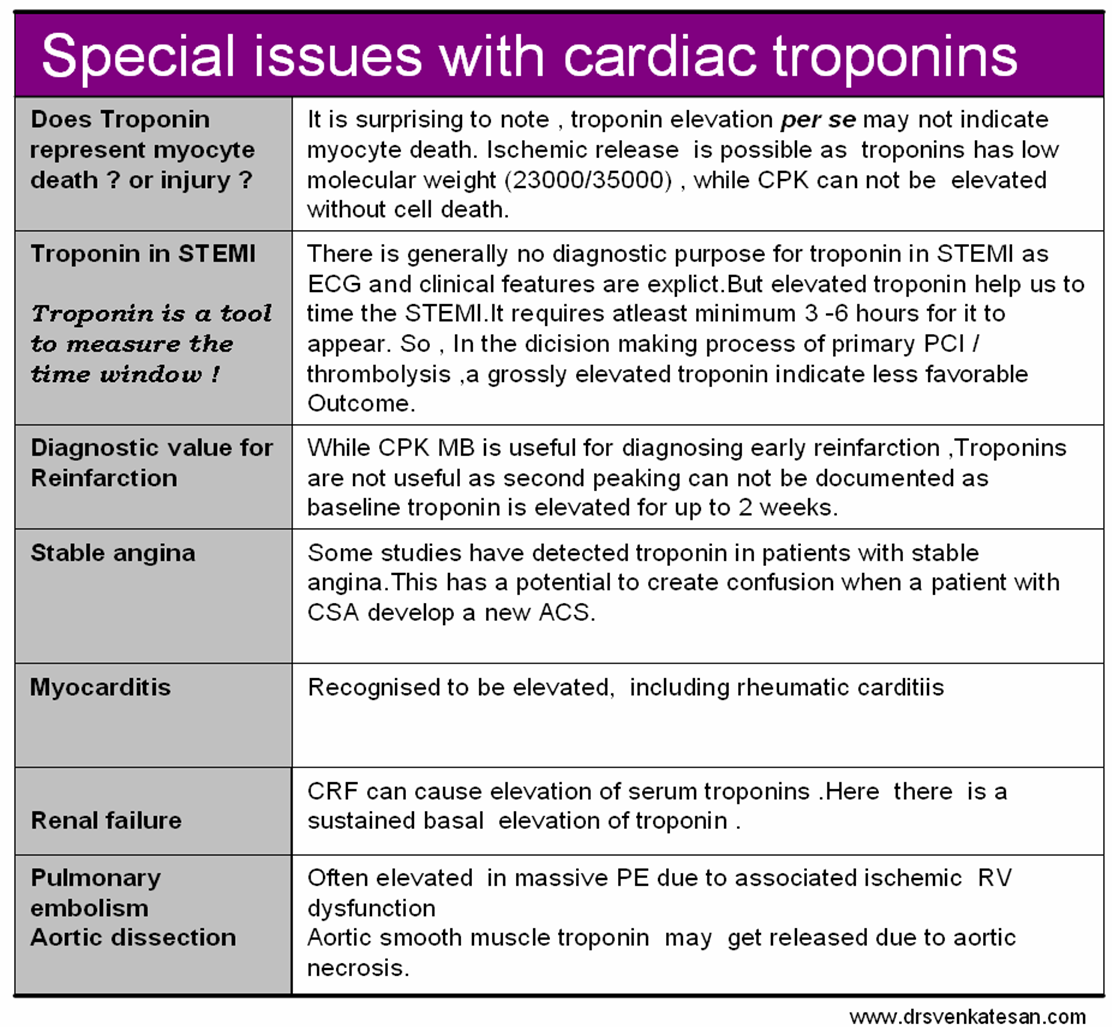
Is there a bio chemical way to measure time window in STEMI ?


It seems so. In this era of hyperacute PCIs  , we are supposed to diagnose STEMI very early .If you wait for troponin  to assit you in diagnosis it  implies  one has missed the golden hour already (At least Three  golden hours to be precise !)

Cardiac enzymes have a unique value in timing a STEMI as  time of   onset of  chest pain is   unrealiable

as the patient (Even the physician !)  may not be able to differentiate pre infarction angina from infarct pain.

In these situation cardiac enzymes provide us a clue.

The time of realse of these molecules are fairly predictable.

  • Myoglobin -2 -3hours
  • Troponin elvation -3 -6 hours
  • CPK –  8 -12hours

Remember  ECG  rarely show a  time lag   in diagnosing STEMI  !

Message

For  maximum benefit . . . try to perform the  primary PCI before the troponin  appear in blood .

Does this  sound a crazy   tip ? What to do . . . truths are very often crazy .

Read Full Post »

When  PTCA was introduced  by Gruntzig  in 1977 the whole world was awestruck. All he did was . . . to dilate a coronary stenosis with a balloon. No scaffolding  was ever thought off at that time.  It was a huge achievement .   PCI version 1 was  performed for over  20  years in nearly a million  patients   . Till his death stenting  was  an unknown concept.

When the stents first came in,  it was first used with extreme caution .  From the days of  bail out stenting, it  has evolved  into provisional  stenting, elective stenting ,and  now  what is called  “mandatory stenting”

When  Greuentzig was able to  perfuse the obstructed coronary arteries  successfully  in thousands  of patients  in the 1980s,    with a simple balloon

. . . what is the difficulty for us  to replicate it  in 2011 ?

Unfortunately  advocates of POBA (Plain old balloon angioplasty) are considered  to be  un-scientiifc cardiologists or even carry a risk of labeled as quacks.

But please remember . . . POBA   is alive and doing well  too ,  in spite of the serious threat  it faces from the current generation interventionists  . It  will continue to have an  important role in  many  situations.

1.In patients with multivessel  disease while the  proximal lesion  deserve a stent  , POBA is preferred in distal lesions  to reduce the overall metal load .

2.POBA has a major role to play in Primary PCI .We need to realise  dying myocardium does not demand  for stents. It simply requires  quick and prompt restoration of  blood flow. POBA can achieve this with flying colors in most situations.

3. Further , stenting  may be  difficult in complex lesions   during primary PCI .Experience tells us , it  is  dangerous to prolong the primary PCI  procedure time. Here POBA is the only choice ,  may be assisted by thrombus aspiration. Stenting may be delayed or even avoided in many STEMI patients. . We know there is huge STEMI population with  pure thrombus with no atherosclerosis.

4.Patients  with  co morbid conditions , who are  likely to have a non cardiac surgery in the near future  and those who  can not take antiplatelet  drugs  POBA will score over BMS/DES.

5.Finally a POBA costs nothing . .All it requires is a stiff  balloon . In this recession prone world  and ever increasing incidence of  CAD  , POBA  could be the  answer.

6. Acute recoil in POBA (Sudden deaths in POBA is  a rare event !) are more of a perceived fear rather than a reality. It can be argued stents  are  primarily used  to make  cardiologists job easy and  comfortable.

7.Cost effectiveness of plain balloon verses stenting was never  properly tested .

Final message

When sudden deaths  due to subacute   thrombois in DES population   is accepted with all those attendant  pride . . . why not we accept a risk of  less sinister event  namely the  late onset restenosis with POBA.

This is a funny world . The DES fiasco is driving us towards stent less world and a bio degradable stent is already being projected as new savior.

Meanwhile no  one can kill POBA thats for sure !  It  will  ultimately   be reinvented  with another exotic study  soon !

Read Full Post »

Atherosclerosis  probably ranks first among all  human diseases that cause maximum suffering  to  mankind.Since it is a disorder of blood vessel  it has an easy  access to every  vital organ  in our body to inflict the damages . Histo pathologically , atherosclerosis is an all in one disorder where inflammatory , degenerative and lipid injury  collectively  contribute to the disease progression. Diabetes and hypertension play a vital amplification role.

Atherosclerosis begins very early in life as fatty streaks in every individual and takes different avatars ( or remain indolent)   depending upon the risk factors and life style.

How to estimate plaque burden ?

It has  always been a difficult task to estimate the  atherosclerotic  plaque burden inside the  coronary  arteries.The fundamental flaw for many years is ,  we always thought  if there is a plaque it must  encroach  into the lumen.

Coronary angiogram  , has become the  default investigation  in clinical cardiology . Since it   can  visualize  only the coronary lumen ,  this  flaw  got further  curious  with skewed  interpretation as well.

When things were as it is . . .  Glagov suggested , what  could  possibly be   the  most important  concept in the interpretation of coronary  angiogram .

The concept  suggested  the  atherosclerotic  process  could  actually spread  within the  vessel wall  in a predictable manner .

What determines a plaque to either grow into the lumen or grow away from the lumen?

If we could decode the mechanism of direction of plaque growth we will probably conquer the atherosclerosis  at least by mechanical means . The implications are too many.

A stented coronary artery may be re-engineered to grow the atherosclerosis  towards  the adventia .This could grossly reduce  the incidence of restenosis.

Further , in post Glagov days we realised  mechanical factors like plaque stiffness, eccentricity , plaque mass effect, drifting , lipid core density, medial lysis , elasticity of elastic lamina all could determine the   plaque  movement.

Why compensatory lumen enlargement does not occur in some lesions ?

We do not know the exact reasons . We may call it a fate . . . shall we ?

Curious blessing  : Atherosclerosis  for  some unknown  reason  blesses a  few with coronary artery  dilatation rather than narrowing .

This is called coronary  ectasia . Medial necrosis , weakness of internal elastic lamina or  destruction paves way for plaque shift towards the adventia . It is estimated , if the medial necrosis occurs in at least  50 %  of  circumference of vessel wall   it will  result in ectasia .And  paradoxically if  the media  shows resistance   the plaque grows into the vessel wall.

Endoleak  and Glagovian phenomenon.

Endo leak is the Achilles heel of   endovascular intervention . In fact , many would  consider  it as  a dignified terminology  for graft failure . Endo Leak   occurs when  the artery outgrows the stent  graft and bllood starts  collecting  in the graft vessel -wall interface . When the  scaffold is  placed  within the lumen ,  one may wonder how it is going to prevent  the  artery  dilatation . (Which is basic defect in any aneurysm}In fact , the aneurysm does continue to grow  along with   centrifugal  atherosclerotic  forces ,  possibly by  Glagovian phenomenon .

This makes it obvious  endo- leak is a distinct threat in every vascular  intervention.


Final  message

Most cardiologists  think their ultimate  job  in this world is to  deploy  a stent deep inside a LAD  or RCA.  While a few others indulge in more exotic  adventure of  crushing a plaque ,  trap the debris and  catch it with a  with  a basket .

There  are bigger and bigger   blind areas  in the vessel wall ,  infiltrated with  deadly atherosclerosis which is conveniently ignored  .If only we realize   this fact  , we  can move forward in our war against coronary atherosclerosis.

Of course the good old   medical  interventions  . . .  exactly try  to address  these issues . Let us  think  straight , and  not succumb to glamor  in cardiology !

http://heart.bmj.com/content/84/5/461.extract

Read Full Post »
Time is muscle .This  may sound as  an old fashioned statement now ,  for many of us. But the fact remains. Every minute following  STEMI ,  myocytes  keep  losing it’s life one by one unless , the  intervened.

The prevention of myocyte death can be accomplished by three ways

  1. By early thrombolysis
  2. By Primary angioplasty
  3. The  one  that happens naturally by a process called spontaneous thrombolysis *

* Most have a  strong belief  that the  natural forces are incompetent to lyse a  small thrombus within our coronary  arteries  ( While  , we  fully  realise   natural  forces  like  the Tsunami can wash out  the entire ocean floors  ) . Never under- estimate the force of  nature !

Balloons are not privileged !


It is widely accepted , a time window of up to 12 hours is optimal for reperfusion. Beyond that time , there is no point in reperfusing  the muscle  as   it  might have died. While ,  the majority of cardiologists agree  to this and they  promptly  refuse  to thrombolyse ,   if the patient comes  12 hours after an onset of STEMI  .They are labeled  ” late on  arrival”  and  coded  as ineligible for thrombolysis.

The moment they are labeled as ineligible for lysis , a dangerous thought process runs across  the minds of  many cardiologists. It is  possibly  the most important paradox (Shall  we call it as sense failure ? )

Such lysis ineligible  patients    become  automatically eligible for primary PCI . . . It is curious  to note , the  time window for primary PCI is also less than 12 hours is strangely forgotten.

It has become a prevalent  practice  by all unscientific means  , most  cardiologists extend  the time window for primary PCI well beyond 12 hours  , some even up to 36-48 hours.  No wonder . . . then why open artery trial (OAT) miserably failed . Even a  novice  can predict the out come when  one tries  to resuscitate the  dead muscle .

Final message

Myocardium  does not behave in a privileged  manner  during a STEMI.  It  simply does  not bother  about the way  by which  it is going to be rescued and reperfused  .All it needs   is a timely help. It can not extend its   life just because it is being rescued by a  sophisticated modalities like pPCI.

If the patient is late for thrombolysis ,  he is late for  primary PCI as well .

Please do not change the time window in STEMI  according to  our  whims and fancies . It is  an  unscientific and unprofessional  way to practice cardiology .

Read Full Post »

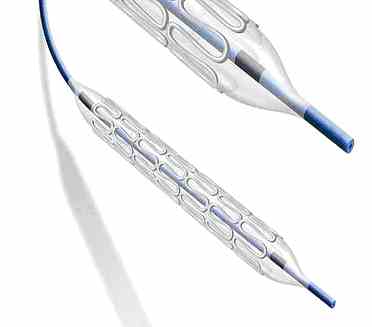
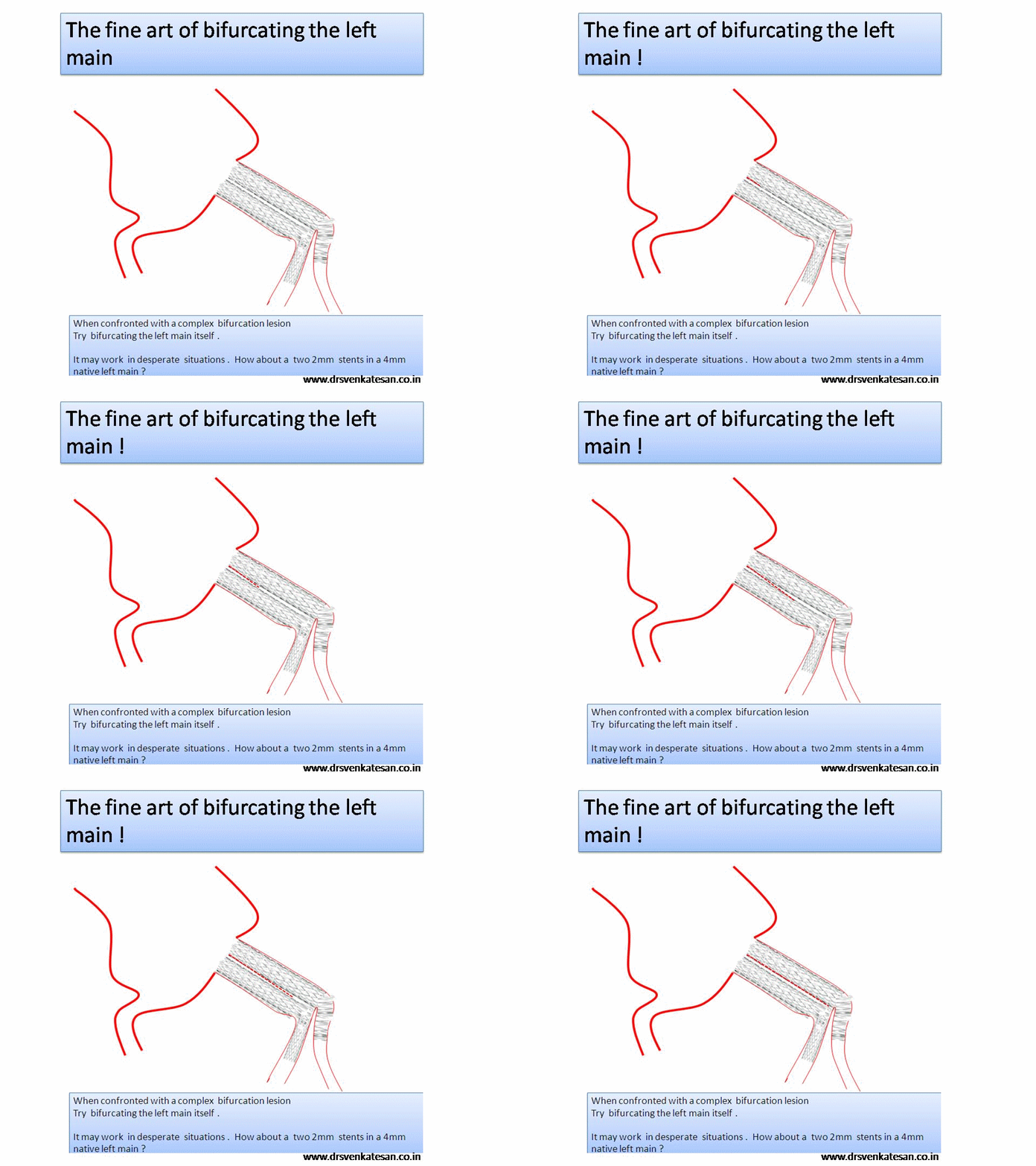
  • It is a complex PCI procedure meant for  high risk  bifurcation /Trifurcation lesions
  • Two stents are simultaneously  deployed.
  • It aims to prevent sudden acute occlusion of one of the major  branches .
  • It is not an easy procedure , and be used only in rare circumstances .
  • Distal left main and ostio proximal LAD/LCX  is a  classical  example.
  • Navigation can be difficult , only well experienced operators should attempt it.

*Is there a ready made two lumen stent available ?

The image is meant for concept purpose only !


It is one of the techniques available to stent unprotected left main

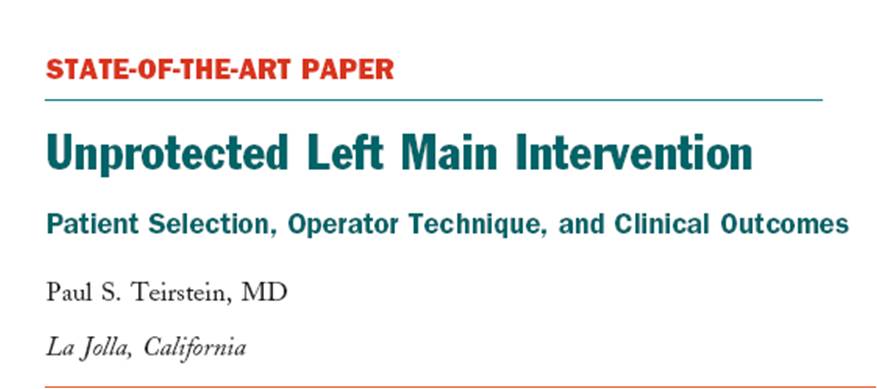
An excellent review  in  ACC intervention journal for unprotected left main .

Click on the Image to reach the article


Read Full Post »

The review published in the prestigious NEJM seems to suggest

PCI  , the most  commonly  performed  therapeutic cardiac intervention  may  result in  more  myocardial  infarction in the community  than  the deadly atherosclerosis itself.


Can it be true in any  stretch of imagination ?

Yes , it seems so . But the only issue  is the  criteria   used to define MI  .

Comments are welcome on this article .

You won’t get the full text article free  .Try to get it from your library .It is worth the time spent  !

http://www.nejm.org/doi/full/10.1056/NEJMra0912134

Read Full Post »

« Newer Posts - Older Posts »