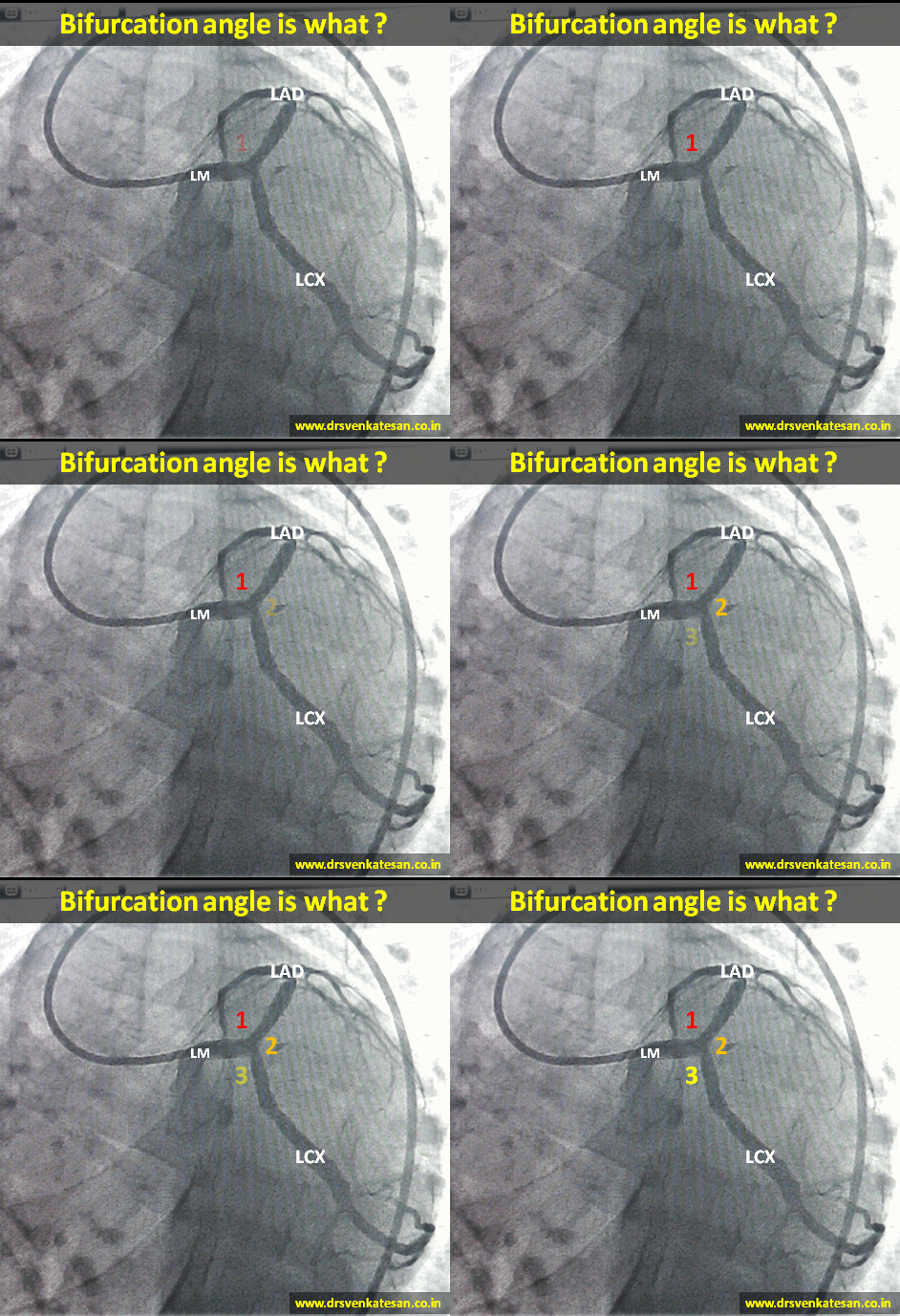
- At any branch point three angles are possible .True bifurcation angle is formed between LAD and LCX .
- The angle between LM and LAD or LM and LCX can also be important in specific situations ,especially when we encounter short left mains and Medina 1,1,0 lesions .
- Major bifurcation angle can occur in mid segments as well , between LAD / major Diagonal , LCX and OM.
- Logic would tell us the left main bifurcation angle is relatively fixed by the anatomical AV and IV grooves. Still early course of LAD and LCX can be out of grooves.
- Further ,the bifurcation angle is imparted some amount of dynamism by cardiac cycle . It can vary between 80 -120 degrees (LAD/LCX).
- Most importantly various angiographic views can alter the true angle (by illusion ) in dramatic fashion . RAO caudal view appear ideal to measure it. (LAO caudal make every bifurcation angle obtuse !)
- Acute angled bifurcations are prone for stent related mechanical issues both during deployment and in the long term outcome . (When two stent technique is used) This is because , acute angled bifurcations has a tendency to drift the carina , and encroach the lumen which can create new turbulence . Of course final kissing balloon is expected to reduce this hemodynamic side effect at least on paper !
Archive for the ‘Cardiology -Interventional -PCI’ Category
Bifurcation angle is what ?
Posted in Cardiology -Interventional -PCI, cardiology -Therapeutics, cardiology- coronary care, cath lab tips and tricks, tagged bifurcation lesion, bifurcation pci, carina plaque shift bifurcation lesion, medina classification, true bifurcation angle on April 7, 2013| Leave a Comment »
Lesser known heros in cardiology “Dr.Yasumi Uchida” :The Coronary Angioscopist
Posted in Cardiology -Interventional -PCI, Wintage cardiology, tagged coronary angioscopy, intra coronary imaging, ivus, oct, red thrombus, white thrombus, yasumi uchida, Yasunori Ueda, yellow palque on March 31, 2013| 1 Comment »
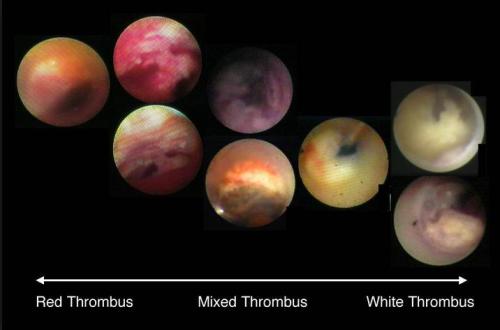
In the early 1980s , when cardiac physicians were confronting how to tackle intra coronary thrombus , one man from Japan was looking directly at the ground zero with fiber-optic coronary angioscope .He provided live images of coronary plaques and thrombus (long before the IVUS and OCT era) because of technical difficulties it did not get into clinical utility but gave us vital information like plaque morphology and behavior.
- The concept of red and white thrombus
- The yellow lipid enriched vulnerable plaques
- Post lytic clot surface
- The fibrin strands within the clot etc.
The angioscopes have now given way to IVUS and OCT which provide indirect vision of the coronary arteries .Uchida has written a book tilted coronary angioscaopy which is a must read for all clinical cardiologists.
I think Japanese are leading in this aspect of cardiac Imaging .Yasunori Ueda is another person who has done lot of work on angioscopy . here is an Image from his paper. Exciting stuff is isn’t !

Image source : Yasunori Ueda http://www.invasivecardiology.com
Reference
http://circ.ahajournals.org/content/104/24/e143.full
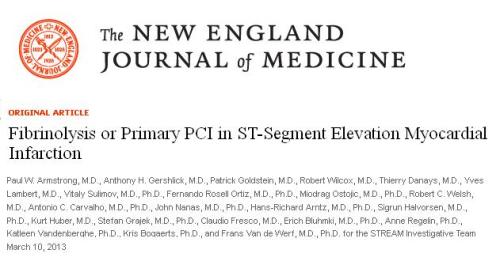
Fibrinolysis beats Primary PCI convincingly in the Belgian STREAM in the first 3 hours of STEMI !
Posted in Cardiology -Interventional -PCI, cardiology -Therapeutics, Cardiology -unresolved questions, Primary PCI, STEMI-Primary PCI, tagged Pre hospital fibrinolysis, primary pci, STREAM study on March 31, 2013| Leave a Comment »
Primary PCI is presumed to be the ultimate , undisputed reperfusion strategy in STEMI . Still , time and again one study or other strips down this “Numero Uno” status of pPCI . If it is really supreme , such awkward situation shouldn’t arise too often . More importantly , the major reason for dubious real world record of pPCI goes beyond the time and logistic factors (which is considered the only issue for pPCI by most interventionist ! ) There is something more to it that is invisible ! (Is it the no reflow ?)
The nearly flawless study from Belgium ( STREAM Just released in ACC 2013/Sanfransisco ) , pre-hopsital or early fibrinolysis has proven to be superior in the prevention major end points at 30 days .
- Death
- Re-infarction
- CHF
The major surprise was pre-hospital fibrinolysis showed less incidence of cardiogenic shock . ( pPCI
group had more of this ( 4.4 VS 5.9 % in STREAM )
Now . . . shall I make a provocative statement ?
while pPCI may be treatment of choice for cardiogenic shock . . . but it may also confer a risk of cardiogenic shock in otherwise low risk MI !
Caution and conclusion
STREAM population applies strictly to 1 to 3 hour time window . It does not apply to either before or after that ! Simply put,we do not have guts to compare fibrinolysis and pPCI in patients who arrive within one hour into a facility where 24 hour cath lab facility is available . We call it unethical to do a study like that ! I personally feel it is really unethical if we do not do a study in this time frame . The reasoning is simple and very personal .In a large Government hospital where we do not have primary PCI program our net mortality for STEMI never exceeded 7-8 % over a period of 10 years , Which is almost at par with global data on pPCI. (Our door to needle time is an unbelivebale 8-12 minutes ! that too only streptokinase !)
Adding Further controversy
pPCI is indeed a superior reperfusion strategy . No one can dispute that .But its superiority is not realised in every patient who gets it. The benefits are accrued if and only if it is used most judiciously . In Low risk , small regional , branch vessel STEMI , pPCI has never been shown superior . It is well recognised , upto 15 % of STEMI is likely to spontaneously abort or experience very good spontaneous recannalisation . By rushing these patients very early into cath lab pPCI meddles with the natural anti fibrinolytic mechanisms . It is this population who invite all the procedural hazards. .
Is this the reason STREAM had more cardiogenic shocks in pPCI limb ?
I think STREAM has strengthened the case in favor of fibrinolysis in this ever ending debate .
I would seriously believe pPCI is hanging it’s superiority over fibrinolysis with a wafer thin mortality advantage . pPCI may not be recommended in a routine fashion to all STEMI population even if they arrive within 6 hours and able to perform the plasty fast . Science is . . . after all . . . continuing confrontations with our assumptions !
Counter point
STREAM is not an exclusive study comparing fibrinolysis and PCI . It is a study comparing Pharmaco Invasive approach vs pure invasive approach . 80 % of patients in the fibrinolytic limb ultimately received PCI and stenting . It simply doesnot make sense to conclude fibrinolysis is superior to PCI . Most of the beneficial effects on 30 day outcome may reflect the timely PCI in the lytic group.
//
What is the Ideal time window for rescue PCI ?
Posted in Cardiology -Interventional -PCI, cardiology -Therapeutics, Cardiology -unresolved questions, cardiology- coronary care, Cardiology-Coronary artery disese, tagged rescue angioplasty, rescue pci, time window for rescue angioplasty, waht is the time window for rescue angioplasty on March 31, 2013| Leave a Comment »
Answer :
In cardiogenic shock it is A . In all others it is probably C.
While D may be considered as an essential target criteria for completing the rescue PCI
Read also
Why-we-often-follow-a-reckless-time-window-for-rescue-angioplasty ?
Why we often follow “A reckless time window” for rescue Angioplasty ?
Posted in Cardiology -Interventional -PCI, cardiology -Therapeutics, Cardiology -unresolved questions, cardiology- coronary care, tagged concepts in primary pci, ethics in cath lab, indication for rescue angioplasty, rescue angioplasty, salvaging myocardium, time window for rescue angioplasty on March 28, 2013| Leave a Comment »
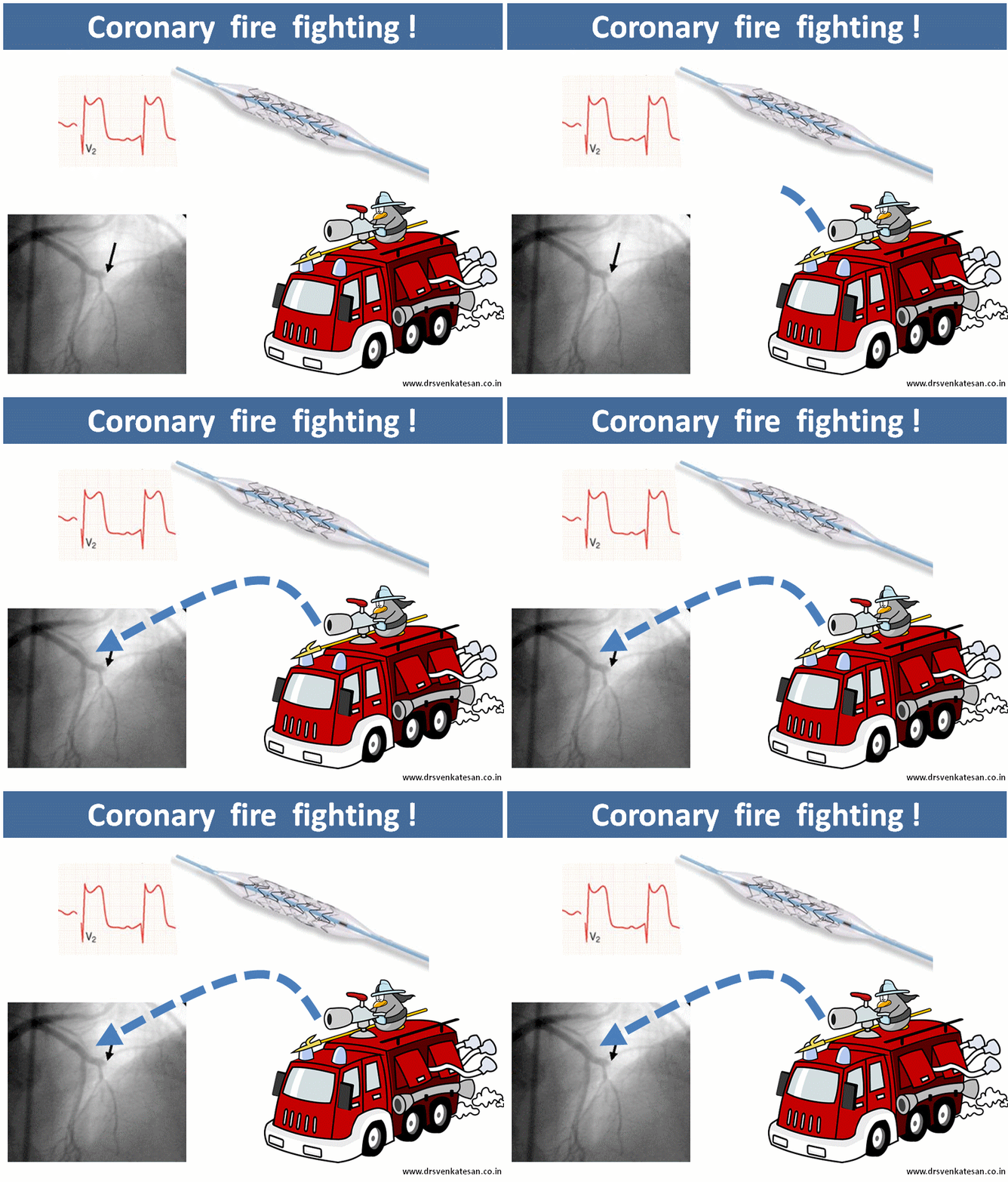
Myocardial salvage is like coronary fire fighting.When fire is fought very early after the accident , benefits are accrued more . Text book primary angioplasty is . . . fire engine arriving at the scene when the house is on fire .
Rescue angioplasty is asking for more force , when the initial fire fighting was inefficient to control the fire. So , it is obvious the rescue efforts should be fast and brisk.In fact the pace should me more than the primary (The the second engine should reach the ground zero faster than the first ! – Read as door -balloon time ! )
But what happens in real world ? We would tell time window for primary angioplasty even in sleep ! but will struggle to come with clear cut answer for the same in rescue angioplasty even in a fully awake state !
It is an overwhelming fact , we have not taken enough efforts to define strict time limit for rescue .( Even though guidelines say it should not be beyond 24 hours , common sense will tell us rescue PCI should not go beyond 12-15 hour window ! .One more definition for rescue PCI could be within 3 hours after diagnosing failed thrombolysis. In real world it is a race against time in a different perspective .In many centers rescue angioplasty “enjoys time less windows “
I was funny witness in a big private hospital when a colleague of mine has posted a case for “elective rescue angioplasty” and was waiting in the side cabin for his turn !
Coming back to the title question
Why we often follow a reckless time window for rescue Angioplasty ?
The reason is simple
Time is not only muscle . . . time is money too !
A comprehensive , evidence based . . . “unethical” STEMI guidelines !
Posted in Cardiology -Interventional -PCI, cardiology -Therapeutics, cardiology- coronary care, cardiology-ethics, tagged commercial guidelines for stemi, etical guidelines for stemi, guidelines for stemi, primary pci thrombolysis on March 24, 2013| 1 Comment »
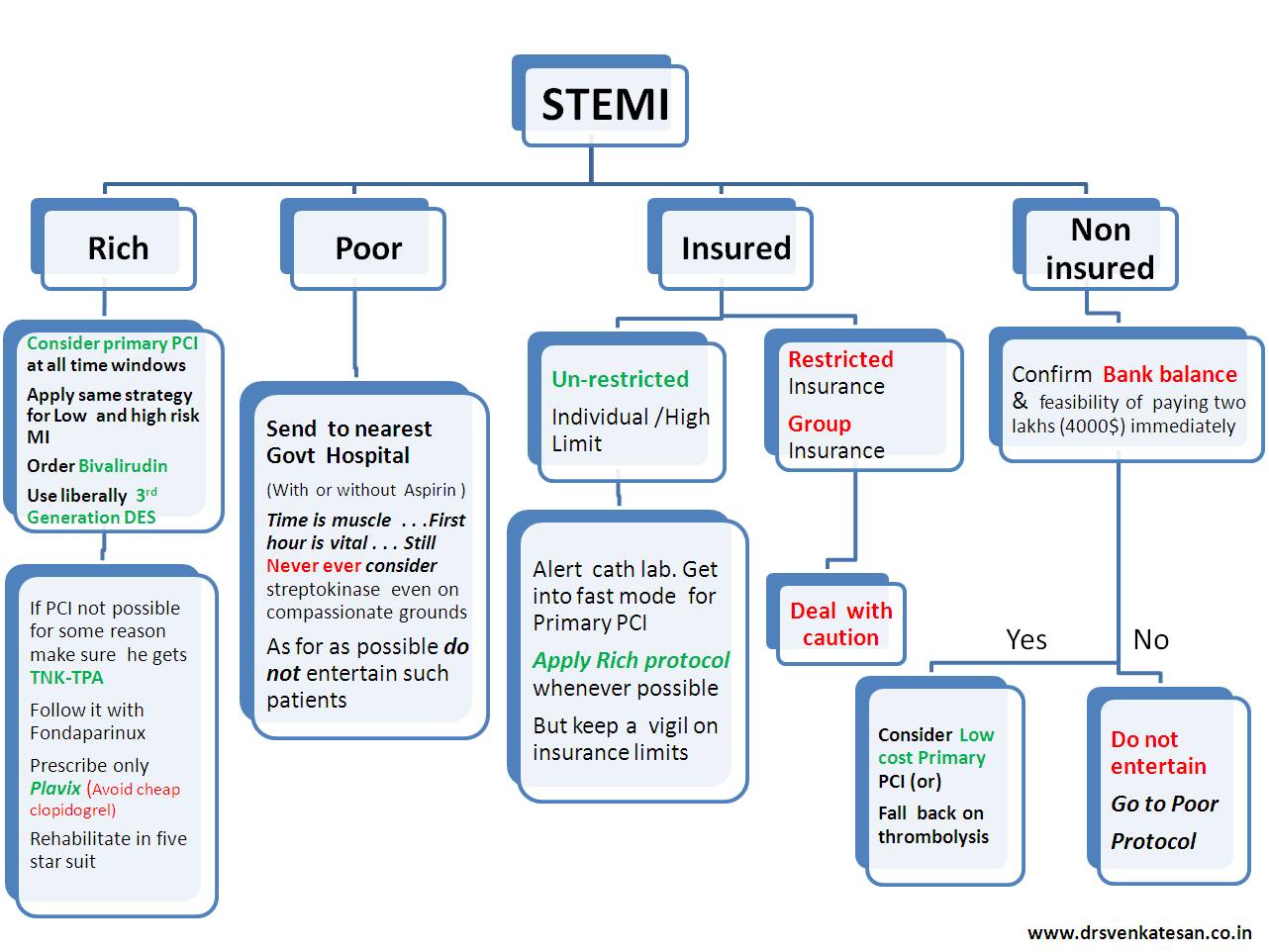
Acute MI kills a few million people world-wide every year .It does not differentiate rich from poor. Logic would tell us , principles of management should not differentiate the people when dealing with a myocardium in distress .
Unfortunately , we scientists do it with passion !
The problem is enormous . . . the rich is suffering from too much* care and the poor is suffering from want of care !
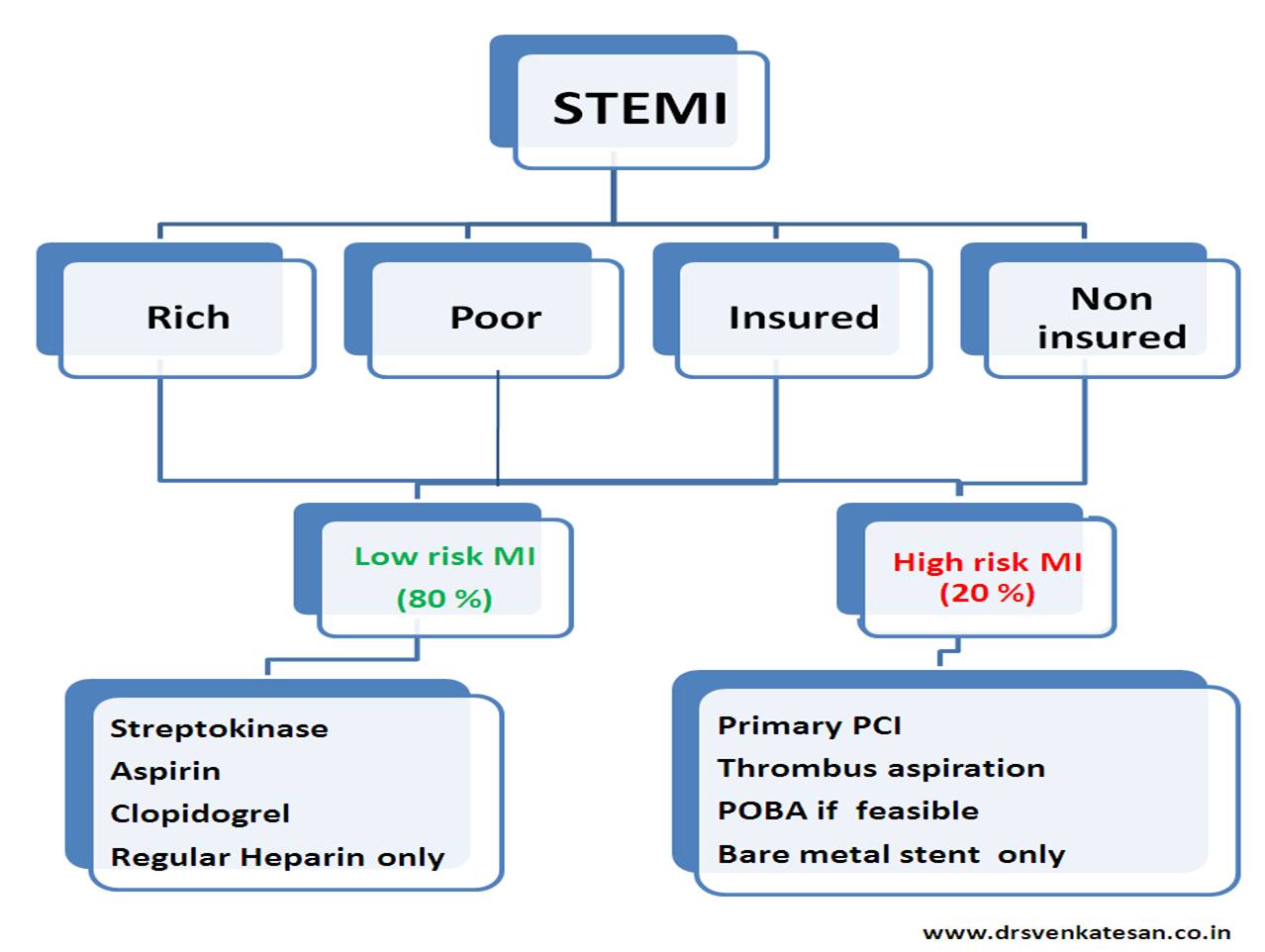
The following flow chart is a result of my observation from close quarters about the management strategies in corporate as well as Govt hospitals .
The first chart exposes the problem .The second one tries to address the issue
Please bear with me . . . if the stuff sounds too crazy !
* Too much care is also referred to as inappropriate care
And for the solution . . . try this
Primary PCI gimmicks :Thrombus jailing and . . .controlled release of thrombus !
Posted in Cardiology -Interventional -PCI, PCI PTCA Hardware, STEMI-Primary PCI, tagged export catheter, pPCI, priamry pci, pronto v3, soft skills in pci, thrombus aspiration during primary pci, tips and tricks in primary pci on March 24, 2013| Leave a Comment »
Soft skills in pPCI
Experience would tell us only about 70-80 % of STEMI are truly eligible for a good quality pPCI .(Multivessel CAD, Complex bifurcation lesion, difficulty in identifying IRA, No IRA-sapsms , complete spontaneous reperfusion ) The remaining 20-30 % should , logically be included in the failed pPCI category .This fact is largely concealed in the literature .
Beware of huge thrombus load in every patient with STEMI .The contribution of mechanical occlusion vs thrombus (in the total occlusion ) is the single most important factor in determining the intervention strategy.
Deploying a stent in a poorly prepared (debrided of thrombus ) lesion confers further continuous risk of a STEMI .Stents smartly jail even large thrombus against the coronary vessels and they release it into the lumen in a controlled fashion and prolong the acute coronary risk phases
If thrombus aspiration does a neat job and establishes a good flow , if the lumen appear good , think twice or even thrice before deploying a stent .It is akin to stent a zero % lesion and we know it is foolish to do that at any stretch of imagination .(Stenting has never been proven to convert a vulnerable ulcerated lesion into stable one )
IVUS, OCT are not the answer in the above situations as we are dealing with emergency coronary fire fighting !
Of course the intensive anti-platelet protocols , will take care of potential after effects of the intra coronary contact sport we play ! . But . . . there is a limit for every thing. So spend as little time as possible when attempting catheter based reperfusion during STEMI.
A chill in Cardiologist’s spine : Unnecessary intervention becomes a definite crime !
Posted in Cardiology -guidelines, Cardiology -Interventional -PCI, cardiology-ethics, Uncategorized, tagged acts of commision is also a medical negligence, cardiology ethics, hippocrates, inappropriate medical care, medical ethics, medical negligence on February 28, 2013| Leave a Comment »
The irony of modern medical care is 9/10 times medical negligence is defined in terms of acts of omission in required level of care . In reality most medical negligence acts are related to knowingly overdoing a futile diagnostic or therapeutic modality.
This irony was never understood by the public, the professionals or even the judiciary .This remains the most dangerous issue facing modern medicine !
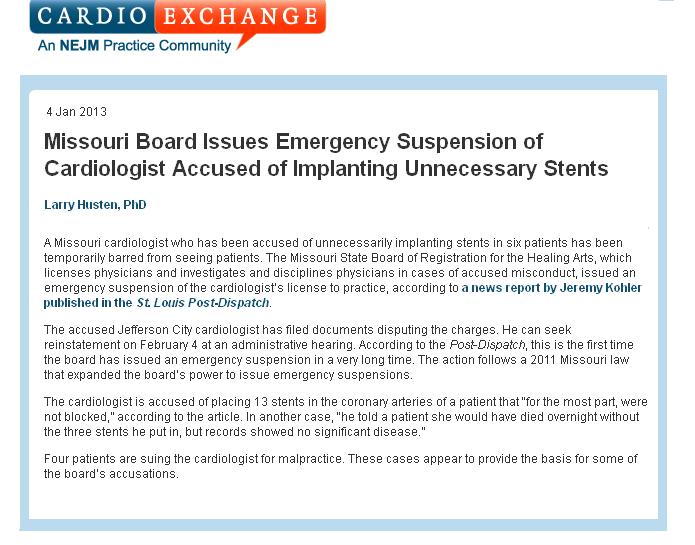
Finally some light is appearing in the horizon . A Missouri Cardiologist is suspended for overdoing things he knows best . . . namely coronary stenting !
This may bring chills over many cardiologist’s spine .
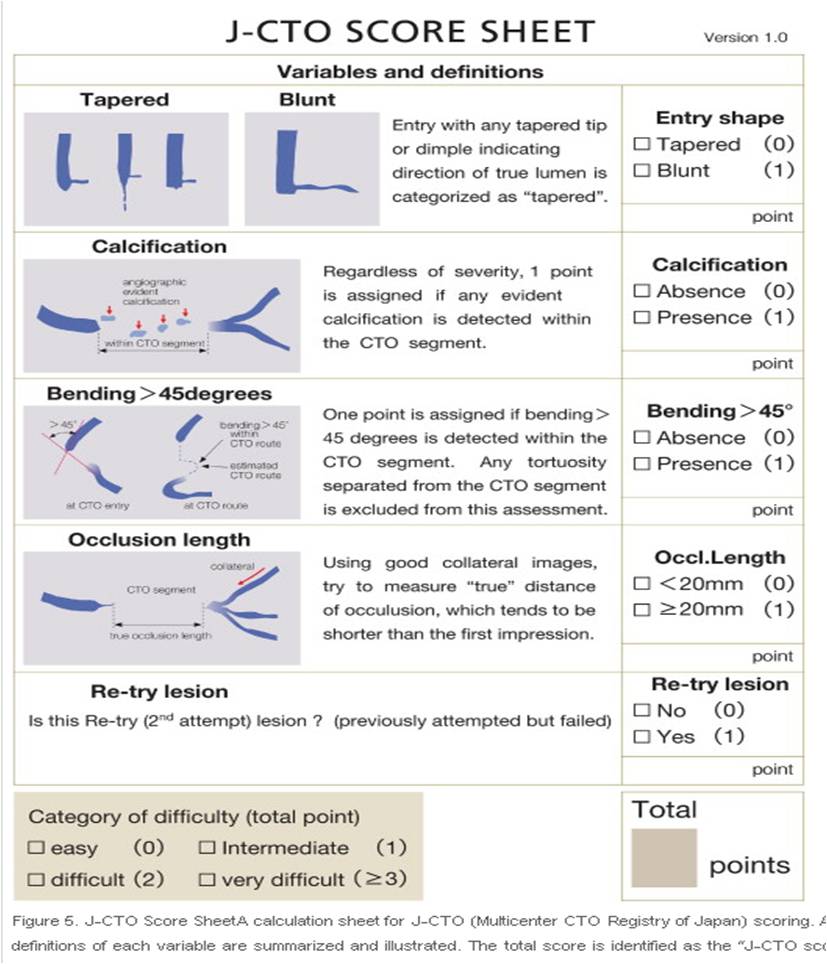
How to predict success in CTO : The Japanese CTO score sheet !
Posted in Cardiology -Interventional -PCI, Cardiology-Coronary artery disese, cath lab tips and tricks, cto chronic total occlusion, PCI PTCA Hardware, tagged chronic total occlusion, cto, tips and tricks on February 28, 2013| Leave a Comment »
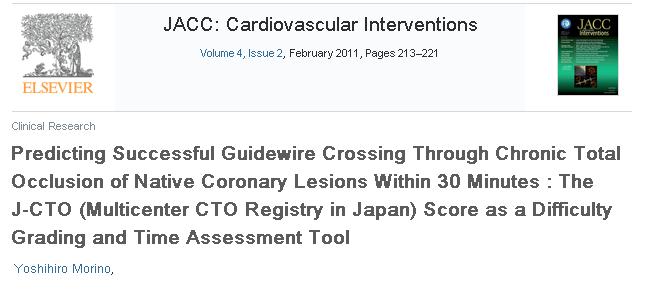
Japanese are the pioneers in CTO reopening .(I understand they do less CABG surgeries for religious reasons ) CTO is the ultimate test for cardiologist patience . it may take hours to open up a CTO (or even to abandon it .) Here is a success prediction tool from Japan .
Reference
http://www.sciencedirect.com/science/article/pii/S193687981000912X