Feeds:
Posts
Comments

Archive for the ‘Uncategorized’ Category

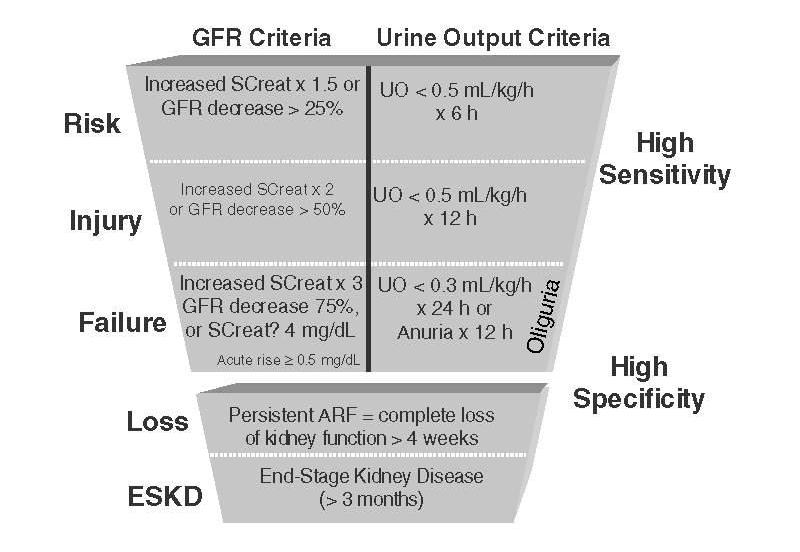
This RIFLE  shoots without  bullets . Yes ! it  helps the cardiologist to  trouble shoot  the kidneys which often  suffer from  cath lab cross fires .

As  the cardiologists indulge in sophisticated cardiac procedures ,  in more and  more  sick and co- moribund  patients , it is becoming increasingly  important  for them ,  to   give due  respects  to  other organs as well !

Renal function is an important determinant   in the  over all outcome  in any cardiac patient.

  1. How to assess  the baseline renal function ?
  2. How to measure  the impact  of the  cardiac procedure ?
  3. How to  follow  up and monitor the  progress of  renal function   in coronary  care unit.
  4. How to  reduce the enhanced renal  risk ?
  5. When do you call for  the Nephrology consult ?

Every step becomes  vital . Do not ever think , a  cardiologist’s job is over  once few  stents are deployed . Wheeling   out a  sick  and fragile diabetic  with borderline  creatinine    out of the cath lab  may be  considered   as a procedural success  , but the real success happens only after  every organ of the  your patient  comes  out  unscathed  after the procedure .  In this  context  , we should first aim to  become a nephron  savvy and a nephron friendly cardiologist .

I have witnessed  cardiologists  spend hours  together  in cath lab with liberal injections of contrasts  even in  elderly  who have delicate kidneys .Cardiologist should realise  kidneys are soft and gentle  organs  which unlike the heart  , do not  know  how to cry  (Angina) at times of stress  as they lack  well developed pain fibers  (unmedulated  type c fibers to be precise!) .Only thing they  know  is ( like touch me not plant !)   they  strike work  the next   next morning (What we refer to  technically as Acute renal  shut down !)

Now , we see little  interaction  occurring between a  cardiologist and nephrologist  prior to PCI , even though  those two organs ( The   respective experts behold )  are  constantly in touch  with each other , every minute ,  by neural and hormonal mechanisms. The new generation organ  specialists  has to learn  a lot   from these sincere , interactive  , democratic  human   biological system.

Coronary arteries can gulp any amount of dye but  not the renal  arteries .The   future looks still more frightening ,  as we have a variety of devices lined  up  to invade human vascular tree (TAVI, Renal ablation, per cutaneous aortic pumps etc)

So what should we do ?

  • Patients  prone for  CIN should be promptly  recognized .
  • Ask repeatedly  the question .  Am  I   sure  ?  . . .does this patient  require this  procedure at all ?  If  so , have I taken all the precautions ?
  • Use the nephrologist’s services more liberally

Finally ,  read the basics of  nephrology   lessons  once again .  The international consensus group has  classified   the Acute kidney  injury  (AKI)   with a  simple and lovely criteria  for  risk  triaging .     It is a  five faceted ,  inverted  (Tip less ) triangular  cartoon called  RIFLE .

The beauty of  RIFLE   lies in its  simplicity . All  it requires  is  serum  creatinine   (eGFR)  levels  and urine output.  Let  every  cardiologist  master this scheme of AKI . It will immensely  help  our  patients   and make us  a  complete  physician   instead of   being  labelled as a  “master of  an  organ”   or   ” An accessory sub physician”
The CIN prevention recipe.

Source Catheterization and Cardiovascular Interventions 69:135–140 (2007)

References

For review about Contrast nephropathy (CIN)  there are lots of excellent articles.
One company is trying to find a new  solution for  this complication . Let us welcome it ! The device is called rena  guard .
Renal Guard : A new technology to prevent CIN

Read Full Post »

Interventional cardiologist are excessively  talented  guys .They always  lead ahead in innovations  .The only issue is , their  enthusiasm  (   many times  overtake  the pace of science .  In the name of off label indications  they indulge   in drug and device extravaganza   in uncharted territory .

Even as we boast of practicing evidence  based cardiology   scientific  adventures  happen  without  proper  evidence  . . .   rather  we  have wait for evidence to come later .” A clear case of  cart pulling the horse “

The wide-spread of use of  second generation DES in STEMI has not been found to superior to BMS in the  EXAMINATION trial just released in ESC 2011 Paris. It failed miserably ,  when every one took  the superiority  for  granted.( Some may claim  non inferiority is  not a failure , but for a DES which was perceived a revolution,  it is definitely a failure in the  STEMI subset )

Further,  what  EXAMINATION  trial did not  address  is  acute and sub acute  stent thrombosis .Even as the DES is credited  with a dubious  record for  sub acute stent thrombosis ,   there is every reason to  suspect , in  the milieu of STEMI the thrombotic risk of DES  would increase many fold.

The  seemingly  low   incidence  of stent thrombosis with DES  in STEMI ,   in  EXAMINATION  trail  is a statistical mirage .This  trial was  neither  planned  nor powered to address the issue of stent thrombosis.

In the  ultimate  analysis of EXAMINATION ,   One could conclude   Cobalt chromium BMS,  has  cemented  its place ,  more firmly for use in primary PCI.

DES  at best ( *With all those conditions apply , Dual antiplatelet etc) can be equal to BMS,  while  BMS at any  day ,  would  casually will  win over DES without any conditions at a  huge cost advantage.

The above analysis is diagonally opposite to that of general  perception  that  emanated  from Paris  ESC meet 2011   trial   .

Please remember EXAMINATION trial did not reach its desired primary end point  !

That is  a strong point  against it  .What do you think ?

Reference

http://www.theheart.org/article/1272077.do

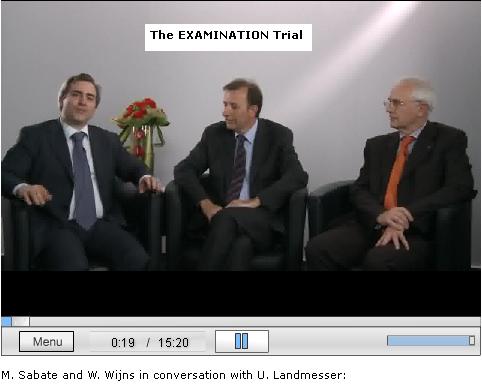
A  TV  debate on Examination  trial from EURO PCR

http://www.oxfordjournals.org/our_journals/eurheartj/ehjvideo.html

Read Full Post »

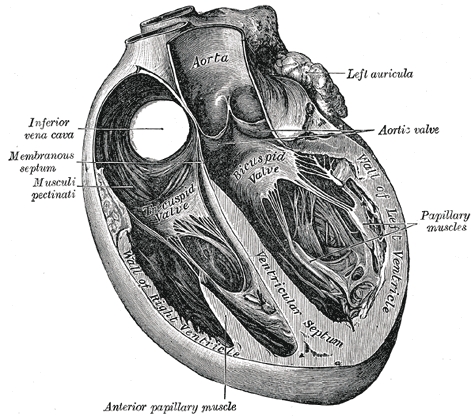
Pectinate muscles are specialized Intracardiac  muscle

  • Pectinate muscles are located mainly in the right atrium  , more  in right atrial  appendage , sparse in left atrium
  • Has muscle fibers arranged in a  comb like fashion.
  • Has less mechanical activity, no significant contribution to atrial contractility.
  • Can stretch and improve the voluminous nature of right atrium
  • The pectinate muscle  folds act as RA volume reserve  during adverse loading conditions . It helps RA dilate with out much wall stress.
  • Rarely it can be a cell of origin for focal atrial tachycardia

Image Source : Greys anatomy

The concertina like effect of pectinate muscle .

The atrial infolding increases the surface area of atrial chamber at times of dilatation , like  the music instrument .So,  these macro  folds ( like intestinal villi )  help overcome the  constantly changing volume status of right atrium.Since the  variation  left atrial blood flow is  not that much ,  the pectinate muscles  are not well developed  in the left atrium.

The same rules would apply for  why  there is excess  trabeculations  in right  ventricle  than  left  ventricle .

Read Full Post »

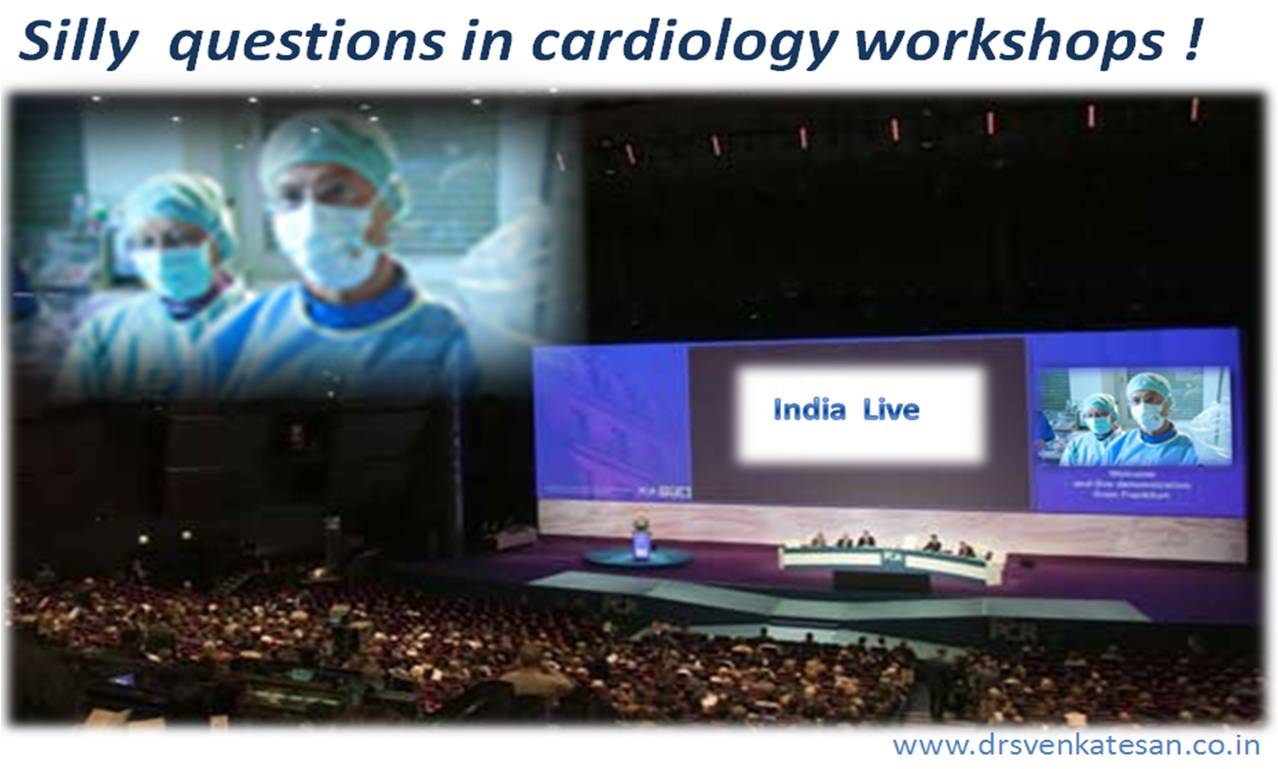
This  happened  in one  of the cardiology  work shops  I  recently attended ,  which  beamed  live cath lab procedures from across the  country.

An   interventional   cardiology  team  in a  bright sky  blue  suit was preparing a  patient for   graft angioplasty  in  a degenerated  SVG graft to left circumflex  . The patient had apparently had  CABG  few years ago  (LIMA to LAD still functional   )   . His LV  EF  was reported   to be  40 %.  The procedure was about to begin. The femoral artery was  being  cannulated . . .

As the audience  were encouraged  to ask questions.  A young cardiologist wanted to know what was the indication to open up the graft  / And what was  his symptom ?

“Do not ask such silly question”  . Prompt came the reply from  one  of a   senior interventional cardiologist from within the cath  lab. He further said  such questions can  not be entertained  as the   forum is meant for tips and tricks to cross a degenerated vessel graft .  When he insisted for an  answer , the entire panel  joined the  ridicule and  the questioner  quietly went out of the hall !

What  do you infer from such reaction?

What makes this question silly ? Why the cardiologist got annoyed and amused ?

This odd  reaction  implies  ,  the  cardiologist  has  something to hide or has guilt of   doing inappropriate procedure.

Such is the transparency in  cardiology workshops  transmitted  live all  over the  country  imagine   what  one can  expect in regular cath labs .

No doubt  JAMA has come out with most  important article  for us. http://jama.ama-assn.org/content/306/1/53.abstract

Live  workshops are not simply to train our hands . It is supposed to teach  us   the “what is right” and “what  is wrong” ,  “what is good” and “what is bad”  for our ailing patients. The senior  cardiologists who administer these workshops  should realise this fact. Very often a bad example is set .   When asking for  patient’s  true symptoms   looks  silly  for us  . .  .  guess where our profession is  heading for !

Read Full Post »

Hypertrophic cardiomyopathy(HOCM)  is a relatively common inherited myocardial disease.Since it predominately involves  LV myocardium and we know LV muscle mass is an integral part of  mitral valve apparatus , it is natural HOCM  has a major  impact on   mitral valve function .

The mechanism  of MR in HOCM is attributed to the following .

  • Asymmetric septal hypertrophy (ASH ) related abnormal pap muscle alignment (Geometric distortion  )
  • Exaggerated SAM(AML  is attracted towards LVOT with every systole that tend to  keep the mitral  valve  unguarded and MR results)*
  • Intrinsic abnormalities of mitral valve.
  • Associated MVPS
  • VPDs and Non-sustained VT can result in transient MR
  •  Pacemaker mediated MR (DDD pacemaker was used to induce desynchrony of LVOT vs LV free wall .This  concept  is almost a failed  one now !)
  • End stage HOCM -Left ventricular dilatation

* This mechanism is considered less important ,  as SAM is almost universal in HOCM  but MR occurs in less than 20%  patients with HOCM.

Eccentric MR vs central MR

In HOCM the MR is more often eccentric .This is understandable as the primary mechanism is related to faulty angle of pap ,muscle vs leaflet attachment.

If SAM is primary mechanism jet is directed posterior.

Murmur of MR in  HOCM

Is rarely pansytolic as the mechanism of MR begins to operate well after the systole starts .

Many times it is difficult to differentiate LVOT murmur from MR murmur . Th ever confusing and tentative  maneuvers might help in few shrewd cardiologists.

Issues  during echocardiogram

Very often MR jets are mistaken for LVOT gradient.Ideally two gradients in isolation (or  overlapping each other)  one bell shaped other dagger shaped must be documented.

Please note : LVOT jet is different from MR jet in size, shape, timing and site of maximum signal . Still it is often be confused with one other. Most common reason for this is technical .A careful apical 4 chamber view with well opened LVOT will reduce the error . Never record a HOCM echo without ECG gating . The MR jet may be very trivial in color flow but doppler will still pick the signal well . Realise ,for hemodyanmic reasons MR jet must be always more than LVOT jet.Finally if you get a report a LVOT gradient > 100mmhg in HOCM suspect it to be MR ! More often your suspicion will prove to be right !

Can mitral regurgitation occur in non obstructive HCM ?

Yes , in few . This is due to intrinsic abnormalities of mitral valve .

What happens to MR with surgical correction ? Can medical management  regress the MR ?

It is expected to regress.But many patients don’t. Effect of beta blockers   on MR severity is not studied well.

Management

  • Most cases of MR  do not require specific intervention.Just reassure them.
  • Correction of LVOT obstruction is expected to relieve MR considerably.
  • Intensive beta blocker or calcium blocker can regress the MR.(Negative inotropy)
  • Mitral valve repair may be necessary in few  with re-engineering of pap and chordae .
  • Mitral valve replacement should be a last resort. It  may be highly tempting  .But restraint is warranted. Much  damage has been done by showing undue haste in replacing mitral valve in HOCM

Final message

It needs to be realized whatever we do  for the HOCM patients , the ultimate outcome is determined by the quantum myocardial disarray  the patient has inherited from their parents.The myectomy , the alcohol ablation, mitral valve repair,  DDD pacing , beta blockers all are palliative. Except a few  , most HOCM patients generally live their natural history .

Read Full Post »

This  article is from the journal JAMA July 2011 , and  “The  Telegraph”  breaks  the News in general media because of   the immense  importance it has  for the public.

http://www.telegraph.co.uk/health/8589168/High-dose-statins-increase-Type-2-diabetes-risk.html

http://jama.ama-assn.org/content/305/24/2556.abstract

HMG COA reductase has a new side effect  when used in high doses. It is  now official ,  it is confirmed by this meta analysis.

According to this study the risk is mainly  with  80mg of Atrovastatin . But  the dose at which the diabetic risk develops is highly variable.

In simple terms  . . . It all depends upon how a  person’s liver responds to ingested statins.

Statins are not  divine molecules  that can heal atherosceloris. It mercilessly  blocks the vital  cholesterol synthesizing   enzyme HMG COA* located in every cell ,  especially  it has a  virulent action in the hepatocytes . We know liver  is the major metabolic hub  which co ordinates glucose and Lipid  metabolism and to certain extent amino acids as well . These statin infested   hepatocytes  can  interfere  with   glycolysis  ,  neo-glucogenesis   and  lipolysis in a complex fashion  . It  would  not require great brains to understand how diabetes can  be induced  by statins !

* Which also has a  indirect cell/  lipid servicing action.

Final message

It is becoming increasingly clear , statins should be used judiciously in whatever dose . We need to be in constant vigil even as   the  human lipid  is under siege  from the   corporate  board  rooms ,  who are  primarily  worried  about  the decline in the per capita consumption of these ubiquitous molecule !

Read Full Post »

Can you diagnose inferior MI with poor R waves ?

No , you need  a “Q ” that’s  for sure !   Do not diagnose inferior MI without a  q wave  . ( The luxury of diagnosing MI without q waves  is available  only for LAD region )

Any axis deviation ( even 30 degrees) from  base line  can alter the inferior lead qrs morphology to a great extent. R wave amplitude is  primarily determined by the  initial septal depolarisation .  So if the  inferior septum is intact  it will never allow to inscribe a q wave  . Further ,  limb leads are bi polar leads and they are   sum-mated  potential  reflected along the entire  bottom half of the  torso . Hence it is not  reliable to attribute  significance  to presence or absence of  r wave (Unlike  chest leads).

The lung and diaphragm  exert  not only electrical insulation but   also mechanical  alteration of septal profile with phases  of respiration.

Counter point

Not really  . . .  you do not need a  Q   waves  to diagnose inferior MI  ,  electrically  diminutive R  is same as  “Q”

There is  an alternate way of  reasoning  too  . R wave is muscle , We diagnose LVH with tall  R waves so muscle loss should be equivalent to R wave loss .We have innumerable examples where  low voltage R waves are  recorded in inferior leads after a well documented inferior MI.

How do you diagnose old inferior MI by ECG ?

  1. Near normal ECG with degeneration of q waves and regeneration* of  R waves
  2. Residual T wave inversion
  3. Simple low voltage inferior leads
  4. Slurred or notched qrs  complex in 2 3 AVF
  5. Rarely with atrial abnormalities and AV nodal prolongations

The concept of regenerated R is well established . And it brings to the age-old debate of R with live muscle Q is dead muscle

Regeneration is salvaged muscle (Natural salvage , awakening from hibernation etc)

How good is Echocardiogram in diagnosing old Inferior MIs ?

Surprisingly , echocardiography do not help much either .Technically inferior transmural MI  is expected to  leave  a residual wall motion defect.  But many times it do not. Many non q inferior MI (Is there such an entity ?)  do look perfectly normal by echo .

The primary reason  for this is ,  infero-posterior surface is anatomically remote and it makes  wall motion analysis difficult .Newer tissue motion analysis (Velocity vector imaging)  could aid us better.

Some times a trivial or mild  mitral regurgitation is the only sign of   old inferior MI  as  the pap  muscle  lags behind in it’s  functional recovery  while  free posterior wall is  fully salvaged and contracting well .

Final message

It needs  that extra bit of   of  knowledge to  expose  our ignorance.

Even in this  maddening   scientific  era  we have valid  reasons to  go back to fundamentals  of  R wave and Q  wave genesis in MI ,  where clarity  is lacking .

Read Full Post »

HCM is due to  hereditary mutation of myocyte sarcomere .The molecular defects are  located  in  myosin, tropomyosin, titin .Depending upon the protein  involved the hypertrophy can be regional or localised.

Non obstructive types most often involve tropomyocin mutations. Obstructive types predominate with myosin mutations.

HCM types

Non obstructive

  • Simple ASH
  • Apical HCM

Obstructive

  • LVOT
  • Mid ventricular

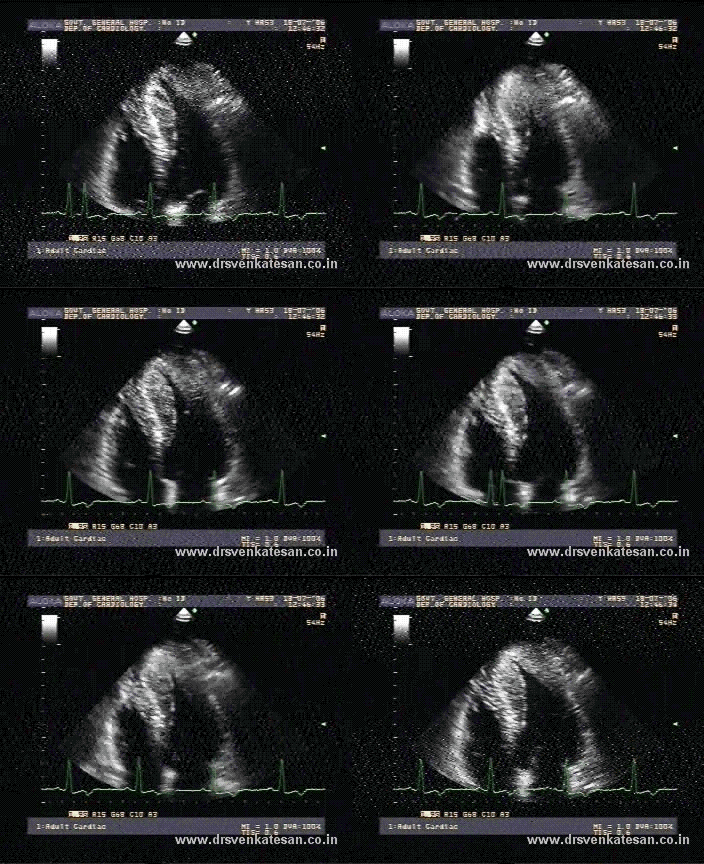
When the hypertrophy is in the LV apex there is little hemodynamic consequence

Apical HCM can still be prognostically and practically  important even though there is no  hemodynamic impact.

  • Arrhythmic risk persist(Any focal hypertrophy can be substrate for reentry due to slow conduction)
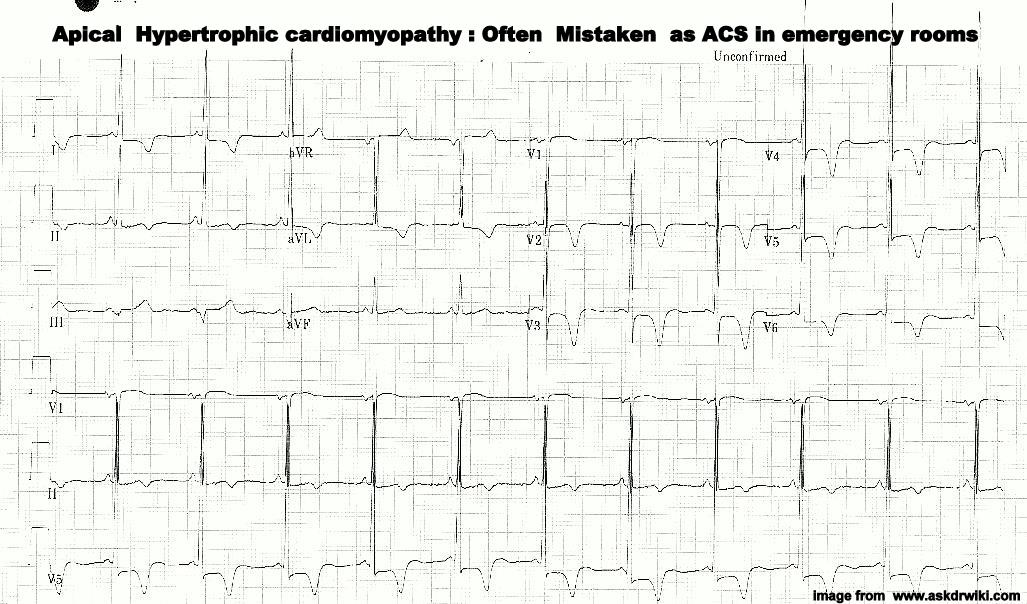
  • More  importantly  apical HCM is the commonest myocardial condition mistaken  for unstable angina  and they wrongly enter the ACS protocol and might land up in cath lab tables as well !

Always remember  high voltage qrs with deep T wave inversion (90 out of 100 times)  is due to  myocardial pathology not ischemic.

Management

  • Reassurance (First advice is,  not to search for more information from the internet ! It may confuse them !  )
  • Just follow up with yearly echocardiogram .Follow up the siblings too.
  • Marriage counseling . (Not contraindicated )
  • Holter monitoring or  extended loop recording may be done to  detect any sub-clinical of arrhythmias.
  • Beta blockers are generally not indicated  routinely  may be given if family history of sudden death .

Reference

http://emedicine.medscape.com/article/152913-overview

Read Full Post »

An atherosclerotic  plaque is termed  vulnerable when it’s  future behavior is unpredictable .A vulnerable  plaque has a  tendency to get occluded at any time.

Anatomically  a  vulnerable  is  present  , if the lipid core is more , fibrous cap is  thin  and  a  large lipid  core hanging eccentrically. A plaque with high temperature (Hot plaques ,febrile plaques)detected by OCT/Raman spectroscopy or thermography

Note the T cells and macrophages wage a losing battle against a metal monster !

What is the best method to calm down these vulnerable , hot ,inflamed plaques ?

A stent which scaffolds a plaque is believed to stabilse it  and  make it less vulnerable to rupture. This is the most optimistic view on coronary stenting .

Here comes  a pessimistic view !

A metal inside a coronary artery covering is  additional  threat .A metal  is   perennially  thrombogenic  ,especially the drug eluting stents which suppress the normal endothelial  function .

What  is the realistic view  ?

A stent should be used cautiously and judiciously in coronary plaques  with   high risk features  .Here  a  stent  in all probability  converts a vulnerable plaque  into a  relatively stable plaque

When stenting is done indiscriminately( without application of mind )  in stable non flow limiting lesions  stability is replaced with vulnerability.

Is it not curious to know  any angina  in a patient  who  had   PCI  for chronic  stable angina  is labeled  as unstable angina. 

Vulnerable stents

Following are typical  clinical scenarios   where stents could  carry a vulnerability  tag . 

  1. Poorly deployed  stents
  2. Properly deployed (but unnecessarily deployed especially in chronic stable angina )
  3. All Bifurcation stents
  4. Distal left main stents
  5. Stents with plaque prolapse
  6. Finally and most importantly all  drug eluting stents are considered  vulnerable ! (That’s why  our patients has to  live at the mercy of dual platelet blockers , life long.  Of course , there is no life time warranty   that  drugs do their  job properly)

And now . . .  you answer my  question !

Can  stenting convert a stable plaque  into vulnerable plaque ?

  • If  “yes’ is your answer your patients are in safe hands .
  • If  ” No”   is  your  answer ,  you are  fit to become a leading  interventional cardiologist !

Read Full Post »

While anatomical  grading of obstructive  coronary lesions are  quiet easy ,functionalc assessment is always difficult.The famous TIMI grading system had one unique problem .TIMI 1 and 2 grades are relatively easy to grade. TIMI 3 flow  which corresponds to normal penetration  and normal  distal perfusion  . This distal perfusion was entirely optical .

This was an important issue , in assessing post  PCI or thromolysis patients . It was realised much later , TIMI 3 flow is  stunningly  heterogenous group  .It was  ironical  ,  even after a successful PCI ,  restoration of TMI3 flow  could not be relied upon as an index of successful PCI  .

So , the PAMI study group included time as additional factor in grading TIMI 3 flow. PAMI 3 is  essentailly same as  TIMI 3  flow but  with a  condition , complete  distal vessel filling  must  occur within 3 cardiac cycle . PAMI 3 can be termed as a   refined version of TIMI 3 introduced in the evaluation of success of primary PCI . This helps us  define  or  diagnose   slow filling .

What are the other ways  to grade TIMI 3 flow

  • Myocardial blush index
  • TIMI frame count ( < 25 frames )

PAMI : Primary angioplasty in myocardial infarction

TIMI :  thromolysis in acute myocardial infarction

Reference:

http://circ.ahajournals.org/cgi/content/full/circulationaha;104/6/624

Read Full Post »

« Newer Posts - Older Posts »