Feeds:
Posts
Comments

Archive for the ‘Uncategorized’ Category

  • Second heart sound is widely split because the pulmonary hangout interval* is wideFixed because , the RV stroke volume does not show the normal respiratory changes.This is due to dynamic phasic shunting across the IAS ( For example : During inspiration , if RA,RV volume gets augmented by 50ml from IVC inflow , in expiration this IVC augumentation is removed but a 50 ml augmentation from left atrium takes place , this keeps the RV diastolic , as well as systolic volume relatively constant.) This makes the 2nd heart sound fixed .

    * Hangout interval is the gap ( in time ) between the arterial pressure curve and the respective pumping chamber pressure curve (RV, LV) at the level of incisura.

    Incisura is the notch on the descending limb of arterial pressure curve , when the pulmonary or aortic valve closure occurs . When we analyse the simultaneous pressure recordings of RV ,LV/Pulmonary artery/Aorta , the arterial pressure curves faithfully accompanies the chamber pressure curve along the dome of the chamber pressure curve till it descends , where it dissociates , from the chamber pressure curve and hangs out for a certain milliseconds. This time interval is called as hang out interval (Named by Shaver et all )

    What is the normal pulmonary hangout interval and systemic hangout interval /

    Pulmonary hangout interval is 60-80ms

    Aortic hang out interval is 20 ms

    Why does it happen ? What does it signify

    It happens because , even as the chamber pressure falls below the arterial pressure ( Note: Semi lunar valves close at this cross over point ) blood continues to rush forward , with momentum in to the pulmonary and systemic circulation, in spite of the pressure cross over has happened, the semilunar valve doesn’t get closed exactly at the cross over point .It gets closed little later than true cross over point.This gap in time is the hangout interval. This Interval keeps the arterial pressure not only to be sustained little longer but also slightly higher .

    This interval is an indirect( inverse) marker for vascular impedance of the distal draining circulation .The impedance is same as vascular resistance for all practical purposes.Since pulmonary circulation is a low impedance circulation , it has a wide hangout interval and the systemic circulation vice versa.

    How much of S2 widening is contributed by RBBB in ASD ?

    This is not known .But it has a minor role in prolonging S2 split. This is because , the RBBB in ASD is most often incomplete and peripheral one .( Pesudo RBBB due to RVOT dilatation )

    What happens to S2 when pulmonary arterial hypertension develops in ASD ?
    It is often narrow and fixed . Pulmonary arterial hypertension makes the pulmonary circulation to behave like systemic , hence the impedance becomes high and the hang out interval is significantly lost and second sound is narrowly split. (But fixity may be maintained.)It also depend upon the RV function and associated RBBB. RV dysfunction and RBBB both tend to widen the split.*Mild PAH usually does not alter the S 2 splitting

    Is there any other cause for wide and fixed splitting of second heart sound ?

    Having known the reasons for widening and fixity it is easy to understand , a patient with right heart failure and RBBB can have a wide and fixed split .

    Widening is due to RBBB (Delayed activation of RV ) . Fixity is due to severe right heart failure makes the RV out put relatively constant .(As RV inotropism is not good enough to handle the inspiratory augmentation of RV end diastolic volume.)

    Why in VSD the second heart sound is not wide and fixed split even though hemo- dynamically it fulfills the same hemodynamic scenario ?

  • This is due to dynamic phasic shunting across the IAS ( For example : During inspiration , if RA,RV volume gets augmented by 50ml from IVC inflow , in expiration this IVC augumentation is removed but a 50 ml augmentation from left atrium takes place , this keeps the RV diastolic , as well as systolic volume relatively constant.) This makes the 2nd heart sound fixed .

    * Hangout interval is the gap ( in time ) between the arterial pressure curve and the respective pumping chamber pressure curve (RV, LV) at the level of incisura.

    Incisura is the notch on the descending limb of arterial pressure curve , when the pulmonary or aortic valve closure occurs . When we analyse the simultaneous pressure recordings of RV ,LV/Pulmonary artery/Aorta , the arterial pressure curves faithfully accompanies the chamber pressure curve along the dome of the chamber pressure curve till it descends , where it dissociates , from the chamber pressure curve and hangs out for a certain milliseconds. This time interval is called as hang out interval (Named by Shaver et all )

    What is the normal pulmonary hangout interval and systemic hangout interval /

    Pulmonary hangout interval is 60-80ms

    Aortic hang out interval is 20 ms

    Why does it happen ? What does it signify

    It happens because , even as the chamber pressure falls below the arterial pressure ( Note: Semi lunar valves close at this cross over point ) blood continues to rush forward , with momentum in to the pulmonary and systemic circulation, in spite of the pressure cross over has happened, the semilunar valve doesn’t get closed exactly at the cross over point .It gets closed little later than true cross over point.This gap in time is the hangout interval. This Interval keeps the arterial pressure not only to be sustained little longer but also slightly higher .

    This interval is an indirect( inverse) marker for vascular impedance of the distal draining circulation .The impedance is same as vascular resistance for all practical purposes.Since pulmonary circulation is a low impedance circulation , it has a wide hangout interval and the systemic circulation vice versa.

    How much of S2 widening is contributed by RBBB in ASD ?

    This is not known .But it has a minor role in prolonging S2 split. This is because , the RBBB in ASD is most often incomplete and peripheral one .( Pesudo RBBB due to RVOT dilatation )

    What happens to S2 when pulmonary arterial hypertension develops in ASD ?
    It is often narrow and fixed . Pulmonary arterial hypertension makes the pulmonary circulation to behave like systemic , hence the impedance becomes high and the hang out interval is significantly lost and second sound is narrowly split. (But fixity may be maintained.)It also depend upon the RV function and associated RBBB. RV dysfunction and RBBB both tend to widen the split.*Mild PAH usually does not alter the S 2 splitting

    Is there any other cause for wide and fixed splitting of second heart sound ?

    Having known the reasons for widening and fixity it is easy to understand , a patient with right heart failure and RBBB can have a wide and fixed split .

    Widening is due to RBBB (Delayed activation of RV ) . Fixity is due to severe right heart failure makes the RV out put relatively constant .(As RV inotropism is not good enough to handle the inspiratory augmentation of RV end diastolic volume.)

    Why in VSD the second heart sound is not wide and fixed split even though hemo- dynamically it fulfills the same hemodynamic scenario ?

  • Guess the answer .It will be posted soon.

    Read Full Post »

    Aortic regurgitation complicating VDS  is an important clinical  entity in congenital heart disease.It is  also  a popular case for the cardiology fellows in their  final clinical examinations . AR is a  late manifestation of VSD (usually in early  adolescent  or adult hood) .This develops due to loss of aortic valvular support provided by the inter ventricular   septum.

    In fact ,   IVS can be termed  as a foundation stone  on which  a  part of  aorta (Mainly its anterior part) rests . So, it is not surprising VSD patients  are prone to develop AR especially,  as they grow when aorta tires to outgrow the septal support . Further,  the hemodynamics of VSD has a crucial impact on the AR progression.(See image below)

    Pulse /Blood pressure

    Large volume pulse,  may be collapsing

    Peripheral signs of Aortic run off usually present

    Apical impulse

    Shifted down and out Hyperdynamic

    Murmur

    To and fro murmur (To -Systolic , Fro -Diastolic )

    It is differentiated from continuous murmur by a distinct reduction  in the intensity of murmur towards the end systole and a different murmur  appear  in diastole  . While , a continuous murmur  is  a single murmur  that peaks  around sound  heart sound , overlaps the second  heart sound and spills well into diastole.

    Other useful diagnostic clues

    • Usually the VSD  is  restrictive  .Left to right shunt is often below  2:1
    • With the onset of AR  ,there is  further reduction in the left to right shunt of VSD
    • Hence,progressive pulmonary arterial hypertension is uncommon and Eisenmenger is reaction is very rare in  VSD with AR.
    • Presence of AR makes  LV dilatation disproportionate to VSD  shunt  (LV size  is not useful to assess the  hemodynamic  significance of VSD)
    • LV dilatation invariably means significant AR rather than VSD.  VSD induced LV enlargement  is  usually less conspicuous as it is  represents  physiological flow across mitral  inflow .  While , AR is a high gradient leak  from a non-physiological chamber (Aorta)
    • ECG volume overload of LV   is  evidenced by  more prominent * q waves in  V5 V6

    *Double dose of volume overload (AR +VSD)

    Management

    • If AR is mild ,only VSD closure is advocated *
    • If AR is moderate  , repair of aortic valve is  considered along with VSD closure.
    • For severe AR , Aortic valve replacement or repair with VSD closure mandatory.
    • Device closure of VSD and percutaneous  aortic valve replacement  not feasible at the moment .May be a future possibility.

    * If both  VSD and AR are very small ,  simple follow up , and observation (Leaving the patient happy!)  could be a distinct option !

    Pathogenesis of AR in VSD : The landmark article from Japan in 1973 by Tatsuno  and Sakakibara

    http://circ.ahajournals.org/cgi/content/short/48/5/1028

    Thanks to circulation .Such articles are made available .

    http://circ.ahajournals.org/cgi/reprint/48/5/1028

    Read Full Post »

    Acute pulmonary embolism is a vascular  emergency.Massive pulmonary embolism needs immediate thrombolysis or embolectomy. Success rate  of  thrombolysis  appears good . But , the symptom improvement  is slower .

    Sterptokinase is the commonly used drug to dissolve the pulmonary thrombus  . (Except in USA , where they  prefer the much costlier TPA )

    The sterptokinase  adminstered with the following protocol

    • 2.5 lakh Unit bolus over 30 minutes
    • Follow with 1lakh unit /per hour for the next 48 hours (Up to 72 h)

    When to start Heparin infusion ?

    For TPA ,  there is no confusion .Heparin must be started immediately after the completion of TPA infusion (100mg in 2 hours)

    Cardiology community is divided for heparin protocol with  streptokinase. Because , streptokinase is administered over 48hours it is thought heparin is not required during  this period.But in reality , it  implies , we  deny a role for this  powerful anti thrombin  in the critical hours of ongoing  intra vascular clotting . Hence  logic demands  to start heparin  along with  streptokinase.

    There is further concern that,  the dissolved thrombus generate pro coagulant  debri , that will negate the benefits of thrombolysis. Oral anticoagulants  are supposed to be started  as soon as the diagnosis  of pulmonary embolism is made. In that case , heparin will be required  much earlier as  warfarin has to be overlapped with heparin.

    We would  argue for  , a careful simultaneous infusion of heparin (May be 500units/hour ) .Strict monitoring of APTT is warranted.

    What does the clinical  trials say ?

    There are few studies address this specific issue .I am still searching the data base. Once i get it i will post it. The readers  may also try to find an answer .

    http://ats.ctsnetjournals.org/cgi/content/abstract/62/3/880?ijkey=cdcd223289bd75ffb49a8d1cd1c73d35fe76e08d&keytype2=tf_ipsecsha

    Read Full Post »

    Planimetery is the age old method to measure the mitral valve  area( MVA) by echocardiography.

    Advantage

    • Simple modality
    • 2D echo  is enough
    • Doppler errors avoided
    • In the presence of MR, planimetery orifice has an edge over other methods

    Disadvantage

    • Optimal gain setting becomes  important .There is  significant inter and intra observer variability.
    • Shape of the orifice is not constant  ( MVO is funnel like) . Narrowest diameter is usually measured.
    • Planimetery is  a purely an anatomical orifice,while blood flows through both primary and secondary mitral orifices .Sub valvular fusion makes secondary MVO the  narrowest point  . Measuring it becomes difficult as it has no defintion of border.
    • Gross errors possible in calcified valve.
    • In post commissurtomy  the  lateral extent of split is often  not tractable

    How to improve the accuracy of planimetery ?

    Color Doppler aided  2D  planimetery . This can improve some of the limitations , as  it provides a hemodynamic MVO(Some what physiological ) Of course  , pressure halftime derived MVO is purely a physiological orifice .

    Other options to measure MVO

    1. Pressure half time
    2. Continuity equation
    3. PISA method

    Advantages and disadvantages  of Pressure half time derived MVO will be posted soon.

    Read Full Post »

    Bio-chemical diagnosis of cardiac injury or infarction is  well  documented modality for many decades. Now , acute coronary  syndrome is diagnosed  by a battery of tests  that  detects the  proteins leaking from the  injured  myocardium.

    Nephrologists have long been aiming for  such a  marker for ischemic  renal injury  (Not withstanding the fact , they are already blessed with two age-old molecules  creatinine and BUN !)

    Neutrophil gelatinase associated Lipocalin (NGAL)

    • This is 25 Dalton molecule  richly secreted within renal  cortical cells in response to ischemic injury .
    • It is released without  modification in the  urine  .High urinary levels  of NGAL  reflect  acute renal  injury.
    • Early experience shows it  is a  promising  investigation and could  become a regular biochemical test in the near future.
    • Urine level of  NGAL >250 ng/ml , 2 hours   after cardiac surgery  predicts impending renal failure  in the next 24-48 hours .The advantage is , it NGAL raises well before serum creatinine.

    NGAL After cardiac surgery

    http://cjasn.asnjournals.org/cgi/content/full/3/3/665

    Lipocalin following PCI

    Bachorzewska-Gajewska H et al. Neutrophil-gelatinase-associated lipocalin and renal function after percutaneous coronary interventions. Am J Nephrol 2006; 26: 287-292.

    www.ngal.com

    References for  NGAL

    http://www.ngal.com/literature/popular_reviews_of_the_nature_of_ngal_with_a_focus_on_acute_renal_injury

    Final message

    • Cardiologists  and cardiac surgeons  have started  performing  complex    PCIs and  CABGs in  patients with   delicately  and precariously balanced renal function.
    • While ,  cardiologists   challenge  the kidneys with high  osmolar contrast agents ,  the surgeons stress it with extra corporeal circulation.  Many of these patients also  have co- morbid conditions .
    • Often , the cardiac outcome is directly linked to pre /post procedural  renal function .Nephrologists usually  arrive  late  into the filed (Creatinine SOS calls !).By this time the full-blown ATN sets in many.

    Now , we have a tool to identify impending ARF , it gives us  little more time and  flexibility in managing the issue .

    Read Full Post »

    Medical science is  not like mathematics or economics .

    • It is about how a  bundle of human cells(organs) behave at times of adversity .
    • It is  about how our mind  takes on the body .
    • It is also   about , how the care takers  Heal/Manipulate /Manhandle  these cells at times of distress !

    We know, two persons with identical injuries , sustained in a car crash one dies within an hour  , while the other with a  many fold serious injury successfully fight the trauma and walk out of hospital with victorious  .That is the fighting spirit .This  is either  inherited  are  nurtured or both.

    This implies , an accidental injury may be an  external , unpredictable  event,  while the  response to  that injury is predetermined or even a predictable response !

    In the name of modern science , we “the human animals” are trying to buy this fighting spirit  with money.We are made to believe ,  survival and well-being is a commodity and  can be  bought with high cost  medicines , and high cost care .

    Remember  , one of the most astonishing medical  fact is , while we  may struggle to induce  swine flu  in  a laboratory on a given  individual ( Even if ,  H1Ni  viral  concentrate is  infused or inhaled  )   , an  other person gets this disease  , while simply  flying over an  infected country  . Such is the complexity  of  the host response  system in medicine .

    So , it is foolish to think health can be bought or maintained  with  money power or modern hi-tech medical care .At best it can save   few lives  with  its   life supporting drugs and devices . Ultimately,    human survival  is determined  by the way we  live  and the way  our  ancestors lived and how we fight the illness.

    Yogi’s  of  Himalayas lived for more than 100 years without the need for drug eluting stents and LV assist devices .

    Having totally misunderstood  the concept of health and illness the world is wondering how on earth , we can reduce the escalating cost of  healthy living  (pseudo health  !)

    An article in the current NEJM ponders over ,  Why in  Grand junction,  Colorado ,USA ,  the health care cost is very much lower ,  without compromising the quality of life and survival.

    The answer is very simple .There is some body in that county , who  dares to think beyond  raw  science  and adds  little  bit of common sense ! Obviously he has to be rewarded and  this  model need to be replicated  elsewhere.

    http://healthpolicyandreform.nejm.org/?p=12706

    This article discusses the phenomenon  of  high quality , low cost medical care , but what it misses out is , the reverse could also be true !

    Read Full Post »

    AV node is the  “Go slow” region in the cardiac highway .Every impulse is delayed  for about 120ms and then pursue its  onward journey to depolarize the ventricle.

    Since  AV node  has inherently slow conduction properties , it is not  surprising  this zone  is vulnerable  for developing  AV block .We know AV junction and the adjacent his bundle  is the site  for many types of AV block. In  classical  Mobitz type  2 AV block ,  for every two or three supra ventricular impulse only one is  conducted and we call this as   2:1  or 3: 1 AV block ( More appropriately AV conduction  )

    Can we have reverse of the above situation ?  That is , for each supra ventricular  impulse  can ventricles  fire twice or thrice   ?

    Yes it can  ,  what looks like a funny situation ,  could be more common   .We are not recognising it often.

    How is  this possible ?

    This can happen only if there are two different  tracts of conduction from atrium to ventricle and  both of them conducting  fully to  reach ventricle and complete the depolarisation.

    This situation can  occur in

    • Dual AV nodal pathway*
    • Triple nodal pathway**
    • Multiple AV accessory pathways (All contributing  AV conduction )

    * Exact incidence in general population is not known ,but it could be higher than what  we believe !

    ** Very rare

     Some what  related  phenomenon , never the less , it   mimics 1:2 or 1 : 3 AV  conduction

    • AV nodal echo beats
    • Non sustained AVNRTs

    How is simultaneous conduction possible in dual AV nodal  physiology  ?  Will ( it not  ! ) the first impulse make the ventricle refractory to the following impulse ?

    Under normal physiological conditions simultaneous conduction*  is not possible .It happen if  . . .

    • The first impulse goes relatively fast  and activate the ventricles .
    •  The second component of the first impulse, ie  through  the slow path conduction   is sufficiently  slow ,  it  reaches the ventricle and  able to depolarize it , well after  the  first beat’s  refractory period .
    • A Further requirement is , the initial  fast response fails to block the incoming slow  response  by a retrograde   slow path block .

    * It need to be further clarified , even in physiology ,  simultaneous conduction is possible , but it is  often incomplete . At best it can result in ventricular fusion beat as in pre -excitation beat or it can be a concealed one travelling halfway through the AV node or the bundle.

    Why recognising this 1:2 conduction  is important ?

    • It is traditional  to  think  , an unexpected beat  occurring prematurely  in a given strip of ECG is always thought to be an ectopic beat .This is not the case. An  unexpected premature narrow QRS  complex  with out a  p wave , should  make us suspect   dual AV nodal conduction .
    • If  this  dual AV nodal  pathway  is intermittently  conducting or conducting with  varying velocities ,  it becomes  an     irregular narrow QRS  rhythm  .This  can ,  very well  be confused with  atrial fibrillation.
    • If  one of the paths in the dual AV pathway  is conducted aberrantly   it  mimics a  VPD.

    Final message

    1:2  AV conduction may not be rare . Cardiac physicians are encouraged to look  for this phenomenon whenever they encounter an abnormal  early  narrow  QRS  beat without preceding P waves. Apart from academic curiosity , it can  solve many mysteries in CCUs and EP labs .

     Reference :

    http://www.ncbi.nlm.nih.gov/pmc/articles/PMC2267891/

    Read Full Post »

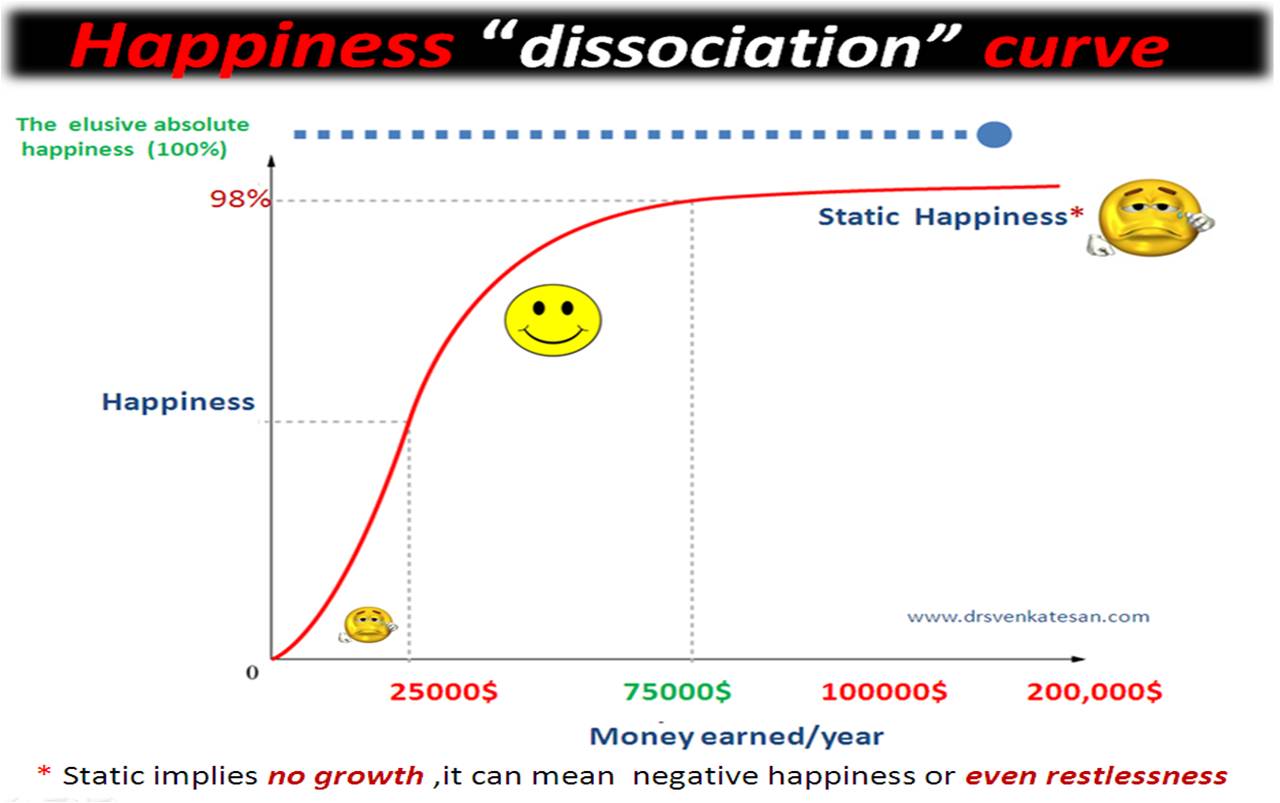
    Mankind’s  elusive pursuit of happiness  has an  interesting relationship with human physiology.The recent research  from  Princeton  university has confirmed a concept about the relation between  happiness and the economic well being .It was strange it exactly mimicked a famous physiological concept involving hemoglobin and oxygen.

    Two simple questions were asked

    1. Can money bring happiness to life ?
    2. Is there a linear relationship  between money  and happiness ?

    The answer to the first question is  “yes” it can.

    The answer to second  looks complicated but , it is actually simple !

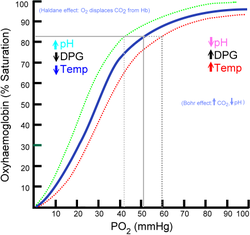
    The relationship between money and happiness is  linear initially  , till it  hits the flat  section of  the curve  at 75000$ /year . (In India it may at 12,0000 lakhs/year)

    Like hemoglobin , which   gets saturated  with oxygen  at  Pa o2 of  90  %  ,

    Beyond  a particular point , however much you increase  your salary , the  mind can not be enriched with further happiness !  , as all the happiness receptors  get  saturated !

    Link to Princeton university paper

    Another  curious phenomenon is ,  the more time you spent  in pursuit of happiness less likely you get it  !

    (The following  illustration  is from the original Princeton paper which i got from  NDTV  website )

    http://profit.ndtv.com/news/show/the-odd-relationship-between-money-and-happiness-102103

    Hemoglobin Oxygen dissociation curve

    Read Full Post »

    We owe a lot  , to  our ancestors for making our  journey   smooth  and purposeful   in  our  pursuit ,   of   healing the   mankind  . It is because of their  meticulous  clinical acumen , passion  , dedication ,sacrifice we are enjoying  the fruits  of success .

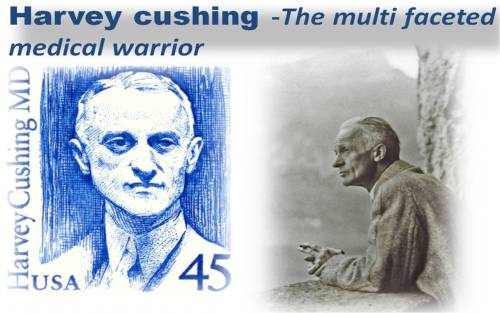
    Though there are thousands of them , one life that always fascinates  me is that of Harvey Cushing. His fame went  to dizzy heights  after his publication of  biography of William Osler .

    A book every medical  professional must read and cherish especially the elite cardiologists !

    I wonder  ,what  Harvey Cushing  ,  if alive would make  a difference  in the current  world of medical  science contaminated with commerce ,  hyped up technology ,  and  the near extinct bed side clinical skills.

    Links to life of Harvey Cushing http://www.med.yale.edu/library/historical/cushing/peter.html

    Read Full Post »

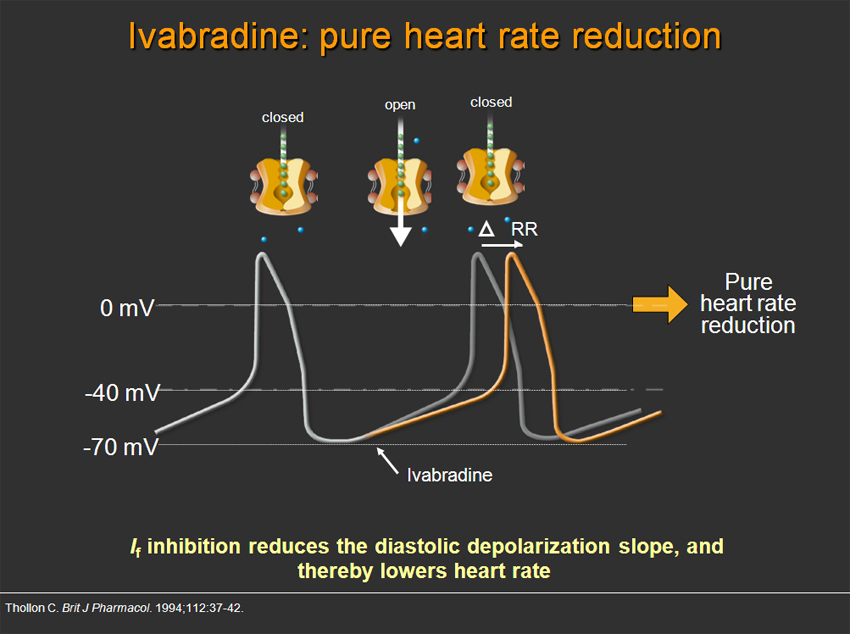
    We now understand , heart rate reduction  could be the single most important factor  in the management of heart failure .Beta blockers have proved this time and again.We know heart rate has a linear relationship between survival .

    SHIFT trial has  proven  that  Ivabradine  has a major role in the management  of chronic heart failure therapy .It is an If current blocker .  No hemodynamic  side effects was noted.

    How does Ivabradine act ?

    It acts on the phase 4 diastolic depolarisation in SA node by slow I f  currents.

    SHIFT trial Link to lancet

    SHIFT study official website

    In this trial , the usage of  optimal Beta blockers  was  only in 25 %  . Patients  who received   complete beta blockade did show much benefit with Ivabradine . Further, the usage of  digoxin was only around 20% .This does not represent  the realistic  population of  cardiac  failure in many  countries  .In India , almost 70-80 % receive  it . Digoxin , the wonder drug does have an important vago mimetic action, to  reduce the heart rate .

    Another  contentious issue   in SHIFT study  is , the Class 4 patients constituted <2% of the study population .It is ironical , these are the patients , one would  like to try a new rate control drugs like Ivabradine  , because we  are worried about beta blockers in this population  .A great opportunity was  lost as Ivabradine could have  been tried in this population.

    We need a study  like this .

    • One to one comparison   of  beta blocker  and   Ivabradine  in cardiac failure  . Such a study will ever happen ? My guess is , it is  next to impossible !
    • Efficacy of  Ivabradine in patients with class 4  failure  , where beta blockers were contraindicated  or could not be administered.

    Final message

    Ivabradine , a new generation  negative chronotropic agent  is a great concept drug. But , the worthiness of this drug  is questionable , when we have  proven , well tolerated  drugs namely , the beta blockers to reduce the heart rate.. However , if the beta blockers are poorly tolerated  Ivabradine may be tried.Last , but not the least, never under-estimate the greatness of digoxin in heart failure.It is the only drug that has a positive  inotropic  properties coupled with  negative chronotropic action . Both benefits patients in CHF  . It can do wonders than any other drugs .(DIG trial was the most misunderstood by cardiologists!)

    Read Full Post »

    « Newer Posts - Older Posts »