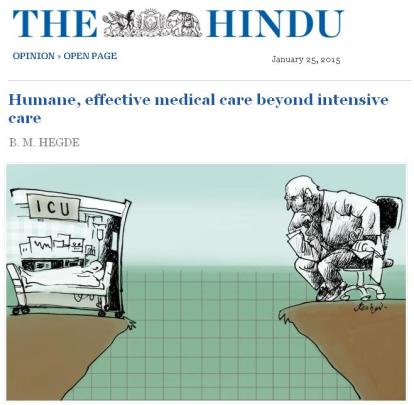
As we practice this Noble (& Delicate ) profession ,we often tend to Ignore the warnings even from our learnt colleagues , Why ?
Posted in bio ethics, cardiology innovation, Cardiology quotes, cardiology-ethics, Venkat quotes, Wintage cardiology | Tagged aga asd device ado 1 2 figulla flex 2, asd vasd pda device closure, cath lab nightmares, cath lab tricks and techniques, dr s venkatesan, ego vs wisdom, venkat quotes, wisdom quotes, wisdom vs knowledge | Leave a Comment »
A STEMI patient arrives late after 48 hours with chest pain .There is persistent ST elevation.
What is the likely mechanism of this chest pain ?
If this patient comes to a non PCI eligible centre. Will you lyse him ?
If post infarct angina is unstable angina . Isn’t thrombolysis contraindicated in UA ?
How to differentiate Post Infarct Angina from Re-Infarction ?
A very tricky issue indeed.
Unless fresh ST elevation with fresh enzyme peak is documented these entities cannot be differentiated.
(Even fresh ST elevation can be related to infarct expansion ,stretch or early acute remodeling.Fresh enzyme release or new peak may not represent new infarct always .It can be due to intermittent re-perfusion of IRA .It may simply represent a enzyme flush from the index infarct zone)
What is the practical , realistic , (Unscientific !) solution ?
Why break our head ? Never bother to differentiate PIA from Reinfarction etc . Let it be any thing . Do a emergency CAG .Stent whichever lesion looks good for the same . Of course , make sure he has enough insurance coverage .
Posted in Cardiology -Therapeutic dilemma, cardiology -Therapeutics, Cardiology -unresolved questions, Reperfusion, STEMI, STEMI-Primary PCI | Tagged cardiac enzymes in reinfarction, ccu tips, issues in acs, post infarct angina vs reinfarction, post mi angina, stemi late presentation, thrombolysis for reinfarction, thrombolysis for unstable angina | Leave a Comment »
This query often evokes confusion among fellows and General physicians .
The answer is simple .Yes , you can.(With few conditions)
Clinical situations
Ischemic q waves: Q wave can occur with transmural ischemia which result in electrical stunning and loss of R waves . (Many of them regenerate this R within few days after STEMI , indicating the q waves can be ischemic in origin)
Reinfarction : Patients with old MI can develop fresh ST elevation in q leads due to tachycardia and dyskinetic infarct segment .This group of patients should be carefully evaluated before labeling them as re-infarction
* q RBBB in early hours of anterior STEMI is fairly common which may revert later. qRBBB is not a contraindication for re-perfusion .
Final message
Presence of q waves does not imply one should not entertain thrombolysis or PCI .The decision to reperfuse , rather goes with presence of chest pain , ST elevation and of course within the acceptable time window!
Posted in Cardiology -Therapeutic dilemma, cardiology -Therapeutics, Cardiology -unresolved questions, Cardiology-Coronary artery disese, Clinical cardiology, Primary -PCI, Reperfusion, STEMI, Thrombolysis -Tips | Tagged Indication for thrombolysis, q rbbb in stemi, q waves stemi and thrombolysis | Leave a Comment »
The right ventricle is considered as a docile cardiac chamber with passive filling and emptying properties .
This belief was reinforced when Fontan in early 1970s suggested a principle in the management of cyanotic heart disease when the right side of the heart is underdeveloped. He proved RV can be by-passed safely , with great veins (IVC/SVC) by themselves take care of filling the pulmonary circulation without the need of RV pumping function.
While it is true for few complex cyanotic heart disease, largely this a misleading concept. In clinical cardiology practice ,sudden or non sudden RV deaths happen every day in the form of . . .
So , RV function can never be dispensable in day to day cardiac hemodynamics.
RV has some unique properties in terms of shape , size and hemodynamics . We are getting more insights from modern blood pool imaging by MRI , about how the RV handles the blood volume .
We know RV has a unique shape triangular ( partially pyramidal ) . It can be inferred the RV cavity is formed by fusion of many eccentric spacial planes. We have always believed RV handles the blood it receives from right atrium in a unique way .Now we are beginning to understand it .It is now documented the RV segregates the blood it receives into 4 components.
It is curious to know RV inflow is connected to the outflow by an invisible physiologic Bridge . About 44% of blood traverse the RV in this fashion.

Note : RV blood flow preferentially enters the RVOT with out transiting RV body and apex.Image courtesy http://ajpheart.physiology.org/
Which is the most important part in RV ? (Among Inflow, Body, Apex, Out flow)
After reading this article it seems to me , the mechanical function of RVOT could be most vital. If it fails to handle the first increment which comes directly from RV inflow, stasis is likely in RV body and apex , elevating RVEDP and later promoting stasis leading to clinical events.
Clinical implication of this study
Final message
Traditionally we have labeled RV as a passive venous chamber .It is clearly a misnomer.It has to handle both the venous and pumping function beat to beat with precision without back log .Obviously , RV has to think and work more than it’s big brother !
Reference
I wonder , if there is any other site other than APS . . . to find crucial answers in cardiac physiology !
Posted in acute pulmonary embolism, Cardiac MRI, cardiac physiology, cardiac volume, Cardiology -Hemodynamics, Cardiology -unresolved questions, echocardiography, myocardial disease, pulmonary hypertension, Right ventricle | Tagged every thing about right ventricle, fontan principle, mechansim of rv clot formation, right ventrcular dysfunction, right ventricle, right ventricle hemodynamics, right ventricle hypertrophy vs dilatation, right ventricle physiology, right vs left ventricle, rv clot in rv apex, rv failure, rv infarction, rv inflow vs outflow, rv outflow body inflow apex, shape size and funcion of right ventricle | Leave a Comment »
I frequently refer to one of the most famous medical quotes made in last century by a Harvard professor Dr Herbert Lay in 1969.
Five decades have gone since this observation was made by Dr Ley .Mind you ,Dr Ley is not a lay person , he was heading the same FDA which he targeted ! I guess when Dr Ley made this statement there was little commercialization in pharma Industry . Now along with it an entirely new field of medical device industry has grown to gargantuan proportions !
I wonder what Dr Herbert Ley would have to say as on 2014 !
Many modern medical professionals would shrug these views as controversial , pessimistic and negative forces of science !
Here I borrow my own quote from venkat@thoughts
Posted in bio ethics, medical quotes, Two line sermons in cardiology, Venkat quotes | Tagged drug regulation act, hippocrates quote, medical ethics, medical quotes | 3 Comments »
We often find some degree of MR associated with chronic atrial fibrillation.What is the mechanism ?We also know MR begets MR.Is it because of progressive LV or LA enlargement ?
Posted in Cardiology -Mechnisms of disease, Cardiology -unresolved questions, Left atrial enlargement, Mitral annulus -Functional mitral regurgitation | Tagged does the mitral annulus dilate with la enlargement ?, effect of af on mr, left atrium and atrial fibrillation, mechanism of mitral regurgitation in atrial fibrillation, mitral annulus and atrial fibrillation, mr begets mr | Leave a Comment »
Spontaneous closure of VSD is a well recognised phenomenon, than ASD though both happen in equal frequency.The simple reason being VSD is a noisy disease , ironically the smaller the size of VSD more noisy it is . Hence it is rarely missed while ASD is largely silent in children. For this reason it is possible ASD may be the most common congenital disease .
Natural history of ASD(OS) closure
Factors that determine spontaneous closure
Why SVC and primum defect do not close easily ?
Plane of ASD secundum is single and bridging of tissue is possible .
Sinus venous and primum defects exhibit holes which run in multiple planes hence approximation not possible . They also do not have a valve mechanism.
Un-natural history of ASD
In the current era, one more force interferes with spontaneous closure of ASD . It comes from the hyper trained aggressive Interventional cardiologists who compete with the nature and easily prevail over it !
Reference
Coming soon
Iam saying it as PFO . . . How do you say it is an ASD ?
Posted in ASD device closure, cardiology -congenital heart disease | Tagged acute dilatation of right atrium ra, asd device closure vs spontaneous closure, ostium secundum asd, spontaneous closure of ASD, what is the mechansim of spontaneous closure of asd, will a 3 5 8 10mm asd close spontaneously ? |
IVC filter usage has increased many fold in recent years.Please note , it is not indicated in every case of recurrent DVT/or PE. There are specific indications.
Permanent IVC filters
Temporary /Retrievable filters*
Outcome of IVC filter (PREPIC -8 year follow up study )
Reference
Posted in acute pulmonary embolism, Cardiology -Hemodynamics, Cardiology -Therapeutic dilemma, cardiology -Therapeutics, Cardiology -unresolved questions, Pulmonary arterial hypertension, Pulmonary circulation | Tagged antocoagulation following IVC filter, indications for IVC filter | 1 Comment »
Fractional flow reserve(FFR) is an Intra coronary hemodynamic parameter promoted recently to assess the physiological impact of a coronary lesion . Though it sounds logically attractive the concept is sailing in rough seas .I am afraid FFR is drowning a fairly useful tool of IVUS along with it !
Read this large study on FFR (JAMA June 2014) .It seems to suggest FFR is a costly and unnecessary accessory in cath lab
Critical thoughts on FFR
It adds time , money , and procedural risk* to any given patient .The only possible use is to reduce the proliferating stent usage !But the irony is complete as we do our daily business in modern cath suits .To negate one indulgence we need to need to indulge in another ! (Junk begets Junk !)
It reflects lack of courage on the part of cardiologists to advice medical management even in obvious low risk lesions !
It is unfortunate ,we need a scientific or a pseudo scientific tool to lift up our sagging medical intellect !
* crossing delicate and often complex lesions without any major purpose is bad wisdom !
Continue Reading »
Posted in Cardiology -Interventional -PCI, Cardiology -Therapeutic dilemma, Cardiology -unresolved questions, Fracional flow reserve, Infrequently asked questions in cardiology (iFAQs), IVUS /OCT/NIR, Left main stenting -Tips and tricks | Tagged ffr ivus oct, fractional flow reserve, fractional flow reserve oct ivus | Leave a Comment »