
After nearly three decades of , treating patients , teaching students and little involvement in research , created a new definition for null hypothesis in medical research !
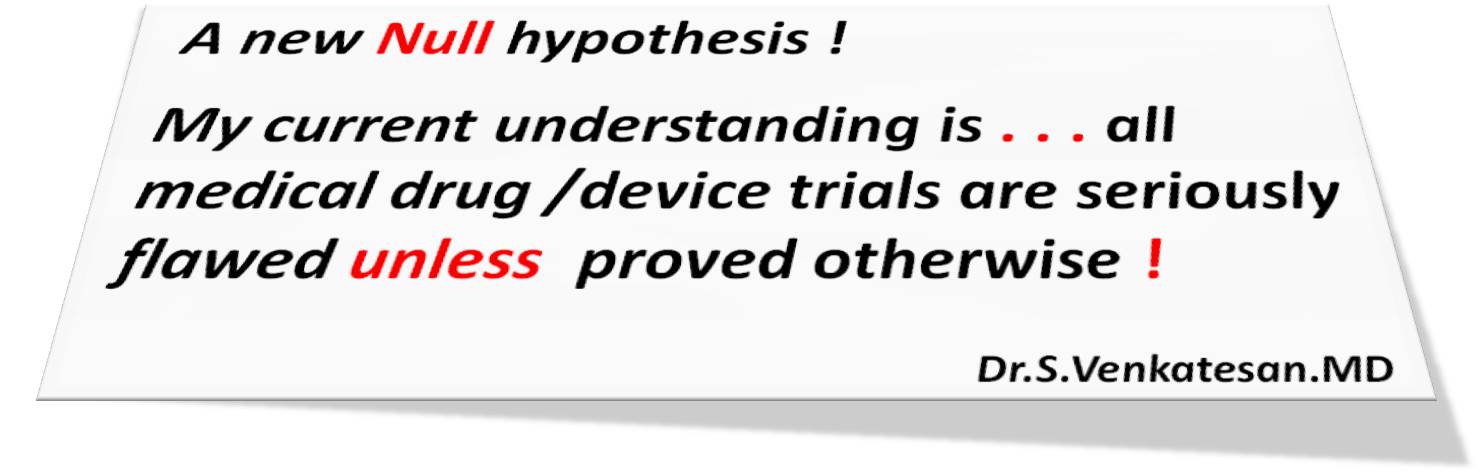
After nearly three decades of , treating patients , teaching students and little involvement in research , created a new definition for null hypothesis in medical research !
Posted in bio ethics, medical quotes, Two line sermons in cardiology | Tagged evidence based medicine, flawed drug trials, medical ethics, randomised drug trials, rct, statistical gimmicks | 1 Comment »
This cartoon succinctly depict all the options we have in our fight against end stage heart failure .We know , a failing heart is often compared to a sick , aged and tired horse.

Image courtesy Heart Physiology: From Cell to Circulation :Lionel H. Opie Lippincott Williams & Wilkins, 2004
1.Don’t whip the horse (Except in emergency)
2.Unload the horse
Vasodilators
3.Slow the horse
4.Change the horse
5.Switch to an Artificial Horse(Tractor )
6.Finally try to heal the horse (Still largely in research labs!)
Posted in cardiac drugs, cardiac failure, Cardiology - Pioneers, Cardiology -Hemodynamics, Cardiology -Mechnisms of disease | Tagged cardiac failure management, cardiac failure ppt, Cartoon based cardiology, dig trial, great cartoons in cardiology, illustrations in cardiac failure, milrinone dobutamine cardiac failure, quality and qunatity of life in cardiac failure, whipping a tired horse in cardiac failure | Leave a Comment »
Every one talks about coronary excesses ! It happens both in acute and chronic fashion , not withstanding the inappropriately understood . . . appropriately released guidelines on inappropriateness ! The burden of coronary syndromes of the humanity, I am afraid would include these man made excess as well !
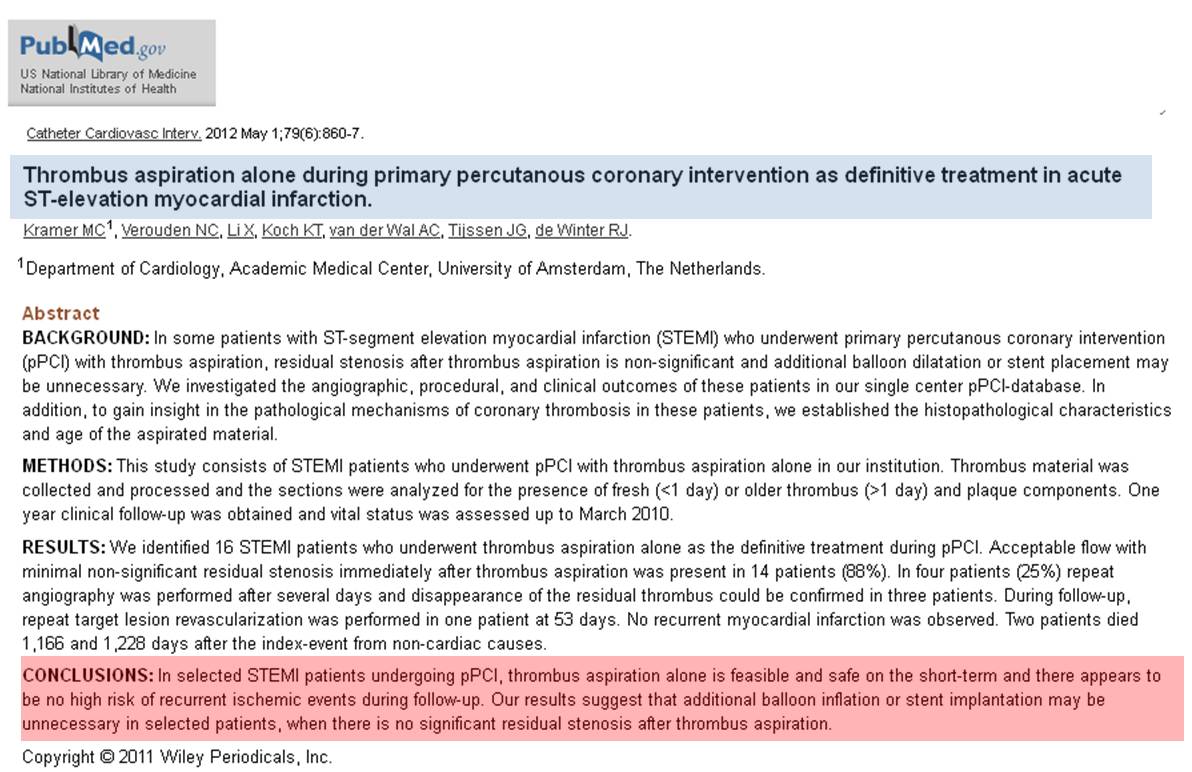
I stumbled upon two small “gems ” in this other wise wild dark cardiology literature .One from Kamaer , Netherlands and other from Escaned from Spain.
Both talk about a simple and logical modality in the management of STEMI . If bulk of the STEMI events are due to coronary thrombosis just tackle it . “No more . . . no less” Stent only , if there is tight residual lesion.
1. From Amsterdam , Holland.
2.This one is from Spain.These studies I am sure , only a fraction of the interventional community would have read .Reason ? We are always hijacked by the moments of glamor ! I am just sharing them .hope few are benefited
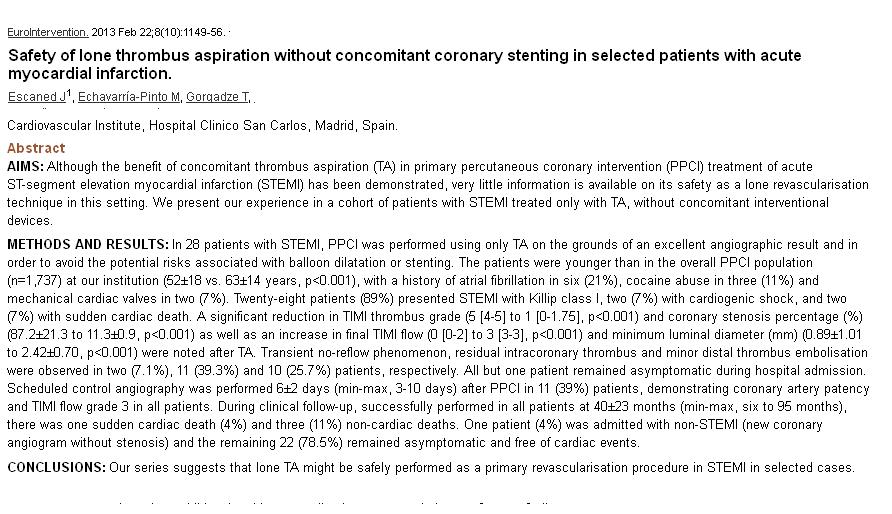 These two studies with total number of 44 patients has a potential to redefine the entire practice pattern of acute interventional coronary care.(Of course , if only , we are ready to make sense out of it !)
But , the concept will be heavily banished by strong visible and invisible forces for the simple reason it suggests a true possibility of knocking out the role of stent from acute STEMI arena.
When I discussed with my colleagues for a large scale study on isolated thrombus aspiration in STEMI , they told it is not possible for ethical reasons !
I was amused , denying such a study is biggest ethical blow to the field interventional cardiology !
Final message
Proof of concept does not require numbers .A study with less than 50 subjects can be far superior than multi-centre ,multi-blinded , self steered ,peer reviewed largesse ! The truth of the study lies in the core consciousness of people who do it , not in the numbers and exotic statistical methods !.
After all , one of the greatest medical study was done by James Lind (Father of RCT) who discovered vitamin c as an antidote for scurvy, with a hand full of sailors while they crossed the Atlantic many centuries ago !
After thought
You say , thrombus aspiration is great , Why the hell , TAPAS , INFUSE AMI, and TASTE studies confuse us regarding thrombus aspiration ?
Don’t blame it on thrombus aspiration .We do it perfectly . It is because of what we do after that ! We decorate the coronary lumen finally with a piece of metal cherry undoing all the goodness of a great pudding !
Posted in Cardiology -Interventional -PCI, cardiology -Therapeutics, Cardiology -unresolved questions, cath lab tips and tricks, Infrequently asked questions in cardiology (iFAQs), Primary PCI, STEMI -Managment | Tagged controversy of thombus aspiration in STEMI, current stemi management guidelines 2014, priamry poba, Primary PCI without stent, thrombus aspiration alone for stemi | Leave a Comment »
Meticulous Aortic imaging is vital for assessing atherosclerotic plaques in stroke evaluation , aneurysms of aorta ( Both dissecting and non dissecting.) and during aortic surgeries. Peri procedural aortic imaging has become mandatory in many of the complex aortic endovascular repair as well .
TEE is an extremely useful investigation and has revolutiolised our appraoch to aortic disorders .
However , we have an issue .
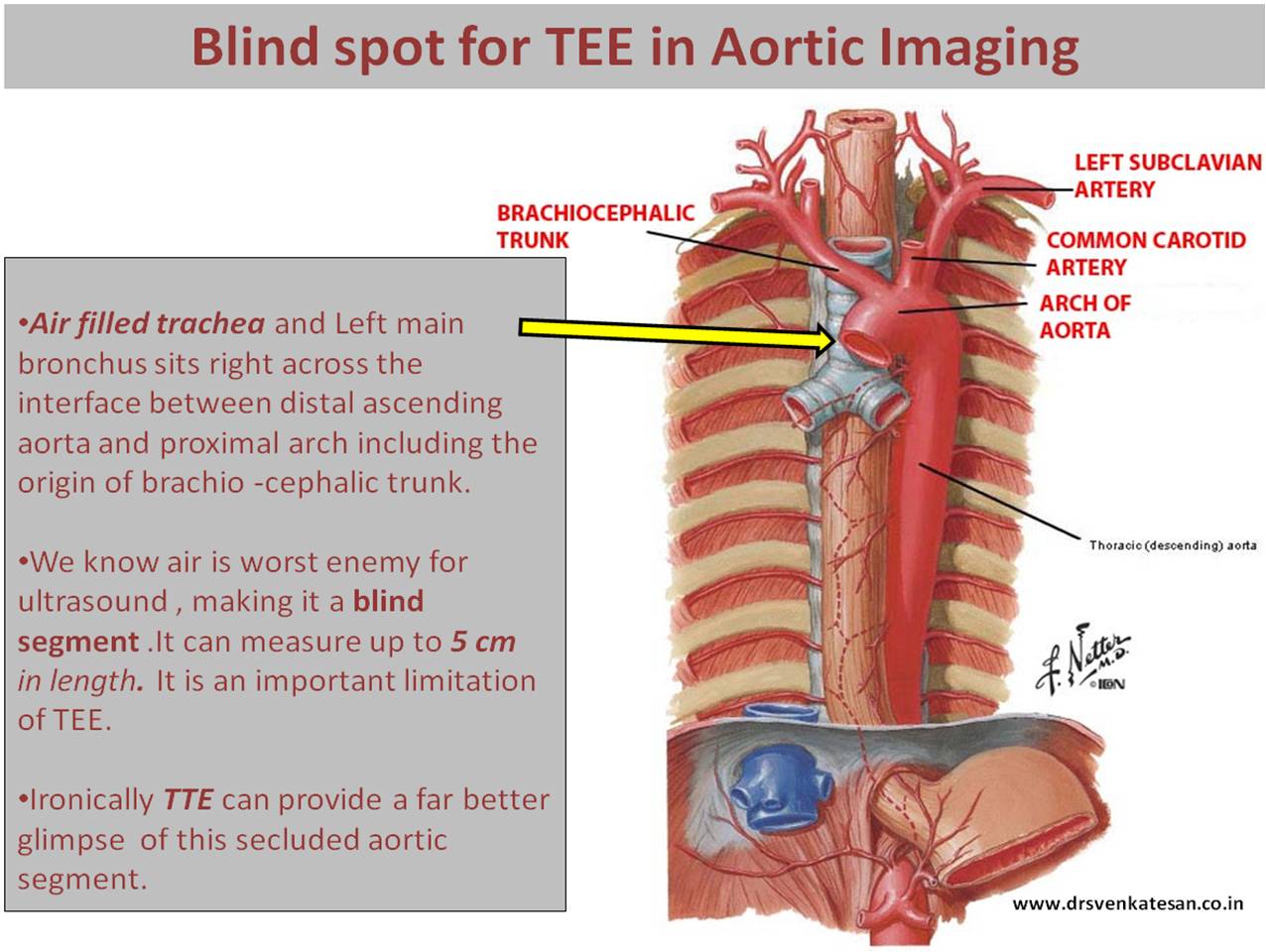
How to overcome it ?
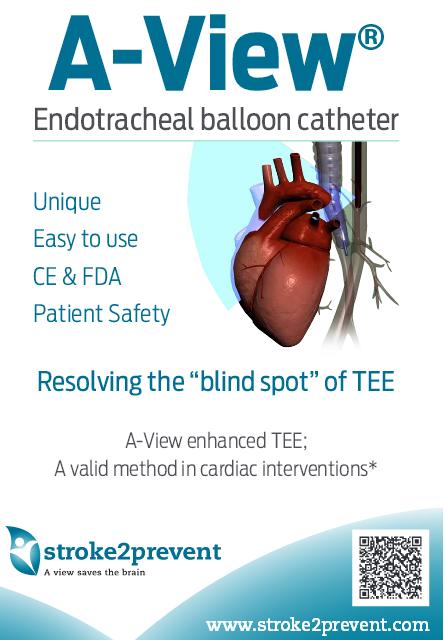
During peri-operative TEE a simple but innovative idea is to displace the tracheal air with saline filled balloon and capture the aortic arch with ultra sound . What a way to un-blind our vision deep inside the thorax !
A specific catheter is available for this purpose .
Posted in Aortic diseases, Aortic stent grafing, echocardiography, TEE-Transesophageal echocardiography | Tagged aortic arch blind spot in tee, aortic imaging in dissection dissecting aneurysm of aorta, ascending aorta blind spot in tee, what is the blind spot in tee for aorta, where is the aortic blind spot in tee ?trans esophageal echo |
The success of primary PCI is defined on the basis of acute vessel opening and deployment of stent and wheeling out the patient out of the cath lab. Most PCI cath report promptly mentions TIMI 3 flow with Grade 3 myocardial blush.
I recently encountered 3 patients over a period of 2 months in my echo lab. All three had a recent primary PCI for STEMI found to have scarred IAS with moderate LV dysfunction.
These patients were medically savvy and asked a simple question after glancing at the report signed by me.
Doctor , If my myocardium has been allowed to die a silent death in a matter of 30 days and replaced by a whitish scar , what is the point in calling the much hyped primary PCI successful and charging me about 4 Lakh Rs . They wanted to know ?
I told them you have to direct this query o the supposed state of the cardiac Intervention team.I also told them it may not be proper to criticize anyone. The science of myocardial revascularisation is yet to be fully understood.
Why the myocardium goes for long-term scarring in spite of prompt early revascularization?
Final message
Just because your patient has received a state-of-the-art primary PCI in a high-end hospital does not negate the possibility of myocardium going in for scarring and resulting in significant LV dysfunction. There is something more hidden in coronary hemodynamics than it appears!
The so-called acutely successful PCI in your discharge summary actually may mean nothing. Unfortunately, we the pundits of cardiologists never bothered to include myocardial status as one of the criteria to define the success of the procedure.
Ideally, we may defer calling a primary PCI successful or not by at least a few months, when the true story unfolds ie how your myocardium has responded to the treatment and the after-effects of a stent.
Posted in Cardiology -Interventional -PCI, cardiology -Therapeutics, Cardiology -unresolved questions, cath lab tips and tricks, Infrequently asked questions in cardiology (iFAQs), STEMI, STEMI-Primary PCI | Tagged aborted mi by primary pci, lv dysfunction following primary pci, myocardial scarring after primary pci, primary pci | Leave a Comment »
Brugada syndrome is due to a genetically impaired sodium channel activity ( SCN5A) in phase o, of action potential .This results in phase 1 (Ito channel) failing to inscribe the transition between phase 0 and 1 that result in loss of dome .This loss of dome is dominant in epicardial cells compared to endocardial cells.This result in electrical heterogeneity and a hence a voltage gradient in repolarisation phase that can trigger a Phase 2 reentry mediated VT /VF.The above said defects are either dormant, manifest, self extinguishing , dynamic subjected to autonomic tone , ambient myocardial temperature (Febrile VTs) making this a complex entity.
There are three distinct types according to surface ECG.It can be either spontaneous or induced. The arrhythmic events and prognosis and hence management differs according to the types.
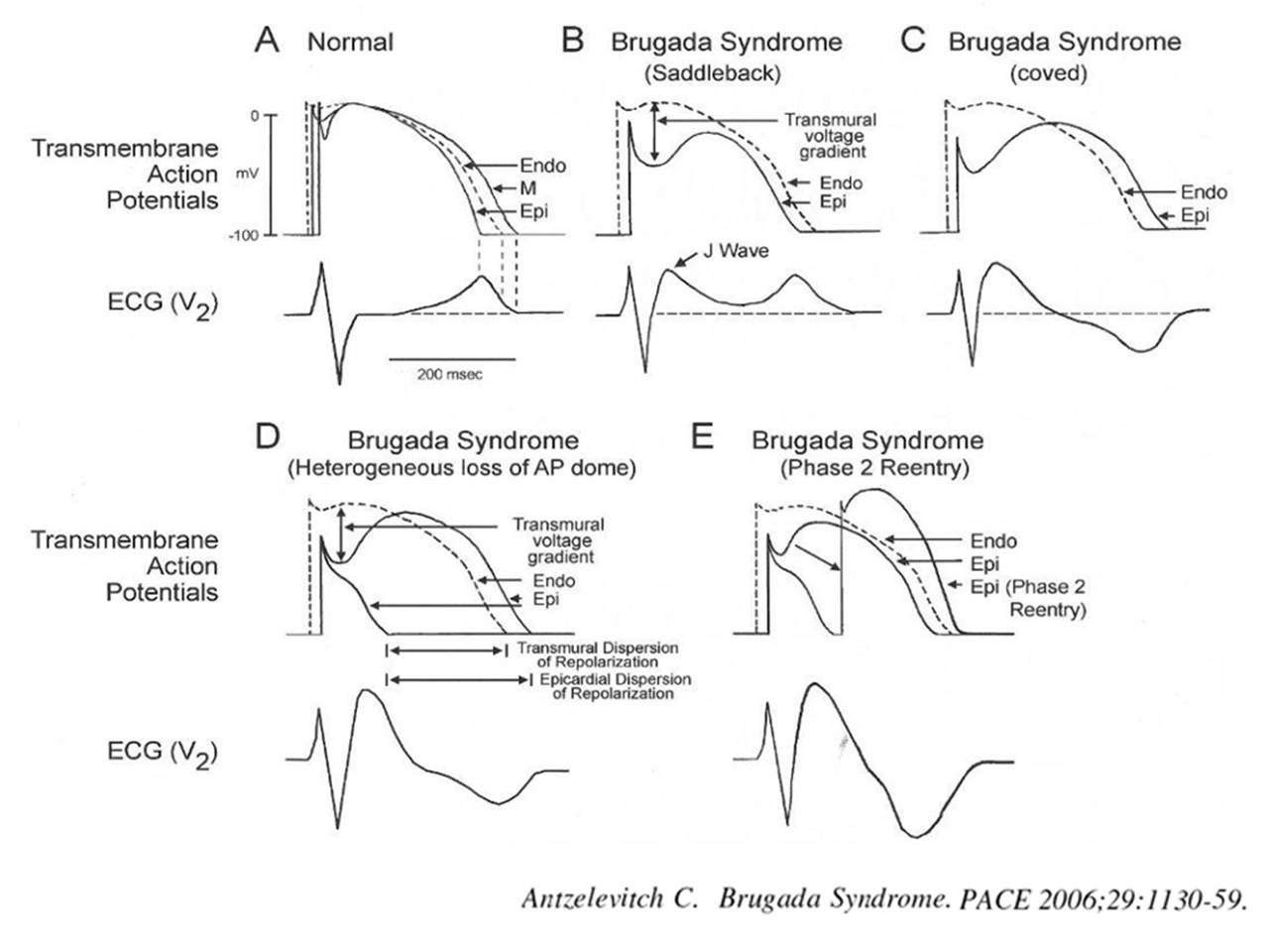 All types carry a minimal risk of SCD , variable though . Of course syncope has to be much more common. Curiously every episode of syncope is seen as naturally aborted SCD by physicians ! (No one to be blamed for this .The definition of syncope is like that !If the patient doesn’t wake from syncope it becomes death !).
When a patient with Brugada has a syncope , it doesn’t imply he experienced a dreaded VT or VF.While SCD is invariably due to ventricular fibrillation , a spontaneously terminating VF as a cause for syncope is rare in Brugada . (Ref 2 : ILRs have documented though in few)
So what exactly is the cause for syncope in Brugada ? The issue is real and critical in clinical decision-making. We are beginning to document variety of mechanisms. Following are the possible causes
Final message
It is to be strongly emphasised a significant subset of Brugada patients especially in Type 1 Brugada (spontaneous or drug induced ) the mechanism of syncope is often not related to the dreaded VT/VF. It can simply represent high vagal tone and unexplained dynamism of autonomic activity .ICD is not a default indication for all those with syncope in Brugada syndrome.Think , pause and decide when you deal with such patients. ICDs are true revolutionary devices . . . no two thoughts about it,but it can make a hell out of heaven if used in an inappropriate situation !
Reference
Posted in Brugada syndrome, Cardiology - Electrophysiology -Pacemaker, cardiology -ECG, Cardiology -Therapeutic dilemma, Cardiology -unresolved questions | Tagged av blocks in brugada sysndrome, mechanism of syncope in brugada syndrome, non vt mechansims in brugada, vaso vagal syncope in brugada syndrome | 1 Comment »
Human beings can defy fate in a regular fashion as the modern science is exploding and creating infinite possibilities !
Still , a sudden cardiac death that happens in a remote place in an unexpected manner is still in the God’s domain ! Cardiac arrest and sudden cardiac death is the most common mode of acute human loss in our planet .(Read a link :Ignorance based cardiology )
When the heart goes for convulsions due to electrical instability , the only solution is immediate CPR followed by electrical shock .All you require is about 200 j of electrical energy over the chest .This is to achieved within 5-10 minutes.How and where do you get that energy in that short time span ? Is 911/108 services that efficient ?
*Can your fully charged mobile phone deliver it ? Unfortunately not yet !
Public access AEDs (Automatic external defibrillator) are there in many commercial places.But ,they are not universal and foolproof.
Come 2015, we have a marvel of a technology waiting to happen !
How about delivering a light weight defibrillator through a drone ? to the exact place where it is needed .With the accuracy of GPS technology steadily improving , a self powered , auto- responding drones from a near by base station is a reality .
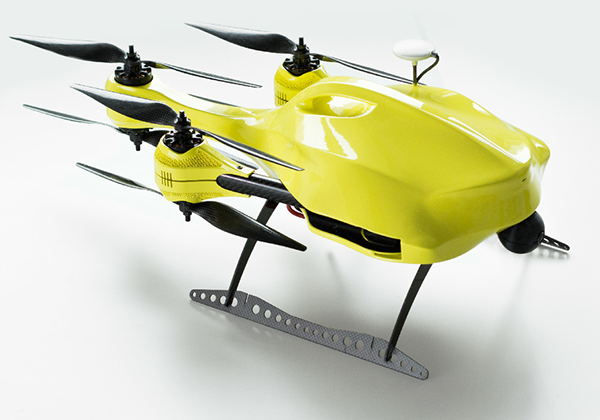
This drone . . . delivers life !
All that is required is a phone call . The drone with defibrillator is delivered in few minutes .Of course , a bystander help is required .An experimental pilot project is being tried in Holland What a break through it could be when its stream lined ?
Man proposes ,God disposes ” so sure it is ! Are we close to challenge the super power ?
It is said , modern men will play god in near future with perfection.Can it ever be like this ? “God proposes and man disposes ? No . . . it can never be! If a drone comes from nowhere to save a human life, it is also an act of God ,through a “Human enriched technology.
Posted in Breakthrough technology, Technology | Tagged cardio pulmonary resusitation, cpr, defibrillator delivered in drones, drones in medicine, medical technology | 1 Comment »
VSD with Pulmonary atresia is a complex form of cyanotic heart disease .Though it’s a close companion of Tetrology of Fallot physiologically, it is a vastly different entity in embryological and anatomic terms.
TOF is cono truncal anomaly where abnormal anterior displacement of conal septum result in malalignment VSD, RVOT obstruction ,aortic override and RVH.
While ,pulmonary atresia with VSD is not a primary cono truncal anomaly, the defect occurs much earlier than TOF in fetal life , where the origin of PA fails to materialise,(Fetal arteritis?) and which triggers a series of anatomical disarray in pulmonary arterial circulation. The PA growth arrests in various levels (Somerveille Types) .It is important to realise while the PA may be patent , pulmonary valve is always atretic and disconnected from RV.
In severe forms there is Zero pulmonary artery content .The lung is perfused in chaotic manner. This situation akin to “TAPVC” in arterial side and result in total anomalous pulmonary arterial connection.
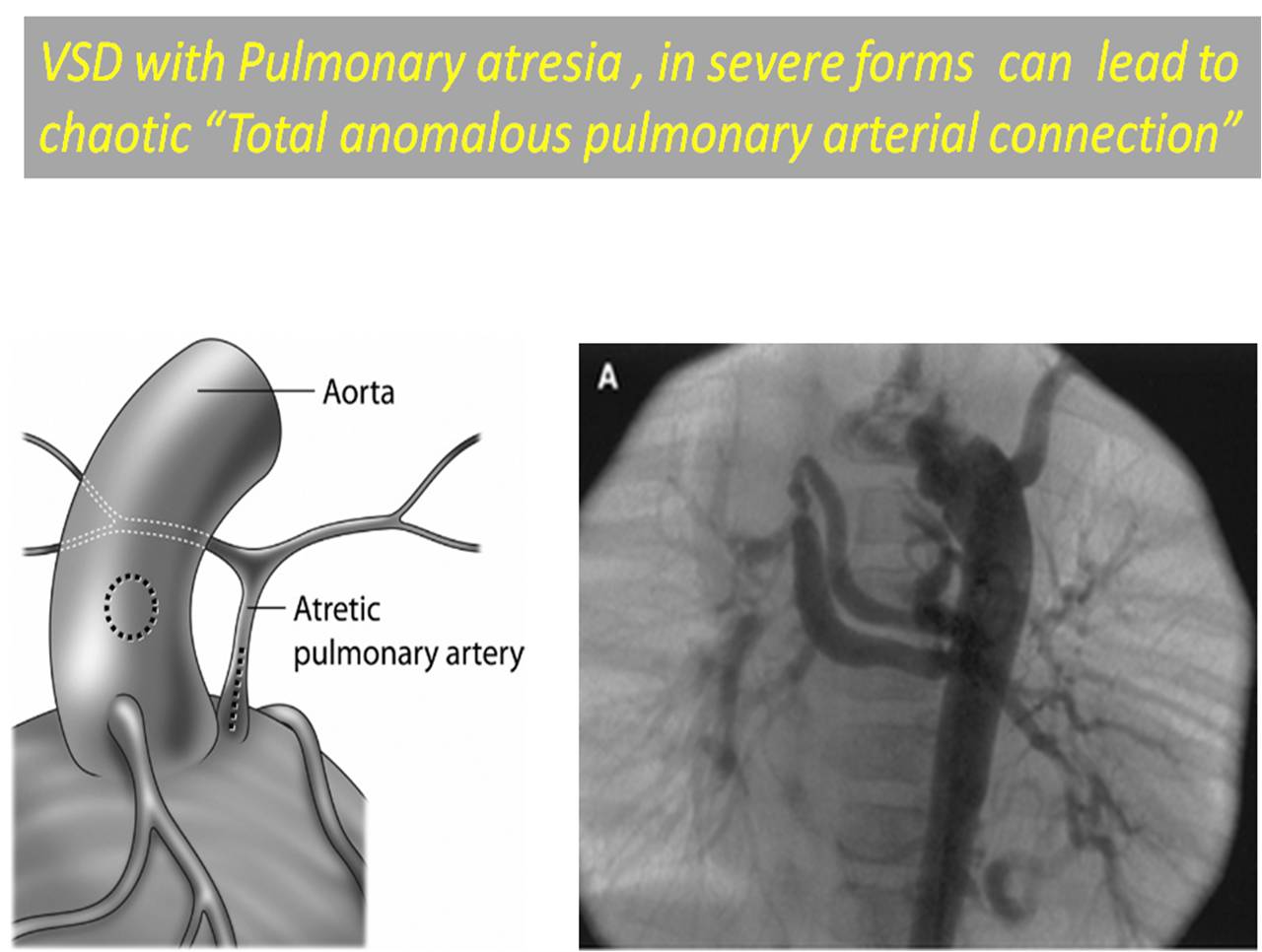
Natural History of PA with VSD .
The blood supply of lungs is maintained by MAPCAS.Since , the fetus is not dependent on its lung for survival, life goes on well , till birth and face the harsh reality that it has no independent blood supply for lungs from RV and has to depend on collaterals from aorta.
Survival depends upon the the quantum of collateral .( Size , number, arborisation pattern etc). Life is shortened in most babies and lost by 1 or two years . Exceptions are always there.Survival has been reported up to third decade in a few with a balanced pulmonary flow.these are the ones we catch up in young adults some times.
In effect , MAPCAS are the life line of these children , paradoxically the fate of these children piggyback on the behavior of the MAPCAS .
MAPCAS are not natural vessels that is meant to receive blood at systemic pressure. They are fragile and thin and when exposed to high pressure react pathologically.
Following anatomical and physiological effects occur in MAPCAS .
Principles of Surgery
The principle of surgery is to disconnect the arterial pulmonary vascular blood supply and connect all lung segments with pulmonary arterial supply and ultimately connected to right ventricle to restore the physiology.
Single vs Multiple staged surgery
The original concept was to do multi stage surgery , believing in the principle every stage give us time for pulmonary vessels and lung to grow .It involves extreme commitment of surgical team in identifying and understanding the pulmonary vasculature and the systemic collateral arborisation. The factors that is taken into account includes the presence of confluent PA , MAPCAS induced lung segment injury and its maturity . When pulmonary vessels are inadequate , autologus pericardial rolls are used as alternatives.
There is no point in vascularising a zone of lung with physiological low pressure neo pulmonary circuit which is unlikely to to work because of immaturity of distal veesels or its already damaged by the harsh pressure of MAPCAS!
We have realised the hemodynamci behavior of lung segments supplied by MAPCAS and the subsequent undoing of it is so unpredictable. The current concept is to recruit maximum lung segments and aim to provide revascularization through physiological manner.
An early single stage unifocalisation is suggested as a best option.(Reddy VM, J Thorac Cardiovasc Surg. 1995;109:832–45). Single stage repair is attractive not only in long-term hemodynamic advantage but also in the logistics . In multi stage repair ,only about 20-30% of children ultimately complete the treatment for various reasons.
It is heartening to note one of huge accumulated experience for surgical management of PA with VSD has happened in the southern Indian cities of Chennai and Hyderabad where i live.
Kudos to Dr Murthy and team for the pioneering work .Incidentally ,Dr KM Cherian is the legend in the filed of cardiac surgery and in my opinion he should get the title of the Father of pediatric cardiac surgery in India !
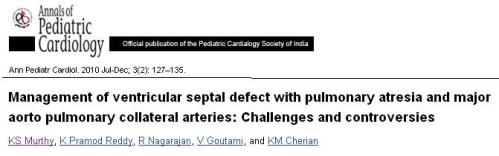
And this seminal paper from his team shares one of the largest experience who underwent single stage unifocalisation for PA with VSD in 124 patients.
What is the cardiologist role in VSD and PA ?
Cardiologist are expected to play a limited role . They can’t provide any cure as such.A meticulous cath study is all that required from them for the surgeon.
Selective MAPCAS angiogram requires special expertise ad through knowledge of anatomy .The MAPCAS are clustered around few specific zones.Now MRI and CT scan also can delineate the anatomy.
What is the surgical outcome ?
it is steadily improving globally.But only a hand full centers in the world can undertake such complex procedure(Lucile packard Children’s hospital Stanford is pioneer )
Hemoptysis in PA and VSD
It is a rare but an important issue .This can occur any time in the natural history even post operative. Most are managed conservatively .Interventional approach with embolisation is possible in expert centers.(K.Greaves et all)
Can the natural history be better than these complex unifocalisation surgery in these tender children ?
Statistically , it is possible in few cases, but to identify those children you need to get an appointment with God ! If parent’s take such a decision it should be welcomed and cardiologists and surgeons should not lure them with scientific excess !
Final message
The surgical correction of PA with VSD continues to be complex .Meticulous recruiting and unifocalisation of PAs and creating confluence , connecting the RV through a conduit may be the key.However, ultimately what is going to matter is the how the lung responds to these surgery hemodynamically !
It appears to me the whole process is more of a vascular surgery of lungs rather than heart !
Reference
Posted in cardiology congenital heart disese | Tagged aorto pulmonary collaterals, hemoptysis in mapcas pulmonary atresia and vsd, K S murthy KM cherian madras medical mission Innova children's hospital pulmonary atresia vsd tetrology, mapcas, single vs multiple stage unifocalisation, tof with pulmonary atresia, unifocalisation single vs multiple staging pulmonary atresia, UNOFOCLAISATION | Leave a Comment »
Complex coronary lesions require not only expertise it needs better hardware .A key factor is the support from guide catheter.Innovations are hall mark Interventional cardiology community.Every few years a hard ware breakthrough is expected.
Boston scientific has an answer for improving frequent guide catheter destabilisation in complex anatomy and lesions .A dramatic new concept for guide catheter support .They have named it in a hollywood fashion “Guidezilla”
Major advantage : Extending the tip of the guide with an anchor to facilitate smooth balloon approach to the lesion which i avoids repeated disengagement of guide catheter.
Watch this animation . It comes with a music stunning too !
Posted in Hardware techniques tips | Tagged cath lab hardware, guidezill guiding catheter boston scientific, guiding catheter innovations | Leave a Comment »
In this wireless networked world nothing is personal, not even your heart beat.Modern pacemakers and ICDs have wireless connectivity with the manufacturers.This is value added service for regular monitoring and solving any technical issues.
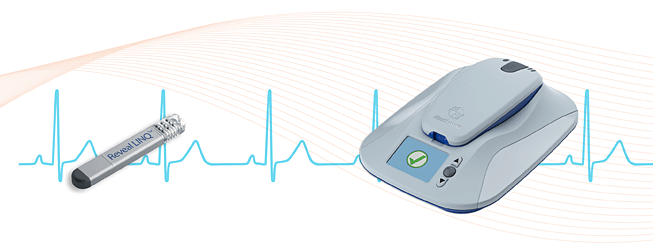 Hacking a device like pacemaker and ICD and instant deactivation or triggering a new event is a distinct possibility .It was shown in a fictional TV series “Home land” that prompted the ex American wise president Dick Cheny to switch off all wireless function in his ICD. Now ,the US homeland security cyber emergency response team has decided to probe the issue .
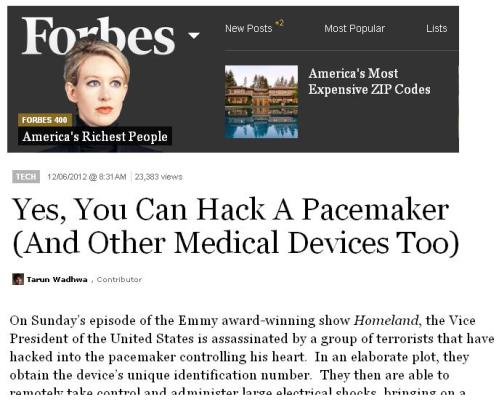
Perils of technology is taking us to new uncharted territories , while your SA AV node are at risk of being remote controlled !
Meanwhile Medtronic has clarified they have increased the security features and pacemaker /ICD hacking is not an issue to be worried . But the threat is genuine !
Reference
1. Frenger P Hacking medical devices a review – Biomed Sci Instrum. biomed 2013.2013;49:40-7
3.Fox news
Posted in bio ethics, Cardiology - Electrophysiology -Pacemaker, Cardiology -Technology | Tagged dick cheny and ICD, homeland seral pacemaker hacking icd, Pacemaker and ICD hacking, remote cardiovrsion, remote monitoring of pacemakers icd, wirless connectivity of icd | Leave a Comment »




