Feeds:
Posts
Comments

Archive for the ‘Cardiology – Clinical’ Category

Coronary atherosclerosis  can  strike  an artery  with  variety  of   lesions.It can be  any of the following.

  • Focal
  • Ostial
  • Eccentric
  • Discrete
  • Diffuse
  • Tandem
  • Ectatic
  • Multiple

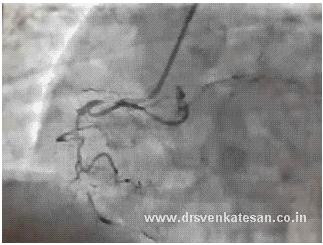
  Rarely  a coronary artery  is  blessed with  all  of the  above  characters ,     added  with homo and hetero  collaterals   . . .     resulting  in  Atherosclerotic    chaos  !


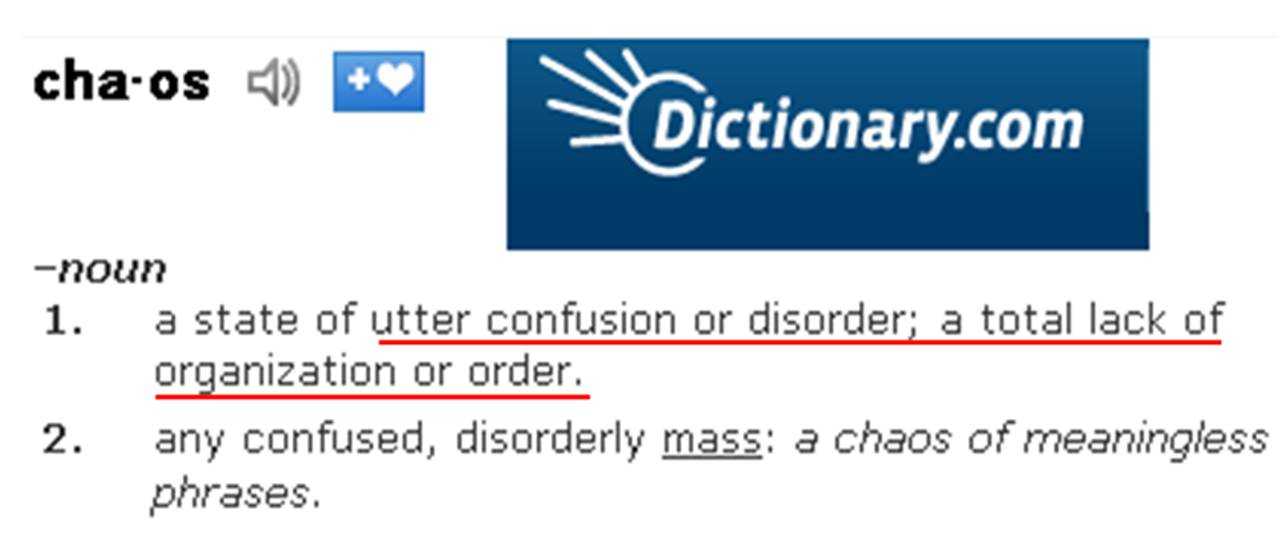
What is  chaos ?


Note one such vessel inflicted with chaos lesions

How to you report the above angiogram  ? What can be done ?

We  do not treat an angiogram. We need to know the clinical background. (This  is a  50 year old man with chronic stable angina )  He also had a  lesion  in LAD and   was advised CABG with grafts to LAD  and PDA.

Is PCI possible in such a vessel ?

Most would agree , it is a crime to think about  PCI in the above vessel. Still , few hard-core  interventional  cardiologists may vouch   for success  in this vessel !

Is there any alternative management other than CABG in this vessel ?

Leaving it alone can be an intelligent strategy . (If  LAD is normal  it  may be the  best possible management)  . But , CABG will remain a default choice. But , when a person is having such a rampant atherosclerosis  he is at high  risk  for pre- mature  graft disease as well. Hence  , intensive medical management will be the key  in  such patients irrespective  of  any revascularization procedure.

Read Full Post »

Coronary collateral circulation can be termed as one of the  mysterious  circulation in our body.Cardiologists generally do not  give much importance to it and some interventionists even ridicule it !  . But  ,  God has given it ,  with  a purpose. He adds a riddle though !  .Collaterals  grow  in  almost  every  individual  when   obstruction occurs gradually ( chronic coronary syndrome ) but only in  a few ,  it  will open up  during a real emergency like ACS !

How and why , only  few of us can  recruit  coronary collaterals   during   acute occlusion ?

God  blesses acute coronary collaterals only in selected few  , who  are on the right side of his good books .This can be  the other name for our  destiny !

Role of coronary collateral circulation  in acute coronary syndrome.

  • Limits  infarct size and volume
  • Promotes salvage
  • Converts q  MI to non q  MI
  • Prevents Unstable angina from becoming MI
  • Prevent primary VT and VF*

All  of the above can be vital  in saving a life  . Even as  we realise 30 % of STEMI do not even reach hospital  , it seems certain men and women with early collateral recruitment  will never  fail to reach the hospital alive

Is there a simple  method to identify  people who are blessed with acutely recruitable   collaterlas ?

I am afraid it is  almost equal to  asking   for a glimpse of GOD   !

Wait . . .  when we were on cath lab  few  days ago a  stunning  phenomenon happened  that could pave way for identifying  potential acute  collaterals  in any human being.  Follow this site  . . .the details will be posted !

Read Full Post »

 Hypertension  ranks  number one  in the risk for future  stroke . Surprisingly this is true  for ischemic  as well as  hemorrhagic strokes.

 What  causes  thrombosis or  rupture of small cerebral arterioles ?

 It is somewhat similar to coronary events . ( With one major exception,  coronary vesels  are   not prone for rupture ) .It is  believed   sudden spikes of   blood pressure  and the resultant endothelial injury are responsible. Atherosclerotic plaque fissure and inflammation  also  contribute. 

Is embolic stroke related to hypertension ?

The vast majority of embolic stroke are believed to  arise from heart .This belief is getting gradually eroded , as we now know aortic arch and carotid arteries vie for this honour . .(This was indirectly proved in AFFIRM trial  when rhythm control failed  to reduce the incidence of  stroke inpateints with AF ,   implying much of the strokes arise  in the upstream rather than within the cardiac chambers )  

Meanwhile , there is no controversy  in  SHT  promoting  both cardiac  and non cardiac embolus to brain

Systolic ,  Diastolic or Mean pressure   which is  important  in the genesis of stroke  ?

All parameters  are  important , but the   systolic blood pressure  is vested with more  vigour  to damage the  cerebral arterioles. The reason  systolic pressure is more important lies  in the  fact ,  it  can  attain  high pressure peaks instantly ,  unlike diastolic or pulse pressure which  slowly builds up. Further , systolic BP  carries  leading edge of the pressure  curve with high Dp/Dt and hits  the target  first !

At what pressure the cerebral artery becomes  uncomfortable ?

We do not know  the answer as yet , but any systolic pressure above 180 mmhg is a huge stress for the cerebral arterioles.The rapidity with which the BP  raises  (Dp/Dt) also becomes  important  . High blood pressure increases the shearing stress .It  interferes with nitric oxide synthesis and promotes endothelin release which precipitates  cerebro vascular event.

How do you identify people who are at risk for stroke ?

While  cardiac physicians are obsessed with exercise stress test to predict CAD  very  few  are worried about  stroke . In fact the same exercise stress test can be used to stratify stroke risk. The exercise induced systolic blood pressure  raise  is a useful risk stratifying  tool. This concept is there for more than a decade without reaching the clinical domain.

The following paper was  published in stroke journal (2001)  from the picturesque university of  Kupio Finland.(See below )  It is a wonderfully done study and throws great insight into the  new  emerging  science of  Intra cerebral hypertension .

 

The following can be summed up as risk factors for stroke during EST  (Derived from   various sources  and  . . .  with   liberal dose of personal  logic !)

  • Raise of 20 mmhg  SBP  at  2  minutes .
  • Increment of >  20mmhg in SBP any subsequent minute.   
  • Any  SBP  above 200mmhg during  EST
  • Failure to  reach baseline SBP  at 6 minutes recovery .
  • SBP  or DBP remaining high  even  after  the heart rate reaches baseline.


 Final message

For the kind attention  of all  cardiac physicians . . .  whenever you do an  EST for a cardiac indication ,  please spend the first  few  minutes  carefully ,and   look at the  blood pressure response . It is encouraged ,  to  specifically mention about the  behavior of  SBP  and write a remark about the propensity for  stroke in  every EST/TMT report .   Let us grow our brain  sense as well   . . .  for   the sake of our patients !

Thanks again  to Dr S.Kurl et all from Finland  for their  nice article which  stimulated  me to write  this post .

Reference

http://stroke.ahajournals.org/cgi/reprint/32/9/2036

http://heart.bmj.com/content/95/13/1072.abstract

Further queries

How common is stroke following a EST procedure ?  Can high blood pressure dislodge a carotid plaque during a stress test ?

The answers will be posted soon once I  get it . ( Of course you can do it if you know !)

Read Full Post »
WPW syndrome remains as  a   fascinating ECG entity ,  ever since it was described by Wolf , Parkinson and White in the year 1930.It is  primarily a  disorder of cardiac embryology . Heart is an organ made up of  tissues from mesoderm and neuro ectoderm.The muscle which comes from mesenchyme has to be incorporated with specialized conducting system. This is a complex  process .It is determined by the bio-genetic forces. When errors happen in the embryonal  tissue  flow  congenital anomalies occur.

In  WPW this  error   happens  exclusively in the conduction  tissue movement  . Normally the specialized conducting system    pierces  the  entire  AV ring and connect atrium  and ventricle  .Later ,   it regresses in  all areas  except in the AV nodal zone  . When  It  fails  to regress ,  these  remnants of  conductive  tissue act as AV accessory tissue  and create electrical  short circuiting .This is the reason , all these pathways are located in the close vicinity of AV ring.

Accessory pathway shows   varying conduction velocity , but generally devoid of  decremental conduction properties .  The presence of such pathways make these individuals prone for variety of cardiac arrhythmias .It can range from  simple AVRT  to  malignant antidromic  AVRTs  that can end up in  VT /VF.

Resecting  these  pathways surgically was once popular.  Effective blocking  of  the pathways with  drugs  is a good option. Currently ,  it is possible to  locate and  ablate  most of these  pathways   successfully.

Even though there are many protocols to locate accessory pathway the one that is very popular is  simple   Type A and type B  WPW , which locates the pathway either in the  left  or  right  ventricle  respectively.

Huge data base  has been accumulated over the past 80 years  regarding WPW syndrome,  still   many questions are unanswered.  One of the important clinical issue is  multiple  accessory pathways , scattered  at  random  across the  tissue planes of atrium and ventricle  .

The other issue is intermittent pre-excitation and shuffling  of path ways during tachycardia  .

It is very rare to see a patient who manifests both Type A and type B pattern during sinus rhythm .Here is an  article from  unexpected  quarters  , Colombo Sri-Lanka in the year 1972  candidly  describes a patient with classical  combination  of  Type A and  B  WPW . It is great to see such an interesting  observation in the pre  EP/Echo era from a remote island nation.

Now , let us ponder over  these questions

    1. Can a pre-excitation  happen simultaneously in both right and left free wall pathway ?
    2. How will the ECG look like  when impulse travels over multiple pathway ?
    3. When dual pre-excitation combines   with  normal AV  conduction  ,     will  it not make  a  triple AV pathway ?
    4. How does a supra-ventricular impulse decide ,  which pathway it is going to travel  when confronted with a choice of  three or  four pathways ?
    5. How do you plan ablation for such a patient  ?

Read Full Post »

What do you advice a patient with single vessel  CAD  with milder forms of angina or no angina ?

Medical management ?  May be you are right . But most of us do not  follow this  correct advice.  Why ?  We have a inherent bias against  medical management  . Cath labs exude  unmatched glamor and  attraction in various forms  to both cardiologists and their patients.   Now , here is a   surprise  finding  , unpalatable though , for many of  us !  Simple jogging or bicycling can have equal if not  more relief  than even a angioplasty . This study which came in 2004  was made sure , not to  gain a prominent place in cardiology literature.

http://circ.ahajournals.org/cgi/content/full/109/11/1371?linkType=FULL&resid=109/11/1371&journalCode=circulationaha

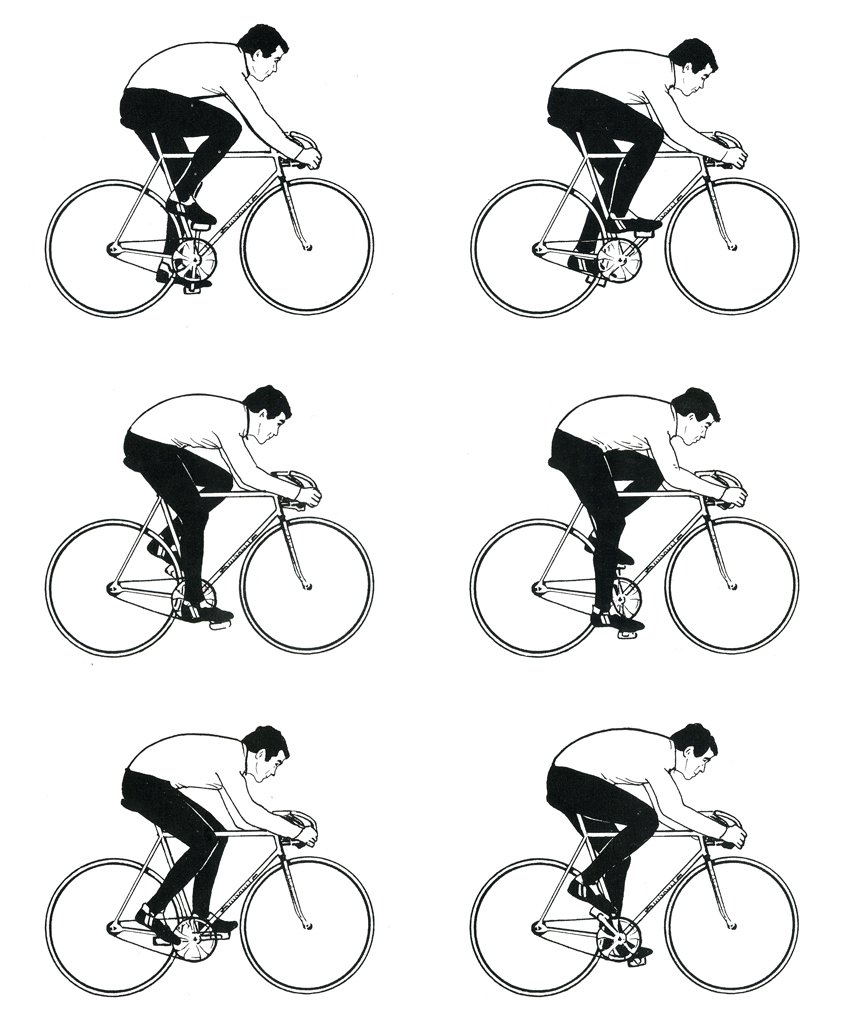
Let me pedal faster . . . cardiologists are after me !

The circulation article

How does exercise help in reversing CAD  ?

We know the prerequisite for plaque formation is the endothelial  injury along with lipid accumulation. Further ,  high local adrenergic(vasomotor) tone ,   growth factors and inflammatory activity would accelerate the plaque formation.

Regular exercise  has been  convincingly  shown to improve  the endothelial function. It  restores  the optimal adrenegric tone in the coronary micro circulation so the blood flow is brisk and pro-coagulant  activity is reduced .

It is easy to accept  the fact ,   exercise  can  prevent   progression of plaque   . . .A question that lingers in many including  many  cardiologists is this   . . .How  is it possible   for exercise to  regress well  established plaques ?

When   exercise  can   dissolve  huge  fat loaded  abdominal  tummy  in matter of weeks ,   there need not be any doubt  about the efficacy  of   exercise  in regressing   minute  lipid laden  coronary tummies (also called as plaques) .

(Of course , the  above statement  is supported by  documented  angiographic evidence  as well !)  Read below and  also the AVERT study .

Final message

Attention  all CAD patients ,  empower yourself , you  can become your own  cardiologist . You can perform angioplasties with bicycle  at zero  cost ,  of course  you have to pay for the bicycle !

This article “hypes up” the importance of physical activity in the management of CAD. But , it has to be  combined with optimal anti anginal drugs, good lipid control , blood pressure and diabetes  control  if present  , stress reduction  and good  sleep  to keep the CAD and cardiologists  at bay !

Read Full Post »

We know  acute coronary syndrome  presents* with  either  STEMI or NSTEMI. (*It actually doesn’t present , it is our understanding and interpretation ).  Bifurcating  ACS into two is more by convention and convenience .Does  the intra-coronary  plaque  dynamics  really  permit us to divide ACS in to two distinct ECG  entities ?

Are we oversimplifying it ?  Probably yes.

The following paper was presented in the cardiological society annual scientific session in New Delhi few years ago (2006)

It generated an intense debate  , finally the chair person  reluctantly concluded such events are  possible. . .

but need more proof   . What is your take on this issue ?

DUAL   ACUTE   CORONARY SYNDROME

S.Venkatesan ,G.Gnanavelu,V.Jaganathan,

Department of cardiology . Madras Medical College. Chennai

Acute coronary syndrome (ACS)  is  classified into  STEMI  and NSTEMI and has gained universal acceptance. The classification was done by   clinical & electro physiological   findings    with   some   pathological basis. The   classification   came into vogue primarily to simplify the decision making process of thrombolysis. ( STEMI –Thrombolysis eligible .NSTEMI  Thrombolysis ineligible.) The limitation of this classification is well   exposed   as   we   now know,    STEMI can evolve into NSTEMI and NSTEMI can evolve into STEMI .   Identifying the culprit artery in ACS is   not straight forward especially in NSTEMI. Adding further complexity   is   the newer   observations that diffuse vessel inflammation,  and  multiple active plaques(MAP) are responsible for many of the episodes of  ACS.

In this scenario   there   could be two are more pathological processes   one   resulting   in  a total occlusion   and other sub total occlusion resulting in both patterns of ACS simultaneously .(STEMI & NSTEMI  Dual ACS)

We   describe two  patients  who had   presented to our CCU  . Both had STEMI one in  lateral  other in anterior wall . They   were thrombolysed   as per  criteria. Both patients had gross ST depression (>4mm)  elsewhere. In one patient it  corresponded  to the reciprocal  leads .The outcome of  thrombolysis  was turbulent .Both patients worsened and one developed  recurrent VT . Paradoxically the ST elevation   regressed   indicating a successful   thrombolysis  in the STEMI  territory  even as the ST depression  was worsening in the other leads. Angiogram   revealed   multivessel CAD with   recannalised  LAD  lesion with eccentric , thrombus containing  lesion in RCA/LCX. One patient expired and other was referred for revascularisation.

We   believe   both of our   patients  experienced  Dual ACS.

When to suspect dual ACS ?

Dual ACS is likely , when  STEMI is associated with ST depression  in at least 5mm in any two leads  or   when there is disproportionate  reciprocal ST depression ( > 2mm of primary). The reason for the poor outcome could be due to a therapeutic conflict between   STEMI & NSTEMI as the former  is  thrombolysis friendly while the later is not . Role of   thrombolysis in  such situations were ACS wanders between STEMI & NSTEMI is not defined. Another possibility is the concept of reciprocal ST elevation,   where in the index event  could be NSTEMI and STEMI is a secondary response  and  thrombolysis is apparently  contraindicated.

We conclude that in patients with ACS,   two or more   plaques can simultaneously get  activated  and  present  as a combination  of STEMI / NSTEMI   in the same  patient  in two different coronary arteries.(Dual ACS) .We suggest   that in every  patient who present with  STEMI  a possibility of   dual ACS  is to specifically considered,  as  thrombolysis could be disastrous  and  instead  they  should  reach   the  cath  lab directly.  .

Read Full Post »

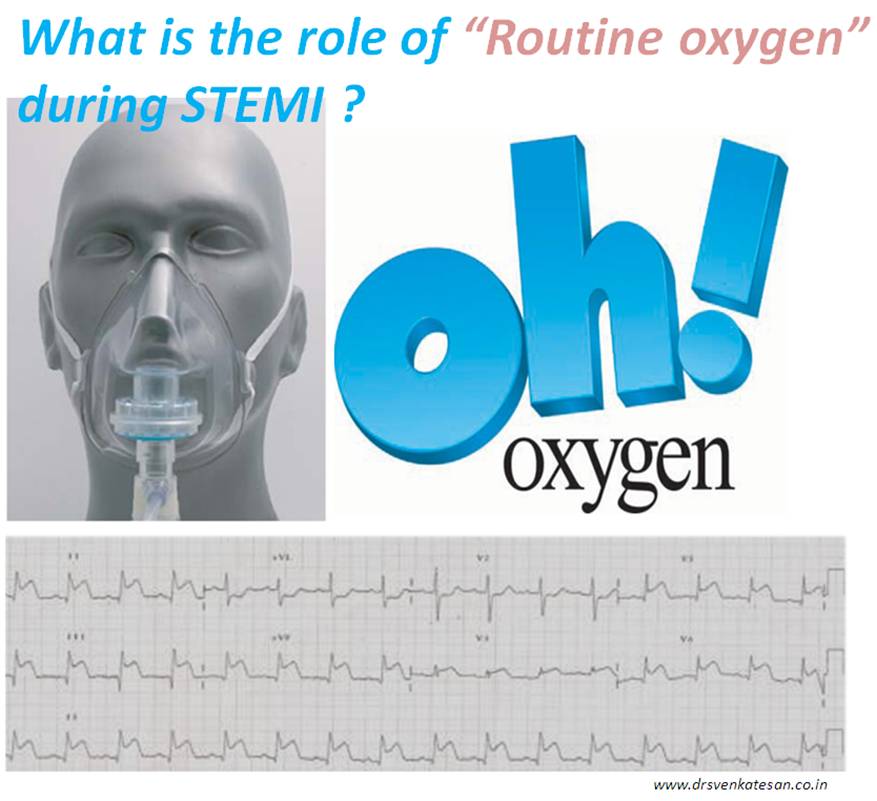
Oxygen has an ubiquitous place in any  critical care unit. If some body is labeled as  critically ill , it becomes mandatory  for a tube to  be inserted per nasal. It is more of a conditioned  reflex and  sort of a socio- medical necessity .The futility of oxygen administration in critically ill is most evident in the management of STEMI.

Inconvenient  questions

  1. Does the oxygen  we  supply ,  ever reach the disputed  site   myocardium             (From  the port of entry . . . namely the nose  )
  2. Does it improve  the myocardial salvage ?

There is generally no hypoxia associated with STEMI . Even if it is there , the  ischemic myocyte can not be oxygenated by increasing the systemic saturation as the problem is with the   delivery of oxygen due to defective supply.

What does the guidelines say regarding o2  ?

Read  yourself    http://circ.ahajournals.org/cgi/content/full/110/5/588

Final message

Routine oxygen administration  is  required  to create  the intensive care ambiance .

Oxygen administration  by default has no scientific role.

However,   it is generally not harmful . As long  a drug is  not harming the patients , inappropriate  therapy is   forgiven by modern medicine.

When  is oxygen really indicated in STEMI ?

  • Significant persistent  Hypoxia
  • Associated LVF
  • Any arrhythmia
  • COPD

Forbidden discussions  in academic forums

Oxygen  administration has  become  mandatory to generate revenue  for the cash starved  corporates .It  is a standard practice to charge these patients on hourly  basis  of o2 usage  in many hospitals.

Read Full Post »

An  unwanted , unexpected , unpleasant sound  is  often referred to as  noise

Human ears , are  not meant to  hear  only the  pleasant  sound . We live in a noisy world. It is believed every cell in the body has ( Auditory ?) sense  receptors. But , the noise is perceived  only at brain .It is  incidental our ears  are located  right beside the brain , adjacent to  parieto  -temporal cortex . The auditory nerve  has   its  nucleus  located dangerously close to vasomotor centers of  brain stem .

.

When  excess noise enters our ears it vibrates  the brain stem as well . Noise travels in the nervous system as electrical  impulse , so it is natural  for  to expect a  spill over to the  nearby  adrenergic  centers  .

A sudden explosion or a thunder will skip a few heart beats is it not ?  Similarly , when   we experience  pleasant  sound /  melody**   it  soothes   the nerves ,  this forms the basis of musical  therapy.

So  it is logical to conclude   , when the  nice  music  has a capacity to heal ,  unwanted  noise  is expected   to injure  our biological system.

** A rock fan under the influence of  drug  may feel a every nonsense  as melody . . . is a different  story !

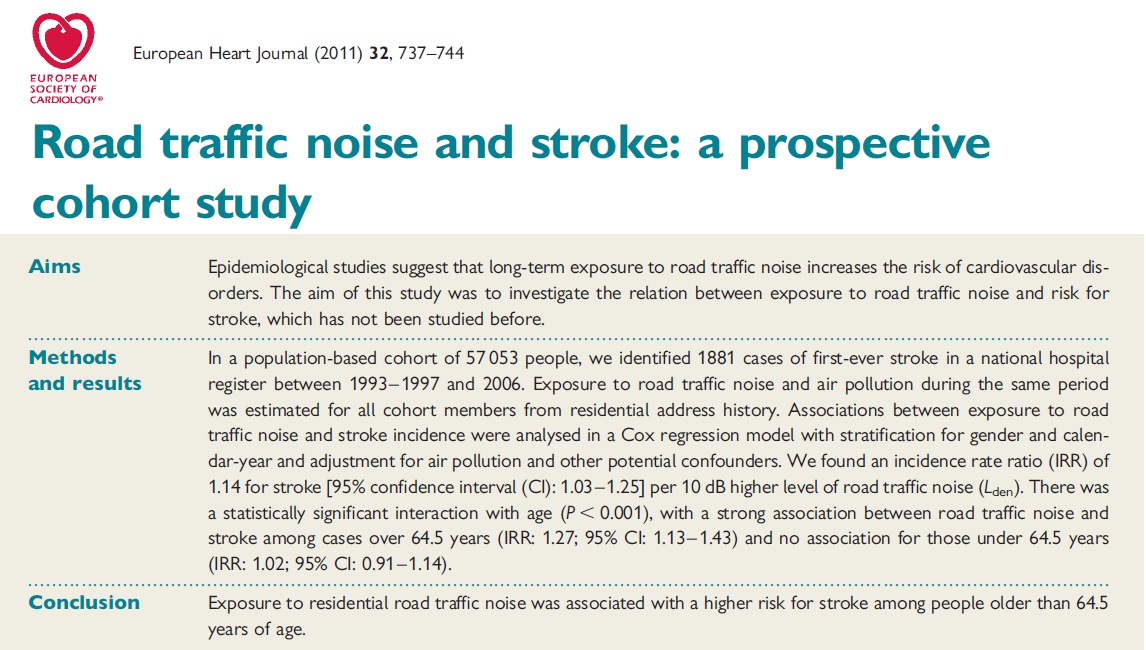
It is observed strokes and MI are more common in urban areas congested  with traffic chaos. Here is an article from European  Heart  journal   with  solid evidence on this topic.

Excess noise   could  result in  cerebral  or coronary arterial  spasm ,  thrombotic  occlusion or even a hemorrhage ?*

  • Noise  induced adrenergic trigger and spasm of blood vessel
  • Adrenergic  surge  and resultant hypertension

Associated  Phenomenon along with noise

  • Anger
  • Anxiety
  • Fear (A noise associated with a  missile attack  in the  war zone )
  • Relative  hypoxia , Air pollution in noisy  environment .

*A distinction must be made between   chronic noise  pollution  vs  Acute noise intoxication.

For  those who want  more depth in this  topic , I  was surprised to find  this  exclusive journal  that documents noise and human health .

Final message

Excessive noise  can have a detrimental effect in the nervous system . Since  cardiovascular system  is also under    neurological command  it  is  expected to  share the ill effects.

A comforting news for healthy men and women  . Noise per se  can not be termed  as a  coronary  risk factor . It can  (at worst ) be a  trigger  for an event  in individuals who have other major risk factors.


Read Full Post »

Human heart is a compact elastic organ .  We know elasticity is lost when it is stretched beyond a point.This is what happens in dilated  cardiomyopathy .When the heart muscle fibers stretch  too long from the baseline  it loses its ability to contract and relax   efficiently.In fact  , after a cut of point even if it comes the original length the elastic fibers are fractured and suffer from irreversible damage.

Among  the systolic vs diastolic dimension it is the diastolic dimension that becomes important in defining dilatation.

When do you say a ventricle is dilated?

  1. When the EDD (End diastolic dimension) > 60mm
  2. EDD > 56mm
  3. EDD > 10 % from baseline
  4. EDD > 25 %  from baseline

Any of the above can be right.

The normal human ventricle measures  between 35 to 55mm in diastole .

Currently accepted  definition for enlargement of heart is EDD  of 56 mm and above. Some believe  in a more strict criteria of 60mm.

Consider the following situation

A man with 35mm EDD   can increase 20mm ( ie 60 % )  from of his baseline  and still be  labeled as  normal LV  dimension ! . If the above patient  is  destined to develop dilated cardiomyopathy    his  heart  would  begin  its  final  journey  slowly but   surely ( from 35 mm  ! ) . So ,  according to current criteria  we can diagnose  DCM only after it travels the half way towards hell .   What a way to define DCM  ! Be cautious LV dimensions can fool  you  . . .

If the EF is low and symptoms develop early ,  one may recognise  the above  entity ( at least erroneously !) as non dilated cardiomyopathy or RCM.

If  the patient is relatively asymptomatic and   if we   overlook  the  baseline  LV parameters ,  we are likely  to miss  most of the early  DCMs

Final message

We need to stress the importance of baseline LV dimension in defining DCM  . It is proposed  from this  site ,  an increase of 25 %   and above from baseline  can be   included as an   additional  criteria  for  LV dilatation . This  could  help us understand   the early muscle dynamics in DCM.

Un-Answered questions

  1. How to diagnose  early DCM ?
  2. When does the EF begins to decline in DCM ?
  3. What is the relation between EDD and EF %?
  4. Is HF with preserved LV function ( previously called diastolic dysfunction ) is the earliest point in the natural history of  DCM
  5. Is there a overlap  between non dilated cardiomyopathy , RCM and early phase of DCM ?

Read Full Post »

SA node is  the ultimate   power  center  of heart located in the junction of SVC and right atrium .In normal physiology  it fires  at a rate of  60 -90 /minute   that  dictates  the  ventricular rate  .

SA node is a linear  spindle shaped structure with a length of  1.5cm . The P cells with unique mitochodria  are  responsible for pace making activity  . The ion responsible for pacemaker current is mainly  calcium  with the initial 25 % push given  by  sodium current as well .  These cells are predominately under vagal control.Even though  pace making activity  is normally restricted to the SA node  , the vagal innervation is such that  the pacemaker  has a  potential to shifts it’s activity  both functionally  geographically.

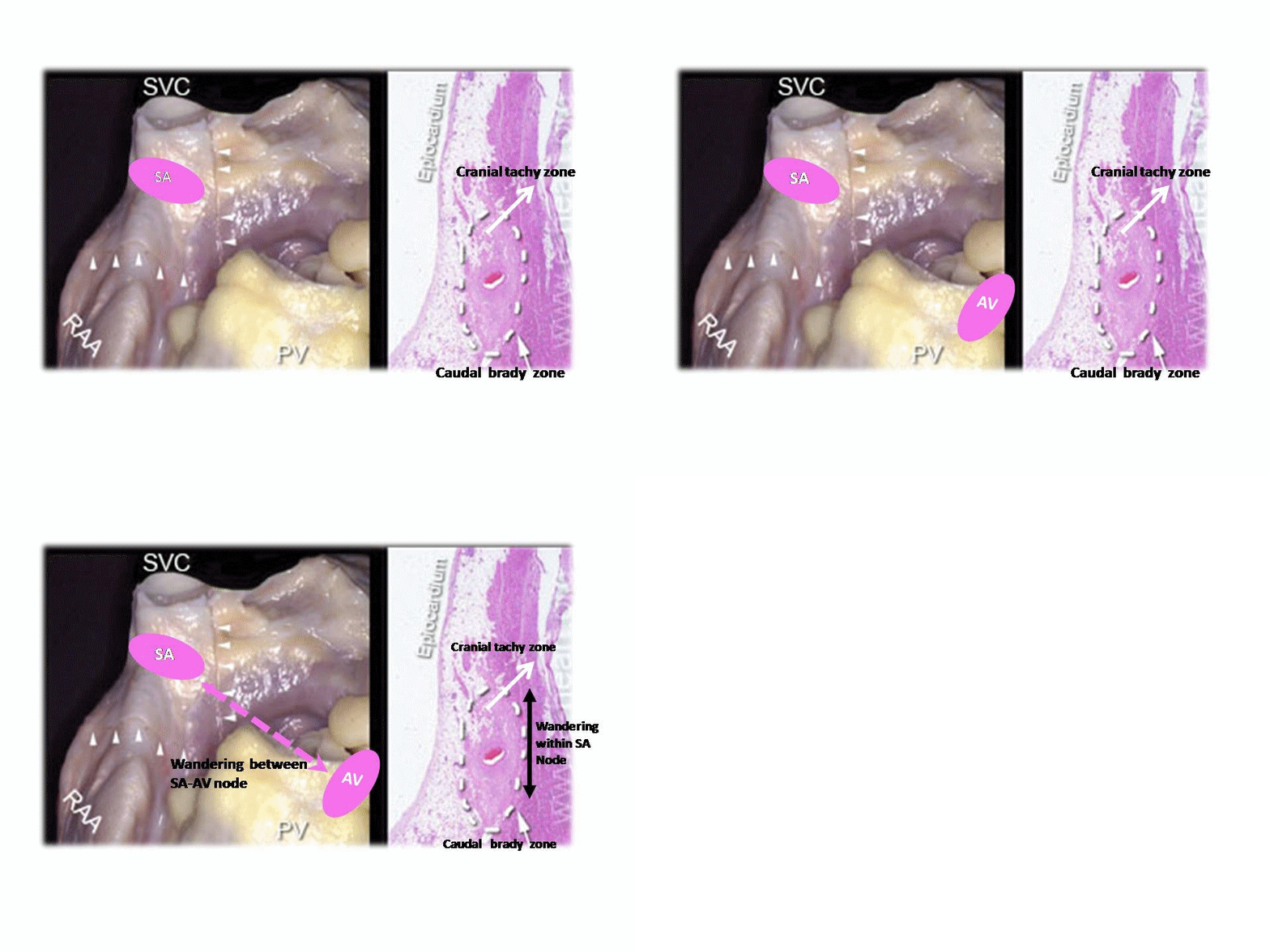
In fact , there is constant flux of pacemaker activity  with  the entire length of SA node.The  cranial   aspect  SA node has more fire  power than its caudal tip . It is possible Sinus tachycardia  and sinus  bradycardia could represent  minor changes in the firing focus in its cranio-caudal axis.Further the P cells of  sinus node can spill all over the atria and even up to AV node.

What is wandering  atrial pacemaker ?

This entity is poorly defined  in literature.  With pace making cells scattered all around  there is no surprise to note dynamic pacemaker  shifts  even in healthy people. This is  especially common in young athletes.

Wandering can occur

  • Within SA node ( Shift of focus of p cell firing .No visible changes in ECG )
  • Within SA node and atria
  • Between SA node and AV node. (Sino-Junctional rhythm )

Effect on ECG

  • Baseline bradycardia.
  • Changing P wave morphology
  • Change in PR intervals
  • Intermittent absent (Rather concealed  )  P wave if  is also possible
  • RR interval can also show minor variation.

Image Modifed from http://www.eheart.org

Clinical significance of  Wandering pacemaker(WAP )

  • A Benign condition generally has no clinical significance.
  • It is often an expression of  high vagal tone.
  • Usually transient.
  • Can be unmasked by beta or calcium blockers.
  • Severe forms of wandering  pace maker can be a marker of sinus node dysfunction  and  would need  further evaluation
  • In  the coronary care units it is  associated  with infero-posterior MI when the vagal fibers are  insulted.

Differential diagnosis .

  • Some times it  need to  be differentiated form ectopic atrial rhythm /Low atrial/Coronary sinus rhythm etc .
  • Sinus  slowing  followed by a  functional escape and  reemergence of sinus beat   can be a termed as a form of wandering  pacemaker

Final message

WAP : This attractive and  descriptive ECG entity  is   largely insignificant in clinical cardiology .

It should not be confused with more dangerous cardiac arrhythmia  like sinus pauses and arrest .

Read Full Post »

« Newer Posts - Older Posts »