Feeds:
Posts
Comments

Archive for the ‘Cardiology-Coronary artery disese’ Category

How to manage an  asymptomatic 45 year old man with  90 %  mid  LAD lesion  , with  FFR  .9   who is  stress test  positive at 9 Mets  ?

Six  cardiologists and six responses   . . .  and the elusive seventh sense

  1. FFR is most scientific test to assess  physiology of coronary stenosis  . I will  go with that  and put this patient under  medical management.
  2. I agree with FFR, still the  patient has no symptoms  , but why the hell is EST  + ve ?  I am confused  .
  3. I would definitely stent the lesion irrespective of the symptoms .
  4. I would order a stress thallium . I do not believe in FFR
  5. The data provided  is insufficient. I would like to this patient in my clinic , and if necessary  may  order a fresh CAG.
  6. For a 90 % LAD  lesion FFR should not have been done in the first place .That is the root of the confusion. He should have received a stent long back .

Final message

FFR is  a terrible concept   for two reasons . One ,  it never bothers about flow across  a lesion. It simply  relies upon  pressure drop. we all know  there  is an intricate relationship   between pressure and flow . Simple pressure drop can never be  expected to translate into incremental flow in biological systems .The  second major limitation is  it  ignores the  morphology of the lesion . We know an eccentric soft  lesion with a  good distal   FFR  is  live  coronary explosive .

Read Full Post »

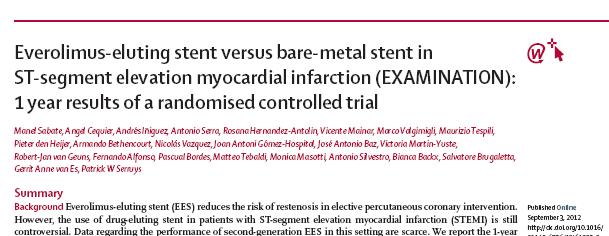
DES is  a revolutionary coronary support device ,   but it was always a suspect  when it came to STEMI and primary PCI .

How good and safe is DES in STEMI ?

Cardiologist were always beating around the bush for a specific answer to this question.

The general  principles and background

DES was thought to be unsafe in a thrombotic milieu .(DES was notorious for acute stent thrombosis) .Still ,first generation DES ( Sirolimus and Paclitaxel ) were thought to be unsafe in STEMI .However anecdotal evidence suggested DES reduced stent thrombosis  . .Then came the 2nd generation DES (Zotarolimus and Everolimus ) . There was a  excitement every where .The logic  was   “If first generation of DES is not good . 2nd generation  must be good”   What a way to think scientifically .Wisdom  did not prevail  . Many started using ZOTA /EVERO  in STEMI  .(Medtronic and Abbot were silently enjoying the scenario !)  And now finally Everolimus was tested with BMS in  STEMI .

That is EXAMINATION trial for you  . . . Published in Lancet  September 2012

It  has found  2nd Generation DES are not superior to BMS in STEMI in terms of  patient outcome . The study broadly concluded  that  the patient related parameter did not show any significant difference  while  stent related outcome seemed  fare better.

Why this patient – stent dissociation ?

How can large group of patient who  have more stent thrombosis and TVR ,  still  no correspondingly increased ACS or deaths

Does this mean  these stent thrombosis are safe events ?

The answer lies in the fundamentals. The  stents  represent  anatomical  correction  , while  the patient  outcome depend   more on physiology ( flow )  so we are back to square one  to the fundamental  coronary conflict  ie  improving anatomy need not impact physiology.

Critical comments

After reading the EXAMINATION  trial  I asked my third year fellow .

What was  the re-stenosis rate  in DES vs BMS  at 6 months ?

He said this study never analysed the issue of re-stenosis  .

I asked him , Are you sure ?

He confirmed it with a firm Yes.   And then , I found this

                                   A shocking omission for a study which is supposed to answer a   critical question whether
                                   DES is good for   STEMI in the long term
Final message
What a way to conduct a large  land mark study ?
This  study   never bothered to find out the re-stenosis rate  with DES  after  primary PCI and compare it with BMS  .
In fact they have conveniently mentioned ,  follow up angiogram was not part of the study protocol .
I concluded  at the end of journal  review meet   , that  this  EXAMINATION  was not properly conducted   and DES may come back with a vengeance   in the near future !

Read Full Post »

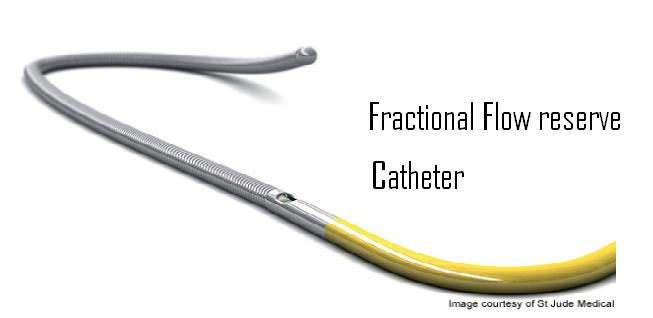
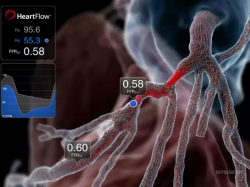
Fractional flow reserve is  a new coronary hemo-dynamic para meter used to assess physiological impact of border line lesions in coronary artery disease. The calculation is simple

FFR is  a terrible concept * for two reasons .

One ,  it never bothers about flow * across   a lesion. It simply  relies upon  pressure drop. We  know  there  is an intricate relationship   between pressure and flow . Simple pressure drop can never be  expected to translate into incremental flow in biological systems .

(FFR anology  in co-arctation of aorta . Can you take difference between upper limb  BP and lower  limb BP as a most accurate   Index of severity of co-arctation of aorta ?  )

How crude it would be   . . .  to  believe so ?

Two   it  ignores the  morphology of the lesion . We know an eccentric soft  lesion with a  good distal   FFR  is  live  coronary explosive .

The  FAME 1 and FAME 2 studies  glorified  FFR  !  I differ in many ways .

Some of  the  observations made about FFR.

  • FFR is to be  done only in discrete ,  safe looking  , intermediate lesions .(Do not ever attempt it in a eccentric lesion )
  • FFR wire is a  stiff ( stainless steel ) wire .  Careful maneuvering is necessary . Lesion crossing  and pull back  FFR wire require some expertise.
  • FFR / OCT  combo,   increase  not only the  fluroscopy time  ,  this procedure can be  more complex than  the intended   PCI .
  • My colleagues tell me FFR measurements are not often  reproducible .(I have little experience in this )
  • Adenosine induced vasodilatation  is not natural physiological model . Further it has  a potential for  a coronary steal if there is near critical lesion in contra lateral artery.
  • There are many occasions   FFR wire has caused  dissection  and  subsequent stenting was necessary  .(The very thing  the cardiologist wanted to avoid !)
  • Bifurcation lesion FFR measurement is prone for errors
  • FFR in two tandem lesions cannot be assessed   accurately
  • Post PCI FFR is not practiced routinely in may centers  the fear of  status quo of FFR.

Final message

This post is not to defame the FFR as a concept . Just to make you think  . . .  how often ,  we  are entrapped  in a  pseudo -intellectual  game in  the cath lab ! FFR  as a tool , can still  be valuable to assess coronary hemo-dynamics in a selected lesion population especially,  discrete,  single vessel ,  or left main disease  with around 70 % narrowing . But never go with FFR alone .Consider the morphology , location   of the lesion .

Finally do not forget  ,  the   good old  EST  can  give a stiff  fight  for supremacy over FFR  in terms of assessing physiological impact of a coronary stenosis (Especially in single vessel disease ) 

Reference

Fractional Flow Reserve versus Angiography for Guiding Percutaneous Coronary Intervention . http://www.nejm.org/doi/full/10.1056/NEJMoa0807611

Read Full Post »

Hi all ,

I get frequent comments about my blog. I do try to answer many of them . This is a very unique one , and it is making me think further.Since he has specifically wished his clinical data could be eye opener for others ,  I am jut posting it here . The comment was in response to my article  Who said coronary collateral circulation will not support exercise ?   here is  the extract

Dr. Venkatesan,

I read your blog with great interest and I think I may have something useful to contribute from my own personal experience. I am a 68 year old male with a long history of smoking (for fifty years), and a history of uncorrected hypertension over the years (it has been corrected to normal with medication for many years now). I am a non-smoker now for the past 18 months. I have PAD and a moderate aortic aneurysm of about 3.5CM (ascending and descending) which is being watched with regular vascular scans.
The common femoral arteries in both of my legs are nearly 100% occluded between my thighs and my knees, and yet my ankle and toe blood pressures (and my circulation in my ankles and feet) is almost normal. The reason for that is that according to the vascular scan, my deep femoral arteries are much larger caliber than normal with extensive vascular collateralization by passing the common femoral occlusions.
About twenty years ago before the PAD diagnosis, I realized that I had claudication in both of my calves when I walked a short distance. I expected this was being caused by an arterial blockage in my legs, so I went to the gym every day for about three years, and walked through the pain every day. I believe this contributed to the formation of the collaterals that have perhaps saved my legs and feet.
I also have heart disease, and had a fairly minor heart attack in 1999. No stents were placed nor angioplasty performed at that time. I recently had an arteriogram and cardiac stress MRI which showed that two of the three coronary arteries are now 100% occluded (apparently I had another cardiac event and did not know it). The cardiologist says that the LAD is in extremely good condition and has numerous collaterals branching from it. I have no symptoms whatever from all of this, except that my LVEF is low (about 35%). I walk at a very brisk pace six miles per day, five days per week, and I monitor my pulse rate with a pulse monitor when I walk. I keep my pulse between 115 and 120 which I calculate to be 80% of maximum for my age. I believe this cardio exercise / walking has also helped with the collateral formation, and I am hoping to bring the LVEF back up to a reasonable number with this exercise regimen.
My cardiologist has recommended an ICD, but I have decided against that since I have never had VT or VF or any other type of cardiac arrythmia (except for non-symptomatic PVC’s which I was born with).
I believe that I am the lucky recipient of good genetics to begin with, but also I am highly motivated now to take better care of myself, and know as much as I can about the conditions that I have. I plan to have an echocardiogram in six months to see if the LVEF numbers have improved, and I fully expect that they will have. I give credit to the smoking history for the vascular problems that I have including the cardiac problems. I am a lucky person I think, and suspect that not everyone has the fortunate ability to heal themselves the way I have.
I have asked for copies of my arteriogram and stress MRI records. If you are interested in looking at these I would be happy to share them with you.

The letter ends .

Dear Mr Weigel

Yours is an extremely interesting story  told in a most scientific manner.Thank you .

It gives me great insight  ,  how a  human vascular system  can  transform when confronted with  natural disasters like multiple blocks on its way .A flowing river will definitely reach its destination  however bizarre the path it takes . Human biology is vested with vast reserves of genetic building blocks put on sleep  mode. While billions of dollars are being pumped into do research in human angiogenesis we have tuned a  blind eye to the vast net work of natural collaterals.

Our clinical experiences also tell the same thing . In chronic total occlusion  majority of patients would develop good collaterals if only we do not  tamper  the  main vessel  .None of scientific studied available has proven opening CTOs (Chronic total occlusions) has improved the clinical outcome .

Regarding  the guidelines  for revascualrisation ,  I am yet to come across a standard scientific guidelines that includes the extent of collateral circulation  as one of the determinant for need for revascularisation !

I will definitely use your case study for the benefit of so many patients !  I always feel , a properly interpreted experience  , even from a  single patient   can make a tremendous impact in the growth of science .

Thanks again for sharing your personal health issues !

Dr Venkatesan
Chennai .India .

Read Full Post »
Here is  the two versions  of  a  discussion  by a  cardiologist  to his  patient , on the day of his discharge  from a  state of the art trans national  heart health  service in southern  India.

An alluring cardiologist .

  • I have implanted  the  world’s  best drug eluting stent to your block .
  • The block has  vanished without a trace  .
  • You will be free from pain  here after .
  • You can enjoy a new lease of life .
  • You can go for holidays , you can cherish  ,   you can do whatever you want  .
  • Forget about complications  it is negligible .
  • But please take all the drugs regularly .

A Bitter cardiologist

  • This stent is a temporary solution to your problem .
  • Do not think you are cured of your illness .
  • Atherosclerosis can never been cured completely.
  • You have to be careful .
  • Avoid very strenuous activity .
  • It can re occlude at any time even if you skip  the tablets for  few days .
  • After all, it takes only  6 minutes to form a blood clot  .
  • You may  require CABG in  future  as most stents  get blocked  by  5 -10 years .
  • Further , the drug you are taking may develop resistance and you may  recur the same old problem .

Final message

So , the  art of  medicine  is to hide some of  the  unpleasant outcomes from the patient and project only positive aspects to our patients *

* This is often a controversial  issue . Scientifically advanced health care system  do not agree with this . But  I would believe , that is one of the major reasons   they are suffering from huge health care crisis !

I do not agree with  the concept  of empowering  patients with  bitter truths   . This  need not be  vigorously  practiced.   Disclosure of all potential complication  to our patients  , by itself a trigger  such  events  by meager anxiety .

Read Full Post »

Rescue PCI rescues

  1. Myocardium
  2. Patient’s life
  3. Both
  4. None
  5. Cardiologist pride

Answer:

All of the above can be a correct response in varying situations.

Read Full Post »

The last rites for routine   Swan Ganz catheterisation ( In STEMI ) was  performed  by a  land mark JAMA article  in 1996 .

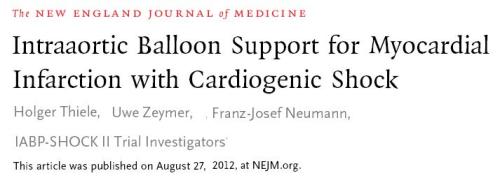
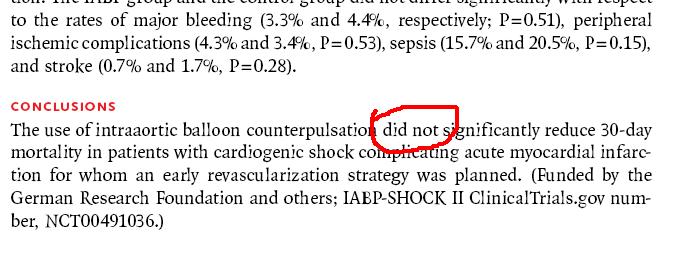
Now . . .  is the turn for intra aortic balloon counter pulsation (IABP) .

A conceptually attractive concept  was laid to rest in Munich ,West Germany , this week at annual  European society of cardiology ,  Scientific Sessions  .August 2012 .

What a crash for a great  hemo-dynamic  principle    in acute MI which ruled the roost for over three  decades !
Just Imagine ,   how many man hours , millions of  worth of consumables  wasted  . . .  better  not to talk about  associated   aortic injuries .

This is what we call   premature evidence based harm”

I  wonder  . . .  whether  I am  justified in making this extreme comment .

Please read for yourself  , this early online release alert  from  NEJM .

http://www.nejm.org/doi/pdf/10.1056/NEJMoa1208410

Reference

Connors A, Speroff T, Dawson N, Thomas C, Harrell FE Jr, Wagner D, etal. The effectiveness of right heart catheterization in the initial care of critically ill patients. JAMA 1996;276:  889-97.

http://www.ncbi.nlm.nih.gov/pmc/articles/PMC2352214/pdf/bmj00561-0005.pdf

Read Full Post »

An awkward  argument for routine EST following primary PCI

Please remember,  primary PCI is not the end of the management of STEMI. Primary PCI is an IRA focused intervention. We need to study other lesions and their the flow pattern as well. Logically we need to do a test for adequacy of  baseline vascularity and the current revascularisation . Simple deployment of  a stent in IRA (without documentation of good flow during exertion ) is not acceptable to believers of  scientific medicine  . Resting TIMI 3 flow conveys no meaning for a patient who is going to be ambulant and active. A stress test will come in handy .

The micro-vascular integrity and resistance following an extensive STEMI is best studied by the adequacy of exercise induced  coronary hyperemia (This is physiologically equivalent to the much fancied FFR in cath lab ) . One can consider EST following a primary PCI as an non invasive substitute for the collective FFR of all three vessels including the IRA that is stented .

Does any cardiologist have guts to do a pre- discharge EST after a successful primary PCI ?

Typical responses would be

  • Why the hell I should do it ?
  • Do you know how risky it is to do a EST early after a primary PCI ?
  • If at all I have any doubt , I would prefer a non invasive PET or Thallium to study the adequacy of revascularisation.

If you think , it is too risky to exert a successfully revascularised patient early after a STEMI . . .   at the same time   argue  to do it in non revascularised patient routinely .  Do we not see a huge irony here ?

Other inference could be . . . we are still suspecting the quality of our revascularisation during PCI !

If  EST is contraindicated after a primary PCI , are we going to advice  these patients against indulging in any activity requiring moderate exertion fearing a stent occlusion ?

. . . What a way to interpret the aftermath  of a   ‘state of the art ‘ procedure called primary PCI !

In science ,  correctness is more important than politeness !

Read Full Post »

Whatever  is your answer .   It will be   far off from the truth .

What causes  Atheroscerosis ?

The perception  that , circulating lipids directly damage  the coronary endothelium is an  ill proven concept.  Isolated hyperlipidemia  rarely leads to full blown Atherosclerois .

If  LDL moelcules  can penetrate the endothelium  , why the circulating LDL  at a normal concentration of 130mg/dl  fail to do so in vast number of humans   as they criss cross the human circulatory system  at-least a  trillion times  every year ?  So , there  must be something else  operating *It requires a high blood pressure, diabetes , smoking or some form of endothelial injury  (That includes chronic Inflammation )  for the  lipids to  enter the sub endothelial planes and start depositing.

The relationship between serum lipids and plaque burden lacks clarity.

* The argument that 130mg LDL is injurious to endothelium  while  100mg  is not  ,  can  easily be disputed !

Read Full Post »

Ventricular septal rupture is a major mechanical complication of STEMI . Excruciating  chest pain ,  is the sine qua non of  any myocardial tear , dissection and rupture . It is surprising ,   VSR  following STEMI  is rarely a painful event . I can recall number of  such events  , when a  stable   patient with persistent ST elevation  in the  coronary care unit ,   wakes up next morning  with a systolic murmur.And echo reveals a septal defect promptly.

Three  reasons  can be  proposed  for relatively  pain free rupture of IVS in STEMI.

  1. Typically  VSR  occurs in 3rd or 4 th day of infarct . By this time myocardium  can be as  soft as an ice cream ! . There is not much stress and strain at the site. The necrotic  debri just gives way to spikes of   LV systolic pressure .
  2. For rupture to occur there   must be  transmural infarct  .The pain nerve terminals also die in the process .
  3. Further , it is a cavity to cavity rupture  (LV to RV ) . Direct pericardial  stretch  does not occur .

* Ventricular free wall tear   is a near fatal event is extremely painful .This  often occurs  in the first 24 hours when  the nerve terminals are  alive . The free wall rupture is more of  a  tear in the plane of  myocardium . The  pericardial  (epicardium)  layer has  rich   somatic  nerve supply .

In summary

Early  myocardial  tear   involving the epicardial  surface can be severely  painful  .  Late giving way  of softened  , necrotic  often  hemorrhagic muscle ( especially in the IVS ) is less painful or totally painless.

Coming soon   . . .

By the    . . .  what happens  to  pieces of  septal myocardium as it  gives way  and enter the right ventricle   ?

Read Full Post »

« Newer Posts - Older Posts »