Feeds:
Posts
Comments

Archive for the ‘Cardiology -Interventional -PCI’ Category

Failed thrombolysis is a well debated concept, while failed primary PCI is a conveniently neglected phenomenon .

How to assess successful reperfusion following PCI or thrombolysis?

I do not know how many  of us know this vital fact !

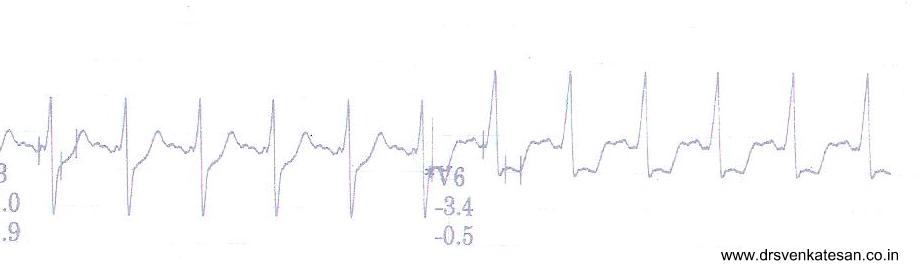
Coronary angiogram is squarely beaten by the humble  ECG in assessing the effectiveness of myocardial  reperfusion . This is not hard to understand as  coronary angiogram *  can  tell us only  about epicardial  patency ,  while ECG  sends vital perfusion  data from within the  myocytes ! Which do you  think is superior ?

And now  interventional cardiologist have realised this fact . they  measure the ST segment  regression instantly once the primary  PCI is  completed . How ?  An ECG is recorded from  right inside the infarct  related artery .

*Of course myocardial blush score , TIMI frame count are poor alternatives !

This paper just published in CCI is  a fascinating revelation .

http://onlinelibrary.wiley.com/doi/10.1002/ccd.23455/abstract

Read Full Post »

How to manage an  asymptomatic 45 year old man with  90 %  mid  LAD lesion  , with  FFR  .9   who is  stress test  positive at 9 Mets  ?

Six  cardiologists and six responses   . . .  and the elusive seventh sense

  1. FFR is most scientific test to assess  physiology of coronary stenosis  . I will  go with that  and put this patient under  medical management.
  2. I agree with FFR, still the  patient has no symptoms  , but why the hell is EST  + ve ?  I am confused  .
  3. I would definitely stent the lesion irrespective of the symptoms .
  4. I would order a stress thallium . I do not believe in FFR
  5. The data provided  is insufficient. I would like to this patient in my clinic , and if necessary  may  order a fresh CAG.
  6. For a 90 % LAD  lesion FFR should not have been done in the first place .That is the root of the confusion. He should have received a stent long back .

Final message

FFR is  a terrible concept   for two reasons . One ,  it never bothers about flow across  a lesion. It simply  relies upon  pressure drop. we all know  there  is an intricate relationship   between pressure and flow . Simple pressure drop can never be  expected to translate into incremental flow in biological systems .The  second major limitation is  it  ignores the  morphology of the lesion . We know an eccentric soft  lesion with a  good distal   FFR  is  live  coronary explosive .

Read Full Post »

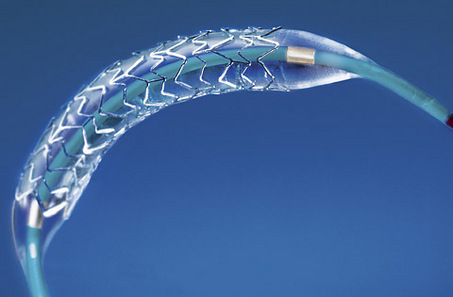
This man enters your cath lab  every morning !  . . .  He is Mr Stent !

Endo-prothe`ses coronariennes autoexpansives.”

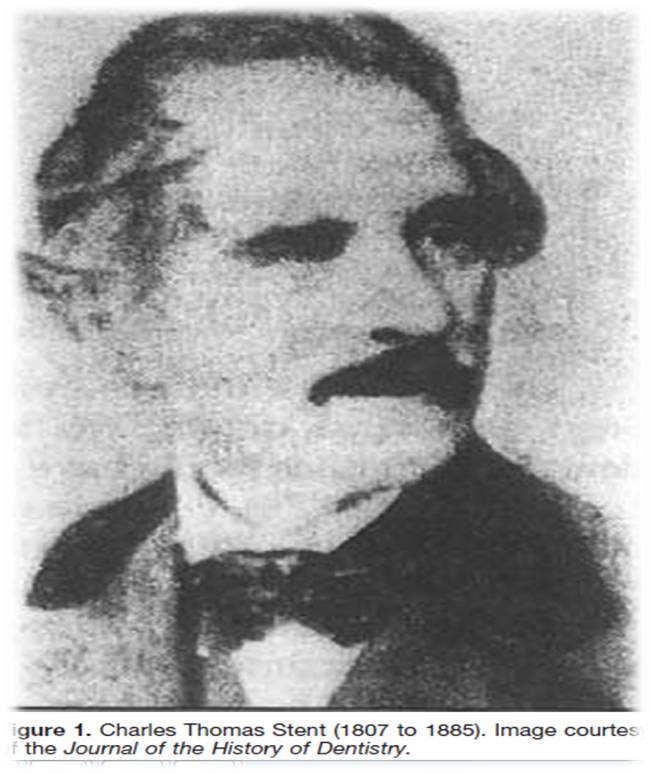
    “Endo-prothe`ses coronariennes autoexpansives.”  This is the official name given to coronary stents  when it was first used in man in 1986 in France . The first  stent in human coronary artery was implanted by Puel . Followed by Sigwart  ,Puel combine .

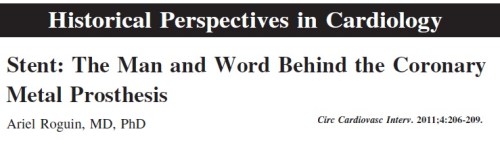
Later on  , the name Stent came into vogue . Surprisingly stent is not a technical name . It is a name of British dentist. To know more about the historical aspects of coronary stents read the following review from Circulation.

References

http://www.fauchard.org/history/articles/jdh/v49n2_July01/charles_stent_49_2.html

1 .Puel  J, Joffre  F, Rousseau  H;  et al.  Endo-protheses coronariennes auto-expansives dans le prevention des restenoses apres angioplastie transluminale, Arch Mal Coeur 8 1987 1311-131

2. Sigwart U, Puel J, Mirkovitch V, Joffre F, Kappenberger L. Intravascular stents to prevent occlusion and restenosis after
transluminal angioplasty. N Engl J Med. 1987; 316: 701-706.

Read Full Post »

DES is  a revolutionary coronary support device ,   but it was always a suspect  when it came to STEMI and primary PCI .

How good and safe is DES in STEMI ?

Cardiologist were always beating around the bush for a specific answer to this question.

The general  principles and background

DES was thought to be unsafe in a thrombotic milieu .(DES was notorious for acute stent thrombosis) .Still ,first generation DES ( Sirolimus and Paclitaxel ) were thought to be unsafe in STEMI .However anecdotal evidence suggested DES reduced stent thrombosis  . .Then came the 2nd generation DES (Zotarolimus and Everolimus ) . There was a  excitement every where .The logic  was   “If first generation of DES is not good . 2nd generation  must be good”   What a way to think scientifically .Wisdom  did not prevail  . Many started using ZOTA /EVERO  in STEMI  .(Medtronic and Abbot were silently enjoying the scenario !)  And now finally Everolimus was tested with BMS in  STEMI .

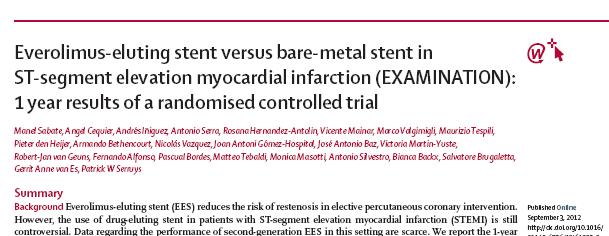
That is EXAMINATION trial for you  . . . Published in Lancet  September 2012

It  has found  2nd Generation DES are not superior to BMS in STEMI in terms of  patient outcome . The study broadly concluded  that  the patient related parameter did not show any significant difference  while  stent related outcome seemed  fare better.

Why this patient – stent dissociation ?

How can large group of patient who  have more stent thrombosis and TVR ,  still  no correspondingly increased ACS or deaths

Does this mean  these stent thrombosis are safe events ?

The answer lies in the fundamentals. The  stents  represent  anatomical  correction  , while  the patient  outcome depend   more on physiology ( flow )  so we are back to square one  to the fundamental  coronary conflict  ie  improving anatomy need not impact physiology.

Critical comments

After reading the EXAMINATION  trial  I asked my third year fellow .

What was  the re-stenosis rate  in DES vs BMS  at 6 months ?

He said this study never analysed the issue of re-stenosis  .

I asked him , Are you sure ?

He confirmed it with a firm Yes.   And then , I found this

                                   A shocking omission for a study which is supposed to answer a   critical question whether
                                   DES is good for   STEMI in the long term
Final message
What a way to conduct a large  land mark study ?
This  study   never bothered to find out the re-stenosis rate  with DES  after  primary PCI and compare it with BMS  .
In fact they have conveniently mentioned ,  follow up angiogram was not part of the study protocol .
I concluded  at the end of journal  review meet   , that  this  EXAMINATION  was not properly conducted   and DES may come back with a vengeance   in the near future !

Read Full Post »

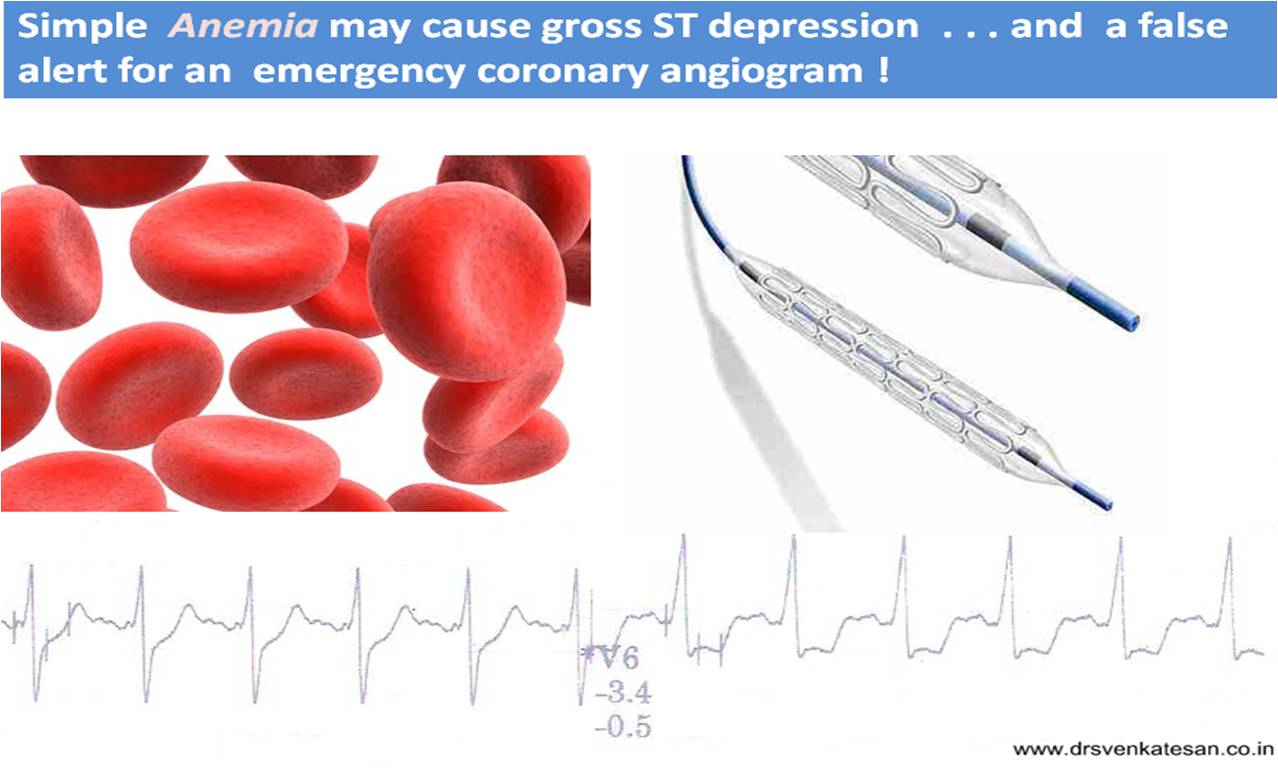
This is a true story  . . . happened  many years  ago under my direct  vision.

A  48 year old women came with significant breathlessness and catchy  sub -sternal chest pain .

“I  was exerting too much in recent days  doctor” , she said .

Her ECG  showed  a tachycardia and dramatic ST depression in most leads .

The ER in charge promptly texted the cardiologist .
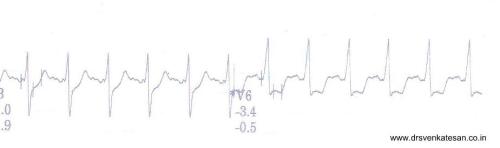
The moment he saw the ECG ,he  had no hesitation , to order for an emergency angioplasty  (  How can he plan a angioplasty  , without even  knowing the coroanry anatomy . some one murmured  . May be   . . what he probably  meant was emergency angiogram   the other explained )    Further , he was telling his    fellows  . . . that  this is going top be  tough case and a possible  left main PCI .

An emergency  angiogram was done .  On table  it was a huge  surprise for every one ,  it was a  a classical  text book   look alike normal coronary arteries !

The moment normal CAG was  visualized  the consultant  concealed his momentary  surprise    and went on to say  it is classical case of syndrome  X   with severe micro- vascular disease causing ECG changes !

As  the patient did not give any opportunity to poke her coronaries   she was wheeled out of  wheeled out of cath lab.

Meanwhile ,  first year  fellow came rushing with the blood reports and biochemistry .

Is everything  alright ?   Yeh sir ,  except her Hb %  . . .  it is  5.6  Grams !

The bewildered  consultant *  realized   the  high  coronary drama , that is  been enacted  over the  past 2 hours !  and  learnt  (and taught) a most important  lesson to their fellows !

Hi guys , this is neither  a NSTEMI nor  a microvascular syndrome X  . . . this is simply anemia related  extreme  ECG changes !  We have erred in our reasoning and  our pre cath clinical scrutiny has  gone awry ! 

He went on to say  ,  don’t worry  many times medicine is learnt in  hard ways  . After all nothing adverse has  happened here .

The women was subsequently investigated and handed over to  gynecologist for a probable hysterectomy .

Final message

Please be reminded  , anemia  can produce  variety  of  ECG changes.  In extreme anemia  global ST depression is  common especially if  tachycardia is associated .

The lesson here  is ,  whenever  gross  ST depression is witnessed  with vague chest pain  check the hemoglobin first . This is an unusual story of a women  ,  with simple  anemia  (due to   chronic mennorhagia )   landed in cath table in an acute fashion .  Luckily  she  did not have any  incidental coronary  lesions  that prevented her becoming a  greater cath lab  victim !

* The bewildered consultant is none other than the author  of this blog.

Read Full Post »
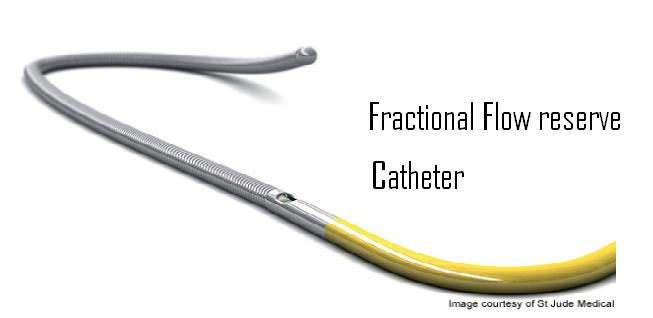
Fractional flow reserve is  a new coronary hemo-dynamic para meter used to assess physiological impact of border line lesions in coronary artery disease. The calculation is simple

FFR is  a terrible concept * for two reasons .

One ,  it never bothers about flow * across   a lesion. It simply  relies upon  pressure drop. We  know  there  is an intricate relationship   between pressure and flow . Simple pressure drop can never be  expected to translate into incremental flow in biological systems .

(FFR anology  in co-arctation of aorta . Can you take difference between upper limb  BP and lower  limb BP as a most accurate   Index of severity of co-arctation of aorta ?  )

How crude it would be   . . .  to  believe so ?

Two   it  ignores the  morphology of the lesion . We know an eccentric soft  lesion with a  good distal   FFR  is  live  coronary explosive .

The  FAME 1 and FAME 2 studies  glorified  FFR  !  I differ in many ways .

Some of  the  observations made about FFR.

  • FFR is to be  done only in discrete ,  safe looking  , intermediate lesions .(Do not ever attempt it in a eccentric lesion )
  • FFR wire is a  stiff ( stainless steel ) wire .  Careful maneuvering is necessary . Lesion crossing  and pull back  FFR wire require some expertise.
  • FFR / OCT  combo,   increase  not only the  fluroscopy time  ,  this procedure can be  more complex than  the intended   PCI .
  • My colleagues tell me FFR measurements are not often  reproducible .(I have little experience in this )
  • Adenosine induced vasodilatation  is not natural physiological model . Further it has  a potential for  a coronary steal if there is near critical lesion in contra lateral artery.
  • There are many occasions   FFR wire has caused  dissection  and  subsequent stenting was necessary  .(The very thing  the cardiologist wanted to avoid !)
  • Bifurcation lesion FFR measurement is prone for errors
  • FFR in two tandem lesions cannot be assessed   accurately
  • Post PCI FFR is not practiced routinely in may centers  the fear of  status quo of FFR.

Final message

This post is not to defame the FFR as a concept . Just to make you think  . . .  how often ,  we  are entrapped  in a  pseudo -intellectual  game in  the cath lab ! FFR  as a tool , can still  be valuable to assess coronary hemo-dynamics in a selected lesion population especially,  discrete,  single vessel ,  or left main disease  with around 70 % narrowing . But never go with FFR alone .Consider the morphology , location   of the lesion .

Finally do not forget  ,  the   good old  EST  can  give a stiff  fight  for supremacy over FFR  in terms of assessing physiological impact of a coronary stenosis (Especially in single vessel disease ) 

Reference

Fractional Flow Reserve versus Angiography for Guiding Percutaneous Coronary Intervention . http://www.nejm.org/doi/full/10.1056/NEJMoa0807611

Read Full Post »

Intra cardiac foreign bodies are frequent occurrences  in clinical cardiology practice. The common ones  are intra chamber clots , vegetations  and rarely tumors. Some of these masses are very mobile are  precariously attached to the cardiac strutures  . It becomes a cardiac emergency as a major embolic event  is imminent .

While surgery  remains the  mainstay approach in such situations ,   now it seems possible to trap these mobile  masses with help of catheter and retrieval devices   safely.

The only  issue is , while retrieving  these masses   it  should not be let into the circulation and result in  embolisation  . For this we can develop a   porous net (Fishing net like ) that can be  blown in the distal  chamber or Aorta .

Devices can be structured in way  that a single catheter can be used with different  ports  to capture and  filter  and retrieve  the mass . (  vacuum  enabled suction catheters can be additional option  ) .The whole procedure can  be  accomplished with fluroscoy and fluroscopic guidance . Intra cardiac echocardiography might also contribute .

This innovation will    be  a great  value addition  to the  interventional  cardiology   armamentarium   ,would be   be appreciated by clinical  cardiologists . We in our tertiary  teaching hospital   have  felt  the need for a such a device quiet often  .Currently many patients land up  in  surgical tables  for the sole purpose of removing these clots and vegetations  .Similarly left atrial clots becomes  a contraindication for percutaneous   mitral  commissurotomy(PTMC)   . Such capture devices can be very useful.

Read Full Post »

Here is  the two versions  of  a  discussion  by a  cardiologist  to his  patient , on the day of his discharge  from a  state of the art trans national  heart health  service in southern  India.

An alluring cardiologist .

  • I have implanted  the  world’s  best drug eluting stent to your block .
  • The block has  vanished without a trace  .
  • You will be free from pain  here after .
  • You can enjoy a new lease of life .
  • You can go for holidays , you can cherish  ,   you can do whatever you want  .
  • Forget about complications  it is negligible .
  • But please take all the drugs regularly .

A Bitter cardiologist

  • This stent is a temporary solution to your problem .
  • Do not think you are cured of your illness .
  • Atherosclerosis can never been cured completely.
  • You have to be careful .
  • Avoid very strenuous activity .
  • It can re occlude at any time even if you skip  the tablets for  few days .
  • After all, it takes only  6 minutes to form a blood clot  .
  • You may  require CABG in  future  as most stents  get blocked  by  5 -10 years .
  • Further , the drug you are taking may develop resistance and you may  recur the same old problem .

Final message

So , the  art of  medicine  is to hide some of  the  unpleasant outcomes from the patient and project only positive aspects to our patients *

* This is often a controversial  issue . Scientifically advanced health care system  do not agree with this . But  I would believe , that is one of the major reasons   they are suffering from huge health care crisis !

I do not agree with  the concept  of empowering  patients with  bitter truths   . This  need not be  vigorously  practiced.   Disclosure of all potential complication  to our patients  , by itself a trigger  such  events  by meager anxiety .

Read Full Post »

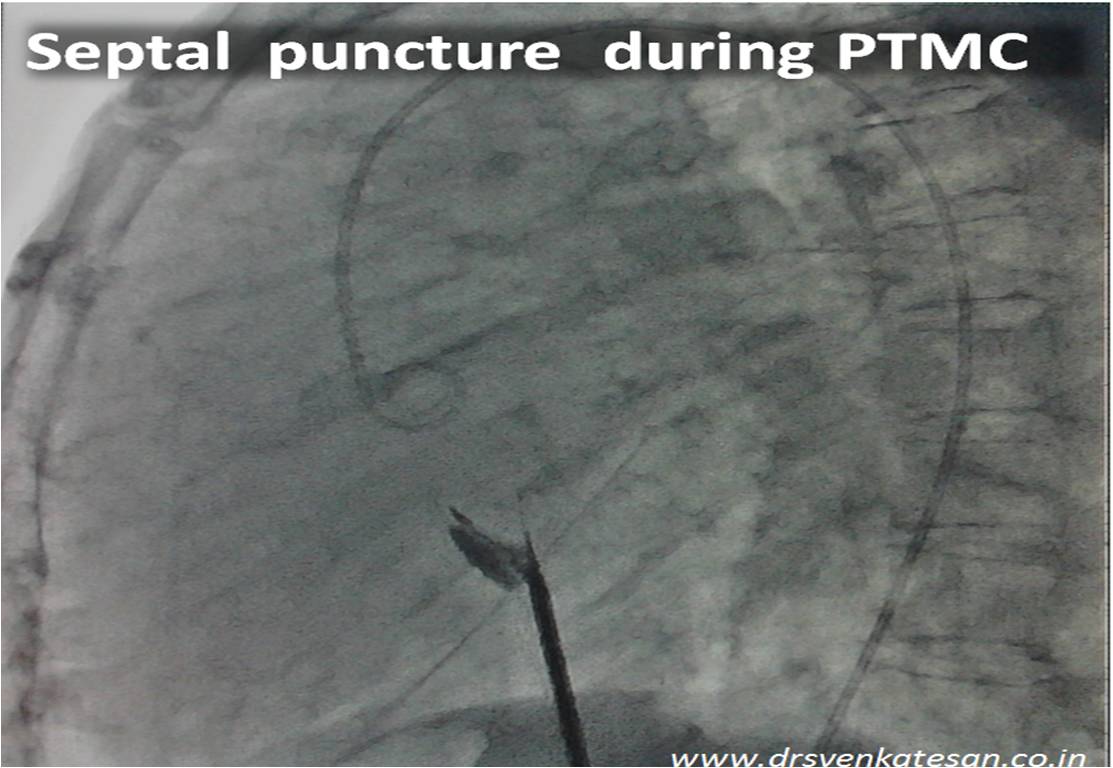
What are the   structures that  can get punctured and result in cardiac tamponade during PTMC ?

  1. Aorta
  2. LA  roof ( Many parts of LA are extra pericardial . Still ,  if you are good enough !  you can enter the pericardium )
  3. LA free wall
  4. IAS  /pericardial space Interface (Stitch effect )
  5. LV free wall
  6. Pulmonary vein
  7. RA free wall

Traditionally  cardiologist’s major  fear is  confined to  accidental  aortic puncture . With growing  experience  &   inexperience   we  now know   PTMC  is vested with other  risks  for cardiac puncture other than Aorta .

  • LA roof  puncture can occur if the septal puncture is high  and  the movement of sheath over IAS plane is not smooth . ( Animated  to and fro movement across IAS is largely unnecessary !)
  • LA free wall when the guidewire is manipulated.
  • The  right atrial side of IAS  often  over shoots the LA side of IAS . This brings a unique situation where  Brocken-burrogh needle may  enter the LA through pericardial space .One may not be aware of this until you pull back the needle when pericardial
  • LV free wall  rupture is  rare with Inoue technique .Over the wire  balloon technique with a guide wire tip can cause LV injury
  • Accidental  pulmonary vein inflation with the balloon is  always  possible. One has to verify the balloon position in lateral view.
  • RA free wall should not happen  today . Still  a distorted RA anatomy due to associated  tricuspid regurgitation or stenosis . This can bring a surprise element to our understanding of IAS septal alignment .

Reference

http://interventions.onlinejacc.org/data/Journals/JCIN/22697/04019.pdf

Joseph G, Chandy ST, Krishnaswami S, et al. Mechanisms of cardiac perforation leading to tamponade in balloon mitral valvuloplasty.
Cathet Cardiovasc Diagn 1997;42:138–46.

Read Full Post »

What happens to  bleeding time  with   antiplatlet drugs ?

  1. Does not have any effect
  2. Prolongs  it marginally  .(This can not be detected accurately by the conventional  Ivy  bleeding time)
  3. BT is  significantly prolonged at therapeutic doses .Bleeding time is useful to monitor efficacy of these drugs.
  4. Prolongs only with loading dose hence it has no clinical  utility .

Answer :

I have been struggling to find an answer in the literature .  Response 2 seems to be  correct .

Back to basics

We are taught reverently  in the first clinical year  at  medical schools ,   platelets are primarily responsible for   stopping  the capillary bleeding . Clot formation follows later . The coagulation cascade occurs over the platelet plug with number of mediators  from platelet  taking part in the clotting process.

If  anti-platelet drugs  functionally  paralyse the platelets ,  it  must  prolong the bleeding time . If that is so ,  why  we  are simply not bothered about measuring bleeding time  to assess the efficacy of anti-platelet drugs ?

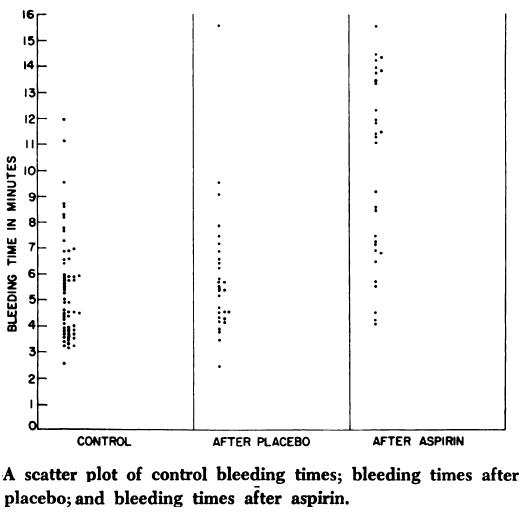
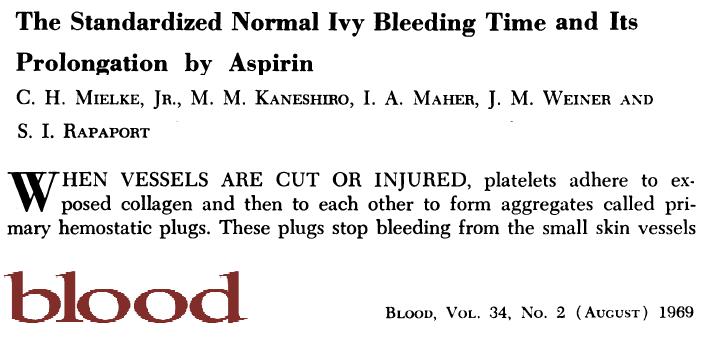
Surgeons tell us every other  day about the  ooze in a patients pretreated with aspirin. In fact there is very good evidence for this . Following data is taken from  the journal  “Blood” in 1969 .

There are few  important reasons why bleeding time  is  not in vogue to monitor anti-platelet efficacy

  • A marginal elevation (  say  . . .  from 6 minutes to  8 minutes  ) may not convey any  meaning (Is it really  so ?)
  • The method of bleeding time measuring is  primitive one ( Ivy ) and it is time-consuming (Since the normal bleeding time can be up to 3-9 minutes   ,it is too long period for the  modern day cardiologist )
  • A prick  has  to be made  and the patient  may  feel awkward.(While he can very  well tolerate  the nicks in radials and femorals !)
  • Simple BT  costs nothing and can be readily done in bed side , while digital platelet  reactivity testing adds  spice ! It  would be humiliating  for   a  cardiologist  (who lands to the cath lab in  a Audi saloon )  to order for simple bleeding time

So what does the  newer platelet assay tools do ?

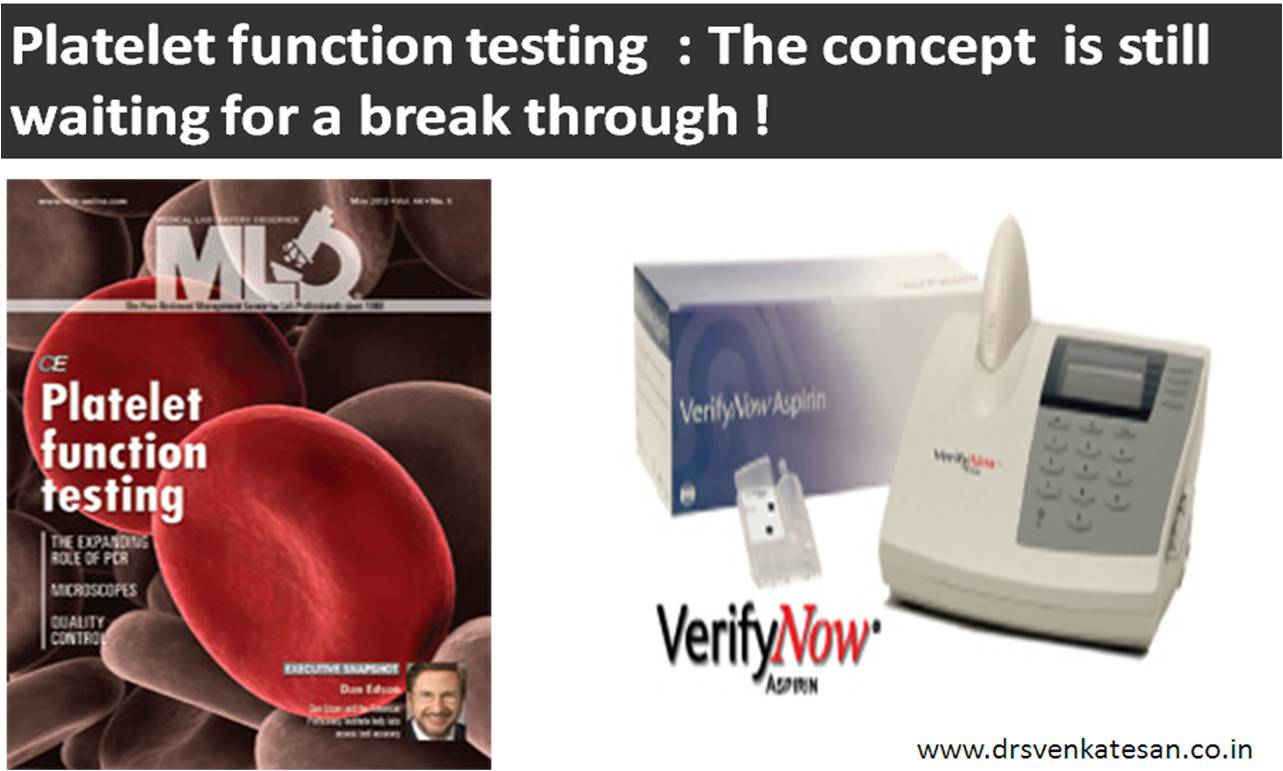
Ironically  , the currently available   sophisticated point of care platelet function test is   grossly error prone .Currently they are not recommended  for routine use . So what is the big deal ?  Modern  physicians  has no right to ridicule the  age-old tests ! . In fact  should try to  give a new lease of life  to  the conventional  BT .

I personally feel  there could be a role  for  conventional BT in    an  occasional   patient   after  complex angioplasties . Confirming the  adequacy  of  anti platelet  drug is critical   .  A simple   one time  monitoring of  bleeding time  24-48 hours  after  a PCI  with full dose of anti-platelet  drugs  should help us track and monitor the efficacy  these drugs .  My  guess is  it can be kept  at upper border of normal or slightly above it . If we know the basal  bleeding time it will be added advantage as one can prolong  it  more objectively.

We plan to undertake a simple study of effect of loading dose of clopidogrel  on the  bleeding time . The results will be reported .

Final message.

Ignoring age-old basic medical concepts is  a  serious  threat  facing  the  current   medical professionals . Can we afford to  ignore a  grossly elevated ESR   in a patient with fever , since it is cheap and primitive investigation . Similarly a   low bleeding time   in a patient with  dual anti-platelet therapy   and a drug eluting stent   would  convey a  serious message ,  (All is not well   In  terms of adequacy of platelet inhibition.   ! )

Reference

  1. http://www.ncbi.nlm.nih.gov/pmc/articles/PMC1995097/pdf/nhj1529900.pdf (Point of care instant platelet function testing)
  2. http://bloodjournal.hematologylibrary.org/content/34/2/204.full.pdf
  3. http://en.wikipedia.org/wiki/Bleeding_time

Read Full Post »

« Newer Posts - Older Posts »