Feeds:
Posts
Comments

Archive for the ‘Cardiology -unresolved questions’ Category

The mechanism of pedal edema in Amlodipine

Note : I lost track , the source of this Image .I thank with courtesy whoever has created this Image .

It is primarily a  local phenomenon . The calcium channels  are primarily  arteriolar dilators . Since the  venules  lack much muscle they  are not much affected by the Amlodipine   .  This  facilitates flooding of  venules and leaks into the peri venular interstitial space. It may be apt to call Amlodipine induced edema  as a form of   local venous edema .

This results in near permanent  collection of fluid  especially  near  the ankle . Systemic fluid retention has no major role . However few patients may  show an  augmented   RASS  response due to sudden arteriolar dilatation  .  In these patients   addition of ACEI or ARB may help relieve  edema legs .The Amlodipine  induced edema is  dose  and  time dependent .(Cumulative)  . It is mostly benign in nature ,  rarely warrants withdrawal of the drug.  The edema can  occasionally be generalised   and weight  gain is  possible .

Other factors that increase the chance of edema is age , women  , obesity. They have loose  interstitial  tissues.Many especailly women complain tingling feeling in the edematous zone.

The calcium blocker induced edema is  an  exclusive feature of dihydrpyridine group  .(For some reason  , Verapamil and Diltiazem do not  share  this side effect  as  theya balanced Arteriolar and venous dilator . )

Can we use diuretics to treat Amlodipine induced edema legs ?

Hydrochorthiazide  is rarely useful as the primary problem is not in the renal  retention.

How to  treat Amlodipine induced edema ?

Unfortunately the popular combination with diuretics do not work . Angiotensin  inhibitors which has some veno dilatation is shown to reduce this edema  . ( COACH study . Olmesartan / Telmisartan combination  is an option ) .It defies logic ,  to  add  another anti HT drug for the sole  purpose of reducing  the side effect of the initial  anti HT drug . Ideally if  your patient is not tolerating  Amlodipine due to edema ,  switch to  an another group of  anti HT drugs.

Reference

http://www.isdbweb.org/documents/file/1664_2.pdf

Read Full Post »

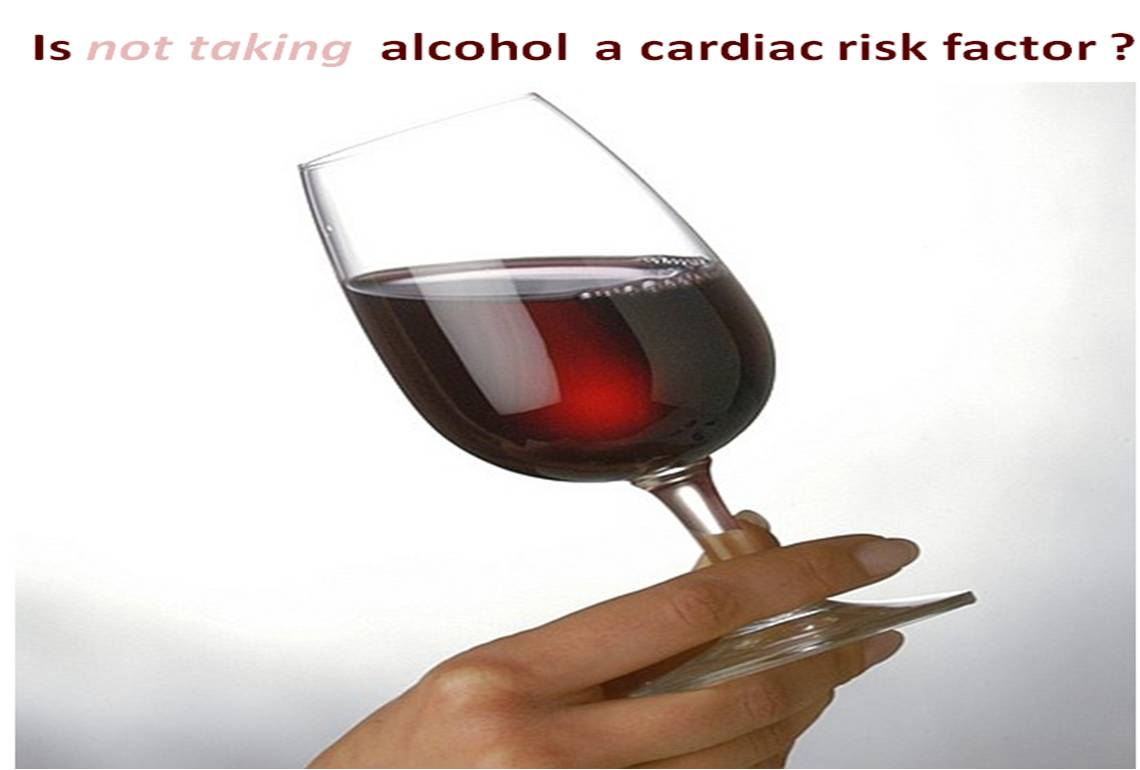
“It seems  certain . . . both  zero alcohol  intake and excessive alcohol  confers cardiac risk   “

I stumbled upon  the above   conclusion    from a respectable source*

*This  is from the  famous  INTERHEART  study published in Lancet.

Can it be true ?   What is the proof ?

Consuming  moderate   quantity of  alcohol  reduces  cardiac risk

  Does it make sense  to  skew   this   statement  like this

   . . . Not taking  alcohol   would   be a cardiac  risk  in other wise healthy individual .

Can we  profess  such a reasoning ?  My colleagues call it stupidity ?

If  it is true ,  are we justified  to use  alcohol as  a primary prevention drug ?

Which type  of alcohol we are  talking about ?

I am struggling to get specific answers .

After reading the INTERHEART study , my conviction is  the  “dangerous suggestion”   may indeed  have a significant  quantum of truth !  Readers may share their thinking .

In a country like India where alcohol is considered as a  killer chemical with a huge social stigma ,  it is  blasphemous to suggest  not taking it can be  cardiac  risk factor !

Reference

http://www.thelancet.com/journals/lancet/article/PIIS0140-6736%2804%2917018-9/abstract#

A. DiCastelnuovo, S. Castanzo, V. Bagnardi, M.B. Donati, L. Iacoviello, G. de Gaetano. Alcohol dosing and total mortality in men and women. Arch Intern Med 166;2006: 2437-2445

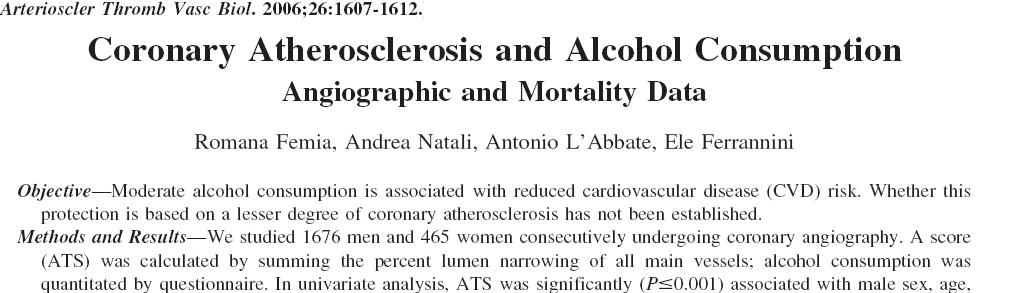
R. Femia, A. Natali, A. L’Abbate, E. Ferrannini. Coronary atherosclerosis and alcohol consumption: angiographic and mortality data. Arterioscler Thromb Vasc Biol 26;2006: 1607-1612

D.L. Lucas, R.A. Brown, M. Wassef, T.D. Giles. Alcohol and the cardiovascular system. J Am Coll Cardiol 45;2005: 1916-1924

Read Full Post »

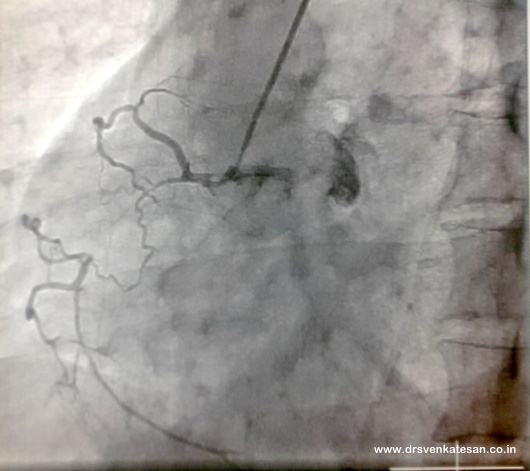
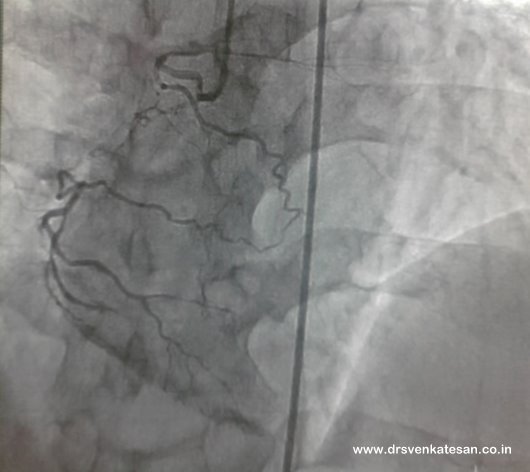
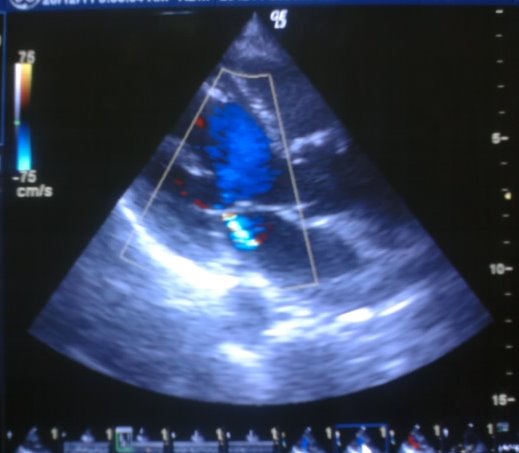
A middle aged man who owns a petty shop in a small  town of south India   came to us for stable angina .His RCA looked like this.

Normally if one coronary artery is obstructed the other comes to the rescue .It seems , this RCA do not trust it’s sibling LAD . See how it  self supports  its own  territory .(The most fascinating and mysterious aspect of coronary circulation is the collateral circulation. LAD  has big brother attitude  . . . it hesitates to help others while   RCA is more philanthropic , we know  it sends prompt  collateral to  LAD  whenever it is  distressed !)

However , there is one advantage of  such   self-sustenance of RCA  (Intra coronary/homo-collaterals ) . If  the  RCA  has to live  at the mercy of LAD  it  runs a risk of   neglect  at times of  distant LAD ischemia as well  !

Management

Single vessel disease , total occlusion , long segment lesion , still  the  PDA  is protected and the vital postero- basal area of heart perfused well ! What to do ?

Scientific  cardiologists  would like to meddle this  RCA with  multi-pronged guide-wires and other weapons  . Non -scientific cardiologists would  send him  home with medicines  . This patient preferred the later ! In the process  he  saved a  lakh ,  which  I  believe was meant for his daughter’s  education . He profusely thanked me for not hijacking his hard earned money for  frivolous  reasons . I said he should thank  his collaterals  and not me , for getting his money back  !

Read Full Post »

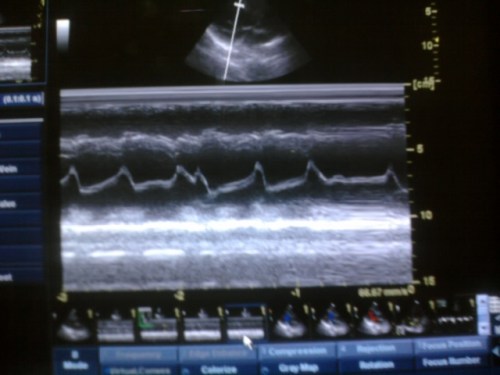
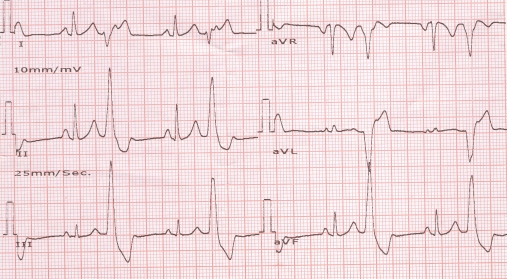
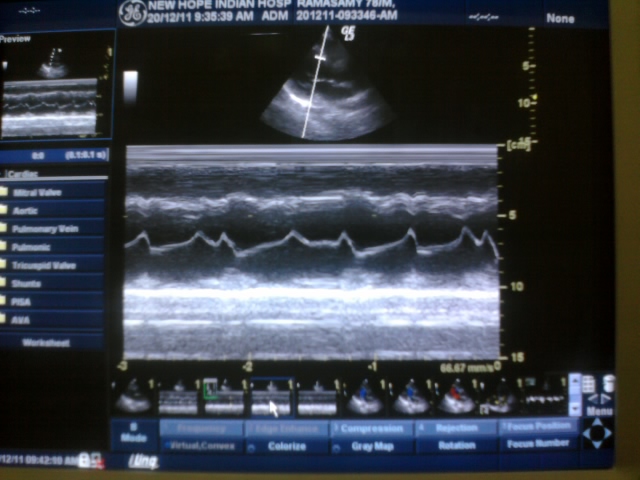
VPDs are the most common arrhythmia  that  confront  us  in  cardiology clinics .While  it can be a totally  benign   manifestation in some  ,  it may signify a sinister condition in others. ECG  is the easiest  and surest way to identify VPD.However  a shrewd echocardiographer can detect the VPDs while imaging the heart.It is often missed if one do not concentrate on the mitral valve motion.
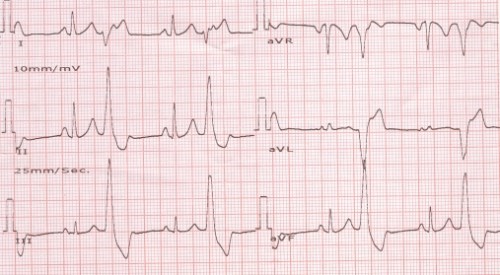
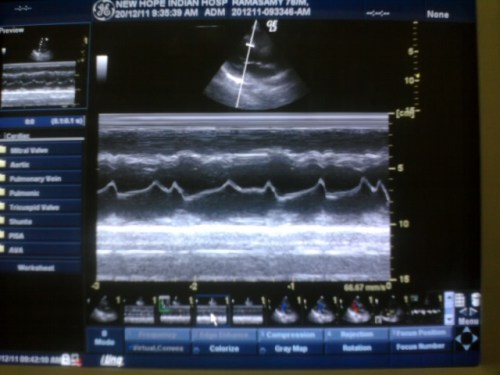
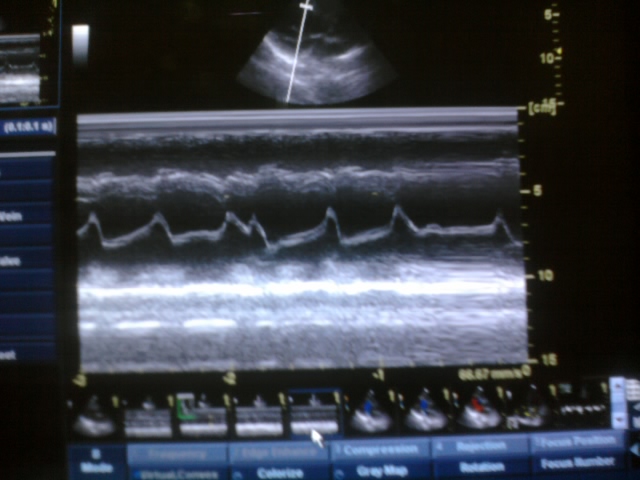
Note :The VPD convert the typical M pattern into a inverted U pattern in mitral valve.
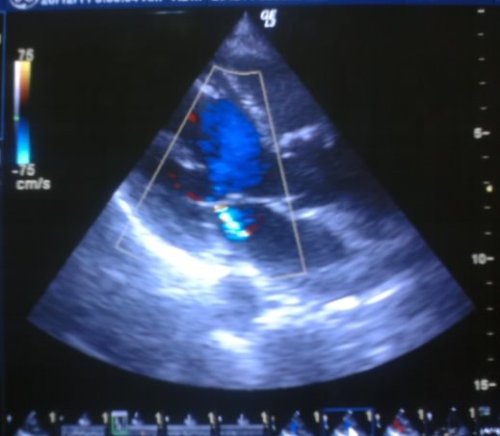
One of the important hemodynamic side-effect of VPD is intermittent mitral regurgitation.

Effect of VPD on mitral valve opening .

By  conventional thinking   VPDs  are expected   to impact  more on the  mitral  valve closure than it’s  opening .In reality it has indirect influence on mitral valve  opening as well. The retrograde  conduction(VA conduction) of the VPD determine the timing of atrial contraction and hence the   mitral valve opening. If the VPD gets blocked retrogradely  within AV node , the normal sinus impulse will activate the atria in an antegrade fashion .Note ,  he atrial activity  occur randomly when multiple VPDs occur.This makes the cardiac cycle too complex to assess especially the diastole. (In fact true  physiological diastole  may  not occur here !)

If  the mitral valve opening  is interfered by a   VPD  (Early diastole is  the  favorite time  for VPDs to  appear  !  )   .When it occurs the AML is    suddenly pushed  upon superiorly  by the premature ventricular activity and hence resets the  mechanical diastole. Please note electrical resetting of atrium is different from mechanical resetting.

It is also possible atria and ventricle contract simultaneously .This is the time , a cannon wave  may occur inside LA .VPDs can result in pulmonary venous canons and may even elevate pulmonary venous pressure   if  this  occurs repetitively .

Another possibility  is ,  VPDs  may not initiate a ventricular  contraction at all .It may be  simply  be an electrical event. That’s why  we changed the name of extra systole  and premature contraction into just   premature depolarisations.

Why is it important to know about M Mode motion of VPDs

Cardiologists  continue to  engage wide qrs  tachycardias   in the  wrong side  of their   brain for many  decades .The ECG debate about wide qrs tachycardia  is expected to  continue  for generations . !  Few smart cardiologists would  rapidly put  the echo probe  over the mitral valve and able to  differentiate  instantly a VT form SVT   with fair  degree of accuracy.

Detection  of regular M shaped mitral AML  will exclude a VT with a high degree of precision .(AV dissociation by echo )*

Even  presence of trivial  MR*  (More often diastolic )   which occur  irregularly  will  definitely indicate it is VT . SVT  hemodynamically   can not result in this  MR is gives us evidence for AV dissociation

* No reference for these observed indices in our lab. (Class 1 Level C expert opinion(  No one calls me as expert though ! )

What is the mechanism  of VPD induced  mitral regurgitation ?

It is well-known VPDs can cause   mitral regurgitation .Not every VPD cause MR.

  • The timing is important .
  • It can be  either systolic or diastolic MR .
  • If VPD occur in early diastole (After the T wave , the MR jet  will collide with  diastolic mitral flow. )
  • Paradoxical septal motion induced by VPDs can alter the pap muscle alignment transiently and result in MR
  • We dot not know how a LV apical VPD  differ from RVOT  VPD in the genesis of MR.
  • Logic would suggest RVOT  VPDs are unlikely to result in MR as there is  a time lag for the impulse to reach the LV base

What is  the effect of  VPD and Aortic valve opening ?

While  every VPD promptly  hits the mitral valve ,  aortic valve may or may not open with VPDs .Again timing and focus of VPD could be  important.This is the reason during  multiple  VPDs  only few open the aortic valve , that  explains  pulse deficit. (The so called missed beat )

Final message

Anterior mitral leaflet (AML) is the most mobile structure  of  the heart . Hence ,  it is not surprising to note  sudden unexpected ventricular contraction will  have maximum impact on this valve .

When VPDs occur in clusters or at random it has a complex effect on the mitral valve motion. This is responsible for  palpitation , minimal mitral regurgitation and rarely trouble some pulmonary venous cannons and raise in pulmonary venous pressure .

Careful analysis of  AML motion can give us useful clues to differentiate VT from SVT during wide  qrs tachycardia

Read Full Post »

Though heart is  primarily  known  as a  mechanical  organ , in reality   it is a vital  electrical organ as well . The entire mesh of electrical  pathway  from SA node to  Purkinje  fiber  would easily cross  a mile or two .Maintaining and protecting  such a  delicately  woven network  needs lots of  electrical sense  .  It is not surprising to note  , VT or VF  can be induced  virtually  in  every human heart  if stimulated rapidly. Electrocution  induced  by VF is  the typical example.Cardiac surgeons  do it regularly  before  surgery .

So , inducible  VT  in the EP  lab need to be  defined in a strict manner .

  •       VT must be triggered  by a  single stimuli  (or  two )
  •       Multiple sites should not be stimulated(ideally  single site , at most two )
  •       It should be sustained.
  •       Only mono-morphic VT has  significance
  •       Induced  p0lymorphic VT  has no clinical value.
  •       Pharmacological  stimulus  such as isoprenaline   can be used but reduces specificity.

*If a VT  rapidly degenerate  into VF  it  usually  means a polymorphic VT  while   unstable irregular  polymorphic VT   could be  same as   VF )

How do you make sure  what we induce in  EP lab is same as the clinical VT ?

This is the most difficult task for electro -physiologists. In real life setting VT is  often induced by ischemia hypoxia , local  acidosis and electrolytic imbalance. However  rarely mind this issue . In EP lab we induce  it  with  artificial electrodes  . Does it make sense to compare  these two totally different  set of triggers  in real life and a virtual EP life . Ideally  to confirm ischemic  VT  one has to induce ischemia  in EP lab and look for  VT . (Adenosine  stress ? )  Further ,  only re -entrant VTs  can be induced in EP lab by programmed stimulation . Automatic VTs can not be induced by stimulation .

The chances of inducing a VT in EP lab is  directily proportional to the aggression of the electro physiologists and patience  of  the  patient ! One can afford to use  more aggressive  protocols only   if a clinical VT was  recently the   documented .

 Electrical stress testing of heart

It may be tempting  to refer    induction of VT  in EP lab  as  electrical stress testing  for the heart. But fundamentally there is a difference  between this and  the conventional EST . Unlike exercise stress  test the  inducibility of VT highly unpredictable . It has far too many variables . (The surface area of contact , number , Intensity ,  site of stimuli , scar location , irritability of viable myocardium  ,  inertness of scarred myocardium ,  and finally the cellular milieu etc  )

Thoughts to ponder over Is it not  “a fundamentally a wrong concept”  to give importance  to inducible VT  ?

Why should we  treat a clinically non relevant inducible VT ? We do not know yet whether inducible VT in other wise normal LV function  has any long-term significance . Currently it makes   no sense   to intervene in VT  if the LV function is good and the episodes  are not clinical but only inducible.

Note: If there is severe LV dysfunction (EF < 30 % ) one can implant an  ICD without   an  EP study . ( Of course   to state more dramatically   without even single documented VT  !) MADIT 2

Final message .

A VT which is inducible in EP lab has no meaning ,  if the LV function is normal , while  even a  non-existent  (potential  )VT  in the setting of severe LV dysfunction is vitally important !

Though  we  differentiate cardiac function  into mechanical and electrical for academic purposes , it is astonishing to note   how the heart is able to function  as a  single unit  . We know today , the ultimate  outcome of   VT  is  not  dictated  by  electrical status of the heart rather , the mechanical ability  to  with -stand  sudden dis-organized  ventricular  contractions ( A ventricle with good contractile function has inherent  capacity  to extinguish most episodes  of VT .(Myocytes with inbuilt biological ICDs ?)

It is a million dolor question why some VT remain as non- sustained while others rapidly degenerate into  fast VT and VF thereafter

Reference

The two contrasting studies

The MUSTT (1999) trial exposed the limitation of   clinical utility of inducible VT . Multicenter Unsustained Tachycardia Trial (MUSTT) Investigators

While   MADIT 2  (2002)which recommends an ICD in every patients with  severe LV dysfunction following MI without even a EP study .

Read Full Post »

Mechanism of chest pain in mitral valve prolapse  include

  1. Mitral valve  has pain fibers , the myxomatous degeneration  of the valve tissue generates pain .* (Not much evidence )
  2. Mitral valve stress, strain ,  stretch and bending.
  3. Mechanical stretch  of papillary muscle or LV free wall (dimple ?  ) as the mitral valve prolapse into LA.
  4. It is a central pain perception disorder .Panicky and anxiety reactions included
  5. It is not chest pain  at all it is simply a feeling of palpitation .
  6. Associated ischemic  heart disease

The commonest mechanisms  are   response  4 and 5 .

The evidence  lies in the fact ,  many of  these people  begin to complain of chest pain only after being aware this problem. MVPS is  often a  fancy entity created by cardiologists  which  unfortunately has  labeled  many of the normal  general population as cardiac patients. Barlow who described this entity  decades ago  would have never imagined  it  would be  so popular and subjected to mis-use . We have proposed a solution for this . The diagnosis of MVPS shall not be mentioned unless it is obvious  and fulfill a strict criteria . The commonest error we make is  an elongated , redundant , hyper mobile mitral leaflet   at   as  MVPS.

It is expected  ,  true MVPS must have all of the following  three criteria

  • Thickened leaflets
  • Clear prolapse of  at least one leaflet in long axis view beyond the plane  of  mitral annulus
  • At least some degree of mitral  regurgitation must be present

Read Full Post »

WPW syndrome is the prototype of cardiac pre- excitation . The accessory  AV pathway short circuits the ventricle .Since  there are two options  available   for the  incoming  atrial  impulse  to reach ventricle ,  often  times  the qrs is contributed by both .Hence a  fusion  occurs  within qrs complex and stretches it wide   ,  it also  generates a delta wave and short PR interval .

The complexities of  conduction   properties and refractionaries of AV node and  accessory  pathways determine the degree of pre- excitation. When an optimally timed  APD  gate crashes  into the  accessary pathway it gets blocked ,  only to recover little late ,  unfortunately  invites AV nodal impulse  from below  . This facilitates a  re- entry circuit from ventricle to atria and result in classical AV reciprocating tachycardia .

Antegrade conduction through AV node is  physiological and  benign as it inherently checks the heart  rate . Antegrade conduction  occurring through the  accessory pathway  (which  constitutes the pathological  component  ), is   potentially  dangerous  as it lacks the  electrical breaks (Technically called decremental conduction )

What  is the  specific  ECG evidence for  antegrade conduction thorough accessory pathway  in ECG ?

Delta  waves

So,  what does it mean if there is absent delta waves  in WPW syndrome ?

It can mean three things

  1. Concealed pathway
  2. Manifest pathway , but intermittently  blocked pathway.
  3. It is not WPW syndrome at all .

We know concealed  pathways are  safe* as it allows only retrograde conduction. ( Safe  regarding   risk  of  sudden cardiac death ,  still unsafe for AVRT !)

Intermittent WPW

Intermittent pathways are equally  safe  as intermittent absence of  pre-excitation   indicate  the  presence   of naturally occurring     breaking system within accessory pathway . Are these  accessory pathways blessed with some AV nodal cells ?  May be !  . Histological studies do suggest that .This explains   intermittent missing of delta waves  which is  electro-physiologically a good sign

(We also know   there are exclusive slowly conducting accessory pathways like  Mahim and variants  )

If  one is lucky to observe this phenomenon in ECG  it can be termed as  a poor man’s  EP study  . ( Which requires specialized methods to document the refractory period of accessory pathway  to be   < 250 msec)

Techniques to  screen for or / unmask this concept.

Whenever  we  diagnose  WPW one has to look   ,  whether the patient  harbors  this phenomenon .

  • Holter monitoring has a useful role in this regard .
  • If there is nocturnal   disappearance of pre- excitation it would  suggest a safe  accessory pathway.
  • Similarly , if pre- excitation disappear during exercise  stress  testing it  would indicate a  type of intermittent WPW syndrome.

Final message

An astute cardiologist shall  look for this intermittent nature of delta waves  and  help avoid a costly and  potentially harmful EP study !

Read Full Post »

How early one can shift a patient for rescue PCI after failed thrombolysis ?

  1.  Wait for at-least 24  hours.
  2. A minimum  cool off period of 2 hours is required.
  3. It is never an issue . Rush the patient  immediately to cath lab
  4. The question does not arise  . Often times ,  rescue PCI is a dead concept  as  sufficient damage has happened !

Answer

The irony of  medical science  lies in our belief that every medical query  has a specific answer ! In reality it is rarely true.   In this instance , any of  the above can be a correct response.

A patient with  failed thrombolysis can belong to any of the  64 possible combinations*  based on  time of  thrombolysis , extent of  MI,  associated complications, co- morbid conditions , presence of symptoms . (For example there is  a sub groups of patient with  failed thrombolysis still  asymptomatic  and comfortable )

The issues for rescue PCI  do not  arise  in a   sinking STEMI (Cardiogenic shock ) , or  STEMI with persistent angina. There  is  no  management issues in  these patients  .They need to be rushed to cath lab. Unfortunately  in  impending  LVF or manifest LVF (But not in shock )  decision making is tough , as doing a PCI in patients  with basal crackles  and hypoxia is a real challenge .These are the patients who are likely  to hit hard  from the hazards of the procedure .Extreme caution is required.

I have seen  significant cohort  of  asymptomatic hypotensive patients getting converted into   drug resistant, IABP dependent refractory shock after PCI  ,  making every one look  pathetic  !  The  only solace for the interventionist  is  the gratification  of  stenting the  IRA !

This  happens  , in spite  of having  multi national trained  in house critical care anesthetics and  dual core processing IABP  . Realise  what we need is delicate decision making ,  So use extreme diligence in selecting patients with impeding shock .

Your medical management can  provide  more teeth to stabilise your patient than a PCI .If you are doubt discuss with your learned colleagues .  ( If you  do not  ask for evidence for  this statement , probably  it would confirm  you  as  an  experienced   cardiologist  !)

Real issues pushed to the sidelines ?

While the real issue  in the timing of rescue PCI  may be  different , the discussion traditionally  revolves around   hemo-rheological aspects . We know  the lytics and PCI do not combine well for two reasons.

  • Pro-coagulant nature of lytic state .
  • Excess bleeding risk at puncture site.

Now ,  we have evidence to say fibrin specific lytics  TPA, TNKTPA has less of this issue . ( NORDISTEMI)

Patients who receive  fibrin specific lytics  can  safely  be  taken for rescue PCI  in case it is needed without any increased risk .

Bleeding complication  has dramatically reduced as radial procedures are done often even in emergency setting.

Vascular occlusive devices  have added to our comfort.

* The definition of failed  thrombolysis by  itself is not standardized . Is it symptom guided ?  or ECG / enzyme / echo guided  ? A patient with  infarct  related chest pain (dull aching )  after thromolysis can be labeled as post infarct refractory angina and rushed for emergency angiogram .(This is due to our ignorance  about  the  residual pain signals  through  type c pain fibres  for up to 24 hours )

Final message

The indication and  timing of rescue PCI is  primarily  related   to the  overall   patient profile  rather than the bleeding or pro-coagulant issues .

Although   pro-coagulant  lytic state is based on weak scientific  foundation , it  is a blessing in disguise  as it  can  act  as a deterrent  in restricting  inappropriate rescue PCI !

Read Full Post »


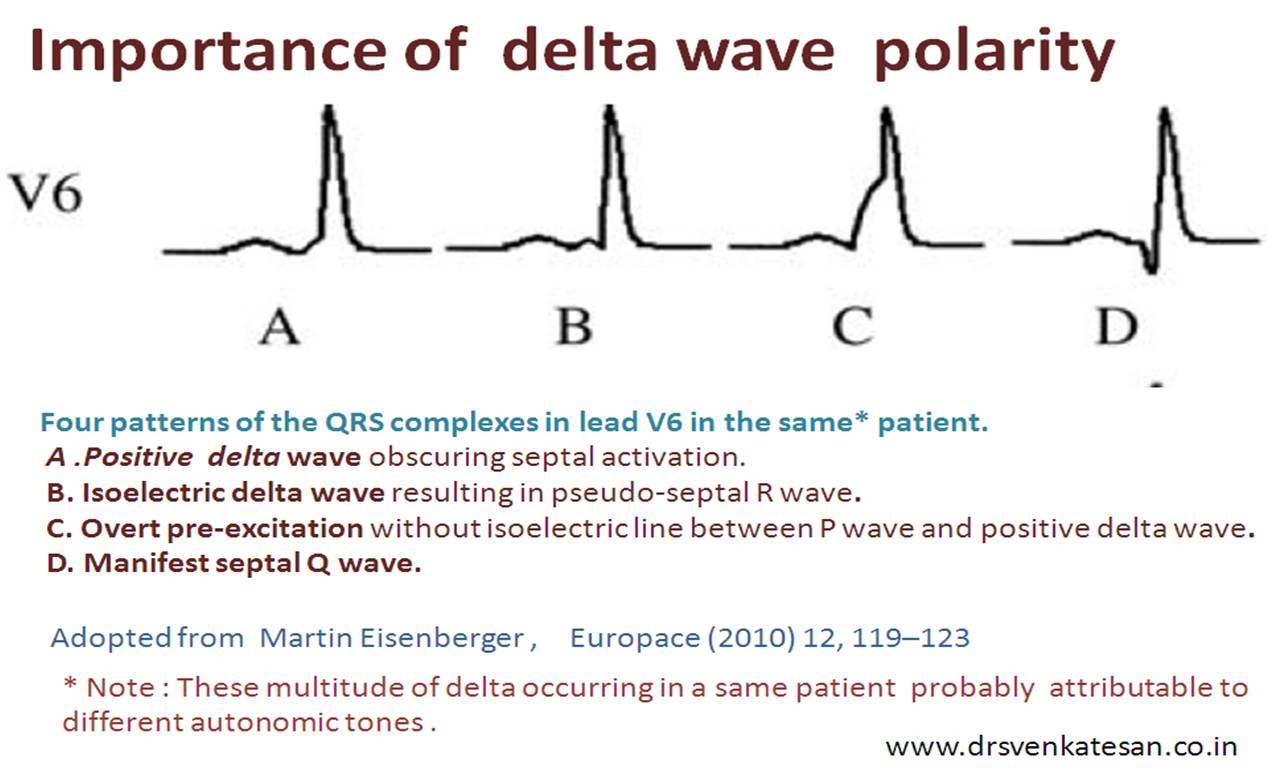
 Delta waves  are initial 20 ms  (or is it up to 40ms ?)  segment of  qrs complex that is  inscribed due to pre-excited depolarisation of the ventricle due to an accessory pathway .

It is more of a  fusion complex with  native normal qrs complex. The leads in which appear , the polarity and magnitude of these delta waves are determined by

  • Site of APs
  • Rapidity of  conduction through this AP
  • The quantum of native AV conduction
  • Influence of Autonomic tone  and the  refractory period of these accessory pathways .
  • Heart rate , distal conduction velocity , also can influence .

Can delta occur without AP ?
Like any other variation  isolated delta waves are reported in routine ECG finding.   It can be  be present in 0.15% to 0.25% of the general population. A higher  prevalence of 0.55% has been reported in first-degree relatives of   patients with accessory pathways.

How do you account for delta in general population ? We know concealed pathways can not record delta  . . . then it is possible some from of accelerated AV conduction  with twin pathway should be quiet common . ( It is very much possible  dual AV nodal pathway with grossly different conduction properties and distal insertion sites  inscribe a delta wave .)

  The crux of the discussion  of WPW syndrome revolves around  identifying delta wave and its direction .  If  the delta wave is well inscribed this job is easy  but at times  it  can be really difficult .

Many moods of delta wave

  • Positive delta  wave inscribes  above baseline. (See the above ECG  showing different delta in same patient )
  • Negative below baseline  and  iso-lectric on the baseline .
  • Please note , delta wave polarity and QRS polarity need not be in the same direction . If  they are in  the opposite  direction many time it appears as  small a pathological “q”  or pathological  “r”
  • It is likely  a delta wave can also drag  and  change the direction of qrs depolarisation  if  the  quantum pre-excitation  is large and with a fast conduction property.
  • It is also possible  the combined contribution of  negative delta with negative qrs together make a  deep  q waves . (Typical example is the LBBB type ECG in type B WPW in Ebstein anomaly )
  • Rarely the entire QRS can be  due to pre-excited  tract and native AV conduction contribute less.(This exactly happen in anti-dromic tachycardia ) but  this phenomenon is extremely rare to occur without tachycardia.

Final message

WPW  syndrome is such a dynamic  entity ,  one can realize how futile it will be to formulate fixed rules for ECG localization based on this wave .In fact,  we suffer from a  fundamental  electrical ignorance .How often delta wave polarity is discordant with qrs polarity and what is the  mechanism ? Standard text books do not discuss this issue . Many of the EPs skirt this question ! For this , we need  to critically decode the mechanisms of delta wave generation . Hope our youngsters take up the job !

Read Full Post »

What is a coronary risk factor ?

Right from the days of  Framingham study we have conferred a privileged   place   to  few  cardiac  risk factors.

they are

  • Diabetes mellites
  • Hypertension
  • Hyperlipidemia
  • Smoking
  • Obesity

They are referred to as conventional risk factors .  What is the convention ?  Do they deserve  the  cult  status they enjoy ?

Today we also have a  cluster  of non conventional risk factors like , Lip (a) , low HDL, Homocystenemia , CRP , Apo B etc . Currently ,  in any large cohort of CAD  up to 30 %  do not exhibit even a single conventional risk factor  . This is a huge number .Hence   we tend to give more importance to genetic make up and mental stress etc  .The search is still  on for newer risk factors .

Why some research  findings are difficult to comprehend ?

It is because we are yet to  decode the  intricacies  of  human biology  fully . Our knowledge is so superficial  , as we chase  a pseudo scientific  proofs   for  a  presumed  hypothesis.  The classical example is the concept called good cholesterol (HDL) and reverse cholesterol transport which  is never based on solid scientific foundations.

Take the sorry story of  Torcetrapib

Many consider  low HDL  as an independent CAD risk factor to be a  myth  or else why should we miserably fail  to have any positive effect of  increasing the HDL  levels by pharmacological means . (One argument is physiological  and natural elevation of  HDL  would still be beneficial  . But the issue is still wrapped in a statistical mystery

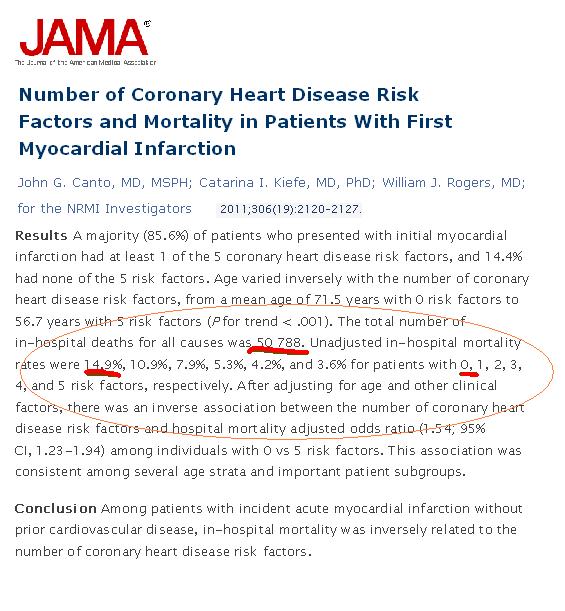
This  paper from  JAMA   adds further insight into our ignorance about  the  genesis of CAD .

The data is from  NRMI registry.

The statistics  reveal  a stunning fact .In  the overall CAD cohort ,  patients  with no major risk factors  experience  highest mortality and the ones with maximum   risk factors have least mortality ! What a shocker of a study ?

http://jama.ama-assn.org/content/306/19/2120

This  paper  would bring  jitters to the population ,  but in the real sense it sends an important message .

A significant population develop CAD without any  known risk factors.(14.5% in NRMI registry )

If a person develops  a CAD without any major risk factor  ,  it seems  . . . it is not at all a  good news   !  rather we need to introspect , why  without any risk factor he or she has suffered CAD ,

One inference is  their vascular system is more vulnerable ! Some hidden factors are operating . How to manage such  patients  without any target to intervene ?   A diabetic dyslipidemic smoker has a   definite  therapeutic target  .

What about these   lesser  humans  who   develop   CAD without any known risk factors  ? They  tend to suffer more !

Is  CAD  due to DM/SHT  is better than  others  ? This study seems to say so ” Known devils are better than unknown ones ”

Final message

Unlearning is an   “essential and fundamental”  component of   scientific learning .  In this progressive scientific world , this applies  most to   medical profession  than any other field !

Read Full Post »

« Newer Posts - Older Posts »