Feeds:
Posts
Comments

The answer to this  seemingly innocuous  question is not  that simple at all.  We know ,sinus tachycardia is  a common expression of thyroid  excess while  sinus bradycardia is the  hall-mark of thyroid depletion. So  obviously ,  the first thing that would  strike us  is ,  there must be  something  cooking between thyroxine and the SA node .

We realised much later , there is no direct action of thyroid hormone on the SA node instead it has a crucial interaction with adrenergic system which   has the major influence on chronotropy.

Click on the image for flash Animation (Courtesy Mcgraw Hill )

How does thyroid interact with adrenergic system ?

Thyroxine (T4)  is an inactive molecule , it has to get converted to  T3 for its action. This conversion takes place inside target cells like myocytes, pacemaker cells  (of course  it has action  on virtually any metabolically active cell !  )

The most important point to remember is , unlike catecholamines the thyroid receptors are located  in the surface of  the nucleus  inside the cell , instead of cell membrane . Surprisingly T4 does not require any specialised transporter to enter the cell.It simply diffuses into the bi-lipid layer of cell membrane as T4 is immensely lipid soluble.  . After entering the cell in the cytoplasm it gets converted into  T 3.

This T 3 is attracted towards the nucleus. Once  it is attached to nucleus , it brings about  changes in the gene configuration and  through  messenger RNA results in new protein generation . These cellular  elements are vital for maintaining the  ionic channels and ports and anti-ports.Among these the most important is adrenergic receptor molecule , an its  signal system namely the GTP/Adenyl cyclase/Cyclic AMP units in the cell membrane .

Thyroxine is a physiological hormone  required to maintain these adrenergic  receptor complex on day-to-day basis. (It can be called as cell servicing hormone )

The circulating catecholamine’s  action is  heavily  influenced by the thyroid hormone status.   Sympathetic  nervous system is the live wire for human biological system.  So , when thyroid is in excess the entire metabolism of  cell is increased and vice versa happens.With the close interaction with adrenergic system  , one can understand how thyroid excess causes anxiety state and depletion causes  depression.

Coming back to heart ,

  • Thyroid hormone   up-regulates  beta receptors in cell membrane and augments the action of epinephrine and  result  sinus  tachycardia .It can have positive inotropic action as well (Hyperdynamic  state )
  • Aguments intracardiac  conduction.
  • The action of thyroid hormone on heart can well extend to the pathological phase, where in it can cause multiple ventricular ectopics and atrial fibrillation. (Note the striking similarities between  these arrhythmias   and   adrenergic  arrhythmias !)

What is time frame for  thyroid  hormone action ?

Obviously thyroid hormone can not  have a rapid onset action  since it invites the nuclear synthesis  (Like steroid hormones)  it may take few weeks time for thyroid hormone to express its effects.

How does beta blockers exert its action in thyrotoxicosis ?

This occurs in two ways.

  • The beta blockers occupy the adversely up-regulated dense  beta receptors of cell membrane and  prevents excess adrenergic  action.
  • There is some evidence beta blockers prevent conversion of T4  into T3 .This seems to be less important than its direct sympathetic blockade.

For effective control of thyrotoxicosis one need to administer beta blocker in combination with anti-thyroid drugs.

Will calcium blockers be effective in controlling the tachycardia of thyrotoxicosis ?

No it is not . It may  reduce the heart rate a little but never to the extent of beta blocker. This is another  indirect evidence for  the interaction between thyroxine and adrenergic system.

If thyroid hormone is able to potentate the circulating catecholamine action why not it be used as a

positive Inotropic in cardiac failure ?

A very valid question.  It was tried by many researchers especially in dilated cardiomyopathy. .For some reason it has not worked well , except in patients with  associated with hypothyroid  state.I personally believe thyroid hormone must have  a major role  in chronic heart failure in spite of the fact  we have  proposed sympathetic blockade as concept for regulating cardiac failure.

Human coronary artery anatomy would  rank  top among  all human biological mysteries. The variations in their branching pattern is next only to palmar creases and cerebral gyri !

The left coronary artery can divide in to two , three  or even four branches occasionally.The trifurcation  occurs in upto 20 % of population .The ramus intermedious  can some times be a major division .Usually it supports the diagonal or OM territory.

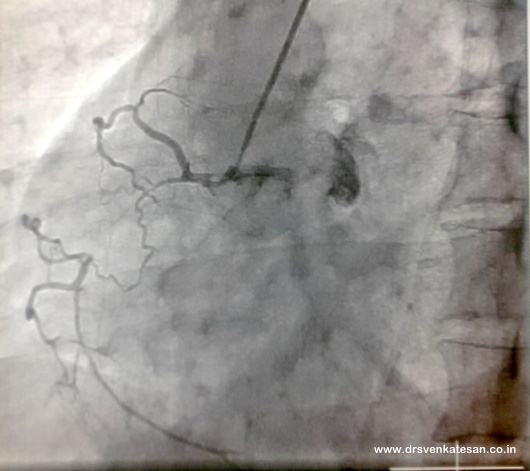
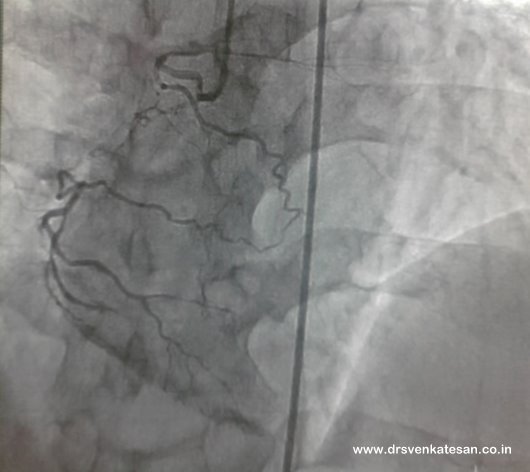
It is very rare to see a ramus  take a long course . Here  is a patient whose LAD is small  which  falls  short of LV apex . Sensing this , the ramus travels all the way to apex and support the LAD in distress !

RAO caudal view shows the Ramus reaching all the way to LV apex! Note the diminutive LAD and absence of true OMs from LCX.

* Technically  this can  also be  referred to as a rare form of dual LAD system .

Second heart sound in TOF is often single and loud . It is often  best heard in left 2nd intercostal space as well as on right 2nd  space.

This is primarily due

  1. Presence of  pulmonary stenosis  and  resultant reduced pulmonary blood flow makes P2 soft or absent .Hence  A2 becomes loud by default.
  2. In tune with any  cono -truncal anomaly  , aortic root  is  anteriorly  malposed  in TOF. This brings the aorta  closer to chest wall  (Nullifying the  aquastic insulation  of main  pulmonary trunk  ) and results in a  booming aortic  second heart sound.
  3. Increased flow across  aortic valve . In cyanotic heart disease with reduced pulmonary blood flow aortic flow is augmented and may even result in dilatation of aorta . A large aorta with increased flow is perfect setting  for  generating a loud A2  . It  is common to hear a  aortic ejection click as well in these situations .

When you hear a single  second heart sound at  the base  of heart  , how do you recognise it to be   A2  or P2 ?

Will be answered shortly.

Gynecologists  do have  interactions with cardiologists  frequently  in their day to day practice.In fact ,  in any big hospitals cardiologist consult  invariably happen every day . In our institute  fellows visit the maternity ward almost daily to give opinion   about a cardiac issues .  These are mainly emergencies like  breathless   rheumatic heart  patient  in labor , A DVT to R/O pulmonary embolism,  women  with prosthetic valve waiting for delivery, and a  women with LV dysfunction posted for hysterectomy  etc.

While it is common  for  our  Gynec colleagues to call us in  emergencies ,   and we do have a cardiac clinic every week ,  it is rare to discuss broad based practice  issues. There is little inter departmental  brain storming sessions.

Here is an excellent initiative from  European union where they have  created consensus document for reducing  cardiac risk  in peri menopausal  women.(http://eurheartj.oxfordjournals.org/content/28/16/2028.full.pdf+html)

The beauty of this document lies in the succinct practice points written in every  page .

In India , even though premier bodies like cardiological  society of  India  exits it rarely  considers bringing about such guidelines  in collaboration with other scientific bodies . ( To be  more precise  . . .they  do not have their own guidelines either ! )

I believe , FOGSI  (Federation of Obstetrics and gynecologists society of India ) is doing a much better job and they have created exclusive guidelines in O & G.


Q : Beta blockers reduce  blood pressure mainly through

  1. Reduction in Heart rate
  2. Reduction in cardiac output
  3. Negative Inotropic action
  4. Vascular sensitization to circulating catecholamines
  5. Blocks  Renin secretion and  reduce vascular tone.

Answer : (May be  4 as well !)

Our understanding of beta blocker’s  action  in SHT has changed considerably over the years .The  negative inotropic action on the myocardium  attributed for BP reduction ,  is no longer considered  important . Now we know , beta blockers can  reduce peripheral vascular resistance significantly.(There were days , we presumed  the opposite to be  true ,  ie when beta blockers are blocked , alpha action will overshoot to cause excess vascular resistance ! ) This  is more of  perceived fear.  This concept was never proved convincingly even in the  dreaded  Prinzmetal  angina* where beta blockers are  relatively contraindicated for fear of  aggravating vasospasm.

*Note : This is may  still be valid in selected few  who  show a  tendency for  Raynaud  phenomenon especially in peripheral vascular  system.


Additional  factors   influencing  beta blockers in SHT

  • Suppression  of  central adrenergic drive  ,  modulation of   brain stem vasomotor centre  are aslo considered vital . This action is linearly related to the ability of beta blockers to cross the blood brain barrier which is more with lipophilic drugs like metoprolol.
  • The role of beta blocker in isolated systolic hypertension in elderly  is unique.Here it reduces the myocardial dp/dt (ie contractility )  and hence help them prevent  systolic spikes of pressure and the resultant  stroke.
  • The newer  vasodilating beta blockers  like Nebivolol, (Nitric oxide mediated ?)  and Carvidilol may have additional advantage in controlling BP.
  • It needs to be appreciated , beta blockers combine well with  diuretics like  hydrochlorthaizide  .This  makes it easier to control severe forms of HT  especially volume dependent ones in  both young and elderly. (SHEP trial )

Final message

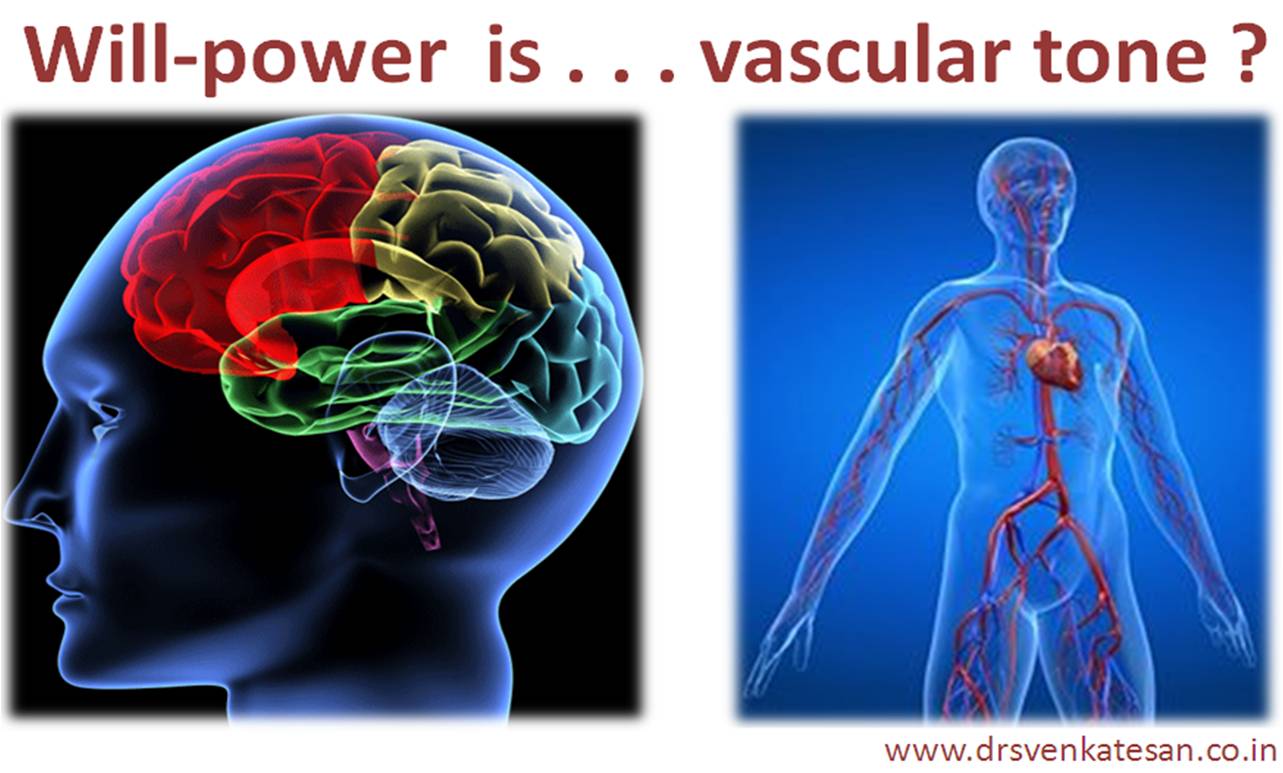
The modification of vascular response to catecholamines  is  the single most important mechanism of reduction of blood pressure.

This may be a direct consequence  of  1.  Blockade of  vascular  adrenergic receptors . Indirectly  through suppression of  Rennin secretion.

Instent restenosis is a  common problem.

Diffuse long segment instent restenosis is somewhat rare.

We  encountered one such patient who had diffuse instent restenosis of RCA.

ISR is ssupposed to be rare in DES, but here ISR occured with a Cypher stent  one year following implantation

He presented with angina which  was relieved  by plain baloon angioplasty.

 link to a  related article in  this  site  regarding the mangementof ISR.

We know primary PCI is a race against time  both for the  patient  and his  physician.

What is the upper limit for this unique race where the stakes  are high   and it involves  human lives  and  big  corporate  warfares  ?

  1. 6 hours
  2. 12 hours
  3. 24 hours
  4. 36 hours
  5. 54 hours
  6. Time does not matter . You can do a PCI as late as possible as long as  patient has sufficient insurance coverage and we have the expertise

Answer :

Please note there is  only one exception  . Cardiogenic  shock has been given a extended  lease of time window (Which can be technically up to  54 hours ) . PCI can be performed   if the onset of shock  is   within 36 hours  of STEMI  and to be performed within  18 hours after the onset ! )

* Even though we  have a  well set criteria for re-perfusion which bans primary PCI to be performed after 12 hours , cardiologists have enough technicalities to overcome this hurdle and keep doing the futile pPCI well after 12hours.

How they are   able to indulge in these futilities   without  any ethical issue ?

The answer  is very simple. Instead of calling it as primary PCI they refer to it as delayed PCI or rescue PCI !  Strict time specific guidelines are only for primary PCI . By changing the terminologies they   make a mockery of the concept of time window which  is vital for any intervention for STEMI !

Success of primary PCI is defined by  different yardsticks  by  different  cardiologists  , in different  institutions !  But , for the patient and his family,  getting  discharged   alive with out symptoms is a huge  success !

They  do not bother  even if they are charged  Rs 3-4 lakh for their stay ,  as they  believe  surviving  a heart attack  is a God’s grace   rendered thorough the hands of  the doctor.

But we know  the real success lies elsewhere. Cardiologist’s   perception of   success of  pPCI   should be based on scientific concepts. Unfortunately many  physicians  continue to  think like  their patients  . This  tendency to get self gratification  with a patient’s  frame of  mind is  common  and  needs  introspection .

This is esepcailly  true for primary PCI . It came with big fanfare  a decade ago . Soon ,many cardiologists developed  a habit  of criticizing   the  practice thrombolysis for STEMI .If primary PCI is such a superior modality  every patient   should be prevented from significant  myocardial damage following  STEMI .

Primary PCI  may be the the most logical method  still , for reverting the STEMI process  . But “A properly performed  primary PCI  as a  concept ” lies  mainly  on paper ,  not  been  replicated in real world for various reasons.

Please remember , a successful primary PCI

  • Is  not restoring TIMI 3 flow  in IRA
  • Is not relieving  the  angina
  • Is not discharging a  patient in stable condition

Even if  . . .  we accomplish each one of the above  . . .   if   the patient  carries  home  anything  equal  to ,  or more than moderate LV dysfunction ,  primary PCI  has  deemed to have failed.

Final message

What is the reality  check ?  In one  of  the  preliminary analysis   out of 20 randomly selected  patients  who have undergone STEMI*   within 12 hours  , significant LV dysfunction  was present in  12  patients making it pPCI only 40 % successful   in real world  .( Which  would struggle to beat the outcome of  promptly administered fibrinolysis )

* Primary PCI done in state of the art institutes .

“STEMI is Acute MI” , and   “Acute MI is STEMI”  !   This is  how we  have been taught over the years.

But   STEMI can present in any one of  the following  odd ways

1. Posterior MI with ST depression in V1 to V3 ( Manytimes mistaken for unstable angina , and reperfusion not considered !)

2.Only with tall T waves (TEMI)

3. Left bundle branch block

4. Present as ventricular tachycardia. Untill VT  it is reverted ST elevation  will not  manifest.

5. When a  STEMI presents with  complete heart block   ST elevation may not manifest.

6.Atypical ECGs and subtle ECG changes are especially common in elderly, diabetic and in patients with LVH.

7. Finally,  it is often quoted in text books  acute MI occurs with normal ECG in up to 10 % . This is  a  high estimate .We belive acute MI with normal ECG is very rare presentation < 1% . That too in the very early stages of evolving MI.

As of now  only condition No  1 and 3 are approved  for  thrombolysis or PCI.  The unfortunate few who fall in other categories will continue to lose their muscle in the golden hour without any intervention  as the guidelines has not addressed these issues.

Pulmonary hypertension (PH)is a very common clinical problem in cardiology.The classification of PH  has been little complex. Now we have a fairly clear scheme formulated in 2008 in a small beach side county of  California called Dana point .

I have tried to simplify it without affecting the core

Click on the image if  slide is not displaying

Category 1 is again divided into 5 categories

1.1 /1.2/1.3/1.4/1.5

Other categories( Category 2 to 5)

* Note there is a special category called 1 ‘ for pulmonary veno-occlusive disease .This should be distinguished from CTEPH

Summary

Remember  99 %  all  pulmonary hypertension will be constituted by the following  seven entities .

Idiopathic PAH  1.1

Familial PAH       1.2

Connective tissue disease 1.4.1

Congenital heart disease  1.4.4

Left sided valvular /Myocardial heart disease 2.3.3

Secondary to  COPD  3.1

CTEPH   4

In India  (probably worldwide ) the commonest  cause for  PH is  2.3.3

The updated pulmonary hypertension  classification is available here