Feeds:
Posts
Comments

Answer : Is the coronary dissection really painful ? As in most situations of scientific medicine, the answer to the question is, It “may or may not”. But, for some strange reason, it is more often painless . Mind you, even if it occurs, it is atypical, continuous, non-anginal if flow is unaffected, and not relieved by nitro-glycerine. This has important clinical significance , as many successfully lysed STEMI patient might have minimal segments of dissection/deep plaque fissures. , may be misdiagnosed as post infarct angina.

Spontaneous coronary dissection vs Iatrogenic dissection

SCAD is a rare , different entity , enjoys a popular space in the patho-physiology of CAD. it is a disorder more common in women, especially in pregnancy where hormones tend to soften the connective tissue in vascular EC matrix. An important therapeutic caution is PCI is contraindicated in SCAD except in critical locations such as left main.

Image courtesy : An amazing learning resource by Charles Bruen, MD at http://www.rhesusreview.com

Reference

A best review article on SCAD from NEJM Esther S.H. Kim N Engl J Med 2020; 383:2358-2370

Next query

What is the difference between plaque fissure and coronary arterial dissection? Is plaque fissure painful ?

Answer could not be synthesised with the available cardiac literature.

Postamble

This quote is being sent for the annual meet of “Right care movement” I know ,this can sound outrageous, permissble limits of abuse ? Up to 2% or 5% ? Let it be anything . Meanwhile try to enlighten yourself , the key differences between misuse & abuse.

Preamble

A patient who had a PCI some time back , asked me in one of his recent visit.

Doctor what is microvascular endothelial dysfunction and erosison ? Am I at risk of developing it ?

What am I supposed to answer ? Yes, I some how managed .” Don’t worry , it is a complex biological phenomenon. you need not go deeper into that. Take medicines regularly” He wasn’t happy with my answer is a different story.

A simple tip for peace of mind … for the modern patient

If the current generations of patients , equipped with hyper-knowledge engines, insist to understand 100% about their illness, imagine the consequences to the global healing system ,that has so many ground level issues to bother about.

One unofficial estimate from an elite , professional academic chatterbox of medicine suggests that the knowledge base with which doctors diagnose, treat, and understand the diseases they tackle, is at best 15%. Pateints need not be thankful , but atleast understand we are for working around with 85% ignorance, and still tries to bring out the best. I am sure this is a fact, no one can disagree ,regardless of the presence or absence of evidence to support it.

Final message

It might appear fair if someone argues blind faith in a trusted physician or hospital could end up as unscientific or unethical. But,what they fail to realize is, sciences’ blindness can be much darker, especially when it comes to the outcome of treatment and prognosis.

Pure science

Whenever possible ,before doing a coronary revascularisation procedure , check twice the segments you try to perfuse is really short of blood supply and truly needs the procedure. Don’t ever waste your resources and try to blood-feed the dead myocardium. It’ can never be awakened !

Pragmatic science

I was conversing with my colleague recently , who has grown into  suave , Interventional cardiologist with a huge academic & societal repute .He owns a personal cathlab and planning to get one more.

I learnt a non-academic reality lesson from him .

myocardail viablity viability study pci ptca cath lab ethics

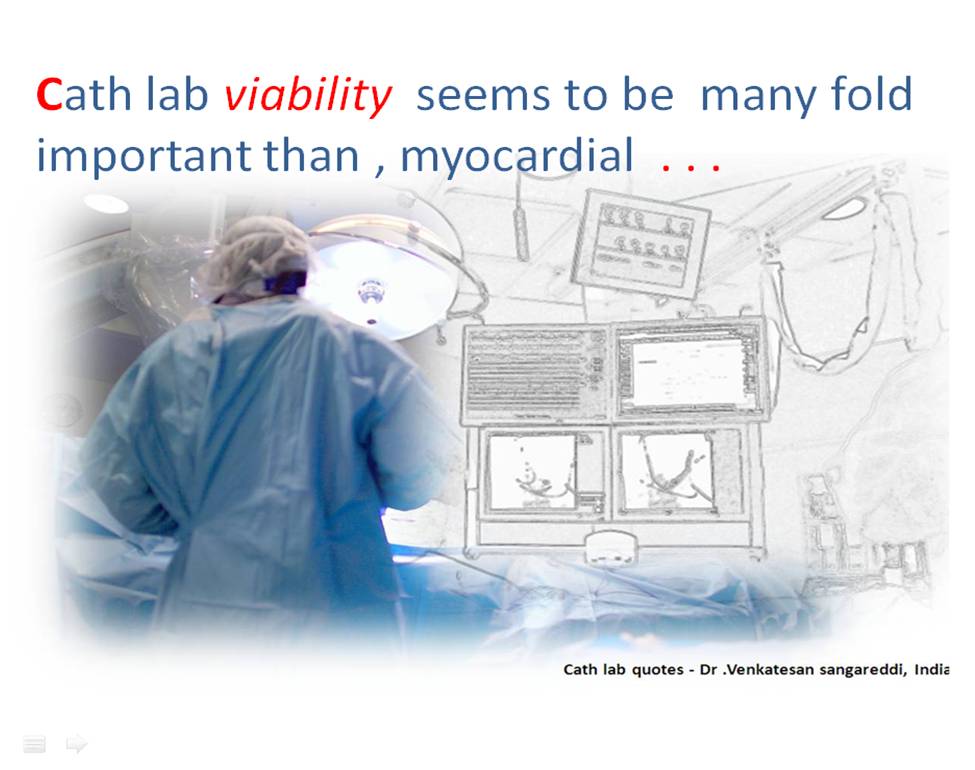
When planning myocardial revasascularisation,  apart from myocardial viablity status, there is one more viability issue  which is done in the account books of finance mangers across big hospitals. Its Cath lab viablity.  Trust me, he used exactly the same word ! He went on to explain in detail , how, every day there must be a minimum number of procedures to keep the machine alive. Which is under the eagle eyes of the guys who funded the state of the art lab !

“So, what do you say,I asked him ?”

He was frank enough to admit,  he felt always happy when he is able to convert angiograms into angioplasties.He went on to add , the Ideal CAG-PCI conversion ration should be atleast 3:1 or more.

“Whenver I hear such genuine statments from real world people , it pains,  as it tends to confirm my assumptions ”

Final message

I am wondering with all my lost wisdom. Why should any cardiologist after 30 years of training,  fight for cath lab viablity , and get into a conflict with the very organ they are supposed to care and protect.

When did we become so Inferior beings & fight for the survival of these life less machines ?

Meanwhile, major text books , has un-intentionally facilitated this academic deciet .They have largely taken away the sting out of the snake . Myocardial  viablity , hibernating, stunned  myocardium , are rarely given importance nowadays and made it appear taboo concepts,in cardiology academia.

Postamble.

Will be extremely happy if what is portrayed in this post is not really true.

Reference

Nandan S. Anavekar, Panithaya Chareonthaitawee, Jagat Narula, Bernard J. Gersh, Revascularization in Patients With Severe Left Ventricular Dysfunction: Is the Assessment of Viability Still Viable?,
Journal of the American College of Cardiology, Volume 67, Issue 24, 2016,Pages 2874-2887,

A 62-year-old man who is being scheduled for prostate surgery with no cardiac risk factors or comorbid status came for surgical clearance. I examined him and took an ECG, everything was fine and gave him clearance for surgery.

 I was surprised to spot him the very next day, waiting in the lounge of my office. He said, his anesthetist was not happy with my pre-op-cardiac assessment report, suggested it was incomplete, and sent me back for echocardiography to know the LV ejection fraction.

I wanted to clarify with the patient, what exactly happened when he met his anesthesiologist.

“I am not sure doctor, the moment he saw your report, he called my urologist. I overheard his call, they were discussing the need for an echocardiogram and they were also wondering,  how could a cardiologist give a  surgical clearance without even an echocardiography”.

I wasn’t really surprised by the turn of events and told the patient. 

“I am experienced enough to say, your heart is 100 % normal without an echocardiogram”.

“I understand doctor, but sorry to bother you. Can you please take it for the sake of my anesthetist and urologist, after all, right now I am worried about their peace of mind” 

“You are absolutely right. This is a topsy-turvy world. Investigations are dictated to me in my own field of expertise. Anyway, I am not a fool, to expect a patient’s help to guard my principles of practice. Please check in, let me do the echocardiogram as they wish” 

Thank you so much, Doctor“.

I showed him, the vigorously contracting ventricle and taught the student trainee who was nearby, a simple clinical tip ie, a loud first heart sound on auscultation is good enough to tell you, the EF is beyond 60% in most situations. (A forceful AML movement is a direct auditory marker of EF %)

Final message

It is getting more & more clear,  physicians will face huge hurdles in applying their clinical skills to practice. They may even be unauthorized to do so. It seems, in our misplaced quest for perfection, we have fallen into a scientific trap, that every clinical decision must be authenticated by some objective lab-made obsession. The word clinical acumen could soon become a laughing stock, as AI-powered medical zombies are waiting to join our consultation suits.

(Meanwhile,  the guidelines are very clear. (Read below)  Do echo only in high-risk surgery, if patients’ functional capacity is poor. But, let me confess, at least in our part of the world,  we are happy to violate standard guidelines  without any degree of guilt )

Reference 

ESC Scientific Document Group, 2022 ESC Guidelines on cardiovascular assessment and management of patients undergoing non-cardiac surgery: Developed by the task force for cardiovascular assessment and management of patients undergoing non-cardiac surgery of the European Society of Cardiology (ESC) Endorsed by the European Society of Anaesthesiology and Intensive Care (ESAIC), European Heart Journal, Volume 43, Issue 39, 14 October 2022, Pages 3826–3924https://doi.org/10.1093/eurheartj/ehac270


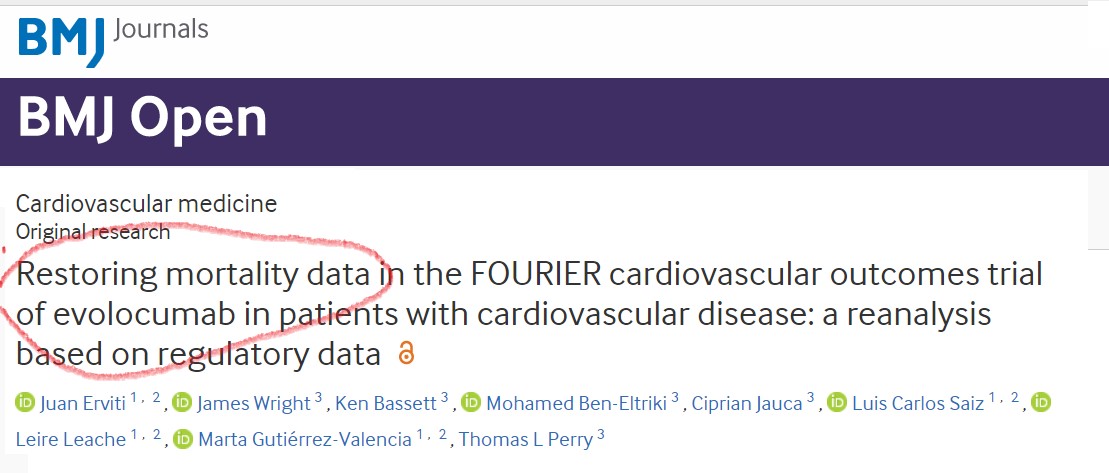
Welcome back to the big molecular science of PCSK and its antagonist Evolocumab, a monoclonal antibody designed to target and prevent the LDL receptor catabolism inside the lysosomes. Evolocumab was approved by FDA for aggressive lowering of LDL, following a  customary study published in NEJM 2017, that released this double-edged anti-lipid molecule into the human domain with all fanfare.

It aimed to reduce the LDL as low as possible in selected patients with familial LDLemia & and those who don’t tolerate statins.  Now, a study was silently released in BMJ open, at the fag end of 2002, which is causing ripples in the pharma world in the new year.

In fact, this paper can’t be called a study. It looks more like an FIR. It questions the missing death counts, which were not included in the landmark trial, that led to its approval.  It took time for the news to sink into the world lipid community. 

Final message

I am surprised at the reactions to the reanalysis of FOURIER data. Any reasonably experienced cardiologist will agree, getting regulatory approval with manipulated data and analysis is more of a norm and not an exception (Ref 1). In a trillion-dollar pharma industry, do you think hiding deaths is a big crime? Is there a solution to this menace?  Yes, let us hope so, with movements like this one (Doshi P et all, Restoring invisible and abandoned trials: A call for people to publish the findings 


Counterpoint (Q&A)

Q  

Damn this post. Don’t blame a phenomenally successful scientific breakthrough that intercepts the immune destruction of LDL receptors. Instead of being cynical, try to come up with a scientific analysis of the FOURIER study. Please read this rebuttal from the TIMI group, https://www.tctmd.com/news/study-alleges-mortality-miscount-fourier-trial-timi-group-disagrees

 A 

I agree, let us not blame Evolocumab. It is an innocent and intelligent molecule. Culprits are elsewhere. It is a reserve drug in a highly selected population with refractory LDLemia.The lesson from the FOURIER  to all the clinical trialists is, when credibility is lost every thing is lost, even truths can become a casualty. We have to live with that. 

Reference

Marcia Angell,the former NEJM editor’s  book


The term Ischemic heart disease (IHD) was once very popular, but many abandoned it as it became an academic cliche.  CAD & CAHD are the other terms that are equally popular and prevalent. Stable IHD was in vogue till recently, which was again replaced by “chronic coronary syndrome’ now. Honestly, I feel the original term IHD to be restored however outdated it may look. it encompasses the entire spectrum of clinical cardiac disorders.

Manifestation of Ischemia heart disease 

  1. Angina
  2. Infarction
  3. Cardiac failure
  4. Arrhythmias 
  5. Silent ischemia
  6. Sudden cardiac death

 The purpose of this post is to share some thoughts on the link between Ischemia and cardiac arrhythmia. 


What is the relation between  Ischemia and cardiac arrhythmia (especially VT)

A.Strong relation

B.Weak relation 

C.No relation 

D. Recurrent ischemia protects against arrhythmia.

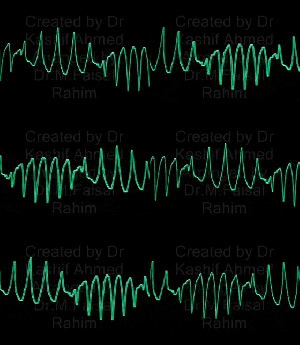
The fact that. acute Ischemia triggers primary VT and VF and is the leading cause of electrical death is sufficient to fix the answer without any doubt. But, the  truth is, the link between Ischemia and cardiac arrhythmia is more complex  

If we could agree ischemia is a powerful trigger of ventricular arrhythmia, will every patient with chronic stable angina be at risk of  VT after walking a certain distance?  

So, where does cardiac arrhythmia fall in the Ischemic cascade of events? the fact that chronic ischemia on exertion rarely precipitates an arrhythmia conveys a strong hidden message. 

Coming back to, STEMI where the arrhythmic risk is powerful, still, if the same acute ischemia, presents as UA/NSTEMI, with severe compromise of resting blood flow, it doesn’t trigger a VT usually. This fact should baffle us and question why even acute ischemia carries low arrhythmic risk except when it happens with STEMI.

The potential mechanisms of lack of VT in UA* (No evidence /Class C evidence) 

  • In UA, ischemia is primarily subendocardial, and the neuronal innervation which is more in the epicardial plexus fails to get stimulated. This is in contrast to what happens in STEMI. Here It is transmural ischemia and the sub-epicardial is always involved.
  • In this context, the high prevalence of VT in Prinzmeal angina where there is subepicardial injury is a point to be noted. In young NSTEMI/STEMI crossover entities like Wallens and De-winters, there is a high adrenergic drive, which triggers the VT rather than ischemia per-se.
  • Finally, even in STEMI, only a minority of 15-20 % of myocardium become arrhythmogenic and face fatal complications. What protects the rest of the 75 %? is genetics, epigenetics, or fate.? 

The practical implication of this question

  1. The VT in ischemic cardiomyopathy is related more, to the scar burden, strategically placed islands of dead and live tissues, and the overall severity of LV dysfunction. This makes the Ischemic VT, as a term,  could be a misnomer.  In fact, it is the viable ischemic tissue that is a powerful trigger.
  2. If baseline chronic ischemia is less likely to trigger any VT, revascularisation in chronic CAD (PCI/CABG) is unlikely to give relief from it as well.

Anti-arrhythmic adaptation in chronic Ischemia 

We know about ischemic preconditioning and angina relief. It may apply to arrhythmic preconditions as well. Recurrent ischemia, while we expect to elevate the arrhythmic risk, it is a curious and exciting possibility it might work as an “anti-arrhythmia vaccination” at the molecular level. 

Final message 

So, what is the true relation between ischemia and cardiac arrhythmia?  

It is not as strong as one would believe it to be( Except in the early hours of STEMI and a very small subset of NSTEMI.

Curiously, in certain lucky beings, recurrent baseline ischemia may protect against future arrhythmias.

Reference 

1.A V Ghuran, A J Camm, Ischaemic heart disease presenting as arrhythmias, British Medical Bulletin, Volume 59, Issue 1, October 2001, Pages 193–210, https://doi.org/10.1093/bmb/59.1.193

2.Janse MJ, Wit AL. Electrophysiological mechanisms of ventricular arrhythmias resulting from myocardial ischemia and infarction. Physiol Rev 1989:  69 ; 1049 –169

Few more questions worth pondering 

Why do certain VTs struggle to become sustained?

Will discuss this later (Will need to talk about the diameter of the primary Rotor, the Curvature of rotors and source-sink mismatch, etc. )

How often  Ischemia triggers AF?

I haven’t heard of Ischemic SVT, or ischemic AF much. Trying to accumulate more Info on this.

(This post is about some basics in echocardiography meant for fellows, and echocardiographers. Others can skip please ) 

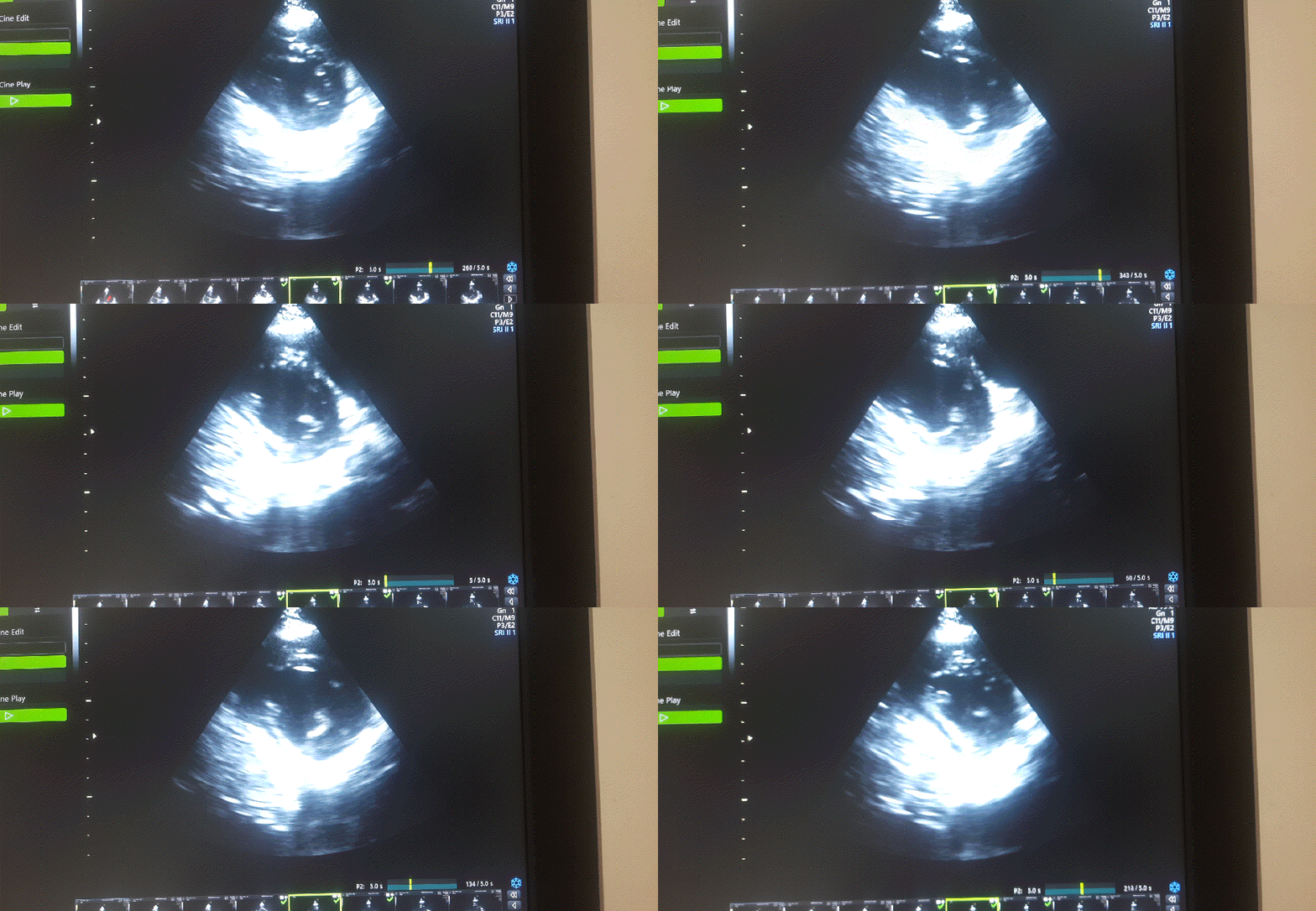
This is a 27-year-old woman who was referred for routine* cardiac evaluation. What do you see?

What is the diagnosis?

This echo clip is from a woman who is 8 months pregnant. What you are seeing is perfectly physiologically and normal. On lying down there is a mechanical push of the diaphragm altering the LV shape and contraction. In the short axis, the left ventricle is contracting well, but the shape is not spherical in systole implying some desynchrony. Further, the  IVS arena is contracting vigorously, which makes, the other segments appear to be poorly contracting. (Someone could report it as a wall motion defect in antero- lateral segments inviting temporary panic)

It is worthwhile to go through this list of non-ischemic WMA and find the pregnancy at the bottom of the list.

Few more conditions, that can be added to this list

  • Though LBBB is the classical cause for WMA, we have seen even LAFB showing the bumpy motion of IVS and the anterior wall.
  • Some patients with ERS and some patients with Brugada show wall motion defects due to repolarisation heterogeneity. 
  • Regioanl pericarditis
  • Intracardiac scars. Localized fibrosis.
  • Extracardiac tumors 

iFAQ on this topic 

Is this wall motion defect in pregnancy, really an artifact or real? 

They are true artifacts in the sense, the heart is an innocent bystander in this pulsating fight between intra-thoracic vs intrabdominal pressures. A similar situation happens in ascites. 

Any other mechanism other than mechanical push?

WMA due to RV volume overload of pregnancy may also contribute. 

Does this WMA affect cardiac hemodynamics?

Logically it should, but it doesn’t. The normal heart has enormous resilience, it just ignores these subtle pushes from below and keeps working normally. Still, enormous distension of the abdomen especially in twin pregnancies, in small body habitus, can make some women breathless, or orthopenic. I am sure, one of the mechanisms could be this geo-mechanical encroachment.

Final message

Wall motion defects are not synonymous with CAD. There is an important list of non-ischemic conditions that can cause WMA. Cardiology fellows and echo technicians are encouraged to go through the above list one more time. While this knowledge can prevent false alarms, at the same time it is always wise to ask for the ECG before doing echocardiography, and not to miss the omnipotent CAD.

Postamble 

*DIscerned readers might wonder why a routine echo was done in a normal pregnancy. I am surprised to note there is an ongoing fad in this part of the world, to do echocardiographic screening on every pregnant mother to rule out cardiovascular disease. (A luxury even the world’s richest country can’t afford) I am told, this echo is meant to rule out peripartum cardiomyopathy for legal purposes. A spot echo at term can never be going to either predict as an event that is mainly going to happen postpartum. This newfound epidemic of anxiety among obstetricians is unwarranted. 

Reference  

A well-written focused review specifically on this topic 

Yavagal ST, Baliga VB. Non-Ischemic regional wall motion abnormality. J Indian Acad Echocardiogr Cardiovasc Imaging
2019;3:7-11.


Putative mechanisms 

Forget about the mechanisms. Is it really beneficial?

Very valid question. No simple answers are available. But, some truths try to emanate from this big epidemiological study by INTERHEART that found the beneficial effect of minimal amounts of alcohol with a wide geographical variation.(Mind you INTERHEART can be Interpreted totally differently if type and amount of alcohol are counted)

How much alcohol is acceptable asper ADA recommendation?

The ADA recommends no more than one alcoholic drink per day for women • no more than two drinks per day for men. One drink is defined as 12 ounces of beer • 5 ounces of wine • 1 ½ ounces of liquor.

Does this apply to the Indian population?

No, it doesn’t apply for behavioral and possibly genetic reasons.  (A. Roy, et al Impact of alcohol on coronary heart disease in Indian men, Atherosclerosis, Volume 210, Issue 2, 2010, Pages 531-535,) 

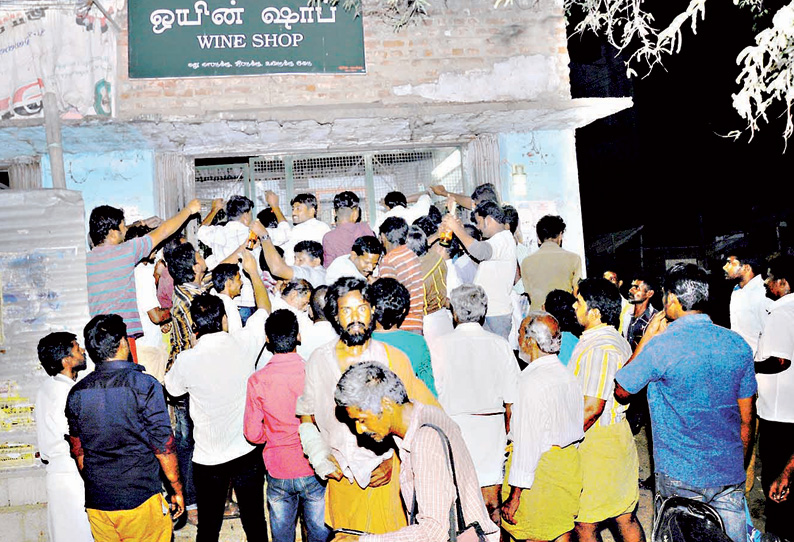
                                            One of the daily scenes In India, at an Alcohol-human Interaction site 

Final message

It is true, disciplined alcohol intake seems to do good if the person takes care of his other lifestyles and potential risk factors. The beneficial effect of moderate alcohol on lipids, and vascular endothelium is based on a weak evidence base, but still good enough to create a recommendation. These (flimsy ?) advantages of alcohol are lost if it exceeds 2 units per day. Meanwhile. let us be aware, alcohol enhances the global burden of disease by many folds and  it should never be tried as the therapeutic drug is a logical and popular opinion (Lancet 2016)

Further research question

All of us would agree, regular alcohol intake, in any amount will end up in danger for native Indians. Now, can an NRI or resident Indian, blessed with so-called western drinking discipline accrue the true benefits of moderate alcohol intake? is a  big research/common sense question.

Reference 

1.Conner H, Marks V: Alcohol and diabetes: a position paper prepared by the Nutrition Subcommittee of the British Diabetic Association’s Medical Advisory Committee.  Diabet Med 2: 413–416, 1985

2.https://www.cdc.gov/alcohol/fact-sheets/moderate-drinking.htm

3.Vu KN, Ballantyne CM, Hoogeveen RC, Nambi V, Volcik KA, Boerwinkle E, et al. (2016) Causal Role of Alcohol Consumption in an Improved Lipid Profile: The Atherosclerosis Risk in Communities (ARIC) Study. PLoS ONE 11(2): e0148765. https://doi.org/10.1371/journal.pone.0148765

4.Leong DP, Smyth A, Teo ; INTERHEART Investigators. Patterns of alcohol consumption and myocardial infarction risk: observations from 52 countries in the INTERHEART case-control study. Circulation. 2014 Jul 29;130(5):390-8. 


* ELI -Evidenceless Imagination (Closely associated with class C evidence)