Feeds:
Posts
Comments

CHB with CAD is a  common combination especially in the elderly.

Which will you Intervene first ?  Is the AV block related to CAD  ?

How to differentiate Ischemic from degenerative AV block ?

Differentiating is often difficult.Even coronary angiogram may not answer the query unless it is totally normal . For AV block to occur usually  LCX / RCA lesion is required.  LAD lesion in isolation are rare to cause CHB .

How often re-vascularisation  reverses  ischemic CHB ?

Logically  you expect more reversals.In real world it rarely happens.

Therapeutic options in combined CAD and CHB

  1. PCI and pace maker in the same sitting .
  2. PCI first followed by pace-maker at a later date.
  3. Pace maker first followed by PCI at a later date if required.
  4. CABG  and epicardial pacemaker ( best option In all critical TVD and CHB)
  5. Pace maker followed by CABG later
  6. Pacemaker followed by medical management (CHB with Insignificant CAD)

Can worsening of ischemia  occur after pacemaker  ?

Very much possible . Since the patient  has been benefited by low heart rate in terms of MVO2 consumption .(Inserting a pacemaker  is  like sudden withdrawal of beta blocker !)

Rate adoptive pacing can confer chronotropic competence which  may bring back the angina.So,what was a insignificant lesion  can become hemodynamicaly relevant  and  may require  angioplasty  later.

*The above clinical issue is applicable  for sinus node dysfunction and CAD as well.

Final message

There is no  fixed rule in the management strategy in combined  CHB and CAD .

Generally , electrical  therapy  should be given preference .Symptom guided approach  may be practical.

In this scientific era , one may argue to deal both issues  together by simultaneous  PCI and pacemaker ,  still  option 3 and 6  remain clear  favorites !

If angina  occurs  even in  baseline bradycardia  it is obvious the obstructive CAD  is  significant and needs immediate fixing .

Finally , though it looks an attractive  concept , It is very rare for CHB  to get reverted by PCI or CABG.


All left to right shunts are  acyanotic heart disease to begin with. Cyanosis appears if there is progressive PHT and reversal of shunt .We know this happens late in ASD.(third decade)

It is important to remember some of the  patients  with large ASD  can show significant desaturation without severe pulmonary HT.  This should not be mistaken for Eisenmenger reaction.

How ?

In  any large ASD ,

  • IVC blood can stream into LA by hitting preferentially the lower part of IAS.( It is the old fetal route that heart does not forget  and indulges whenever the  local hemo-dynamics permits !)
  • During straining , (Valsalva and equivalents)  right atrial pressure can exceed LA and small amount of shunts occur across RA.
  • ASD is often (15%) associated with systemic venous anomaly. The common one is persistent LSVC.  LSVC  is usually connected to coronary sinus . If it has a communication with LA (Un-roofed CS) , there can be significant cyanosis .
  • Further , a large ASD can act as a single atrium and considerable mixing happens and cyanosis results.

Finally ,two conditions should always be considered

  • ASD if associated with VPS auguments R-L shunt .
  • TAPVC can be mistaken for Eisenmengerisation of  ASD in bedside which presents as clinical signs of ASD + Cyanosis

* It is useful to recall ,even PFOs can shunt right to left at times of extreme RA pressures like during PEEP ventilation and orthostatic  deoxia in sick ICU patients are reported (If PFO can shunt R-L , why not huge ASD ?)

Final message

Cyanosis  in ASD is not always  an ominous sign .There are few important causes other than Eisenmenger. Though it  occurs intermittently , persistent mild desaturation is also possible.

Any new ST depression occurring during  EST is sine qua non for inducible ischemia.But,this rule does not uni-formally apply  in all 12 leads .ST depression occurring is certain leads is more important. While severe global ischemia can depress  ST segment  in most leads ,factually  only the leads V 5 and V6  predict true Ischemia.This because , bulk of LV muscle mass faces these two leads.

Isolated ST depression in inferior leads  during exercise

  • Is a frequent issue occurring at the peak exercise.
  • Is least predictive of significant CAD.
  • The exact mechanism is not clear.
  • Some continue to  believe it is indeed significant .
  • We have  observed  isolated  ST  depression > 2mm in inferior leads with significant CAD.
  • What really matters is the quantum of ST depression , symptoms, and exercise time and preexisting CAD .

Probable mechanism

  • Apart from true ischemia ,ST depression may indicate relative sub endocardial strain rather than ischemia.(By the way can simple stretch can cause ST depression ?)
  • The Infero posterior surface of heart represent  right ventricle .RV volume overlooked peaks exercise.Some think it represents acute raise in RV load during peak exercise.

How to report such EST ?

You can report it as such,  what you have observed.

  • ST depression noted in Inferior leads at peak exercise.
  • Mention whether it was angina free,
  • At what METS,
  • Total exercise time .

If you are statistically inclined  you can also mention the likely hood of CAD by positive predictive value (PPV) of the test (Low with isolated Inferior ST depression )

If you are really confused , and do not want to scratch your brain we have the most convenient terminology  invented by cardiac physicians ie Borderline EST, or Mildly positive EST “

Should we do Angiogram for such patients ?

In this era of catching normal people  who attend master health check ups  for a day care CAG  . . . it is not all  a crime to do angiogram in a  patient who shows suspicious  ST depression in three of his leads (2,3,AVF) especially if he also complains of vague chest pain.

Alternate investigation

Of course , we  always have the luxury of using  MDCT  that can stunningly  photograph the coronary arteries.

It is a mystery investigation, if it comes entirely normal every one is happy.Even slightest  defects in the photography  has a potential to confuse both physician and the patient .

What I do ?

I hesitate to  do routine CAG  if ST depression occur exclusively at  peak exercise beyond 10-12  METS , which disappear fast.(Many times we can apply this rule  to classical ischemic ST depression of lead V4 as well !)

ST  depression  in any leads (with any degree) following an episode of  ACS seems to be important.

Related topic

The WordPress.com  prepared a  official 2013 annual report for this blog.

Here’s an excerpt:

The Louvre Museum has 8.5 million visitors per year. This blog was viewed about 540,000 times in 2013. If it were an exhibit at the Louvre Museum, it would take about 23 days for that many people to see it.

Click here to see the complete report.


Dear friends,

It all started in 2008. This is  6th year of my attempt to share knowledge in cardiology.The followers of my blog is the only  strength that sustain my writing .

Wishing you all a Happy , wonderful  and  a prosperous , New year 2014

But . . . please be reminded we don’t require a New year to bring a bout of happiness , it is sitting right in our minds every day  !

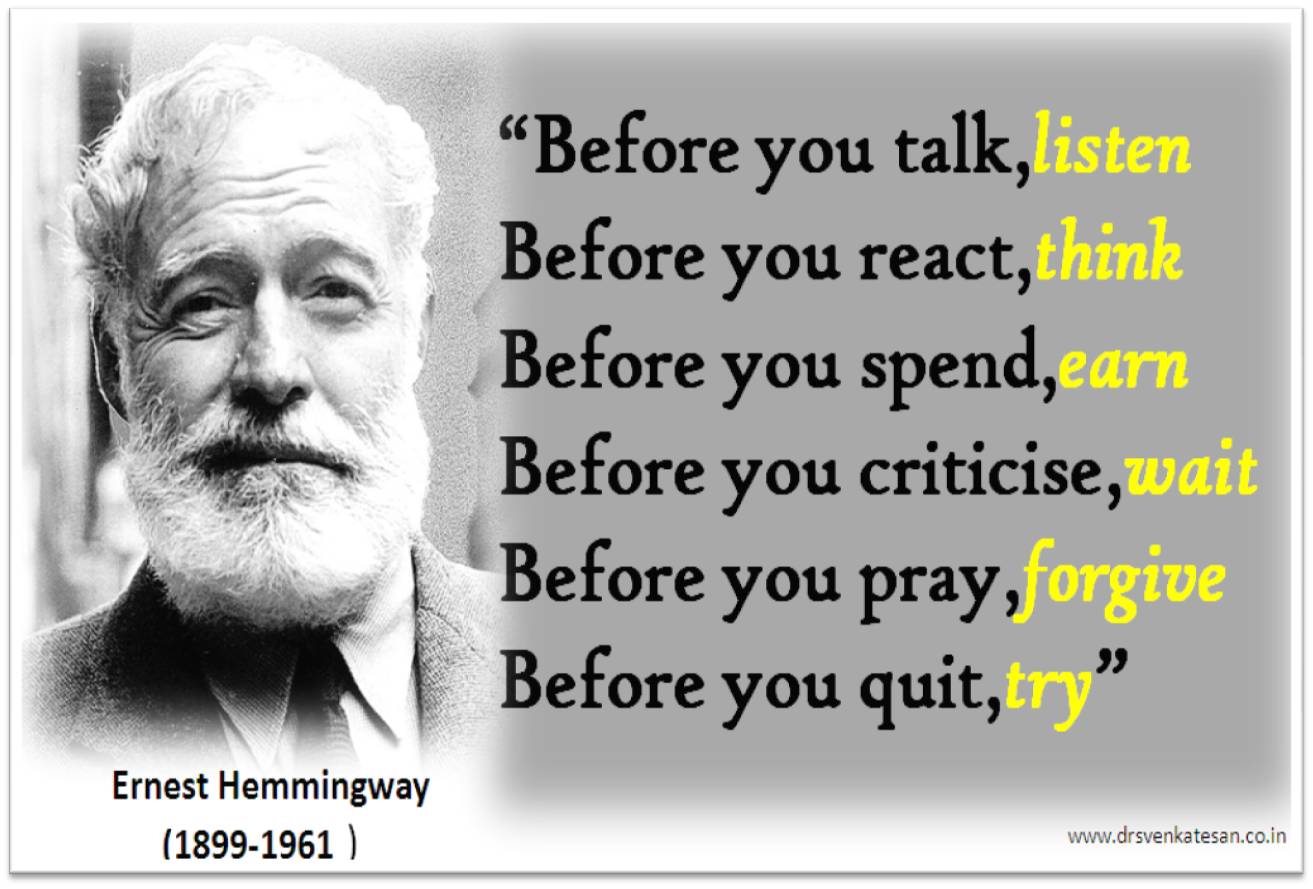
On this day let me quote my most revered quote of Hemmingway.

Ernest hemmingway quotes

Ernest Hemmingway the Nobel laureate  who was born in USA, Lived in Paris , fought in world war 2 , lived in the deep forests of Africa with wild animals during the fag end of his life .He had a Intimate relationship with Cuba,  made a passionate appeal to end the man made disaster called wars in this planet , before his life ended in 1961.

To connect with  this noble (Nobel ) soul  reach through Wikipedia Link

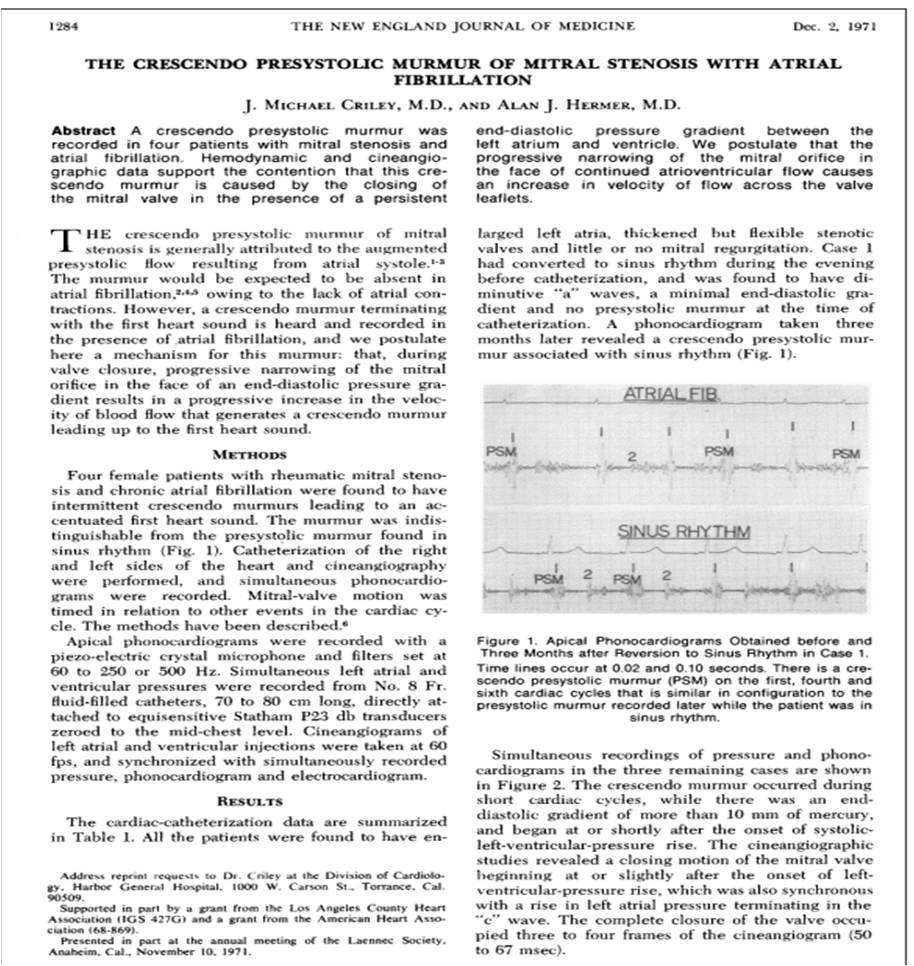
Auscultatory  findings of mitral stenosis is the most common question asked in clinical cardiology right from first clinical year to higher specialty examinations . It should be answered in a systematic way.
What happens to  the murmur and sounds in mitral stenosis after the onset of AF ? When I asked this question  in my class  , many struggled . Hence this post .
 Mitral stenosis auscultation
* Correction
The A2-OS interval in critical MS  is relatively short and only is minimal variation is expected in spite of AF .This is because, A2-OS interval is primarily determined by instantaneous  LA pressure  at the beginning of MV opening which is always high and does not vary much with RR interval .
Reference
Criely mitral stenosis pressytolic accentuation ausultation atrial fibrillation

Following are revered  facts  . . .  among the  “Guardians of   Cardiology” !

myths-truths-300x300

When false truths are synthesized to conceal a true myth . . . where will the poor myth complain ?Following are revered  facts  . . .  among the  “Guardians of   Cardiology” !

  • Primary PCI  is a greatest innovation  in modern day cardiology .Without this modality  most  STEMI patients will buy Instant  tickets to grave yard !
  • A cardiologist who intends to  thrombolyse  a STEMI is considered as a low quality cardiologist .
  • Streptokinase should have  no place in the crash carts of modern coronary care units.
  • There is nothing called “Time window” for rescue angioplasty.
  • VVI pacemaker  will convert an electrical problem of heart block into a mechanical one by depressing LV function .
  • Digoxin is an obsolete  drug even in well established cardiac failure with dilated heart.
  • Beta blockers not only fail to control  blood pressure smoothly , it often converts  a hypertensive individual into a unhealthy one  by it’s prohibitive side effects !


CokeMini_Happiness_03

  It costs just one Dollor !

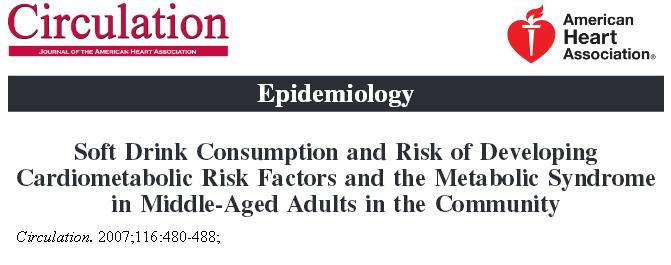
Harvard school of Public health has  recently  published some  hard data about  the adverse effects of bad diet habits especially the impact of  soft drinks on long term cardio vascular health.

soft drinks and impact on healthAnother prestigious journal confirms it . . .

risk of soft drinks and coronary artery diseaseThe ultimate journal for the cardiologists Circulation reaffirms it .

soft drinks carbonated and coronary artery diseaseWe  have overwhelming evidence , prolonged use of soft drinks
increase CAD (Like tobacco ). Still , we haven’t added the customary caution on the bottles of these soft drinks ?

Why  ?

My guess would be, there are powerful forces in  modern society that would love to keep  the  threat of diseases high in the  human domain  so that all  stake holders  make a profit .

The poor , World health instigation(WHO)  and various public health forums  simply watch it .If they protest , they are at risk of sucked into the loop of deceit !

Failure to reverse public health hazards  may be a  lesser crime  in modern days  . . . But , here comes  a series of  advertisements in Indian media , that is a strong indicator that human  intellect and the sixth sense  is going nuts !

It suggests , Do you want  ever lasting happiness . . . Drink  it  . . . earnestly believe  in it  . . . and drink again  !

Coca-Cola-12

I was also told  a shocking fact that , The beverage war in India has  started and the soft drink giants have heavily Invested to take it into the rural markets .Their aim is to  provide  “health  for all Indians”  by 2020 !

Concluding question

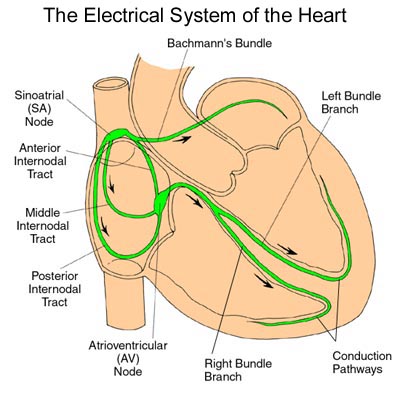
electrical CONDUCTION OF HEART

Image source and courtesy http://www.heart-consult.com

Answer

I am afraid the 4th response is closer to truth .Readers may share their thoughts. If there are three distinct pathways   spreading widely connecting the two spacious chambers and   converging again with  precision at the compact  AV node , it  is a  marvel .

Further , If these pathways are real ,  we must  experience different types of  inter nodal re-entrant  tachycardias.Of-course ,we do come across few macro re-entrant tachycardia in the form of atypical atrial flutters  They need a close  watch .Tracking these arrhythmia may throw light on existence of these pathways.

However, the presence of nodal approaches  with preferential inputs to AV node from different parts of atria would indeed  suggest existence of such pathways !

Further study

What does  sophisticated carto and other electro anatomic mapping say about these inter nodal pathways ?

Reference
An excellent article from imperial college London
Atrial anatomy and inter nodal pathway thorel bachman wenkeback

Heterogeneous three-dimensional anatomical and electrophysiological model of human atria . Seemann G, Höper C, Sachse FB, et al. Institute of Biomedical Engineering, University Karlsruhe (TH), Kaiserstrasse 12, 76128 Karlsruhe, Germany. Transact A Math Phys Eng Sci 2006 Jun 15; 364(1843) :1465-81.

Recently , I came across a   young women  who underwent the following three tests for one episode of syncope after witnessing her pet dog bleeding with  an Injury !

  1. Carotid doppler
  2. Holter monitoring and event monitors
  3. Brain MRI /MR angiogram

This was followed up  by Head up tilt(HUT)  in a premier hospital

After 1 week of investigation ,a diagnosis of  Neurocardiogenic syncope was made and she was reassured and no drugs were prescribed.

(The collective yield of the above three investigation in fixing  a specific diagnosis is  less than 10 % of all known causes of syncope )

Syncope  approach  evaluation

To diagnose  common syncope . . . we need common sense !

Syncope is a dramatic  symptom.It is one of the commonest symptom in ER as well . Life time incidence of syncope is at least one episode in 50% all human life ! The definition  of syncope until recently , was liberal .Any transient loss of consciousness with spontaneous recovery  was termed syncope.

This includes

  1. Hypoglycemia
  2. Anemia
  3. Siezure disorders
  4. Structural  neurogenic (Including ,  brain tumors , Dural hematomas etc )
  5. Panic attacks (psychogenic)

Cardiologists wanted to fix syncope as an exclusive disorder of  circulatory insufficiency.By bringing in a modification in the definition  , ie  syncope is  now defined as a transient loss of consciousness due to   reduction in cerebral perfusion  .

This definition helped cardiologists  to exclude the above entities . Still many would include all in single basket as patient should be seen as a whole and we can’t expect them to  land according to our convenience and classification.

Here is an incomplete* list about causes of  syncope (* 99% complete ?)

Vascular

  • Vaso- vagal syncope in young ( Neuro-cardiogenic , Common , Benign)
  • Autonomic dysfunction of elderly ( Including postural hypotension )

Cardiac

Arrhythmic ( Sinus node dysfunction /CHB/Idiopathic VT/Long QT syndromes)

Structural heart disease

  • Valvular  heart disease  (LVOT/RVOT obstructions)
  • Myocardial disease
  • Rarely ischemic heart disease

Miscellaneous

  • Severe pulmonary hypertension (Including PPH ,  pulmonary Embolism )
  • Paradoxical embolism.
  • Aortic arch disease -Takayasu related arteritis .

Investigation

We have a sophisticated array  of investigation for syncope .It can be a never ending exercise , ranging from  spinal cord evoked potentials to diagnose Shy-drager syndrome ,   . . .  to implanting long-term loop recorders to decode  heart beat behavior.

However , evaluation of syncope is the ultimate wake-up call  to all current generation cardiologists  . . . Why clinical cardiology  should  never  be allowed to die (and  it  will not ! )

Common sense begins with answering  few simple questions . Is it really syncope ?

If  you ask this question three times and with  specific leads to the patient  and the witness ,  truth will come out  . 90% of times it may not be syncope at all (Near syncope, accidental  fall, dizziness ,extreme blurred vision, drowsiness  etc)

If it is syncope , Is there a non cardiac cause ?

It may related to the Hypoglycemia / Anemia /Panic attacks.Get a neurologist opinion , it would be terrible mistake if you miss a space occupying lesion  within the brain. (Missing chronic silent sub dural hematomas is  frequent   in the evaluation of syncope of elderly !)

Ruling out  cardiac syncope is relatively easy

In the remaining  patients  basic investigation like routine blood tests,ECG, ECHO   will help us  rule out most serious cardiac disorders.Similarly  bulk of the electrical cardiac syncope can be diagnosed.(Holter , carotid study in selected few )

Need for neurologist -cardiologist interaction.

Syncope due to VBI,  transient Ischemia attack , Senile vascular dementia  is a grey zone . Many have complex neuronal -vascular mechanisms . What is Consciousness ?  and  What is LOC ?  :Is it the lack of blood or severely depressed nerve signal in the reticular activating system? Lots of interaction between cardiologist and neurologist is required to clear our ignorance.(I  have one such  elderly patient who is intermittently awake ! I call this chronic syncope !)  .

Undiagnosed syncope is not  a crime

Realise the most important lesson in Medicine . If you  have ruled out all serious  causes of syncope you should have the courage to be satisfied with that !

Scientific pursuits has a limit. Searching for the mechanism of a psychogenic  fainting attacks with intra cerebral electrodes is a clear case of  physician acquiring a psychotic  behavior !

Final message

Syncope is not only a dramatic symptom for the patient , it also unfolds a drama of costly  investigations  . .  . many  with  dubious value.

Talk to the patient personally for  10 minutes in a quiet room, try to apply that elusive  clinical sense  . . .   it would rarely let you down !

After thought

What is the true clinical value of * Head up tilt Test (HUT)?

Will be posted soon