Feeds:
Posts
Comments

VPDs are such a common cardiac arrhythmia . We also know most are benign .Still modern science demands to rule out structural heart disease in any patient with multiple VPDs.

When ventricles get irritated it reacts with VPDs . ( The irritants  can be anatomical , physiological or primary electrical)

Echo can detect only anatomical irritants .We are recognising  more such focus for VPDs . Hence idiopathic VPDs  may simply reflect our ignorance !  A focused  echocardiogram is  required .

The following conditions are often observed in patients  with recurrent VPDs

  1. Posterior Mitral annular calcification (Especially in women ) –Annular VPDs
  2. Aortic valve degeneration /Bicuspid aortic valve with calcification – Cuspal VPDs
  3. Mitral valve prolapse in young -Stretch induced  Pap muscle VPDs
  4. Minimal  pericardial effusions with adherent epicarditis
  5. LV false tendons-Stretch VPDs
  6. RVOT lipid focus -Subclinical ARVD
  7. LVH and Hypertension –Fibrotic VPDs    
  8. Asymmetric septal hypertrophy
  9. Scars in MI/ DCMs
  10. infiltrations in RCMs (Any Interstitial heart disease )

(Conditions 7 and 8 are  common disorders myocardium  just included to  complete the list )

**Please note ,above mentioned entites are anatomical irritants .There is a whole lot of physiological  irritants

that can induce VPDs .  ( Hypoxia, Excess catecholamines ,  K + fluxes ,  acidotic milieu etc ) .

*** Another group is primary electrical diseases inherited channel disease can induce VPDs

Also read

A crash course on ventricular ectopics


Answer

The tie is between “B” and “D ”

We know in hypertensive hearts LV primarily fails in diastole . Lungs get congested due to raised LVEDP .Here is a catch . . .  if diastole is  terribly dysfunctional  how can be systole be near  normal  ? (After all  . . . systole is not a  distant cousin of diastole !)

How is  that  high blood pressure maintained in spite of LV failure* ?

Is it due to  well-preserved  EF and cardiac Index ?  or Is it due to extreme levels of peripheral sympathetic activity mediated by catecholamine surge triggered by LVF.

We have attempted to measure  LVEF in patients with flash pulmonary edema and acute severe hypertension .It was a real messy echocardiography . We could not conclude much but one thing is  clear in acute hypertensive  LVF   the LV was vigorously contracting in , probably making the option D  more correct .

* The other way of  reasoning is    . . .  it is because  of high blood pressure the LVF  has occurred . LV contractility has no contribution in maintaining the high BP ( Not in line with  the age  old concept of LV contractility  a major determinant of systolic blood pressure !)

(Having said that  . . . we also see patients with severe LV dysfunction with  severely  stunned , ventricles in association with hypertension and LVF . In fact many of the reversible DCMs are due to sudden surge in blood pressure )

Other mechansims of LVF and lung congestion is

  • Extreme tachycardia and shortening of diastole
  • Mitral regurgitation
  • Assocaited  CAD unmasked by sudden raaise  in heart rate .

Postamble

If  this article has confused  you a little  , It has achieved  one of it’s  objective .  !  I expect more  from   young cardiology fellows to address the issue !

Reference

This NEJM article   authored by Sanjay  Gandhi  has almost answered the hemodynamics of acute LVF and HT .

mechanism of acute lvf in hypertension flash pulmonary edema lvedp in ht nejm 2005 sanjay gandhi

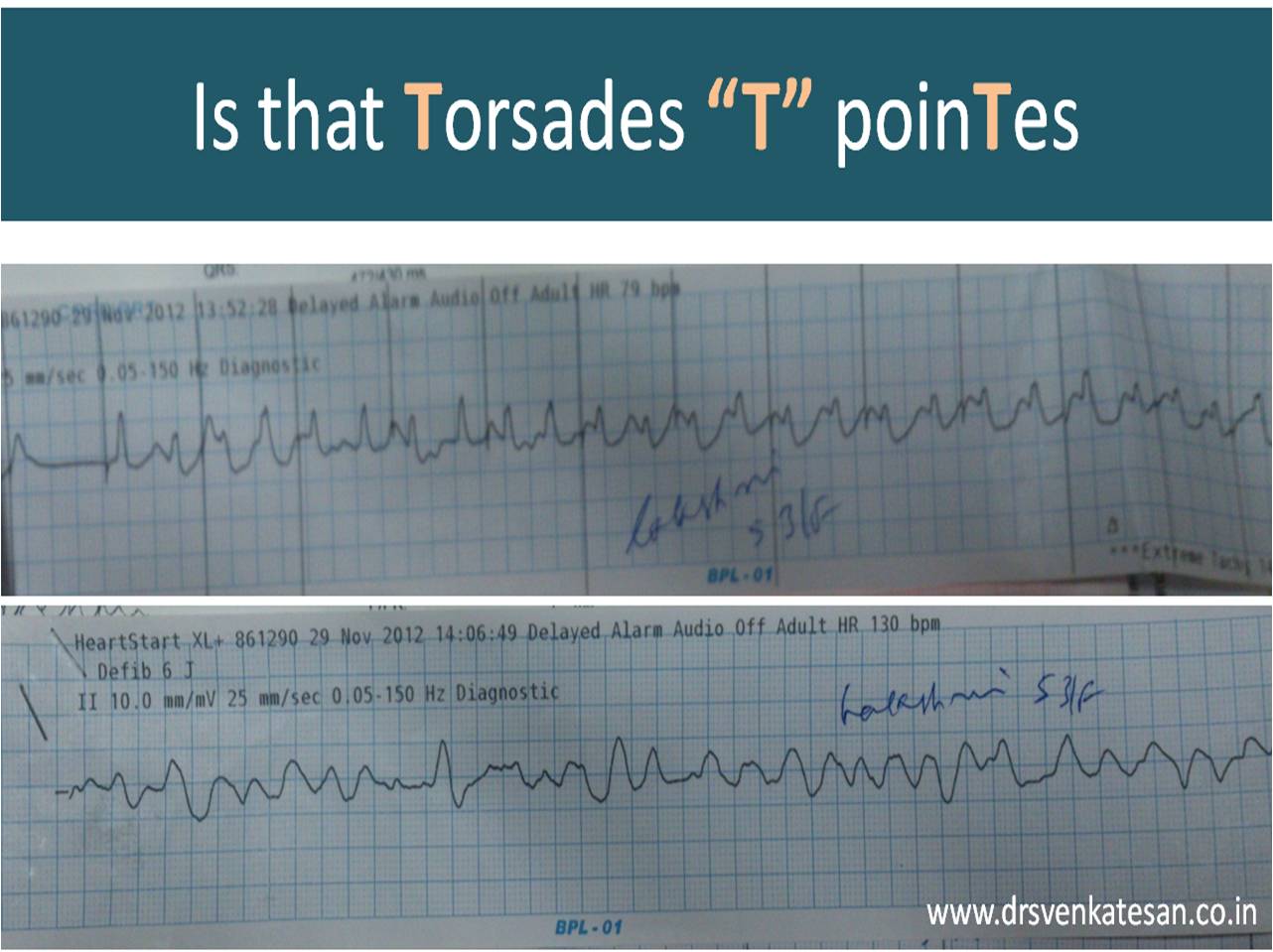
Can VF be a non sustained  arrhythmia ?   This question was raised and a single case report was presented

in the annual scientific sessions of  Cardiological society of India Meet in  year 2008 in  Chennai.

I am just reposting it from my archives .

Slide1 Slide2 Slide3 Slide4 Slide5 Slide6 Slide7 Slide8 Slide9 Slide10 Slide11 Slide12 Slide13

Slide14

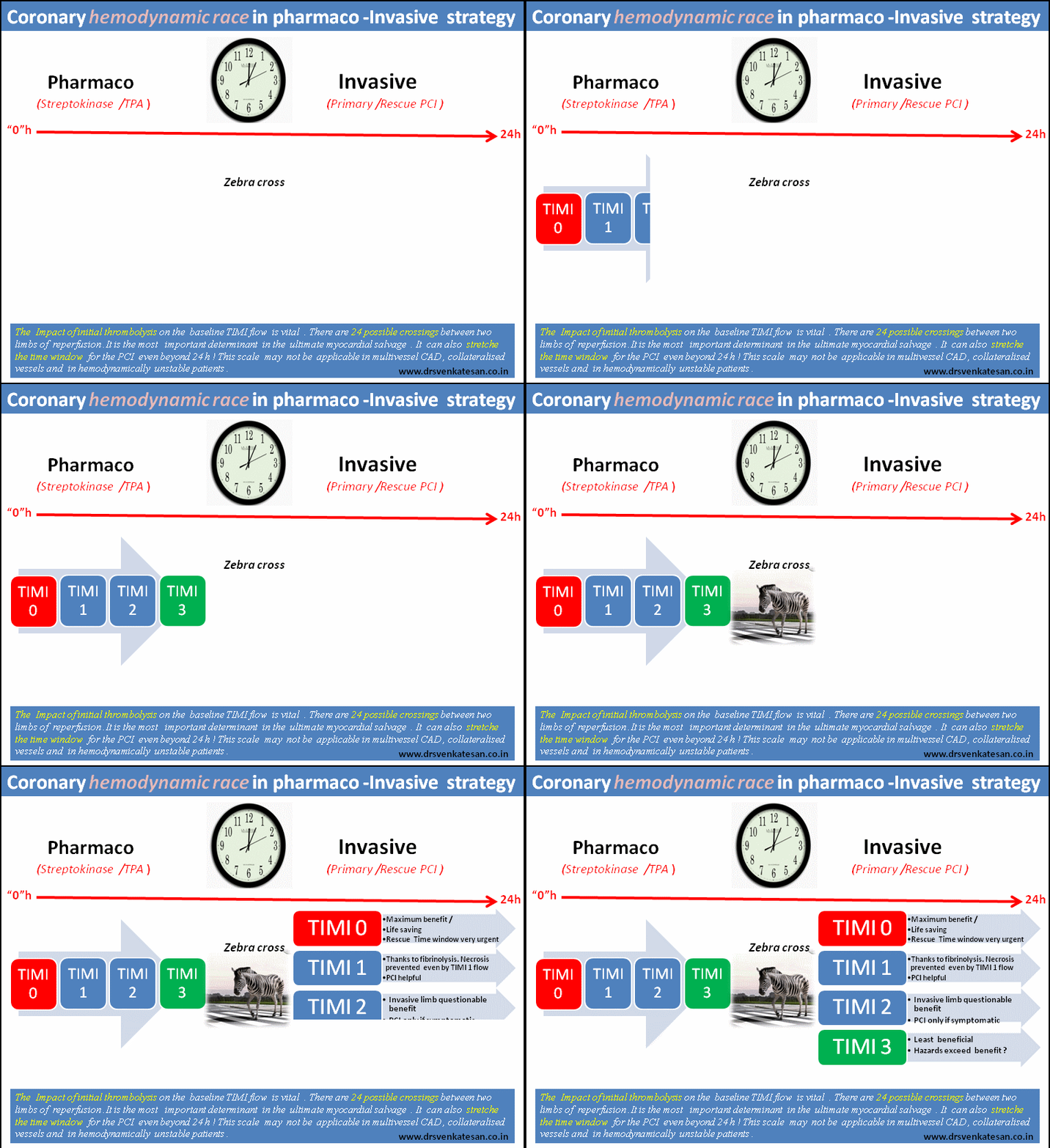
Myocardial salvage is like  coronary fire fighting.When fire is fought  very early after the accident  , benefits are accrued  more . Text book primary angioplasty is . . .  fire engine arriving at the scene when the house is on fire .

Rescue angioplasty is asking for more force ,  when the initial fire fighting  was inefficient to control the fire. So , it is obvious the rescue efforts should be fast and brisk.In fact the pace should me more than the primary (The the second engine should  reach the ground zero  faster than the first !  – Read as  door -balloon time ! )

But what happens in real world ? We would tell  time window for primary angioplasty even in sleep ! but will struggle to come   with clear cut  answer for the  same in  rescue angioplasty  even in a  fully awake state !

CaptureWiz

It is  an overwhelming fact , we have  not taken enough efforts to define strict time limit  for rescue .( Even though guidelines say it should not be beyond  24  hours , common sense will tell us rescue PCI should not go beyond 12-15 hour window ! .One more definition for rescue PCI could be within 3 hours after diagnosing failed thrombolysis. In real world  it is a race against time in a different perspective .In many centers  rescue angioplasty “enjoys time less windows “

I was funny witness in a big private  hospital  when a  colleague  of mine  has posted  a case for  “elective rescue angioplasty” and was  waiting in the side cabin  for his turn !

Coming back to the title question

Why we often follow  a reckless time window for rescue Angioplasty ?

The reason is simple

Time is not only  muscle . . . time  is  money too !

An elderly man  with past H/o CAD  was admitted with ischemic LVF and hypotension .Blood pressure was  90/60 mmhg  and pulse rate was 140 . Urine urine output  in the immediate past hour was 50 ml . Saturation was 95 % .He had fairly extensive  crackles in both lung fields.

A bed side echo showed  moderate LV dysfunction , with wall motion defect in LCX territory and  mild  MR .A dignosis of post  MI -ischemic LVF was made .

He  was  put on intensive anti failure protocol. I asked my  fellow to administer IV NTG  and left the ward .

On my next visit after few hours  . . . the patient was in much bad shape  , and when I enquired , I learnt  NTG was never administered . I was curious to know why the fellow  dis- obeyed my instruction .

He felt sorry  .  .  . But he earnestly told me  , he  could not comprehend the principle of administering NTG in a  patient  with shock ! . I was happy  to  note his  genuine concern  for   the patient  !  But  . . . I had to take a brief  lecture to convince the importance of NTG in some forms of shock !

What is the cause for hypotension in ischemic LVF ?

Lungs are flooded due to  very high LVEDP . Blood  not only struggles to  enter the LV  but also finds difficult to   leave the LV ,  former due to defective relaxation later due to poor pumping.

The extremely high pre-load actually stuns the left ventricle in diastole . (Primarily diastolic stunning  )  . Here is a hemodynamic paradox . Excess pre-load  occurs in  terms of pressure , but  in terms of volume there is miniscule amount  blood  that  traverses LV  .

This is pre-load mismatch  at play .Empty ventricles with high wall stress  and that is reflected in aortic afterword as well .

We have to some how reduce the  very high levels of LVEDP . IV NTG can  dramatically  reduce the pre load  ( and reduce the LVEDP .) The other major  benefit is ,  NTG   can reduce the MVO2 by improving sub endocardium coronary perfusion and de-stress the heart.

Once  LVEDP  is  lowered  , the ventricle will tend to recover and gain at least some  original elasticity ( Frank starling forces) . Of course it will be defective due to ongoing ischemia . Even slight fall of LVEDP (say from 25 to 18 mmhg  can have  significant benefits as the LV function curve labors on the steep shoulder region !) .

This is one situation where NTG can increase the blood pressure once the hemodynamics is favorably altered.

*Yes  . . . heavy doses  of  Frusemide injection can do the same job but it largely depends the kindey’s cooperation to flush out fluids  .In a shock like situation one can trust the kidney perfusion  !

Additional benefits of NTG

Mitral  regurgitation  is a serious destabilizer of LV function .NTG can reduce the regurgitant fraction in acute MR effectively .

Caution

NTG may worsen the hypotension of RV infarction . Make it very sure , you are not dealing with this unique  pre-load dependent circulation.

What happened to this patient ?

He  did show  improvement with IV NTG . Of course it was not dramatic as I have projected in this article .Still it was really helped him .He required simultaneous dobutamine infusion as well .The BP did not fall  further and lung congestion was relieved  .He went on to recover fully by 48 hours and was posted for elective cath study .

Final message

                                             We tend to  worry  more about falling blood pressure  when administering  NTG. . .It is a wonderfully effective drug especially in the setting of ischemia and cardiac failure  even if  the blood pressure is low !

Acute cardiac hemodynamics  is  complex phenomenon .No one has mastered it .Paradoxes are common . Hypotension in the back ground of  acute pulmonary edema  especially due to ischemic LVF  can be corrected by NTG . Of course physicians  need  some  courage to administer NTG in patients  with a systolic pressure of  80-90mmhg.

This should ideally be done with intra arterial line in place and a simultaneous inotropic line (Doubtamine /Nor-epinephrine ) back up in case of worsening perfusion pressure .

Acute MI kills a few million people world-wide every year .It does not differentiate rich from poor. Logic would  tell us  , principles of management  should  not differentiate  the people  when  dealing with a myocardium in distress .

Unfortunately , we scientists do it with passion !

The problem is enormous  . . . the rich is suffering from too much* care and the poor is suffering from want of care !

The following flow chart  is a result of my observation from close quarters  about the management strategies in corporate as well as Govt hospitals .

The first chart exposes the problem .The second one tries  to address the issue

Please bear with me . . .  if the  stuff  sounds  too crazy !

* Too much care is also referred to as inappropriate care

Practical and ethical guidelines for stemi management corporate

And for the solution  . . . try this

Practical and ethical guidelines for stemi management

Soft skills in pPCI 

Experience  would tell  us only about 70-80 % of STEMI are truly eligible for a  good  quality pPCI .(Multivessel CAD, Complex bifurcation lesion, difficulty in identifying IRA, No IRA-sapsms , complete spontaneous reperfusion )  The remaining 20-30 %  should , logically  be included in the failed pPCI category .This fact is largely concealed in the literature .

Beware of huge thrombus load in every patient with STEMI .The  contribution of  mechanical occlusion  vs thrombus  (in the total occlusion )  is the single most important factor in determining the intervention strategy.

Deploying a stent in a poorly  prepared (debrided of thrombus  ) lesion confers  further continuous  risk of a STEMI .Stents smartly jail  even large thrombus against the coronary vessels and they release it into the lumen in a controlled fashion  and prolong  the  acute coronary  risk phases

If thrombus aspiration  does a neat job and establishes a good   flow , if the   lumen  appear   good , think twice or even thrice before deploying a stent .It is akin to stent a  zero % lesion and we know it is foolish to do that at any stretch of imagination .(Stenting has never been proven to convert a vulnerable ulcerated lesion into stable one )

IVUS, OCT are not the answer in the above situations  as we are dealing with  emergency coronary  fire fighting !

Of course the intensive anti-platelet   protocols , will take care of  potential after effects of the intra coronary contact sport we play  !    . But . . . there is a limit for every thing. So spend as little time as possible when attempting catheter based reperfusion during STEMI.

In the early  20th century , Waller invented the ECG machine. Wilson  created  leads and  methods to record it. Eienthoven  formulated the concepts the electrical theory behind ECG.

Between 1940-197os one man ruled supreme in the world of electro cardiography .   He is Dr Sodi pallares from Mexico. His deep insights revolutionised  and helped  us  understand how the cardiac electricity is generated  and propagated  in various pathological states that is the beginning new age electrocardiography! It adds much to his  credit , as in those days scientists  from non American and European countries   were hard to come  in the  global limelight.

Some of his thought processes and Inventions

  • He laid the foundation  for deductive electrocardiography.
  • Applied  vectorocardiographic  principles to scalar  ECG and helped  understand mechanism of ventricular chamber enlargements
  • He was instrumental  to analyse  the genesis of current from the myocardium . He tried to reason out  the contribution  of  cell metabolism, hypoxia, electrolytes to the current genesis.
  • Polarising myocardium with GIK infusion STEMI was proposed by him
  • Finally he tried to incorporate the laws of thermodynamics into electrocardiography .

Please remember , Sodi pallare’s  conscience  is still largely unexplored .There are lots of hidden truths .We now know fever can influence qrs voltage and febrile illness can trigger  ventricular tachycardia as in  of Brugada syndromes.

Today’s youngsters can take a  few cues from this great man and enlighten the field of electro-cardiology

DOCTOR DEMETRIO SODI PALLARES

Demetrio Sodi Pallares (1913-2003 )

If  modern-day cardiologist is able to  interpret the  ECG by a cursory 3 second scan of  strip of waves  , we are greatly  indebted to the knowledge imbibed by this great man from Mexico !

Sodi pallares

Reference

http://onlinelibrary.wiley.com/doi/10.1002/clc.4960110616/pdf

Sodi-Pallares D,Medrano GA, Bisteni A, Ponce de Leon J:
Deductive and Poly-paramerric Elecrocardiography.Instituton acionalde
Cardiologia de Mexico, Mexico,DF1970,VII,VIII
Sodi-Pallares D, Testelli MR, Fishleder BL, Bisteni A, Medrano GA, Friendland C, De Micheli A. Effects of an intravenous infusion of a potassium-glucose-insulin solution on the electrocardiographic signs of myocardial infarction: a preliminary clinical report. Am J Cardiol. 1962;9:166–181


mid diastolic murmur

mid diastolic murmur in  sinus rhythm

With the onset of Atrial fibrillation

  1. The  first heart sound becomes variable in Intensity (Soft to loud in pliable valve / Soft to softer in calcified valve )
  2. Opening snap continue to occur as long as the  valves are  pliable and noncalcified  .The timing may vary but Intensity remain same .
  3. A 2-OS interval is usually less influenced by AF  as it is primarily determined by mean LA pressure at the onset of diastole which has little variation beat to beat .
  4. Length of the diastolic murmur varies . In Short cycles  MDM  can be  very brief  or even in audible.
  5. In long cycles MDM will be distinct.
  6. A late diastolic murmur in long cycle indicates severe MS.
  7. Even pre-systolic accentuation may be appreciable in some of the long cycles .

Link  to  Echo Image of  Mitral stenosis .

https://www.youtube.com/watch?v=3qvOMwOshg4

How to assess the severity of  MS in the presence of AF ?

  1. Presence of AF by itself indicate presence of severe MS  in most .
  2. A2-OS interval  may be useful
  3. Concentrate on long cycle .Look for ( rather listen !)  for late diastolic component of  MDM .If  you hear it ,  MS is usually severe

Other signs  are often useful

Low volume pulse

Inconspicuous LV impulse

Presence  of  any significant Pulmonary hypertension

Squatting is a simple physical  maneuver that can  be done in bed side.

  • Squatting  increases  systemic venous return.
  • Raises aortic after load and SVR

It is  ideal to do  “Stand -Squat -Stand” sequence to appreciate the attenuation during squatting and augmentation during standing

squatting dynamic auscultation mvps mitral valve prolapse

Hemodynamics

MVPS-MR is  a pre load (LV volume )  dependent phenomenon.The degree of prolapse is inversely proportional to the LV size.

Squatting increases the venous return and after load both tend to  increase the LV volume. More blood in the LV  , means mitral leaflet floats much closer to the  mitral annulus . Hence the  force of LV contractility is not only  less on the prolapsing  leaflet , it  reaches late ,  hence the click is delayed  and murmur is short (It may be less intense as well * )

(* Squatting increases aortic after load hence the murmur of MR  may  get amplified .)

Reference