Feeds:
Posts
Comments

Archive for September, 2010

The murmur of Austin flint is has become an immortal cardiac auscultatory sign even in this  era  of hi tech cardiology.  This is our humble tribute  to the  physicians of those time  , who were blessed with  meticulous observatory  and auditory skills .

In the year 1859 , Austin flint  was able to  delineate the hemodynamics  of Aortic regurgitation . , ( 50 years before the invention of ECG  and  X ray ,  125 years before the echocardiography was  discovered   )

It was his  suggestion , in  severe aortic regurgitation , as the blood leaks back in to LV, the regurgitant  jet mechanically interferes with mitral valve opening and hence a functional obstruction to mitral inflow .This generates a mid and late diastolic murmur from the mitral valve which is heard well in the mitral area.

This was confirmed 100 years later as anterior mitral leaflet flutter by  echocardiography in severe AR.

We have since  improved  our  understanding  about the mechanism of  of mitral MDM  in AR

  • It is  also attributable  to the raise in LVEDP and hence  mitral valve  tend to float early  and assume a relatively closed position.(Resultant functional MV narrowing )
  • One more mechanism that could contribute to Austin flint murmur is the diastolic mitral regurgitation that occur in some cases of acute  severe aortic regurgitation .

Ech0cardiograpic correlates

Anterior mitral leaflet flutter is the classical echo correlate of Austin flint murmur.

Differentiation from organic Mitral stenosis

In mitral stenosis following are present .

  • MDM with presystolic accentuation
  • Opening snap
  • Loud S 1

References

Austin flints original article Flint A. On cardiac murmurs. Am J Med Sci. 1862; 44:29-54

http://www.youtube.com/user/NEJMvideo#p/u/29/iOAmqOYVczE

Hear the Austin flint murmur (Link to Texas heart institute podcast )
Read Full Post »

Interventional cardiology has grown leaps and bounds. We are in the era of percutaneous replacement of cardiac valves.  Mitral valvotomy for mitral stenosis is one the stupendous success  stories of interventional cardiology.

In PTMC,  we have a major cardiac valve disease ,  treated without anesthesia  in a  procedure   lasting about 30 minutes and patients  can walk  home within hours of the procedure.

The maximum such procedures are done in developing countries like India, Brazil, and many south Asian , African countries.

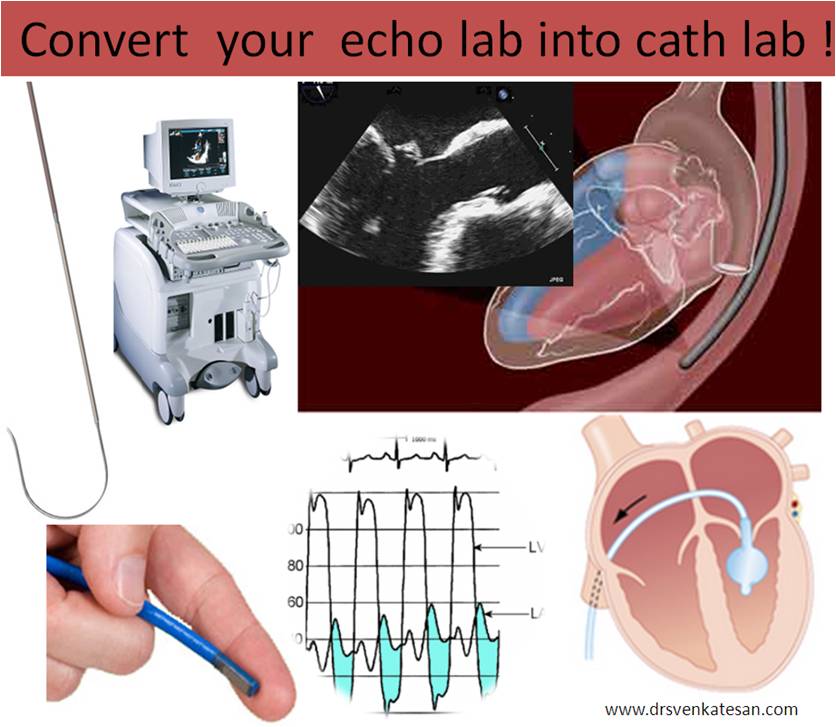
It is a procedure requiring continuous  fluroscopy in cath lab. This has been our traditional way of thinking. But now we learn , what we  require is an imaging    modality  for the entry of balloon into IAS and the stenotic  mitral valve .This can be Echo, MRI , CT scan etc not necessarily fluroscopy.

Why not echocardiography to guide the balloon in PTMC ?

This question was  answered successfully . Both TTE and TEE are used .Surprisingly   transthoracic  echo , by itself was   sufficient in many patients to complete  a  PTMC.

The following article in JASE (American society of Echocardiography )  opens new avenues for  echocardiography .The work was done in New Delhi India

http://www.onlinejase.com/article/S0894-7317(05)00073-8/abstract

The most surprising conclusion  from this  study is  , it is suggested complications like cardiac tamponade is less likely in echo guided PTMC !  as we are sure  where we re puncturing  and entering .

Advantages

  • Huge cost advantage.
  • Can be practiced in a wider clinical set up
  • Radiation free (Very important advantage  )
  • Live 3D /Echo and MRI are  expected to improve the  feasibility of this modality .

Caution about TTE/TEE guided PTMC.

  • Not every one can do this procedure.
  • Cardiologists who have mastered catheter based PTMC  can only understand the intricacies of  PTMC
  • While catheters can be easily imaged , when the procedure requires finer guidewire manipulations fluro is a must .
  • Currently this procedure should be done with a cath lab  standby
  • Tackling complications may be an issue , but the most dreaded complication cardiac tamponade is more easily recognised by echocardigraphy
  • Special training on this modality is to be strongly encouraged.Such thing is possible only in country like ours where RHD continues to be rampant.

Final message

Cath guided PTMC is considered  the gold standard .But ,  often  we create gold standards with impure gold ! The IAS puncture and mitral valve crossing is the most blinded  procedure in cath lab.

The same job can be done   better , with good   “ocular orientation”  by simple echocardiography

Often  in medicine , a  simple alternate technique   rarely can  compete with a proven  technique .Thus ,  these  techniques are denied wider  application and hence  fail to  prove  it’s worthiness.

Echo guided pericardial aspiration , MRI guided deep thoracic biopsy  are already established non invasive  assisted intervention , soon we can expect many cardiac intervention will be done in radiation free environment.

Unpopular treatment modalities  need not be synonymous with ineffective  and dangerous  forms of treatment.

Read Full Post »

In this era of  technology hype , cardiology  journals are flooded with interventional   articles. Congenital heart disease has been pushed to the back ground .  CTGV* is a   fascinating  congenital heart disease (Of course ,not so fascinating  for the patient !)

*TGV and TGA are used interchangeably  .

It is a complex disorder of ventricular looping (L Looped ventricle LTGA )

This can occur in three forms

  • Isolated CTGV
  • CTGV with VSD or PS
  • CTGV as a part of complex  cyanotic heart disease.

The irony of this disorder is , it has two errors in development that tend to  neutralise  the hemodynamic  abnormality .

 ventricular connection is abnormal (Discordant) . RA is  connected to LV and LA connected to RV . Still nothing alarming  happens  as LV is connected to  Pulmonary artery and RV is connected to Aorta .(Ventriculo arterial discordance)

In spite of this natural  hemodynamic  correction , one can not ignore this entity  ! as it is  anatomically  uncorrected  for the rest of the life.

Since morphologic RV acts as a systemic ventricle it is bound to  have difficulty in tackling the systemic pressure in later in  life .

Further , the two  complex  defects called  (also called as  ventricular inversion ) make sure that the conduction tissue and the AV valves   are distorted and  squeezed in the AV junctional arena with it’s unique double looping defect  .The his bundle inverses, the left AV valve often regurgitates .Complete heart block often ensues.

Management

  • Isolated CTGV are best left alone .
  • When VSD /PS are associated corrections are adviced
  • It is not simple surgery , one may require a technique called double switch .(I always wonder such surgeries are ever indicated in other  wise asymptomatic population with isolated CTGV)

Here is an article from “The  Heart”  that deals with the problem of CTGV , may be  . . . in a manner no other journal  has ever done !

 Congenitally corrected transposition of the great arteries Heart 2010;96:14 1154-1161

You need some  luck  to  get a live full text link here

Read Full Post »

Implantable cardiovertor defibrillator(ICD)  is one of the major revolution in cardiology practice  that happened last century. We know , the number one killer of mankind is the ventricular fibrillation induced by acute or chronic CAD.

In the  later half of 20th century we  learnt  that , the only way to prevent a sudden cardiac death is the defibrillating   the  heart as soon as the deadly killer arrhythmia strikes !

Whenever cardiac arrest happens  in  a susceptible population , following  things are possible.

  • Call 911 /108  start CPR .
  • Have  Automatic external defibrillator AED at home
  • ICD implantation -Percutaneous trans-venous approach

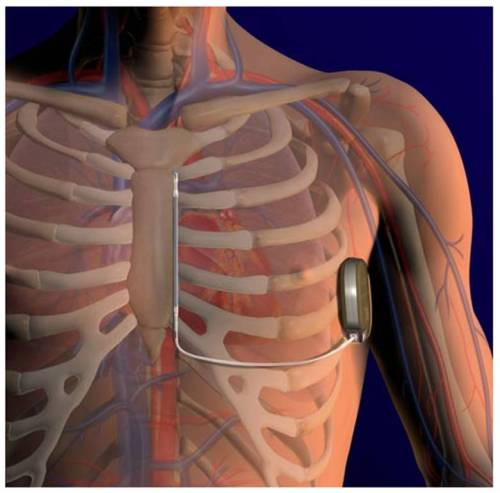
And now new mode of defibrillation

Transvenous implantation  becomes  technically complex in many  .Abandoning the procedure  or using subcutaneous pads are necessary in few . Then , this question was asked

Why not the entire ICD implantation be in  subcutaneous plane ?

Yes , it is possible . After all , current can reach the  place where  it is needed ,  irrespective of the site it is delivered. The aim of this technique is to  simplify the ICD implantation  , so that it can be practiced in a wider clinical set up Preliminary  results  of subcutaneous ICD are available and was published  recently in NEJM.

The issues that need to be tackled are

  • Amount of energy required
  • Battery life

http://www.cameronhealth.com/product-info.htm

Read Full Post »

Coronary artery disease  can be termed  as   “New age plague” afflicting the mankind  !  It  probably has killed ( or Killing ) as  many lives  as   most other diseases  put together.  Why  only a section of  our  population is vulnerable is  not fully  understood .

We are familiar with coronary risk factors for too long  . . . still  . . .

We do not understand why 50% CAD occur in people who have no known coronary risk factor !

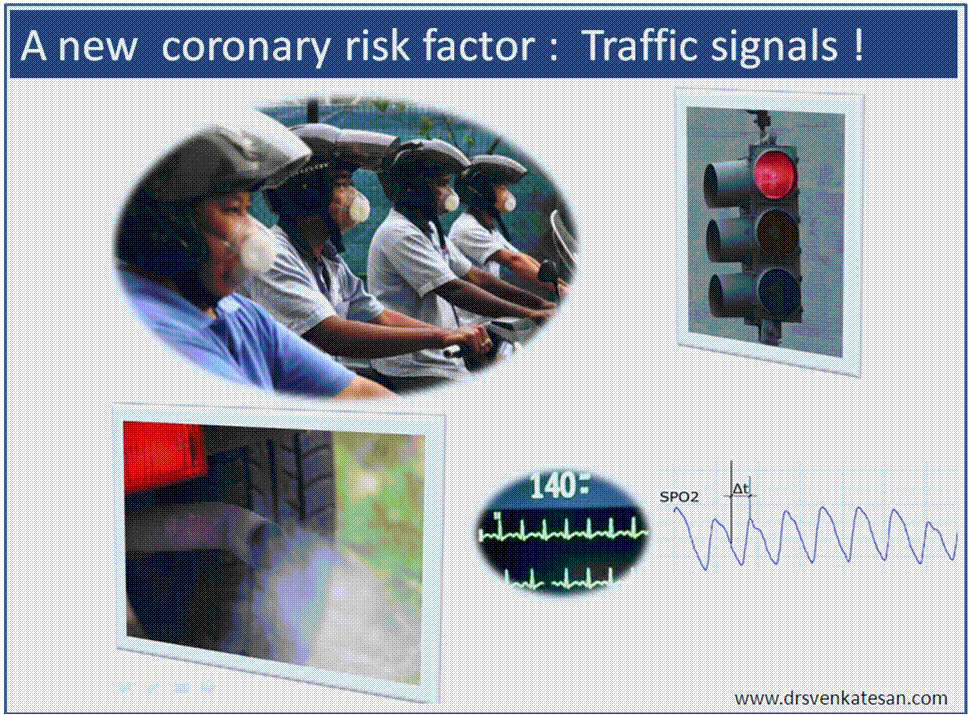
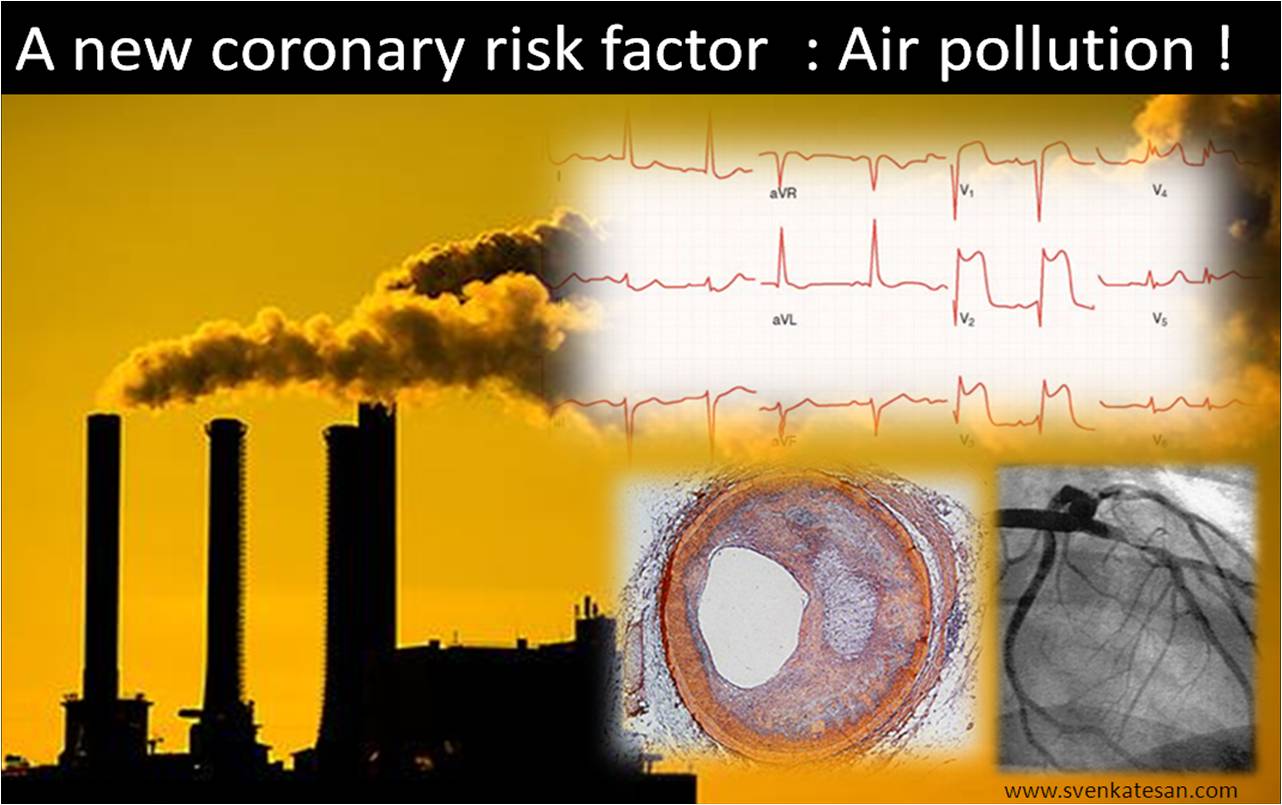
There has been propositions and dispositions  of various risk factors .  The latest one is  the  Air pollution. This is quiet interesting,  as air is the staple food of human survival . We  eat , drink ,  (Rather inhale )  about 500 ml /of  air every   3  to 4 seconds  for 24 hours a day for 365 days  , for our life time !

Does the air we breath reach the  largest cardiovascular  organ namely the vascular endothelium ?

Yes definitely  ,  not only it  reaches   the endothelium but also injures it  (When it contains gases other than oxygen  )  .While tobacco  is a well established  endothelium  destroyer , it is no surprise   community smoking ( Air pollution !)  will do the same job  with perfection .

What are the proposed toxins in the air pollution that harm the endothelium ?

It is a mixed  masala gas out there  over  our   polluted cities ! .(Atmosphere,  Industrial, Automative ,Domestic, Human , and other invisible  sources ) We need to analyse further to answer this question authentically .

Though , common sense  is  enough   to establish the  link between air pollution and CAD. We have  lots of evidence coming up  . . .

Reference

http://ajrccm.atsjournals.org/cgi/reprint/173/4/432?maxtoshow=&hits=10&RESULTFORMAT=&titleabstract=coronary&searchid=1&FIRSTINDEX=0&resourcetype=HWCIT

Further research

We will be shortly reporting our experience with endothelial  function assessment  in traffic police population of our city Chennai  ,India .

Read Full Post »

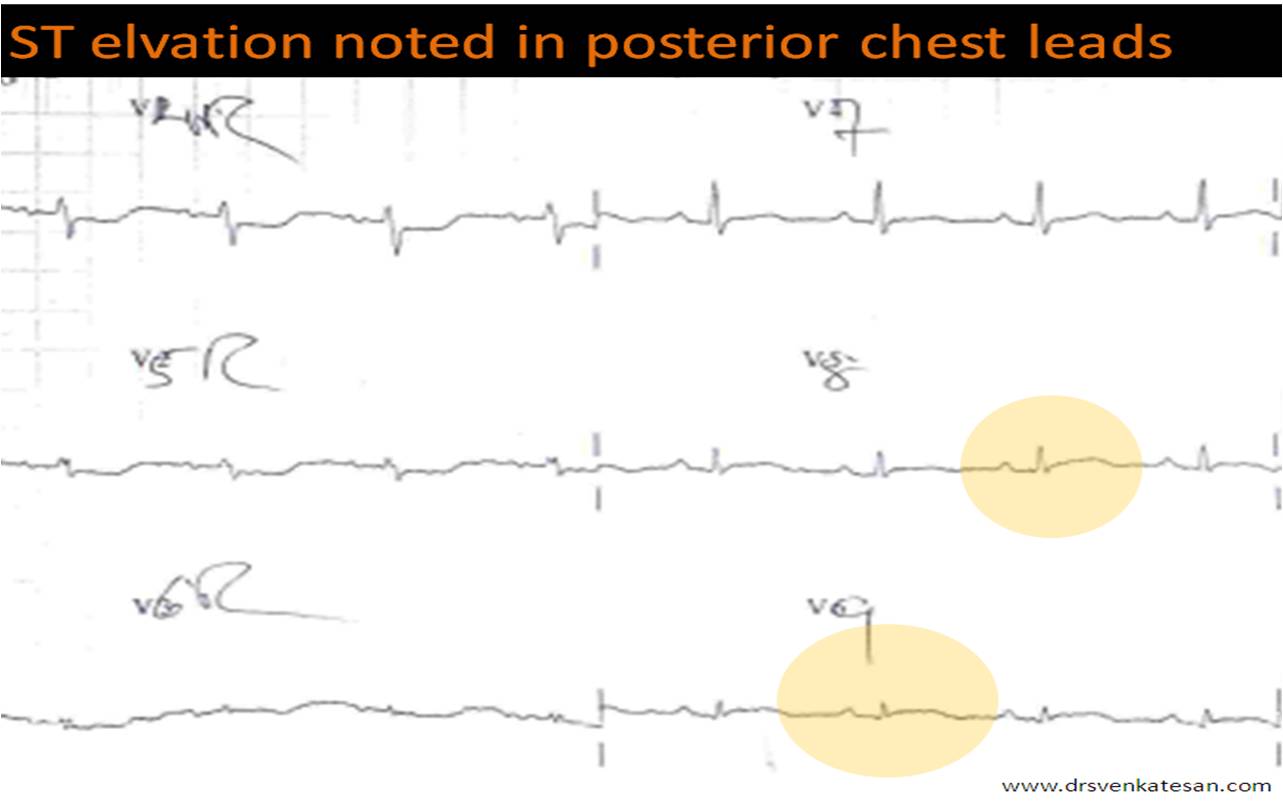
Thrombolysis is specifically indicated when there is  ST elevation in ECG. ST elevation is a surrogate marker for  total coronary occlusion. It occurs due to current of injury flowing   towards* the lead  facing the  infarct territory . There is only one situation where you can safely and effectively administer thrombolysis in the presence of ST depression ie

Note : There is no accepted terminology  to label a MI as  ST depression MI . Here it is used to emphasise ST elevation is not the only indication for thrombolysis .In posterior MI there is infact ST elevation but it is failed to pick up by standard 12 lead ECG.

NSTEMI is a different entity altogether and  thromolysis is never indicated.

Isolated ST depression in V1 V2 V3 .It almost always indicate isolated posterior STEMI. This can be confirmed by posterior chest ECG leads V7-V10 .

*One will be surprised, to know  the mechanism of ST elevation in STEMI is still not fully elucidated .Technically speaking the net movement of current is away from electrode as  there is only a baseline  diastolic shift  which  gets neutralised in systole  mimicking an ST elevation .(Electro-optical illusion !)

How sensitive is these leads to detect isolated posterior STEMI  ?

Fairly sensitive. Both scapula and  para spinal muscles can be a  significant electrical  barrier that can prevent ST elevation from inscribed .In case of doubtful ST elevation in posterior leads , mit is always better to rely on the clinical presentation.Acute chest pain , consistent with ACS and a new onset ST depression >2mm V1 to v3 is a definite indication for thrombolysis .

Link between posterior MI and RV MI ?

They are closely linked entities .In fact posterior surface of heart is contributed significantly by RV.

What is the angiographic correlation of  isolated ST depression in V1 to V3 ?

It almost always localise the lesion to left circumflex artery . If it is dominant , it can involve lateral and RV territories.

Is isolated posterior MI  less dangerous ?

May be yes , but only after the patient reaches the hospital as electrical risk is same in every STEMI .

The area of infarct  is less , LV failure is less common. While conduction disorders and ischemic mitral regurgitation   can occur  significantly.

Also read ,  Why thrombolysis is contraindicated in UA/NSTEMI ? in this blog

Read Full Post »

Mitral valve can be termed as  the most important valve of heart . The reason  for this  : It is the only valve that is dependent on the  Left ventricular function (The  parameter  which   determines the  ultimate outcome in any form CAD ! )

So , indirectly mitral valve function will invariably be affected by some degree  at least in  most  patients with LV dysfunction. (After all LV free wall , is a component of mitral valve apparatus.)

While , we have numerous modalities to assess mitral valve function  ,  the one that has fascinated the surgeons during  mitral  valve surgery is the intra operative TEE.

Many believe TEE provides live  images  of mitral valve   which are not possible  even under  direct vision ! The eye of the  TEE sees the mitral valve  from a  posterior location , (of -course It can see at any angle !)   while surgeon can see in one angle . The  types of repair , the adequacy  of repair, the annulus status,  even a trial mitral run ,  can be done with the help of TEE.

The TEE probe silently does  this job sitting inside the esophagus   , without  obstructing the surgeon’s operative field .

The success of TEE as an investigative tool did not come easy.Decades of  observation , innovation and learning( Especially from  department of cardiac science  Mayo clinic USA , where they standardized the views. )  are involved .

Now we have omni plane, real time 3D TEE probes .

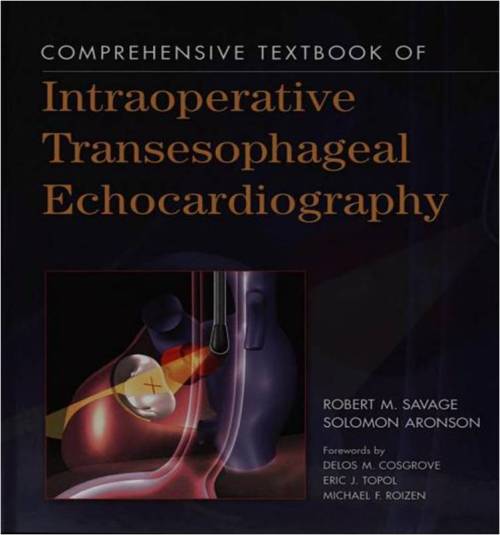
The books  which are  considered the best for  TEE aspects of mitral valve  and it’s  repair are

Read Full Post »

Cardiac myxomas are rare tumors. But they present in a dramatic way. It can have  severe  systemic symptoms and present even as  fever of unknown origin ! While , physicians  of  previous era were struggling to make a ante-mortem diagnosis we are blessed  to make a instant  diagnosis with echocardiography !

Want answers  for all these  from the original researchers ?

  • What is the pathology  myxoma ?
  • What  are the  classical Locations ?
  • Difference between Sessile Vs pedunculated
  • Soft vs Hard
  • Benign vs malignant / Locally invasive
  • Recurrent myxomas
  • Vascularity  of myxoma
  • Calcification (RA myxoma> La Myxoma)
  • Non atrial  myxomas(Valvular  papillary myxoma)
  • The  Cell of origin (Stellate , polyhydral )

You  will not get a better reference than the following article , including extensive illustrations . An 1980 article from  Mayo clinic published in American journal of pathology

http://www.ncbi.nlm.nih.gov/pmc/articles/PMC1903582/pdf/amjpathol00223-0227.pdf

LA myxoma  : A Video

A case reported from my hospital Hosted as Video presentation  Follow the link

http://www.youtube.com/watch?v=SD2LrK1mdic&feature=related

Read Full Post »

Belgium SOAP  wants a  knock out punch to  Dopamine in shock !

Vaso constrictors are  the mainstay  drugs  in the management of shock  syndrome. While ,the ultimate outcome depends on the primary  cause for shock, these vaso- constrictors  have  a critical role in sustaining life , till the organ function is recovered.

The physicians world  over,  differ  in their choice of  vasoconstrictor support .They  are almost divided   equally in their usage between  dopamine and norepinephrine  .

Surprisingly,  there  has been no one to one comparison trial till  this study   in 2010 .This trial  is called SOAP 2 published from  Brussels , BELGIUM .It  compared the usage of these two drugs in variety of shock  syndromes. It favors norepinephrine use ,  that includes  cardiogenic shock as well.

The disadvantages of dopamine noted in this trial was

  • Increased  risk of arrhythmias
  • Increased rate of death  in cardiogenic shock

The implication of this trial may force the ACC/AHA guidelines , which  advices  dopamine as the first choice in shock syndromes especially in cardiogenic cause.

Read Full Post »

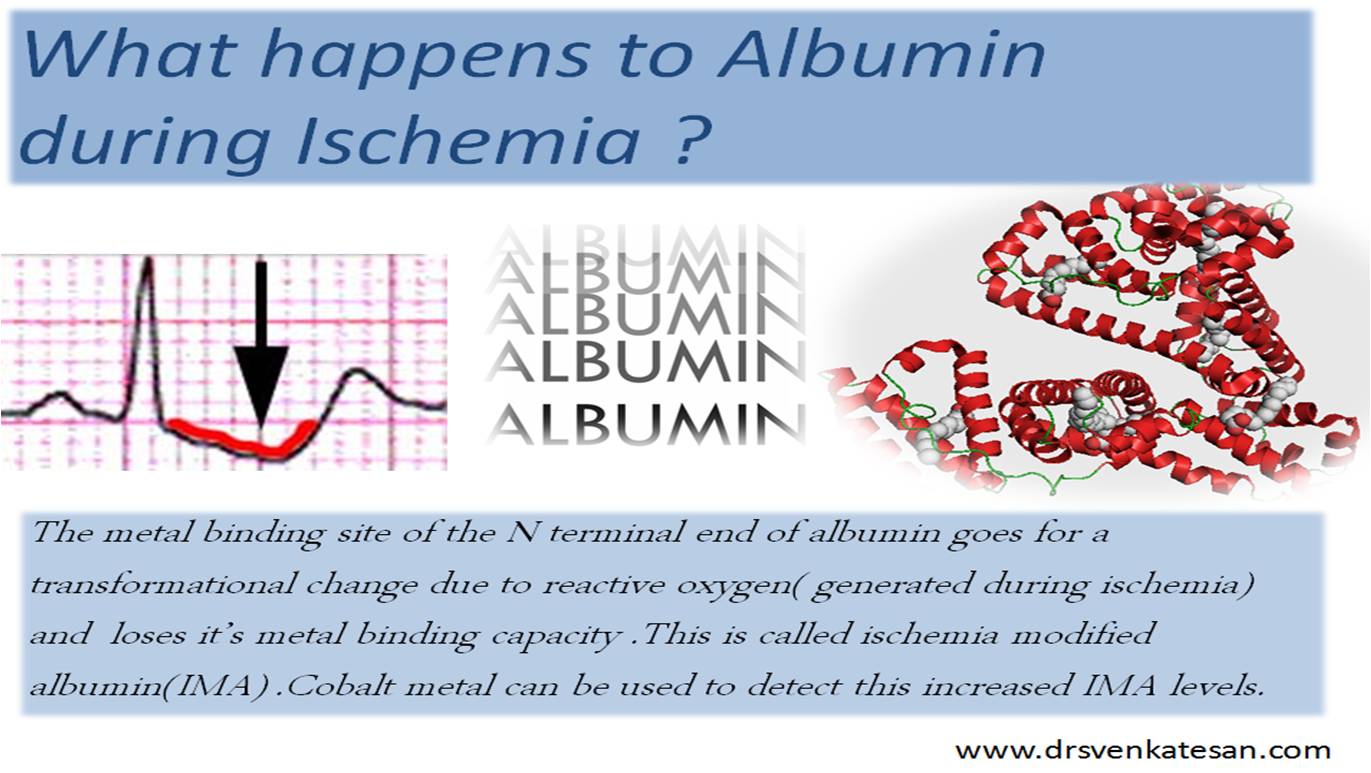
In the diagnosis of ACS, we have definite bio  markers for acute MI . Further, ECG  has a good  spcecificity  for STEMI . While ,clinical and ECG features of ischemia are not perfect. A bio marker for ischemia is the ultimate dream of cardiologists  and  emergency room physicians. . In this context , the IMA -ischemia modifed albumin  has come  with   great expectation .

Ischemia modifies what ?

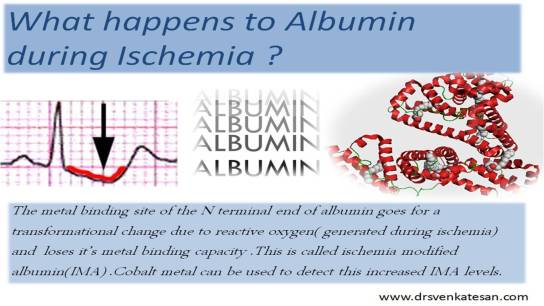
Normal albumin moleule has  a metal binding site (Copper ) .There are few free binding sites available .During ischemia this metal binding capacity  reduces .  A cobalt containing  reagent when added to ischemic blood  finds binding sites scarce , and hence  excess free  cobalt  will color the sample  and a  posiitve test for  ischemia is diagnosed.

*Normal human albumin  may contain  2%  of ischmia modifed albumin which is expected to increase up to 6% during ischemia

IMA raises not only during ischemia it can also  raise during oxidative stress

  1. Stroke, 
  2. Chronic kidney disease 
  3. liver disease,
  4. Maligancy

It can also  be elevated following

  • Routine coronary angiogram
  • PCI
  • DC shock

Increased lactic acid for example in sepsis may reduce the IMA level and can miss an episode of true ischemia

Final message

IMA can be a useful tool to identify  ischemia early .But lacks senstiivty . New improved immunoassays may be more sensitive and specific

Reference

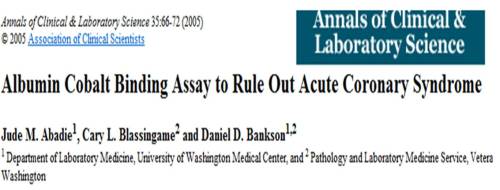
1 .Medscape review  

2. Circulation article

3. PRIMA study which  was done in ER in risk stratifying ACS proved IMA is not vey useful  http://emj.bmj.com/content/23/10/764.abstract

Read Full Post »

« Newer Posts - Older Posts »