Feeds:
Posts
Comments

Archive for May, 2011

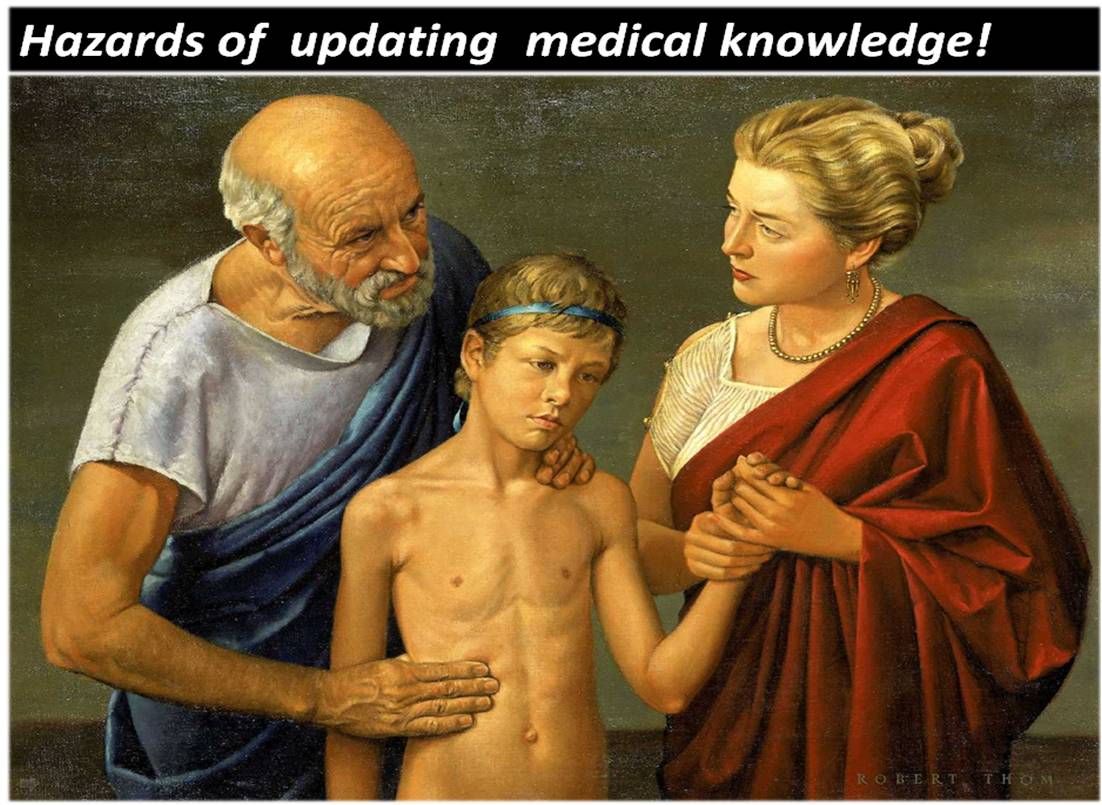
One of the greatest medical sermon of our times  is   “Doctors must   constantly update their knowledge , Continuing medical  education is as sacred as their profession  !  If you are not updating your knowledge you cease to a doctor “

It is fashionable , but true  to state  modern medicine lacks humane  care . Modern medicine  is  challenged by a huge  technological ,  commercial  onslaught  where common sense takes  the back seat

Hence , doctors need to renew not only  their  academic competence   but also  their ethical  fitness  every  year !

Aggression  could be the other  name for  modern medical care . For every  new  invention , treatment   or guideline that  is  approved  an equal number  is shelved after few months or years  for safety reasons.

Bulk of  medical updates  for  current age physicians  is nothing , but asking   them to forget  all those wrong things that has been meticulously uploaded in their brains in the recent past  ( Recall the classical story of drug eluting stents )

If this is the  case . . . then  . . .  what for  we  are  updating ?   and  for what  we are  learning and forgetting  ?  and  . . . how frequent we need to forget ?  Of course  , there is a big chunk of   human tribe  who  can never master the art of forgetting ! Some mistakes are permanently etched in their terra byte hard disks .

Is there a place  for backdating and discontinuing  medical  education  ?

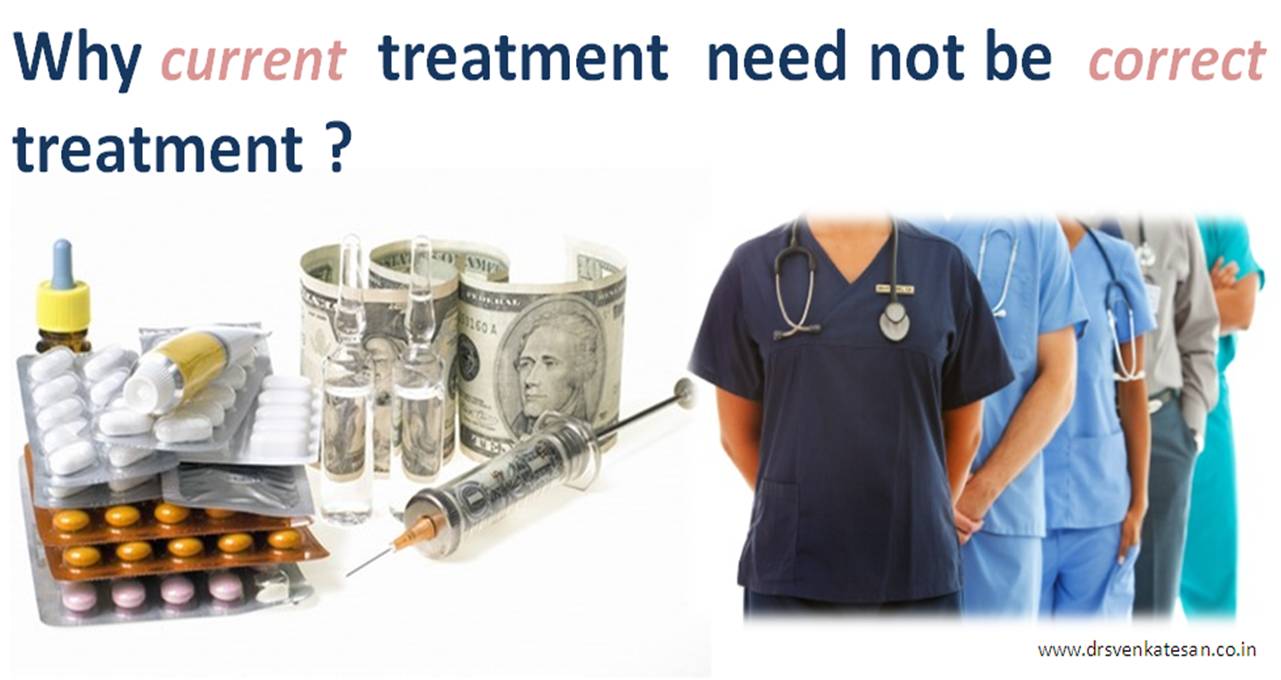
What  man- kind needs  at times of  medical  crisis  ,  is  not  the current  treatment  but the correct  treatment    .It is our duty  to  find  all those  trustworthy  drugs  & treatment modalities  that were  sent  to  the gallows by the modern medical forces   for various reasons !

If  some of  the gems in  medicine are  left behind in  past  “time domain”  ,  it is  mandatory  for us  to go  back in time and   catch it , adopt it and disseminate it !

Further ,  whenever  the  hyped   “medical updating sessions ”  turns out to be  synonymous with adding nonsense (It is  becoming all too common these days   !) we should resist   it by all means !

For many . . . Hippocrates and his medicine sounds dirty now !

If  only we back-date  our knowledge   .  .  .

Todays  youngsters  can learn a secret that liver enlargement can be diagnosed easily  with their  hands ,  without  waiting for a  CT scan report !

If only we back-date  our   knowledge  . . .

We can realise  Aminophylline can save so many  lives of cardiac  failure  , which  our newer inotropic agents are struggling to accomplish .

If only we  back- date  our knowledge  . . .

We can calmly manage  acute MI with lignocaine  even in a country side  .  Amiodarone unfairly replaced  this  efficient  anti  VT  molecule  for no academic reasons !

If only we back- dat our knowledge  . . .

We  can  advice simple non pharmacological intervention for  stage 1 HT   than prescribing the  glamorous  sartan molecules  form a  multinational  ARB shoppe.

If only we back- date our knowledge  . . .

We can  promptly recognise  cardiac failure  without  ordering  for the error prone   BNP . Back dating also  helps us to under stand  that post infarct angina is a  glaring sign  for presence of   viable myocardium  and prevent us from undertaking a  2000 $ PET  excursion !

If only we back- date our knowledge  . . .

We can  send  all our uncomplicated , asymptomatic   STEMI  patients ( in class 1 )  straight to  their  home rather than to cath lab  play grounds !

Read Full Post »

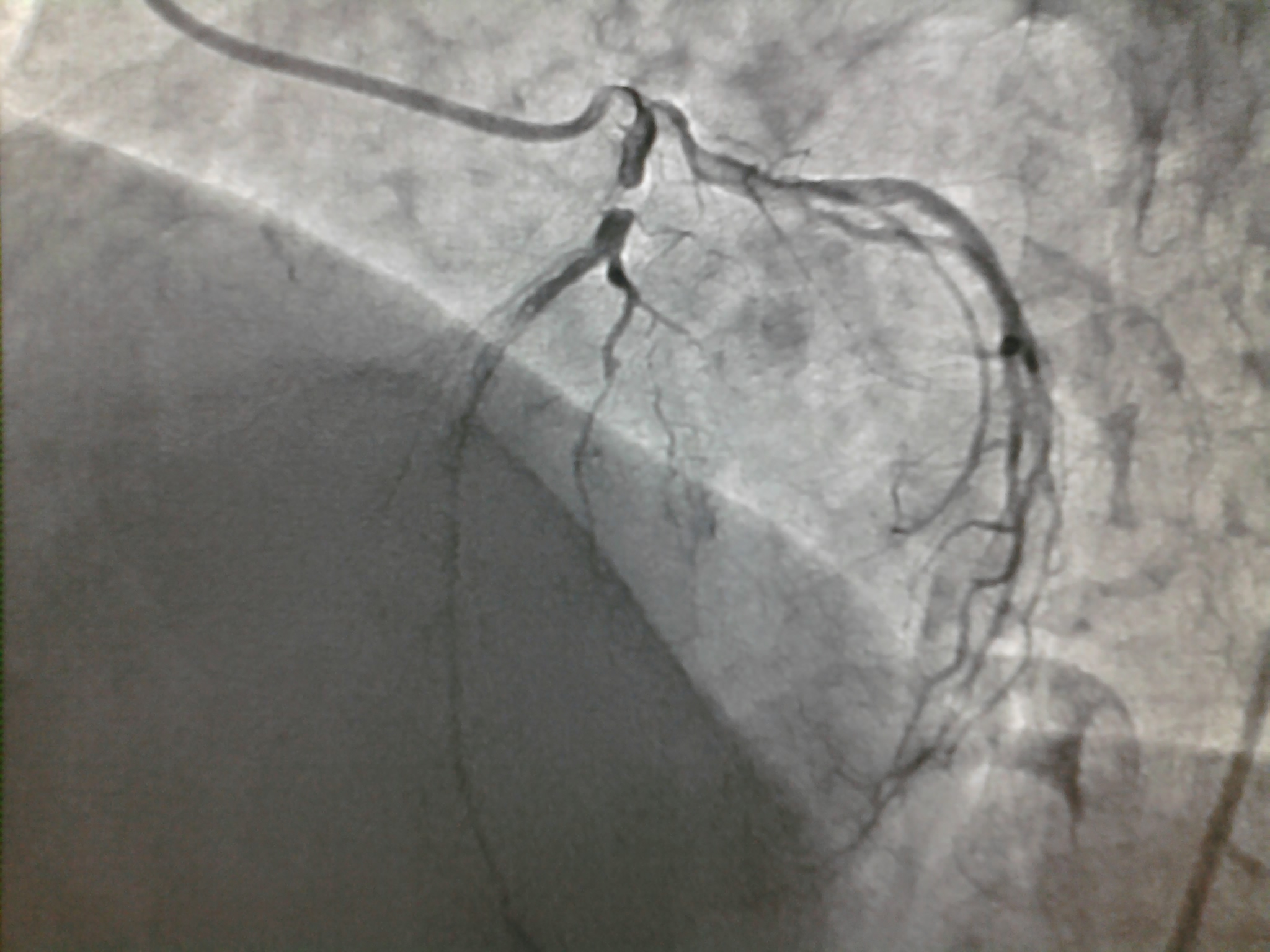
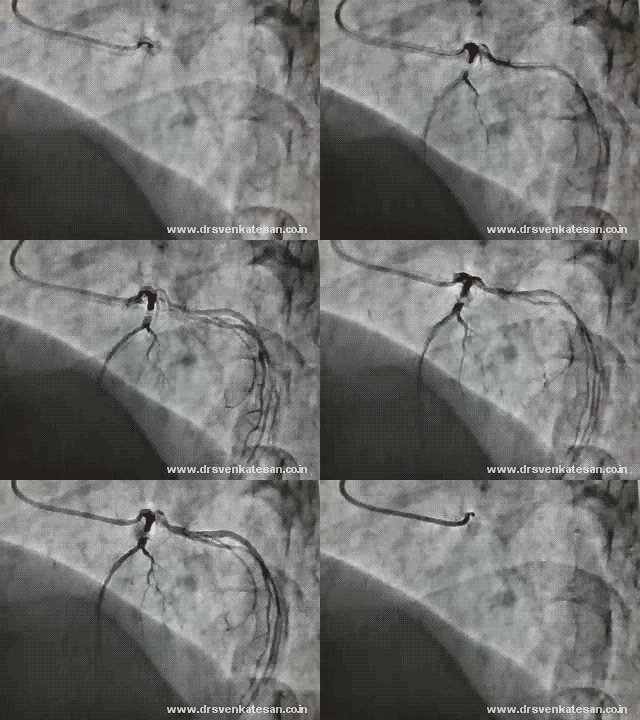
Thousands of  coronary angiograms are done every day. Cardiologist no longer get excited to see exotic coronary lesions .Still , some images can be striking and dramatic. Here is an angiogram from a middle aged man  with stable angina  , who was  one among the routine early morning diagnostic studies  in our cath lab.

Who chopped the neck of this LAD ?

How this man was able to fill up the distal LAD almost completely? (With a complete cut off  right in the neck of LAD )

Are you sure there is antegrade flow ?

Do you get any clue ?

  • Can a trickle of  ante grade flow  sustain  a  TIMI 3 FLOW  ?
  • Or is it a  very efficient  instant collaterals  from LCX ?

Yes . The first one is right . An almost invisible antegrade channel  doing a exemplary job !

How is it possible ?

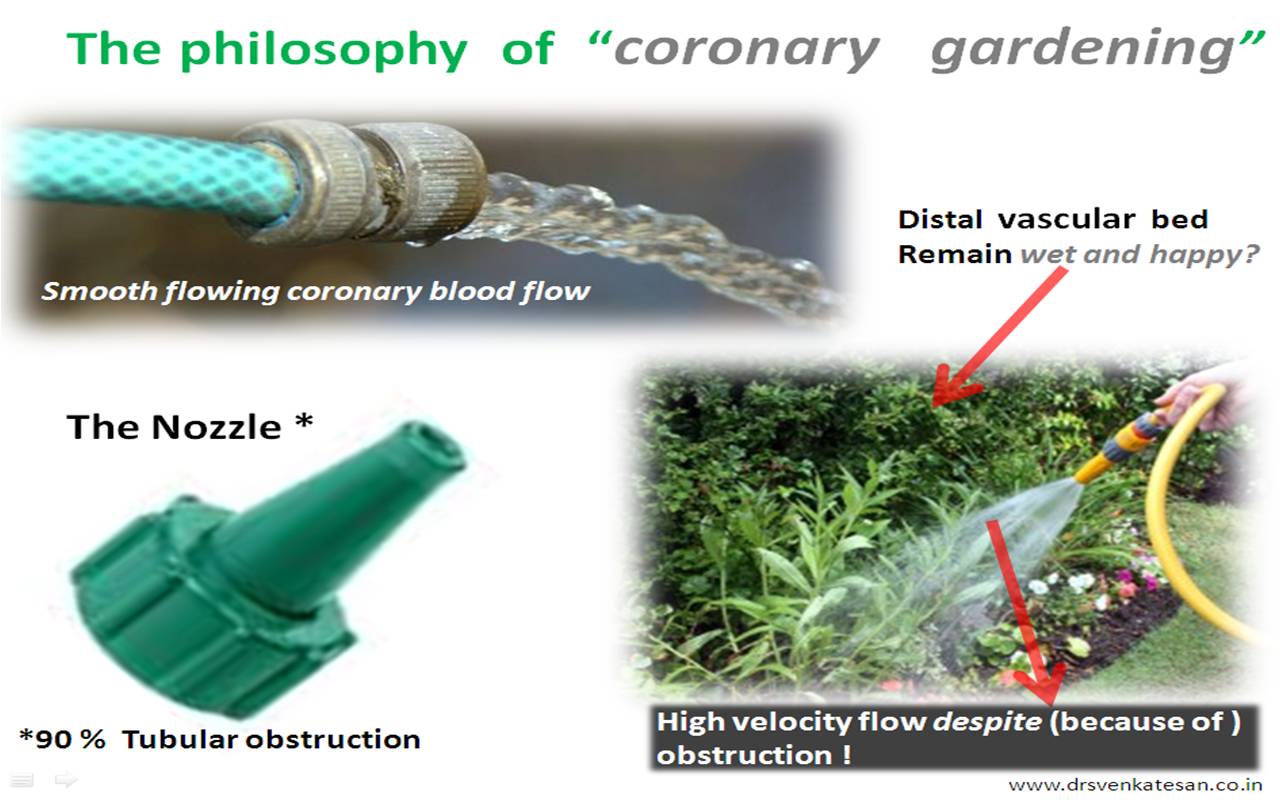
Realize an important fact . The distal flow beyond an obstruction  is not primarily dependent on degree of obstruction but the status of the distal vascular  bed .  If it is normal  even a hair-line patency  can  profusely perfuse the distal myocardial segment. This is what is happening to this man with a stable angina and perfectly normal micro vascular bed.

Lessens  from this Image.

Do not get fooled by the lay man’s logic. Realise there is  no simple relation  between  the degree of obstruction and degree of  blood flow impediment.It can be linear , curvilinear , or even inverse depending upon   the evolution and timing of obstruction  ,  number of lesions , presence or absence of collateral support , finally and  most importantly  the integrity of microvascular bed .

The  distal vascular bed drops its resistance drastically  once it senses  the problem in  proximal segment . This is based on Bernoulli principle and  is akin to how a  garden hose pipe  can simply increase  the velocity  by tightening the nozzle.*


* The garden hose analogy is a gross simplification of   complex factors that determine coronary blood flow.But it effectively clarifies a point ie  coronary blood flow is least dependent on coronary  stenosis (until  very late stages)

**Note further : This  hemodynamic  principle may not apply in acute occlusion as in STEMI  , where   acute  obstruction  often has a linear relationship with the quantum of blood flow.

By the way what happened to the above patient ?

Since he had significant angina there were no debates regarding management.  He  is posted for elective PCI this week-end .(We  can’t  get a stent just like that unless it is a real emergency  .Ours is a  Govt hospital !)

What is your take . Is it a going to be tough cross ?

I feel so , but my colleague Dr Gnanavelu   strongly  differs !

Let me post  our experience during PCI shortly.

Read Full Post »

                                                     Every day thousands of  hearts  end their life   due to terminal heart failure . Much more  lives are  confined  to their bed rooms.In refractory cardiac failure and severe LV dysfunction the only  long-term option is cardiac transplantation.

Medical therapy has reached its saturation point.  Neuro- humoral modulation shows some promise. The other modalities like cardiac resynchronisation ,LV assist devices ,  ventricular  reduction surgeries ,  restriction devices , mitral valve splinting  are  still experimental .

Simply watch this Image : Your heart will get Energy

Modern day  cardiology is trying to add life to these dying  hearts  .

There are two aims

  • To prolong survival
  • Improve functional capacity (Make them at least take care of daily activities and live a fairly independent live)

This is the purpose of the  mushrooming heart failure clinics all over the  world . These clinics , though started with  good intention , ultimately   become  feeding  centres for so many experimental  bridge modalities  , sometimes  with an  infinite wait for  a potential donor  or at the mercy of their insurance companies  . (Many time it turns out to be a  bridge to heaven as the patient fails to cross it !) .

Even though there is strict criteria for terminal  heart failure ,  in practical terms it has many issues .Temporary functional deterioration is misinterpreted   often .

Premature  dependence on LV assist devices and  indulgence  in inappropriate  mitral valve reconstructive  procedures are the currently most important pseudo cardiac interventions .( Myosplint/AV groove tying etc)   Some where along   the  academic  corridors ,   we failed to realise many patients can bridge themselves  to a  transplant (or even   self de-list  from transplant programme  )  provided we are willing to wait and take few   risks  .

It is observed exercise training  programme is awfully inadequate in most centres  who deal with late stages of cardiac failure.

The hidden link  between skeletal muscle and  cardiac muscle

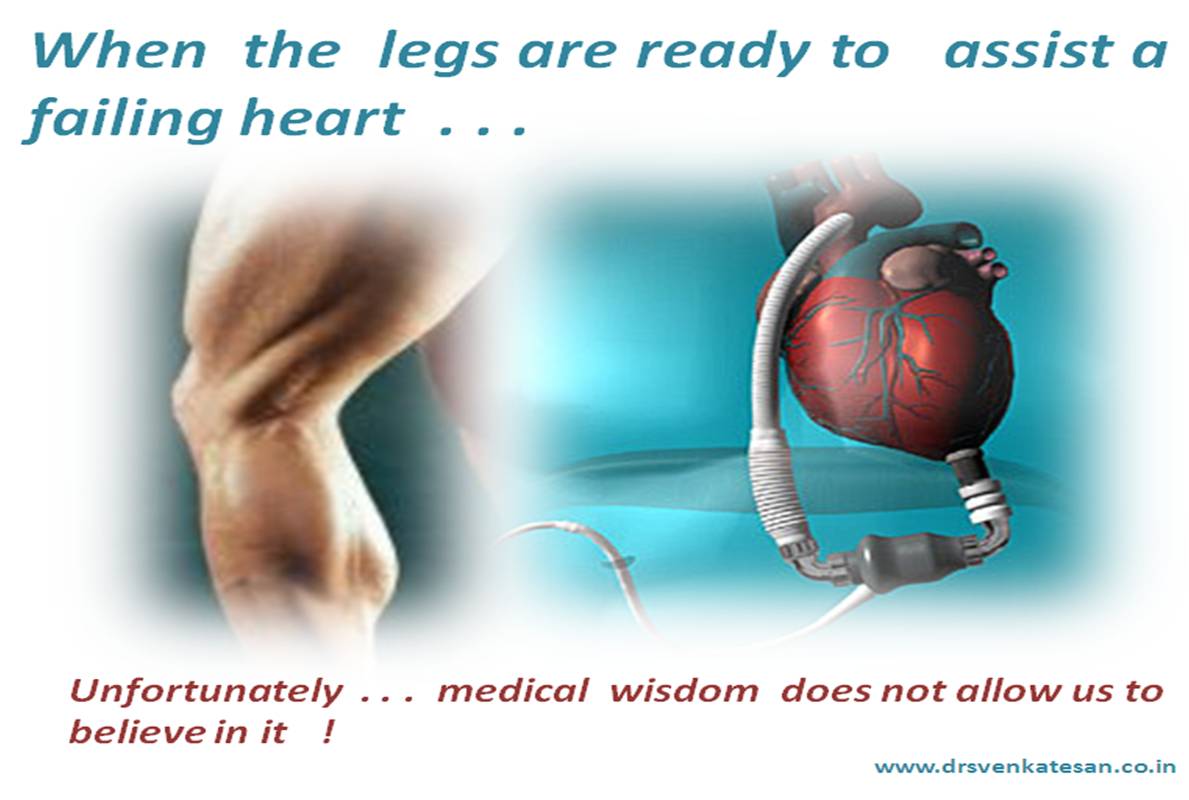
Skeletal muscle  function is impaired in cardiac failure . This impairment is attributable  to both  dis-use and low cardiac output.  Proper training of these muscles can not only improve the functional capacity  but also  sets in  a positive hemodynamic cycle  that   ultimately improves cardiac function as well.
In  our  country we have data  of  thousands of patients  with severe LV dysfunction living with the much ridiculed  digoxin   ,   diuretics ,  ACEI  and minimal exercise living a comfortable life for over 10 years .  It is often said in  cardiology class rooms ,  do not whip a tired horse  as the   failed heart needs rest  .This statement  has  truth  in it even in  this  space age cardiology !

Whipping  a failing heart with electrodes in the name of CRT   could be as  bad as  whipping with inotropic agents . This is not a  personal joke ! This fact has been repeatedly  proved by various inotropic  studies in terminal heart failure(Dobutamine to be specific ) Even CRT  is a suspect .These patients walk for 30 meters  further  with  no convincing survival  benefits .(Of course it requires a ICD -Combo to prevent sudden deaths ) Zero impact in non sudden deaths ?

Can  we propose a  new therapeutic  concept to our  patients   ?

Do you  want to   live with a  low functional capacity (Restricted  life   still  happy  )    for 5 years   or live  apparently unrestricted  life   and die prematurely ?

                         In simple terms,  for all those patients with severe  grades of  heart failure   the  best advice could be . . .to  avoid the levels  of exertion that cause dyspnea / Modern gadgets  may help relieve  exertion for a short  while  , but it  can cut short your longevity * (* This is not a threatening message. This applies to near terminal stages of cardiac failure .All other minor grades of CHF are encouraged to exert up to 70 % of their limits.)

Peripheral mechanism in cardiac failure.

We know cardiac  failure is not a simple  mechanical failure of heart , it activates a complex neuro endocrine system which makes it a systemic disorder .Many of the current research is aimed at favorably modify this. It is now certain Skeletal muscle function is a  major determinant of  cardiac failure outcome and hence a therapeutic target .

If you have good muscle mass ,  good diaphragm and intercostal muscles one can  compensate the compromise inflicted by the heart to a large extent.  We know,   the entire vascular tree has a mechanical function  to do . The stiffness and compliance of aorta , other  major vessels, the muscles  through which these vessels  traverse determine the  ultimate  efficiency  of  circulation.We know  the pulse wave , as it  travels to the periphery , gets amplified. This amplification is not without any significance. It aids in muscle  blood flow . This agumnetation is missing in poorly trained cardiac failure patients. Further muscle respiration is synonymous with  functional capacity . Numerous defects (Both structural and functional )  in skeletal muscle mitochondria are reported.

This is why meticulous  exercise training  becomes an important   intervention in  cardiac failure . There are very good studies that document   muscle respiration defects  getting reverted  with  proper exercise training and  muscle  care  .  Among all muscles the   calf  and thigh muscles show great promise.   We have observed  cardiac failure patients  with good calf muscles ,  outperform others with identical ejection fraction.(Will be published shortly )

Strangely there is no comparative  studies between calf muscle  efficiency   and other available modalities  in cardiac failure .

The concept of  Venous pump vs  Arterial pump

Skeletal muscle mass acts not only as venous pump  it also has a modulating  effect on the arterial pulse transmission .A good venous  pump will activate  vascular  tone . In congestive heart failure  a the RV filling pressure is raised,  blood tends  to  move sluggishly  in right heart chambers .  A proper venous tone  can alleviate this . Well trained  calf muscle  can exactly do this  by a controlled elevation  of  IVC pressure at times of exertion . 

 Dyspnea  of muscular  origin (Peripheral dyspnea)

The symptomatology of cardiac failure has an intimate  realtionship with skeletal muscle integrity  !

Lactate in blood and  hypoxia  in   exercising muscles  can trigger   non hemodynamic dyspnea . Further , there is strong reason to believe  the sensation of dyspnea   is perceived at the chest muscle level  (By muscle spindle length/tension   mismatch ) .It is not known whether lower limb  muscles can generate a feeling of dyspnea  !

But , one thing is certain   by altering the tone of the muscle  spindle and the  optimising the  stretch signals the peripheral component of cardiac dyspnea can be significantly neutralised . This  is what  happens in well-trained   cardiac  failure patients .

How to train the skeletal muscles ? ( In to heart friendly  muscle )

  • Passive stretch
  • Simple 6 minute walking three times a day will help .
  • Muscle massage and toning
  • Drugs like Trimetazidine may improve muscle metabolism by better ATP utilisation
  • Diligent use of diuretics (Excess diuretic can make your muscle exhausted )
  • Chest exercise for improving intercostal muscle function


Final message

Skeletal muscle training  in cardiac  failure  could be as important as  the  digoxins  , diurteics   and ACEI .When a 300 grams of heart muscle is struggling  , God  is willing to  help  it with huge muscle mass that lies elsewhere , we should read the silent  signals of nature . Many cardiac failure patients  realise this and live  a happy live without artificial assistance .This applies  in all grades of cardiac failure .

For  all those physicians  out there in modern hospitals who treat cardiac  failure , spend at least  few minutes  for prescribing a good exercise  program with a specific  mention about calf muscle function  . After all , it  may turn out be the most efficient  RV/LV assist device !

References
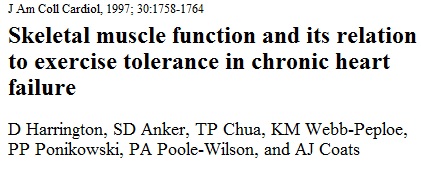
                                                                     http://content.onlinejacc.org/cgi/content/abstract/30/7/1758
 http://www.uptodate.com/contents/skeletal-muscle-dysfunction-and-exercise-intolerance-in-heart-failure

Read Full Post »
In this world of  evidence based medicine  the  funny bedside vocabulary of  medical statistics   has withstood the test of  time. The following words are liberally used by physicians of all walks of life.

We never bother to find what these words mean to our patients  !

Here is a crude and  wild   numerical attempt to  decode  these words.

  • Always                                    99 %
  • It s a rule                                  95-99%
  • Almost always                       90-95%
  • Very common                       > 90 %
  • Common                                  > 75%
  • Uncommon                            < 30 %
  • Rare                                          < 10 %
  • Very rare                                < 5 %
  • It is an exception                2 -5 %
  • Remote                                   < 2 %
  • Never                                     < 1%

Apart from the above   there two  hugely popular  medical words used over  million times every day in all walks of medical practice.

They are  ” May” and “May not”

The greatness of these words lies  in the fact   it can convey any of the above  10 meanings in a single phrase without any fuss !

Further ,  the words may and may not are numberless un-quantified statistical  jargons that   can convey a deep meaning or  . . . no meaning  depending upon the circumstances !

Doctor ,  is there a possibility of  my stent getting occluded    as i have skipped  the  clopidgrel ,and aspirin for the past two weeks

You may  be at risk  . . . but you may not develop  an heart attack immediately . I would advice you start the drug immediately .

Read Full Post »

Heart is mainly perceived  as  a pumping organ but it need to be realised it  also has a   reservoir function  (Temporarily though , for  about .5 seconds every beat ) . Contrary  to the popular belief heart is not  continuously and tirelessly working  .For every contractile  beat it takes  a brief period of rest .This is called diastole. But , even here it is not a complete rest , as  it has to receive the blood from the atria and get filled and be ready for the next beat.

Many think diastole is an active energy-consuming process . . . but it can be debated still ,  as passive elastic properties may contribute substantially to cardiac relaxation blunting the energy requirement

God is so scientific (Greatest scientist !)  he  made it sure   the resting phase(Diastole)   is slightly more  than the contractile phase (Systole ).

This makes the organ relax a bit more than it stresses  in its entire life time . At  any  given heart rate diastole will be slightly  more than systole  , peculiarly  for the same reason  during tachycardia  diastole suffers more than systole.

What happens in diastolic dysfunction ?

Pathologically the ventricles become stiff  and rigid and the filling of the  ventricle is impaired . The commonest cause for diastolic dysfunction are  hypertension, diabetes, and  ischemic  CAD some forms of myopathies  .In systole ,the calcium  is pumped into actin myosin complex  while in diastole the  same calcium molecules  (Or different !)   are ejected back into the cytosol and sarcoplasmic reticulum. The later process is impaired in many situations of diastolic dysfunction.

It should  also be realised not every one with diastolic dysfunction  has a  calcium release /unloading defect .Many  have structural diastolic dysfunction  like interstitial fibrosis  .Here the mechanism goes beyond  calcium kinetics.These are the patients who get maximum  benefit out of heart rate reduction.

It is all Time  . . . Time as a  lusiotropic  drug !

If the ventricle finds difficult to relax  (or slow /sluggish to relax )  we have  two  options to tackle this .

  • To make relaxation  faster( ie positive lusiotropism )*
  • To  prolong the diastole  itself  .

Prolonging diastole makes it certain , the LV relaxation process is completed   as the excess time compensates for  the slowness of calcium reuptake into the sarcoplasmic reticulum . In fact , we have observed at slow heart rates (<60)  it is very difficult to document diastolic dysfunction  by doppler .

In many of  dilated  cardiomyopathies  the beneficial effect of  beta blockers , could be linked to simple reduction in heart rate and prolongation of diastole .(Note In DCM about 30-40 % have restrictive filling )

Final message

As we have no specific drugs to  augment the  process  of   cardiac diastole,  currently heart rate reduction  could be the simple and best method*  to improve diastolic function  .In many cases  diastolic dysfunction  simply vanishes  at low heart rate.Bradycardia  and  diastolic dysfunction   will remain as foes  forever !  Please give the benefit of this simple concept to all your patients with diastolic dysfunction .Your patients  can breath lot more easier !

*Apart from controlling the underlying cause like DM, SHT and CAD  , anti fibrotic drugs,  interstitial relaxants ,selective cardiac   collagen uncouplers  are the  future areas of research .

Read Full Post »

« Newer Posts