Feeds:
Posts
Comments

Archive for the ‘cardiology -Therapeutics’ Category

I used to tell my students ,the relationship between the heart and kidney  is so close , it is never justified for  the  two departments of Nephrology and Cardiology  are  physically away by two blocks in our institute .

Kidneys are vital to maintain the volume and pressure of body fluids and heart is responsible for keeping this fluid circulating.

In clinical setting  it is a well known secret ,most deaths in patients who are on dialysis is cardiac while  most  deaths in patients  with CHF are renal.

It remains a mystery  why kidneys were   ever considered as a circulatory organ  , when  our medical pundits de-compartmentalised  human organ systems !

CKD is pre-cardiac failure and CHF is pre-renal failure

The Heart /Kidney affair is so intimate in many  pathological situations both either succeed or fail  simultaneous or sequentially.

While CKD  results in and pressure and volume overload of heart , cardiac failure cause pressure and volume under load (pre-renal  factor) which worsen the renal function and aggravate cardiac function alter.

In essence,  it is vicious cycle of two  serial organs  performing  the vital circulatory function with body fluids playing a  role of diligent mediator.Whenever the kidney  fails heart  is stretched and stressed  to its Frank starling limits by the volume  as well as the accompanying HT load.

While text books link these two organ as simple cardio-renal syndrome it is not happening at the level of patient’s bed side.

Cardiologists and  Nephrologists must realise they need do work in tandem like  their  respective  departmental  organs  which accomplish this task easily !

To tackle this much  maligned  cardio-renal conundrum

Consider CKD as CHF equivalent  and CHF as CKD’s

I would recommend this concept to be infused  right in the third year medical school and  try de- compartmentelise  clinical  medicine.

Need of the hour : How to Moderate ACEI dosing in CKD

ACEI has been a major pharmacological   revolution in controlling and reversing the adverse events of cardiac failure . Some where along ,  a significant fear complex arose regarding the damage it could cause to kidneys.

Recently , we know the role of  ACEI in CKD made U turn(Like what  Beta  blockers did to CHF) .Now, it is presumed ACEI are indeed  safe in most CKD and may  even regress  CKD. Still this concept  has not been fully disseminated  into general physician domain.

Let cardiologist and Nephrologist sit together and sort out this issue.

I guess ,  ACEI controversy is  a sort of  ongoing ego clash  between Nephrologist and Cardiologist . Both like it , both make fuss about it ! In my observation , if  a cardiologist titrate it upwards  Nephrologist would  lower it  and reverse happens if cardiologist express caution about it ! Do you agree ?

Final message

Mankind has  accrued  great benefits  from stunning break throughs in modern medical science . . . but it has come  only at a huge  cost ! Medical knowledge has completely fragmented the physician mind-set .Every good therapeutic concept is  hanging aloof .It requires periodic de-fragmentation (As we do it to our PCs by anti-viral soft ware !)

To begin with , let us  consider   CKD and CHF as single sequential circulatory  entity !

Let us vouch to  create new generation medical professional  devoid of skewed  medical vision !

Reference

Guidelines for ACEI in CKD

NKF national kidnye foundation

https://www.kidney.org/professionals/kdoqi/guidelines_bp/guide_11.htm
acc aha  accf guidelines chf 2013

Read Full Post »

We know  streptokinase  is a non fibrin specific   agent that   results in systemic lytic state and hence more chance of bleeding.

TPA is fibrin specific  and it  will act only on fibrin  bound to clot , hence systemic bleeding risk should be less.

However , in real world , it is well  documented  stroke risk with TPA is consistently more than streptokinase .(It varies between .0.3-.5% with streptokinase , 0.7-to 1%  with TPA)

How do you explain this apparent  paradox ?

Possible explanations.

  1. The fibrin selectivity pf TPA is not absolute* .
  2. The lytic power of  TPA is more hence stroke is more likely.
  3. The FDP* released by TPA can trigger a systemic lytic state
  4. In the  post TPA protocol   heparin  is  mandatory and  this  contribute to stroke risk.

*What happens o fibrin degradation products (FDP) levels after TPA ?

FDP levels do increase after TPA  .This peaks at 1 hour after lysis.it Correlates well with risk of stroke.(Ho CH, Wang infarction.Thrombosis Research ).

Reference

This is an excellent review with analysis from 14 studies with total of 142 907 patients with thrombolysis

A meta  analysis of thrombolytic agents streptokinase vs tpa tnktpa  stroke risk fibrin slectivity

Ho CH, Wang SP Serial thrombolysis-related changes after thrombolytic therapy with TPA in patients with acute myocardial infarction.Thrombosis Research

Read Full Post »

  • Diabetes mellitus is a pro-coagulant state,especially so in severe uncontrolled states.(1)
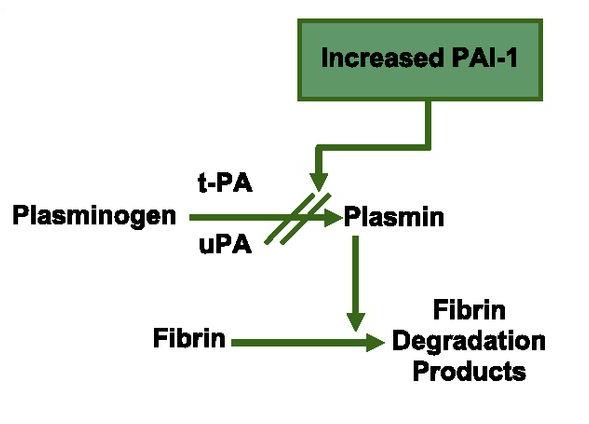
  • This is mediated by increased  levels of   plasminogen  activator Inhibitor.(PAI 1 and 2
  • This tilts  anti-fibrinolytic  forces towards thrombosis.
  • High PAI-1 is an Independent risk factor for MI in young individuals (3)
  • During STEMI the success rate of  fibrinolysis is significantly lower in diabetic population because high levels of PAI 1 .
  • The triad of DM,Obesity, Insulin resistance is a powerful predictor of  poor  response to thrombolysis.


Read Full Post »

Many decades ago Potts  shunt  (Central Aortic -PA shunt)was used to increase pulmonary blood flow for severe RVOT obstruction mostly for TOF  and tricuspid atresia .With the advent of  ICR and  Fontan role for central aorti shunts waned.

Now, read this

Chronic ,refractory pulmonary hypertension of any cause has dismal  outcome.In  patients with severe PAH  many patients  reach supra-systemic pressures . RV   a volume handling chamber faces a uphill task of overcoming huge RV after load. As cardiac physicians , we  struggle  to  perfuse the lungs in such situations.

The only option  seems to be  lung transplantation !

How to perfuse the lungs if the RV is failing ?

Is there any other alternative ?

Why not,use LV contractility  to perfuse lungs .

Great Idea isn’t ? After all , how can we allow left ventricle known for it’s  robust bumping function  sit idle and relax  when it’s counterpart is struggling with heavy load ?

How to use LV for increasing pulmonary blood flow ?

Create a central Aortic -Pulmonary shunt.

That’s resurgence of Potts shunt.

Dr Julie Blanc from France suggested this approach in in NEJM as a letter  (Potts Shunt in Patients with Pulmonary Hypertension N Engl J Med 2004; 350:623) .  It  was a great Idea.

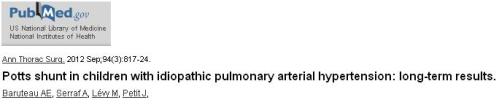
Since then lots of patients  have a benefited from this vintage surgery.

potts shunt in severe pulmonary hypertension

Final message

A surgery blamed for early onset of pulmonary vascular damage due to potential Eisenmenger reaction is back .Indication for refractory Eisenmenger syndrome to perfuse lungs  at very high pressure Nothing is obsolete in medical science .Nothing is ironical as well !

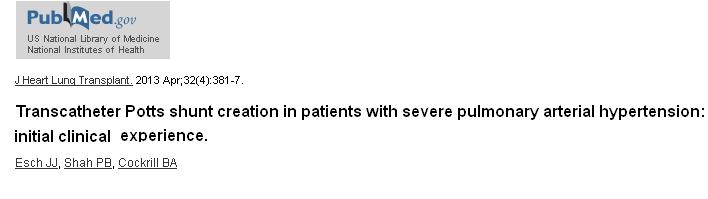
Another Innovation : Now Transcatheter Potts Surgery

potts shunt for eisenmenger and severe pulmonary arterial  pht pah

Read Full Post »

Following are revered  facts  . . .  among the  “Guardians of   Cardiology” !

myths-truths-300x300

When false truths are synthesized to conceal a true myth . . . where will the poor myth complain ?Following are revered  facts  . . .  among the  “Guardians of   Cardiology” !

  • Primary PCI  is a greatest innovation  in modern day cardiology .Without this modality  most  STEMI patients will buy Instant  tickets to grave yard !
  • A cardiologist who intends to  thrombolyse  a STEMI is considered as a low quality cardiologist .
  • Streptokinase should have  no place in the crash carts of modern coronary care units.
  • There is nothing called “Time window” for rescue angioplasty.
  • VVI pacemaker  will convert an electrical problem of heart block into a mechanical one by depressing LV function .
  • Digoxin is an obsolete  drug even in well established cardiac failure with dilated heart.
  • Beta blockers not only fail to control  blood pressure smoothly , it often converts  a hypertensive individual into a unhealthy one  by it’s prohibitive side effects !


Read Full Post »

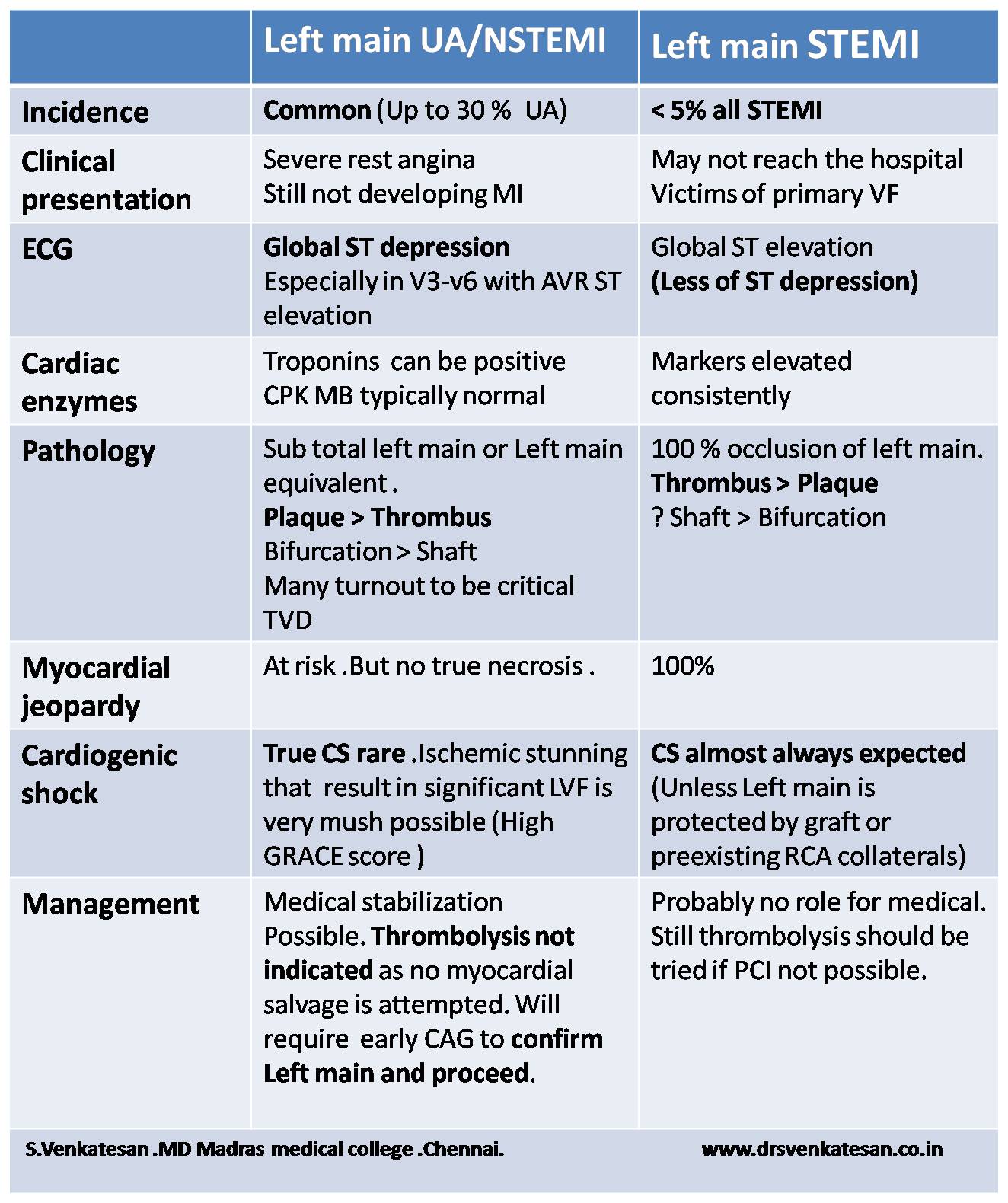
Last week  there was a heated debate in our CCU regarding thrombolysis for  a patient with severe rest angina  and ST elevation in AVR  and ST depression in V2-V5  as it implies  Left main disease  Few argued left main disease is an exception where one can thrombolyse even with unstable angina !

One of my fellows argued ACC guidelines vouched for lysis in UA involving left main .( I do not agree )

A logical attempt to differentiate Left main NSTEMI//UA and STEMI

(In the strict sense Left main NSTEMI is misnomer as AVR shows ST elevation  isn’t ? )

left main disease

Final message

Such  patients with suspected LMD   are to be rushed to cath lab .  . . agreed . If it is not feasible , manage it as high risk unstable angina and do not thrombolyse .Let it be left main disease . Indications for lysis are clear. ST  elevation in AVR alone can not be taken as an Indication for lysis.For thromolysis to be effective there should be high thrombus burden with total occlusion . ST elevation in single lead (AVR ) is not a good  marker for left-main thrombus !

Read Full Post »

Oral anticoagulant usage has been steadily increasing for variety of  indications.Dengue fever is also  appearing in different avatars with  low platelet counts  and bleeding being a primary risk.

I was recently contacted by a physician , regarding a therapeutic dilemma .A young lady with mitral prosthetic valve and a febrile illness diagnosed as dengue . She has a platelet  count of 100,000 .She is on regular warfarin and aspirin .The physician  wanted to know , should he stop the OAC and aspirin ?

What are the options ?

  • Confirm if it is really dengue.
  • Look for clinical bleeding.INR, platelet function tests are not helpful.
  • Continue OAC.You can do that in most situations.
  • Stop OAC only if there is clinical bleeding  episode.
  • Anti-platelet drug usage  is more tricky .One may stop it if the trend of falling platelet is steep by at least two serial measurement.(or 50% fall from baseline)
  • Fresh blood and platelet infusions should be ready .
  • Finally and most importantly , Inform the patient and family about the difficult decision we are making.

*Is  OAC  safer than aspirin and clopidogrel in dengue ?

It is believed OAC has no major  Impact on platelet function .It may not  pose a threat of excess bleeding in the setting of  falling platelet levels .(*Evidence base -nil )

Another potential situation : DES and dengue

The number of DES in developing countries are increasing  where Dengue is endemic . It is not a surprising  to expect  both to  occur together.

Anti-platelet agents  can be problematic .It is better to withhold it during the active phase of dengue.(If the  stent has recently  been deployed you have no option !)

Final message

1.  Prosthetic valve , Warfarin Dengue .

2. DES, Dual antiplatelet agents ,Dengue.

They  extraordinary events  throw a complex therapeutic task .There are only two options .Continue or discontinue ! Whichever way you do , you explain to your clients (patients!)  the (un)reality games we play.

My personal option would be , with hold all hematological drugs during the active phase of dengue .

It is better to believe in the  natural thrombus fighting force . Leave the job of anti-platelet action  to the dengue virus for a week or two and give oral anticoagulants and dual anti-platelet agents a holiday

It may be foolish to rely on the dengue virus to guard against  prosthetic  valve  and DES thrombus , In reality we have to do that !

Reference

No reference exists.It is a statistical mind game.Individual assessment  should prevail. Either way, if something adverse happens court of law should protect us !

Read Full Post »

Syncope in CHB is due to unsafe escape rhythm, changing focus of VPDs,  extreme bradycardia, (<20 /minute),  pause induced VT, (Usually polymorphic and torsades is quite common .)  ultimately may end with convulsions,  ventricular fibrillation, and death.

Syncope in SND is due to extreme slowing of SA node . Sinus pauses or even arrest can happen resulting in ventricular standstill. Fortunately, a stable escape rhythm ensues more often than in CHB. (It may just be around 20 or 30/mt. still, ventricular arrhythmias are uncommon. ) This implies an important fact that stability is more important than slowness.Fatality is rare in SND.However, the mechanism of syncope in  SND is influenced by the integrity of AV conduction also. If it is severely impaired it can trigger ventricular arrhythmias as well as the escape focus becomes unstable infra hisian location.

Paradoxically, in patients with SND, an episode of palpitation due to AF  or sinus tachycardia precedes the episode of syncope. An intelligent patient may recognize this as a warning and can take lying posture after runs of palpitation.This is because of tachycardia-induced suppression of  SA node prolong the sinus node recovery time still further.

How to differentiate cardiac syncope from simple vasovagal syncope?

Cardiac syncope  is differentiated by common vaso-vagal syncope (VVS) as the latter occurs during erect posture . It may be entirely due to vascular component and hence it may simply represent hypotension without a true cardiac limb .(Vasodepressor syncope)

Hence the pulse rate and volume may take some time to recover in VVS, while Stokes  Admas of CHB  usually have a well-formed bounding pulse in the recovery phase, as the rate is low and systemic hypoxia is a consistent feature.

How is the respiration during Stokes – Adams syndrome ?

Intact. Oxygenation in the lungs goes on for time being. The pooled pulmonary blood gushes after the termination of syncope and causes  the classical flushing. Since the hypoxia causes systemic vasodilatation the flushing is more obvious.(Unlike vasovagal syncope where they are often pale)

History of stokes Adam’s syndrome Morgagni is the  one who gave credit to their  discovery

Though Morgagni first described the clinical picture of this syndrome in 1761,  It was published much later by Two Irish Physicians  Stokes, Adams. Wish this entity is referred to as Morgagni-Stokes-Adam’s syndrome

Reference

1.R. Adams. Cases of Diseases of the Heart, Accompanied with Pathological Observations. Dublin Hospital Reports, 1827, 4: 353–453.

2.W. Stokes. Observations on some cases of  permanently slow pulse. Dublin Quarterly Journal of Medical Science, 1846, 2: 73–85

Read Full Post »

In one of  our patients  who had a recent STEMI , CAG revealed  70% LAD  lesion  with   TIMI 1  flow .The distal run off was slow .He had moderate LV dysfunction with no major symptoms. The angiogram was done routinely .( Yes . . . routine CAG- the term I do not relish ,  while it is becoming a way of  life for all learned cardiologists !)

I  was discussing   this case with my fellows and  about medical management of CAD. I  told them  Aspirin will help prevent ACS, statins will stabilise the plaques , beta blocker would prevent cardiac  events by blunting adrenergic surges and Nitrates is a powerful coronary vasodilator that  will improve the  coronary blood flow

A final year MD fellow  threw a  direct  question at me .

Sir,  do you mean  Nitrates  would increase the  TIMI  flow from 1 to 3  in the long term in this patient ?

I was taken-aback  for a moment . . .   and thanked my student for a valid question .

Nitroglycerine is  a powerful coronary vasodilator  we are taught for nearly  half a century . Oral nitrates are used  liberally in the chronic management of  angina. It is a multi billion  dollar market.

Has it been documented to improve coronary blood flow in the long term ?

No

Why then it is  used long term ?

It is a clear case  of  inappropriate medical therapeutics .

* The confusion is partly due to our mix up the mechanism of  relief of angina from coronary vasodilataion. Realistically , NTG should me known  more as a powerful venodilator reducing the preload . It  dramatically reduces the LV filing pressure  and relieves sub-endocardial stress  .This is the major determinant for angina relief .(Of course after-load reduction also helps)

Final message

Nitrates  should be used only for relief of an episode of angina or just to prevent It .This may surprise you  , Nitrates has no documented  efficacy  in the long term management  of angina.

Read Full Post »

Hypertension is  probably the most   important clinical entity for physicians
for decades .With the advent of modern interventional cardiology management of HT with  drugs have become a  less glamarous job for us. Still , the quantum of the problem and it’s impact on the  risk of CAD and progression   remain a major issue.
There many  different bodies periodically coughing  up guidelines  to manage HT.
  1. JNC from USA
  2. British Hypertension society from UK
  3. European society of cardiology
  4. World hypertension league
  5. Finally WHO guidelines* ( It is not a regular exercise ,WHO releases it  as and when it feels like !)

The stakes are high for the drug industry .Anti hypertensive drugs are the  major source of revenue  to them . Any dip in per capita consumption will have direct impact on their health ! ( WHO bothers about public health ? )

The so called scientific  guidelines,  are generally made balancing patients health vis a vis drug companies health .I have found more often than not it was tilted towards the industry .

The fact that there are multiple guideline with varying impact factors makes sure the confusion among the global physician intact . This is one of the aims of the pharma companies as they influence heavily  when to initiate the treatment ,  and what we are  supposed to prescribe.
Some of the guideline are notorious for insinuations . One example was about the definition of pre hypertension  few years ago .It has since been removed  from the literature after a critical debate .

* One may wonder why I’m focusing always  on non scientific  issues more than academics .(I some how feel non scientific factors are going to impact our health more than any other factor in the coming  generations  )

Now is the beginning of a balance .

European society of cardiology 2013 guidelines for hypertension
Among these guidelines  I would  think  ESC is close to reality and fairness.
Even    it was carrying dubious advices till recently .Now they have come out with new one in 2013.Most changes are  welcome.
  1. It is essentially about cleansing the contaminated guidelines
  2. Removing unnecessary medications
  3. Unified definition.
  4. More efforts to identify true secondary HT
The salient  points
There are  18 point update in the ESC 2013 . All of them are great . Essentially they are about the basics we have been  taught as we learnt in our final year MBBS. (The rest of our life we have to unlearn  the junk we have accrued over the years  from various CMEs )
I can modify it and  short list
  1. Do not start too early .Have universal definition (Now 140mmhg)
  2. Respect non drug treatment ,( However attractive the  gold tipped pen the  representative leaves  in your consulting suit !)
  3. Avoid using multiple drugs
  4. Never miss a secondary HT .( If  diastolic BP> 110mmh almost always a renal component would be there .Remember Conn syndrome (Primary aldosteronism )  is 10 times more common than much hyped pheochromocytoma ! Just do K+ levels to detect this )
  5. In CAD patients never treat HT in isolation .( Measure blood pressure with sugar and  lipid 120 /70 mg of LDL )
ESC 2013 is a commendable Initiative . It has  tried to remove most errors of the past .obviously  the pharma industry will be unhappy as it will definitely bring down  total drug consumption the  population.
Final message
HT  is an important target  for prevention and management of CAD
Thanks to the much maligned pharma industry  .
We have good drugs.Use it judiciously . Try to reduce the number of drugs .
If possible make them drug free.
If a patients taking   beta  blocker for associated  cardiac condition do not add another anti HT drug . (Recall  from your distant memory , beta blocker is a anti HT drug too !)
Simply follow common sense . (* If you think you  lack  it  ,  get  it from your learnt patients .Many  of them have in plenty . I often do that . One  question they keep asking  “Should I take this drug  life long doctor ?”  is a definite common sense booster!  )

Read Full Post »

« Newer Posts - Older Posts »