Feeds:
Posts
Comments

Archive for the ‘cardiology -Therapeutics’ Category

Right ventricular infarction (RVMI ) is a  common  cardiac emergency in coronary care units. It can be termed as a mechanical complication of infero-posterior STEMI .However ,  around 10 % of anterior  MI do develop this complication . Onset of refractory hypo-tension in spite of correcting hypovolemia  suggests  RVMI.RVMI generally comes under class 3  (Cidar Siani /Diamond -Forester classification of STEMI )  , ie   silent lung with systemic hypotension.       (RV shock requires an unique definition , as it can not be included in traditional  definition of cardiogenic shock as the PCWP is likely to be normal.

How to manage a full blown RVMI  who is not showing  signs of improvement ?

Following is an extract  from our coronary care unit experience

(do not ask for evidence for everything !)

  • Consider immediate angiogram  to know the  anatomy of the problem .Try opening the RCA which is most  likely to be  the culprit (Any associated critical  LCX /LAD lesion  must be attended too ! )If  the duration of MI is beyond 36 hours  culprit lesion may be  left untouched or at least not our primary target !
  • Inotropic support (Doubtamine continuous infusion is preferred .Milrinone  for the rich !)
  • There is no specific RV assist devices available.(LV  assist device has no role in RV )
  • Restrict fluid (Opposite  to RVMI guidelines) There have been instances of  overzealous fluid therapy resulting intra-cardiac  hypervolemia. IVS encroaching LV worsening the cardiac index .
  • Pacing is  definitely required in severe bradycardia or CHB .  Dual chamber pacing is the  ideal  choice to maintain AV synchrony as we desperately need  the  atrial booster pumb  for a failing RV . (Please realise , VVI  pacemakers ,  can still save lives as it takes care of extreme bradycardias  effectively )
  • PCWP in the setting  of RVMI is an  unreliable parameter of true cardiac function.(In almost 90 % of RVMi some degree of LVMI is present ) . In RVMI  PCWP is determined by a  delicate balance between LVEDP and the  onward stroke volume from a failing RV .) The alter tend to bring the PCWP down former would keep it high . Which component is  operating at a given point is a  wild guess  . The situation get quiet complex in the setting of multiple vaso-active drugs , pacemaker , ventilator
  • Balloon Atrial septostomy  /dilatation might help ( Hypoxia may worsen as elevated RA mean pressure may shunt right to left  however cardiac out put might improve)
  • Pericardiotomy  or simple splitting  of pericardial  layers has been tried   (Improves RV restriction effect)
  • If the patient is on ventilator keep the PEEP well below the standard recommendations (RV will struggle more ! )
  • Pacing catheters  can irritate the RVMI in their  raw zone and trigger recurrent ventricular arrhythmia .( Often  labelled wrongly  as Ischemic electrical storm !)
  • Call  Nephrologist  consult  if  renal function  deteriorates . Peritoneal  dialysis is preferred  .  It  is worthy to know , deaths have occurred on hemo dialysis  table.

Final message

RV shock  carries a dismal  outcome , almost  reaching  as that of an LV cardiogenic shock. Ironically ,the most important prognosticator  in RVMI  is the quantum of LV involvement !
Read Full Post »

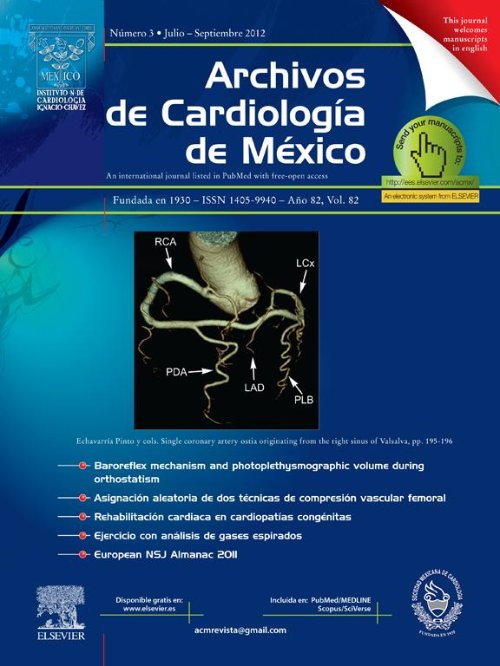
This article   provides  you every thing  you  want to learn  about ASD device clsoure .The anatomy , the art of doing TEE in cath lab etc.Do not ever shy away from lesser known journals .It is simply amazing  to find  hidden treasures .Thanks to  Mr Tim BernersLee  invenor of the Internet !


mexican cardiology journal


Sample this arricle

 http://www.elsevier.pt/en/pdf/90140903/S300/


Read Full Post »

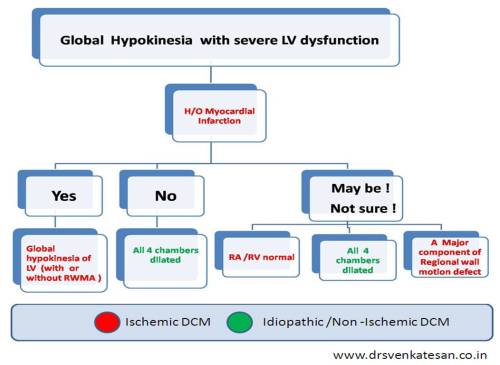
Even though cardiologists consider themselves master of ischemic heart disease , their collective clinical acumen is  put into  acute stress test   when they  confront  a patient with dilated LV and severe  LV dysfunction.This is not  a  rare situation  in clinical cardiology we stumble upon such instances often .Most of them are conferred a  tag  of DCM .

The differentiation from ischemic  vs idiopathic or primary muscular is not a  wasted academic exercise  , since   ischemic  DCM  may get reversed with revascularisation .We have  various  tests to differentiate  ischemic from idiopathic like CAG,MRI, 3D RTE, etc . Still common sense would tell us   95 % of times we can  differentiate ischemic DCM from non ischemic by asking  two critical questions  in the  bed side  echocardiogram

  1. Is there a regional wall motion defect ?
  2. Does all 4 chambers of the heart is enlarged ?

Idiopathic DCM is primary disease of muscle hence  the cardiac   muscle as a  whole  fails  ( We know they are a single  folded  muscle sheet )

Since  Ischemic DCM  primarily affect left ventricle and left atrium  RV,RA enlargement  are terminal events.

* Please note the traditional dependence on CAG to  diagnose  ischemic DCM is fraught with a risk of missing small vessels  induced  DCM,

*** If atrial fibrillation is present longstanding it can dilate both atrium but still RV will be normal  in sized in  ischemic DCM until very late stages

Here is a  20  second flow  chart  to differentiate ischemic  DCM  from idiopathic

ischemic verses idiopathic dcm

Read Full Post »

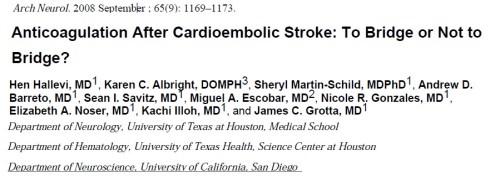
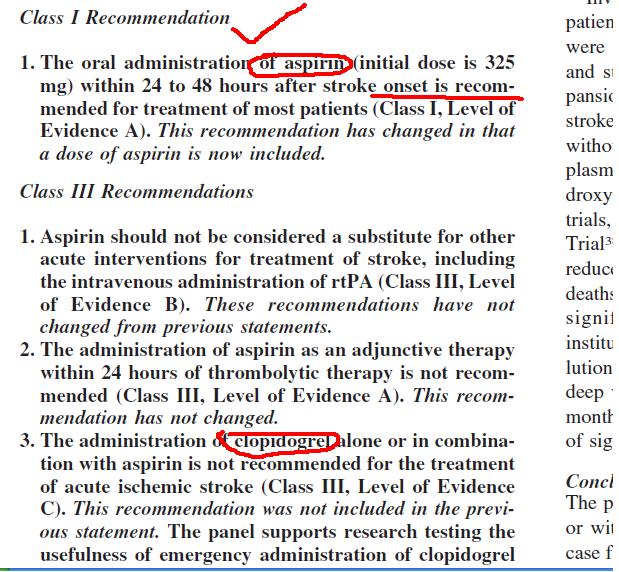
The  major  issue of contention is fear of conversion of pure ischemic stroke into hemorrhagic stroke .

But here is a catch if you worry about that  . . . who will worry about recurrent emboli from heart ?

References

http://www.ncbi.nlm.nih.gov/pmc/articles/PMC2678170/pdf/nihms104070.pdf


anti coagulation following cardio embolic stroke

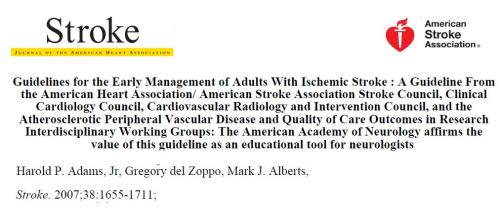
aha stroke guidelines 2007

aha stroke guidelines

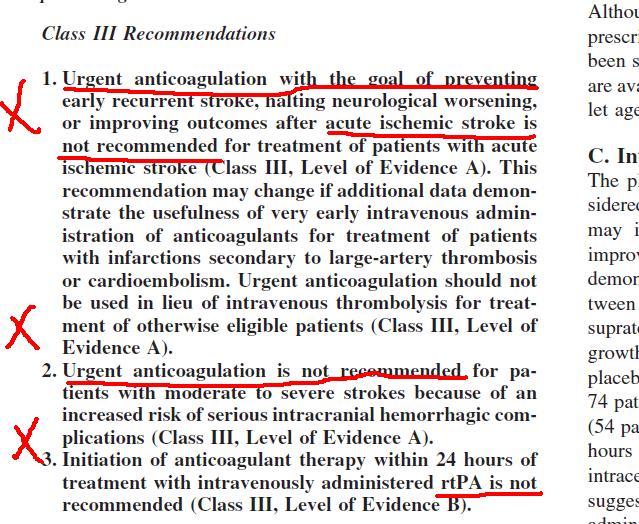
Recommendation for heparin

aha antiplatlet agent

Recommendation for anti-platelet drugs

I think  the 2007   stroke guidelines are the latest .Even after going  through the guidelines  I am not really clear about the answer for the question posed in this article.

One more thing   I  (mis) understood was  ,  In acute stroke thrombolysis seems to be safe  . . . Heparin seems to be dangerous ?  Is that true ?  It defies logic for  me !

One possible explanation is thromolysis is a emergency single shot salvaging  process . While prolonged heparin will ooze blood into Infarct ! This is exactly is the reason  in   tPA   should not be   followed up with heparin  in acute strokes.(unlike STEMI  where a follow up heparin is a must )

Regarding prevention of recurrent emboli , we need to bother about whether it is predominately platelet rich or RBC rich

Readers may contribute to find the exact answer !

Read Full Post »

As I expected ,  my earlier algorithm “An Idiot’s approach to tachy-arrhythmias” has  elicited  mixed reactions  .Some  EPs calling it a dud while few  physicians termed it awesome . Here is  a follow up .

Heart rate of a tachycardia is the most neglected parameter by physicians .  They are often seen spending  hours together for decoding  arrhythmia , splitting the brains   for P wave  location , VA conduction, Fusion beats etc .Finally they end up  either administering  Amiodarone a broad spectrum anti arrhythmic agent or DC shock.

Here is an unusual algorithm  for arriving at a diagnosis in all tachy-arrhythmias  based only on heart rate and the width of he qrs complex.

(Click over the table for high resolution image )

approach to cardiac arrhythmias narrow qrs vs wide qrs brugada wellens criteria

General principles in diagnosis of tachycardia

Narrow  qrs tachycardias.

90 % rule : If regular It is sinus tachy if irregular it is A-FIB . Take some efforts to r/o sinus  tachycardia . (In children and young adult it can be extremely difficult at times )* Please note : Sinus tachycardia can show some irregularity due to sinus arrhythmia and  frequent  APDs and JPDS . Further at  fast rates P may fuse with T it should not be confused with  A-fib .

Wide qrs tachycardia

Common things  are common , if  you sight a large animal with a huge trunk  in a Kenyan safari ,  it is most likely to be an  elephant and not a Dinosaur !  Please diagnose VT  when you encounter wide qrs tachycardia by default especially when the BP drops  !

  Management issues

It  would be  foolish to split our heads for decoding an arrhythmia when a patient is unstable .Any hemo-dyanmic unstable tachycardia needs DC shock . (Synchronized will be better unless it is dire emergency )There are very few arrhythmia where DC shock is contraindicated   ( MAT/Dig toxicity/Underlying sinus node dysfunction )

Only if the patient is hemo-dynamically  very much stable   the  physicians  have enough time to  confuse themselves  and the real  ordeal begins .Please remember  the 5 arrhythmias  constitute 98  % of all known tachy-arrhytmia . So where ever  you practice ,  whether  in remote Nigerian village  or  sophisticated  Cleveland  university hospital , when you are  confronted with a tachycardia  the diagnosis  should be one among the  following  five  !)

  1. Sinus tachycardia .
  2. AF/A-fib
  3. Atrial tachycardia  with  or without blocks
  4. ventricular tachycardia /VF
  5. AVNR/AVRT with or without aberrancy

All  other tachy-arrhythmiaa  are  largely  academic !

Regarding  drugs

Knowing the mechanism of  arrhythmia genesis  is less important  at bed side . They are  triggered , sustained, and maintained by either functional or structural component .Ionic basis operates in every arrhythmia  , but it is the anatomical  substrate that maintains it .This happens in only diseased heart.The only point worth remembering regarding mechanism of arrhythmia  genesis  is ,  automatic and focal tachycardias  will not respond to DC shock . All other can be termed some form of re-entry . Micro reentry  for all practical purposes behave like  triggered  activity. Ischemic and electrolytic VTs are primarily ionic based and often polymorphic.Structural VT are commonly mono-morphic. Any VT just prior to degeneration to VF become polymorphic

Every patient with cardiac arrhythmia should be checked for hypoxia,acidois , electrolyte defect or exposure to any  pro arrhythmic drugs. (The commonest  cause of tachycardia in any  IMCU , is inotropic induced (dopamine /doubtamine ) tachycardia .

We  have  5  pharmacological options

  1. Blocking  adrenergic  receptors(IV Esmolol, Metoprolol)
  2. Blocking calcium channel (Dilitazem,Verapamil)
  3. Blocking potassium channel  (Amiodarone  ,Sotolol Adenosine  to a cetian extent )
  4. Blocking sodium channel . ( Procainamide , Lignocaine (Wonder drug almost forgotten now ! ) Flecanide Mexilitene etc)
  5. Digoxin ,Adenosine  magnesium are special  anti-arrhythmic  agent which  has very useful role in certain specific situations (Magnesium -Torsades/Polymorphic VT / Adenosine in LVOT/RVOT VT etc)

General principle is ventricular arrhythmias  are blocked successfully  by sodium or potassium blockade  Atrial and functional tachycardia are blocked by calcium or adrenegic blockade  .Of course,  there would be  some degree of overlap  when the arrhythmia  origin  hovers  around the junction  on either side of the AV  ring . This is basis of verapamil sensitive VT .Clusters of  calcium  channels are scattered  in the junctional  region

Refractory tachycardia

  1. Consider ablation  in AVNRT/AVRT
  2. ICD +Drugs  in VT
  3. Ablate and  Pace(Some A-fibs)
  4. Ablate and ICD (Some  incessant VTs)
  5. Surgery in minority

In AVNRT/AVRT 90 % success can be achieved  in most EP centers .VT ablation  is still a complex process  with  success rate around 60 % ICDs  are indicated in all recurrent VTs except incessant forms .(Where the battery will deplete within a month !) Surgical cure (Maze etc  ) is possible in selected few while undergoing mitral valve surgery.Contrary  to the modern scientific  mood ,  I can ay with conviction most A-fibs can be managed medically except a fraction will require pulmonary vein ablation / isolation .

Final message

Mastering the field of of  cardiac  arrhythmias ,  though  appear a daunting task ,  it does not  require   immense  sense  to understand real world problems are  only a  few and can be tackled in a simplistic manner !

Read Full Post »

Heart rate of a tachycardia is the simplest of all  . . . but   neglected parameter by physicians.  They are often seen spending  hours together for decoding  arrhythmia , splitting their brain for locating P waves ,  VA conduction, Fusion beats etc Finally , most end up  either administering  Amiodarone a broad spectrum anti arrhythmic agent or a DC shock  without arriving at a correct diagnosis.

Here is an unusual algorithm  for arriving at a diagnosis in all tachy-arrhythmais  based only on heart rate and the width of  the qrs complex with acceptable accuracy.

(Click over the table for high resolution image )

approach to cardiac arrhythmias narrow qrs vs wide qrs brugada wellens criteria

Caution :

The above table is  an extremely simplified approach for tachy arrhythmias. Not applicable for scientifically inclined . But in my personal opinion ,  in an emergency room  pure science matters less !

Read Full Post »

The popular clinical  entity Idiopathic dilated cardiomyopathy   is often a  dust-bin diagnosis” . The fact is the word   idiopathic simply reflects  our ignorance.

For God nothing is idiopathic . . . he knows how each and every cell  would   behave  .

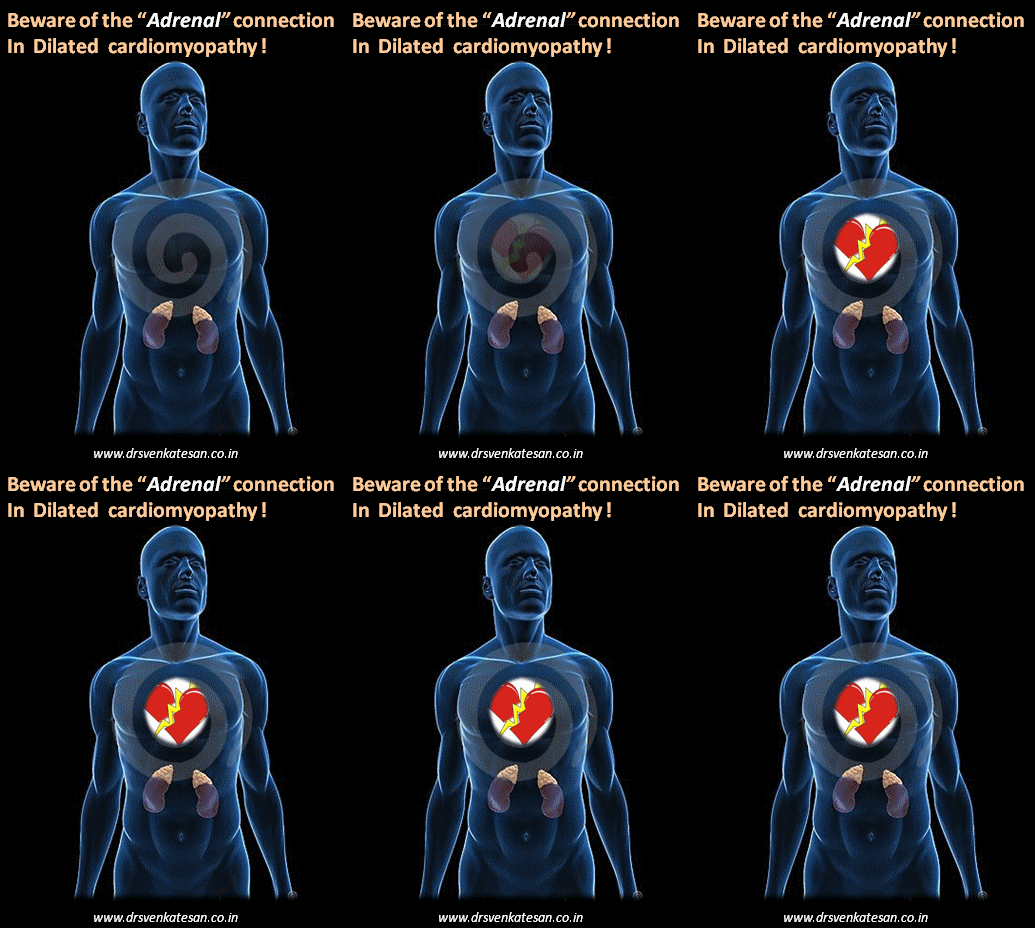
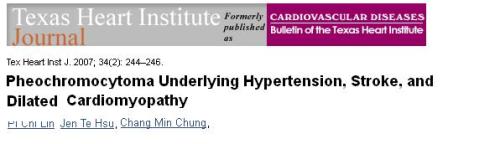
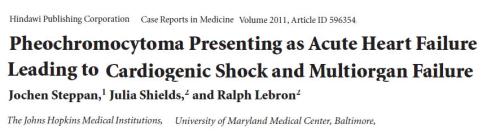
so , when a patient presents with progressive dilatation and  heart failure refractory to all medical  therapy he is termed as idiopathic and posted for heart transplantation. And only later , we realize the whole thing is due  a  terrible form of reversible  DCM  . That is  pheochromocytoma  induced DCM , which recurred again in the   transplanted  heart.  What a  costly  Ignorance ?

pheochromocytoma and dilated cardiomyopathy reversible dcm tachycardic

Image courtesy and source http://www.dreamstime.com.

Is sub- clinical pheo like situations rampant ?

We know  that  high levels of both epi and nor- epinephrine circulate  in cardiac failure . We presume it  to be a secondary effect .

How can  we  so sure about it ?  There  is a distinct  possibility  of   adrenal gland hyperfunction  and hyperplasia in all DCMs (Idiopathic or ischemic ! )  The dramatic beneficial effects of beta blockers in cardiac failure  will vouch for it .

So , It remains a fertile filed for the youngsters to explore . . . the hyper  adrenergic mediated reversible component of any cardiomyopathy and cardiac failure .

Final message

The default  approach  in any  patient with progressive / refractory cardiac failure   should  be  ,  to consider  whether they fit into  any form of reversible myocardial disease  .  What is idiopathic in remote clinic of   your distant  country side  may be  well recognized secondary cardiomyopathy . The irony is , even sophisticated university hospitals many times miss the true etiology as in the above case report .

                                  So, the term Idiopathic  dilated  cardiomyopathy  (iDCM )  may  aptly be named as  Ignorant  forms  of  DCM  , with an  attractive  abbreviation    . . .   iDCM

Reference

1.J Surg Educ. 2009 Mar-Apr;66(2):96-101. doi: 10.1016/j.jsurg.2008.11.004. Pheochromocytoma presenting as acute severe congestive heart failure, dilated cardiomyopathy, and severe mitral valvular regurgitation: a case report and review of the literature.

2.Kelley SR, Goel TK, Smith JM.Prog Cardiovasc Nurs. 2005 Summer;20(3):117-9. Pheochromocytoma presenting as heart failure.

3.Pheochromocytoma   masquerading as a cardiomyopathy. Garcia R, Jennings JM.  Am J Cardiol. 1972 Apr;29(4):568-71.

4.  http://www.ncbi.nlm.nih.gov/pmc/articles/PMC1894695/pdf/20070600s00025p244.pdf

pheochromocytoma and dcm dilated cardiomyopathy .catecholamine induced dcm tachycardiac cardiomyopathy

5. http://downloads.hindawi.com/crim/medicine/2011/596354.pdf

pheochromocytoma and dcm dilated cardiomyopathy .catecholamine induced dcm tachycardiac adrenal cardiomyopathy


Read Full Post »

When I posed the above question  to few  cardiologists including electro physiologists , the answer I got was surprising .  In the process ,  I could understand why cardiology is such fascinating subject !   Each one gave a different answer and all the 5 responses were forth coming .

The following post in my blog which  I wrote years ago tries to decode the reason for such wide variation in our understanding of AVRT of WPW.

By the way ,  is there a  real risk   for an  ortho-dromic AVRT into anti-dromic AVRT by a definite block in AV node  ?

Read Full Post »

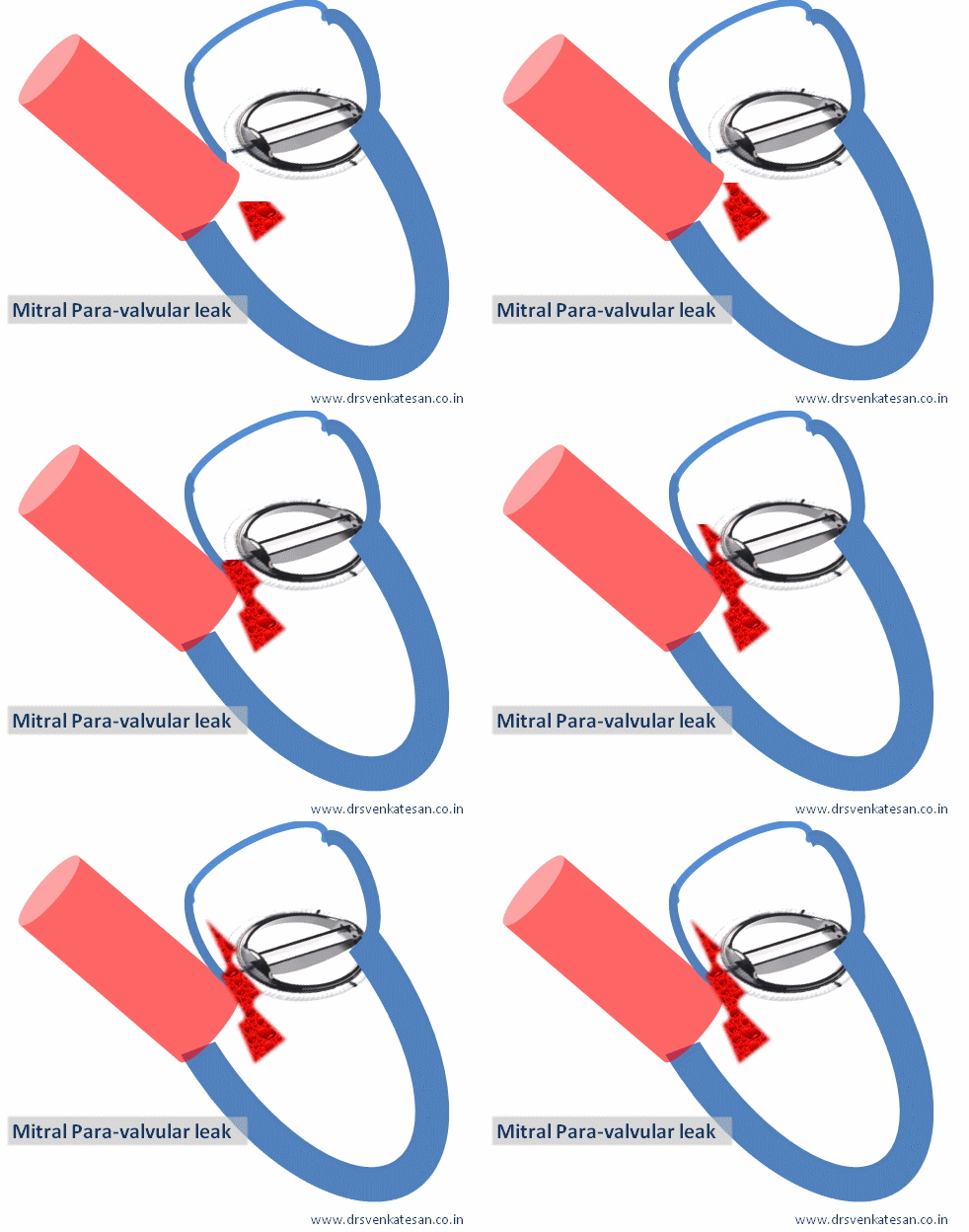
Mitral para-valvular leak

para valvular leak 002

How to manage para valvular leak ? 

Does  the terms  peri  & para valvular leak mean the same ?

Coming soon  . . .

Mean while , read this article from ESC journal  for an excellent discussion on the topic .

1. http://www.escardio.org/Para valvular leak

2. The ultimate  reference on the topic of prosthetic valve assessment by Echocardiography  http://www.asecho.org/files/public/pvtext.pdf

prosthetic valve echocardiography guidleines acc asecho esc

Read Full Post »

This paper is to  be presented in the the Forth coming   Annual CSI meet New Delhi  December 2012

Beware of Primary PCI : Is there a Low risk STEMI where  pPCI is potentially contraindicated ?

Venkatesan Sangareddi  . Department of cardiology  . Madras Medical college

Primary PCI has proven to be the best  option for management of STEMI . But it need to be done early,  by an experienced team , in a good facility . It is not the individual expertise that matters !  Any treatment , which has great therapeutic potential  also  carries a hazard . So , these treatments  must be used with caution.  Not every STEMI patient , carry a high risk for death.  In fact , the mortality  in some of the subsets of STEMI  can be as low as 1%. If , a  STEMI patient , with a likely 1% mortality is going to get a procedure with  3 – 4 % ,risk it should (And Must !) raise a validity question  But,this issue is rarely addressed in the interventional summits.

In a case pool of 56  randomly collected primary PCIs from various institutes , the outcome  of pPCI  was analysed .It is a retrospective , observational study .STEMI was graded as high risk when one of the following features  were present and it was “low risk” when none of the feature  was  present ( Second STEMI , Extensive  anterior MI , Class 3 /4 killip, An episode of VT/VF, Complete heart block, Diabetic individuals )  High risk STEMI  constituted 22 patients .The overall in hospital  mortality  was (5/56) 9 % In high risk STEMI it was (2/22 )9.5 % in low risk  STEMI it was 3/34 6.4 % .In the corresponding period 40 patients with STEMI who were treated by only thrombolysis or heparin (If beyond time window ) was used a control . 15 patients  were in high risk In the this group the  mortality in high  risk STEMI  was (3/15 )19% and low risk STEMI  there was nil mortality (0/25) 0% .

There was an unacceptable moratlity  with  pPCI  in the low risk STEMI which fared worse than even simple administration of heparin.These data reveal a dangerous fact , that is , primary PCI does not differentiate in the procedural  risk with reference to the patient profile it deals with .While , it dramatically reduce the risk in high risk STEMI It confers a astonishing risk to low risk STEMI .The exact cause for this risk is not known . Common sense would tell , pPCI is  expertise driven driven while thrombolysis is not .Our analysis also suggest bulk of early hazard of pPCI is also logistics related.

Primary PCI could be  cautiously and consciously avoided  in  patients with  low risk STEMI even if it is technically and academically indicated. This can have a great impact in the overall outcome of STEMI management.It is suggested every STEMI patient need to be risk stratified on arrival.(It is still a mystery , why we do this for NSTEMI and not in STEMI ) . A change in the current PCI guidelines to this effect is to be considered.

Read Full Post »

« Newer Posts - Older Posts »