Feeds:
Posts
Comments

Archive for the ‘Cardiology -unresolved questions’ Category

It is  a well proven concept   beta adrenergic blockers have a useful role in controlling   the  frequency, and intensity  of  vaso- vagal syncope .

One may wonder how an anti adrenergic drug help to counter hyper vagotonia syndrome !

This is because  during  vaso -vagal  syncope ,  the  inital trigger is  sympathetic . A   sudden hyper adrenergic  surge occurs   that stimulate the vagus, ( Which  overshoots the   initial  quantum of adrenergic signal)   and  cause a systemic vasodilatation ,  hypotension and bradycardia.

How does adrenergic surge stimulate the  vagus?

By two ways

  • Brain stem spill over effect in medulla (Vasomotor to tractus solitarius)
  • Cardiac  stretch caused  by hyperadrenergic activity . This stretch initiates a  vagal reflex  especially from  the base of the heart (Similar to Bazold Zarish reflex ). This  mechanism is  thought to be more important than brain stem spill over  , that’s why  it is referred to as  neuro-cardiogenic syncope .

How does beta blocker help?

  1.  It   sedates  the  adrenergic centre which  modulates the trigger  .It  also blocks the  sympathetic  afferent limb of the syncope circuit.
  2.  Anxiety  and panic reactions are close associate’s of vaso- vagal syncope. They are  not only  considered as  prodrome for syncope  but also act as  important triggers.This is effectively tackled by beta blockers .
  3. Finally , beta blockers  soothes the mycardial  stretch  receptors by reducing the  ventricular shear stress (Reduced contractility and wall stress )  hence neuro-cardiogenic  axis is  pacified.

It is important to remember beta blcokers can only  prevent/  reduce  episodes  of  vaso vagal syncope. It  may aggravate  the situation   if administered  shortly  after the event , as bradycardia and hypotension  is dominant  in the recovery phases.

*During an episode of vaso vagal syncope atropine group  of drugs is most useful .

Which beta blocker ?

Propronolol is the prototype  as it has non selectivity and good penetrance  of  blood brain  barrier ,  which is  the most appropriate site for suppressing hyper adrenergic drive.

Cardio selective beta blockers  do have a role as cardiac stretch  receptors is  one of the two target sites .

Final message

Ironically ,   in the long term management of  vaso-vagal syncope , anti adrenergic drugs  have a major role  rather than atropine like drugs .

Read Full Post »

An atherosclerotic  plaque is termed  vulnerable when it’s  future behavior is unpredictable .A vulnerable  plaque has a  tendency to get occluded at any time.

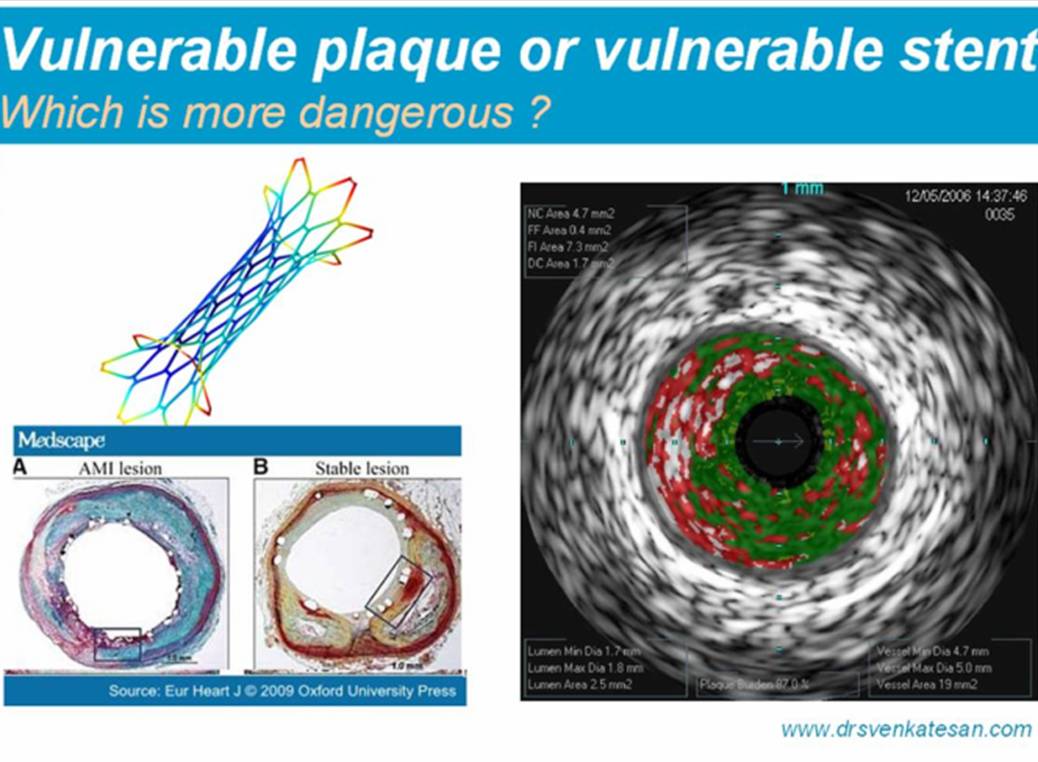
Anatomically  a  vulnerable  is  present  , if the lipid core is more , fibrous cap is  thin  and  a  large lipid  core hanging eccentrically. A plaque with high temperature (Hot plaques ,febrile plaques)detected by OCT/Raman spectroscopy or thermography

Note the T cells and macrophages wage a losing battle against a metal monster !

What is the best method to calm down these vulnerable , hot ,inflamed plaques ?

A stent which scaffolds a plaque is believed to stabilse it  and  make it less vulnerable to rupture. This is the most optimistic view on coronary stenting .

Here comes  a pessimistic view !

A metal inside a coronary artery covering is  additional  threat .A metal  is   perennially  thrombogenic  ,especially the drug eluting stents which suppress the normal endothelial  function .

What  is the realistic view  ?

A stent should be used cautiously and judiciously in coronary plaques  with   high risk features  .Here  a  stent  in all probability  converts a vulnerable plaque  into a  relatively stable plaque

When stenting is done indiscriminately( without application of mind )  in stable non flow limiting lesions  stability is replaced with vulnerability.

Is it not curious to know  any angina  in a patient  who  had   PCI  for chronic  stable angina  is labeled  as unstable angina. 

Vulnerable stents

Following are typical  clinical scenarios   where stents could  carry a vulnerability  tag . 

  1. Poorly deployed  stents
  2. Properly deployed (but unnecessarily deployed especially in chronic stable angina )
  3. All Bifurcation stents
  4. Distal left main stents
  5. Stents with plaque prolapse
  6. Finally and most importantly all  drug eluting stents are considered  vulnerable ! (That’s why  our patients has to  live at the mercy of dual platelet blockers , life long.  Of course , there is no life time warranty   that  drugs do their  job properly)

And now . . .  you answer my  question !

Can  stenting convert a stable plaque  into vulnerable plaque ?

  • If  “yes’ is your answer your patients are in safe hands .
  • If  ” No”   is  your  answer ,  you are  fit to become a leading  interventional cardiologist !

Read Full Post »

While anatomical  grading of obstructive  coronary lesions are  quiet easy ,functionalc assessment is always difficult.The famous TIMI grading system had one unique problem .TIMI 1 and 2 grades are relatively easy to grade. TIMI 3 flow  which corresponds to normal penetration  and normal  distal perfusion  . This distal perfusion was entirely optical .

This was an important issue , in assessing post  PCI or thromolysis patients . It was realised much later , TIMI 3 flow is  stunningly  heterogenous group  .It was  ironical  ,  even after a successful PCI ,  restoration of TMI3 flow  could not be relied upon as an index of successful PCI  .

So , the PAMI study group included time as additional factor in grading TIMI 3 flow. PAMI 3 is  essentailly same as  TIMI 3  flow but  with a  condition , complete  distal vessel filling  must  occur within 3 cardiac cycle . PAMI 3 can be termed as a   refined version of TIMI 3 introduced in the evaluation of success of primary PCI . This helps us  define  or  diagnose   slow filling .

What are the other ways  to grade TIMI 3 flow

  • Myocardial blush index
  • TIMI frame count ( < 25 frames )

PAMI : Primary angioplasty in myocardial infarction

TIMI :  thromolysis in acute myocardial infarction

Reference:

http://circ.ahajournals.org/cgi/content/full/circulationaha;104/6/624

Read Full Post »

We presume  ECG  fails miserably against echocardiography for assessing hemodynamics , while  echocardiogram  has  little value  when it comes to studying   electrophysiology .  Ironically ,  we often  ignore  the fact  ,   ECG can  provide  important long-term   hemodynamic  data . The pattern of  chamber enlargement  give us  vital clues to the prevailing hemodynamic  stress and loading conditions. While echo  can be termed as an  anatomical and  physiologic   modality  , ECG  apart from  its unique capacity to record cardiac  electrical finger prints ,  it  provides  useful ,  anatomical ,  hemodynamic information too !

While Doppler is a  fascinating modality to measure hemodynamic data in a moment to moment fashion it can never ever tell us  , what has been going around in the preceding months or years. This  is were chamber size helps which  give us chronic physiological information (Chronic  Doppler ?)

A simple E:A reversal  in  mitral inflow doppler can be a  innocuous  finding in isolation  . If it is associated with even   minimal grades of  LAE  it gains huge importance. That is why left atrial size is  funnily referred to as HB A1C of diastolic dysfunction ( A marker of chronicity  of  diastolic dysfunction)

If LAE is so important to diagnose diastolic dysfunction , why  we are so  obsessed  with doppler filling profiles  of mitral valve ,pulmonary veins, mitral annular tissue Doppler and what not ! .Many of these sophisticated doppler methods are extremely operator dependent  and are  subjected  to technical and mathematical errors. Especially , with  tissue doppler where we  magnify the errors as we  filter  extremely  slow tissue motion .

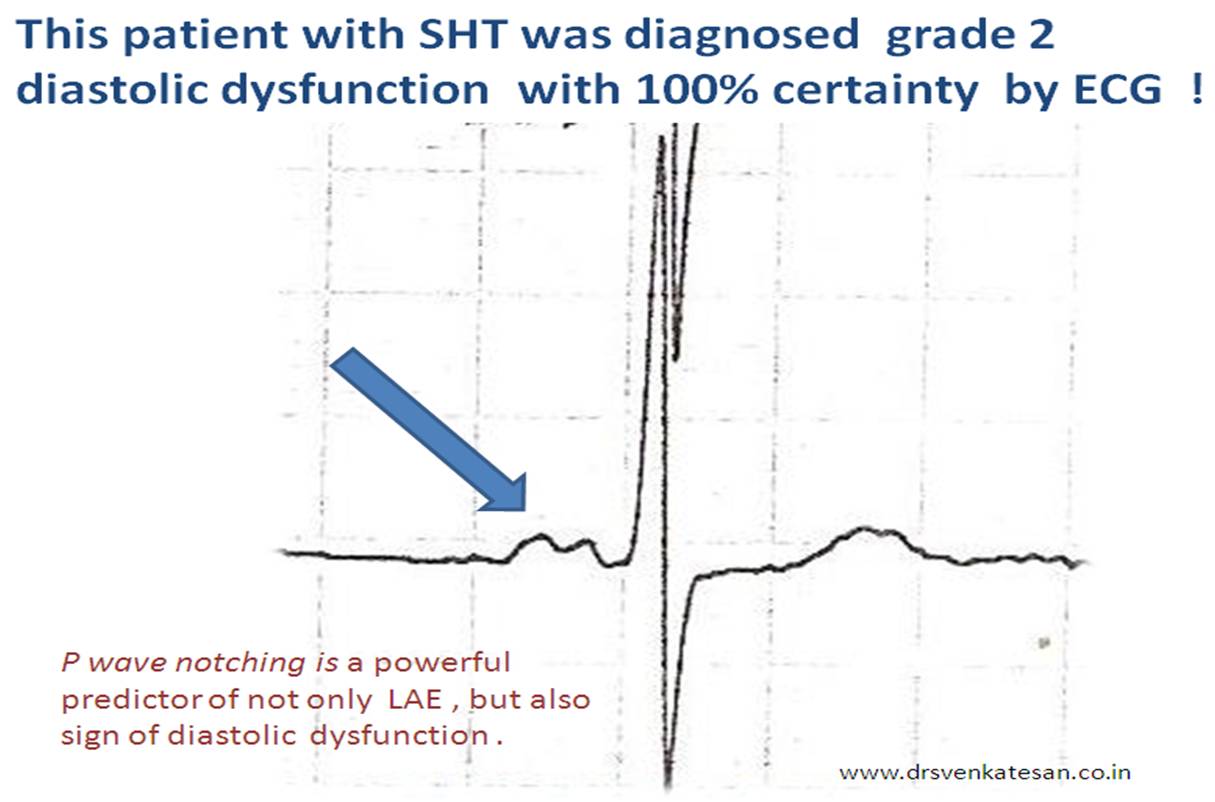
For  many  decades  we  have failed  to impress ourselves  , about the importance of subtle P wave abnormalities in the  ECGs   of  hypertensive patients.

In fact those  innocuous looking  slurs and notches   in P waves ,  suggest the left atrial  stress and a definite marker of underlying LV diastolic dysfunction .

P wave is the only electrical wave that occur in diastole .Hence there is no surprise  ,i  gives us enormous information about this phase of cardiac cycle .

If only we look  at them carefully, zoom it (Now it is made easy with so many softwares)  analyse critically we can find a wealth of information about the atrial behavior in hypertension.

Experience from our hypertension clinic  with periodic echocardiograms suggest ,  the following  ECG  findings   can be   good markers  of significant  diastolic dysfunction .

  1. Notched P wave
  2. Wide  P waves
  3. Slurred  P wave
  4. Bi-phasic P waves

* Surprisingly  , these abnormalities correlated with at least grade 1 diastolic dysfunction even in the absence of  for LAE or LVH by echocardiogram.

** In an  occasional patient  P waves  can widen due to inter atrial block or conduction delay. This a rare exception for wide P waves without LAE.

Final message

A well recorded and   analysed   ECG can  predict diastolic dysfunction  with fair  degree of accuracy .This fact need to be emphasized  by every one  .  Next to ECG ,  LA size and volume  by 2d echo are excellent parameters  to assess diastolic function in a long term fashion. Sophisticated  but  error prone ,  momentary doppler parameters are getting too much attention  at the cost of simple ,  shrewd ECG and 2D echo  !

Read Full Post »

Pulmonary circulation  is a  low pressure  , low impedance  but  a high capacitance  system  . The job  of  pulmonary circulation  is  not only  to  ferry  the  blood from  right ventricle to  left atrium  ,   it should also ensure smooth gas exchange as it traverses the circuit . (How vital  it’s job is  . . . but we tend to be  obsessed with heart !)

The paradox is ,  for  the  flow of blood to occur you need a pressure head . (Note :  the pressure head is 120mmhg in systemic circulation.) The pulmonary  pressure head  is  only about 5-10mmhg it has to push the entire blood .(Pulmonary   pressure head  = Mean pulmonary artery pressure -mean LA pressure )

In  healthy persons

  • Pulmonary artery pressure (PAP)  is not supposed to increase beyond few mmhg.
  • The diastolic pulmonary artery pressure can not  afford to increase  even  those  few mm.

If it does , it  can cause serious hemodynamic and oxygenation issues. Both these statements are  based on  strong scientific  beliefs But now we realise the margin of these elevation has been revised a little higher  in normal persons .

  • In health ,  athletes can reach a systolic PAP  up to 40mmhg .
  • Diastolic PAP still largely remain a mystery . You can’t measure it when the patient is running you know !

Here is a recent article from chest  (2011) which documents pulmonary artery systolic pressure in trained athletes .

Relationship between exertional dyspnea and PA pressure.

The mechanism of  exertional dyspnea in any  individual is largely attributable  to  exercise induced pulmonary vascular  stretch .(J receptors etc ) . Many still believe  human functional  capacity is limited primarily by  the  lung function and the cross sectional areas of  pulmonary microvascular  bed .( Is this the  reason  two  patients with 25% EF  has vastly different functional capacity ?)

* Note : Exercise induced  pulmonary artery pressure  elevation are well-recognized in pathological states.

  • Mitral valve disease
  • In established COPD
  • In patients  with LV dysfunction

.

Read Full Post »

Can the LV  ejection fraction change with every  heart beat  ?

EF % is one of  the  glamorous  cardiac functional indices that has  caught  the  imagination of both patients and physicians. How accurate it is ? How reproducible it is ? How many methods are available  to arrive at EF % ?

Picture courtesey http://rachel.worldpossible.org/ocw.tufts.edu Munther Homoud, M.D

 How many of us  realise  it can  potentially   change  with  every  heart beat ? *

Apart from the heart rate dependency ,  the echocardiographic error can be amplified  by

  • Difficulty in identifying  the  leading and trialling edges  of endocardium
  • Patient posture errors
  • Edge detection errors in 2D
  • Pap muscle shadowing .
  • Angle errors
  • Sub optimal echo windows  when EF is measured  in the  bed side  in critical care units
  • Mental status of performing sonographer/cardiologist  (One who chops  2D shells hurriedly and obliquely !  )

All these make this index a highly  variable parameter(  next only   to your  city temperature ! ) This happens whether you measure EF  with M Mode, 2D Simpson , 3D volumetric etc .

* The term  “beat to beat” changes may be  a little exaggerated  statement .It is used   to convey the point of   ” huge  variability” of this parameter.  It  means there can be variations of EF %  with varying heat rate.

The heart is not an Independent organ rather, it is a slave to preload and afterload !

How to overcome the limitation  of EF ?

To overcome this  error a new  parameter called myocardial performance index (MPI) which accounts for heart rate came into vogue . (Did it come really ? Ihaven’t seen a single cardiologist  do this in his clinic ) . 3D volumetrics,  velocity vector imaging , and many other innovations has been added.  Nothing  was  able to replace the EF % . Because of complexities in the newer  modalities  most cardiologists (including  the author  )  continue to romance  the  much flawed EF %  .

Simplicity  shall   reign supreme   .  .  . in spite of  inaccuracies ,  in any walk of life  !

 How does  EF  change  beat to beat ?

The answer is simple . The contractility of heart is dependent   upon the previous  diastole ,  during which heart fills. Heart is primarily an elastic organ. Whenever the  filling is  is more   ventricle is stretched  more ( diastolic filling is the stretch ) and the subsequent force of contraction is more . This is the basis of famous frank starling law.

LV filling is dependent on RV filling which in turn depend on venous return ..Venous return is a function of  vascular tone and the persons physical activity .

Apart from this  adrenergic drive make the heart contract vigorously . This is the reason ,  many patients  with  severely compromised  LV function  in ICU  , supported  with  inotropic agents  show vigorous contraction of heart .(Basis of doubutamine  stress test )

** Every one of us is aware about the huge influence  the preload  has ,  on LV contractility .  Surprisingly,  it   can also  swing  with changing  after load . This fact is often  under recognised .This is called Anrep effect .

So , imagine the scenerio . . .the heart is simply  a “squeezing- slave”  of   pre load and  after load  !  . . . And still we are happy with assessing the cardiac function ,  in isolation without giving any respect to the loading conditions.

Final message

EF ,  would rank  first among all  medical  investigations ,  that is  significantly  flawed , still  continue  to  enjoy huge popularity  ! It has little value as a  screening   test for assessing  LV function in  general  population . But ,  it  has an  important role to assess  the damage following   MI and in  the  follow up of patients with   significantly  compromised LV function.

Cardiologist are aware of this fact ,  but most non cardiologists , especially  Anesthetists  and Surgeons  revere  the  EF% with    sanctity  . This is definitely un-called for . It is the duty of the cardiologists to pass on  this  message to their colleagues in other fields.

Read Full Post »

Even as we make rapid strides in  conquering coronary atherosclerosis by all those fancy gadgets , the  fundamental coronary  hemodynamic principle   is poorly understood . Hence  there is no surprise  for the  “perennial ambiguity”  in the indication  and effectiveness of  coronary revascularization .

Why the hell ,   reliving  a  coronary obstruction  may  not provide the   expected hemodynamic benefit  or do not prevent future  heart attack  in many ?    One of my patients  asked ?

I told him . Wait , do not get  excited , we also do not know  . . .We are just beginning to understand mysteries of coronary  circulation.

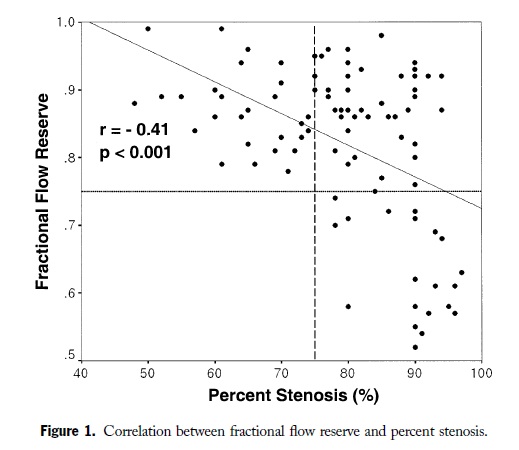
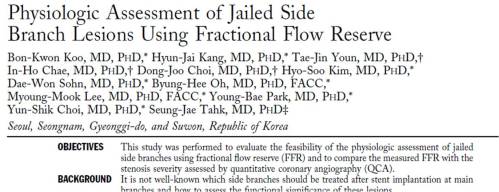
It is a well documented fact  ( but a  debatable )   that  lesser the  severiity of a  lesion more likely it is prone for an acute coronary  event .( Vulnerability , shearing stress or is it a simply a statistical mirage !) While the  vulnerability aspect is  complex , the hemodynamic  impact of  coronary  lesions  is   relatively better  understood. Here is  an important  documentation from Dr B . K  Koo from  Seoul , South Korea  who has elegantly shown the behavior of  fractional flow reserve (FFR ) in various grades of  stenosis  .This study was done in jailed side branches following PCI.

FFR  shows a surprise   relationship  with severity of coronary stenosis  . Even severe lesions showed equal if not more flow  reserve ?

and mild lesions might have lost all its reserve.

 How is it possible ?  Can it be true ?

Yes , it is indeed a  fact . God generally  keeps a stong link between anatomy and physiology  , structure and function . But he adds a rider and keeps  a reserve in every  human cell   meant for  emergency  back up . FFR is  one aspect of this , we have  partially discovered .  When we fail to understand this we are bound to get confused and make a wrong decision in cath lab.

Simply stated ,  flow across a coronary  artery is much more depedent on the status of microvascualture  than the hurdles they face in the epicardial highways !

Link to this original article from JACC .

How to do the FFR procedure ?

http://www.sjmprofessional.com/Clinical-Solutions/Intl/Radi-FFR.aspx

Soon to follow . . .  If less severe lesions are more  dangerous why we are ignoring it in cath lab ?

Read Full Post »

                                                     Every day thousands of  hearts  end their life   due to terminal heart failure . Much more  lives are  confined  to their bed rooms.In refractory cardiac failure and severe LV dysfunction the only  long-term option is cardiac transplantation.

Medical therapy has reached its saturation point.  Neuro- humoral modulation shows some promise. The other modalities like cardiac resynchronisation ,LV assist devices ,  ventricular  reduction surgeries ,  restriction devices , mitral valve splinting  are  still experimental .

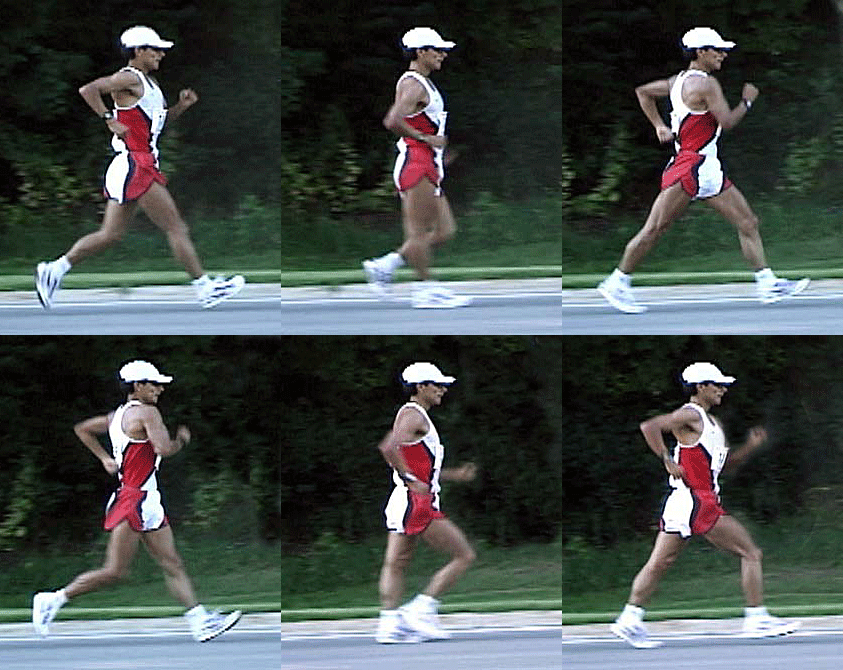
Simply watch this Image : Your heart will get Energy

Modern day  cardiology is trying to add life to these dying  hearts  .

There are two aims

  • To prolong survival
  • Improve functional capacity (Make them at least take care of daily activities and live a fairly independent live)

This is the purpose of the  mushrooming heart failure clinics all over the  world . These clinics , though started with  good intention , ultimately   become  feeding  centres for so many experimental  bridge modalities  , sometimes  with an  infinite wait for  a potential donor  or at the mercy of their insurance companies  . (Many time it turns out to be a  bridge to heaven as the patient fails to cross it !) .

Even though there is strict criteria for terminal  heart failure ,  in practical terms it has many issues .Temporary functional deterioration is misinterpreted   often .

Premature  dependence on LV assist devices and  indulgence  in inappropriate  mitral valve reconstructive  procedures are the currently most important pseudo cardiac interventions .( Myosplint/AV groove tying etc)   Some where along   the  academic  corridors ,   we failed to realise many patients can bridge themselves  to a  transplant (or even   self de-list  from transplant programme  )  provided we are willing to wait and take few   risks  .

It is observed exercise training  programme is awfully inadequate in most centres  who deal with late stages of cardiac failure.

The hidden link  between skeletal muscle and  cardiac muscle

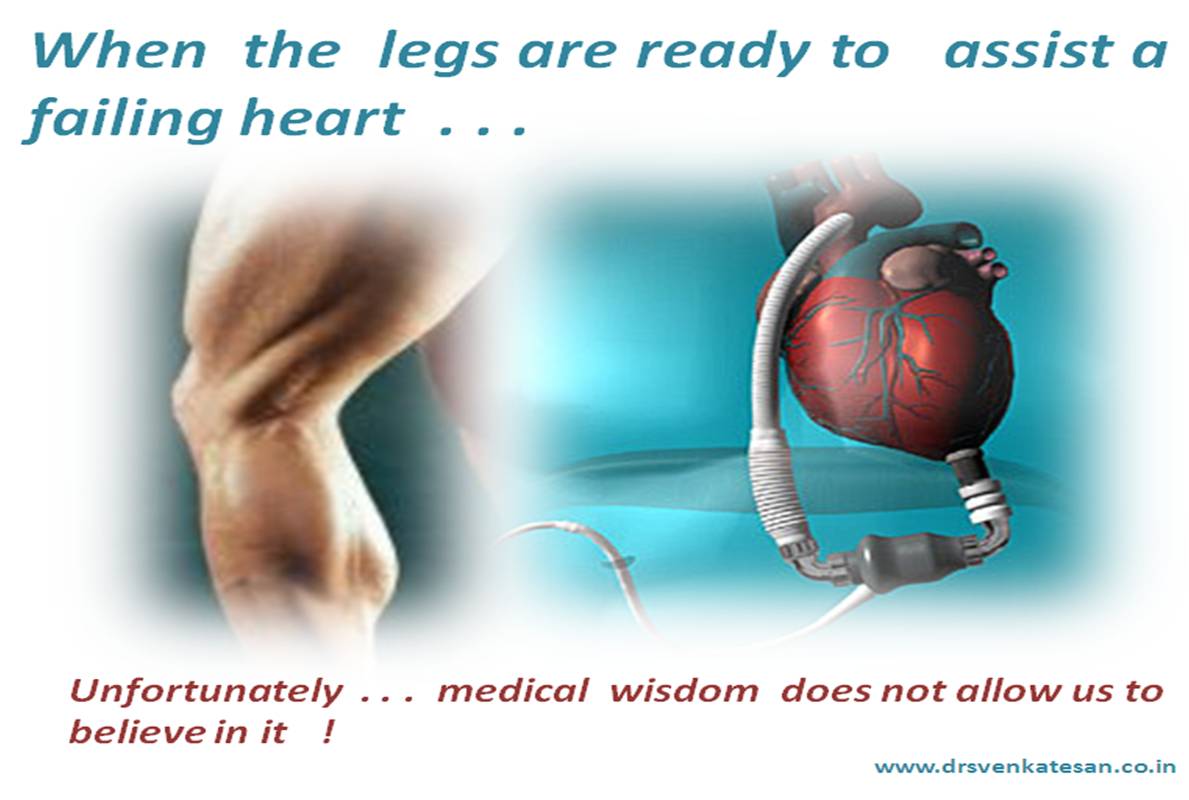
Skeletal muscle  function is impaired in cardiac failure . This impairment is attributable  to both  dis-use and low cardiac output.  Proper training of these muscles can not only improve the functional capacity  but also  sets in  a positive hemodynamic cycle  that   ultimately improves cardiac function as well.
In  our  country we have data  of  thousands of patients  with severe LV dysfunction living with the much ridiculed  digoxin   ,   diuretics ,  ACEI  and minimal exercise living a comfortable life for over 10 years .  It is often said in  cardiology class rooms ,  do not whip a tired horse  as the   failed heart needs rest  .This statement  has  truth  in it even in  this  space age cardiology !

Whipping  a failing heart with electrodes in the name of CRT   could be as  bad as  whipping with inotropic agents . This is not a  personal joke ! This fact has been repeatedly  proved by various inotropic  studies in terminal heart failure(Dobutamine to be specific ) Even CRT  is a suspect .These patients walk for 30 meters  further  with  no convincing survival  benefits .(Of course it requires a ICD -Combo to prevent sudden deaths ) Zero impact in non sudden deaths ?

Can  we propose a  new therapeutic  concept to our  patients   ?

Do you  want to   live with a  low functional capacity (Restricted  life   still  happy  )    for 5 years   or live  apparently unrestricted  life   and die prematurely ?

                         In simple terms,  for all those patients with severe  grades of  heart failure   the  best advice could be . . .to  avoid the levels  of exertion that cause dyspnea / Modern gadgets  may help relieve  exertion for a short  while  , but it  can cut short your longevity * (* This is not a threatening message. This applies to near terminal stages of cardiac failure .All other minor grades of CHF are encouraged to exert up to 70 % of their limits.)

Peripheral mechanism in cardiac failure.

We know cardiac  failure is not a simple  mechanical failure of heart , it activates a complex neuro endocrine system which makes it a systemic disorder .Many of the current research is aimed at favorably modify this. It is now certain Skeletal muscle function is a  major determinant of  cardiac failure outcome and hence a therapeutic target .

If you have good muscle mass ,  good diaphragm and intercostal muscles one can  compensate the compromise inflicted by the heart to a large extent.  We know,   the entire vascular tree has a mechanical function  to do . The stiffness and compliance of aorta , other  major vessels, the muscles  through which these vessels  traverse determine the  ultimate  efficiency  of  circulation.We know  the pulse wave , as it  travels to the periphery , gets amplified. This amplification is not without any significance. It aids in muscle  blood flow . This agumnetation is missing in poorly trained cardiac failure patients. Further muscle respiration is synonymous with  functional capacity . Numerous defects (Both structural and functional )  in skeletal muscle mitochondria are reported.

This is why meticulous  exercise training  becomes an important   intervention in  cardiac failure . There are very good studies that document   muscle respiration defects  getting reverted  with  proper exercise training and  muscle  care  .  Among all muscles the   calf  and thigh muscles show great promise.   We have observed  cardiac failure patients  with good calf muscles ,  outperform others with identical ejection fraction.(Will be published shortly )

Strangely there is no comparative  studies between calf muscle  efficiency   and other available modalities  in cardiac failure .

The concept of  Venous pump vs  Arterial pump

Skeletal muscle mass acts not only as venous pump  it also has a modulating  effect on the arterial pulse transmission .A good venous  pump will activate  vascular  tone . In congestive heart failure  a the RV filling pressure is raised,  blood tends  to  move sluggishly  in right heart chambers .  A proper venous tone  can alleviate this . Well trained  calf muscle  can exactly do this  by a controlled elevation  of  IVC pressure at times of exertion . 

 Dyspnea  of muscular  origin (Peripheral dyspnea)

The symptomatology of cardiac failure has an intimate  realtionship with skeletal muscle integrity  !

Lactate in blood and  hypoxia  in   exercising muscles  can trigger   non hemodynamic dyspnea . Further , there is strong reason to believe  the sensation of dyspnea   is perceived at the chest muscle level  (By muscle spindle length/tension   mismatch ) .It is not known whether lower limb  muscles can generate a feeling of dyspnea  !

But , one thing is certain   by altering the tone of the muscle  spindle and the  optimising the  stretch signals the peripheral component of cardiac dyspnea can be significantly neutralised . This  is what  happens in well-trained   cardiac  failure patients .

How to train the skeletal muscles ? ( In to heart friendly  muscle )

  • Passive stretch
  • Simple 6 minute walking three times a day will help .
  • Muscle massage and toning
  • Drugs like Trimetazidine may improve muscle metabolism by better ATP utilisation
  • Diligent use of diuretics (Excess diuretic can make your muscle exhausted )
  • Chest exercise for improving intercostal muscle function


Final message

Skeletal muscle training  in cardiac  failure  could be as important as  the  digoxins  , diurteics   and ACEI .When a 300 grams of heart muscle is struggling  , God  is willing to  help  it with huge muscle mass that lies elsewhere , we should read the silent  signals of nature . Many cardiac failure patients  realise this and live  a happy live without artificial assistance .This applies  in all grades of cardiac failure .

For  all those physicians  out there in modern hospitals who treat cardiac  failure , spend at least  few minutes  for prescribing a good exercise  program with a specific  mention about calf muscle function  . After all , it  may turn out be the most efficient  RV/LV assist device !

References
                                                                     http://content.onlinejacc.org/cgi/content/abstract/30/7/1758
 http://www.uptodate.com/contents/skeletal-muscle-dysfunction-and-exercise-intolerance-in-heart-failure

Read Full Post »
Coronary collateral circulation can be termed as one of the  mysterious  circulation in our body.Cardiologists generally do not  give much importance to it and some interventionists even ridicule it !  . But  ,  God has given it ,  with  a purpose. He adds a riddle though !  .Collaterals  grow  in  almost  every  individual  when   obstruction occurs gradually ( chronic coronary syndrome ) but only in  a few ,  it  will open up  during a real emergency like ACS !

How and why , only  few of us can  recruit  coronary collaterals   during   acute occlusion ?

God  blesses acute coronary collaterals only in selected few  , who  are on the right side of his good books .This can be  the other name for our  destiny !

Role of coronary collateral circulation  in acute coronary syndrome.

  • Limits  infarct size and volume
  • Promotes salvage
  • Converts q  MI to non q  MI
  • Prevents Unstable angina from becoming MI
  • Prevent primary VT and VF*

All  of the above can be vital  in saving a life  . Even as  we realise 30 % of STEMI do not even reach hospital  , it seems certain men and women with early collateral recruitment  will never  fail to reach the hospital alive

Is there a simple  method to identify  people who are blessed with acutely recruitable   collaterlas ?

I am afraid it is  almost equal to  asking   for a glimpse of GOD   !

Wait . . .  when we were on cath lab  few  days ago a  stunning  phenomenon happened  that could pave way for identifying  potential acute  collaterals  in any human being.  Follow this site  . . .the details will be posted !

Read Full Post »

 Hypertension  ranks  number one  in the risk for future  stroke . Surprisingly this is true  for ischemic  as well as  hemorrhagic strokes.

 What  causes  thrombosis or  rupture of small cerebral arterioles ?

 It is somewhat similar to coronary events . ( With one major exception,  coronary vesels  are   not prone for rupture ) .It is  believed   sudden spikes of   blood pressure  and the resultant endothelial injury are responsible. Atherosclerotic plaque fissure and inflammation  also  contribute. 

Is embolic stroke related to hypertension ?

The vast majority of embolic stroke are believed to  arise from heart .This belief is getting gradually eroded , as we now know aortic arch and carotid arteries vie for this honour . .(This was indirectly proved in AFFIRM trial  when rhythm control failed  to reduce the incidence of  stroke inpateints with AF ,   implying much of the strokes arise  in the upstream rather than within the cardiac chambers )  

Meanwhile , there is no controversy  in  SHT  promoting  both cardiac  and non cardiac embolus to brain

Systolic ,  Diastolic or Mean pressure   which is  important  in the genesis of stroke  ?

All parameters  are  important , but the   systolic blood pressure  is vested with more  vigour  to damage the  cerebral arterioles. The reason  systolic pressure is more important lies  in the  fact ,  it  can  attain  high pressure peaks instantly ,  unlike diastolic or pulse pressure which  slowly builds up. Further , systolic BP  carries  leading edge of the pressure  curve with high Dp/Dt and hits  the target  first !

At what pressure the cerebral artery becomes  uncomfortable ?

We do not know  the answer as yet , but any systolic pressure above 180 mmhg is a huge stress for the cerebral arterioles.The rapidity with which the BP  raises  (Dp/Dt) also becomes  important  . High blood pressure increases the shearing stress .It  interferes with nitric oxide synthesis and promotes endothelin release which precipitates  cerebro vascular event.

How do you identify people who are at risk for stroke ?

While  cardiac physicians are obsessed with exercise stress test to predict CAD  very  few  are worried about  stroke . In fact the same exercise stress test can be used to stratify stroke risk. The exercise induced systolic blood pressure  raise  is a useful risk stratifying  tool. This concept is there for more than a decade without reaching the clinical domain.

The following paper was  published in stroke journal (2001)  from the picturesque university of  Kupio Finland.(See below )  It is a wonderfully done study and throws great insight into the  new  emerging  science of  Intra cerebral hypertension .


The following can be summed up as risk factors for stroke during EST  (Derived from   various sources  and  . . .  with   liberal dose of personal  logic !)

  • Raise of 20 mmhg  SBP  at  2  minutes .
  • Increment of >  20mmhg in SBP any subsequent minute.   
  • Any  SBP  above 200mmhg during  EST
  • Failure to  reach baseline SBP  at 6 minutes recovery .
  • SBP  or DBP remaining high  even  after  the heart rate reaches baseline.


 Final message

For the kind attention  of all  cardiac physicians . . .  whenever you do an  EST for a cardiac indication ,  please spend the first  few  minutes  carefully ,and   look at the  blood pressure response . It is encouraged ,  to  specifically mention about the  behavior of  SBP  and write a remark about the propensity for  stroke in  every EST/TMT report .   Let us grow our brain  sense as well   . . .  for   the sake of our patients !

Thanks again  to Dr S.Kurl et all from Finland  for their  nice article which  stimulated  me to write  this post .

Reference

http://stroke.ahajournals.org/cgi/reprint/32/9/2036

http://heart.bmj.com/content/95/13/1072.abstract

Further queries

How common is stroke following a EST procedure ?  Can high blood pressure dislodge a carotid plaque during a stress test ?

The answers will be posted soon once I  get it . ( Of course you can do it if you know !)

Read Full Post »

« Newer Posts - Older Posts »