Feeds:
Posts
Comments

Archive for the ‘Uncategorized’ Category

There are about 5000 medical journals ,  churning out tens of thousands of articles every month .Most of these  papers  come from developed world where publication is made mandatory to get a medical  degree . So it is not surprising  to find   proliferation of medical journals .

Publishing a paper is strictly monitored by a peer reviewing system in most journals . But , it is also a fact an article rejected  out right  by a journal , invariably appear in some other journal.

There is a joke going around among medical researchers,  if it is difficult to get your article published in a  journal , you start your own journal . . .It is much easier !

Where is the problem ?

Further  , bulk of current day research work is sponsored by drug and device companies .It is possible these papers may have 100% acceptance rate.

Brighter side

Even in this scenario , it is heartening to find  occasional  excellent  academic  treasures  and landmark research articles .

How common is irrelevant , pseudo , futile  , clinical research  articles  published  in medical journals  today ?

I agree , I  have prejudiced  view  on this issue . I  would like to know am I  really wrong ? What is your take on this issue ?

Read Full Post »

Once in a while the ACC/AHA comes with knock out articles. Here is a  must read  topic for every cardiologist.

How to diagnose MI in ECG ? Sounds , insulting ?

After reading this you should change the way 12 lead  ECG is looked at . . .

Experts from the article

  • How to make the best of lead AVR  ?  Just invert it and you get a + 30 degree lead which  was hither  to unavailable .A new window of opportunity to diagnose   antero lateral MI .
  • Shuffling  the 12 leads to a have an anatomically contiguous  ECG
  • Know , how to label STEMI  with a  .5mm ST elevation  (Minimal STEMI ?)

And lot more exciting  tips  !

If you  think ,  all these are new stuff in cardiology you are grossly mistaken .These concepts are more than 10 years old (In Sweden it is 25 years old ! )

When  European heart journal published  the article   “Myocardial Infarction redefined ”  in year 2000 many missed out the importance . For those who missed it (just  10 short  years have gone by )    ,  Let us update ourself  at least  in 2010 !

Thanks to ACC and JACC.

Click on the link

For PDF article click on the Image

Read Full Post »

A combination of  low voltage  qrs  and high voltage  qrs is a well known marker of dilated cardiomyopathy . classically patients with  severe forms  of  dilated cardiomyopathy show high voltage qrs complex in V1 to V6 and significantly low voltage in limb leads.

Why this happens ?

This happens due to two reasons.

1 .We know , chest leads are unipolar and picks up the electrical activity directly beneath the lead. In dilated  cardiomyopathy the enlarged heart (Usually more than 6 cm in diastole , may reach 9cm ) brings the myocardium closer to chest .This increases the electromotive forces reaching the lead.

2. The enlarged LV increases the  residual  end systolic and  end diastolic  volume , this increase in blood volume independently increases the electrical  conductivity and inscribes a high voltage complex.

This is some  times called as Brody effect .The same phenomenon occurs  in physiological conditions  as in stress testing  where excercise increases the qrs voltage due to increased

Why  limb leads do not show this high voltage ?

The limb leads are bi polar leads  hence as a rule , they record a smaller voltage than chest leads.In many patients with cardiomyopathy , the muscle mass  is  replaced by fibrotic tissue (Interstitial fibrosis ) and this brings down the net electrical energy draining from the heart.

Note : In spite of this, a dilated LV  records high voltage in precardial leads as explained above

When can limb leads  record high voltage in cardiomyopathy ?

It should be realised conduction defects can cause an increase in qrs voltage irrespective of the status of the muscle .This happens due to LAFB,LBBB, non specific IVCD. Because  , these conduction defects are very common in cardiomyopathy ,  there is very poor correlation of LV mass verses  high  voltage  qrs .

What is the correlation of low voltage to LV muscle mass ?

This has better correlation a very poor voltage < 5 mm( the largest qrs ) in the limb leads  predicts a very badly scarred LV .

Read Full Post »

“Time is muscle” is  the often quoted “sermon”  in emergency cardiology , implying ,  every patient with STEMI should be taken up for   thrombolysis or primary PCI at the earliest  after the onset of symptoms.

While thrombolysis is the proven method of reperfusion for over 25 years , Primary PCI , a costly , risky but better  alternative is struggling to prove it’s impact in the world of acute coronary syndrome ! (Some may  see non- sense in this statement !  But it still can make sense  !)  In India hardly 3 -5 % of STEMI is taken for primary PCI .This includes the much hyped corporate cardiology centres.

If primary PCI is a revolutionary reperfusion strategy  , why it has not invaded the cardiology field  by strom  ?(A pathetic 5% growth over 15 years will tell the true story !).

We know 6 hours is the acceptable time window before which some form of repefusion must be attempted. A time limit of 90minutes   for the   “door to  balloon”   is  fixed  as optimal for primary PCI .

In other words ,  if primary PCI can be arranged within 60-90 minutes   one  can afford to lose the golden hour !  How does this logic works ?

In fact it does not work ! in many .

The 90 minute criteria is not strictly followed . Common  sense would have it ,  this 90 minute time frame for primary PCI  would  logically be the   “symptom to  balloon time”,

But in reality  the time window of STEMI   is a collection of  following

  1. Symptom recognition  and 911/108 alert
  2. Ambulance arrival time
  3. Ambulance  to ER time (Traffic delays)
  4. ER to Fellow
  5. Fellow to consultant
  6. Consultant decision-making time
  7. Insurance clearance time
  8. ER to Cath lab door time
  9. Cath lab to needle time(Femoral /Radial )
  10. Needle to Balloon time

Where does the   90 minute  rule  for performing primary PCI stand ? It  can  mean many things

After all those hectic  activity  any one of the following is achieved !

Coronary flow – TIMI  3 ?  TIMI  2 ? TIMI 1 ,  Slow flow, Low flow ? No flow , No re-flow ?

* Prehospital thrombolysis avoids atleast   8  (No 3-10)  components  of time delay in our goal to salvage myocardium.

This is the simple reason, why primary PCI is not reaching it”s logical conclusion all over the world.

Summary

In simple terms ,  one  do not require a double blinded multicentred trial  to  show  primary PCI  performed at 2 hour time ( 2 hour  + 90 minute door to balloon time )  window   would be  far inferior to   pharmacological thrombolysis done at   15 -30  minute time window  (An ambulance driver can do it !).

Finally the most important fact , the often ridiculed thromolytic agent does not show  discrimination in it’s  effetiveness whoever  administers  it ! A  lay person or an ambulance driver with 10th grade education can open up the coronary artery 70% times  while  a cardiologist with a 20 year training  does the  slightly  improved version of the same job  costing   nearly 100   times( Rs  25oo for streptokinase vs  2 lakh for a PCI )  more  . In  the process  often  the   golden hour is lost ! Apart from this,  primary PCI is fraught with a risk of  procedure related  hazard  and  it is a hugely expertise driven procedure .

One more message  is ,  poor countries need not  feel dejected for not having those sophisticated country-wide cathlabs  and emergency air dropping of patients.What we  need is good transport systems and quick access to a near by   coronary care units with support staff.

Always remember  at any given time frame  , a well equipped  CCU can save  thousand lives more than a cath lab

Note of caution :

This article is written in the  overall interest of cardiac patient in the developing and non developing and Primary PCI can make merry in all those rich countries for the simple reason they can afford to  do that (Not necessarily  cost-effective !) . Still , primary PCI/surgery  is the only option for patients coming with a electrical or mechanical complication.

Reference

All that glitters is not Gold !

Know , how even high volume centers  struggle to prove he worthiness of primary PCI !

This is not a small study ,  it  is a huge study involving 5 lakh patients with STEMI spread all over the United states.

The conclusion from  his article indirectly supports the view , an early non PCI approach in STEMI can be superior  even if  infra structure and technical expertise are available  for PCI.

Read Full Post »

Human heart is a vital bundle of muscle  weighing  about 300-400 grams. The blood  supply of this muscle  mass  is highly variable . Some areas are abundantly  vascularised ( eg -IVS.) Some areas have a balanced blood supply  or   twin blood supply (Often the  LCX and RCA in the  crux of the heart ). Certain areas have a precarious blood supply . They are  some times called as water shed areas or  the vulnerable  (The Bermuda triangle of the heart ) overlapping zones of   of  LV apex,  LV free wall and  the anterior surface. This  is  often a  no man’s  land .Every major arterial branch  ignores  this area  and shrug of their responsibility .

This  is the reason ventricular free wall and IVS rupture is more common in this area  making the  mechanical complication  a leading cause of mortality in STEMI.

Similarly , even among the survivors , this area is more prone for aneurysmal  dilatation and adverse remodelling .Though . this  is related more to the LV stress distribution (Laplace law)  , early softening  due to watershed infarct of LV apical zone , also play  a major role .

Read Full Post »

Probably , this is  most important question  for a  modern-day cardiologist.

Q : Clinical cardiology as a speciality is  . . .

A.Hale and healthy

B.Dying slowly  and steadily

C.Terminally ill

D.Dead long ago

If your answer is A , it would be a  blatant lie ! If the answer is D , you are a pessimist .

The  real answer could be  somewhere between C and D , more towards  D “

 Why  clinical cardiology has  plunged  in  to  such a sorry state of  affairs  ?

 Why it has become an objectionable sub -speciality among current generation cardiologists ?

You blame it on anything, but the real culprits are pseudomodernity , commercial onslaught and the glamourous mindset of  many cardiologists. In every walk of life  tradition, culture and heritage of the past is preserved except in medicine .There  is rarely a backward journey in medicine  . This ,  in spite  of the fact there are lots of hidden treasures  left by our elders.

Image courtesey : Jupeter Images

Now , cardiology  as a specialty is  in a miserable  state .It has almost become synonymous with putting stents across the obstructive coronary arteries. There is a perception among  juniors (  seniors too ! )  Choosing  clinical cardiology is an inferior  pursuit of cardiology .

Many belive clinical cardiology  means ,  measuring blood pressure , looking at JVP , apical impulse, S1 S2 etc  .Clinical approach  does not end with  Inspection , palpation and auscultation of the  heart .

Then , what could be the defintion for clinical  cardiology in the current era ?

It is the process of application of our mind in toto on the patients symptom and it’s  impact on the overall health  with specific reference to cardiovascular system  .It also refers to  the thought process that will decide the optimal  managemnt strategies .( That puts the patient’s interest first )

In simple terms being clinical , is being sensible  and ethical

For example, a comfortable post MI patient with near normal LV function should be sent home for a later evaluation (If , and only if  he develops significant symptom ) This  is clinical cardiology working at it’s best .

If such a patient is sent to cath lab directly  , clinical cardiology is deemed to have doomed !

Similarly , a patient with Atrial fibrillation with the rapid ventricular rate should receive  digoxin or a beta  or calcium  blocker for rate control as a first measure . If a physician refers such a patient to an  university EP  lab ,  clinical cardiology is deemed to have doomed !

If a patient with ASD with less than 2:1 shunt is adviced device  closure clinical cardiology is considered  failed.

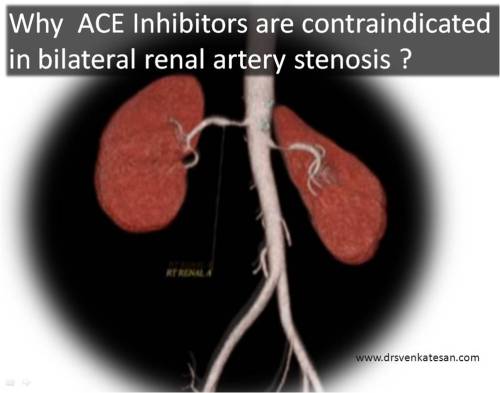
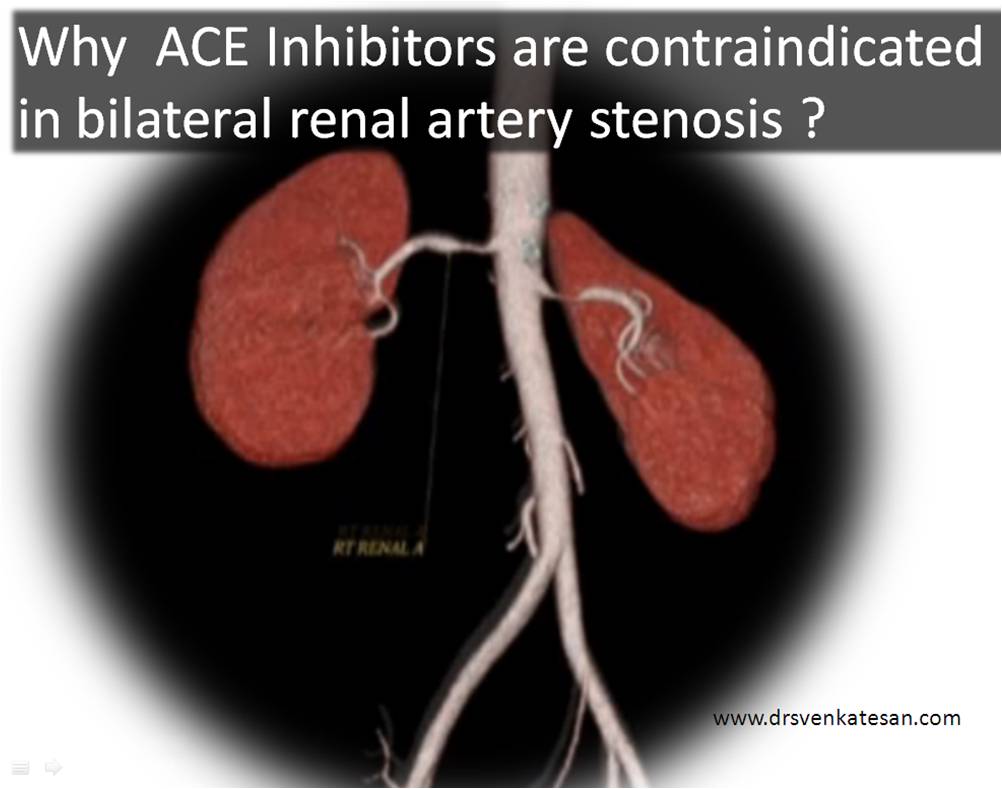
If a patient with renal artery stenosis is blindly stented ,  clinical cardiology is in the highway to death .

If you prescribe a latest generation sartan for your hypertensive patient instead of advising physical activity, diet and lifestyle modification , it implies  clinical cardiology is  given a death sentence and being publically hanged.

 Finally ,   it is the ultimate  mockery of clinical cardiology ,  when a physician diagnoses  cardiac failure  by pro BNP and CVP  , even as the  patient’s lungs are sounding with crackles and the neck veins are violently pounding .

Worse still ,  the same patient miay be  ruled out of cardiac failure  , if  the BNP level  is within normal levels  !

As you  come across   any of  the above situations ,  too often , one  can predict the future of clinical cardiology.

My impression is ,  the mortality  of  clinical cardiology at this point  of time  is ,  it may not survive too long and the  5 year survival  rate appear dismal. Of course ,  in many institutions    especially  the corporate ones ,   it is  already  been packed and sent to the  mortuary !

Read Full Post »

Some journals do a great work silently .Impact factors are a non issue for them

It is the content that matters . Pediatric cardiology is one such journal !

Of course , they don’t publish papers  that have  greatest  significance to mankind !

like Telmisartan is not inferior to Ramipril in the mangement of hypertension

and Fondapaurinox  is as effective as regular Heparin   . . . etc  . ..etc

They dedicate themself in the decoding the mysteries of congenital and acquired heart disease of children .

Read Full Post »

 Excercise physiology has been studied most extensively in the last century.The hemodynamic impact of excercise in various disorders of heart has been well established.
Dyspnea on exertion is the commonest symptom in clinical cardiology practice. It is well-known pulmonary stretch receptors located in pulmonary vasculature is one of the  major mechanism of dyspnea.

Excercise increases the cardiac output manyfold.Transporting  up to 10-12 litres of blood every minute across the lungs with a narrow pressure  head (about 10 mmhg ) is not an easy job . It needs lot of lung discipline .

It is surprising to note, there is little data on excercise induced pulmonary hypertension in the evaluation of patients with unexplained dyspnea.

We know, excercise increases the systemic blood pressure ,we  presume it should not raise the PAP (however severe the exertion is 1 )as pulmonary circulation  is a  high compliant low pressure system. 

Is our presumption correct ?

Exercise induced PAH can occur in both   health and disease 

In patients with preexisting disease

  • Stress induced LV dysfunction and resultant raise in LVEDP-PCWP-PAP .This is the most common mechanism in valvular and myocardial  disease.

Apparently healthy population

  • Excercise  induced PAH as a  marker for silent CAD .
  • Transient Hyperkinetic PAH* (Note :Here PCWP is usually normal )

This is similar  to hypertensive response to EST in systemic circulation.Existence  of this entity , is controversial, But this may reflect  reduced pulmonary vascular reserve  or reduced pulmonary nitric oxide secretion.

*The main difference here is the PAH is more often an  isolated systolic PAH. While LV dysfunction induced PAH is  a combined diastolic and systolic PAH .
How to assess excercise induced  PAH ?
It is not an easy job. Invasive catheter derived pressure measurements have been done ,but it is not practical .

The simplest way is to look for the TR /PR jet in echo in both pre and post excercise phase.

Final message

Excercise induced PAH is an inadequately studied entity in cardiology , in spite  it’s great significance .
This phenomenon is observed  in both diseased and normal heart.

The quantum of excercise induced PAH  is  widely variable depending upon the cardiac  status especially  LV function and the  functional integrity of pulmonary microvasculature .

Read Full Post »

Ventricular septal defect(VSD) is one the commonest congenital heart disease . Right from the days of Gasul , Abbot, and Keith we have analysed the natural history for nearly a century . VSD is an intriguing congenital heart disease where a child can develop a florid cardiac failure within weeks of birth in one end to a totally asymptomatic adult with a benign cardiac acoustics defect (Namely a systolic murmur in the left parasternal area.) But for this murmur , the patient would be labeled absolutely healthy.

 In between these two spectra is the huge population of VSD that gets closed spontaneously. A rough estimate says 60 % of all small VSDs get closed by age 10 .

So ,what we are supposed to do once a child is diagnosed of VSD ?

Should we close or should we wait ?

The indication for closing a VSD is discussed elsewhere ( Read this link )

 What are the factors that determine VSD closure ?

  • The size
  • The site
  • Age of the child
  • The Rim morphology
  • Associated lesions*
  • Hemodynamic stress
  • Inherent tissue factors
  • Infection **

* Associated defects like PDA, RVOT obstruction are strong deerrants against spontaneous closure

General rules of VSD closure

 Size

VSDs <5mm have great chance of closing Large VSD > 1cm is rarely get closed .

Supracristal VSDs located sub arterially are immune to spontaneous closure however small the size is .

Location & Site

 VSDs that are located exclusively within the membranous septum rarely close . VSDs which are located in the perimembranous area (With at least 50% circumference is fenced by muscular or trabecular septum has the greatest potential to close by natural forces.)

Isolated muscular VSD if large can not get closed . Inlet VSD has anatomical difficulty to get closed.

Rim Morphology

 Small muscular VSDs have a potential to close , but it is believed differential cellular lining of VSD rims (Eg : A combination of muscle, membrane , is more likely to close .)

 Process of tissue growth As the child grows the it is expected the heart will outgrow the lesion . This is thought to be the commonest mode of VSD closure. As the IVS mass increases as he child grows it brings he rims together . But logic would suggest unless some degree of neocardiac proliferation occur a VSD may never get closed completely .

Some times even large VSDs try to close with the help of the neighboring structures like septal tricuspid valve leaflet . Indeed this can be the dominate mode of closure in many. This can induce a tricuspid regurgitation .

**Role of infection

Paradoxically an episode of infective endocaditis in the edges of VSD accelerate the process of approximation of tissue plane and healing .

 Relation with Pulmonary arterial hypertension (PAH)

 Once PAH sets in the VSD never gets closed spontaneously , This may be due to all VSDs that result in PAH has to be significantly large

 Can a VSD get larger progressively?

In physics and hydraulics a hole under hemodynamic stress is destined to progress In human biology this is thought to be rare .Post MI VSRs can behave in an unpredictable manner as he edges of the defect a often softened and prone for tissue plane dissection and extension .

Why some VSDs never close ?

It is clear , size and location matters the most , but there are other issues some of them may be unique tissue properties .

Why is it important to know the biology of VSD closure ?

In this era of interventional cardiology we are using mechanical devices to close VSDs and ASDs .It is fraught with many technical issues. If there is a biological glue or membrane that can be delivered by catheter to close small VSDs or ASDs .

 So for no therapeutic approach to hasten the natural closure of these defects has been practiced .Further research is required to explore the cellular adhesiveness and help accelerate closure of these defects.

Read Full Post »

Chronic total occlusion is the cardiologist’s  daymare .Here is an article that adds on to 1ooth technique to cross the chronic total occlusion within the coronary artery !

If only we succeed in  this  Arabin magic , in the cath lab we can open the doors of  all CTOs .

This technique is based on the principle  to push the hard plaque  into the adjacent side branch like a sliding door,   if the pateint has one !

The only isssue  with this  technique  could be the    “cave door”  may close again immediately  as it did for Alibaba    !

Reference

 http://www.ncbi.nlm.nih.gov/pubmed/20088015

http://www3.interscience.wiley.com/journal/122619470/abstract

Read Full Post »

« Newer Posts - Older Posts »