Feeds:
Posts
Comments

Clinical sense

  • First and fore most  dictum  is  not  every  prosthetic valve obstruction  is  thrombotic (Most cardiologists are tuned to think that way )
  • Pannus, Mechanical failure  and  vegetations can increase the gradient across prosthetic valve.
  • If the clinical presentation is acute (< 48 hours ) it is  more likely to be a thrombotic event .
  • History of  recent discontinuation of oral anticoagulants /sub optimal INR will favor thrombosis.

A meticulous Echocardiography is vital (TEE though gives more information in an emergency TEE is suffice )

  • Thrombolysis is to be considered in all .
  • For right sided prosthetic obstruction thrombolysis is the  initial modality of choice.
  • For left sided valve thrombosis   surgery is the preferred option .However a trial of  thrombolysis for 24 hours may be tried .
  • For a high risk mobile thrombus , thromolysis is contrandicated.

The success rate is less with Mitral than Aortic valve  . Success depend upon more on the  location / Freshness of thrombus than the type of the lytic agent used.

Is there a time window for prosthetic valve thrombolysis ?

Thrombus organisation takes 2 weeks at- least.Hence , it better not to attempt thrombolysis in documented late prosthetic valve thrombosis.

Thrombolysis of left-sided valves has inherent risk of  stroke .

Heparin controversy

Simultaneous usage of heparin along with streptokinase or TPA is  perceived as risky (No good evidence for this perception )It is logical to expect even as the thrombus  lyses the clot lots of pro-coagulant debri  are released . Concomitant usage of heparin  will definitely help accelerate thrombus dissolution. (I am glad  Joseph S   Alpert also feels the same ! )

Assessing successful  thrombolysis

  • Can be a tough task .
  • Relying purely on gradient is vested with risk of huge error.
  • In a patient with shock or LV dysfunction gradients are not reliable as low flow status masks the gradient.
  • A accelerated thrombolytic  protocol 15lakhs streptokinsae in 60 minute may be tries in unstable patient .
  • It is wiser to rapidly asses for clinical improvement in high risk subsets  and refer the  patient for early surgery .

Surgery

Prohibitive mortality reported in many centres.

It need to be remembered no surgeon will operate on a  sick patient in  shock  exposed to  cocktail of heparin and streptokinase.

Valve replacement is required in most case. Simple valve debridement  (servicing the  valve ) and releasing  discs  from the  sticky thrombus is  also possible in an occasional patient.( Do not ask reference for this !)

Reference (Surprisingly most of the good papers in the topic appeared  in JACC)

http://content.onlinejacc.org/cgi/reprint/41/4/653.pdf
http://content.onlinejacc.org/cgi/reprint/41/4/659.pdf

http://content.onlinejacc.org/cgi/reprint/35/7/1881.pdf

http://content.onlinejacc.org/cgi/reprint/35/7/1874.pdf

After thought

I have not seen a single case of acute prothetic valve thrombosis involving Starr Edwards valve  in the  last  20 years of  of clinical cardiology practice.

Is it true   . . . the new age valves  with more mechanical stress points  are proving more injurious to our patients. Our  pursuit  towards a  perfect artificial  valve need some introspection .

Read a related article in my site :  Who killed Starr Edwards valve ?
If only we realise . . . even a healthy  human life   . . . has a mortality of 100 % at some point of  life  , the mentally immortal  modern human species won’t demand for  a  2 % chance of living   “30 more  miserable days”   with terminal cancer !

Venkatesan  Sangareddi (2012)


Up to 24 hours

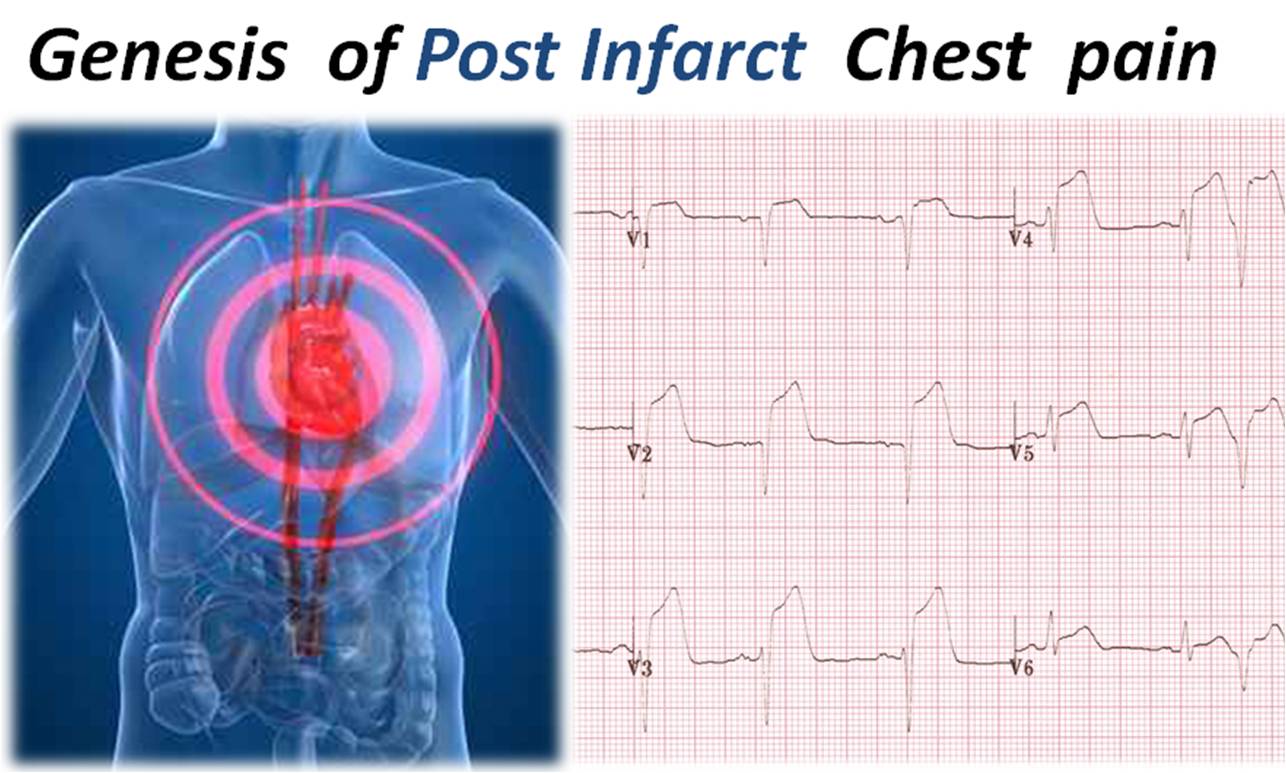
  • Failed thrombolysis and persistent infarct related chest pain
  • Prolonged  Infarct pain  in spite of successful thrombolysis (Rare)
  • Dual STEMI and Dual ACS ( Combination of STEMI/NSTEMI)  *

* Generally  until   after  24 hours one should not make a second coronary syndrome  though  logically  it is possible ( Dual acute coronary syndrome)

After 24 hours -up to 2 weeks

  • Post MI angina  – IRA related (Re-occlusion, Threatened reocclusion)
  • Post MI angina -Non IRA related ( Critical  non -IRA lesion)
  • Thrombus migration /Side branch occlusion
  • Re infarction -Same territory
  • Re-infarction-Remote territory
  • Infarct extension, Infarct expansion , Dyskinetic segments  ( Acute ventricular  remodeling  has a potential to generate pain )
  • Combinations of the above

Caution

24 hour is  arbitrary cut off .There can be spill overs and over laps

*Refractory non ischemic  chest pain often atypical not relieved by anti anginal  medication   – Pericardits, Coronary dissections , myocardial /Pap muscle  tears .

After thought

Do we need to break our brain  to  find  the source of angina  following STEMI ?

Principles of scientific medicine  would demand it  . However   in this era of  hyper active interventional  cardiologists  there is little purpose  as they  tend to  open up all occluded arteries   guided by the  their  ignorance about the source of chest pain.

Reference

Video on Dual  coronary syndrome

Improving upon  (or help  improve )  others idea is still  a great  research contribution.

No need to feel inferior about it !

Steve Jobs exactly did this  . . . and  he was a great visionary !

Unfortunately ,  it is looked upon as partial  plagiarism in some quarters  . It need not be !


Left main coronary artery is  considered as the sanctum sanatorium  for  the cardiologists .

One would wish  to rule out  disease of left main  in any given  patient with CAD.

Though there are strong clinical predictors of  LMD, this  segment of the coronary artery  tends to  throw   surprises.

A  strongly positive stress test,  ST elevation in AVR  , fall in blood pressure with exertion  are good markers of left main disease.

Still,  in the era of  optical coherence tomography (OCT )  and IVUS  , we do  have a simple tool that can image the left main coronary artery fairly accurately .

We know the  resolution power of  routine trans thoracic echo  is 3mm and above  . (It can detect vegetation of that size easily !)

So , it can easily accomplish  the task of  imaging the  left main ostium .(which is a minimum of  4-5mm diameter )

How to image left main by echo ?

  • Parasteranal long axis  or short axis  the ideal view. Short axis would also  help.
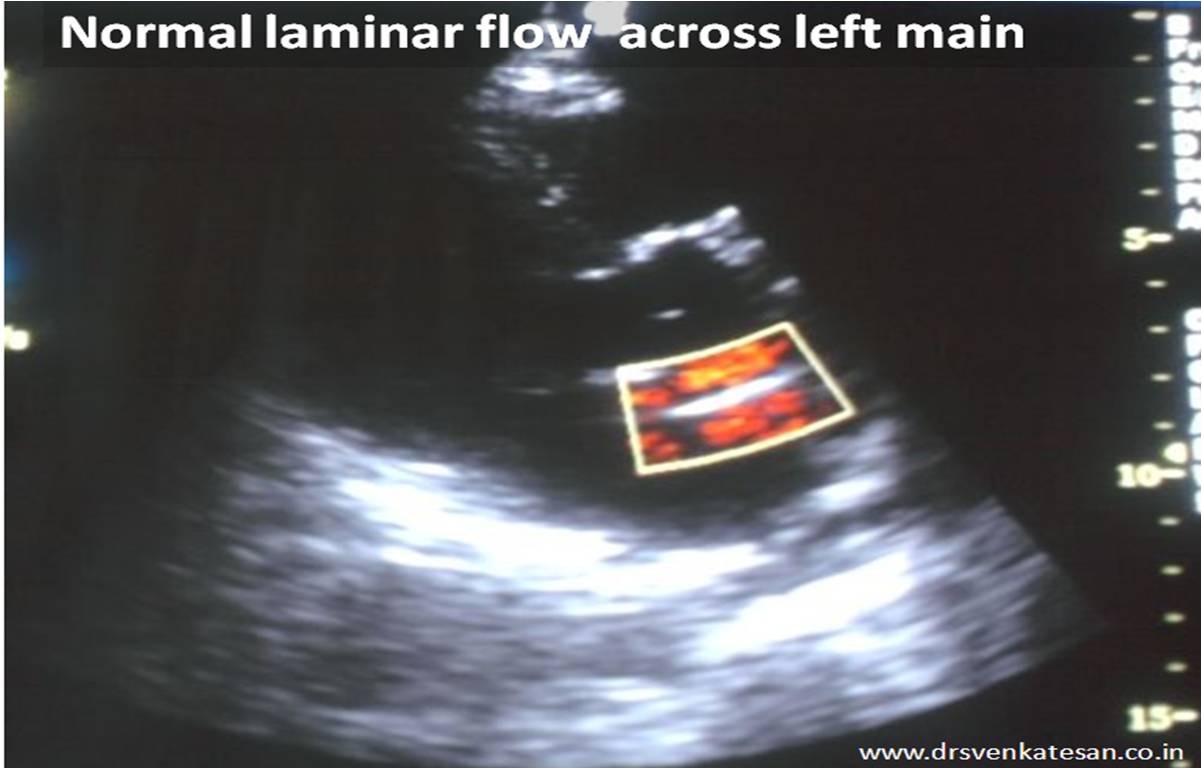
  • Normal left main is easily diagnosed  by two parallel  lines . ( See above picture )
  • Plaques are  diagnosed when this line is  distorted  and filled by haziness.
  • Significant ostio proximal  lesion must never be missed by TTE .However distal left main can not be assessed in most .
  • Doppler assessment may not be possible in all as pulse doppler sample volume can not be placed in left main.
  • Trans esophageal echo would increase the yield.

Final message

Processing power of echo machines  and  their image quality has improved  vastly over the years. The existing literature about left main imaging  by echo are based on old generation machines. The data are as obsolete as those  machines . This has to be kept in mind.

I wonder why most cardiologist are averse ( rather feel guilty ) to report  the  status of  left  main  artery  by  echo cardiography .

Every patient with  a  positive TMT must undergo a  focused echocardiogram  of  left main . You will be rewarded with a  good glimpse of the sacred segment  of coronary artery 9 out of 10 times  !

So , can we shoot the Left main  at the bed side  ?

Yes definitely  . . . if only we wish to !

* A correction

The left coronary visualised in this parasternal Long axis view is in fact exceptional. The ostium and shaft often better seen in short axis in around 3-4 O clock position.

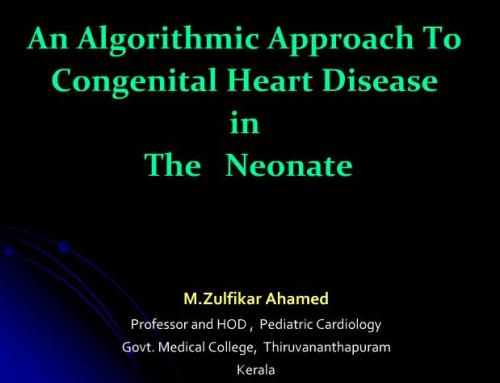
I stumbled upon this presentation which deals  how to approach to a problem of  congenital heart disease. In a newborn or an infant . It is clearly a master piece .  A life time experience  of a pediatrician  condensed in  130 slides . It is from Kerala .India.

Link to the  presentation

To  quote an  example  from this presentation.

When you want to rule out  urgently a congenial cyanotic heart disease in the bed side *  What will you do ?

What is  hyperoxia test  ?

Axminster 100 % O2 . Measure satutration.If the  PO2 crosses  200 ,  virtually any cyanotic heart disease is ruled out.

If it is less than 150 , it  is very much  likely the baby has  a CHD !

(* Echocardigram may not be available everywhere . Even if it is there it needs a certain expertise to do it  new-born  )

The key word for  successful  primary PCI  is

  •  Suction &  Aspiration of thrombus  with   micro catheters like  export catheters
  • One can do away with a stent during primary PCI but can never do away aspiration
  • Distal protection as concept is rapidly dying out as we aim to remove all the thrombus .

Tips for effective thrombus aspiration

  • Apply continuous negative pressure once catheter reaches the thrombus do not release  it till you enter back into the guide.
  • Make sure  you are sucking only  blood  products  not the  endothelium
  • Watch out for  side branch spill over.
  • 7F sheath 7F catheter ideal for aspirating  with a  micro catheter
  • Please be informed some thrombus require more negative pressure especially  in the late  presenters of STEMI

* During dire emergency when you do not have a specialized suction catheter do not hesitate to push  even a diagnostic catheter into the coronary .We have  saved few lives !

Crazy   questions  in primary PCI  ( or Is  it futuristic )

Can we connect the suction apparatus into LAD micro catheter ?

Do we have camera guided suction catheter ?

Can you flush the thrombus if you are not succeeding in aspiration ?

Is ultrasonic desiccation  of thrombus possible ?

Acknowledgement

Some of the tips were  gathered from the recently concluded  India Live  2012  conference   in New Delhi .

Blindness  brings  doom to most life situations , paradoxically it is supposed make us wiser in medical research .

We are made  to  believe , the shrewdness and the accuracy of  a study is directly related to the  degree of blindness .

Is blindness  such a great thing ?

The fact that medical research requires  tight  blindness  for  maintaining  truthfulness  ,    implies  there is a  huge   potential   for contamination  by vested  vision .

Our experience suggest  the purpose of blinding a study has entirely a different meaning in today’s world.

Telmisartan  is non inferior to  Ramipril  proved  by a double blinded RCT screams a headline in a popular journal !


Some of the definitions of blinding

Single blinded study

Patient does not know  . . . doctor knows

Double blinded  study

Both the  patient  the doctor  do not know what is the study the researchers knows it .

Triple blinded study

The  Researchers , the doctors and the patients   . . . no one knows what they are doing . Then who will know it ?

Please  be  reminded ,  few powerful men are always awake  to  manipulate the study.

Other forms of blindness (Cortical blindness !)

Who decides  which drug to be compared to which  drug   . . .  we are blinded

Who decides in which country the study  is to be  done  . . .   we are blinded

Who  appoints the principal investigator  . . . we are blinded

Who is steering the steering committee   . . . we are blinded

Who is going to  liaison with the journal editors for publishing the study   . . . .we are blinded

For the practicing doctors  the  blindness often  continues   even  after publishing the trial as vital information are with held.

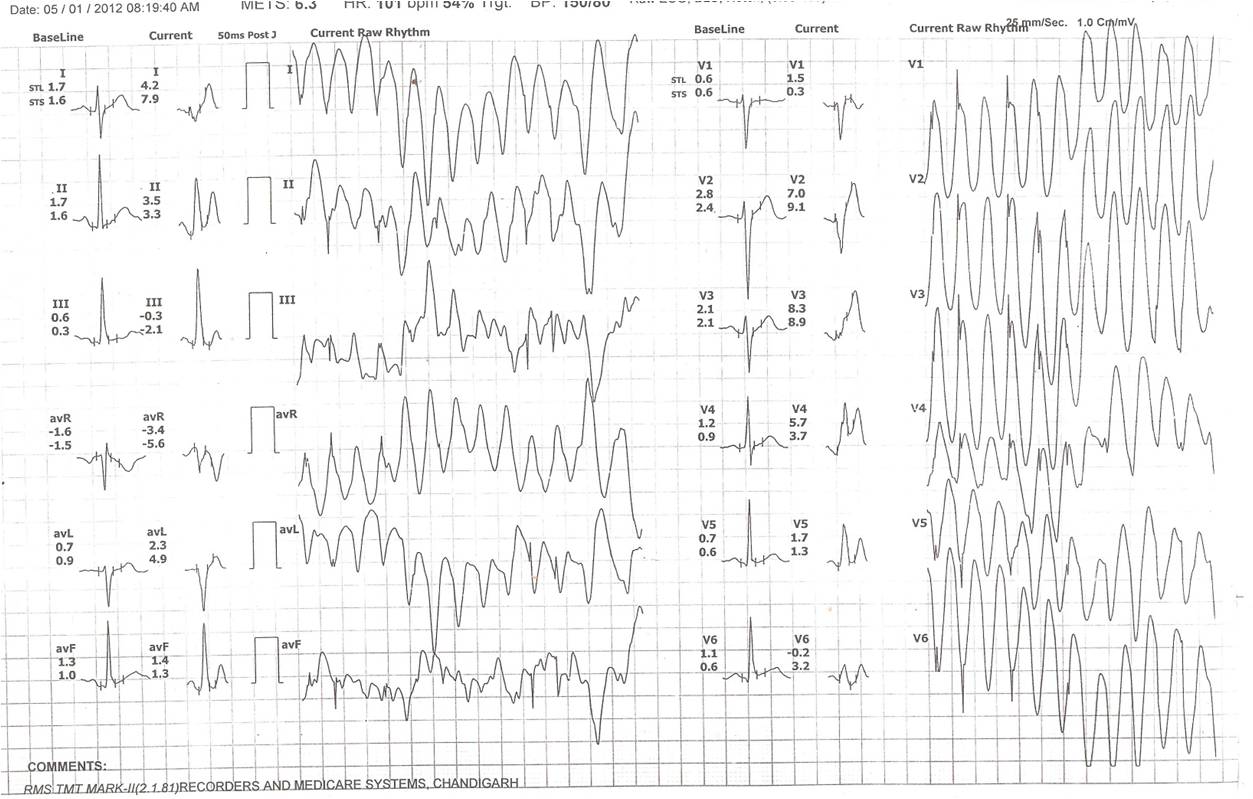
A young  man  fell  off the tread mill  soon  after complaining of chest pain in the immediate recovery  phase.

He had just completed 8 minutes of standard Bruce without any difficulty .

Even as the defibrillator was being  moved near him , he was  successfully   shocked with hands  of a hefty nurse !  ( 25 joules ? )   . He  got into this rhythm !

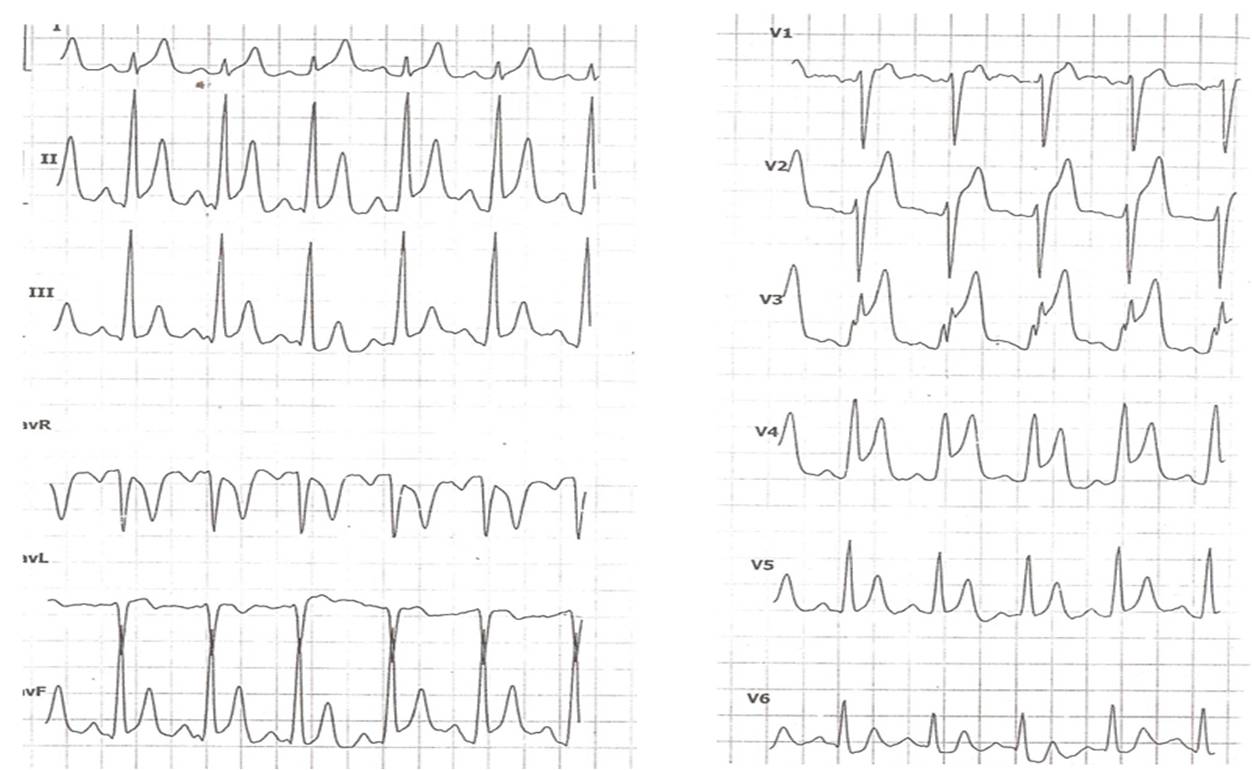
Note the ECG shows diffuse ST elevation .  The ECG soon settled and a diagnosis of  variant angina was  presumed.

He was shifted to CCU. There was no elevation of enzymes , though he showed a transient wall motion defect lasting up to 48 hours.

The subsequent elective  angiogram did not reveal any critical CAD favoring  Prinzmetal angina.

Provocative tests for vaso spasm is not practiced in our part of the world  (I wonder  whether it is still in vogue at all !)

* The classical  angina of prinzmetal is not related to exertion .  Can we call this as a variant of the variant angina ?

Final message

  • VTs are rare arrhythmias  during EST. However , there are important link between exertion ,  VPDs and VT .
  • Exercise induced RVOT  VTs are  supposed  to  more  common. However , ischemic VT during exercise has to be ruled out in every patient.
  • Non sustained VTs in patients who have baseline VPDs are usually benign .
  • Paradoxically VPDs disappear in many  during exertion indicating overdrive suppression by sinus rate .This again can be ignored.
  • Mono morphic VTs  would suggest structural defects.
  • Polymorphic VTs during exercise indicate either ischemia or electrolytic origin

Also read

Wrong concepts in coronary spasm

Acknowledgement

ECG Courtesy:  Dr G.Gnanvelu MD,DM  Professor of cardiology . Madras medical college

Measuring TR peak velocity is the most popular  method to assess pulmonary arterial  pressure.It is  universally  believed  TR jet predicts the systolic PA pressure fairly accurately. By all means it is  a wrong perception.

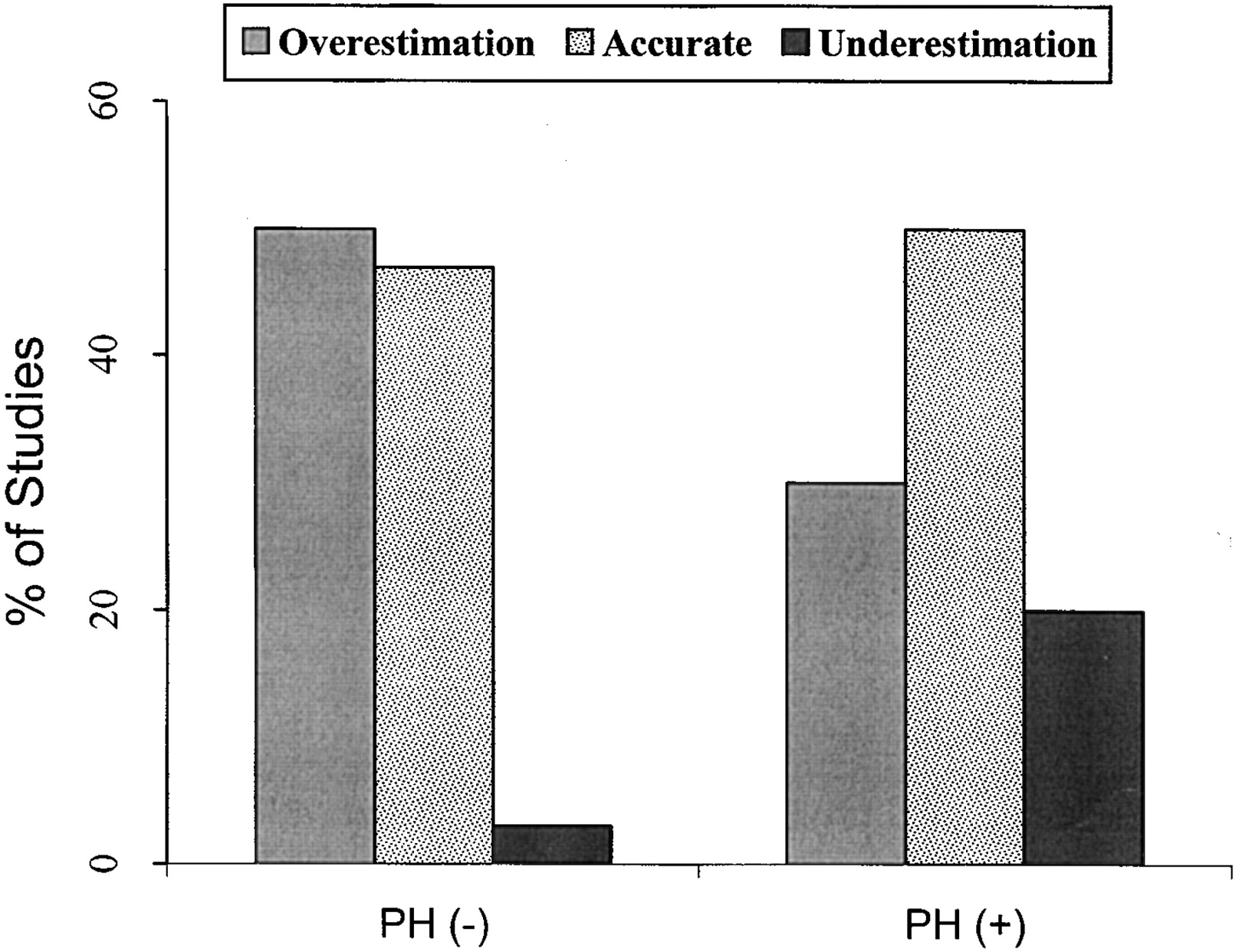
At best ,  it has only 40% correlation with cath  derived PAP  . In other words cardiologist are fooled by TR jet more often than not ! Here is an  elegantly done study  from American  Journal of  Respiratoty and critical care medicine  in  patients  who had undergone lung transplantation . It compared  systolic PAP derived from  Doppler vs cardiac  cath.

Source : http://ajrccm.atsjournals.org/content/167/5/735.full.pdf+html

Important observations about TR jet derived PAP

  • Over estimation is the key error.
  • Error of  under -estimation  less common .
  • Over estimation often occur in normal persons
  • Under estimation more frequent in patients with PAH.

(The above study documents  over estimation of 10mmhg  in systolic PAP in 50 out of  100 patients )

Final message

Nothing is perfect in science ,  especially in medical science.  In spite of the limitations  of  TR  jet  , it   will remain the corner stone in the hemodynamic evaluation of right heart pressures . (Forget for the moment . . . the umpteen variables  in  the modified Bernolui equation  , flow acceleration , viscous friction etc )

It is prudent ,  cardiologists  are expected to be aware of this harsh  fact  and  should be meticulous in tracing TR jet and  reduce the error.

One controversial  but logical  suggestion  would be  to drop the ritual of adding  empirical  RA pressure   5- 10mmhg  over the TR  jet  while  calculating PAP , as there is   60 %  error  of  over-estimation  that naturally occur with TR jet. 

Reference

http://www.registroep.org/documenti/IPERTENSIONE%20P.%20CRONICA%20TE/06_Sciomer%20ECO.pdf

 http://ajrccm.atsjournals.org/content/167/5/735.full.pdf+html