It happens only in India
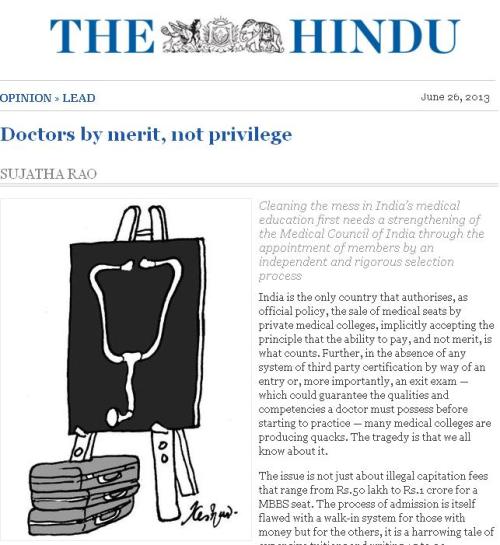
About 150,ooo people die in road accidents in India every year . . . highest in the world ! Myocardial infarction kills only slightly more !
Image courtesy : Times of India , 18th April 2013 . Picture by S.L. Shanth Kumar .
We are taught in medical schools early in our career , ventricular premature depolarization (VPD ) takes LBBB morphology if it arise from right ventricle , and RBBB morphology if it arise from left ventricle .This is a rough rule of thumb.
Why this rule is unreliable ?
VPDs have a focus of origin—–a short circuit——and an epicardial breakthrough . All these together influence the morphology. Within the left ventricle , a deep endocardial focus can behave vastly different from superficial epicardial focus . The course of VPD is influenced by the myocardial status ( scars etc ) . Further, the electrical properties of interventricular septum is shared by both ventricles .
What happens to a VPD arising from interventricular septum ?
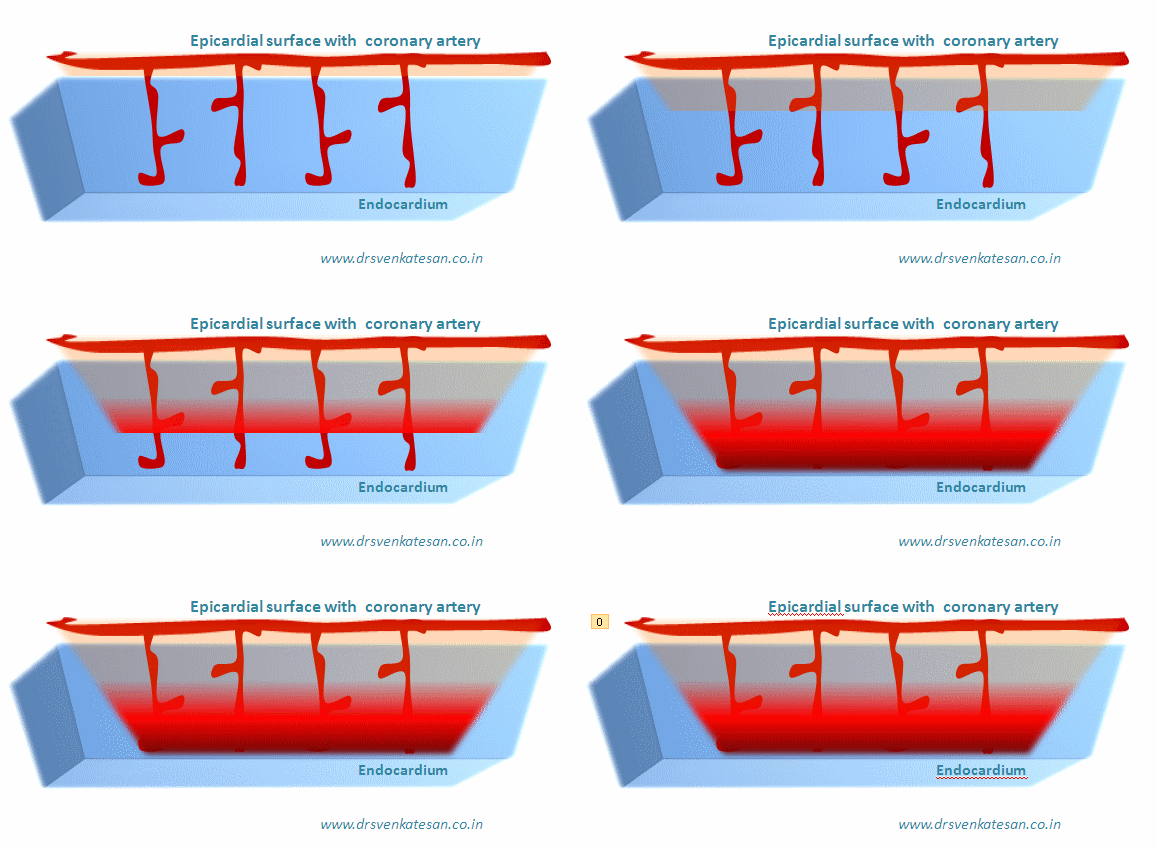
IVS is not only shared by both ventricles , it does not have true epicardial surface (Both side bordered by endocardium ) In most septal VPDs , breakthrough occur on either side of the ventricle . However , It keeps trying to break through epicardial surface ! . Hence , septal VPD is like cat on wall situation .So the morphology varies quiet frequently.Further , the VPD can capture the specialised conduction tissue occurs more commonly with septal VPDs. This can alter both the width and morphology of QRS.
Posted in Cardiology - Electrophysiology -Pacemaker, cardiology -ECG, Infrequently asked questions in cardiology (iFAQs) | Tagged endocardial vs epicardial breakthrough, localising VPD, locating the origin og vpd, rv vs lv vpd, septal vpd, septal vpd epicardial breakthrough, ventricular extra systole | Leave a Comment »
Posted in Cardiology - Electrophysiology -Pacemaker, cardiology -Sexual health | Tagged does the icd shocks the partner during sex ?, ICD shocks during sex sexual acts, inappropriate icd shocks | Leave a Comment »
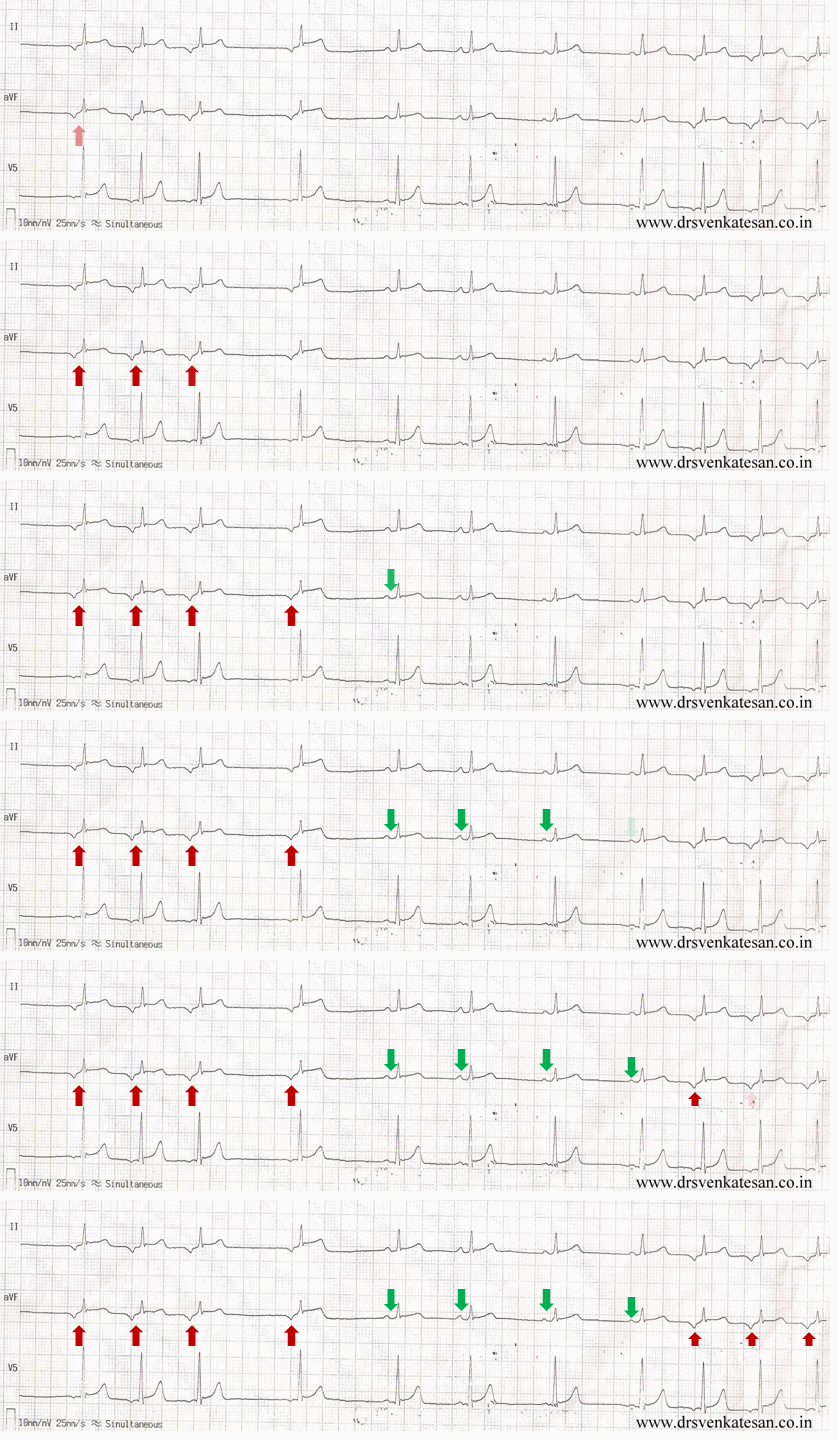
This is an ECG which I reported yesterday in my clinic . I thought it was a near perfect example for sinus node premature beat .
(Of course I need to explain why the P morphology slightly differs )
A sudden unexpected QRS complex is often called as ectopic beat . If it occurs prematurely (ie earlier than anticipated ) it is called as premature beat. If it occurs late it is refereed to as escape beat .Please note the difference is not absolute .
Sinus node is a dramatic bundle of energy with divine powers that drives rhythm of life !
The pacemaker cells are arranged in a compact fashion with differential properties from cranial cells firing fast and caudal cells little slower. The neural control is under constant Neuro/electro/humoral servo control mechanism.It is well known the pacemaker shifts it’s firing location within the SA node in fairly regular fashion .The entire SA node has rich adrenergic and cholinergic innervation , with a dominant control by the later . (This is why the intrinsic heart rate is in the tachycardia range (around 116 ) when SA node is denerved pharmacologically )
SA node , being a complex structure , it is not surprising to note few beats to fire slightly late or prematurely.If it occurs late it is called sinus pause , if it occurs early it is sinus premature beat , if both occurs interchangeably we refer it as sinus arhhytmia. (Read about sinus pause here)
What is the clinical significance of SPD ? (Sinus premature depolarisation )
It is a very benign entity that it is merely an academic fascination . By stretching my imagination I can correlate it with few possible clinical issues.
Related article
https://drsvenkatesan.wordpress.com/2009/04/14/can-premature-ectopic-beats-occur-in-sa-node/
Posted in Cardiology - Electrophysiology -Pacemaker, cardiology -ECG, Cardiology -unresolved questions, Cardiology-Arrhythmias | Tagged SA node, sinus node anatomy, sinus premature systole | 1 Comment »
April-May is carnival time in India . . . cricket carnival. In IPL . . . Indian premier league , eight teams will fight for the cup . IPL 2013 became a smashing hit , until last week when three players were arrested for spot fixing in an over . And for the past 10 days the entire Indian media has gone into manic reaction over it !
Still , the sport was wonderful , the skills shown were extraordinary , and what happened was an aberration just like in any other aspect of life . IPL is perfect mix of sports , business , commerce and some sleaze . Actually in a successful business model , one should actually be surprised if corrupt practices does not occur !
The game of cricket can never be killed by money ! The way the issue was handled by the media and the reactions and public debates for me looks irrelevant . Is it justified ?
We the people and media has much much important things to do in India !
Posted in cardiology-ethics | Tagged ethics in life, ethics in medicine, hippocrates oath, india cricket | 2 Comments »
Multivessel PCI during acute STEMI is forbidden except in cardiogenic shock . (or in some very unstable patients without cardiogenic shock)
The reason
Still . . . in real world it is extremely difficult to curtail the urge to stent all eligible lesion during primary PCI !
How to avoid it ?
If the patient is poor or the insurance limit is low , the issue of multi vessel stenting does not arise at all !
Always ignore complex non IRA lesions during primary PCI. Be happy if a non IRA has a bifurcation lesion !
Still , some lovely looking lesions in non IRA would be tempting and inviting . Indulge at your own risk !
* Please remember if the proximal LAD has a non IRA lesion , it may be sensible to attempt simultaneous revascularisation even if the patient is stable !
Other unrealistic advice
Reference
Posted in Cardiology -Interventional -PCI, cath lab tips and tricks | Tagged cath lab tips and tricks, ira vs nonira angioplasty, multivessel angioplasty in stemi, primary pci | Leave a Comment »
The link between brain and the hand starts right from fetus . It is a well known fact vertebral artery competes with hand blood flow . In the right side , there is one more vascular issue ! .Bracho cephalic artery arises directly from aorta and supplies the right hand and right half of brain.
It remains a mystery why left brain is blessed with a separate origin , while right has to share it with blood meant for hand .It is beyond science . . . isn’t
It is possible the left hemisphere of brain has more purpose to be alive , with bulk of the cognition work to do . Hence God created a separate supply to it ! Of course , he would have never thought , the possibility of his ” mean” creations adventuring within the arterial tree !
Click over the Image for animation
Please remember whenever we play with catheters and wires through radial route , we are hugging and scraping the artery meant for cerebral circulation !
Final message
Femoral Interventions enjoys a proven track record. Currently , radial route has virtually taken over with few advantages . However , the overall stroke risk in the two approaches remain low but genuine (.4 %) .It may be true , arch manipulation is more with femoral but the threat to vertebral and brachiocephalic circulation is more with radial . When the available evidence are not conclusive and new ones are not forth coming . . . it is wiser to rely on common sense !
Reference
I think this 2011 study from the prestigious stroke journal has convincingly answered the issue
It concludes , the right radial approach is indeed risky to develop cerebral micro embolism when compared to right femoral
A Review article in Circulation
Other references
1.http://stroke.ahajournals.org/content/38/7/2176.full.pdf+html
2.Transient Cortical Blindness after Coronary Angiography Journal of International Medical Research. 2009;37:1246–1251,
3. Stroke and Cardiac Catheterization Circulation. 2008;118:678–683,
Posted in Cardiology -Interventional -PCI, Cardiology -unresolved questions, Hardware techniques tips, Infrequently asked questions in cardiology (iFAQs), radial coronary angiogram PCI | Tagged aortic scraping and cholesterl embolism, brachio cephalic artery right, innominate artery and radial coronary angiogram, palques in innominate artery, plaques in right brachio cephlaic trunk, radial coronary angiogram, radial vs femoral catheterisation, right mca stroke in right radial angiogram, right vs left mca stroke, right vs left radial angiogram | Leave a Comment »
ASD is the most common acyanotic heart disease with left to right shunt . Highest qp/qs are seen with ASDs
The shunt begins from left atrium and goes on to complete a circuit.
LA——-ASD———RA————RV———-PA———-PVs———LA
In this circuit all chambers enlarge except the LA . (Inspite of the fact about 200-300 % cardiac output traverses this chamber )
Why ?
Post -test
The most popular answer in the above poll is LA is a transit chamber .
If it is so . . . RA is equally a transit chamber , why it enlarges significantly ?
Posted in cardiology -congenital heart disease, Infrequently asked questions in cardiology (iFAQs) | Tagged ATRIAL SEPTAL DEFECT, ra rv mpa enlarged LA normal in ASD | Leave a Comment »
For STEMI management there are 6 management protocols available
*CABG is rarely used except in severe mechanical complication.
There is some issues in differentiating facilitated PCI and Pharmaco Invasive Approach.
What do we facilitate ? How we do it ?
PCI in acute STEMI is done in a thrombotic milleu. So we get sub optimal results .Hence to facilitate it we try using
either 2B-3A antagonists, Newer Heparins, or even thrombolytic agents before submitting them for PCI
Where is this facilitation done ?
Facilitated PCI is done in small hospitals where there is no cath lab or cath lab is available only during office hours.
Facilitation can be done in either in same hospital or on the way to big hospital
Is there a time window to start this ?
The main aim was to was to facilitate the PCI .Hence time window was not considered vital in few studies (Wrongly though !) ideally it should be started as early as the first contact . Since facilitation can be started earlier the time window is 0-24 hours .
What happened to the concept of f-PCI ?
It died a premature death and last rites were completed when the FINNESE trial was out .
But it left behind a daughter concept ie in selected patients if the facilitation is done early , especially in those patients who are going to get the subsequent PCI late ,or in high risk individuals , the initial pharmacological facilitation* was indeed useful.)
*If facilitation was with fibrinolytic agents (Not 2a/2b ) .It is very important the benefits of facilitation is mainly attributed to the time gain in achieving partial opening of IRA making it more complete salvage of the subsequent PCI .
This aspect later on named as PIA .
Pharmaco- invasive approach(PIA)
We know p PCI is a race against time .We also know fibrinolytic therapy fares well in this race but pPCI beats in effectiveness .
So what prevents us to combine the swiftness the fibrinolysis and the robustness of pPCI ? That is like getting the best of both world .( It is not that easy thing accomplish after all 1+1 in medicine is rarely 2 !)
In it’s core principle it is same as f-PCI . But facilitation is done only with fibrinolytic agent (Not 2B-3A) . Pharmaco Invasive strategy can be started in any small hospital/ In the ambulance /. It is routinely followed by PCI whether the initial thrombolysis is successful or not . PIA should not be done before 3 hours window if a timely pPCI is feasible. Hence PIA has a typical time window of 3-24 hours .
Summary
f-PCI is combining various anti-platelet and fibrinlytic strategy prior to PCI . It was found to be useless if it is used routinely in all cases of pPCI. (Rather 2B-3A was useful if only the facilitation was done within the cath lab to prevent procedure related issues) .Time window can be between 0-24h .
Pharmaco Invasive approach (PIA) is actually a type of f-PCI where fibrinolytic agents are used routinely which is followed by mandatory angiogram and PCI in all deserving cases.Many still believe the facilitation in PIA is primarily accured in shortening the time to reperfusion rather than altering the thrombus load and morphology ! Time window is usually between 3-24 hours.
Posted in Cardiology -Interventional -PCI | Tagged facilitated PCI vs pharmaco invasive appraoch, primary pci, rescue pci | Leave a Comment »
Interventional cardiology has grown leaps and bound in the last few decades .We are able to clip the wings of mitral valve without surgery when it prolapses
We can deliver a huge aortic valve and fix it with wires .
But . . . we have no proper preformed guiding catheter that can sit into RCA ostium directly and snugly for a long time to enable complex RCA angioplasties !
An now try this one .
Here is a pending patent for a preformed RCA catheter
Posted in cath lab tips and tricks, Hardware techniques tips | Tagged preformed judkins right left, rca catheter, sones voda multipurpose judkins tiger | Leave a Comment »