Feeds:
Posts
Comments

Archive for the ‘Cardiology-Arrhythmias’ Category

Pacemaker rhythms  result in classical ECG with  LBBB morphology.It is a universally understood  fact that  RV pacing would  produce LBBB and LV pacing a  RBBB pattern in surface ECG.As with any other rules in medicine , it is not 100%  perfect .(May be 70%)

In the process of oversimplification of rules  we have forgotten a simple fact , that is, interventricular  septum is  shared by both the ventricles . ( functionally and electrically )

In due course , cardiologists and electrophysiologists  have  recognised this fact. A pacemaker lead hitching on the IVS  can behave independently and disobey this  golden rule of pacing.(RV-LBBB,LV-RBBB). Depending upon the orientation of the lead and the pressure it exerts  on the tissue  and degree of penetration of the screwing lead into the septum, the resultant   ECG can  either have a complete RBBB pattern ,  partial RBBB or partial LBBBB or combination of both.

Can RBBB pacing be stable ?

Yes.,  provided the the fixity of the lead and other parameters like impedance and pacing threshold are good.

Before labelling RBBB pacing as safe one should rule out pathological RBBB pacing like septal perforation and

accidental entry into LV through foremen ovale.

Is coronary sinus pacing an acceptable alternative  for  long term permanent pacing ?

The answer is generally ” No ” ,  but it needs rethinking.

A coronary sinus pacing may happen accidentally.The leads get located  either in the main stem coronary sinus or it”s tributaries.the morphology of ECG depends upon the branch it enters.Leads when they reach LV aspect result in RBBB morphology.

Can  we do intentional coronary sinus  pacing for complete heart block ?

There are many accepted  references in literature  that terms   RV pacing as unphysiological and has high risk of precipitating or aggravating cardiac failure. So currently , alternate sites of pacing are explored.( Septum, his bundle , biventricualr etc)

It is an irony , in this era of cardiac resynchronisation therapy where we do coronary  vein pacing  , the same concept is not being tried for regular  permanent pacing in special and difficult situations.( Severe TR, Left sided SVC, AC canal defects etc)

Final message

  1. RBBB morphology following  permanent pacing  need not elicit a panic reaction provided all parameters are stable.
  2. In patients  with difficult RV anatomy* ,  who need permanent pacemaker implantation a modified  coronary sinus pacing can be a solution .But as of now no such speciifc leads are available.EP Industry should take a note on this .

*Epicardial pacing is an option in such situations .But it requires surgery.

Ref:

Safe right bundle branch block pattern during permanent right ventricular pacing Journal of ElectrocardiologyJanuary 1, 2003   Yang, Yung-Nien ; Yin, Wei-Hsian ; Young, Mason Shing

Read Full Post »

To further understand women's heart click on the title

SCD  continues to be  the major mode of  death of  our  population . Millions of men die every year instantly .The commonest mechanism is due to primary ventricular fibrillation following an abrupt closure of coronary artery due to a thrombus.Most die , within few minutes of the event, some  before reaching the hospital , few within the ambulance  and an  unlucky few die on the CCU bed  or cath lab table even after getting the best treatment.

If we analyse the data, there is a  surprising fact !  Men form the bulk of these SCD victims.In our experience , out of 100 cases of consecutive  in hospital primary VF only  6 were females , indicating  an important  biological phenomenon to be studied.The data for out of hospital primary VF is more difficult to get , but the  log records of EMRI and emergency rescue team consistently confirm the male preponderance of primary VF .

How  does the female heart enjoys this relative immunity from primary VF even as the blood supply is acutely compromised ?

The answer  is  not known . If we are able to  decode this , one can replicate the same  model in male .

The QT paradox and incidence of primary VF

QT interval represents a combination of  electrical depolarisation and repolarisation .It is a well established   scientific  fact  that  women have   relatively  prolonged QT interval .This  is determined by evolutionary biology and  inherited characteristics of  potassium channels  during myocardial repolarisation

In simple terms, the female heart  knows how to relax slowly and prolong the electrical relaxation time.(Not mechanical)

It is also a well known  fact ischemia mediated a prolonged  QT interval is a trigger for dangerous ventricular arrhythmia.This ischemia induced QT prolongation is less pronounced in females than males as the baseline QT itself is slightly longer in women.The percentage increment of QT interval during acute ischemia is significantly higher in male .This could be one reason for the preponderance of VF in men

The billion dolor question and a real challenge for the cardiologists is

How to make a heart electrically inert during ongoing ischemia ?

  • Pain is also trigger for primary VF due to high adrenergic tone.Prompt control of chest pain make VF less likely.
  • Lignoacaine a myocardial anesthetic if administered quickly can prevent many of the primary VF.

And now , shall we  think little wildly !

What if , if  we administer lignocaine spray straight over the (or sublingually ) in every patient with  chest pain

as like a sport injury and try calm down the heart electrically !

Also read

1.Lignocaine  the forgotten hero .

2.View this video -Ignorance based cardiology !

Reference

Arrhythmias and sex hormones


Read Full Post »

What is the simplest and accurate way to predict  the   origin of Right atrial tachycardia(RAT)  from left atrial tachycardia(LAT) ?

Look at the P waves in V 1 ( Don’t look further ! )

  • A  negative  or  a biphasic (+/- ) P wave in V 1  is 100% specific  for a right atrial tachycardia
  • A positive P in V1 or  a biphasic ( –/+ ) P-wave in lead V1  has 100%  sensitivity  for a left atrial tachycardia

What are the incidence of left and right atrial tachycardia ?

RA- 75%

LA -25%

What are the common focus of right atrial tachycardia ?

  1. Crista terminalis (60% of all RAT)
  2. Tricuspid annulus
  3. Coronary sinus ostium
  4. Perinodal tissue
  5. Right side of IAS
  6. Right atrial appedage

What are the left atrial focus in Left atrial tachycardia ?

  1. Right & left pulmonary vein (50% of all LAT)
  2. Superior mitral annulus
  3. LAA
  4. CS body
  5. Left septum

(Please note  this rule is not applicable for re-entrant tachycardias, atrial flutter, AV nodal tachycardias)

Source :

P-Wave Morphology in Focal Atrial Tachycardia

Development of an Algorithm to Predict the Anatomic Site of Origin

peter M. Kistler  et all. 

This paper  from  Melburne, Australia is a rare gem of  an article for understanding  atrial tachycardia .This  paper won the  the Eric and Bonny Prystowsky Heart Rhythm  society Fellows Clinical Research Award, New Orleans, Louisiana, 2005.

Click on the Link  to reach the article

http://content.onlinejacc.org/cgi/content/full/48/5/1010


//

Read Full Post »

                                         Ventricular  tachycardia is considered as a dangerous electrical rhythm abnormality .It can immediately degenrate into ventricular fibrillation and result in SCD in many.Ironically, it is also a fact , a patient with VT can  present silently  without any symptom  .Some VTs are slow and recurrent without much affecting The hemodyanmics.


In chronic recurrent, beningn VT (Some may consider it , ” height of  absurdity ” to call a VT beningn ! but it  is a reality , the term beningn denotes –  very remote chance of converting into VF) ” Is there any other therapeutic option other than convertng into sinus rhythm. “(  Read related topics)


The following paper was presented in the Annual scientific sessions of  Cardiological society of India,  Kochi , seven years ago in  2002


VENTRICULAR RATE CONTROL  IN  VENTRICULAR TACHYCARDIA 

S.Venkatesan,,. Madras Medical College. Chennai


                           Mangement of  hemodynamically  stable  recurrent   ventricular tachycardia  remains a  delicate clinical problem. Reverting to  sinus rhythm  is  considered as  the only aim  of  treating  VT.While rate control is accepted as a therapeutic  option  in atrial fibrillation,  it is not  so,  for  ventricular tachycardia.In this  context  we attempted to analyse  the effect of  Amiodarone on   ventricular  rate  in stable ventricular tachycardia  which fail to convert  to sinus rhythm.


                            The  study cohort consisted of 49 patients with stable VT  who were admitted in the coronary care unit  of  Govt. General Hospital  between 1998 to 2002.The criteria for inclusion   were systolic BP>100mmHg and absence of  hypoperfusion of vital organs  The mean age was 52 years (range 26-68)  with a male female ratio  of 4:1.   Of the study group 36 patients  were either reverted with  IV lignocaine , Amiodarone ( 150-300mg   bolus )  or  DC  cardioversion . 13  patients  who did not respond to   either of these   were  followed up  with  Amiodaroneinfusion(1000mg)  for 24 hours.  The baseline  diagnosis were old MI (6)) DCM (3)  Arrhythmogenic RV displasia(2). Idiopathic VT was diagnosed in  2 patients.All these patients had  VT  during  most part of  the   24 hour  follow up.


                         The pre Amiodarone mean  ventricular rate was  152  (124 –196).  Post amiadaorne (at 24hrs) mean ventricular rate was 128(88-142). The time taken for   50% heart  rate reduction was  6.6h (4-24h).  The average  systolic blood pressure  improved from  100   to  112mmhg . These patients were  discharged  in stable clinical status with oral Amiodarone and  were  referred for  EP study.


                          It is concluded that Amiodarone, apart from it’s cardioverting ability , has a distinct ventricular  rate controlling  effect  which  can be of therapeutic value in  at least certain subset of chronic recurrent VT.

Final message


Some of  the patients  with VT carry a very low risk of VF  and SCD .In these  patients , the only  other major  aim is to prevent tachycardiac cardiomyopathy  that can be done with drugs which  controls  the ventricular rate whenever  VT occurs !

Corrrecting the primary cause like cardiac failire , revascularisation ,detailed EP study  ,tachycardia mapping , followed by RF ablation and ICD implantation is  the state of the art approch in the management of VTs.But this small clinical observation was made to  impress rate control could also be an option  in patients  in whom these procedures are  contraindicated  or not  available . 


Read Full Post »

Lignocaine , probably has saved more lifes  world over  than any other cardiac drug .

It was the only choice for ventricular tachycardia  till 1990s, both in pre and post  thrombolytic era.Every coornary care unit has reverted tens of thousands of  unstable VTs with this simple and cheap intravenous drug.the utility value of lignocaine is not limited to ischemic VT alone it is effective in in almost all forms of VT.It was classically administered in two or more boluses followed by an infusion.

What happened to this wonder drug  with great performance record ?

The  power of   statistics , and inappropriate interpretation by the scientific community  has left a serious blow to this wonder drug .Now the drug has been made redundant, and mainstream cardiac literature has made everyone feel  guilty , if  anybody  uses this drug for VT .

Why did lignocaine lose the battle ?  The reason is three fold

  1. The advent of  much fancied Amiodarone
  2. One negative study  for antiarrhythmic drugs in post MI period (CAST) 
  3. And two so called  positive studies  for Amiodarone (ALIVE & ARREST) has sounded the death bell for this drug  which has resuscitated millions of life !

CAST study http://content.nejm.org/cgi/content/abstract/321/6/406 

All , CAST  said was routine suppression of  asymptomatic ventricular arrhythmias  in the post MI period is unwarranted. But you know , how this  world interpreted it  “Lignocaine  has no role in ventricular arrhythmias in post MI setting ”  The most funny thing  was  lignocine was never used in CAST study .

The  studies involving one to one comparison  of Lignocaine and Amiodarone (ALIVE and ARREST study) was also not interpreted  properly.These studied only shock resistant VTs. What about the role of lignocaine where defibrillator was not available ?

Link to ALIVE and ARREST  read and make your own conclusion.

http://content.nejm.org/cgi/content/abstract/346/12/884

http://content.nejm.org/cgi/content/full/341/12/871?ijkey=8fa241f3cebb86a177632ec6ccadfb5a3ded7bc2

 Final message

  • Lignocaine is not  only a topical anesthetic  , it is powerful and gentle myocardial anesthetic when administered in post MI period.
  • With this property it  successfully cardioverts and prevents dangerous ventricular arrhythmias.
  • Time tested and worthiness proven.
  • While , we are made to believe  the success rate of  Amiodarone in VT is far superior than ligncaine .It is a falsehood.
  • Any experienced cardiologists will recognise ,  many times even  Amiodarone resistant VTs often respond to Lignocaine .
  • The fact of the matter is , without a good quality  one to one study  , lignocaine was ditched. One reason for this could be  Lignocaine ,  is a generic drug and has no market value.

Let us take home , the message (scientific or unscientific ! ) Lignocaine still has a great role to play in the management of dangerous ventricular arrhythmias .The only caution is ,  it should not be used routinely and indiscriminately in all asymptomatic patients with  VPDs or nonsustained VT . (Acknowledging CAST conclusion.)

Read Full Post »

sinus-node


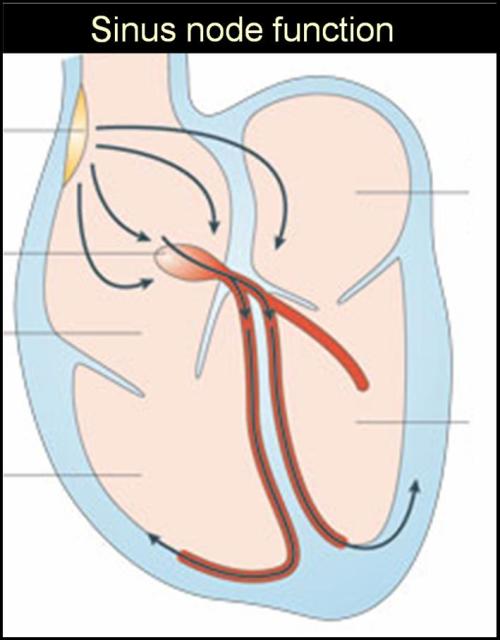
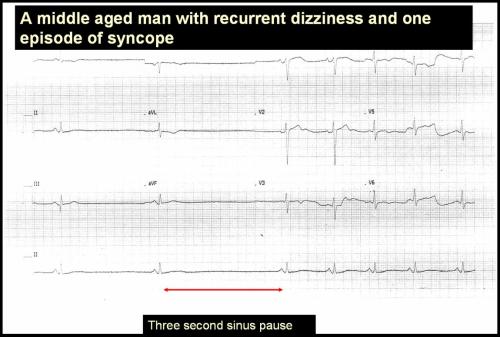
Sinus node  as the pacemaker , orchestrates the rhythm of life . It has  to fire for the entire life time of  a person.It  can not afford to take any rest ! But it can pause a little bit , of course that pause  could  be less  than 15% of it’s basic sinus length. This variation of sinus  cycle length is called sinus arrhythmia.This is physiological. When it exceeds 15 % of the previous sinus cycle it is referred to as sinus pause.

 Have a look at this ECG
sinus-pause-2


What follows a long pause ?

By strict terms  of definition a sinus   pause should be followed by  a delayed , next sinus  beat only. A  sinus pause  , many times  is followed  by   JPD – Junctional escape beat.This situation should be ideally  referred to sinus arrest as the sinus node is taking too much of rest and it is not able to wake up from the slumber and it needs assistance form the junctional pace maker.

So even though sinus pause and sinus arrest is used many times interchangeably, it should be avoided. 

What are the electrophysiological mechanisms of sinus pause ?

  • Simple sinus bradycardia . The commonest  mechanism is  the  increased vagal tone. This occurs more often in young athletes. Eventhough increased vagal tone  conveys   a innocuous meaning , at times  this can also be symptomatic  and require intervention.
  • Sinus node exit block.
  • First degree, second degree, complete SA block can occur as in AV node.

First degree SA block can not be diagnosed by surface ECG. Third degree SA block is same as sinus arrest and subsidiary pacemaker will function in these patients.  Second degree SA block is usually diagnosed when the sinus pause is in the multiples of resting sinus cycles. If the pauses are not in exact multiples  sinus arrest is diagnosed. All these arrhythmia’s are collectively called sinus node dysfunction(SND)

How do you manage these patients?

Sinus node disorders can occur in number of systemic diseases*. It  needs to be  ruled out.

  • Infiltrating diseases like amyloidosis, hypothyroid states can result in SND.
  • Drug induced SND like beta blocker and calcium blockers are fairly common and should be excluded
  • Some congenital heart disease (SVC ASD) can involve sinus node.
  • Ischemic SA node disease is rare but can occur  following  infero posterior  myocardial infarction
  • Sinus node disorders are  very often related to degenerative atrial diseases associated with HT, cardiomyopathy etc

*The list is not exhaustive

A very important association is noted  with atrial fibrillation as  a part of tachy brady syndrome .The link between SND and AF  is obvious as   atrial pathology is the common denominator in both ! This will be discussed later.

When is a  pause  significant ?

Any pause that is producing significant symptoms is significant.This depends upon the overall  hemodynamic compensation of the patient.Young, and fit can even tolerate three second pause without symptoms.Underlying heart disease makes even a smaller pause symptomatic.But generally a 3  second or more  pause is almost always pathological .Pauses can be up to  5  seconds (  a 5 second pause actually means a  heart rate of 12/mt , obviously it can not go on for a minute, a patient will develop a syncope). A 3 second pause  corresponds to 20/minute.

How will you evaluate a patient with sinus pause ?

There are sophisticated electrophysiological studies (EP) available like sinus node ECG ,sinus node function studies like sinus node recovery time, activation time etc. But these are generally of  academic interest.

If a patient is symptomatic  (syncope) because of bradycardia  he requires a pacemaker and  EP study is redundant . Similarly , if  he is totally asymptomatic in spite of pauses , again  EP study is  not  indicated.

Only for patients  in the  grey zone,   further studies are indicated .This would include a extended holter, loop recorders, event monitors etc.

Another important issue to consider  is , before putting a pacemaker   patient”s   symptom  must be correlated  with their arrhythmia.

What is  the overlap  between sinus node dysfunction and neuro cardiogenic syncope ?

SND  can occur as an overlapping syndrome with neurocardiogenic syncope.(NCS ).NCS is also a very common cause of syncope .In NCS  there are two limbs .Cardio inhibitory and vasodepressive. The cardio inhibitory form can exactly mimic an SND. In a given patient  it is very difficult to pinpoint which of this limb is dominant.Head up tilt test(HUT)  might help in few.  If a patent’s symptoms are due to inappropriate vasodilatation pace maker may not reduce the symptom of dizziness or syncope.

Management

  • There is no ideal  medical therapy* available as on date
  • Withholding all drugs which might aggravate bradycardia is of paramount importance.
  • Pace maker is the specific treatment in all symptomatic patients.

*Aminophyline tablet may be useful in some patients .It acts by antagonising adnosine receptors in SA node.Other drugs which can incrase the heart rate in the short term include  Orcipranaline(Beta 2 stimulant /Alupent ) Probantheline(M 1 blocker)

The key issue is to avoid unnecessary pacemaker implants in patients who have insignificant pause.

 Which pacemaker is ideal in SND ?
pacemaker

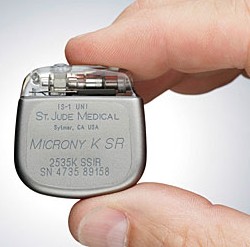
                                                              The need for dual or single chamber pacemker will be taken by the electrophysiologist .Atrial based pacemaker (AAI)  is preferred as it gives physiological pacing .But a simple ventricle based VVI pace maker is good enough in vast majority of patients. This takes care of   future risk of AV block also. DDD pace maker is the most physiological pacemaker and it is supposed to provide better quality of life. But it has an issue of insertion and  maintenance of  two leads, multi parameters to be programmed.It should switch to appropriate modes  at different times.(Like VVI mode during atrial fibrillation etc).Trouble shooting needs expertise , while  VVI is simple,  safe , and just effective as well .(In this turbulent world, quality of life is a  too trivial an issue  to be determined by a DDD  maker)

Read Full Post »

« Newer Posts
