Feeds:
Posts
Comments

Archive for the ‘Cardiology -Interventional -PCI’ Category

T waves attract less  attention in STEMI ,except for the  fact   tall T waves  implies   hyper acute phase of  STEMI.

What is the duration of hyper acute phase ?

  1. Few seconds
  2. Few minutes
  3. An hour
  4. Few hours
  5. Any of the above

Answer

No one exactly knows  .It can  be highly variable .  So , 5  could be  the correct answer .  

 * Most importantly  hyper acute phase  need not occur in all patients with STEMI as suggested in experimental models.

Some  observations in T wave behavior in STEMI

Mechanism of hyper acute  T waves

It is the pottsium channel dynamics.Transient intracellular hyperkalemia  is thought to be responsible.

T wave as marker of  reperfusion

Inverted T wave in precordial leads are a good marker of IRA patency  especially in LAD

Slowly evolving STEMI

This is relatively  new concept . STEMI with a prolonged hyper acute phase  ,  ie ,  T waves ” dilly dallying”  for hours or even few days have been recognised. (This was  refered  to pre-infarction angina in the past )

This sort of T wave behavior makes it difficult to diagnose STEMI.Enzymes will help , still  thrombolytic guidelines  demand us to wait till ST elevation to occur. This is  unfortunate .But as physicians we are  justified to thrombolyse tall T waves with a clinical ACS .The other simple solution is to shift the patient to cath lab to find what exactly is happening in the LAD ! 

Now , what is new about  T waves in STEMI ?

It is  the localizing value  in LAD infarct

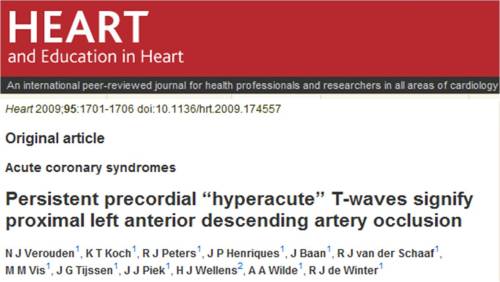
A tall persistent  hyper acute T wave  helps us to localise a LAD lesion .This paper from Netherlands ,  clearly  confirms this observation. The study was done from a primary PCI cohort,   a perfect setting to assess the  T wave behavior  in the early minutes /hours of  STEMI .
Other mysteries about T waves in STEMI

Does hyperacute T waves  occur in infero-posterior STEMI ?

I would believe it is very rare .Our CCU has not seen any tall T waves in inferior lead. Further analysis of the  data from the  above study could answer this question .

How often a  hyperacute T waves transform into NSTEMI ?

This again is not clear.Most of the hyper acute T will evolve as STEMI .But  , nothing prevents it to evolve as NSTEMI a well . After all , a hyper acute T   MI can  spontaneously lyse in a lucky few , ( Who has that critical  mass of natural  circulating TPA )  .If  these natural lytic forces are only partially successful , it may evolve into de nova NSTEMI.

Bi-phasic T waves in ACS.

A benign looking T waves with terminal negativity in precordial leads  can some times be a deadly marker of critical LAD disease.This has been notorious to cause deaths in young men which often correlates with the widow maker lesion in LAD.

What is a slowly evolving STEMI ?

Prolonged tall T wave phase  possibly   indicate , the myocardium is relatively resistant to hypoxic damage .

The most bizarre aspect in our understanding about ACS pathophysiology  is the concept of  time window , based on which , all our  ACS therapeutics revolve !

Does all myocardial   cells  have a same ischemic shelf  life ?  Can some patients  be  blessed with  resistant myocardial cells   when confronted with hypoxia or ischemia ?

                                 It is well-known  , in some hearts ,  the  muscles go for necrosis within  30 minutes of  ischemia,  while some hearts can not be infarcted even after 24 hours of occlusion .So , slowly evolving STEMI is a feature of  myocardial ischemic resistance .This is not  a new phenomenon as we have extensively studied about the concept   ischemic preconditioning .

We wonder there is something more to it . . .  the quantum of preconditioning  can be inherited .Further  , we are grossly ignorant about  the molecular secrets of  non ischemic metabolic  preconditioning  .

Final message

                         T waves attract less  attention in STEMI . Cardiologists are often tuned to look only the ST segment , after all ,  ACS  itself is classified based on  the behavior of this segment.(STEMI/NSTEMI) . We need to recognise ,there is a significant subset of ACS   affecting exclusively T waves.  Shall we call T elevation  MI ? ( TEMI )

Do not ignore T waves in STEMI. It has more hidden electrophysiological  treasures that  is waiting to be explored .

Read Full Post »

STEMI is an cardiovascular emergency . We alert  instantly the services  of  911/108/1066 . What we fail to realise is , the  physician’s thought process  should also  be equally fast  . Before dispatching  a STEMI patient by ‘air mail” to the nearest cath lab ,   spend few thought full moments ! We have  a simple and   equally effective option  ,(If not superior )  of revascularisation  , right in your clinic or hospital ! Use it liberally , it is not a inferior treatment !

This article  is from the prestigious  journal  “Annals of emergency medicine” .It confirms a longstanding doubt regarding the efficacy of  air lifting of STEMI patients.

A shocking observation . . . is . . .  many of those patients who are air lifted  for primary PCI   receive none of revascularisation  modalities !  Learn  how  many  of our patients have a futile helicopter ride in the golden hour of STEMI  !

Final message

Even airdropping of STEMI patients to cath lab for primary PCI is not  enough in this unique   race against time  . So , in the management of STEMI ,  we need lots of non -medical  sense* !  .Please judge    “the delay”   due to transfer carefully   and  always consider administering  the thrombolytic agent  when a patient  with STEMI  arrives   within 30 minutes.

A definite primary thromolysis (Within 30 minutes ) is  often  better than a PPCI  (Potential primary  PCI), which  may  or may not materialize in time  !)

*Please  realise  even  inclement weather  and traffic jams can have a impact on coronary patency !

See  comment about this article in Heart wire

What next ?   On site  mobile cathlab ?

Read Full Post »

Cleveland clinic is a leading centre for cardiac care .Major technological breakthrough occurs from this institute than any other place. Thousands of articles come out every year. Some articles , get global attention and make  a huge impact. These are usually related to a new hi- tech modality like CRT devices or percutaneous aortic valve deployment etc ,etc.

                                                Some articles , which are very important  may not get the due  attention . Journal editorial boards often  have a scorecard called impact factor .That is ,   how  a  journal  is  impacting the practice habits of  medical professionals . Ideally we need to have to grade individual   articles with impact factor .Many articles may not have any significant  impact  however good the impact factor of the journal.

Here is an article,  which excellently depicts the principles of management of ACS.  It was published in 2003 JACC,  by Steven Nissen  from Cleveland,  Ohio .It deserves more attention . Every cardiologist , involved in ACS management should read this, especially the interventionist.

Link to article placed her with courtesey of JACC

Read Full Post »

Acute coronary syndrome  is primarily a disease of blood vessel , which perfuses  the heart.  It can even be a disorder of blood, often called vulnerable blood which predispose  for intra- coronary thrombus .

Mind you  , heart is an innocent bystander ! to the onslaught of  coronary atherosclerosis !

Hence , we  often use two terminologies .

CAD : Pure vascular (Coronary )  disease without  any structural and functional impairment of heart  ( No Angina, No myocardial damage ) Most of the asymptomatic plaques  , non flow limiting  lesions, incidentally detected by the modern coronary imaging gadgets  fall in this category.

When does  CAD becomes CAHD ?

CAHD : Coronary artery heart disease .Here not only the coronary artery is diseased , but it has it’s mission fulfilled   ie target organ either damaged structurally (STEMI, NSTEMI ) or functionally (EST positive , Chronic stable angina CSA )

Does the heart does any wrong to suffer from Acute coronary  syndrome  ?

No, it is simply not .The fault lies in one or more  of the following   .Generally at-least two these factors are enough to impede blood flow )  . They  combine to produce an ACS.

  • Blood defect
  • Vessel wall defect
  • Slowing of flow (Stasis)

This is called as Virchow’s triad   suggested over 100 years ago . Still valid in the era of per cutaneous  aortic valve implantation.

* The concept of de-linking  disorders of  coronary  vascular disease  from myocardial disease  is vital  in understanding the implications of current modalities of treatment. 

Even though we PCIs target the culprit ie blood vessel , it need to  realised , we  always fall short of real target . . .namely the heart . In coronary interventions  the catheters and wires roam around superficially over the heart  and they never even touch the heart .This is the reason PCIs are struggling to prove it’s  worthiness over medical therapy in many CAHD patients , which can reach deep  into the vessel, heart  and even every individual cells of heart.

Many (or . . . is it most ?)  Interventional  cardiologists have a bad  reputation for ” failing to look  look beyond the lesion” .  It is estimated  a vast  number  of cathlabs  and CABG theaters worldwide  are engaged in futile  attempt to restore coronary artery patency after a target organ damage is done .This is akin to building flyovers  to dead and closed highways .

Salvaging a coronary  artery and reliving a coronary obstruction is an entirely unrelated and futile  exercise to  a patient who has a problem  primarily in  musculature .

The much debated concept of  documenting  myocardial viability  , before revascularisation  died a premature death as the concept  by itself , was not viable commercially . (Viability studies   , tend to tie down the hands of device industry further , some  interventional   cardiologists began to see this concept  as an  interference to their freedom to adventure  )

Of-course , now  we have  other parameters  phenomenon  like  FFR estimation by Doppler , epicardial  -myocardial dissociation, slow  flow , no re-flow are  gaining importance.

Final message

ACS is primarily a disease of blood vessel but it’s impact is huge on heart. We need to look beyond the lesion .Restoring  a blood vessel  patency  to an ailing organ (Heart ) is not synonymous with total  cardiac intervention  and protection . There is lot more to cardiac physiology other than it’s blood flow. Heart muscle is a too complex organ to be controlled by few balloons and wires  which beat around the bush.

Read Full Post »

It is well  recognised for STEMI  to get aborted   spontaneously or through intervention.

Can a glamorous procedure like  Primary PCI be redundant ?

Yes of course . This paper,  is about how a planned  Primary PCI  can go awry  . . . Presented in the Annual scientific sessions of cardiological society of India Kolkatta December 2010.

Down load full presentation  in PDF format (primary_pci_)

Summary of the presentation

ABORTED  AND     ABANDONED    PRIMARY PCI

S.Venkatesan  G.Gnanavelu.R.Subramanian .Geetha Subramaninan

Madras Medical College. Chennai

Primary PCI has become the  standard of care  for acute STEMI in all  those eligible patients. Apart from the individual & institutional expertise ,the  key  to success  lies in  expediting   the symptom to balloon time to less than an hour.

Even though  STEMI   is characterized  by  acute total obstruction , it  is also a fact during this critical time window , a less recognised   positive  phenomenon takes place within the  ill fated coronary artery. Intrinsic fibrinolytic activity gets activiated and begins to take on the thrombus head on .It should be recalled this is the  earliest intervention in STEMI by natural forces , with zero time window . The power of this natural lytic process has  never  been easy to predict and quantiate . But  we  have  often realised  such a phenomenon do occur often and  is referred  by  various  terminologies like spontaneuous  thrombolyis, aboted MI etc .The exact incidence  is not estimated .In this era of  primary PCI we have found a new opportunity to confirm  this concept.

It has been  observed during  primary PCI ,  an occasional patient  may  have  either  a totally  patent IRA  or a minimal &  insignificant lesion  like luminal irregularity .This has  subsequently led on to cancellation of the procedure .We report our experience with  two patients with  this particular situation .One patient with IWMI with a time window   of  6hours had a totally patent  RCA.  Even , the luminal irregularities were difficult to locate .The other patient had anterior MI with ongoing ischemic pain.He was taken up for primary PCI.The initial angiogram  showed a total mid LAD  obstruction . As soon as the  guidewire reached the thrombotic lesion the  artery opened up   wth a TIMI  3 flow .There was no residual lesion or thrombus  noted. Both of the above  patients  were  young , smokers . 2b 3a antagonists were not administered. We infered, both had thrombotic STEMI and   presumed  to  had either spontaneous reperfusion , or  reperfusion assisted by dye injection & guidewire manipulation. They were  shifted out of cath lab with a new code of aborted primary PCI and  were discharged with normal LV function .It need  to be  realised here, a   distinction must me made between  aborted PCI  and   abandoned or failed  primary PCI  as  the later  connote a negative outcome. The  causes for abandoning  primary PCI are due to complex  lesions like bifurcation /Trifurcation lesions , triple vessel disease  with difficulty in identifying culprit lesions.A  Primary PCI is  considered failed  when the  IRA patency  is not accomplished or  failure to  sustain myocardial flow inspite of  IRA patency (No-Reflow) . These patients may end up in CABG or occasionally fall back on  thrombolysis  which was considered a inferior modality just few hours earlier !

.                                         We conclude , in the management of STEMI ,  primary PCI once contemplated need not always reach it’s  logical conclusion. There are situations  it can  get  aborted or abandoned  at various levels . Aborted  primary PCI  due to spontaneous  lysis though uncommon ,  can be a therapeutically and financially rewarding concept for the patient  and  physician .

Read Full Post »

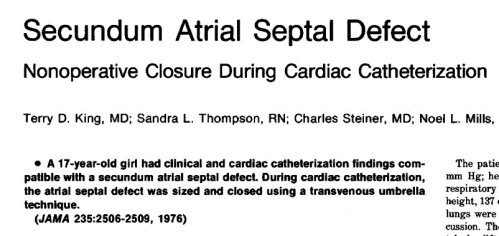
It was those great  years  1974 -1976.  Even before the concept of  PTCA was born, few  committed cardiologists  of New  Orleans were on a mission. Closing the ASD in cath lab. They  achieved it successfully with a umbrella device.


But 35 years later as on 2010 ,the concept though proven still struggles to prove itself.

Link to related article .

Read Full Post »

Coronary circulation is an enigma . This is true even after 50 years of coronary angiography.  What we visualise  in CAG is  only a  fraction ,  when  compared with what we do not see !  The intricacies of  coronary collateral circulation and micro circulation is comparable only to the  ultimate force of   invisibility “The  God ”

But , we will never ever believe what we do not see  . . .  but we have to accept the following  fact . How is it possible   for  some of the coronary  arteries  to maintain  a near normal blood flow from a donor (Contralateral ) coronary  artery  in spite of  100 % occlusion ?  Is it not common to see TIMI 3 flow even with 99 % occlusion .(Link to related article in  this blog  and  video ) . This is because the coronary  vascular bed has an extraordinary capacity to drop its distal pressure to negate the effects of obstruction.

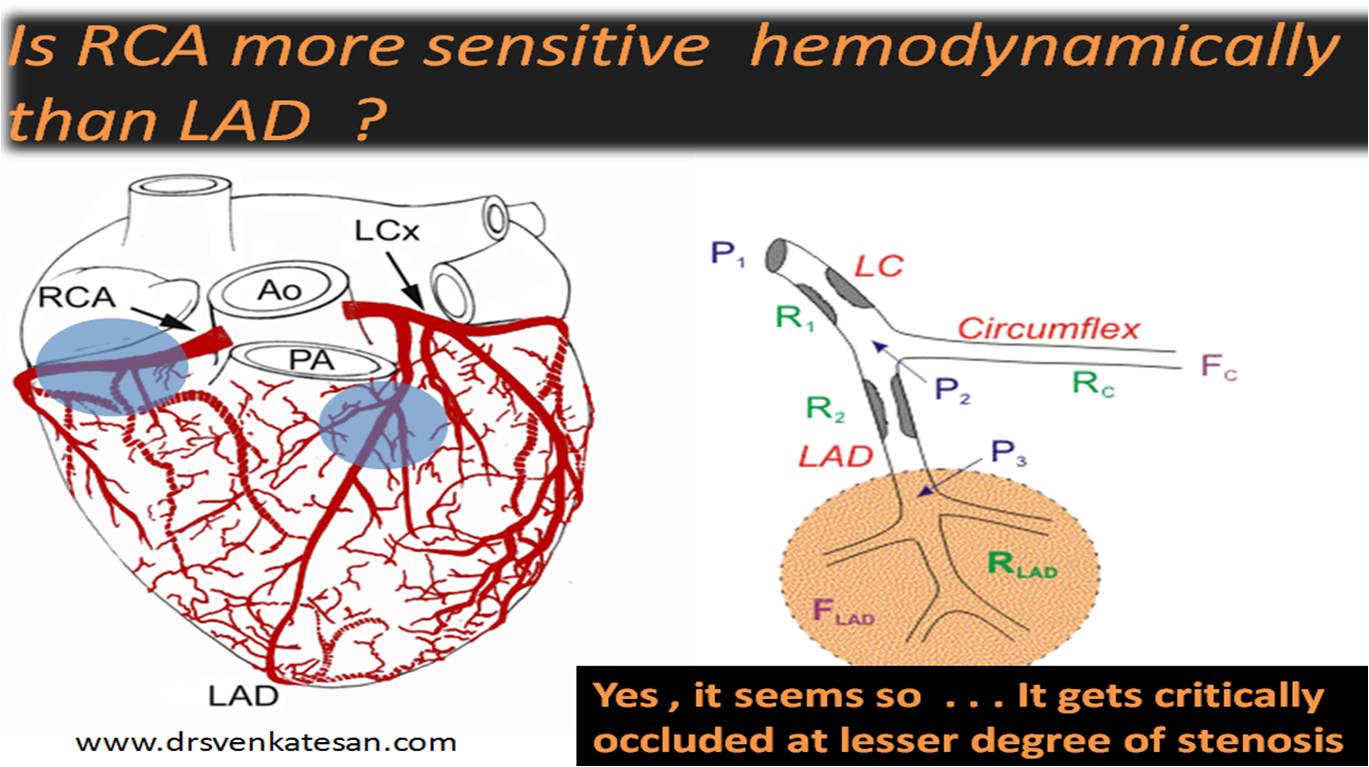
Does the distal vascular bed anatomy and physiology same in RCA and LCA ?

We presume it so . The problem in medical science  is , these   presumptions  often  become  facts in due course  ! Now we have (It is in fact 30 years old !) RCA has lesser ability to withstand the stress  of stenosis than LCA.

The prime reason for this observed difference could be the LCA has a well developed microvascular bed which can reduce the distal coronary resistance .(Again , this is my  presumption  . . . !!! )

This interesting article was published in Circulation 1980 .


Read Full Post »

In any field  , errors and mistakes  transform into   experience in retrospect. (Of course only  if we  realize  our mistakes !) . Many would argue prevention of such errors is the  only way to move  forward in science  , but ,the opposite could also be true.

In Medicine ,

  • Most errors are mild ,
  • Some errors  can   be fatal but it helps us prevent further fatalities.
  • Some errors create history  and  re-define the science.

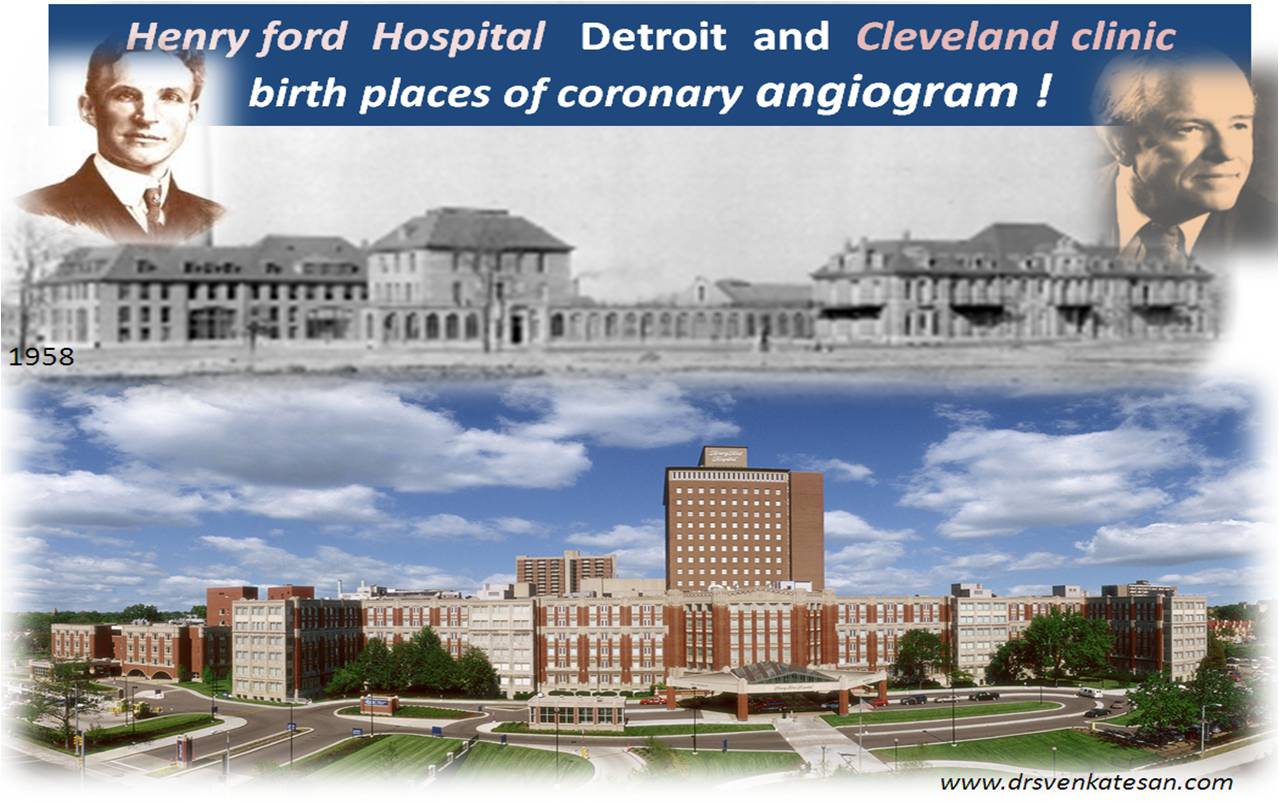
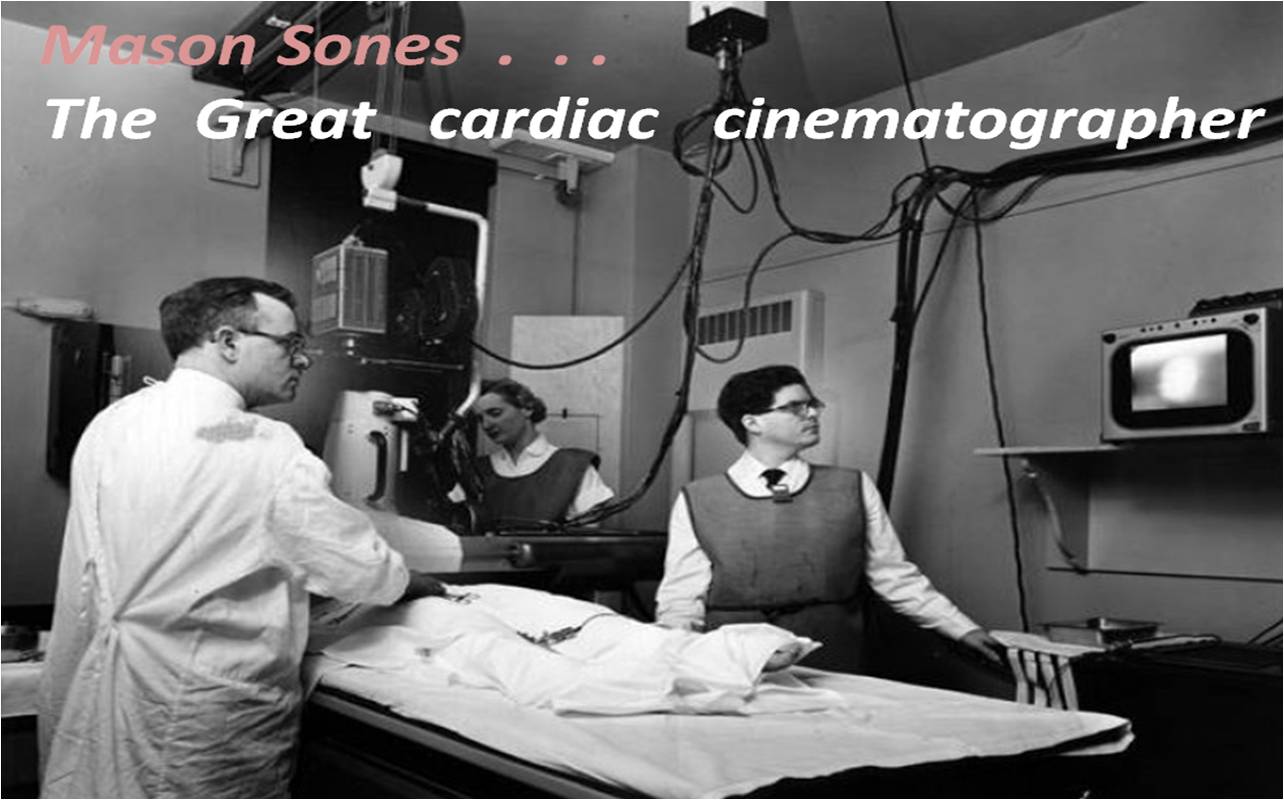
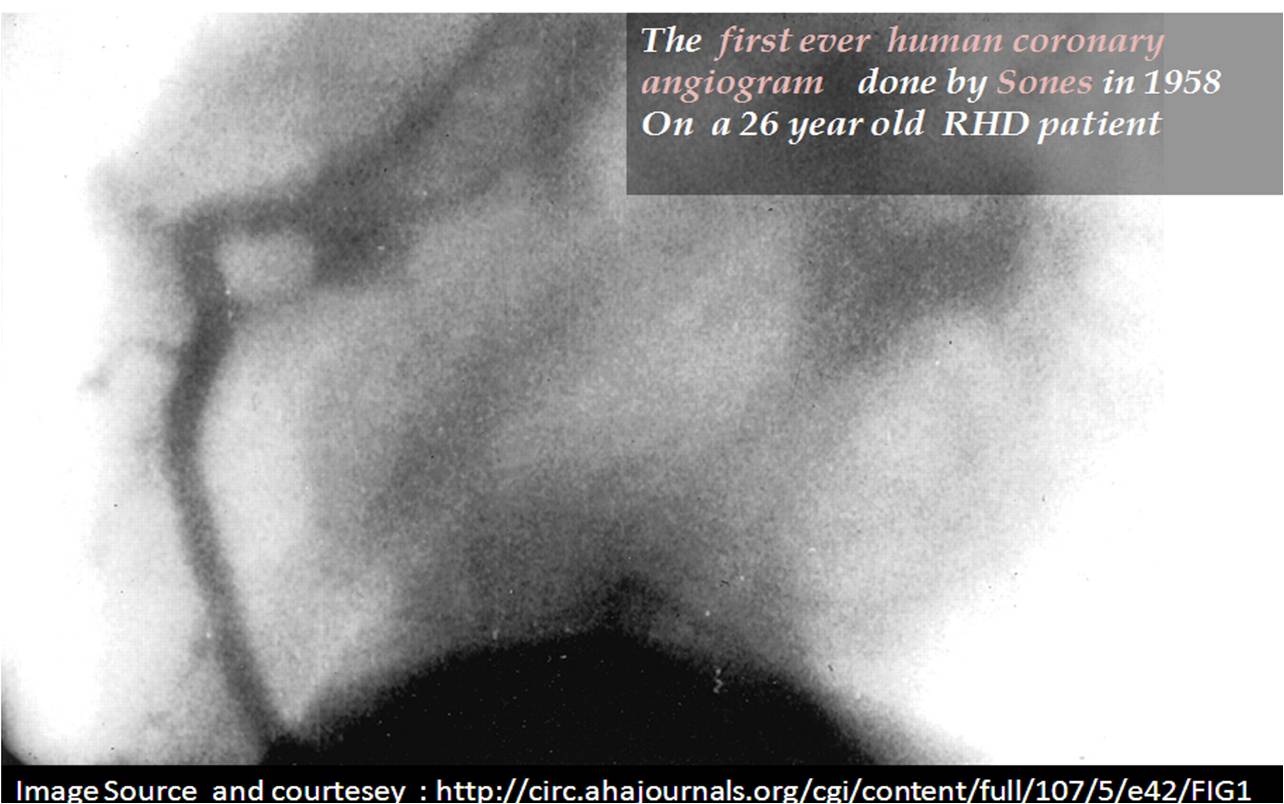
That’s   what  happened on 1958 , to be precise on  October  3oth , 1958  in a lonely laboratory of Henry  Ford hospital/Cleveland clinic *

*A correction -This  invention actually happened in Cleveland.  ( Sones learnt  all his techniques in Henry ford)

When  Sones along  with his assistant were trying  to do an  Aortogram in a patient with RHD,  the entire dye meant for aorta went straight  into  the right coronary artery.When every one was stunned ,the  patient happily  survived the injection  with a few skipped beats.

The man behind  this horrendous medical mistake was   Mr . Sones . He   was guilty for many days ,  spent many sleepless nights  ( In spite of  the patient surviving  the episode ). In fact , he was much amused  about the patient’s  survival . At that point of time,  even a spill over of dye into coronary artery was considered forbidden.  He pondered over the incident for months  .

Had  two queries  lingering in his mind .

  1. How the  right coronary artery  was able to withstand the 40cc dye  injected with  force .
  2. If 40 m l was tolerated ,  well what about routinely injecting  3-5 ml for visualizing the coronary  tree   by intentionally  seeking the coronary ostium .

That was the moment , the concept of diagnostic coronary  angiogram  was born . He published his observation as an  abstract in Circulation journal. Later he did many experiments  with video  engineering at Kodak labs , X  ray  technology to improve the cine imaging .By 1964 , he devised a perfect protocol  for doing  selective coronary angiogram. Then along with Rene Favaloro he pioneered CABG surgery in USA.

Final message

Cardiac  catheterisation was invented by  Forssman , Cournand , and Richards ,(Nobel prize 1956 ). It was  Sones who took it into the coronary arteries  and thus it was  made possible  for a whole new specialty  of coronary  diagnostics  and therapeutic PCI  which was  conceptualized by another extraordinary human life called   Gruentzig. Sones along with Gruentzig definitely deserve a Nobel in medicine which i think will happen soon ! They lived a great life constantly thinking, innovating  putting  patients interest in the fore front .

Mean while , I argue our youngsters  to  portray  the images of  these giants in  every   cath lab they  work   .You may get their blessings from heaven  , provided you do your interventions with integrity and honesty without any conflict of interest in the patient care.

Do not cry foul when some genuine errors happen in cath lab.Few among us (like Sones ) may innovate those mistakes into glory !

Reference

http://en.wikipedia.org/wiki/F._Mason_Sones#cite_note-3

http://www.wired.com/thisdayintech/2009/10/1030first-coronary-angiogram/

Read Full Post »

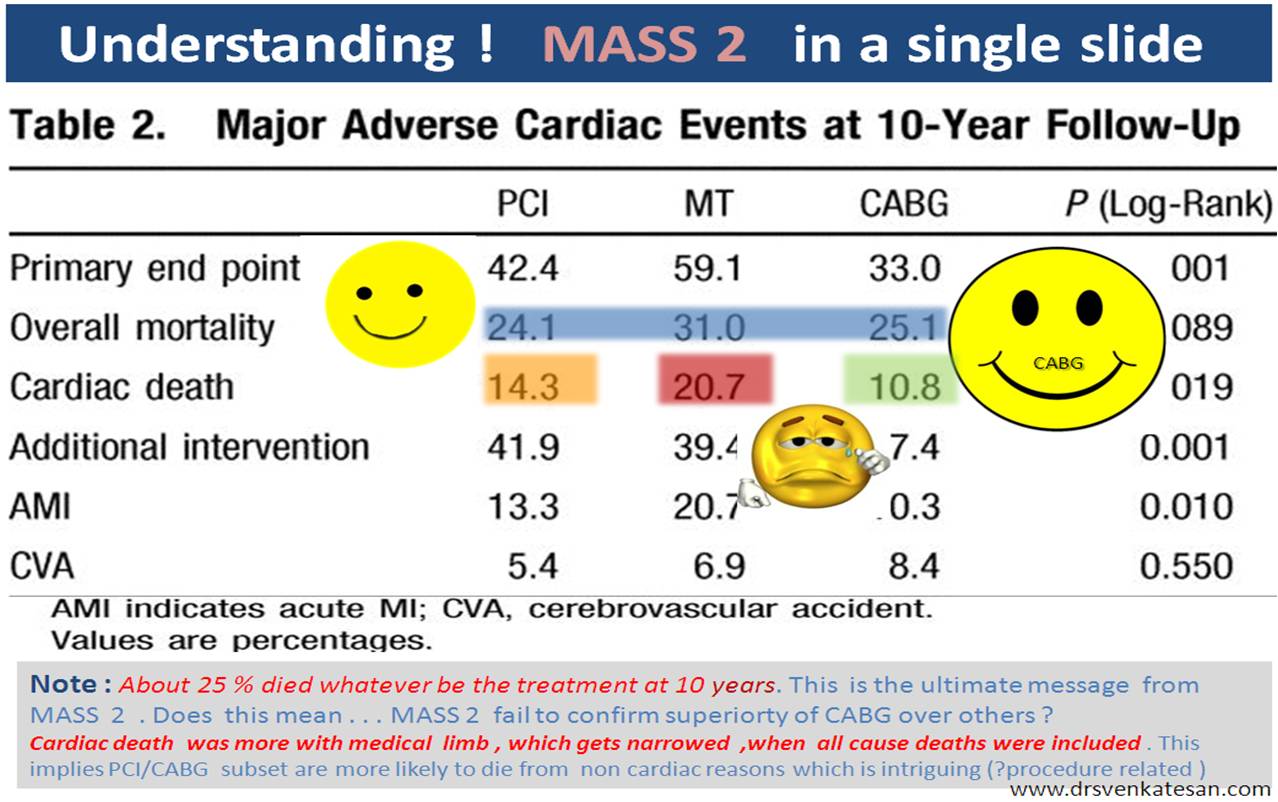
MASS 2  study , the 10 year follow-up results are just out in circulation   september 2010 .

It is a rare study , where “one  to one vs  one” was compared  ie  the effect of  medical,  CABG , and  PCI    in chronic CAD .This was done in a single centre in Brazil,  between 1995 -2000 . It was  followed  up till 2010. Interestingly ,  such a study  may not be possible in the future ,   as  many of us  have  prematurely  glorified  the PCI and CABG over medical therapy . Recruiting  patients   for medical therapy alone is becoming a  difficult  job even in  developing countries.  Even if we recruit , huge cross over is likely  to PCI, CABG for all fancy reasons.

So , in MASS 2 we have a rare treasure on hand . . . Let us give three cheers to those  Brazilians  who did this study ,  and  shall carefully analyse and  interpret the results.

Highlights ( According to my  interpretation)

  • A total of about  600 patients with 200 in each group.
  • The overall death at 10 years  is not greatly different . (Around 25 % )
  • But ,cardiac deaths were distinctly higher by few percentages in pure medical  arm
  • Need for crossover  from medical to surgery and PCI to surgery was significant.

CABG tended  to prevent future MI in this study . This  could be  most significant observation from  this study ,( A revelation in fact ! ).It is against the popular  belief  created by CASS  legacy.

What are  the observed difference  between MASS 2 –  5 year results , which was published in 2004 ,  and  the 10 year follow-up , as  on  2010 ?

At the end of 5 years in 2004 , the differences  among the three groups were not obvious.The benefits of CABG mainly appeared after the 5th year and at 10 years it was significant.

Shortcoming of MASS 2

  • It is a single centre study .Numbers were less (600) .
  • It need to be emphasised    CABG was done  with  pump in all patients  . So the currently prevalent off  pump CABG  may not be really  comparable with reference to outcome.
  • Only   bare metal stents were used in PCI .(If only DES was used  . . . Considering the host of issues for and against DES , it will  be a  wild guess to judge it’s implication .  It could  have  tilted , either in favor or against  the  PCI  limb .)
  • In medical  limb ,  statins were not used in all.  Further , the dose of statins were not aggressive.This makes medical therapy appear less effective.

Intriguing  thoughts

When we say medical   therapy is  being  compared with PCI and surgery , we are actually comparing ,

Medical therapy  alone

Medical  therapy+ PCI

Medical  therapy + CABG .

Every patient  in all three  groups  receive  statin , antiplatelet and beta blocking drugs and so on.  Even though  statistics  would  vouch for  additional  benefit ,  over and above medical therapy  , in a given CABG  individual ,  how much  of the  the  accrued benefit  is contributed by co- administering   medical therapy  .It  is beyond   reasoning even  with all  gimmicks of statistics.

To exactly quantify  the individual benefits and efficiency  of  PCI ,  CABG  and medical therapy  two more  study limbs are necessary .

  • PCI without drugs.
  • CABG without drugs.

Such a study is possible only in a virtual world ! .  Decision  making  in favor of CABG ,  especially   in chronic stable angina ,  will continue , to be  difficult in the absence of refractory angina .This is due to  the modest benefit of CABG ,   that is  expected,  at an additional risk , cost and  expertise.

Please remember, a person can survive  , only  with medical  therapy for > 10 years  but no one can ever live with PCI or CABG  for that period of time without  adjunct drugs  . Guess  which modality   is  going to win the race  against CAD  in the long run  ?

Final message

If  any one  asks  for  conclusion of MASS 2  study ,  don’t ever say  “CABG is superior to  medical therapy” . Please emphasize , “CABG + medical therapy could   be , marginally superior to medical  therapy alone in some of the patients with chronic stable angina. (Each word  in the above statement is  important !) .

So . . . MASS 2 : Is it a  shot in the arm or shot  in the head for CABG ,  we do not know !

http://circ.ahajournals.org/cgi/content/abstract/122/10/949

http://circ.ahajournals.org/cgi/content/full/122/10/949 .This study was done by Zerbini foundation Brazil

Read Full Post »

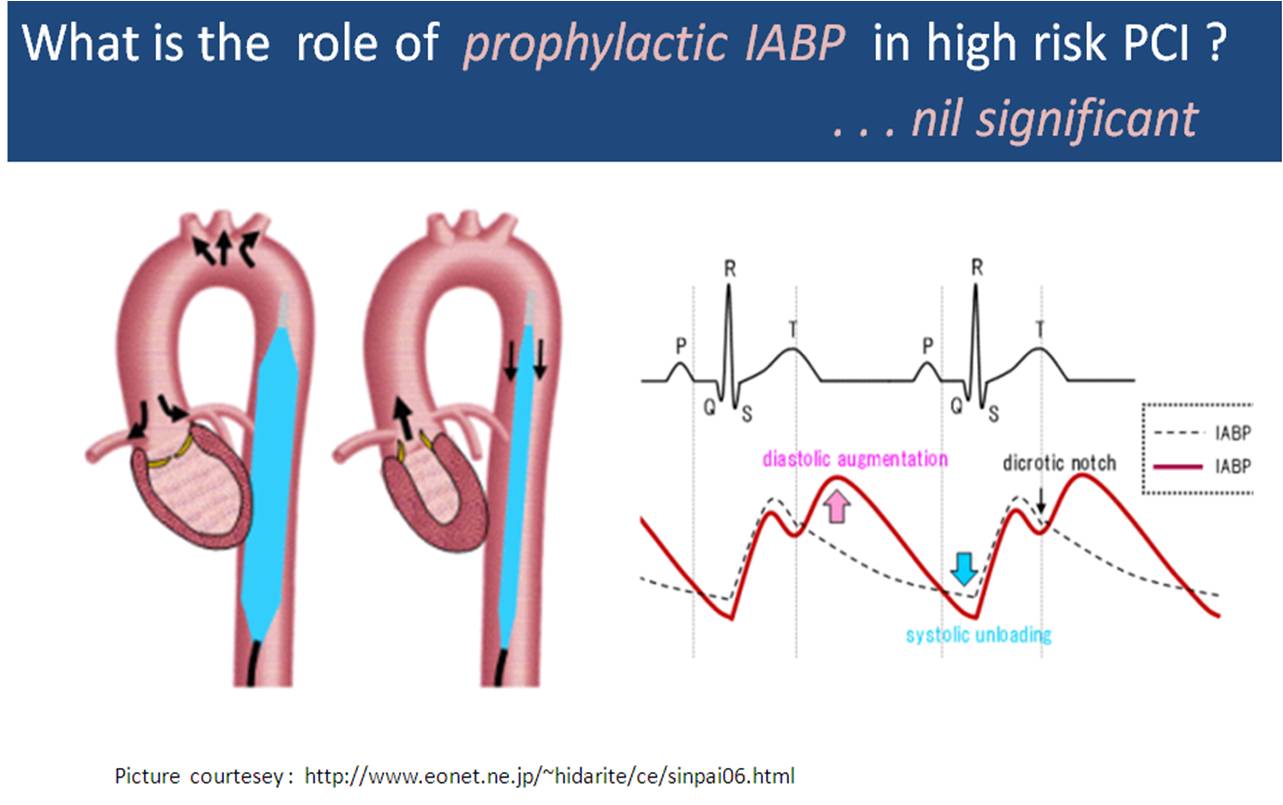
IABP is thought to be the  savior   when  PCI is done in severely compromised left ventricle and  in other  high risk angioplasties. Without verifying the facts,   routine use of this device became rampant  in cath labs around  the world in the last decade .

Everyone strongly believed , IABP  plays a major role in sustaining coronary  perfusion  during complex PCIs.  Then  the  favorable experience  started  pouring in,  from many cath labs  without IABP  support .   Common  sense struck us ,  and some one asked this question .


Should we routinely insert IABP in all  cases of high risk PCI. ?

The  study , published in  JAMA 2010  convincingly  answers  this  question


Can you do a high risk PCI without IABP back up facility ?

In academic sense “No” .

IABP service is not available in many cath labs in India for various reasons .But it does  not  become a contraindication to attempt PCI on  them .At least , we should have  facility to shift the patient  to a nearby advanced cardiac care centre  in case the need arises.

Final message

In plain language (Politeness removed !)  routine  prophylactic  IABP is not only useless ,  it could also  carry a  danger of access site ,  procedure  , expertise (Lack of  it ! ) related  hazards. Remember the Swan Ganz story !

http://jama.ama-assn.org/cgi/content/abstract/304/8/867

Read Full Post »

« Newer Posts - Older Posts »