Archive for the ‘cardiology -Therapeutics’ Category
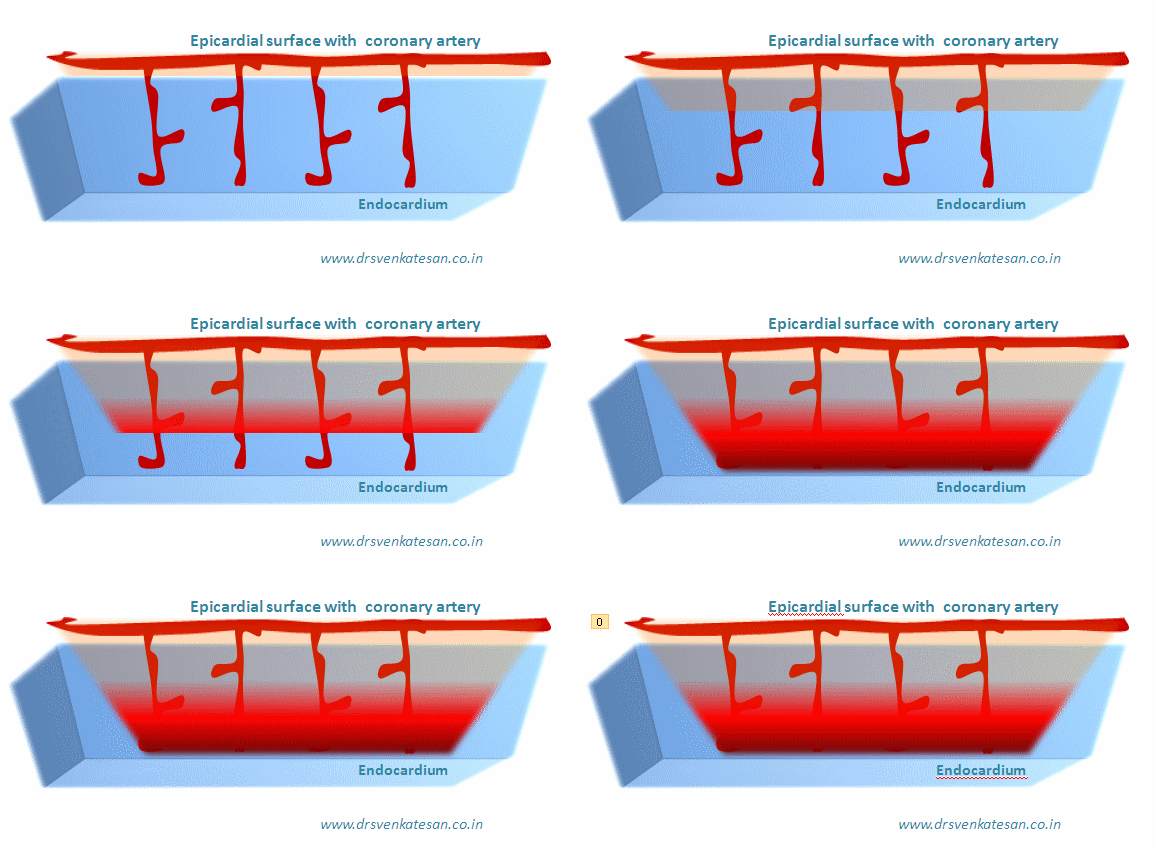
How does beta blocker acts as an anti anginal agent ?
Posted in cardiology -Therapeutics, Cardiology-Coronary artery disese, Uncategorized, tagged beta blocker anti anginal action, mechansim of angina relief by betablocker, mechansim of beta blcoker action in stable angina, sub endocardial flow on June 28, 2013| Leave a Comment »
“Arrhythmia of life”. . . and . . . “Arrhythmia of death”are one and the same !
Posted in cardiology -Therapeutics, Cardiology -unresolved questions, cardiology- coronary care, STEMI-Primary PCI, tagged arrhythmia of life and death are same, primary ventricular fibrillation, reperfusion arrhythmia on June 26, 2013| Leave a Comment »
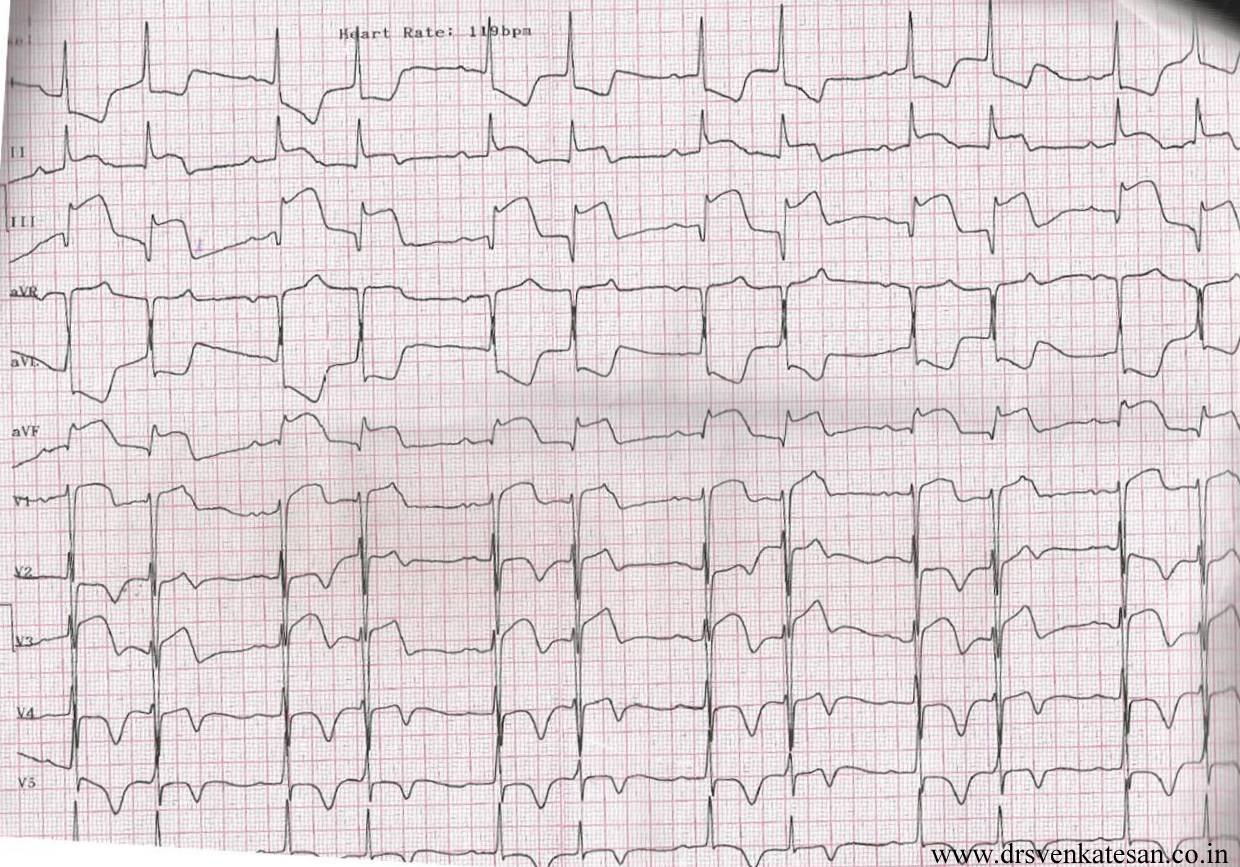
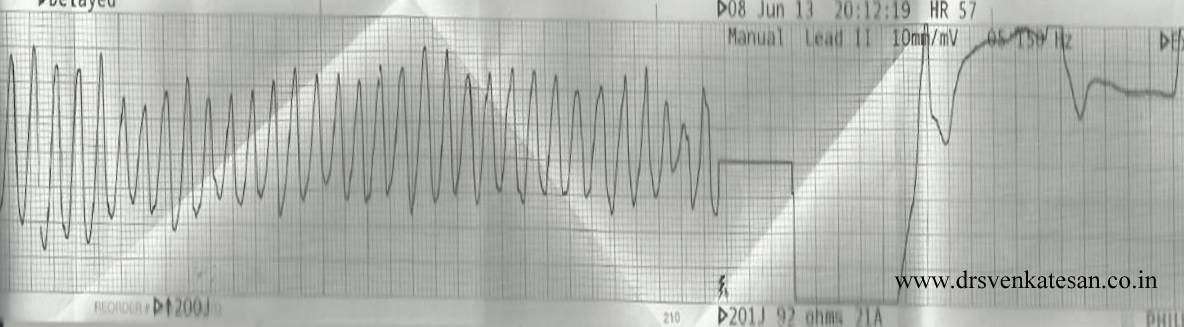
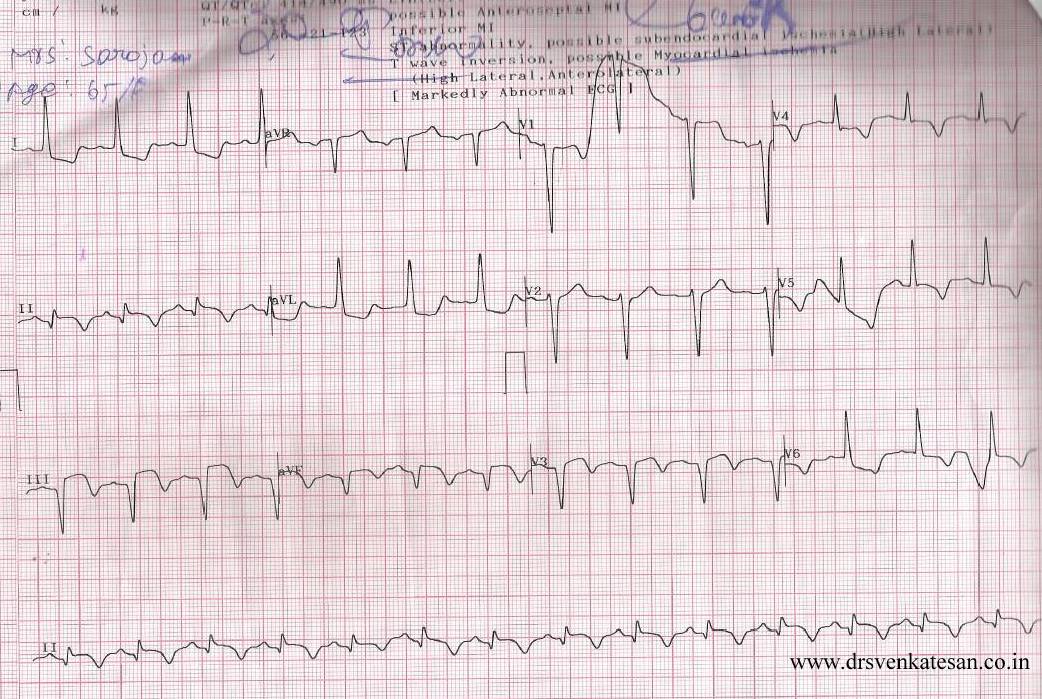
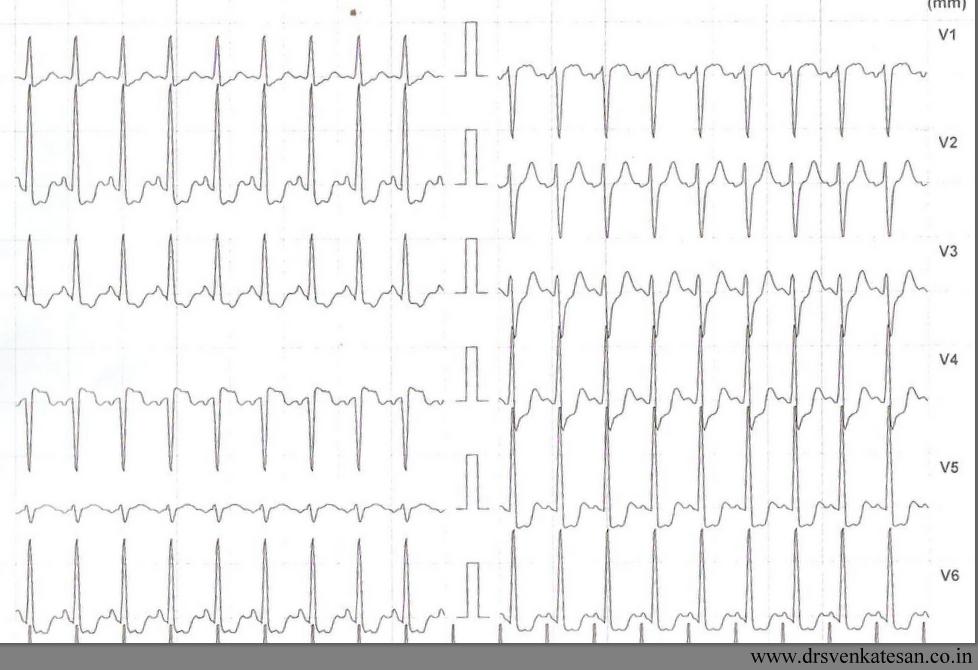
This is the story of a 55 year old women , who was received in our CCU with a dramatic STEMI (ECG looked like an action potential ) , LV S 3 and hypotension. It was impending cardiogenic shock.Since we do not have full fledged primary PCI program , thrombolysis was planned. She had cardiac arrest immediately after starting streptokinase infusion . She was promptly shocked and revived . The ECG changes rapidly reversed(ECG -3) . Every other hemodynamic parameter got stabilised as well . To our surprise ( few hours later ) this patient was so comfortable , sat up on her bed , demanded a discharge . (Which was refused of course !) One week later coronary angiogram was done, a near complete recannalisation of RCA was documented.
ECG -2 Developed cardiac arrest 10 minutes after starting the Streptokinase Infusion
ECG -3 .Taken few minutes following the VF
Acute myocardial infarction (STEMI) kills more than a million life every year . Majority of death happens within an hour of onset of symptoms. Ventricular fibrillation is the arrhythmia of death. Why this occurs only in few , while many are immune to it ?
God keeps this secret close to his chest , how and why he selects candidates for this arrhythmia !
Scientists are still far away in finding the truth . But , one thing is obvious .The moment coronary artery is totally occluded , the heart begins a fight and try to get rid of this obstruction . In the process , it goes into convulsion (VF) with a foolish belief , it can shrug of the thrombotic insult . Death often ensues if not intervened . (Very rarely VF can be a non sustained one and patient survives cardiac arrest !)
VF as a electrical response to reperfusion injury .
Often times , we witness patients to go for VF very early following thrombolysis . The thrombus in situ is an irritant , it triggers the inherent fibrinolytic system (Natural TPA included) If it is successful it opens the occlusion ( atleast partially ) and salvages the myocardium .If the fate is against the patient , very early reperfusion of IRA triggers VF . If this occurs at home survival is low .If the VF occur at hospital the probability of survival is near 100 % .
The intensity of natural lytic mechanism is the major determinant of early reperfusion . Ironically the same factor determines occurrence of the deadly VF .
I would believe , the STEMI patients who die early (even before reaching the hospital ) are (un) blessed with a fighting heart ! Ironically , the lazy hearts reach the hospital alive ! (slow & steady win the race !) . Of course , reperfusion injury is not the only mechanism of VF . Other common suspect is left main STEMI .
Link to related video “Ignorance based cardiology ”
https://www.youtube.com/watch?v=J9DH6Vr04es
Final message
While , VF is referred to as arrhythmia of death , it may in-fact , represent a common form of reperfusion arrhythmia in the setting of STEMI ! . . . Hence , it can Initiate a new lease of life in many lucky ones ! I hope the title of this article makes sense !
Importance of “TIMI 1” flow . . . in pharmaco Invasive strategy of STEMI !
Posted in Cardiology -Interventional -PCI, cardiology -Therapeutics, tagged failed thrombolysis, pharmaco Invasive strategy, rescue pci, stemi maangement, time window for pci on June 11, 2013| Leave a Comment »
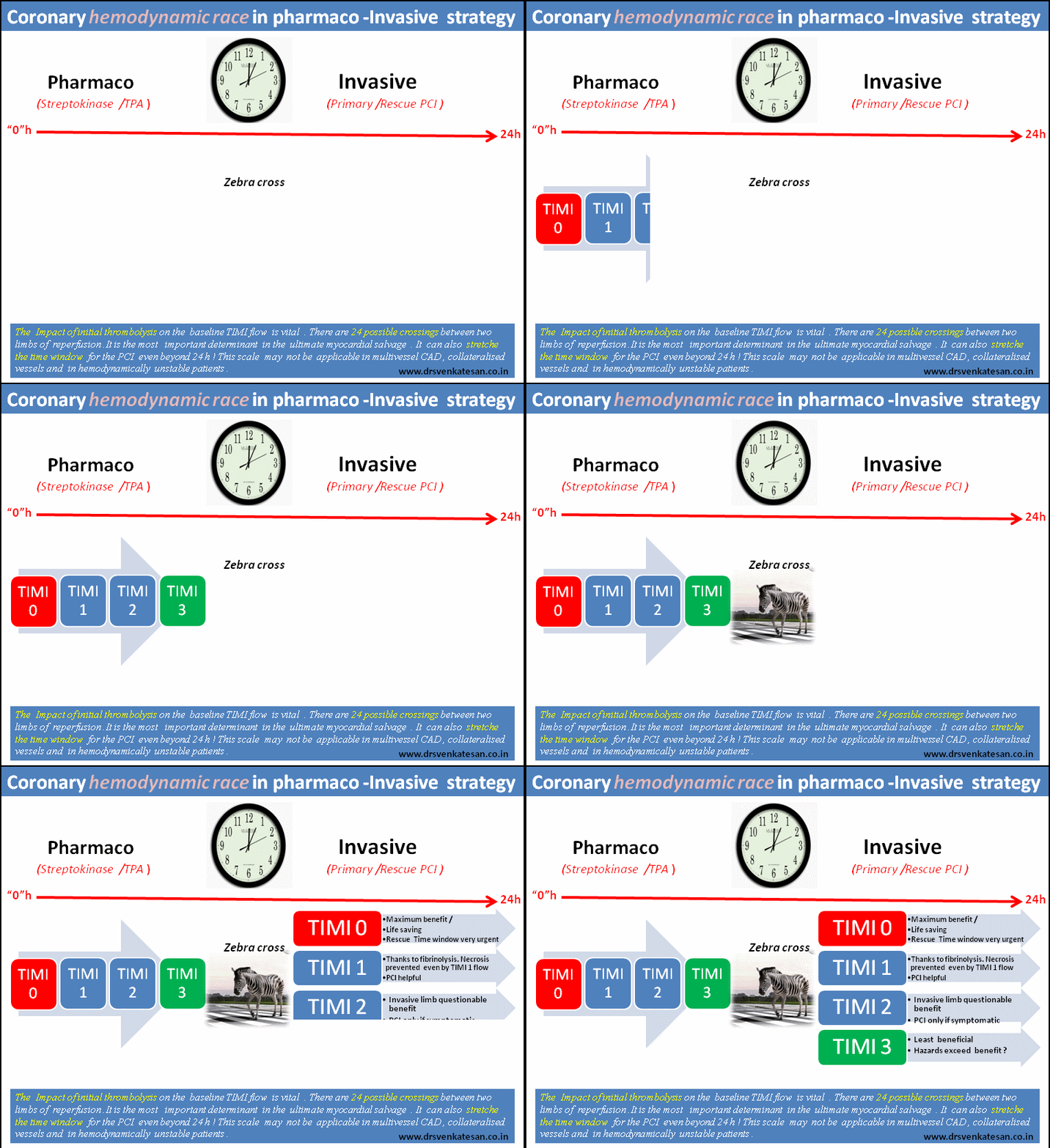
Do not ever under estimate the importance of TIMI 1 flow . It can save a major chunk of myocardium ! A late TIMI 3 flow . . . is far inferior . . . to an early TIMI 1 flow . * Even a trickle of flow (Ooze ) can keep the myocardium alive . This point we have realised very late. Thus came the pharmaco Invasive strategy for all STEMI who have no immediate access to cath lab ! (please note 90 % of STEMI belong to this group )
For a high resolution Image click below
CCU riders : ST depression + Rest angina is not equal to unstable angina !
Posted in Cardiology -Interventional -PCI, cardiology -Therapeutics, Cardiology -unresolved questions, tagged demand ischemia and unstable angina, mechansim of unstable angina, secondary unstable angina, thrombus less unstable angina, unstable angian without thrombus on May 31, 2013| Leave a Comment »
Thrombus laden plaque is sine qua-non of UA/NSTEMI . That’s what we have been taught ! right ? It may be true in many situations , but please remember there is another concept called demand ischemia , where in there is no active thrombus , still resting angina may occur due to increasing heart rate etc.
I just wanted to test how far this concept is understood , by the fellows in our coronary care unit . Following is story of a patient who arrived at CCU with angina at rest . I showed this ECG asked them the management .
History was purposefully blinded . 5/6 cardiologists wanted to admit the patient either in CCU or rush to cath lab. Heparin/ Fondaparuinux was prescribed by all. Tirofiabn was suggested by few.It is a high risk UA with left main disease some one mumbled .
I silently listened to them and revealed the history . This patient has just finished the exercise stress test , it was terminated as he had angina at peak exercise. and was reported as positive . A date was fixed for elective coronary angiogram. 10 minutes later ECG totally normalised , and the patient went home (Boarding a crowded Chennai city bus )
The fellows realised the importance of history . In fact no body asked for it ? I felt bad as all my fellows failed in this test That reflects bad teaching on my part !
What is the mechanism of ST depression here ?
- Fresh thrombus ?
- Mechanical occlusion ?
- High heart rate ?
- Combination of high rate and probable flow limiting lesion .
(Severe forms of stable angina can occur at rest . So do not equate all rest angina as true unstable angina !)
Final message
Do not label an ECG straightaway as acute coronary syndrome when there is baseline tachycardia and ST depression . Spare few minutes and apply your mind !
If a combination of ST depression and angina can be taken synonyms with UA every EST positive fellow should be labeled as UA and admitted in CCU. Please remember any tachycardia with a fixed tight lesion will mimic UA . Further , since there is no thrombus here and there is absolutely no role for heparin.
Simpe tips to suspect secondary hypertension .
Posted in cardiology -Therapeutics, Cardiology hypertension, tagged secondary hypertension, tips for hypertension on May 31, 2013| 1 Comment »
95 % of hypertension is designated as primary HT .What does it mean ? It means 95 % of times we do not know what exactly is the cause for raised blood pressure . Simply stated . . . it reflects 95% ignorance .
So what is secondary hypertension ?
Secondary HT is the one, in which we have specific reason for the raised BP. The most important cause is Renal , endocrine etc.
When will you suspect renal HT ?
https://drsvenkatesan.wordpress.com/2010/09/01/when-will-you-suspect-reno-vascular-hypertension/
How is secondary HT different ?
- Occur at relatively at young age (<45)
- It is generally more severe.
- Diastolic BP is proportionately higher ,
- End organ damage is more.
- It is very unlikely primary HT to present as acute LVF. One rule of thumb is , if diastolic blo0d pressure is > 120 never diagnose primary HT . Some amount of renal component is very likely.
Is stress related HT a form of secondary HT ?
PTCA : Percutaneous Transluminal “Credit” Angioplasty
Posted in Cardiology -guidelines, Cardiology -Interventional -PCI, cardiology -Therapeutics, cardiology innovation, tagged banking and cardiac care, cost of ptca, financial issues in cad, funding for cardiac care, insurance ethics in medical care, insurance in cad, ptca by credit, state vs central government spending for cardiology on May 31, 2013| Leave a Comment »
Heart disease was once considered as rich man’s disease . . . It’s no longer true . We in India , are witnessing an epidemic of CAD . The reasons are varied . Apart from conventional factors , social factors like changing demographic pattern , life style , ethnic risk like south Asian metabolic profile are responsible .
While Rheumatic heart disease (RHD ) continues to be a huge burden , CAD is the number one cause for cardiovascular morbidity and mortality .
CAD affect the poor and rich with equal vengeance . The later is better equipped financially to tackle it . Of course , it has resulted in maximum inappropriate interventions. The poor (or borderline poor ) have no other option but to knock the doors of Government hospitals. It is heartening to note, various state Governments are gradually involving insurance schemes.
Still , many struggle to find the required finance for a major cardiac intervention. It roughly costs 100,000 rupees for PTCA .While PCI is required in all symptomatic , critical coronary occlusions , still . . . majority of the CAD in general population do not require it . There are 675 cath labs in India performing 180000 angioplasties every year on an average of 15000 PCI per month ( 500 /day ) This is grossly inadequate . We have huge potential
What is the hurdle ?
- Expertise ?
- Hard ware ?
- Awareness ?
No . . . it is all about financial resources
Recently I stumbled upon an advertisement on Times of India
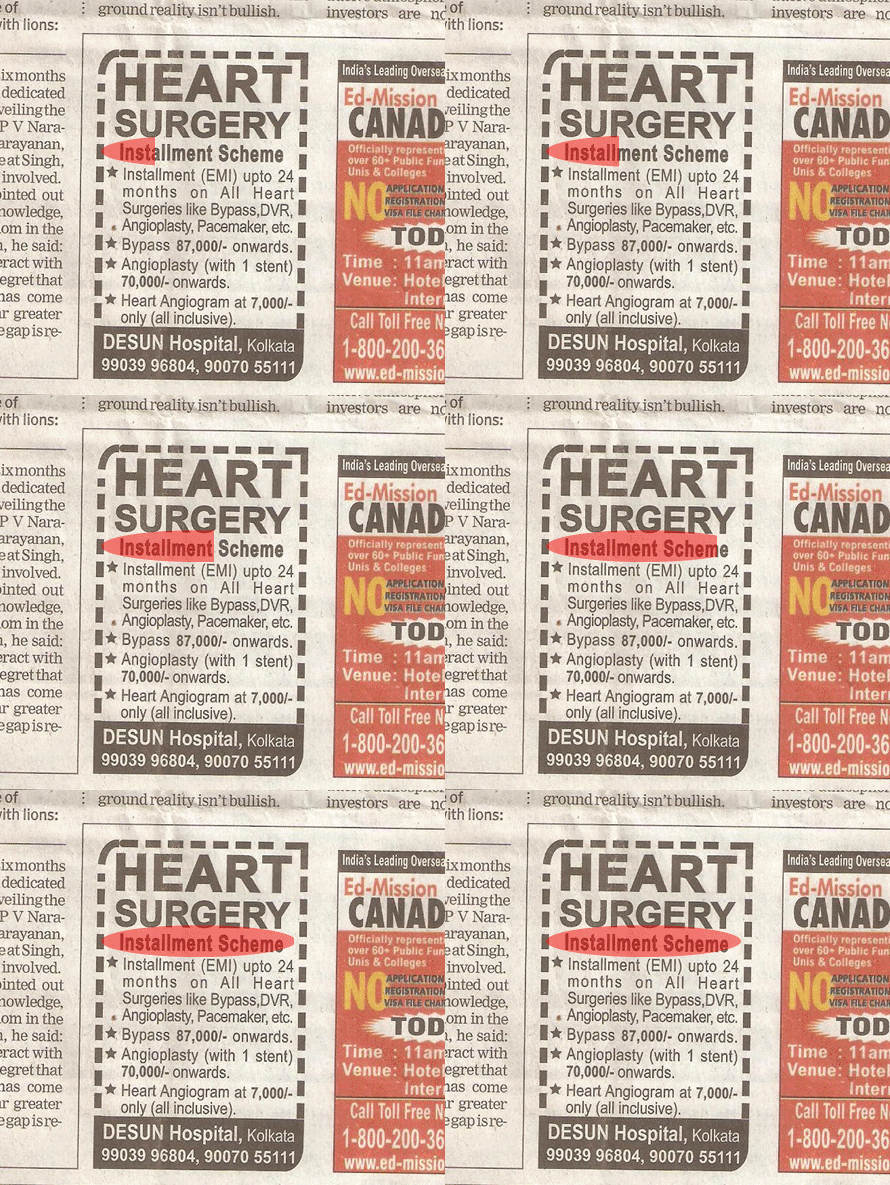
Disclaimer: This article does not in any way defame any hospital that offers the scheme.It just want to debate the concept.
Hospitals want to market the procedure . Convert angiograms to angioplasties . That’s corporate boardroom mantra . And one fine day , bankers and medical doctor sat together and brought a brilliant idea.
Why not do the procedure on credit and push the patient life long into a financial debt !
Wonderful idea . . . many thought .Thus came the financing scheme for cardiac procedures.
Final message
Financing a poor patient with good intention is welcome. But, there is big caveat .In a vast country with high illiteracy , inappropriate procedures may be thrusted upon on the poor souls.
After thought
Now , our patients have one more risk parameter to assess ” Number of remaining EMI( Equal monthly instalment ) and incidence of stent thrombosis” “Accumulated interest and angina” What a wonderful way to provide cardiac care !
I can recall a patient who sold his livestock (his sole income source ) for undergoing a open heart surgery and lost his life as well in the process leaving the family stranded !
Solution
The only solution is to provide a strictly regulated Govt sponsored insurance scheme. High tech procedures should be continuously and meticulously audited for cost effectiveness .
What is the mechanism of ventricular tachycardia in hypertrophic cardiomyopathy ?
Posted in cardiology -Therapeutics, Cardiology -unresolved questions, Cardiology-Arrhythmias, Infrequently asked questions in cardiology (iFAQs), tagged hocm, hypertrophic obstructive cardiomyopathy, lvot vt in hocm, mechanism of vt in hocm, mechansim of vt in hcm, septal vt in hocm, vt in hcm, vt in hocm, vulnerable spots in hocm on April 26, 2013| 1 Comment »
In HCM every myocyte is genetically made defective . Myofibrils are in disarray every where . Still , can we identify some vulnerable zones that acts as arrhythmic focus ? If that is possible , we have a opportunity to abate that focus .
In HOCM , which is the most stressed area ? LVOT ? Septum, ? When we say stress , it can mean either mechanical or electrical .
Does electrical instability involve the same zone as mechanical stress ?
How often VT originate from LVOT in HCM ? For this we have good clinical model _, the patients who underwent alcohol septal ablation.
What happens to the incidence of VT post septal ablation ?
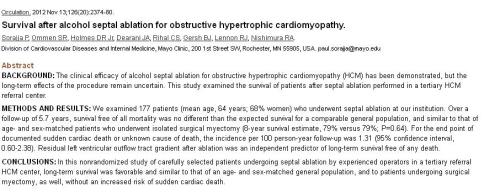
“It is reported post septal ablation the incidence of SCD becomes equal to general population” (Read the paper below )
If that is true , it is obvious the arrhythmic focus is also ablated along with LVOT myocardium .
Though many studies claim so ! It fails to convince us . HOCM is a diffuse disease of myocardium. Even a cluster of myocyte disarray with fibrosis can be a future focus irrespective of it’s location .
However , it is always possible relieving the mechanical stress of the LV can definitely reduce the likelihood of an electrical event .(Even if the arrhythmic focus is intact elsewhere !)
* We know RVOT is developmentally arrhythmia prone zone . We also know HCM involves RVOT (After all , IVS is legally shared by both ventricles ! ) . Some of the monomorphic VTs with LBBB morphology may originate from RVOT in HCM .
Management of recurrent VT in HOCM
- Drugs (Amiodarone/ Calclum blockers/ Beta blockers/Disopyramide)
- ICD- (Probably mainstay )
- Very rarely ablation (If localised focus is well documented )
Reference
1.A case report for successful ablation of VT in HOCM http://www.ncbi.nlm.nih.gov/pubmed/9255687
2.http://www.ncbi.nlm.nih.gov/pubmed/23076968
//
The hidden link between Mitral annular calcification and CAD !
Posted in cardiology -Therapeutics, Cardiology -unresolved questions, cardiology women, Cardiology-Coronary artery disese, echocardiography, MVPS, valvular heart disease, tagged annular vt, mac, mitral annular calcifcation, mitral valve calcification and cad, posterior mitral annulus calcification, vpds in mac, vpds in mitral annular calcification on April 19, 2013| Leave a Comment »
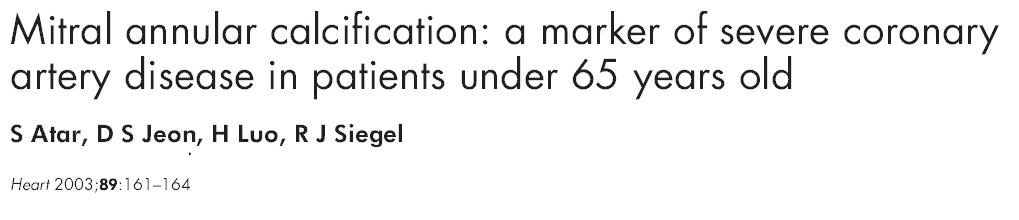
Why should mitral annulus gets calcified ? . Degenerative calcification can be benign in elderly . If it occurs prematurely (say < 55 years ) there is enough reasons to worry . This may represent a systemic vascular inflammation and is considered a surrogate marker for athero- vascular -sclerosis . A study from Cidar Sinai , Los angels has well documented the link way back in 2003 !
This is a large study involving 17 735 patients (who were investigated for symptoms of CAD ) were screened.
The incidence of MAC was high (As expected !)
- 35% > 65 years
- 5 % < 65 years
- The incidence of angiographic CAD among those who had MAC and no MAC was 88% v68% respectively ,( p = 0.0004),
- Left main coronary artery disease was (14% 4%, p = 0.009)
- Triple vessel disease was (54% v33%, p = 0.002).
- MAC is more common in women, especially diabetics .
- Degenerative Mitral regurgitation is common ,rarely mitral stenosis
- Recurrent VPDs and even trouble some mitral annular VT is possible
- Extensive calcific lesions in coronary artery is also reported with MAC.
Does PCI convert “A positive stress test” into “Negative” in all patients with CAD ?
Posted in Cardiology - Clinical, cardiology -ECG, Cardiology -Interventional -PCI, cardiology -Therapeutics, Cardiology -unresolved questions, chronic total occlusion (CTO), Clinical cardiology, cto chronic total occlusion, Diabetes and Heart, excercise stress test .EST, Infrequently asked questions in cardiology (iFAQs), tagged does tmt become negative following pci, est following pci, excercise stress test following pci stenting, pci in multivessel cad, ptca and pci, ptca and stress test, stenting and tmt positivity, stress positivity after pci, stress test in cad, tmt positive and pci on April 9, 2013| Leave a Comment »
Those who answered “Yes” , can leave this article . Those who answered “No” read further .
* Logic would tell us myocardial revascularisation should correct stress induced ischemia and it should disappear promptly . This does not happen in all cases real world ! That is why medicine is different from mathematical science .
Some of the reasons for persistence of stress positivity even after an apparently successful PCI are . . .
- Incomplete correction of ischemia. (Ideally to be referred as failed PCI )
- Error in Identifying culprit 9Angina related artery ) .Common feature of poorly worked up multivessel CAD.
- Re-stenosis /Re-occlusion
- Doing very early stress test without giving time for revascularisation to work *
- Rapid progression of non culprit lesions .(Sub -optimal medical management )
- Chronic N0-Reflow phenomenon surrounding area of infarct .(Especially in PCI of CTOs)
- Dyskinetic or grossly remodeled ventricular segments can result in non ischemic positive EST response (ST drag **)
- Associated systemic conditions especially Anemia/ SHT & LVH -(False positive )
- Many diabetic patients may continue to show stress ischemia due to small vessel disease.
- A patient with syndrome X characters can have incidental epicardial lesion as well . In such a patient EST will always be positive .
* Optimal time to do EST for assessing the efficacy of PCI/CABG is not established .Six months may be the reasonable point .If done within 2- 3 months it may end up in embarrassment for the Interventionist . (So only it is kept at 6 months , this also help us greatly as we can always blame it on poor life style control and progression of the disease !)
** No reference for this , a personal observation .We know Q leads following MI , will show ST elevation during stress test especially if the segments are dyskinetic . In leads diagonally opposite to q leads , ST depression is observed . This may not be a evidence for true ischemia . It probably represents ST drag due to mechanical stretch .
Bifurcation angle is what ?
Posted in Cardiology -Interventional -PCI, cardiology -Therapeutics, cardiology- coronary care, cath lab tips and tricks, tagged bifurcation lesion, bifurcation pci, carina plaque shift bifurcation lesion, medina classification, true bifurcation angle on April 7, 2013| Leave a Comment »
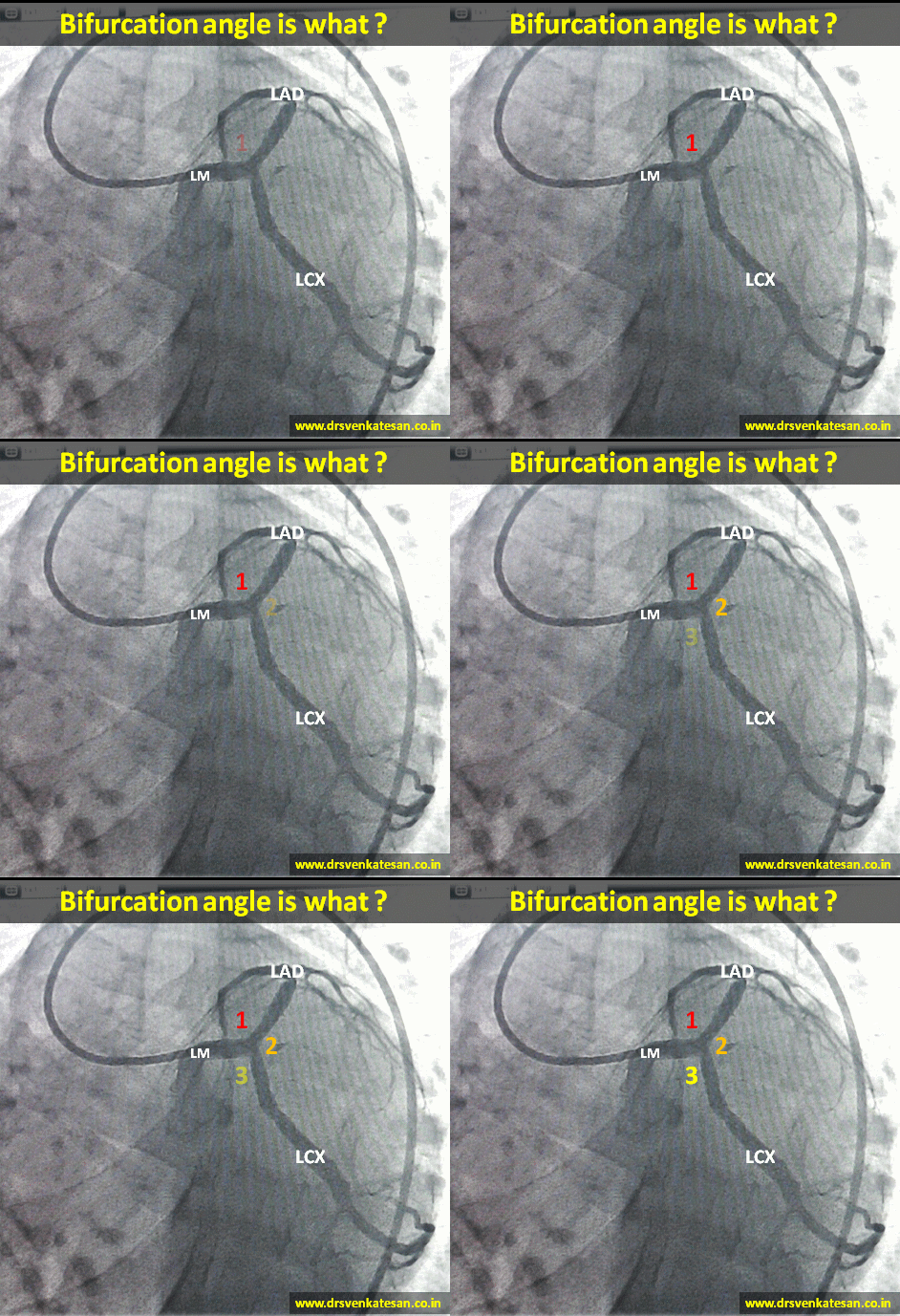
- At any branch point three angles are possible .True bifurcation angle is formed between LAD and LCX .
- The angle between LM and LAD or LM and LCX can also be important in specific situations ,especially when we encounter short left mains and Medina 1,1,0 lesions .
- Major bifurcation angle can occur in mid segments as well , between LAD / major Diagonal , LCX and OM.
- Logic would tell us the left main bifurcation angle is relatively fixed by the anatomical AV and IV grooves. Still early course of LAD and LCX can be out of grooves.
- Further ,the bifurcation angle is imparted some amount of dynamism by cardiac cycle . It can vary between 80 -120 degrees (LAD/LCX).
- Most importantly various angiographic views can alter the true angle (by illusion ) in dramatic fashion . RAO caudal view appear ideal to measure it. (LAO caudal make every bifurcation angle obtuse !)
- Acute angled bifurcations are prone for stent related mechanical issues both during deployment and in the long term outcome . (When two stent technique is used) This is because , acute angled bifurcations has a tendency to drift the carina , and encroach the lumen which can create new turbulence . Of course final kissing balloon is expected to reduce this hemodynamic side effect at least on paper !