Feeds:
Posts
Comments

Archive for the ‘cardiology -Therapeutics’ Category

Acute stroke /ICH/SAH/ Blood pressure is 210 /120 !

You are called in to control the BP  . . . What will you do ?

Basics

Neurogenic HT is adrenergic dependent /stress related .It is  often volume independent .Nitroglycerin worsens adrenergic  hypertension by reflex tachycardia even though it may drop the initial BP .Sustained reduction won’t happen with NTG .Further , nitroglycerine is known to elevate the intra cranial pressure and worsen  the stroke laden  cortical / brain-stem  ischemia

Best drugs

  1. Alpha methyl dopa
  2. Metoprolol
  3. Labetalol

Not best ( Worst ? )

  1. Nitroglycerine ( I guess  most  would disagree with this !  how dare you call NTG useless for   controlling HT )*
  2. Calcium blocker (It is still useful for spasm prevention in SAH)
  3. Diuretics

* IV NTG is useful in some of these patients for a instant effect. However , It has a huge risk of raising intra- cranial pressure .

Final message

Control of neurgenic HT requires correction of the primary trigger namely  the neural insult .The second best option is to stop the effects  neural signal outflow  .Adrenergic  blockers are the best way to do it . All other drugs like calcium/Nitric oxide /diuretics  are non specific  and only  provide a transient relief  and may in fact aggravate sympathetic mediated hypertension.There is no harm in giving  calcium blockers but it should always be accompanied by beta blockers to bring aggressive control .

Finally , controlling hypertension in stroke is to be done  with frequent confabulations !  with neurologists ,  as blood pressure  lowering modalities  has a competing interest with brain perfusion !
Read Full Post »

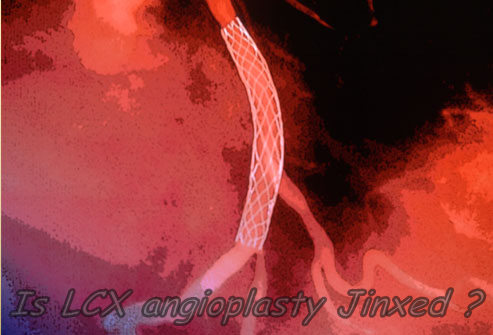
We frequently  hear  a comment  about  LCX angioplasty   being a  tricky intervention   . Even  many experienced cardiologists   do agree with this .

What could be the  apparent explanation for this seemingly important observation in cath lab ?

  1. The first and foremost is the anatomical  uniqueness of  origin and course of LCX. LAD is direct continuation of  left-main  , while LCX always  originate  with a  considerable angle at  it’s origin   . Further downstream  it flexes circum-ferentially over the lateral free wall of left ventricle .This  ensures  the  catheters and stents  we   maneuver often  traverse a hair pin bend  .
  2. The  endurance of  coronary stents are  put into biggest test during LCX angioplasty . While any mediocre metal stent can sit comfortably in LAD , LCX is different story altogether.(A flexible multi link  model  like that of Abbot Vision platform seems ideal . )
  3. The LCX wire crossing and exchange  is vested  with  potential  threat  to  the much important LAD circulation . Time and again , we have observed  ,  prolonged procedures  inside    LCX  some how compromise    the LAD  flow.
  4. Once the LCX is opened ( especially in  a CTO , ) there is a sort of   stealing  of LAD blood flow. We have witnessed this in  at least 2 patients , who developed  anterior  MI after opening up of LCX CTO. (Who  had a insignificant  LAD lesion )
  5. LAD may be widow maker artery ,  but it remains a fact  LCX   has much  more important role in regulating  mitral valve  papillary  muscle  . Even transient  ischemia  in  LCX territory can result in  lung congestion or even  flash pulmonary edema .This  is  fairly frequent during complex LCX angioplasty .
  6. The antero-lateral pap muscle is located in a critical location especially so in post infarct remodeled left ventricle  even minor degrees of ischemia can  create  a havoc .This is what   occurs during  flash  pulmonary edemas in LCX angioplasties.
  7. Spillover of thrombus from LCX to  LAD  can occur  during  aspiration  of   LCX  primary PCI
  8. Finally,   ECG  changes   are often blind in LCX territory . It remains an  Irony ,  we  do not monitor  the heart  with 12 leads during   sensitive procedure like a PCI.(The monitor leads easily miss LCX ischemia .This is hardly surprising,   as we know   LCX territory  has blind spots even with 12 lead ECG !)


Final message

It is  true LCX angioplasties can not be taken casually . One can not afford to have a prolonged procedure  within LCX.Whether dominant or not   LCX  delivers  blood supply  to more vital areas  of myocardium  that typically  includes lateral free wall and  mitral valve function .It is possible septal ischemia is  relatively well tolerated while free wall ischemia triggers an early mechanical deterioration .

Read Full Post »

A young man with   VT  (LBBB morphology ) and  apparently normal heart by   echocardiogram  is  a  real  diagnostic challenge .
Here is a comparison  of  the two  closely mimicking  entities. RVOT VT and ARVD .
Please note -Micro reentry and triggered activity  are very closely related cellular evens. For all clinical reasons there is generally no purpose in differentiating the two.

*Please note -Micro reentry and triggered activity  mimic each other at the cellular level . For all clinical reasons there is generally no purpose in differentiating the two.

*RVOT- Right ventricular outflow tract. ARVD/ARVC -Arrhythmogenic  right ventricular dysplasia /cardiomyopathy

(Caution : RVOT vs ARVD  -In  the traditional medical teaching system , we are often taught to differentiate  two closely related  entities.Our brain also loves to look things in either black or white . Realise , medical science always brings  surprises . There can be significant overlaps between the very entities we want to differentiate.Bear that in mind)

Reference

1. Hoffmayer KS, Machado ON, Marcus GM, Electrocardiographic comparison of ventricular arrhythmias in patients with arrhythmogenic right ventricular cardiomyopathy and right ventricular outflow tract tachycardia. J Am Coll Cardiol. 2011 Aug 16;58(8):831-8.

2 .Ainsworth CD, Skanes AC, Klein GJ Differentiating arrhythmogenic right ventricular cardiomyopathy from right ventricular outflow tract ventricular tachycardia using multilead QRS duration and axis. Heart Rhythm. 2006 Apr;3(4):416-23.

T wave inversion in V1 TO V3 for diagnosing  RVOT VT .

3.Daniel P. Morin,  Andreas C. Mauer, Kathleen Gear, Usefulness of Precordial T-Wave Inversion to Distinguish Arrhythmogenic Right Ventricular Cardiomyopathy from Idiopathic Ventricular Tachycardia Arising from the Right Ventricular Outflow Tract .Am J Cardiol. 2010 June 15; 105(12): 1821–1824

Read Full Post »

Acute coronary syndrome is the number one cardiac emergency .In any coronary care unit there are vital differences  between men and women in terms of ACS presentation and outcome . Though there can be variation in ethnic , geographical   factors .The following is   an observation  from one of the Asia’s oldest  and  largest coronary care unit over a period of 40 years . (Madras medical college Chenna ,India )

There is  very significant gender advantage in the incidence of ACS. The male female ratio is consistently around  4: 1 .This Indicates for every day , men suffer from ACS  by four  fold more .This is a very hard data can not be ignored . Women present to the hospital much later than men .This may be due to increased tolerance of pain, social issues  waiting for their spouse to arrive etc

  • There is a  significant  difference in the pattern of ACS in men and women . Men present with STEMI  and women present with more of NSTEMI . In  NSTEMI  the gender ratio is dramatically equal 1 :1 .
  • Explosive chest pains are less common in women .
  • For some unknown reason  diabetes  afflicts  women with a  greater ferocity  !
  • Similarly  it appears  obesity and dyslipidemia has more significance in women
  • Sudden cardiac death and primary VF is many fold less common in women.
  • Mechanical complications like mitral regurgitation and ventricular septal rupture are several fold higher in women (Weak muscle low muscle mass ?)
  • Thrombolytic success is slightly lower in women than men .
  • The overall outcome in ACS is same as men .Some say women fare  worse  .This is important because while they are protected heavily against development of CAD once they develop it  the outcome seems  exempted  from the gender advantage .The reason for this is not clear

Final message

Women show their  unique way   in ACS  too ! Some   of them are  true  advantages  while  few are disadvantages .The mechanism for these differences  can not be entirely attributable to presence or absence of  estrogen . The hard fact is ,  women always score over men in the tolerance levels and  deal effectively stress situations .  It would appear Women’s body   easily nullify adrenergic triggers .

Reference

Reference less cardiology .

Read Full Post »

This was question thrown at me ,  in one of the  patient -physician meet .

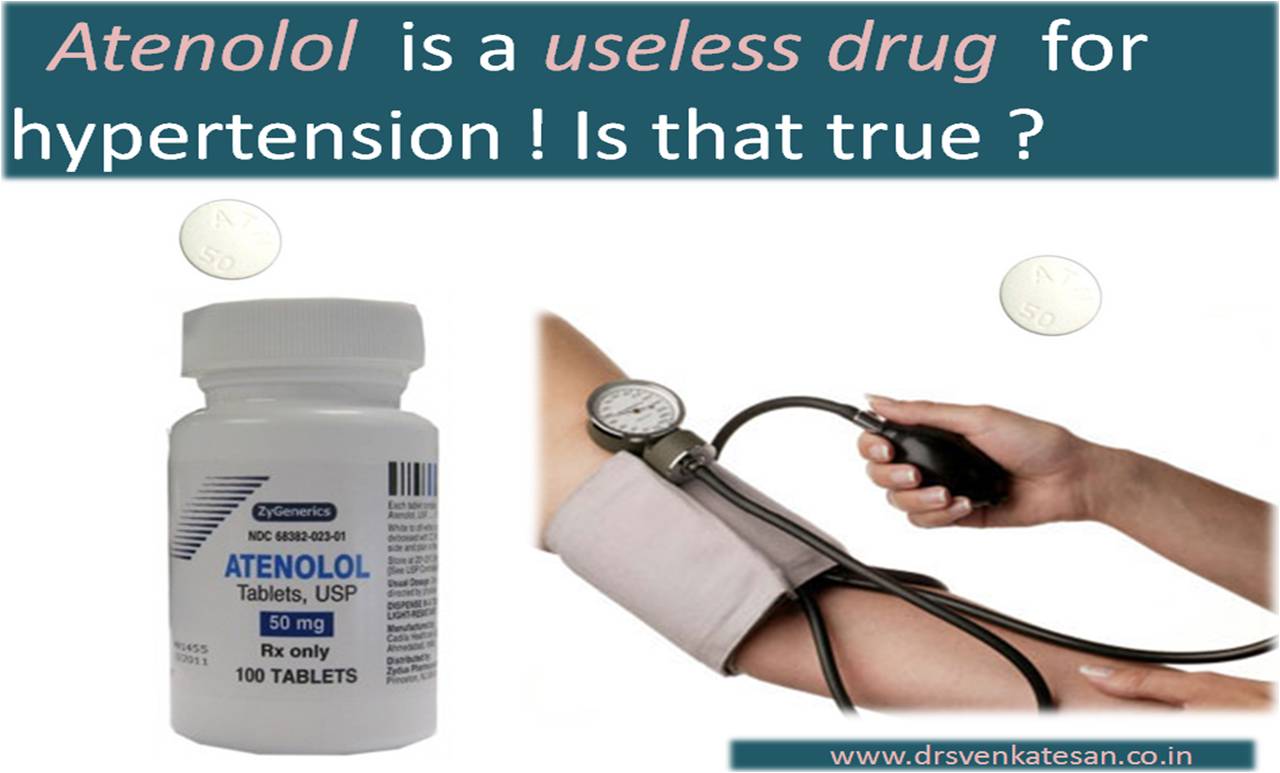
“I am a 58 year old business man . I am taking tab Atenolol 50mg for over  6  years .I am comfortable with that .My  BP hovers around 130 /80 mmhg .My heart rate is 64/mt . I have recently  moved to a popular city in south India  . Now , my cardiologist thinks Tablet Atenolol  for hypertension is useless  . . . what do you say sir ?

My answer went on like this  . . . causing much  displeasure  to my  colleagues !

Atenolol  is a  wonder drug for management of both hypertension and angina for more than 2 decades .  It is  still useful in majority of patients with HT .

The reason for  current generation of cardiac physicians   shunning  away  from this drug  is  largely  for  non academic reasons . A drug which is  in market for more than  a decade ,  generally becomes a generic one. Generic drugs are  like  orphan drugs !   and patients  who consume generics are inferior ones .This is how market economics want us to think .

Physicians are sincere followers of  science and science is not sacred ,  often times  . . .  it is the creation  of   corporate gimmicks .

Few small  studies ,  one major publication  , few guideline   from  influential    scientific bodies  , cocktail of   seminars  , symposiums   all that  is required to disseminate  a concept !

The second major reason is every physician wants to behave in unique way . He fears loosing  his prestige and  charm  if  he  continues the same drug prescribed by another physician  . Many patients also do not like to continue the same drug for long time  !

And now a few words for the cardiac scientists !

*The concept of central aortic pressure and beta blocker’s lack of control over it are all concocted .Beta blocker is most powerful agent to reduce the shearing stress in the walls of aorta . We know that and we believe in that and we prescribe it for aortic dissection to attenuate the intimal tear . Can it do this  . . . without lowering central aortic pressure ? Think for a moment !

Atenol and Metoprolol : The curious  companions .

Both being   closely related beta blockers ,  what makes  Atenolol  to be frowned  upon   and  still   Metoprolol  is  alive and kicking  !

 My final answer to your question !

Atenolol is still useful in the management  of HT. If your BP is well controlled ,  and you have no side effects,  there is absolutely no need to change  the drug   . . .  if  you are  insisted  , you may consider  changing  your doctor   . . . . . .  rather !

Read Full Post »

Failed thrombolysis is a well debated concept, while failed primary PCI is a conveniently neglected phenomenon .

How to assess successful reperfusion following PCI or thrombolysis?

I do not know how many  of us know this vital fact !

Coronary angiogram is squarely beaten by the humble  ECG in assessing the effectiveness of myocardial  reperfusion . This is not hard to understand as  coronary angiogram *  can  tell us only  about epicardial  patency ,  while ECG  sends vital perfusion  data from within the  myocytes ! Which do you  think is superior ?

And now  interventional cardiologist have realised this fact . they  measure the ST segment  regression instantly once the primary  PCI is  completed . How ?  An ECG is recorded from  right inside the infarct  related artery .

*Of course myocardial blush score , TIMI frame count are poor alternatives !

This paper just published in CCI is  a fascinating revelation .

http://onlinelibrary.wiley.com/doi/10.1002/ccd.23455/abstract

Read Full Post »

How to manage an  asymptomatic 45 year old man with  90 %  mid  LAD lesion  , with  FFR  .9   who is  stress test  positive at 9 Mets  ?

Six  cardiologists and six responses   . . .  and the elusive seventh sense

  1. FFR is most scientific test to assess  physiology of coronary stenosis  . I will  go with that  and put this patient under  medical management.
  2. I agree with FFR, still the  patient has no symptoms  , but why the hell is EST  + ve ?  I am confused  .
  3. I would definitely stent the lesion irrespective of the symptoms .
  4. I would order a stress thallium . I do not believe in FFR
  5. The data provided  is insufficient. I would like to this patient in my clinic , and if necessary  may  order a fresh CAG.
  6. For a 90 % LAD  lesion FFR should not have been done in the first place .That is the root of the confusion. He should have received a stent long back .

Final message

FFR is  a terrible concept   for two reasons . One ,  it never bothers about flow across  a lesion. It simply  relies upon  pressure drop. we all know  there  is an intricate relationship   between pressure and flow . Simple pressure drop can never be  expected to translate into incremental flow in biological systems .The  second major limitation is  it  ignores the  morphology of the lesion . We know an eccentric soft  lesion with a  good distal   FFR  is  live  coronary explosive .

Read Full Post »

This is a true story  . . . happened  many years  ago under my direct  vision.

A  48 year old women came with significant breathlessness and catchy  sub -sternal chest pain .

“I  was exerting too much in recent days  doctor” , she said .

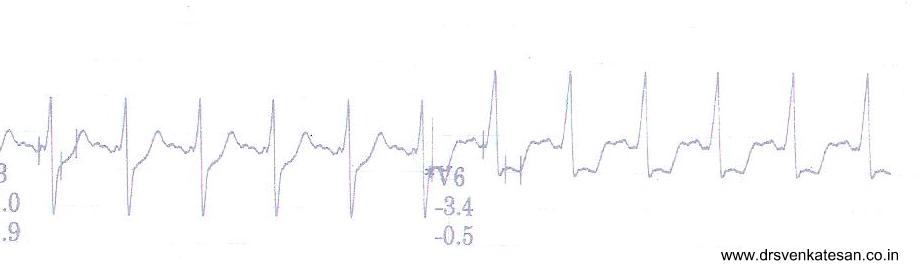
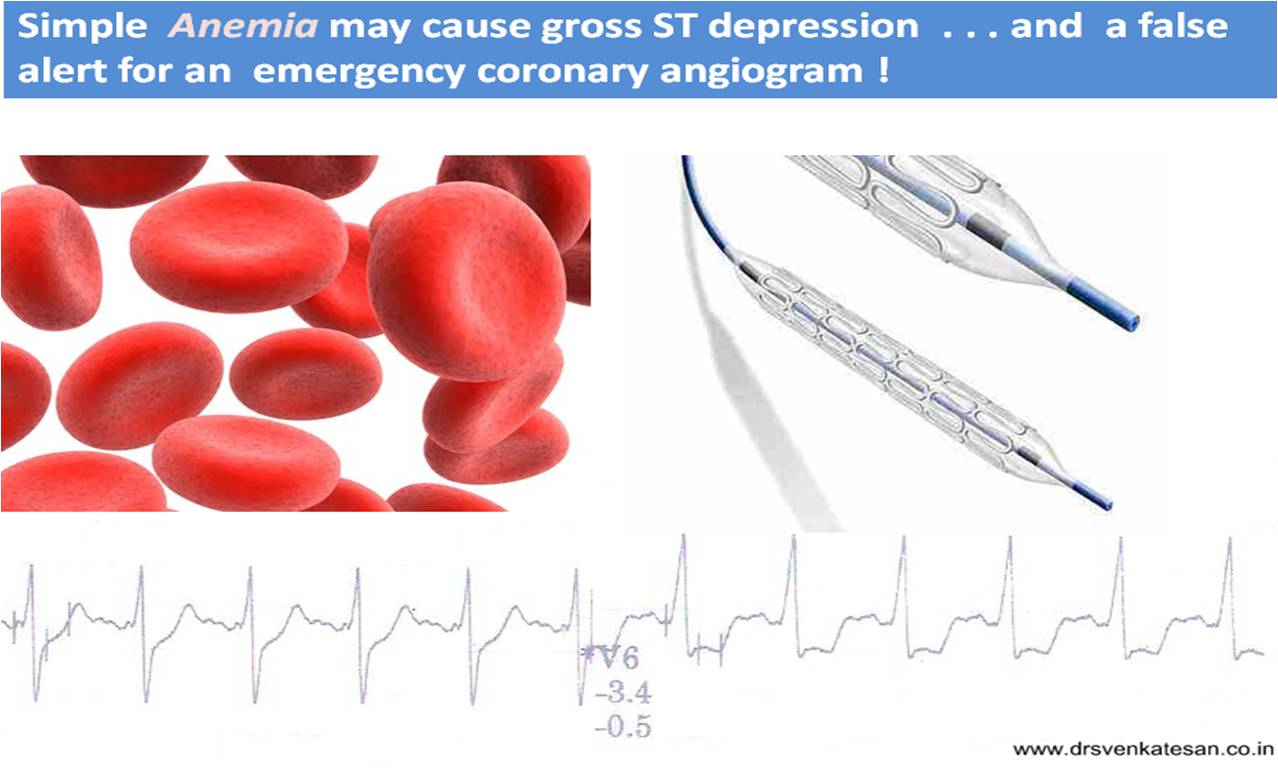
Her ECG  showed  a tachycardia and dramatic ST depression in most leads .

The ER in charge promptly texted the cardiologist .

The moment he saw the ECG ,he  had no hesitation , to order for an emergency angioplasty  (  How can he plan a angioplasty  , without even  knowing the coroanry anatomy . some one murmured  . May be   . . what he probably  meant was emergency angiogram   the other explained )    Further , he was telling his    fellows  . . . that  this is going top be  tough case and a possible  left main PCI .

An emergency  angiogram was done .  On table  it was a huge  surprise for every one ,  it was a  a classical  text book   look alike normal coronary arteries !

The moment normal CAG was  visualized  the consultant  concealed his momentary  surprise    and went on to say  it is classical case of syndrome  X   with severe micro- vascular disease causing ECG changes !

As  the patient did not give any opportunity to poke her coronaries   she was wheeled out of  wheeled out of cath lab.

Meanwhile ,  first year  fellow came rushing with the blood reports and biochemistry .

Is everything  alright ?   Yeh sir ,  except her Hb %  . . .  it is  5.6  Grams !

The bewildered  consultant *  realized   the  high  coronary drama , that is  been enacted  over the  past 2 hours !  and  learnt  (and taught) a most important  lesson to their fellows !

Hi guys , this is neither  a NSTEMI nor  a microvascular syndrome X  . . . this is simply anemia related  extreme  ECG changes !  We have erred in our reasoning and  our pre cath clinical scrutiny has  gone awry ! 

He went on to say  ,  don’t worry  many times medicine is learnt in  hard ways  . After all nothing adverse has  happened here .

The women was subsequently investigated and handed over to  gynecologist for a probable hysterectomy .

Final message

Please be reminded  , anemia  can produce  variety  of  ECG changes.  In extreme anemia  global ST depression is  common especially if  tachycardia is associated .

The lesson here  is ,  whenever  gross  ST depression is witnessed  with vague chest pain  check the hemoglobin first . This is an unusual story of a women  ,  with simple  anemia  (due to   chronic mennorhagia )   landed in cath table in an acute fashion .  Luckily  she  did not have any  incidental coronary  lesions  that prevented her becoming a  greater cath lab  victim !

* The bewildered consultant is none other than the author  of this blog.

Read Full Post »

Hi all ,

I get frequent comments about my blog. I do try to answer many of them . This is a very unique one , and it is making me think further.Since he has specifically wished his clinical data could be eye opener for others ,  I am jut posting it here . The comment was in response to my article  Who said coronary collateral circulation will not support exercise ?   here is  the extract

Dr. Venkatesan,

I read your blog with great interest and I think I may have something useful to contribute from my own personal experience. I am a 68 year old male with a long history of smoking (for fifty years), and a history of uncorrected hypertension over the years (it has been corrected to normal with medication for many years now). I am a non-smoker now for the past 18 months. I have PAD and a moderate aortic aneurysm of about 3.5CM (ascending and descending) which is being watched with regular vascular scans.
The common femoral arteries in both of my legs are nearly 100% occluded between my thighs and my knees, and yet my ankle and toe blood pressures (and my circulation in my ankles and feet) is almost normal. The reason for that is that according to the vascular scan, my deep femoral arteries are much larger caliber than normal with extensive vascular collateralization by passing the common femoral occlusions.
About twenty years ago before the PAD diagnosis, I realized that I had claudication in both of my calves when I walked a short distance. I expected this was being caused by an arterial blockage in my legs, so I went to the gym every day for about three years, and walked through the pain every day. I believe this contributed to the formation of the collaterals that have perhaps saved my legs and feet.
I also have heart disease, and had a fairly minor heart attack in 1999. No stents were placed nor angioplasty performed at that time. I recently had an arteriogram and cardiac stress MRI which showed that two of the three coronary arteries are now 100% occluded (apparently I had another cardiac event and did not know it). The cardiologist says that the LAD is in extremely good condition and has numerous collaterals branching from it. I have no symptoms whatever from all of this, except that my LVEF is low (about 35%). I walk at a very brisk pace six miles per day, five days per week, and I monitor my pulse rate with a pulse monitor when I walk. I keep my pulse between 115 and 120 which I calculate to be 80% of maximum for my age. I believe this cardio exercise / walking has also helped with the collateral formation, and I am hoping to bring the LVEF back up to a reasonable number with this exercise regimen.
My cardiologist has recommended an ICD, but I have decided against that since I have never had VT or VF or any other type of cardiac arrythmia (except for non-symptomatic PVC’s which I was born with).
I believe that I am the lucky recipient of good genetics to begin with, but also I am highly motivated now to take better care of myself, and know as much as I can about the conditions that I have. I plan to have an echocardiogram in six months to see if the LVEF numbers have improved, and I fully expect that they will have. I give credit to the smoking history for the vascular problems that I have including the cardiac problems. I am a lucky person I think, and suspect that not everyone has the fortunate ability to heal themselves the way I have.
I have asked for copies of my arteriogram and stress MRI records. If you are interested in looking at these I would be happy to share them with you.

The letter ends .

Dear Mr Weigel

Yours is an extremely interesting story  told in a most scientific manner.Thank you .

It gives me great insight  ,  how a  human vascular system  can  transform when confronted with  natural disasters like multiple blocks on its way .A flowing river will definitely reach its destination  however bizarre the path it takes . Human biology is vested with vast reserves of genetic building blocks put on sleep  mode. While billions of dollars are being pumped into do research in human angiogenesis we have tuned a  blind eye to the vast net work of natural collaterals.

Our clinical experiences also tell the same thing . In chronic total occlusion  majority of patients would develop good collaterals if only we do not  tamper  the  main vessel  .None of scientific studied available has proven opening CTOs (Chronic total occlusions) has improved the clinical outcome .

Regarding  the guidelines  for revascualrisation ,  I am yet to come across a standard scientific guidelines that includes the extent of collateral circulation  as one of the determinant for need for revascularisation !

I will definitely use your case study for the benefit of so many patients !  I always feel , a properly interpreted experience  , even from a  single patient   can make a tremendous impact in the growth of science .

Thanks again for sharing your personal health issues !

Dr Venkatesan
Chennai .India .

Read Full Post »

Under physiological condition ,  pre-load , after load , and cardiac  contractility should be a sequentially matching parameters . After load mismatch is an important concept , where myocardial contractility is temporarily  depressed due to  lack of adequate pre-load for a given level of after load .

This is also  referred to as descending limb LV function paradox .

The three  common clinical situation  AL mismatch  occurs

  1. Critical Aortic stenosis              (High aortic after load )
  2. Acute Hypertension                   (High after Load -Normal and  low pre-load)
  3. Severe diastolic dysfunction  (Pre-load is high -After load is normal )

If it happens acutely the myocardium becomes dyfunctional  due to  mechanical non ischemic stunning .Once the after load comes down the contractility improves .

What  is the chronic adoptive response to after load mismatch ?

LVH is the major  chronic adoptive response to AL mismatch.

LVH reduces the wall stress which will reduce the after load  indirectly .

So LVH neutralises the   high  after load .Laplace law at work . (Wall stress is equal to  2 times the radius divided by thickness of the wall )

Here  is the Link to the great lecture by John Ross Jr  in LA Jolla , California in one of the annual scientific session of AHA   more than 25 years ago . http://www.ncbi.nlm.nih.gov/pubmed/966366 .The concept is alive and kicking even today .I am sorry to  note   this  important physiological concept   never received the attention it deserves .  I would vouch , it  can be as   important as Frank starling  principle .

Reference :

https://content.onlinejacc.org/data/Journals/JAC/22702/04186.pdf

//

Read Full Post »

« Newer Posts - Older Posts »