Feeds:
Posts
Comments

Archive for the ‘Infrequently asked questions in cardiology (iFAQs)’ Category

Ventricular fibrillation is invariably fatal if not treated . When can atrial fibrillation be fatal ? 

                                     Atrial fibrillation is relatively a benign arrhythmia especially when it occurs in isolation with  structurally normal heart.This is sometimes referred to lone atrial fibrillation . Even otherwise, atrial fibrillation is rarely fatal except in few situations.But AF commonly destabilises the patient  who have baseline valvular or myocardial disease.(Post MI, dilated cardiomyopathy etc)

There are few situations where AF can be life threatening

  • In patients  with WPW syndrome*where , AF  enters into a electrical short  circuit , downhill to enter the ventricle and make it fire at the same rate as that of atria . ( ie 400-600) and result in ventricular  fibrillation.Note , even here it is the VF that kills  not , AF per se.
  • AF in acute MI  often precipitates LVF , but rarely fatal.
  • In patients with critical aortic stenosis, or hypertrophic cardiomyopathy, sudden onset of AF can result in acute cardiac failure.
  • AF is often a terminal event in primary pulmonary hypertension

While atrial fibrillation is  less likely to cause  death , it is  a highly morbid arrhythmia .It is one of important cause of stroke in elderly as well as young !

Read Full Post »

               Usually in the the vascular  system both artery and  vein  go together .It is an  irony in pulmonary circualtion  these two never go together .Another paradox is that pulmonary artery carries the most deoxygenated  blood and pulmonary vien carries the purest  form of blood in the entrie body , probably God has kept them widely seperated as  communication between them  seriously affect the physiology.

Read Full Post »

Ventricular tachycardia is considered as one of the most  dangerous  cardiac arrhythmia .Rather , it is the label  VT  that spreads more  fear than the arrhythmia itself. It is a fact many patients with VT walk into hospital , still  VT will always be a sinister arrhythmia as long as it carries a risk of degenerating into ventricular fibrillation.

What determines hemodynamic stability in VT ?

  • Origin and location of VT
  • The ventricular rate
  • Presence or absence of AV dissociation
  • Impact on mitral inflow pattern
  • Associated left ventricular dysfunction or valvular heart disease.
  • VT in the setting of acute coronary syndrome.(Ischemic VT)
  • Inappropriate drug selection

Origin and location

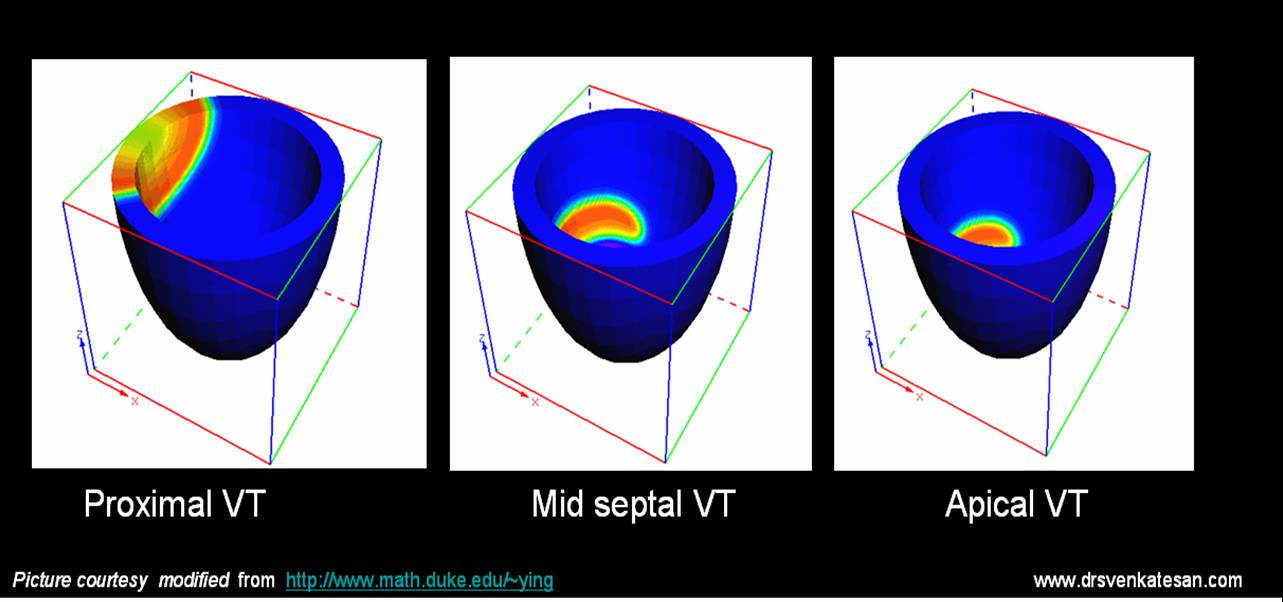
VTs originating high up in the ventricle( High septal VT,Proximal VTs) have more organised ventricular contraction  and they are more stable.Distal VT  originating  in the myocardium away from the conducting system has chaotic myocyte to myocyte conduction.These are very unstable.

The term fascicular VT is nothing but VTs originating  in the His bundle and it’s branches( Can also be termed Septal VT ).These VTs are also stable and some of them respond well to calcium blockers indicating that they are very close to the AV junction and carry the properties of junctional tachycardia. QRS width gives  a rough estimate about the location of VT. Narrower the VT higher it’s origin.( But remember even in VT ,  qrs can further widen on it’s way downhill !)

LV dysfunction.

This is probably the most important determinant of the outcome in VT. Patients with severe LV dysfunction (EF <30%) fare badly .Hence the land mark concepts from MADIT 1& 2 demanded ICDs in these patients.The most common clinical setting is  dilated cardiomyopathy.SomE of them have bundle branch re entry(BBR).This particular  VT can be stable for many  hours.

Ventricular rate.

Usually VT has a rate between 120-200.Higher the rate of VT more the chances of instability .This rule is also not always true as fascicular VT can be well tolerated at high rates.So location of VT focus  and LV dysfunction usually over rides the impact  of ventricular rate.

Mitral inflow pattern

Proper left ventricular filling is the key to hemodynamic stability in VT. In proximal, septal,fascicular, LVOT VTs doppler studies  suggest (ACC /AHA Type C evidence : Personal observations in CCU during VT) near normal preservation of  bi modal filling of mitral valve inflow.In ischemic myocardial VT  the mitral inflow profile is critically affected . There is no distinctive forward filling was observed .In fact  at rapid rates a short pulsatile MR jets are noted instead.

Associated valvular diseases

It is obvious,  aortic  and mitral valve disorders can aggravate the hemodyanmic instability.

Final message

The clinical behavior of  ventricular tachycardia is widely variable and dependent on multiple factors.

Associated LV dysfunction and  structural heart disease ultimately determine the outcome.


Read Full Post »

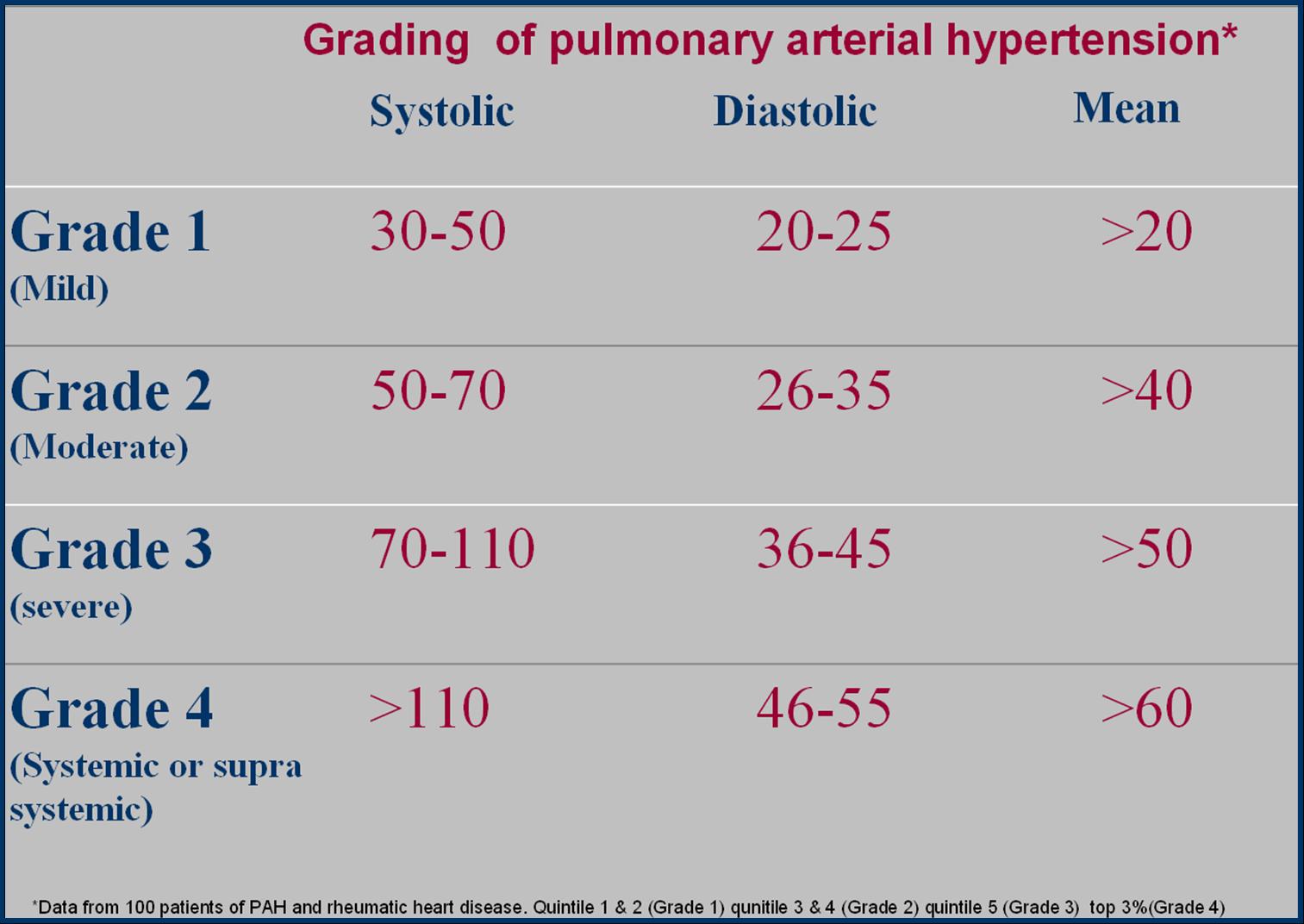
                                  Even as cardiology community is preoccupied with systemic hypertension & CAD  ,  pulmonary arterial hypertension(PAH) is a much neglected , still  an important clinical cardiac problem encountered . The irony is self evident , there are half a dozen methods to grade systemic hypertension not even a single stadardised grading available for pulmonary arterial hypertension. The WHO  working group defined pulmonary hypertension  few decades ago and was not clinically graded .The only grading available is based on  the pulmonary vascular biopsy changes (Heath Edwards) 

                                   Currently PAH management has gone through revolutionary changes. There is an urgent  need for grading  this entity .This will facilitate to  diagnose , manage and assess the efficacy of the currently available treatment.

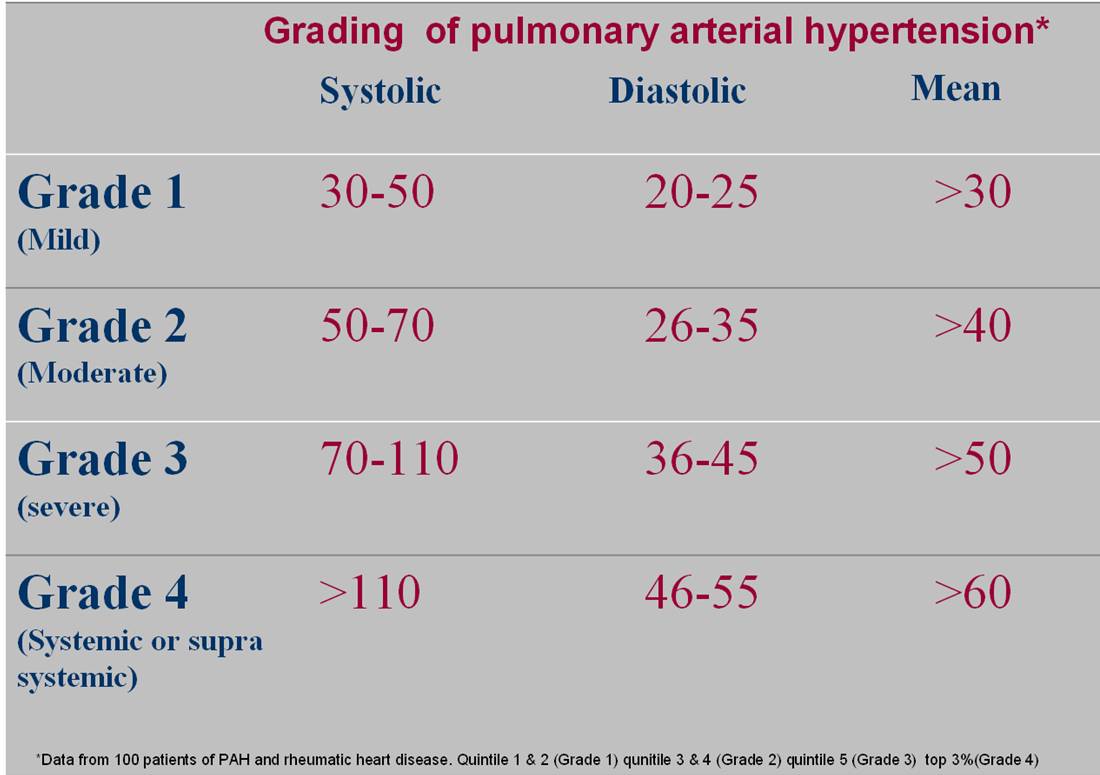
                                Developing countries like ours have a great number of PAH due to rampant rheumatic heart disease.  A simple study was done in  100 patients with PAH .Bulk of the study population had RHD .Few had primary pulmonary  hypertension .Systolic , diastolic, and mean pressure was assessed by doppler echocardiographic analysis of tricuspid regurgitation (TR) and pulmonary regurgitaion(PR) jets. TR jet provided the systolic PA pressure , PR jet provided mean as well as diastolic PA pressure .TR jet was available in all patients. PR jet was available only in 60 patients .Hence the diastolic andmean PA pressure data has been extrapolated in some  and  was plotted in a scatter diagram. Five equal quintiles were divided. Patients in first  and 2nd quintiles were graded 1   and third  and 4th  quintile were  graded 2 ,  5 th  was graded 3 respectively. From this cut off points for  various grades of PAH were identified .The top 3% of patients  with highest PAP were graded as grade 4 and all of them had supra systemic PAH. 

The following grading is suggested for PAH* 

 *This is a preliminary  attempt to grade PAH. This could be applicable mainly in rheumatic heart disese and primary pulmonary hypertension .Further refining of methodology is  required.PAH grading may be little different in congenital left to right shunts.

Read Full Post »


                            Amlodipine , the most popular anti hypertensive drug  used world wide has an very important action on coronary blood flow.When nifedipine was introduced three decades ago it was  known for it’s powerful anti anginal properties. Subsequently  amlodipine was introduced with almost similar action. But over the years, amlodipine was projected primarily as anti hypertensive drug and gradually many of the physicians are made to believe it is a drug that  should be used only if the blood pressure is high.The fear of reflex tachycardia in few was exaggerated.


                              In fact a cross section of  today’s general physicians were queried  about amlodipine  and none of them acknowledged  using this drug as an anti anginal drug. And few of them went to the extent of withdrawing amlodipine if it was used for the purpose of angina relief !

Why amlodipine’s  anti anginal action is in doldrums ?

The single word answer is unfortunate!   Marketing bias ,coupled with  the fact  that mainstream cardiology texts have ignored this aspect.

Final message

                                    Amlodipine , can still be used as a antianginal drug especially  in a patient who has angina with associated bradycardia  , significant LV dysfunction . Some reserve amlodipine and nifedipine exclusively for vasospastic angina where beta blockers alone are theoretically contraindicated .

Read Full Post »

.

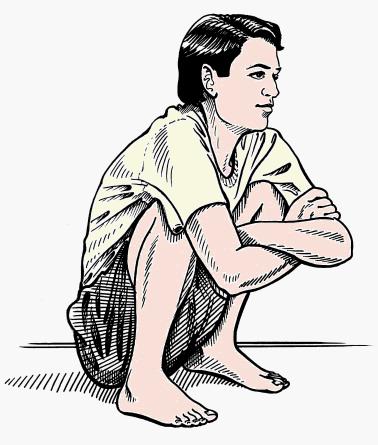
It is a well known fact squatting is a simple compensatory posture adapted by children with cyanotic heart disease during exertion to get relief from breathlessness. The children with tetrology of Fallot and related conditions have baseline hypoxia due to right to left shunting .This gets aggravated during exertion. Squatting promptly relieves this exercise-induced worsening of dyspnea. The oxygen saturation improves immediately after assumption of squatting posture. The exact mechanism by which squatting relives the dyspnea is not clear.

Apart from squat induced po2 raise there is a fall in the concentration of pco2 and raise in blood Ph that pacify the sensitive respiratory centers,thereby bringing down the tachypnea
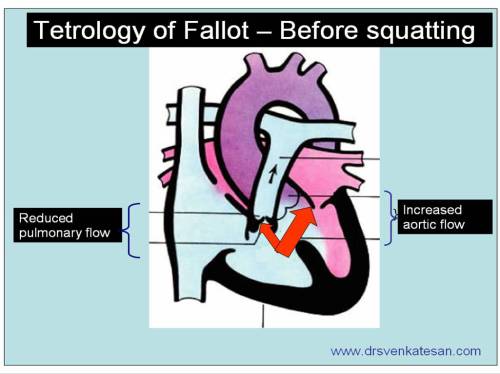
Hemodynamics of squatting has two phases

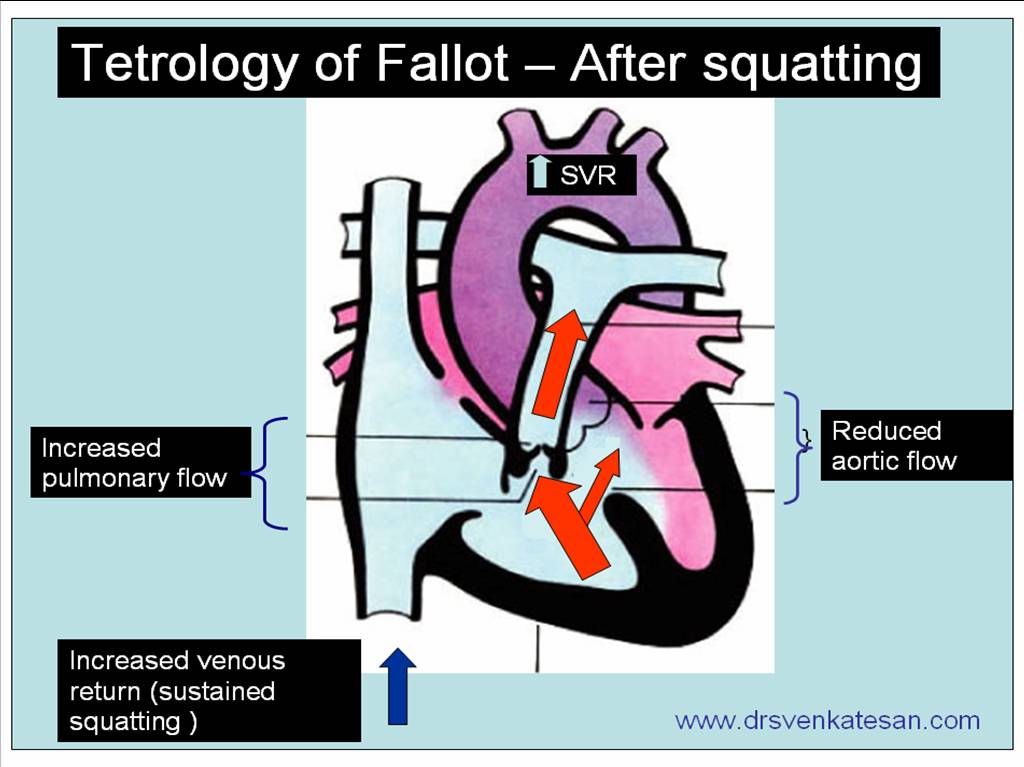
  • Immediately ( First 15 seconds) after squatting there is a sudden drop in venous return.
  • Sustained squatting for 1-2 minutes result in steady increase in venous return, raised systemic vascular resistance.
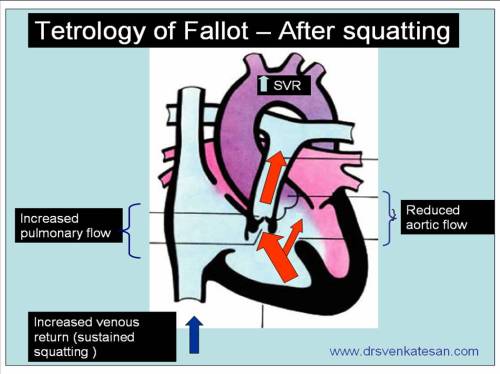
Both these effects help the children with TOF. The initial trapping of highly desaturated blood in the lower extremity gives a quick relief as soon as the child assumes this posture. In the next 15 seconds or so the systemic vascular resistance increases and bring the aortic after load sufficiently high to divert the blood into the pulmonary artery.

The net effect of squatting is there is a transient or sustained (as long as child squats) increase in pulmonary blood flow and this is made possible by the relative reduction of right to left shunt as the aortic and systemic resistance is raised by this posture.

Other explanations

There is one more possible effect of squatting. By, compressing abdomen (Knee chest) cause a mechanical push on the splanchnic blood pool into the aorta which has high o2 saturation. This is thought to provide immediate relief to brain hypoxia and avoid the vicious respiratory/ hemodynamic cycle

What is the clinical inference from squatting in cyanotic heart disease?

Squatting implies there should be a large VSD, associated with a delicate right to left shunting very much dependent on the degree of pulmonary stenosis or ( any RVOT obstruction) and the systemic vascular resistance.

How common is squatting history in pulmonary atresia with VSD ?

It can occur with collaterals are sparse.The mechanism of relief is slightly different.

The likely mechanism of relief with squatting in Pulmonary Atresia, VSD is two fold.

1. The Initial relief is due to trapping of deoxygenated venous blood in squat posture, which is similar to TOF

2.The sustained benefit is due to raised systemic vascular resistance which favors more flow across MAPCAs from Aorta.

The second one has no authentic reference , but its a hemodynamic plausiblity as there is zero RVOT flow in PA with VSD.

What are the other cyanotic heart diseases in which squatting is reported ?

  • Tricuspid atresia
  • Double outlet right ventricle with pulmonary stenosis
  • Any combination of large VSD and RVOT obstruction
  • Rarely in Eisenmenger syndrome*10%)

*Mechanism of squatting episodes in Eisenmenger is tough to explain. But, it does give relief. The most plausible mechanism is the raise in SVR with squatting tilts temporarily a favorable QP/QS as PVR -SVR ratio falls .(Venous return component doesn’t operate here as in squatting of TOF) It should be noted squatting is mainly reported only in VSD Eisenmenger.. ASD/PDA -Eisenmenger is extremely rare or doesn’t occur. This is understandable as Interventricular communication has to be present to shift in QP/QS with a response to a rise in SVR.

Squat equivalents

Assuming a squat position has cultural issues. Grown-up children may avoid these public places. Standing with legs crosse is a common posture. In fact, the mother holding a crying baby in a chest with knees folded promptly prevents a spell . This can be called “squatting by proxy”

*Though squat equivalents do give relief from dyspnea they are given less significance in terms of diagnostic value of TOF

Reference

1.Paul R. Lurie ,Postural effects in tetralogy of Fallot The American Journal of Medicine Volume 15, Issue 3, September 1953, Pages 297-306

2. Warren G. Guntheroth. M.D.Beverly C. Mortan. m.Venous return with knee-chest position and squatting in tetralogy of Fallot American Heart Journal Volume Volume 75, Issue 3, March 1968, Pages 313-318

Read Full Post »


                                                             Syncope by definition is a transient loss of consciousness due to cerebral hypo perfusion and loss of muscular tone, and the patient falls but  recovers fully and gets up either assisted or spontaneous.The cardiac and vascular counter response to syncope is most often intact .This makes syncope characteristically transient . If a patient does not recover from syncope it could either be a prolonged loss of consciousness( Stroke etc)  or if he never gets up he will be called a victim of cardiac arrest or  a SCD ! (Sudden cardiac death ) . So technically by defintion ,  all  patients  will  have to  survive  the  syncopal episode.

But the following questions need to be answered   

  1. How prolonged  a syncope can be ?
  2. Can syncope lead onto  sudden cardiac death ?(SCD)  
  3. What are  life  threatening syncope and non life threatening syncope ?                           

What is the link between, syncope and SCD in patients with ventricular arrhythmia’s ?

Some case of long QT syndromes could be life threatening especially in children as they inherit sudden death. A patient with a non sustained VT  may develop syncope  if  the  VT  becomes sustained especially  if there is underlying heart disease and LV dysfunction . Among this  few , may degenerate into ventricular fibrillation and patient may die.  

How common is syncope in acute myocardial infarction ? 
 Syncope is a very  rare presentation of acute myocardial infarction. 
 
Can syncope precipitate  or precede a  cerebro vascular accident  ?   


Prolonged syncope , TIA,  stroke in evolution and completed stroke   can be a continuous spectrum in patients with carotid and cerebrovascular  disese . But when a syncope evolves in to a stroke the   patient is not considered to be a victim of syncope but  they enter the stroke protocol.

There is a big list for the causes of syncope

But to put it simply

A.Cardiac

  •    Purely electrical ( Arrhythmic- Brady, Tachycardia)
  •    Mechanical( Valvular obstruction, and other structural heart disease etc)

B. Non cardiac

  • Vasovagal (Commonest 90% of all syncope)

C. Metabolic*

  •  Anemia
  • Hypoglycemia
  • Hypoxia
*Metabolic causes  coupled with simple  vaso vagal(Neuro cardiogenic)  constitute the bulk of causes of syncope .Siezure disorders are very  common and a close  mimicker of syncope and need to be ruled out.

How to work up  a patient with syncope ?

                   First ,  one need to confirm  it is indeed a syncope . If the initial examination is not clearcut   one  need to  go back to the  history and ask for  circumstances under which the syncope occured  and  details of prodromal symptoms  if any . Patient’s  family members who witnessed the event can give useful information . It  is the most  cost effective ( Comes free of cost infact !)  investigative tool available .Cardiac syncopes are usually sudden, vasovagal often have environmental or emotional factor. Apart from routine investigations , ECG, Echocardiography, holter are done generally, head up tilt test, Loop, event recorders may be reuired in few.

Final message

                                          Syncope is one of the common symptoms in cardiology and  general medical practice. Many times the diagnosis is easy . Common syncope is  never fatal but , ruling out dangerous  tachy and bradyarrhythmias is a key aim.  In a significant number (20-30%) identifying the cause could be really  difficult and  may never be made in spite  of the modern diagnostic tools. These syncope of unknown origin is grouped along with the neurocardiogenic category.

The one,  positive thing about syncope is (unlike chest pain) , it is rarely fatal in it’s first episode ,  gives the physicians to  investigate and correct the underlying problem.

Read Full Post »

                                 The pleura and pericardium are very close anatomical companions within the thorax. Both contain minimal levels of physiological fluid.  It is quiet common to find combined pleural and pericardial  effusion. While the commonest explanation for combination of pleural and pericardial effusion is inflammation of both  in systemic disorders like polyserositis or malignancy . In cardiac failure also both effusions can  occur explained by raised venous pressure.

But there has always been a curious relationship between these two spaces.

                         Is there a antomical or physiological link between these two spacs ?  In fact a large pleural effusion some times result in sympathetic pericardial  effusion.  Tapping of pleural effusion may regress this pericardial fluid as well.

                         This is purely a clinical observation and needs an explanation .It is  believed , there is  some  non functional lymphatic channels shared between pericardial  and pleural spaces.This may get opened up in pathology of either of them.


Read Full Post »

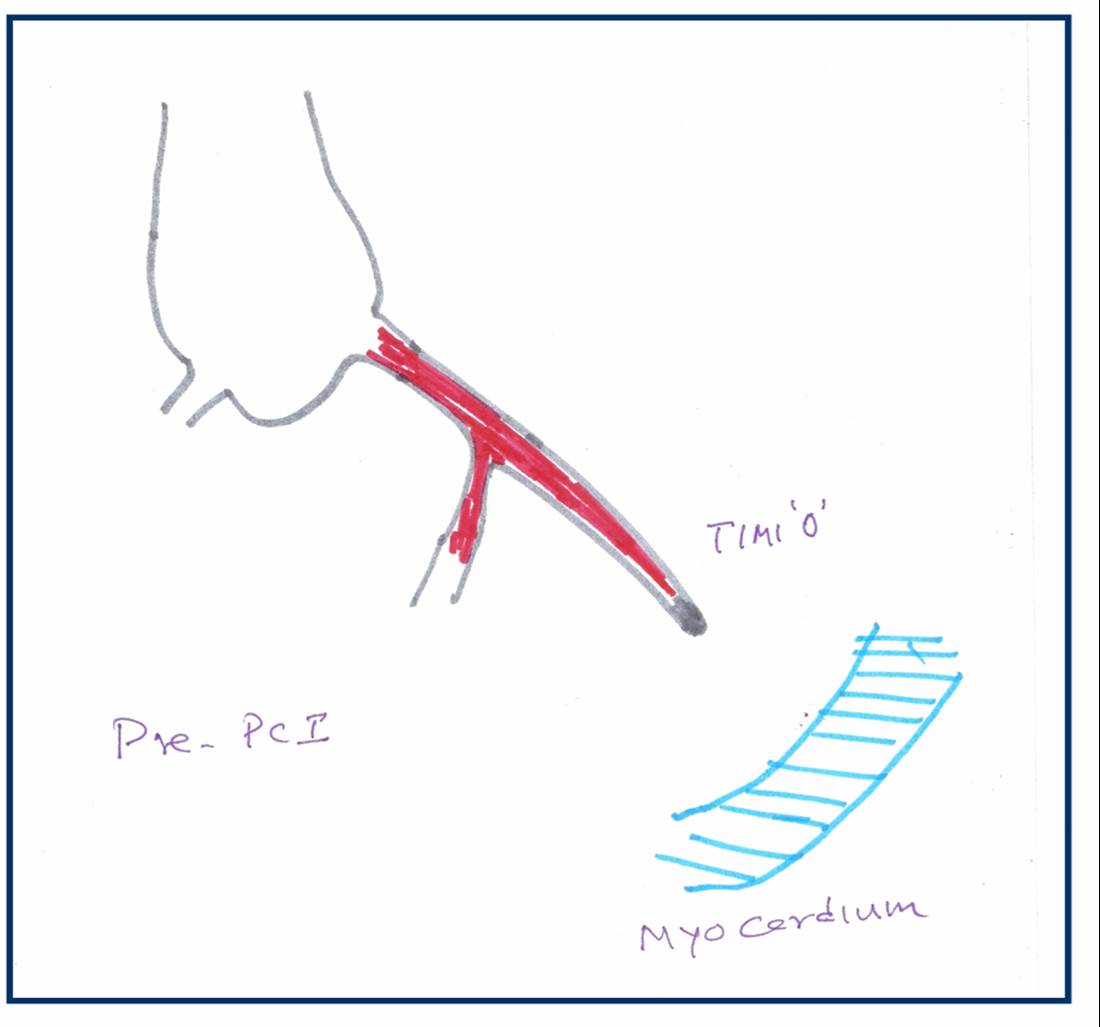
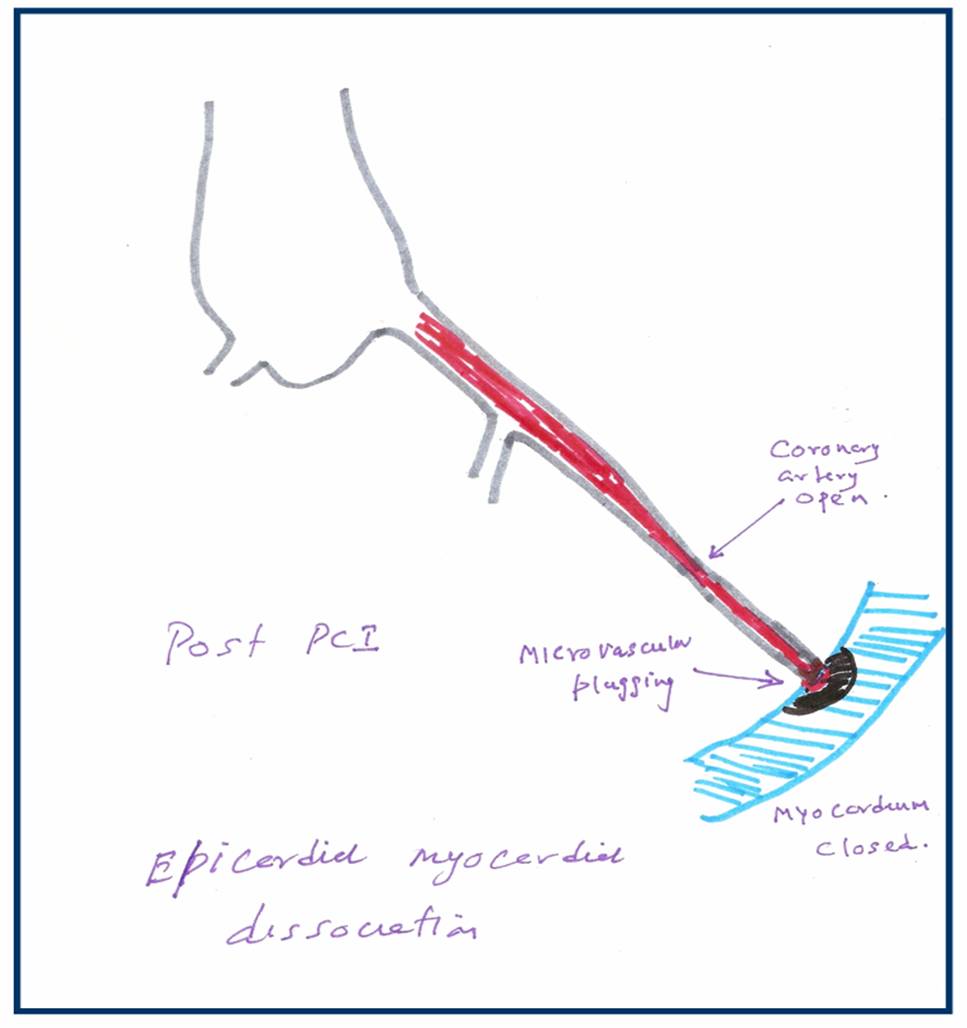
No reflow is the terminology used primarily in cath labs where, even  after a successful opening and stenting  of a coronary artery the coronary blood flow is not  restored to myocardium . The point to be emphazised here is blood do cross  successfully the site of  the obstruction but fails to enter the muscle segment  to which the coronary artery is supplying. So the paradoxical situation of artery  being open but the  myocardium is closed to receive  blood flow  happens . This is termed as no -reflow.  Actually it is a  misnomer , and  ideally it should be called “no flow” because  normal distal flow  does not  occur (After PCI)  in the first instance  to get interrupted  later on  and be labeled as  no re-flow.  .The only positive effect of PCI in these situation is blood flow would have improved by few centimeters ie till it reaches  but falls short of myocardium . In fact no reflow , can be termed as  glorified and concealed  terminology  for  PCI failure . It needs urgent action . No reflow is also called as myocardial epicardial dissociation.

Mechanism of no reflow.

Curious case of open coronary artery and closed myocardium !

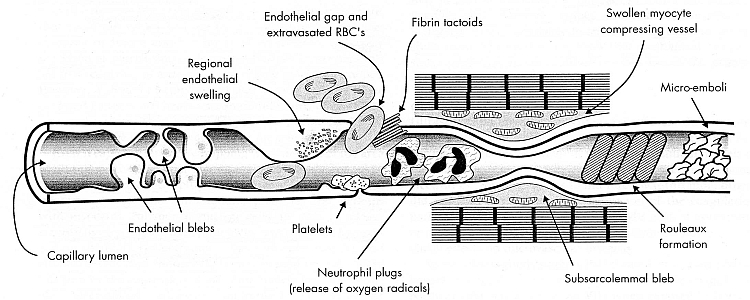
Coronary  microvascular plugging  is mainly  due to thrombus and atheromatous debri , myocardial  edema , microvascular spasm may also contribute.

Where can it occur ?

  • First described in cath lab, especially following primary angioplasty.
  • It can very  well happen following thrombolysis in STEMI.
  • Can occur in venous grafts.

How do you recognise no reflow?

In cath lab it will be self evident from the check angiogram. Some times it is less obvious and may  require, myocardial  blush score, TIMI frame  count, contrast echocardiography, PET scan etc. In post MI a very simple method to recognise this entity could be the observation of persistent ST elevation in ECG .

Treatment.

Extremely difficult. Almost every coronary vasodilator has been tried.(Nitrates, nicorandil, calcium blockers, etc).Success is less than 30%.  High pressure flushing with saline inside the coronary artery is advocated by some.Others believe it’s dangerous to do it. So prevention is the key. Avoid doing PCI in complex, thrombotic lesions. Use thrombus suction device like export catheter(Medtronic). Distal protective devices are double edged devices , useful only in experienced hands.

Unanswered question

What is the size of the particle (thrombotic and atheromatous  debri)  the   coronary microcirculation safely handle and push it into the coronary venous circulation and the coronary sinus for disposal ?

If we can lyse the thrombus into micro particles by some mechanism and make it traverse the coronary circulation this complication of microvascular  plugging can be treated and prevented .

What is the final message ?

  • No reflow is relatively common condition during emergency PCI done for ACS patients
  • More common in complex thrombotic lesions.
  • Can also  occur in STEMI
  • Treatment is often vexing . In fact the treatment of this condition is so difficult , it can be termed  almost synonymously with “Failed PCI” if flow is not restored.
  • Successful treatment of no- reflow  means not momentry restoration of  myocardial flow  by mechanical and pharmacological modalities ,but to maintain sustained myocardial   perfusion. This we realise, as patients who have had a no reflow during  a PCI, do not perform as well in the follow up  .
  • So prevention is the key.

Read Full Post »

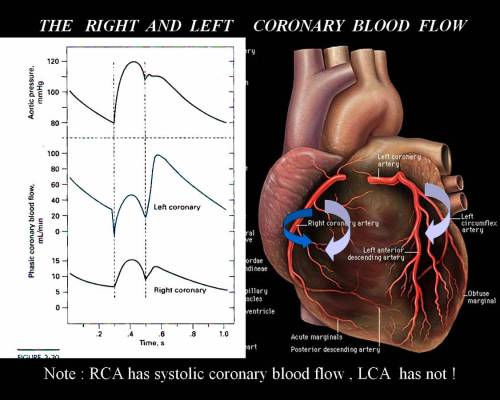
Differential response of thrombolysis between left and right coronary system

  • Thrombolysis is the specific treatment for acute myocardial infarction. ( Privileged few , get primary PCI))
  • Failed thrombolysis occurs in significant number of patients ( 30-40%).
  • Persistent ST elevation  120 minutes after thrombolysis is best indicator of failed thrombolysis.
  • It has been a consistent observation  failed  thromolysis  is more frequent in anterior   or LAD myocardial infarction.

In a simple study we have documented  patients  with inferior MI  rarely had persistent ST elevation and thrombolysis  was   successful in vast majority  of  patients  ( Except in few patients associated lateral MI)


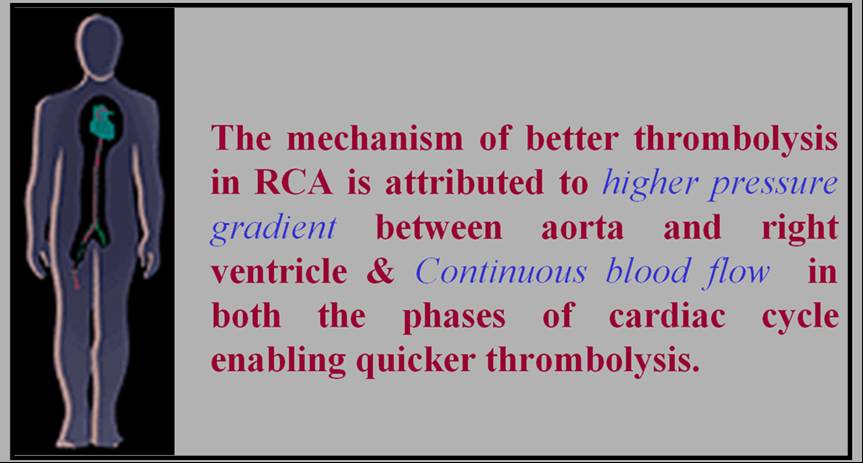
The mechanism of better thrombolysis in right coronary artery  is simple.The success of thrombolysis , apart from early time window , is directly correlated with pressure head  and the duration of contact between the thrombolytic agent and the thrombus. In right coronary circulation the  blood flow is continuous ,  occurs  both in systole and diastole that facilitates the maximum delivery of the thrombolytic agent . Further there is a favorable  pressure gradient  across RV myocardium  as the transmural occluding pressure across RV is considerably less then LV myocardium.

This paper was presented in the  “Annual cardiological society of India scientific sessions”

at Chennai, Tamil Nadu.India December 2000

Click to down load PPT full presentation

Read Full Post »

« Newer Posts - Older Posts »