Feeds:
Posts
Comments

Archive for the ‘Infrequently asked questions in cardiology (iFAQs)’ Category

Thrombolysis in acute stroke

  1. rtPA is indeed useful in acute Ischemic stroke
  2. Elderly need not be excluded (Even > 80y)
  3. Time window : It definitely works up to 4.5 hours and vary likely  to be effective up t0 6 hours.

We are gradually widening the time window  , which was  3 hours a decade ago .It may soon catch up with STEMI window of 12 hours ! ( Mitochondrially myocytes  are not vastly different from cerebro-cytes ! )

So ,  the current role of   of thrombolyis for stroke  is best answered by the editorial  accomplishing  this article !

“The role of stroke and emergency physicians is now not to identify patients who will be given rt-PA, but to identify the few who will not.”

Reference :   A Lancet Break through

http://www.thelancet.com/journals/lancet/article/PIIS0140-6736%2812%2960738-7/fulltext

http://www.thelancet.com/journals/lancet/article/PIIS0140-6736%2812%2960768-5/fulltext

Coming soon

  • By the way ,  rTPA is prohibitively costly for common world citizens . Please tell us about streptokinase in stroke ? Does the poor cousin match the rich ?
  • Do we have primary cerebral angioplasty ?


Please read the comment form Dr  Anthony Andrew Bell it is a must read !

Read Full Post »

 21’st  century  Human beings  on the road !

                              A scene  from  Jaipur’s   main commercial  road

Lame  ducks on the road !

             My all time  favorite  news photograph taken  from a Tamil  daily Dinakaran

An After thought

In this fast and furious world ,  the medical profession  too suffers from the same disarray like  the  Jaipur traffic !

  • Let  us prey  for the   Noble professionals  to be  blessed with  more   discipline,  character , conduct  and  knowledge ( yeh . . .knowledge  ranks  last and least !)  .
  • Let us be focused on task .
  • Let us  also  prey for the strength to differentiate  facts from fiction,  distinguish trivia from  the momentous.
  • And finally let us  have the courage to follow the truth !

Read Full Post »

Mark E Jospehson  is the man who single-handedly carried  the burden of teaching  generations  of electro-physiologists  from  Harvard  Thorndike electro physiology services , Boston USA. Today , whatever  we know  about the mechanisms of VT , it is because of such great men who  spent thousands of hours  in the  first generation EP labs in early 1970s and 80s  , meticulously analysing   the data emanating  from  over  600   scar mediated VT with complex circuitry .

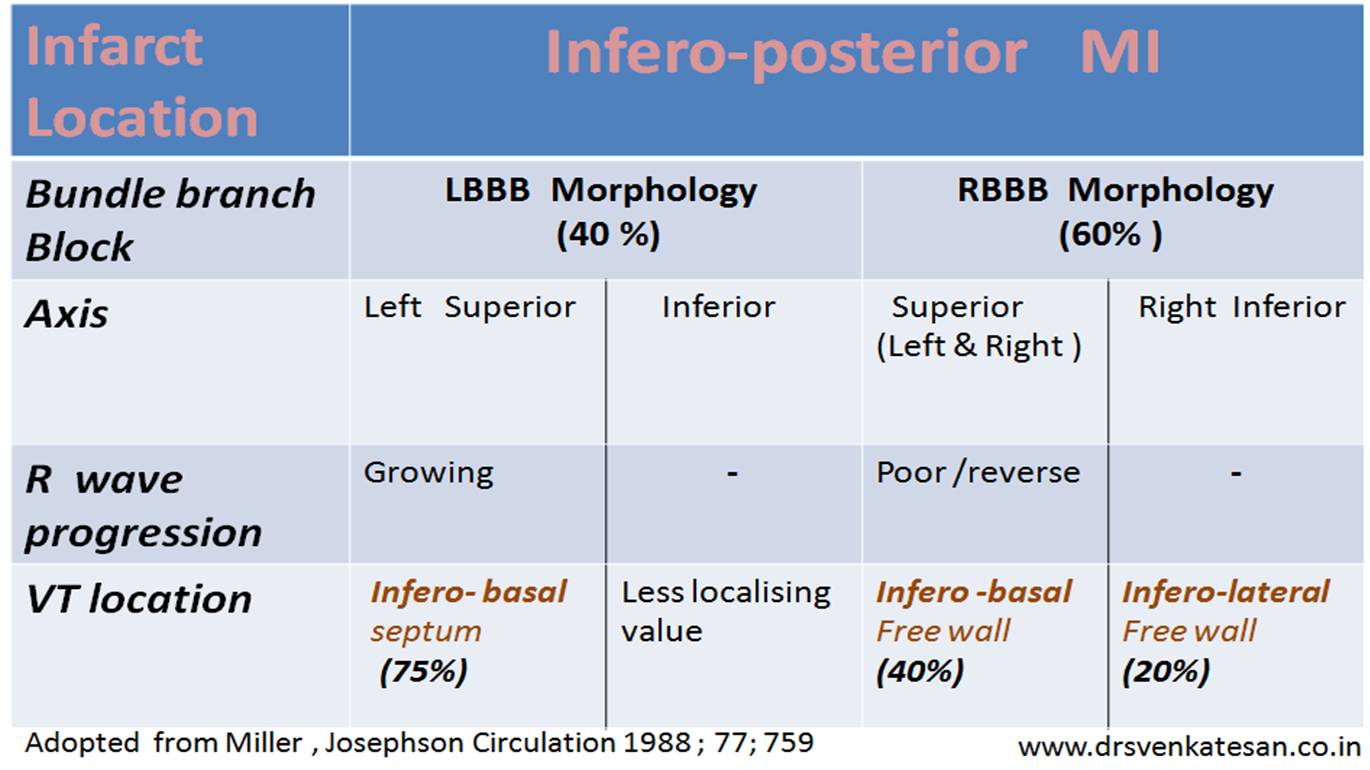
He along with  Miller published this seminal paper  in circulation 1988 , which gave us  the  algorithm  that localises  Post MI VTs.

Following table summarises their finding.

VT localisation in Infero-posterior MI

The general principles  of localisation of VT  

  • Localising VT following myocardial infarction  is difficult but distinctly  possible with  about 60 % accuracy.
  • Whenever we locate a focus we generally refer to epicardial site of exit not the focus of  origin.
  • Ischemic VTs with complex scars are difficult to locate .
  • The rule  that RBBB VT arise from  LV and LBBB VT from RV is too simplistic  in scar mediated VT.
  • The fact  that IVS is common to both RV and LV confounds the issue .Further, in a given  clinical VT  the origin  , course   and exit points of VT can considerably vary .For example  septal VT can exit  on  either side and  result in  either RBBB or LBBB morphology (Epicardial break thorough )
  • Multiple exit points are also possible.
  • VT induced in EP lab may not be reproducing the same clinical VT. So we have to be careful in what  we ablate and claim success !
  • VT with  structurally normal heart  has   more predictable behavior  , for  example RVOT VT  almost always have LBBB morphology.

Other important rules of thumb are

  • LBBB VT has more localising value .
  • Superior  axis is the most common  axis.
  • Bulk of the ischemic VT are located within the septum either in the apical or basal region .(75%)
  • Infero posterior MI has more complex scars , hence VT morphology is heterogeneous.

The purpose of localising VT is important  only with reference to  ablation.(Of course for academic reasons  as well )   With advent of electro anatomic imaging (Carto ) it is becoming   easier  to locate and track them . Still only a minority of VTs are amenable for RF ablation .

Please note ,  the most common modalities we use  in the management of VT  ,   Amiodarone  and ICDs   simply do not   bother  about   focus of origin  for it’s action !  That makes our job easy !

Reference

http://circ.ahajournals.org/content/77/4/759.full.pdf

Read Full Post »

Mechanism of chest pain in mitral valve prolapse  include

  1. Mitral valve  has pain fibers , the myxomatous degeneration  of the valve tissue generates pain .* (Not much evidence )
  2. Mitral valve stress, strain ,  stretch and bending.
  3. Mechanical stretch  of papillary muscle or LV free wall (dimple ?  ) as the mitral valve prolapse into LA.
  4. It is a central pain perception disorder .Panicky and anxiety reactions included
  5. It is not chest pain  at all it is simply a feeling of palpitation .
  6. Associated ischemic  heart disease

The commonest mechanisms  are   response  4 and 5 .

The evidence  lies in the fact ,  many of  these people  begin to complain of chest pain only after being aware this problem. MVPS is  often a  fancy entity created by cardiologists  which  unfortunately has  labeled  many of the normal  general population as cardiac patients. Barlow who described this entity  decades ago  would have never imagined  it  would be  so popular and subjected to mis-use . We have proposed a solution for this . The diagnosis of MVPS shall not be mentioned unless it is obvious  and fulfill a strict criteria . The commonest error we make is  an elongated , redundant , hyper mobile mitral leaflet   at   as  MVPS.

It is expected  ,  true MVPS must have all of the following  three criteria

  • Thickened leaflets
  • Clear prolapse of  at least one leaflet in long axis view beyond the plane  of  mitral annulus
  • At least some degree of mitral  regurgitation must be present

Read Full Post »

WPW syndrome is the prototype of cardiac pre- excitation . The accessory  AV pathway short circuits the ventricle .Since  there are two options  available   for the  incoming  atrial  impulse  to reach ventricle ,  often  times  the qrs is contributed by both .Hence a  fusion  occurs  within qrs complex and stretches it wide   ,  it also  generates a delta wave and short PR interval .

The complexities of  conduction   properties and refractionaries of AV node and  accessory  pathways determine the degree of pre- excitation. When an optimally timed  APD  gate crashes  into the  accessary pathway it gets blocked ,  only to recover little late ,  unfortunately  invites AV nodal impulse  from below  . This facilitates a  re- entry circuit from ventricle to atria and result in classical AV reciprocating tachycardia .

Antegrade conduction through AV node is  physiological and  benign as it inherently checks the heart  rate . Antegrade conduction  occurring through the  accessory pathway  (which  constitutes the pathological  component  ), is   potentially  dangerous  as it lacks the  electrical breaks (Technically called decremental conduction )

What  is the  specific  ECG evidence for  antegrade conduction thorough accessory pathway  in ECG ?

Delta  waves

So,  what does it mean if there is absent delta waves  in WPW syndrome ?

It can mean three things

  1. Concealed pathway
  2. Manifest pathway , but intermittently  blocked pathway.
  3. It is not WPW syndrome at all .

We know concealed  pathways are  safe* as it allows only retrograde conduction. ( Safe  regarding   risk  of  sudden cardiac death ,  still unsafe for AVRT !)

Intermittent WPW

Intermittent pathways are equally  safe  as intermittent absence of  pre-excitation   indicate  the  presence   of naturally occurring     breaking system within accessory pathway . Are these  accessory pathways blessed with some AV nodal cells ?  May be !  . Histological studies do suggest that .This explains   intermittent missing of delta waves  which is  electro-physiologically a good sign

(We also know   there are exclusive slowly conducting accessory pathways like  Mahim and variants  )

If  one is lucky to observe this phenomenon in ECG  it can be termed as  a poor man’s  EP study  . ( Which requires specialized methods to document the refractory period of accessory pathway  to be   < 250 msec)

Techniques to  screen for or / unmask this concept.

Whenever  we  diagnose  WPW one has to look   ,  whether the patient  harbors  this phenomenon .

  • Holter monitoring has a useful role in this regard .
  • If there is nocturnal   disappearance of pre- excitation it would  suggest a safe  accessory pathway.
  • Similarly , if pre- excitation disappear during exercise  stress  testing it  would indicate a  type of intermittent WPW syndrome.

Final message

An astute cardiologist shall  look for this intermittent nature of delta waves  and  help avoid a costly and  potentially harmful EP study !

Read Full Post »


 Delta waves  are initial 20 ms  (or is it up to 40ms ?)  segment of  qrs complex that is  inscribed due to pre-excited depolarisation of the ventricle due to an accessory pathway .

It is more of a  fusion complex with  native normal qrs complex. The leads in which appear , the polarity and magnitude of these delta waves are determined by

  • Site of APs
  • Rapidity of  conduction through this AP
  • The quantum of native AV conduction
  • Influence of Autonomic tone  and the  refractory period of these accessory pathways .
  • Heart rate , distal conduction velocity , also can influence .

Can delta occur without AP ?
Like any other variation  isolated delta waves are reported in routine ECG finding.   It can be  be present in 0.15% to 0.25% of the general population. A higher  prevalence of 0.55% has been reported in first-degree relatives of   patients with accessory pathways.

How do you account for delta in general population ? We know concealed pathways can not record delta  . . . then it is possible some from of accelerated AV conduction  with twin pathway should be quiet common . ( It is very much possible  dual AV nodal pathway with grossly different conduction properties and distal insertion sites  inscribe a delta wave .)

  The crux of the discussion  of WPW syndrome revolves around  identifying delta wave and its direction .  If  the delta wave is well inscribed this job is easy  but at times  it  can be really difficult .

Many moods of delta wave

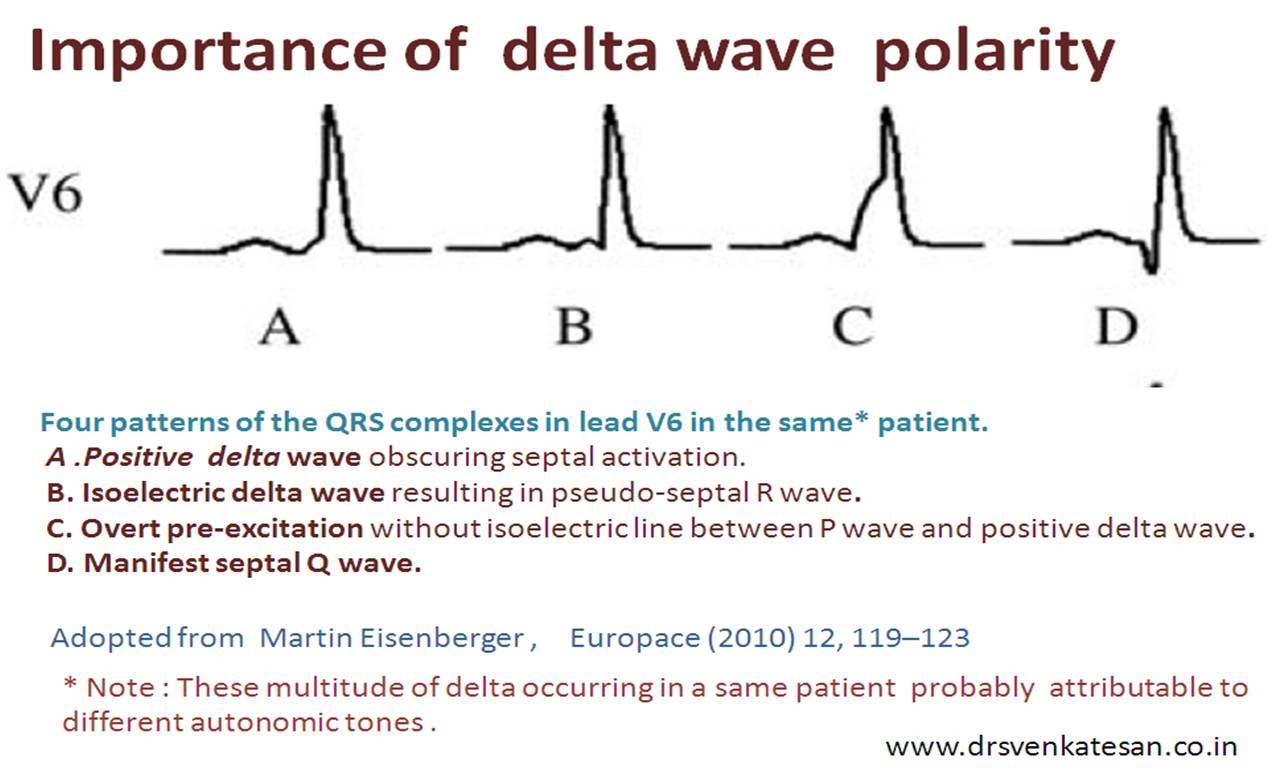
  • Positive delta  wave inscribes  above baseline. (See the above ECG  showing different delta in same patient )
  • Negative below baseline  and  iso-lectric on the baseline .
  • Please note , delta wave polarity and QRS polarity need not be in the same direction . If  they are in  the opposite  direction many time it appears as  small a pathological “q”  or pathological  “r”
  • It is likely  a delta wave can also drag  and  change the direction of qrs depolarisation  if  the  quantum pre-excitation  is large and with a fast conduction property.
  • It is also possible  the combined contribution of  negative delta with negative qrs together make a  deep  q waves . (Typical example is the LBBB type ECG in type B WPW in Ebstein anomaly )
  • Rarely the entire QRS can be  due to pre-excited  tract and native AV conduction contribute less.(This exactly happen in anti-dromic tachycardia ) but  this phenomenon is extremely rare to occur without tachycardia.

Final message

WPW  syndrome is such a dynamic  entity ,  one can realize how futile it will be to formulate fixed rules for ECG localization based on this wave .In fact,  we suffer from a  fundamental  electrical ignorance .How often delta wave polarity is discordant with qrs polarity and what is the  mechanism ? Standard text books do not discuss this issue . Many of the EPs skirt this question ! For this , we need  to critically decode the mechanisms of delta wave generation . Hope our youngsters take up the job !

Read Full Post »

Modern  day cardiology can do wonders. It can revive a sinking  patient in cardiogenic shock with IABP , LV  assist ,   multivessel angioplasty and bring back  life . On  the other  hand  , a young man with an infected mitral valve who is put on  intensive  antibiotic  regimen   , progressively deteriorates  throws an emboli into brain ,  raise his urea  creatinine  , cardiac   failure worsens and finally succumbs .

This is a clear case of failure  of medical therapy in infective endocarditis .  It is almost certain  surgery would have saved him .

Why  the delay ?

So the question that is been debated for so long is   “When to intervene with surgery in IE”  ?

While we show extreme  urgency for ACS , the same is not shown  with IE.This is going to change in the future .Thanks to the  EASE trial (Early surgery  in  endocarditis )  This land mark study from Korea  is likely to revolutionise  the way we will look into the  problem  of infective endocarditis. It was presented in the just concluded AHA annual scientific sessions  in Orlando

This was  our  observation  too . The issue was discussed in  the year 2008 .It reminds me ,  every  learned  thought or opinion is in fact a paper  but unfortunately modern science does not accept a  fact without evidence of a  study . Until then  it remains  as a crap !

I am glad  to note   genuine concepts will some day  get ratified . Kudos to the Korean team.It is a great study to do with  many ethical issues.

Click below to read the related article

Link to EASE Trial  http://www.theheart.org/article/1313215.do

Next question  on the cards

Should there be  a time window above which medical therapy should be   deemed (Doomed !) to have  failed  , so that the patient becomes a default candidate for surgery.

Read Full Post »

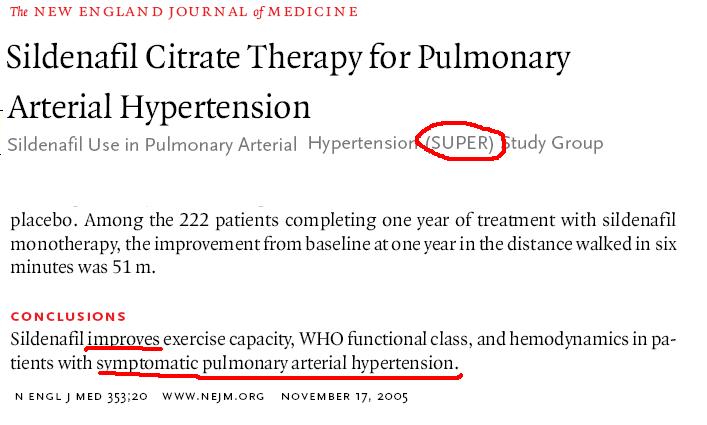
Sildenafil was first approved for pulmonary hypertension  in 2006  after a much hyped study called “SUPER” published in New  England journal of medicine.

This study population  included only  idiopathic pulmonary  hypertension and secondary  pulmonary hypertension due to pulmonary vascular disease like scleroderma  etc .The exclusion criteria were not clearly described in this paper ,  but it was clear PAH due to COPD was not included.

Please note , the title and conclusion are misleading .The real conclusion should be read as sildenefail may be useful some of the patients with in idiopathic PAH and secondary PAH sue to connective tissue disorders.

Further ,  the conclusion  of  SUPER study gave considerable  room for   misinterpretation (Intentional ? ) .The term PAH was used in too casual and generalised  manner. Many of the physicians  started  using sildenafil for every case of PAH including COPD.                 

COPD is a disorder of  airway , while sildenafil is a drug which acts on  the vascular  system (Vascular smooth muscle )  Apply your own logic  ,how  effective sildenafil  would be in  COPD patients .

As on today there is no good  evidence to suggest sildenafil will be useful in COPD. (Few studies  suggested it may be useful in fibrosed  lung)

Still , no body can prevent a physician  from testing this drug in otherwise refractory COPD as  we have a convenient   semantics called  ” off label  indication ”

So, the answer to the title  question still  eludes the majority    . . . even though many of us  know  the answer !

Ans : You   can use it  . . . but your patient   may not  really benefit ,  of course it satisfies  the physician and the drug company.

Reference

An editorial from Indian journal of chest diseases debates the issue

http://medind.nic.in/iae/t08/i4/iaet08i4p317.pdf

http://www.nejm.org/doi/pdf/10.1056/NEJMoa050010

http://www.nejm.org/doi/pdf/10.1056/NEJMc053442

Read Full Post »

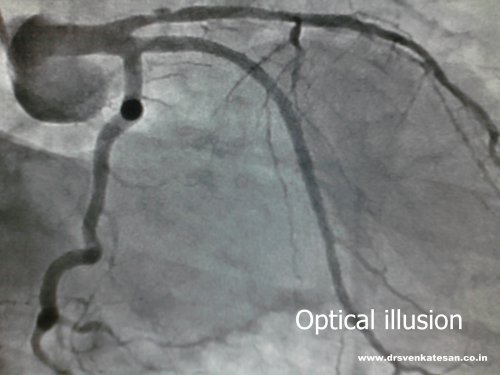
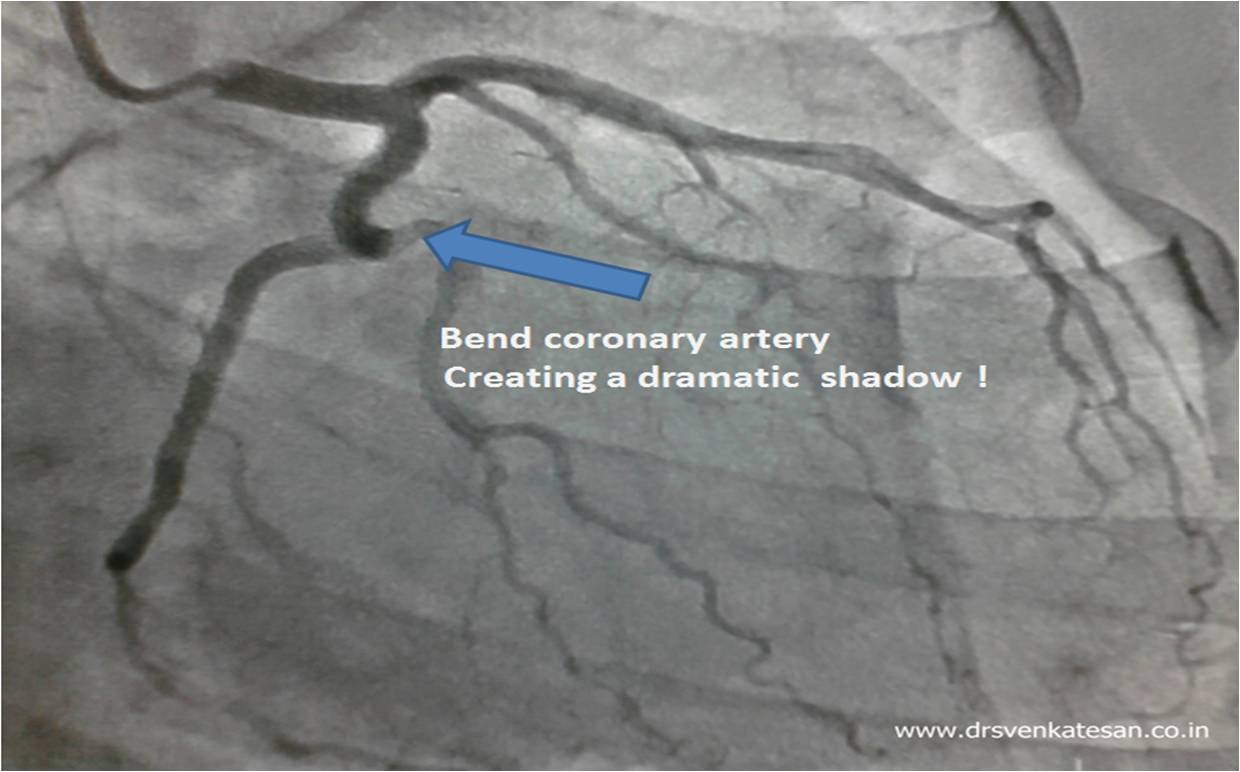
Coronary angiogram is  a videographic snap shot of  moving targets. Coronary arteries are dynamic  , tortuous  vessels of varying dimensions .Normal vessels  sometimes appear as an  illusion of lesions and tight lesions may appear innocuous at times. So the  rule is never rely on a single view before reporting.

This is an  angiogram of a patient , which  one of my fellows referred to as  “a black pearl  inside the LCX !

The same patient,s angiogram showing  origin of OM1

Final message

Beware of radiological artifacts in various angiograms. It can lead to erroneous interpretation and interventions !

Read Full Post »

Moderator band is a ubiquitous structure  found inside right ventricular   cavity , often overl0oked by cardiologists. God has created no structure  without any purpose ! Moderator band has important role to play  both in physiology and pathology .

Image credit and courtesey : Whoever has created

The table attempts to summarise  the features  of moderator band. The  structural and functional behavior of moderator band  in , RV cardiomyopathy , RV non compaction and arrhythmogenic  RV dysplasia is not fully studied yet  . Reference :Content is taken from various sources and with a personal input in few places.  The anatomical data is largely taken from the pioneering  work of cardiac  pathologist and morphologist  RH Anderson of  United kingdom.

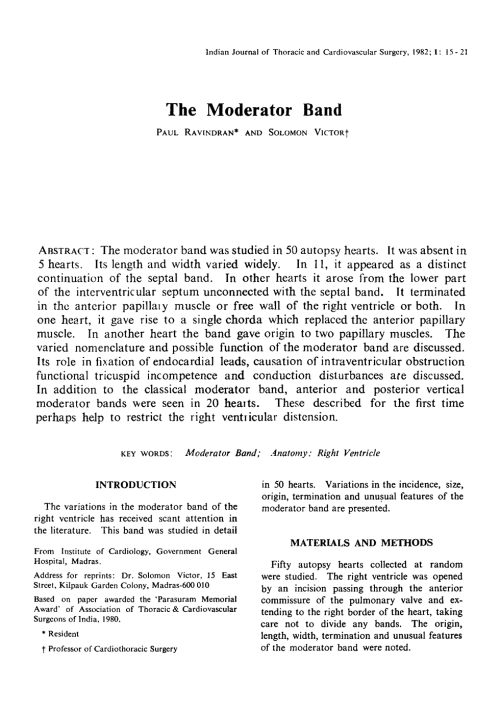
Here is an article  from my institute Madras medical college  published in Indian journal of Thoracic and Cardiovascualr surgery in 1982.

An autopsy study  on moderator band   by Paul Ravindran and   Solomon victor

http://www.springerlink.com/content/g35616v662976g1r/

http://circ.ahajournals.org/content/67/6/1268.full.pdf+html http://www.ncbi.nlm.nih.gov/pubmed/20235167

//

Read Full Post »

« Newer Posts - Older Posts »