Feeds:
Posts
Comments

Aortic stenosis is the commonest valvular heart disease  in elderly. Severe aortic stenosis  requires early  aortic valve replacement . Severity of aortic stenosis is  best assessed by   echocardiogram. ( Cath studies are rarely indicated  now) Mean Doppler gradient across  the aortic valve (dPm) is the widely used  parameter to assess severity.Americans believe  in  a cut off value of  40mmhg  while  Europeans  want it  to be at  50 mmhg . Obviously, these  numbers 40/50   become  vital  as it determines the  critical decision of replacing the  aortic valve which carries up to 4-10 % mortality.

Even as we realize ,   Doppler gradients are so important , we also need to  know ,  how fragile  ( and  vulnerable  ! )  are the Doppler equations ,  especially when it is critically dependent on the angle , flow,  heart rate  , the LV  contractile  force  and associated MR etc. These errors are over and above the  the  technical simplification of Bernoulli equation  which ignores many accessories like viscous  friction ,  proximal velocity etc  .Mind you  . . .with this battered Doppler modality we make a critical operative decision !

Here comes  the ace . . . Shall we  term it as  as negligence  in clinical echocardiography ?

Apart from  the above factors  ,  a single  important  critical determinant of  pressure gradient across AV is the mean pressure in the Aorta itself .  The mean  LVOT gradient = LV cavity pressure -Systemic blood pressure.Echo derived gradient tells us only the pressure difference across the valve.It does not reveal how much is contributed by raise in LV cavity pressure and how much is contributed by the change in systemic pressure.

How many  cardiologists would  measure the simultaneous  blood pressure while recording LVOT  gradient in AS ?  ( To be precise it should be measured in the same cycle  )

If  Aortic mean pressure is high  as in systemic hypertension  LV pressure must raise considerably higher . The contractile capacity of LV is tested here. A hypertrophied LV  easily achieves this.  If the LV fails to elevate it’s intra -cavitory   pressure sufficiently high the LVOT gradient may never reach  the 40 /50 mmhg range  that is required to label  aortic stenosis as  severe.

Many hypertensive patients exactly experience  this situation . The left ventricle of  many  of the hypertensive patients  fail this stress test  and result in low gradient AS.  Note , this happens in spite of   having  normal EF.

The link between systemic hypertension and aortic stenosis is a complex one. The after load becomes double here.There is a strong vascular valvular interaction. The following effects  are seen.

The effect of SHT on AS

It is well known HT  initiates the Aortic stenotic  process by damaging the valve and  also  result in progression.

Transient elevation of systolic pressure  can result in increase aortic orifice , and a fall in gradient.

The effect of  AS on SHT

Once the AS becomes severe , the systolic blood pressure may be reduced. (This not a rule ) If the mechanism of HT is increased  vascular  tone (Which often is the case ) systolic BP will remain high .

Effect of AVR

Surprisingly ,  many times the blood pressure normalises after AVR.The mechanism is not known.

Role of Anti HT drugs.

Fixed vasodilators are thought to be contraindicated as sudden fall in systolic blood pressure against a fixed obstruction is detrimental.  ACEI may be tried cautiously.(SCOPE AS study )

Reference

The following are the excellent article on the topics .All provided free by the  “Heart” Journal
t


Final message

In the evaluation of  Aortic stenosis   ignorance continue to prevail over our  knowledge. The Gorlin’s  the  Hakki’s, and the Hatle’s formulas  have made the  calculation of aortic valve area  look like a   child’s  game  (Which is not !)

Referring  all patients  with a  mean gradient > 50mmhg to the surgeon for AVR (or now a  TAVI)   may be the  easiest option  for the cardiologists  (but definitely not an intelligent one ). Even  as we struggle to decode the intricacies of isolated  AS  ,  one can guess  the complexity  when SHT adds on to AS .

Understanding the hemo-dynamics in  AS in association with prevailing blood pressure is vital.  It is a more scientific way of doing  echocardiography . Every cardiologist should give their input as they encounter hypertensive patients with AS.

It  would appear  ,  an AS patient developing HT at a  later  age  and a HT patient developing AS later are two different poles in the hemodynamic spectrum.
Platelets  are the major culprits in initiating arterial thrombus.Platelet  inhibition is  the key  modality  to treat /prevent  acute and chronic coronary syndromes. It is  an approved indication for primary and secondary prevention of CAD.

Anti platelet  agents are the biggest drug  market among the cardiac drugs. It is  a billion dollar  medical game  played  with two  million  human  platelets !

Aspirin is the best anti-platelet agent known .It is not only most effective but also  available at a fraction of the cost other  drugs. Unfortunately  it is  a generic and not a patented one .Being cheap  ,   good safety profile  is the biggest  disadvantage of aspirin  !  So ,  consistent efforts were made to make this drug appear weaker. Hence came many new anti-platelet agents .

After analyzing  the available literature ,  I have compiled the following conclusions ( Mostly biased observation ! but I strongly believe the  bias is more  towards truth . . . )

All of the following statements can be termed either  true ,were true , believed to be true may  be  true ,  at some point of time  (Between the  last decade and today !)

  1. Aspirin alone is good enough in both  ACS and chronic CAD
  2. Clopidogrel is   equally effective like aspirin in ACS.
  3. Aspirin alone is dangerous in ACS.
  4. Clopidogrel alone is more  dangerous than aspirin alone in ACS,
  5. Aspirin + Clopidogrel  provides the best anti-platelet  action.
  6. Aspirin + Clopidogrel combination is still dangerous .
  7. Prasugrel is more effective than clopidogrel
  8. Prasugrel can never be as effective as aspirin *
  9. Never use clopidogrel alone in DES patient.
  10. Aspirin can be safe in most stented patients
  11. Mono platelet inhibition is a crime !
  12. Risk of  sudden death continues to be significant in spite of dual antiplatelet agents in many with DES.
  13. For prasugrel to be  really useful  it should always be prescribed with aspirin.
  14. Prasugrel alone can be dangerous in stented patients.
  15. If the patient is  getting heparin  simultaneously none of the above seems to be  really  important (Of course all patients with ACS will be getting this )

Above are my inferences in all those trials on platelets in the last three decades

What do you infer  ?

To  a discerned reader all of the above statements  may appear wrong   !

*Finally , it looks to me  both clopidogrel and prasugrel ride  a fake  ride on the shoulders of trusted war horse called Aspirin . There is  a strong basis for this  suspicion  as none of the researchers are ready to do a one to one direct comparison between aspirin and prasugrel  or clopidogrel !

New concepts are created to clear confusion and bring clarity. We know all along low gradient AS is a hall mark of severe LV dysfunction. Now we suddenly invented normally contracting  LV can also cause  low gradient due to low flow when the aortic valve orifice becomes very critically narrow .

How can it occur ?  . . . few  suspect  it  to be  semantics  !

The terminology  that is  often used in recent times when describing severe aortic stenosis.This is called Low gradient severe AS with preserved LV function .

But logic would say blood flow is required to produce gradient .If it falls extremely low the gradient is likely to fall.

If that is the case every severe  AS patient will experience low flow at least in  few beats . Is this the reason why we find it very difficult to reproduce the exact gradient  ?

Low flow ,Low gradient aortic stenosis is not a  new entity .It is the way we look at the data. It  remains a fact  ,  severe  AS can be diagnosed with 2D features alone ,  without the help of Doppler.We also know  Doppler is less reliable than 2D in many situations for various  reasons .The most important being it’s dependence on angle of  doppler  intercept  and LV contractile force.

Read  the  argument by   Nikolaus Jander from Germany

http://eurheartjsupp.oxfordjournals.org/content/10/suppl_E/E11.full.pdf+html

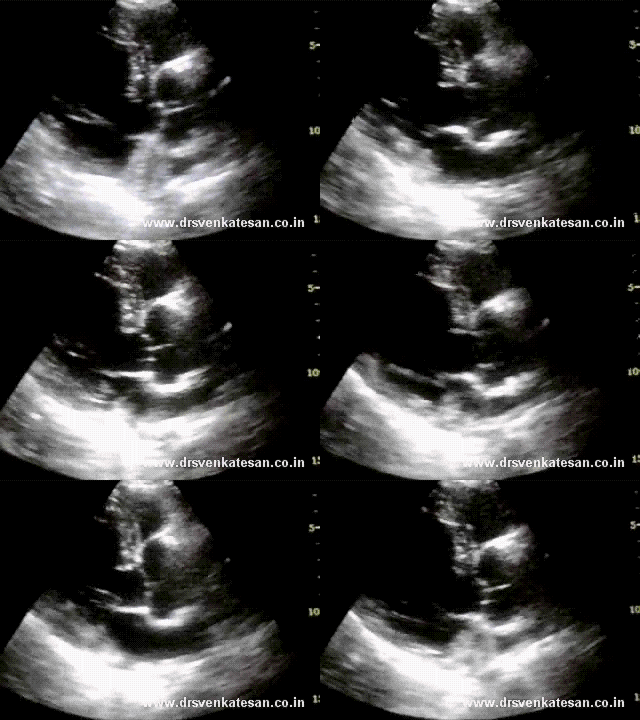
Inter-ventricular septum is generally in parallel alignment with Anterior aspect of root of aorta.

Have a look at this echo form a 65year old man

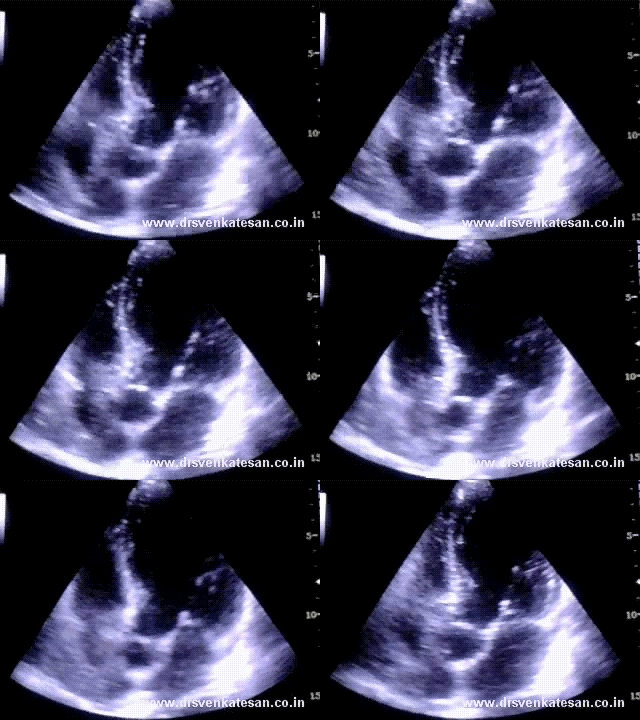
Note the classical bend of basal IVS encroaching the LVOT. Aortic valve opens normally.


The basal septum Projecting into LVOT

Pseudo LVOT gradient. It was about 25mmhg which is not significant.


  • Sigmoid shaped IVS can  cause a unique  LVOT  profile .
  • Present in elderly . The exact mechanism and  mechanical and hemodynamic   implications are not known .
  • It can rarely cause  dynamic LVOT obstruction.
  • When these patients develop Infero posterior MI there could be further collapse of IVS into LVOT .

Relationship between Aortic angle , Hypertension, HCM

Many of the HCM patients may show similar features .When ASH is confined only to basal IVS. HCM should not be diagnosed instead it is  often a defect of aorta /IVS alignment .

Abnormal  aortic angle  with that of IVS  may  make the IVS appear sigmoid.

If  patients  with abnormally angled aorta develop hypertension ASH and sigmoid septum is  more pronounced .

IVS dragging by mass effect  on aortic root is possible and Aortic regurgitation may ensue

Reference

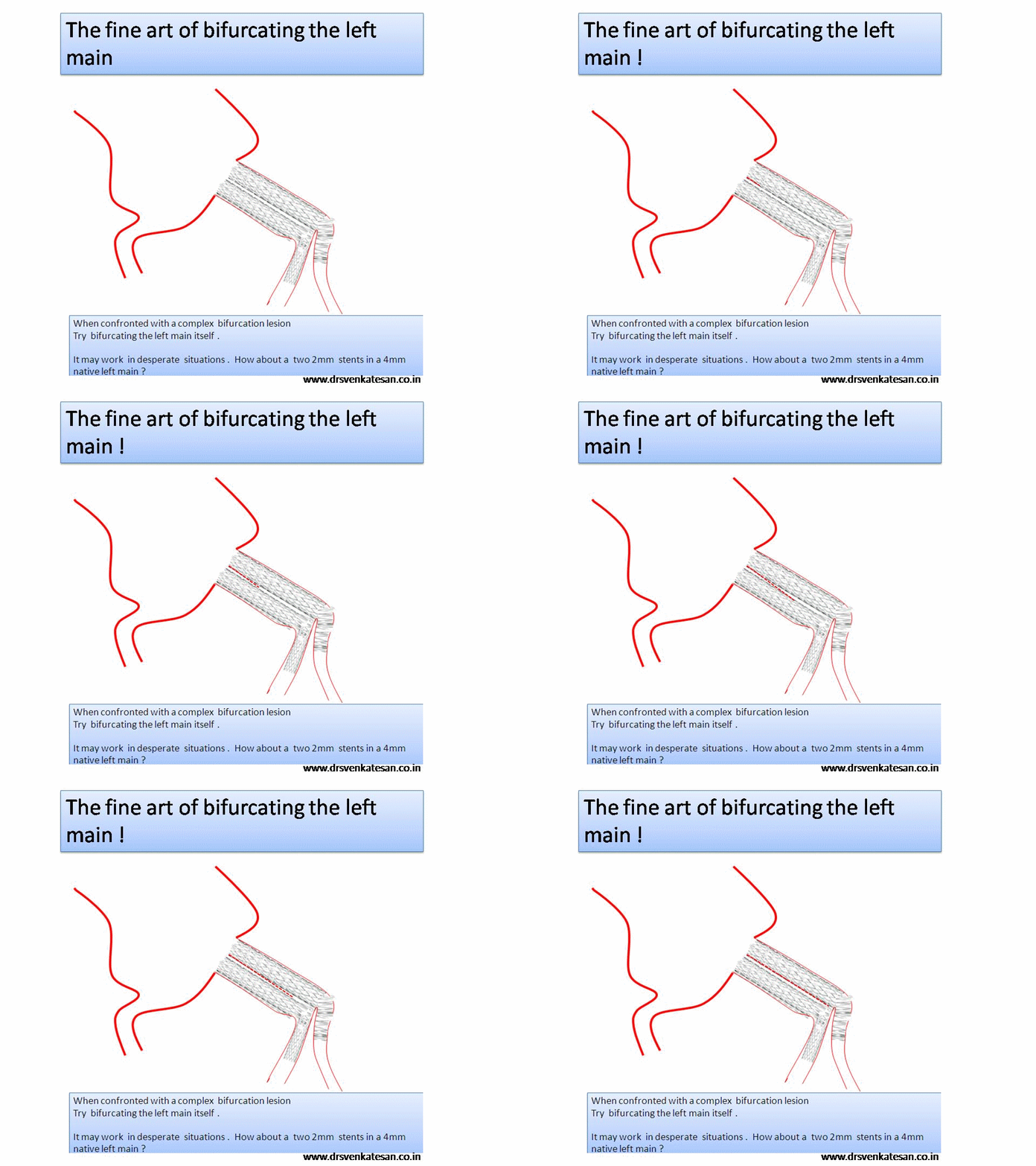
  • It is a complex PCI procedure meant for  high risk  bifurcation /Trifurcation lesions
  • Two stents are simultaneously  deployed.
  • It aims to prevent sudden acute occlusion of one of the major  branches .
  • It is not an easy procedure , and be used only in rare circumstances .
  • Distal left main and ostio proximal LAD/LCX  is a  classical  example.
  • Navigation can be difficult , only well experienced operators should attempt it.

*Is there a ready made two lumen stent available ?

The image is meant for concept purpose only !


It is one of the techniques available to stent unprotected left main

An excellent review  in  ACC intervention journal for unprotected left main .

Click on the Image to reach the article


The review published in the prestigious NEJM seems to suggest

PCI  , the most  commonly  performed  therapeutic cardiac intervention  may  result in  more  myocardial  infarction in the community  than  the deadly atherosclerosis itself.


Can it be true in any  stretch of imagination ?

Yes , it seems so . But the only issue  is the  criteria   used to define MI  .

Comments are welcome on this article .

You won’t get the full text article free  .Try to get it from your library .It is worth the time spent  !

http://www.nejm.org/doi/full/10.1056/NEJMra0912134

This is one of the wonderful corporate initiatives to assess the coronary angiogram and reporting . This calculator and teaching material was created by Boston scientific and Syntax study team . This  was used primarily during the  SYNTAX study.  This scoring system ,  though  appear  elaborate,  is a very  useful ,  objective way to assess coronary angiogram.

http://www.syntaxscore.com/calc/start.htm

Final message

It is encouraged to use this scoring system liberally . This will help us  to take more scientific decisions .


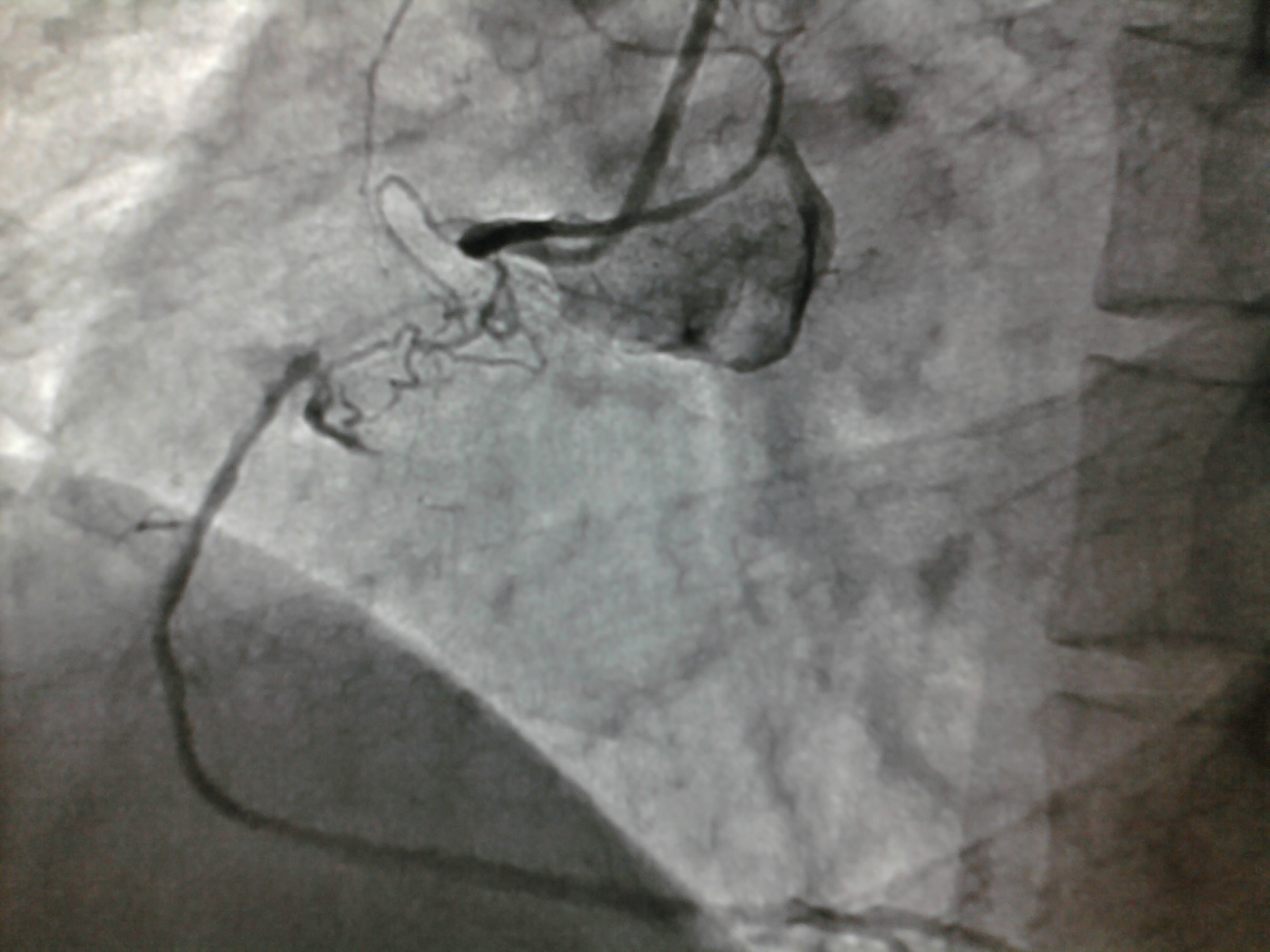
  • Coronary collateral circulation continues to be a poorly understood phenomenon.
  • It reduces the impact  of ischemia , salvage myocardium, keep it viable, and  can  even  be  life saving during a STEMI
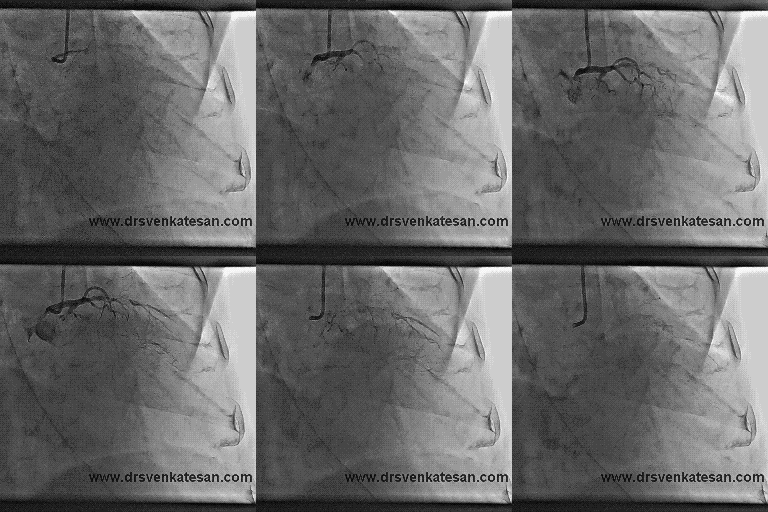
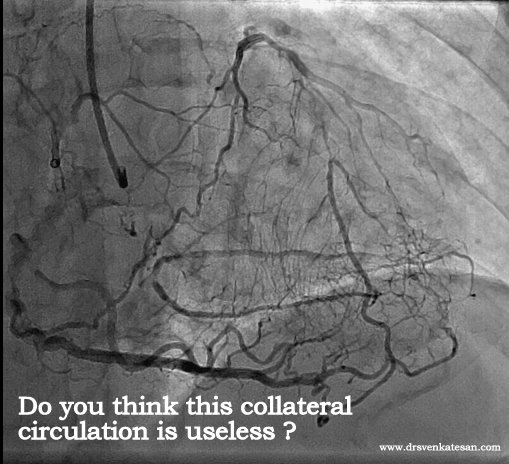
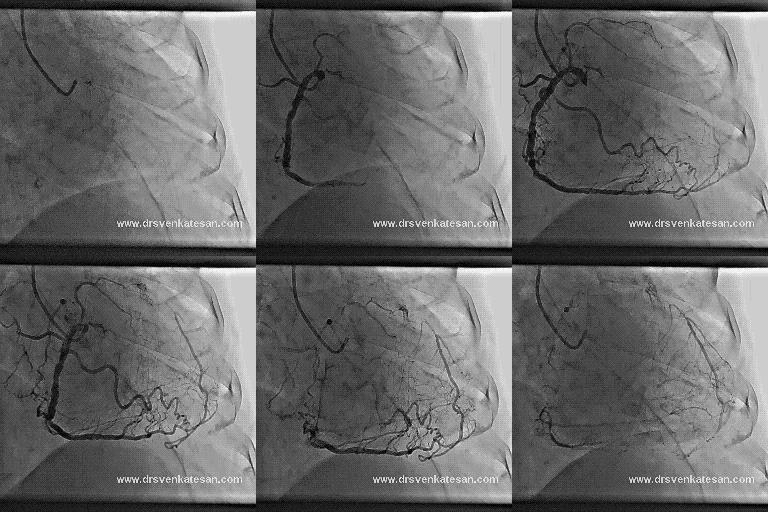
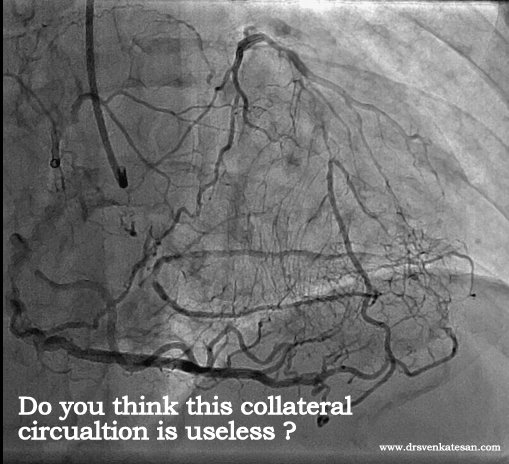
  • It can support either the same coronary artery  or the contra lateral coronary artery (Like the above patient )
  • The usefulness of  collaterals  at times of exertion is controversial .Most interventionists do not believe in  it . (Facts are opposite of course !)
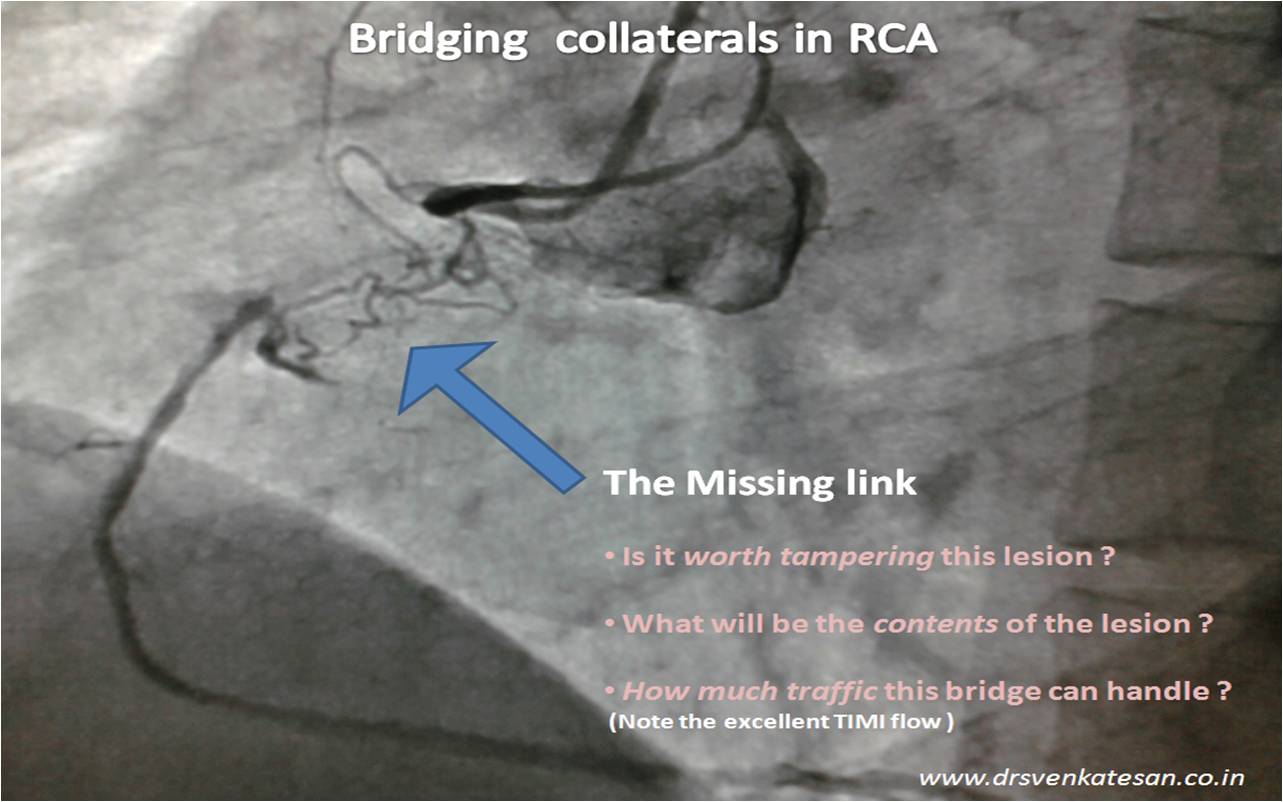
  • Bridging coronary  arterial collateral often indicate hardened total occlusion and success of  PCI is reduced

Here is  the  angiogram  which shows classical intra coronary bridging  collaterals.


Bicuspid aortic valve is  probably the commonest congenital heart disease.

  • It can be a totally benign entity and can be incidental finding in many .
  • Only a fraction progress to pathological entities like aortic stenosis , aortic root dilatation  etc .
  • Those afflicted need periodic echocardiography
  • These valves are prone for premature degeneration
  • Intervention is rarely required

Here is a complete review on the topic from the  top rated cardiology journal circulation.


Link to the article

Coronary collateral circulation is probably the most poorly understood circulation than any other.This  is ignorance at it’s best ,  in spite of the life saving potential  of this circulation. A popular  (mis )perception is  coronary collaterals  can support only  resting blood flow and it would  struggle  to compensate at times of exertion. This is based on few case studies and not based on large , authentic scientific data.

Does this reasoning mean  , coronary  collaterals   can never / ever be complete  ?

If we believe so   . . .we are grossly underestimating the power of  nature .(In fact , mankind  was humiliated by the nature  time and again !)

Lessons  from  a unique patient we have  encountered.

Here is an example of total LAD/LCX  occlusion with good collateral  from  RCA. He was having  stable  angina on medical  management . This patient  was not only  asymptomatic and was also negative for exercise  stress test at moderate work load .


There was an  intense debate about the management  when this angiogram was presented in the cath meeting .


  • Most of the cardiologists believed so !  But they had no answers why his stress test was negative.
  • The other argument for CABG was one can not allow a patient with a functionally single coronary  artery (RCA) However good is the collateral circulation.This at least  has some logic. not the first one !
  • One more suggestion was to quantitate  and map the real extent of ischemia by PET scanning and then decide about revascularisation.
  • One critical opinion was , since he was doing well with medical management what was the need to do coronary  angiogram at all ?

Any answers  . . .

He  ultimately went on to receive CABG (By popular opinion ) , but the point here is the collaterals were  good enough to support exertion.We have  documented quiet a few similar patients with collateral circulation supporting exercise.

What  happened to the collaterals  and (of course ) the patient after surgery ?

I will post you the  curious story soon   . . .

Final message

Coronary  collateral circulation , if well developed  can provide hemo-dynamically useful support even at times of exertion *

* The existing literature  is  biased against this concept. It generalizes all grades of collaterals into a single   entity. It is better  if we  spend more time to understand the nuances of coronary collateral circulation .

This is the  message from our observation. Do not ever believe whatever is published as facts in scientific literature. Observe, analyse , create your own inference ,  and concepts. Mainstream cardiologists would brand it unscientific  , Simply ignore it . Many times it is rewarding  to our patients.