Feeds:
Posts
Comments

Your clock starts  now !


clock gif  dr s venkatesan002

Chronic stable angina : Most can be effectively managed  by  optimal /intensive medicines and life style Interventions .About 10% will require PCI/CABG.

ACS – STEMI:  Primarily  managed  with  rapid and competent  pre-hospital care with prompt thrombolysis in or out of hospital .Patients  with  large STEMI who develop complications (Again about 10 %)   require PCI and few additional  lives can be saved.

ACS-NSTEMI : This is  the group that demand  an  important role for PCI . All true high risk UA/NSTEMI patients  should receive urgent coronary  angiogram and critical lesions  should either be stented or  sent for CABG  (If the lesions are multiple and complex ) The field of interventional  cardiology  is  expected  to play a major  role in  this category of  patients for the simple reason , we  not only give dramatic  relief from angina and also prevent a  potentially a huge MI that is waiting to happen !

* It is vital to emphasise  the “Aim and  objective” in  NSTEMI  management  is critically different from other two. We know ,  in CSA   the aim is to give relief  symptoms  and improve excercise capacity . Both PCI/CABG  are  unlikely  to prevent a future MI in CSA..In STEMI it has already occurred .The aim is to salvage myocardium  and prevent  future events. While PCI can do the former , it can’t do the later . In STEMI scenerio ,we have very good  alternate  modality called thrombolysis which can easily beat the  pPCI  in , cost , availability and time  (and  hence efficiency as well  in  most  countries !)

Counter thought

The above suggestion  is too simplified ,generalized , misleading , and  unscientific, should   strongly be disagreed. For those people who disagree , I provide an alternate scheme  .It is ultra short ,comes in  5 lines .Very practical  and  scientific too  !

In any  patient , who is  suspected to have either  acute or chronic  coronary syndromes ,take them to the cath lab in an  urgent or semi urgent fashion .Do an angiogram and stent all lesions  that you feel important . If  stenting is not possible  manage  with optimal medicines and /or send them to the surgeons.

Final message

The essence of catheter based coronary care is simple.We complicate it. To understand this concept  100’s of cardiology  journals  and as many conferences and infinite  number of books are churned out every year !


Current guidelines advice us to wait for 40 days following STEMI to implant ICD in most high risk patients.

Why this  cool off period.? *

  • Essentially  we are waiting for the Infarct healing process to be completed.
  • By this time electrical stability may be restored. The  risk of VT/VF  declines per naturalis.
  • LV function recovery  is possible. As stunned and hibernating myocardium resumes its mechanical function and patient might  jump out of the MADIT-2  cutoff point. (EF< 30%)
  • Introducing  ICD very early  after STEMI may be a myocardial irritant and that it self can generate  arrhythmias.
  • There is a possible interference by the leads in the physiological remodeling  process.

Final message

So the cool off period is  not only to reduce  the unnecessary  ICD implantation  but also to  avoid lead related issues .

*  This 40 day rule is based on one  large study from Germany. (DINAMIT, 2004  ) . However  few believe  the rule is not absolute. There can be individual   exceptions in high risk patients with critical LV dysfunction .

Other  wise   . . . How do you digest  a death occurring on  35th day  in a patient  who is waiting for an ICD scheduled one week later ?

Reference

DINAMIT trial ICD nejm

Link to  ACC/AHA  Guidelines for ICD Implantation 2013

New development

How to bridge the 40 day gap in really high risk post MI patient ?

We can’t keep him in CCU. Here comes the role of WCD (Wearable cardiovertor defibrillator.) Life vest is  from Zoll . WCD can act like a bridge till the 40 days when the patient becomes eligible for ICD.

http://lifevest.zoll.com/


One of oldest hospital  in the world , is now an  UNICEF heritage site. Santa Creu , Sant Pau original hospital built in 1400 AD rebuilt in 1900 by Catalonian modern architect Montaner.

sant pau hospital barcelona unicef

Architecture by Lluís Domènech i Montaner

sant pau hospital barcelona

inside-hospital-sant-pau-in-barcelona

sant pau hospital unicefReference

Hospital de Sant Pau

TVI  (or VTI)  is a hemo-dynamic  echo parameter measured from Doppler spectrum  across the valves ,usually in the outflow.This parameter is used to calculate cardiac output .VTI times the cross sectional area gives the stroke volume.


time velocity Integral  TVI

A correction: TVI is multiplication of velocity into time not division as suggested in the cartoon   

Time velocity Integral

What is time velocity integral  TVI echocardiography

Summary

*VTI is a Doppler parameter described in cm , it can be referred to as Stroke distance.This stroke distance when multiplied by  valve area gives the stroke volume from LV/RV  (or flow volume across AV valves or through any conduit)

One of  the hottest debate in  the recent  world  cardiology forum in Barcelona WSC 2014 , was  about  how to tackle incidentally detected non IRA lesions  during primary PCI.

So far , the dictum is , one should not meddle  the non culprit lesions unless demanded by hemodynamic instabilty .The next option is to do a staged PCI for these  lesions. (Few days later). or just forget about these lesions unless they are critical.

Now new studies are appearing that suggest  doing all  “do-able” lesions must  be stented  in one go ! This is obviously inviting trouble .The worry is not  in the concept but with the  dubious  track record , fragile guidelines and potential  ethical debacle of the cardiology community !

Stent “As you want and as you please”  has  already  invaded our mindset in  the chronic coronary  scenario. Now in 2014 , we want more freedom  in acute coronary  syndrome as well ! We  can’t ask for a  referee less game of soccer !

We clearly know coronary  arteries  are to be respected and do not deserve indiscriminate stenting  especially  in ACS  where  the early hazard is  more.

A recent story  which I heard  was a  height of  futility . A semi experienced cardiologist in the suburbs of a big southern Indian city , opened  successfully a LAD  which was the IRA  and  subsequently caused  acute  LCX  STEMI , while trying  to tackle an insignificant  non culprit lesion due to procedural mishap ! (Some suggested migration of LAD thrombus !)

What a pity , when we are supposed to  arrest the culprit, in reality it is simply  chased  down to another territory !

 Here comes  unique  advantage of thrombolysis , you need not locate  the culprit  artery the drug chases it wherever it is , even if they are  multiple ! Read in this link :

 Final message

We call it as fate when  thrombus suddenly occlude  a coronary artery  and the IRA becomes  a  culprit . We  need not compete with fate and end up creating  potential new culprits.Let the  sixth sense prevail over the five .Use judicious discretion when trying to stent muti-vessel  CAD  during PCI. Please  realise ,the concept  of  multivessel stenting during pPCI is not wrong .  How we interpret is the issue !

There is no excuse  to indulge as you like  , simply because your intentions are good !


One of my favorite quote  about Happiness from Buddha !


Happiness quote from Buddha

When a patient comes with angina at rest , it could mean two things .Either a  STEMI or an NSTEMI .This , we can diagnose only after seeing the ECG .

Can we differentiate these two by the  character of chest pain alone ?

Very  tough task isn’t  ? But there are some definite clues .

Infarct  pain

  • Is mostly sudden .
  • Likely to be crescendo , lasts more than 20-30 minutes .
  • Fails to get relived by rest or even  Nitrites.
  • Sweating due to sympathetic activation is more pronounced.

Unstable angina

  • Is rarely  sudden .Often has a pro-drome.
  • UA is  mostly precipitated by an increased demand situation or a stress.
  • It has  a typical waxing and waning  pattern . Rarely assume a true  crescendo character  as myocytes  does not necrose (Just threaten to die !)
  • The chest pain radiation   to  shoulder is less  conspicuous , instead it  tends to  reach  the  jaw area .(* An observation,Is it something to do with multi-vessel CAD in UA ?)

Mechanism of the difference : Epicardial vs Endocardial angina

The pain of UA is   due to subtotal occlusion and  endocardial ischemia , while STEMI is  sudden total occlusion  and the resultant  transmural  ischemia . In STEMI  epicardial  surface is always involved (Which lifts the ST segment in ECG .).We know epicardium  is same as  visceral layer of pericardium which is well innervated .Hence  pain  of STEMI   acquires  more of somatic character  than a  predominately visceral type pain  that occurs with  UA/NSTEMI where epicardial ischemia is absent.

Clinical importance

The demarcation between unstable angina and Infarct pain becomes vital when we calculate the time window for thrombolysing STEMI .Many of them have a phase of pre infarction angina which is a type of unstable angina. If we mistake it for Infarct pain then one may falsely calculate a prolonged time window and deny re-perfusion therapy.

Post -amble

It is tricky issue  to differentiate the  chest pain of  STEMI and NSTEMI  .A significant overlap can occur  in  real coronary care scenario . We know   chest pain  that occurs in both   pre and post infarct  phase  is considered  as unstable angina .(With infarct pain sandwiched between them!) Hence differentiating  them may even be termed as futile.

Still,clinical cardiology  can be  made  fascinating by indulging in such exercise !


Most of my students were  struggling to answer this  seemingly simple question . I  realised  later it is indeed a difficult one !

tall t waves

Some thoughts

Tall T waves are observed in very early phase of STEMI .(Within 30 minutes ?)  What is the mechanism ? Since ST shifts occur little later than T elevation ( considerable overlap may occur)  it may not be related to current of Injury.It is an  inherent alteration in the T wave genesis .T wave is inscribed when rapid phase 3 K+ efflux happen (Mainly by Iks and also  IKr )

What is the effect of ischemia on K + channels ?

No uniform answer.(Blocks, stimulates, irritates, Bi-phasic, variable ?)

There are 6 important K  channels in every cardiac myocyte adding to the complexity.

Does  the  Ischemic cells leaks potassium or accumulates it ? 

Though It does both ,  predominantly it should leak .If it’s leaking there is local extracellular hyperkalemia . Is that the explanation for tall T waves ?

What is the influence of QT interval on T wave morphology ?

Long QT as occurs in hypokalemia  pulls the  T down  and it may even  invert it.  .Short QT tends to push it up as in ERS .The effect of ischemia on QT interval is again unpredictable.Further regional and remote ischemia in a given patient can alter this.

Once the ST begins to elevate  the T  waves  losses it power to grow tall .It only can regress. I think this is the time the QT is sort of prolongs .

Effect of reperfusion on T waves

The tall T tend to regress as some form perfusion takes place as  K+ Is pushed back into the cells or  flushed away  from the vicinity.

The dynamic nature of reperfusion  makes the behavior of T wave amplitude further complex. But one thing is certain , a well perfused IRA  is associated with inverted  T wave  which we call it as completion of the process of evolution of MI .

Finally and most importantly this hyper acute T phase is not a constant  phenomenon. In fact it is uncommon in  persons who  have baseline T inversion .After analysing many things we are back to the original state of ignorance .

Summary

Researchers with intra-myocardial micro electrodes try to decode the mysteries in electrophysiology . Still there is a huge disconnect  between  clinicians and physiologists.

In simple terms  I would  believe the mechanism of   ischemic tall  T waves are almost similar to renal  hyperkalemia. (A local , transient  extracellular k + excess ) The base of the T waves are not narrow and tented as in CKD because  some degree of ST elevation (that always is expected )  widens the base of T wave. Further  ,the  prolonged QT interval in  renal hyperkalemia  stretches the QT and encroach   the base of the T wave to the left making it  appear narrow.

A simplest  version for  students

Tall T waves  are due to  transient  local extra cellular hyperkalemia , when K + leaks due to cellular  Ischemia.

Caution: This is  a superficial scientific attempt .I need inputs from more scientific  brains and electrophysiologists.


Read further

https://drsvenkatesan.wordpress.com/2012/02/10/basic-lessons-in-stemi-does-dying-myocytes-release-potassium-into-the-circulation/


I got this alert from World health organisation  yesterday .Click over the image to read more .

dr s venkatesan who sucide alert cardiology heart transplantation

Why should  a cardiologist   affected about this ?

When we are fighting in cath lab day in night day out  to  extinguish the  myocardial fire set by  coronary thrombosis and the resultant STEMI  . . . the  solemn attempt to  salvage  whatever myocardial cells we can !

See . . . what is happening elsewhere  every 40 seconds a healthy heart  in toto  is executed by weak minds !

What should the WHO do ?

Just publish these data and forget . No,they should organise the world leaders to take a resolve !

Either , we should prevent these unnatural deaths or else we should  have world organ net work. Why can’t we use these weak hearts  for those courageous  men and women  who lose their life daily with end stage  cardiomyopathy  who  long for living !

Is this  possible ?

Why not ?  Ain’t  the world leaders group  together periodically  to impose a sanction or bomb other countries  for personal reasons !


WHO sucide prevention

I stumbled upon a TV reality show where a mother of a child  was crying inconsolably ,whom she lost when it fell  into a open  bore-well pit .She was blaming it as her fate and the hole was sent by Lord Yama (God of death )

I  just got  curious ! This article was written  in a flash.

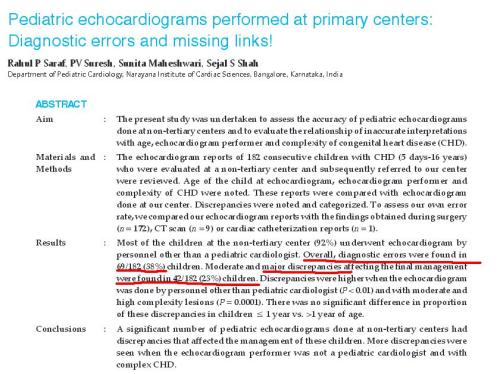
I used to get questions from anxious parents  of  children with holes in the heart .(Asymptomatic small VSDs or ASDs  who come for  periodic echo-cardiograms) .I reassure and  convey  the message , most of these  holes are tiny and will close automatically and they need not worry.Even if it doesn’t, it poses little problem.


asd clsoure

But .after watching  that haunting TV show, I have started to warn  the parents  that  holes in the heart may not be that dangerous  but  be wary of  holes in the roads  and unclosed bore wells  in our country !

Every single parent was amused  with  my statement  ! Some how it appeared sense to me !

I made a mini google research. It is estimated thousands of bore-wells are dug every day and kept open in allover the country side .It is like live land mines .  Some press reports  suggest at least one child dies in India every day due to uncovered bore-wells and man holes ! (May be really true !)

The following are  some of the  samples.

One

borewell deaths 4

One more

borewell deaths  3

Two

You can understand the gravity of the problem , one engineer has devised a special  child retrieval Robot for such accidents.

baby snare bore well cath lab snares asd vsd device av loop how to snare a device

Three

A news report  in Times of India  .What shall we do about these ?

asd vsd borewells pits holes in the heart

It is a horrific truth in this  civilised world .Nature creates  holes  in the heart due to defective gene in some . It appears  less dangerous to me. After all a hole in the heart  threatens only one life,while  a hole in the road  kills many people.

As a cardiologist  , I am saying  this with anguish as our  team  along with  surgeons  work  over time to close intra-cardiac  holes  with device ,  the  holes in the road are often  callously  kept open   forming   death traps  for our children .The men responsible for such things deserves no  pardon.

The story is never ending . . .

borewell deaths 2

Post-amble:
Doctors are not just the  noble professional who provide relief  from  illness . They  have  other social responsibilities  too !
I believe ,  as physicians bound by Hippocratic  oath , we should  help tackle issues that threaten  our pubic health  system , especially in this case were the victims are  vulnerable children !
In fact ,  pediatricians should come forward to work with Govt to  improve safety  issues for children  and  orthopedicians  should help  prevent road traffic accident while  cardiologists  shall  work with the Govt to prevent  heart disease . . .  etc etc .
Though  bore-well deaths are  a pan India  phenomenon , One state in India ( TN)   has taken a   new initiative recently  and has  banned digging  bore-wells without prior permission and stipulated strict guidelines .Others can take a cue from here !