Feeds:
Posts
Comments

Posts Tagged ‘bmj’

What is herd behavior ?

It is a behavioral pattern where in animals and humans in large numbers , tend to behave in the same way at the same time without application of mind .


Herd behavior in human societies

Herd behaviour describes how individuals in a group can act together without planned direction. The term pertains to the behaviour of animals in herds, flocks, and schools, and to human conduct during activities such as stock market bubbles and crashes, street demonstrations, sporting events, episodes of mob violence and even everyday decision making, judgement and opinion forming. This is very much applicable to medical profession also.(Ref:Wikipedia)

Herd behaviour in animals and human how they are different ?

“surprise ! surprise ! There is  very little difference  noted , according to Hamilton”

A group of animals fleeing a predator shows the nature of herd behavior. In the often cited article “Geometry For The Selfish Herd,” evolutionary biologist W. D. Hamilton said each individual group member reduces the danger to itself by moving as close as possible to the center of the fleeing group. Thus the herd appears to act as a unit in moving together, but its function emerges from the uncoordinated behavior of self-seeking individuals.

Among humans for example when panicked individuals confined to a room with two equal and equidistant exits, a majority will favor one exit while the minority will favor the other.

Medical professionals as a herd
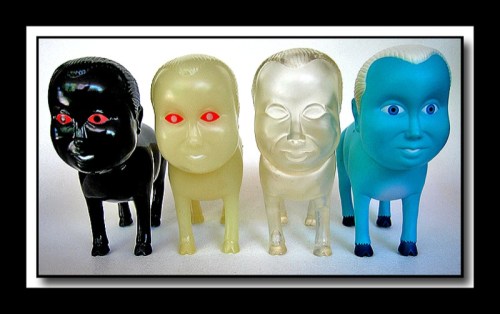

The practicing habits of  medical professionals  move , symmetrically as a herd . When a top journal or a opinion leader utters something every one tend to move in that direction .

If a herd leader says a particular treatment is great, every one will say yes . If he says nay every one will say nay !

No one will really question the direction they move ? Unless the correction occurs from within the herd. No external forces usually are effective.Herding is also benefitial many times as rapid propogation of scientific facts needs such behavior ,but it needs constant scrutiny.


Herd behavior example 1 : The most  typical example is the drug prescribing pattern of anti hypertensive agents over the past half century.The movement  from diuretics to beta blocker , from beta blockers to calcium blockers and to ACE inhibitor and again to diuretic  , then to ARBs and currently shying strongly away from beta blockers, in between  have a brief encounter with alpha blockers and finally  back to diuretics.

If a  particular physician by his insight , had clinged onto  diuretics ( Away from the herd ) for over three decades he is a real exemption , although branded old timed  and unscientific , he has been the most scientific medical professional indeed !

Herd mentality example 2 : Every one says so !  so it must be true ! Hormone replacement therapy good or bad goes with the leader of the herd . 

Herd mentality example 3: Very few cardiologists will be ready to agree the fact that , simple digoxin and diuretic ,ACEI, beta blocker,  administration could be as effective as  the costly cardiac resynchronisation therapy in atleast some of patients with wide QRS cardiac failure ( As we know up to 30 %  wide QRS CHF population do not respond to CRT) 

Defying Herd mentality resulted in major break throughs in medicine

               When every one was  saying beta blocker was harmful in CHF one person from Briton defied it ( Wagenstein, and now beta blockers are the mainstay in the management of CHF! )

There are hundreds of treatment modalities popularised by such herd behavior

Who is the watch dog  , whether science is moving in the correct direction ?


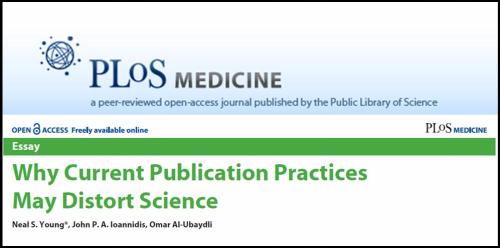
Read this land mark article  how medical research can be distorted by such learned behavior  and how scientific research should not be done .

Click on the image .
 This post is not intended to hurt anyone . It  reflects , human beings are not  fully evolved  yet , in the onging  process of evolutionary biology.

Read Full Post »


                                          CRT , cardiac resynchronisation therapy  is being  projected  as a revolutionary treatment for cardiac failure , where a failing heart is rewired electrically through multiple leads and make it contract  more effectively.The success rate of CRT was highly variable.The basic question here  is,  there should be a  significant  documentation of desynchronisation  prior to CRT , for resynchronisation to be effective. Further , the sites of  myocardial  stimulation ( Coronary sinus/LV epicardial) , dose of electricity and the sequence of stimulation and the  electrical delay  are very  critical. Achieving this into perfection  is not a simple job and is  real rocket science ! ( If we can achieve 5 % of what  the normal purkinje network do within the LV we can term it a huge success.) Let us hope we catch up with nature . Finally , it is ironical  the sites of LV pacing ,  electrophysiologists  select currently  is infact not selected by them but pre selected by the patients coronary venous anatomy ! .So as on date ,  one can imagine how scientific this treatment could be !

                                         Initially it was adviced for patients with only wide qrs later for even normal qrs patients.When people started using it indiscriminately  insurance companies started to rethink and thus came the   RETHINQ study in NEJM  and brought a full stop to CRT in normal qrs CHF.

How to identify who will benefit from  the costly CRT  ?

It is a million dollar question. So millions of dollars were spent to identify the correct tool to identify the true responders to CRT.Echo cardiography with sophisticated methods tissue doppler, tissue tracking and , 3 D echo ,velocity vector imaging were done .These methods are not only costly but also time consuming and  hugely expertise driven.

Does all this  efforts with  advanced echo techniques worthwhile ?

This simple question was addressed in PROSPECT study in circulation

Click to read the article

Read Full Post »

                Human civilisation has met so many challenges.Man kind has enjoyed the benefits of modern medicine for over a century.Now comes the new threat.Threat from within.The onslaught of marketing force has contaminated the medical science .

              It is widely  recognised  commerce is masquereading as science , from stem cell research to futile and costly  drugs, and  questionable  devices and procedures . 

How is the medical  community responding to this  issue ? 

Silence  is the response !  Why silent ? Are we the part of the problem ?  Occasional articles in the  Annals of medicine, Lancet, BMJ, or JAMA talk about these issues and nothing happens next .

Click below  to read one such article from the recent issue of Annals !


Let us hope the world financial crisis currently we are witnessing , would be good for human health as all futile market driven  , enforced medical expenditure goes bust !

Read Full Post »

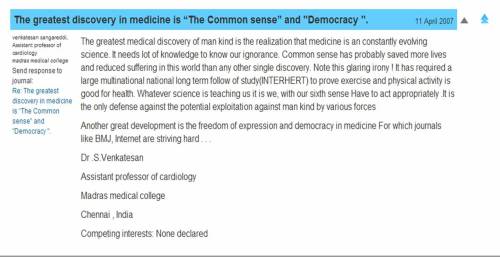
     The greatest discovery in medicine is  “ common sense” and

    “democracy”.           

                       The greatest medical discovery  is the realization that medicine is an constantly evolving science. It needs lot of knowledge to know our ignorance . Common sense has probably saved more lives and reduced suffering in this world than any other single discovery. Note this glaring irony ! It has required a large multi national long term follow  up study (INTERHERT) to prove exercise and physical activity is good for health. Whatever science is teaching us it is we, with our sixth sense have to act appropriately .It is the only defense against the potential exploitation against man kind by various forces.

Another great development is the freedom of expression and democracy in medicine,  for which journals like BMJ, Internet are striving hard . . .

Dr .S.Venkatesan ,Assistant professor of cardiology . Madras medical college Chennai , India


 Click on the title to view the article and all nominations . 


Read Full Post »

Humans have roughly 5 to 6 liters of blood at any given time in their  body  . Out of  this*

50% (2500ml)  is located in the systemic venous compartment.
18% is within the pulmonary circulation participating in the vital oxygenation
12% (500-600ml) is within the cardiac chambers.
8%  is in the arterial tree of  the body.
5%  is  within the  capillaries.
2%  is in the aorta.
* Source : Best & Taylor Physiological basis of  medical practice 1966, 8th edition

What is the implication of this predominantly venous distribution of blood  at rest ?

  • A competent venous tone is essential  for the human beings to maintain the erect posture.
  • Bulk of the cause of syncope in humans is due to peripheral  mechanism like loss of vascular tone and resultant venous pooling.
  • The  concept of venous reservoir is so important in emergency situations like  hypotension  as  simple elevation of legs  is equivalent to  infusing 500 -800 ml of intravenous saline .
  • Similarly during acute left ventricular failure trunk elevation and legs dangling down can reduce the pulmonary congestion very significantly and reduce pulmonary capillary wedge pressure (LVEDP)

 Autonomic dysfunction and venous insufficiency

 Autonomic dysfunction and resultant  orthostatic hypotension is directly related  to venous reservoir dysfunction.Increasing effective circulatory volume by elastic stockings or administration of mineralocorticosteroids like fludrocortisone (.5mg/day ) can be useful in this condition

Read Full Post »

Ventricular tachycardia is considered as one of the most  dangerous  cardiac arrhythmia .Rather , it is the label  VT  that spreads more  fear than the arrhythmia itself. It is a fact many patients with VT walk into hospital , still  VT will always be a sinister arrhythmia as long as it carries a risk of degenerating into ventricular fibrillation.

What determines hemodynamic stability in VT ?

  • Origin and location of VT
  • The ventricular rate
  • Presence or absence of AV dissociation
  • Impact on mitral inflow pattern
  • Associated left ventricular dysfunction or valvular heart disease.
  • VT in the setting of acute coronary syndrome.(Ischemic VT)
  • Inappropriate drug selection

Origin and location

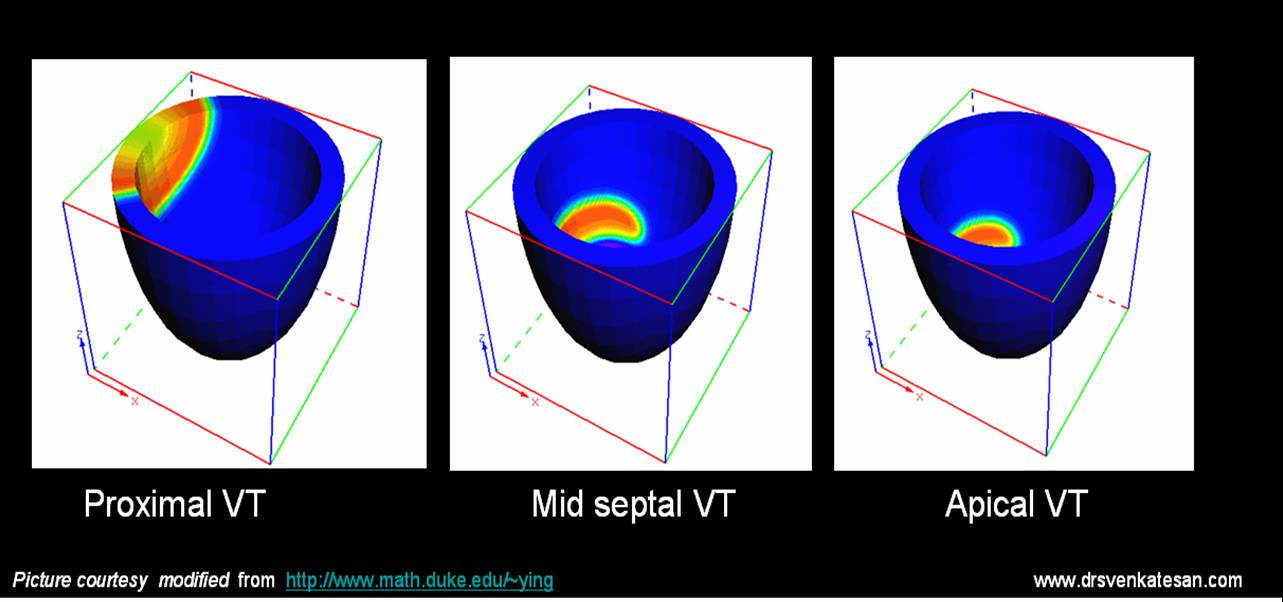
VTs originating high up in the ventricle( High septal VT,Proximal VTs) have more organised ventricular contraction  and they are more stable.Distal VT  originating  in the myocardium away from the conducting system has chaotic myocyte to myocyte conduction.These are very unstable.

The term fascicular VT is nothing but VTs originating  in the His bundle and it’s branches( Can also be termed Septal VT ).These VTs are also stable and some of them respond well to calcium blockers indicating that they are very close to the AV junction and carry the properties of junctional tachycardia. QRS width gives  a rough estimate about the location of VT. Narrower the VT higher it’s origin.( But remember even in VT ,  qrs can further widen on it’s way downhill !)

LV dysfunction.

This is probably the most important determinant of the outcome in VT. Patients with severe LV dysfunction (EF <30%) fare badly .Hence the land mark concepts from MADIT 1& 2 demanded ICDs in these patients.The most common clinical setting is  dilated cardiomyopathy.SomE of them have bundle branch re entry(BBR).This particular  VT can be stable for many  hours.

Ventricular rate.

Usually VT has a rate between 120-200.Higher the rate of VT more the chances of instability .This rule is also not always true as fascicular VT can be well tolerated at high rates.So location of VT focus  and LV dysfunction usually over rides the impact  of ventricular rate.

Mitral inflow pattern

Proper left ventricular filling is the key to hemodynamic stability in VT. In proximal, septal,fascicular, LVOT VTs doppler studies  suggest (ACC /AHA Type C evidence : Personal observations in CCU during VT) near normal preservation of  bi modal filling of mitral valve inflow.In ischemic myocardial VT  the mitral inflow profile is critically affected . There is no distinctive forward filling was observed .In fact  at rapid rates a short pulsatile MR jets are noted instead.

Associated valvular diseases

It is obvious,  aortic  and mitral valve disorders can aggravate the hemodyanmic instability.

Final message

The clinical behavior of  ventricular tachycardia is widely variable and dependent on multiple factors.

Associated LV dysfunction and  structural heart disease ultimately determine the outcome.


Read Full Post »

                                  Even as cardiology community is preoccupied with systemic hypertension & CAD  ,  pulmonary arterial hypertension(PAH) is a much neglected , still  an important clinical cardiac problem encountered . The irony is self evident , there are half a dozen methods to grade systemic hypertension not even a single stadardised grading available for pulmonary arterial hypertension. The WHO  working group defined pulmonary hypertension  few decades ago and was not clinically graded .The only grading available is based on  the pulmonary vascular biopsy changes (Heath Edwards) 

                                   Currently PAH management has gone through revolutionary changes. There is an urgent  need for grading  this entity .This will facilitate to  diagnose , manage and assess the efficacy of the currently available treatment.

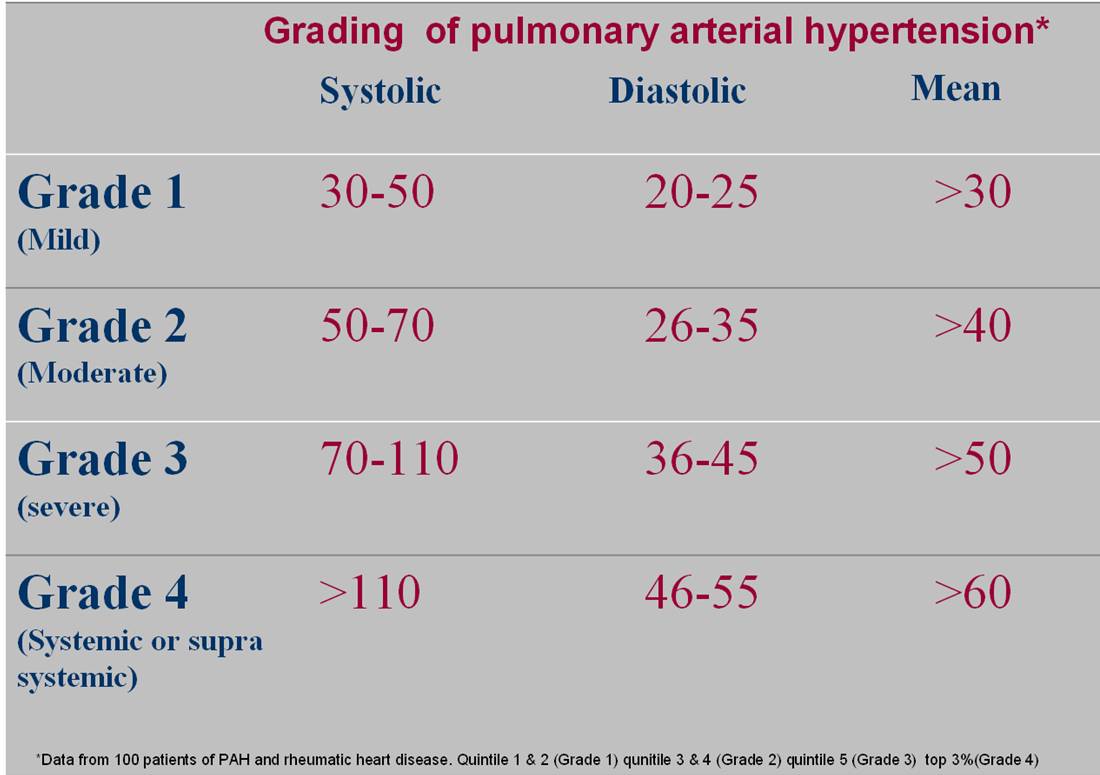
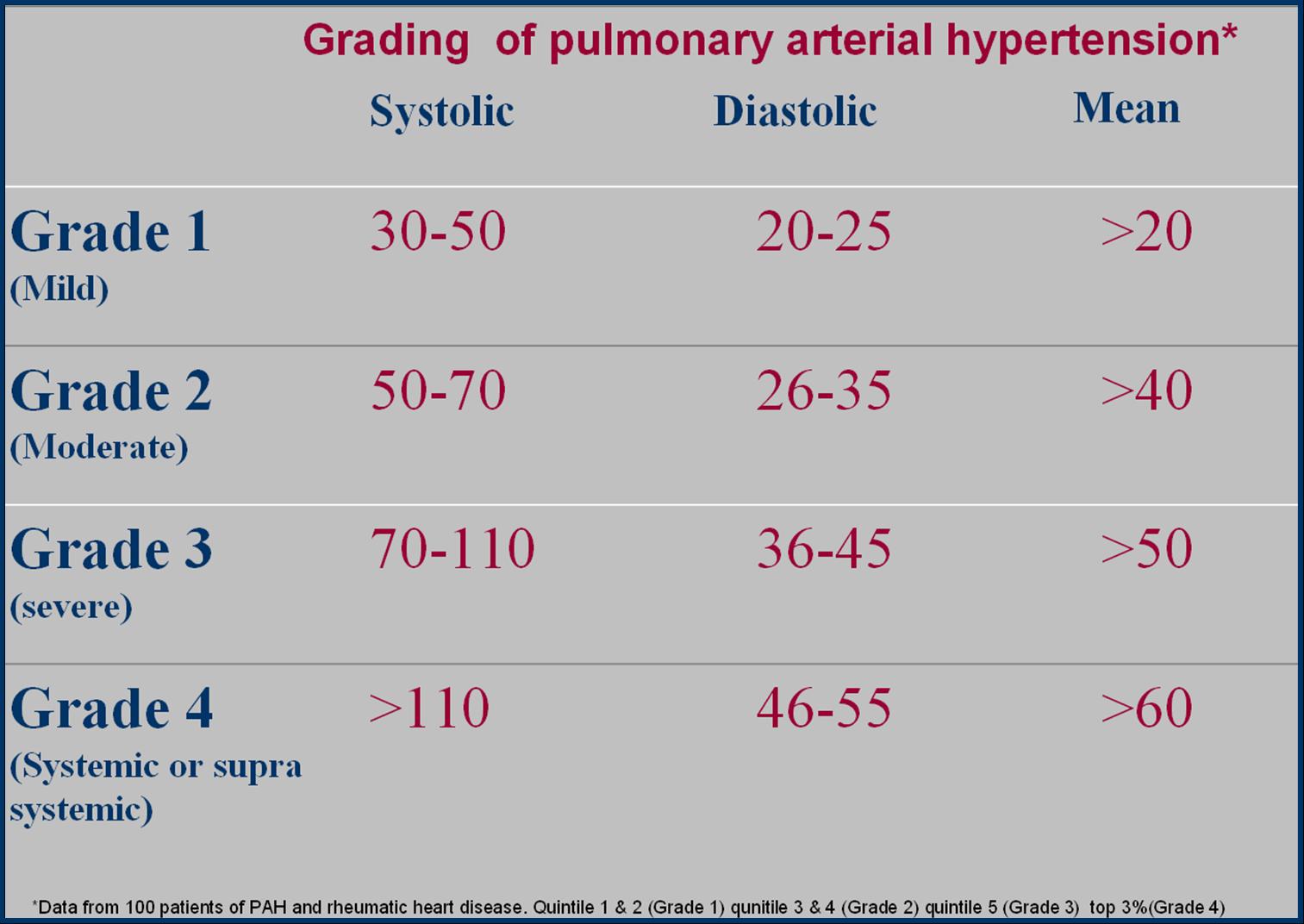
                                Developing countries like ours have a great number of PAH due to rampant rheumatic heart disease.  A simple study was done in  100 patients with PAH .Bulk of the study population had RHD .Few had primary pulmonary  hypertension .Systolic , diastolic, and mean pressure was assessed by doppler echocardiographic analysis of tricuspid regurgitation (TR) and pulmonary regurgitaion(PR) jets. TR jet provided the systolic PA pressure , PR jet provided mean as well as diastolic PA pressure .TR jet was available in all patients. PR jet was available only in 60 patients .Hence the diastolic andmean PA pressure data has been extrapolated in some  and  was plotted in a scatter diagram. Five equal quintiles were divided. Patients in first  and 2nd quintiles were graded 1   and third  and 4th  quintile were  graded 2 ,  5 th  was graded 3 respectively. From this cut off points for  various grades of PAH were identified .The top 3% of patients  with highest PAP were graded as grade 4 and all of them had supra systemic PAH. 

The following grading is suggested for PAH* 

 *This is a preliminary  attempt to grade PAH. This could be applicable mainly in rheumatic heart disese and primary pulmonary hypertension .Further refining of methodology is  required.PAH grading may be little different in congenital left to right shunts.

Read Full Post »

                        Palpitation is one of the common symptoms for which cardiac patients are referred. Like dyspnea , palpitation can either be a physiological expression of normally beating heart or a  dangerous pathological state of the heart. This makes this symptom unique and warrants careful evaluation.                                                                                                                                                         By definition palpitation  is abnormal  awareness  of ones own heart beat. Heart is a mechanical organ with multiple mobile anatomical structures. There is  constant  blood  flow in multiple directions . Apart from this the heart   has  it’s unique translational, rotational movement . These intrinsic movements combined with proximity to chest wall  generate vibratory  motion  signals .These signals are generally dampened by the encircling pericardial space .The neural signals responsible for  perception  of palpitation is not clear. If the heart hits against the chest wall it is the  somatic nerves from the chest wall that carries the signal. Vibrations generated within the heart chambers, and  and the  valves  are  carried  by the  myocardial and intravascular  sensors.( Autonomic) 

What are causes of palpitation?

       Cardiac

  • All hyperdynamic circulatory states. It may be generated from either  right or left ventricle or both.
  • Regurgitant lesions ( Mainly Mitral and aortic regurgitation)
  • MVPS*
  • Congenital heart disese ( Mainly left to right shunts-ASD/VSD/etc)
  • Apart from this patients  with prosthetic heart valve, and pacemaker patients can feel their heart beats.
  •  Cardiac arrhythmia .Both tachycardia, and bradycardia . Ventricular ectopic beats are the very common cause .( It is often described as missed beat)

* Mitral valve prolapse, a very benign condition, over diagnosed in the last few decades raised considerable anxiety and palpitations for the patients (mainly after the diagnosis ! ).Now the cardiology community has sought to underplay this entity with strict diagnostic criteria.( Thickened mitral leaflet ,presence of MR both must be present to label a patient  as MVPS)

       Non cardiac

  • Physiological
  • Anxiety state
  • Anemia 

What is the relationship between ejection fraction and palpitation?

                                        Generally palpitation indicate a  hyper kinetic state of heart .The commonest cause of palpitation is  anxiety  state .This also happens in hyper dynamic circulations like anemia , fever, thyrotoxicosis, pregnancy etc . In all these situations palpitation indicate increased force of contraction which   generates high dp/dt(Rate of rise of ventricular pressure)  . So  the left ventricularejection fraction is normal or more than normal . So  presence of  palpitation could be an  indirect evidence  of reasonably good LV function.

    “Patients  with dilated cardiomyopathy or CHF rarely feel their heart beat during exertion , instead they have dyspnea  as the LV force of contraction is less”

What is the significance of palpitation that occur during rest ?

                              Palpitation occurring at rest indicate more often a  pathology.It is invariably due to an cardiac arrhytmia  either tachycardia or bradycardia. Intelligent patients can give accurate information about the  regularity of rhythm , any  extra beats or missed beats . Atrial fibrillation, VPDs  could be  diagnosed by history alone in them !

If palpitation  is associated with visible chest pulsation what is the likely diagnosis ?

    If  significant visible pulsation over chest wall  pulsations are seen   in young adults it could simply mean a hyper dynamic circulation and thin chest wall. Pulmonary arterial pulsations is not normally felt in left 2nd inter costal space.If felt one has to rule out shunt lesions like ASD or pulmonary hypertension.
                    “ASD is the commonest cause  of right ventricular  palpitation “  

Read Full Post »


                            Amlodipine , the most popular anti hypertensive drug  used world wide has an very important action on coronary blood flow.When nifedipine was introduced three decades ago it was  known for it’s powerful anti anginal properties. Subsequently  amlodipine was introduced with almost similar action. But over the years, amlodipine was projected primarily as anti hypertensive drug and gradually many of the physicians are made to believe it is a drug that  should be used only if the blood pressure is high.The fear of reflex tachycardia in few was exaggerated.


                              In fact a cross section of  today’s general physicians were queried  about amlodipine  and none of them acknowledged  using this drug as an anti anginal drug. And few of them went to the extent of withdrawing amlodipine if it was used for the purpose of angina relief !

Why amlodipine’s  anti anginal action is in doldrums ?

The single word answer is unfortunate!   Marketing bias ,coupled with  the fact  that mainstream cardiology texts have ignored this aspect.

Final message

                                    Amlodipine , can still be used as a antianginal drug especially  in a patient who has angina with associated bradycardia  , significant LV dysfunction . Some reserve amlodipine and nifedipine exclusively for vasospastic angina where beta blockers alone are theoretically contraindicated .

Read Full Post »


                                                             Syncope by definition is a transient loss of consciousness due to cerebral hypo perfusion and loss of muscular tone, and the patient falls but  recovers fully and gets up either assisted or spontaneous.The cardiac and vascular counter response to syncope is most often intact .This makes syncope characteristically transient . If a patient does not recover from syncope it could either be a prolonged loss of consciousness( Stroke etc)  or if he never gets up he will be called a victim of cardiac arrest or  a SCD ! (Sudden cardiac death ) . So technically by defintion ,  all  patients  will  have to  survive  the  syncopal episode.

But the following questions need to be answered   

  1. How prolonged  a syncope can be ?
  2. Can syncope lead onto  sudden cardiac death ?(SCD)  
  3. What are  life  threatening syncope and non life threatening syncope ?                           

What is the link between, syncope and SCD in patients with ventricular arrhythmia’s ?

Some case of long QT syndromes could be life threatening especially in children as they inherit sudden death. A patient with a non sustained VT  may develop syncope  if  the  VT  becomes sustained especially  if there is underlying heart disease and LV dysfunction . Among this  few , may degenerate into ventricular fibrillation and patient may die.  

How common is syncope in acute myocardial infarction ? 
 Syncope is a very  rare presentation of acute myocardial infarction. 
 
Can syncope precipitate  or precede a  cerebro vascular accident  ?   


Prolonged syncope , TIA,  stroke in evolution and completed stroke   can be a continuous spectrum in patients with carotid and cerebrovascular  disese . But when a syncope evolves in to a stroke the   patient is not considered to be a victim of syncope but  they enter the stroke protocol.

There is a big list for the causes of syncope

But to put it simply

A.Cardiac

  •    Purely electrical ( Arrhythmic- Brady, Tachycardia)
  •    Mechanical( Valvular obstruction, and other structural heart disease etc)

B. Non cardiac

  • Vasovagal (Commonest 90% of all syncope)

C. Metabolic*

  •  Anemia
  • Hypoglycemia
  • Hypoxia
*Metabolic causes  coupled with simple  vaso vagal(Neuro cardiogenic)  constitute the bulk of causes of syncope .Siezure disorders are very  common and a close  mimicker of syncope and need to be ruled out.

How to work up  a patient with syncope ?

                   First ,  one need to confirm  it is indeed a syncope . If the initial examination is not clearcut   one  need to  go back to the  history and ask for  circumstances under which the syncope occured  and  details of prodromal symptoms  if any . Patient’s  family members who witnessed the event can give useful information . It  is the most  cost effective ( Comes free of cost infact !)  investigative tool available .Cardiac syncopes are usually sudden, vasovagal often have environmental or emotional factor. Apart from routine investigations , ECG, Echocardiography, holter are done generally, head up tilt test, Loop, event recorders may be reuired in few.

Final message

                                          Syncope is one of the common symptoms in cardiology and  general medical practice. Many times the diagnosis is easy . Common syncope is  never fatal but , ruling out dangerous  tachy and bradyarrhythmias is a key aim.  In a significant number (20-30%) identifying the cause could be really  difficult and  may never be made in spite  of the modern diagnostic tools. These syncope of unknown origin is grouped along with the neurocardiogenic category.

The one,  positive thing about syncope is (unlike chest pain) , it is rarely fatal in it’s first episode ,  gives the physicians to  investigate and correct the underlying problem.

Read Full Post »

« Newer Posts - Older Posts »