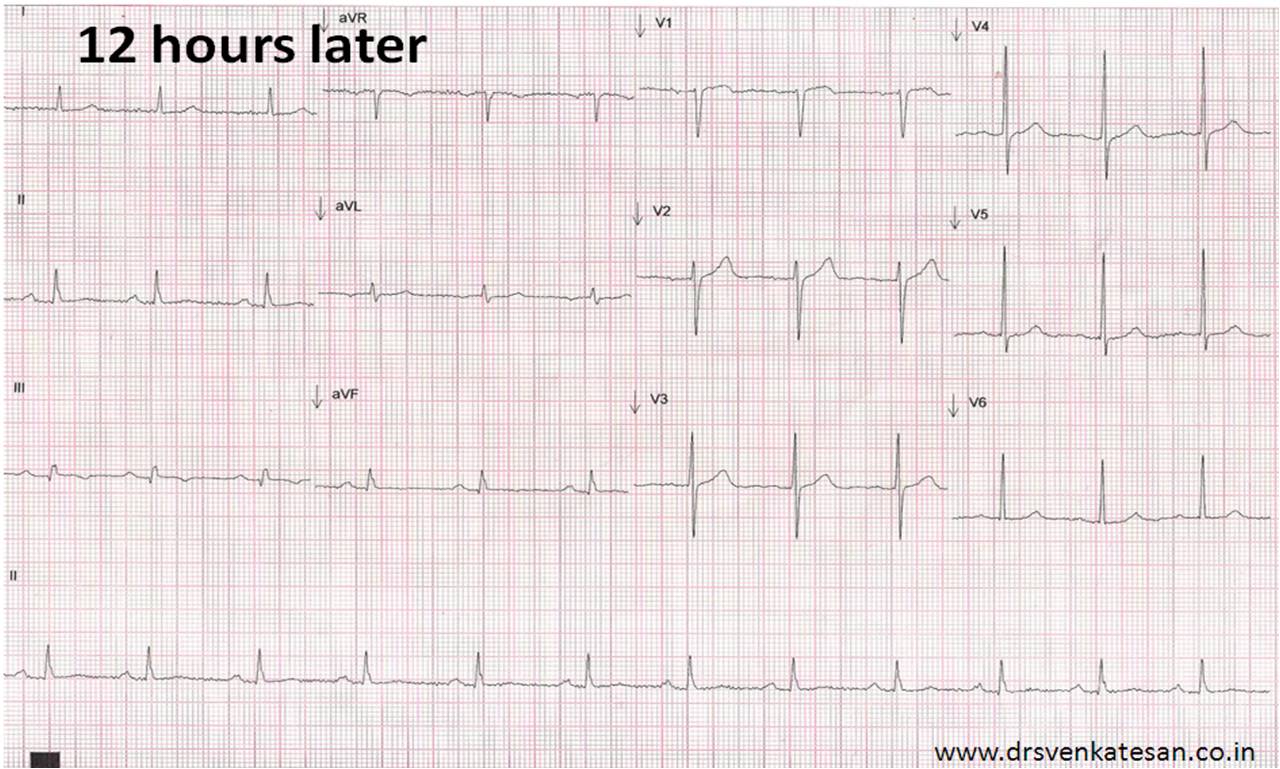
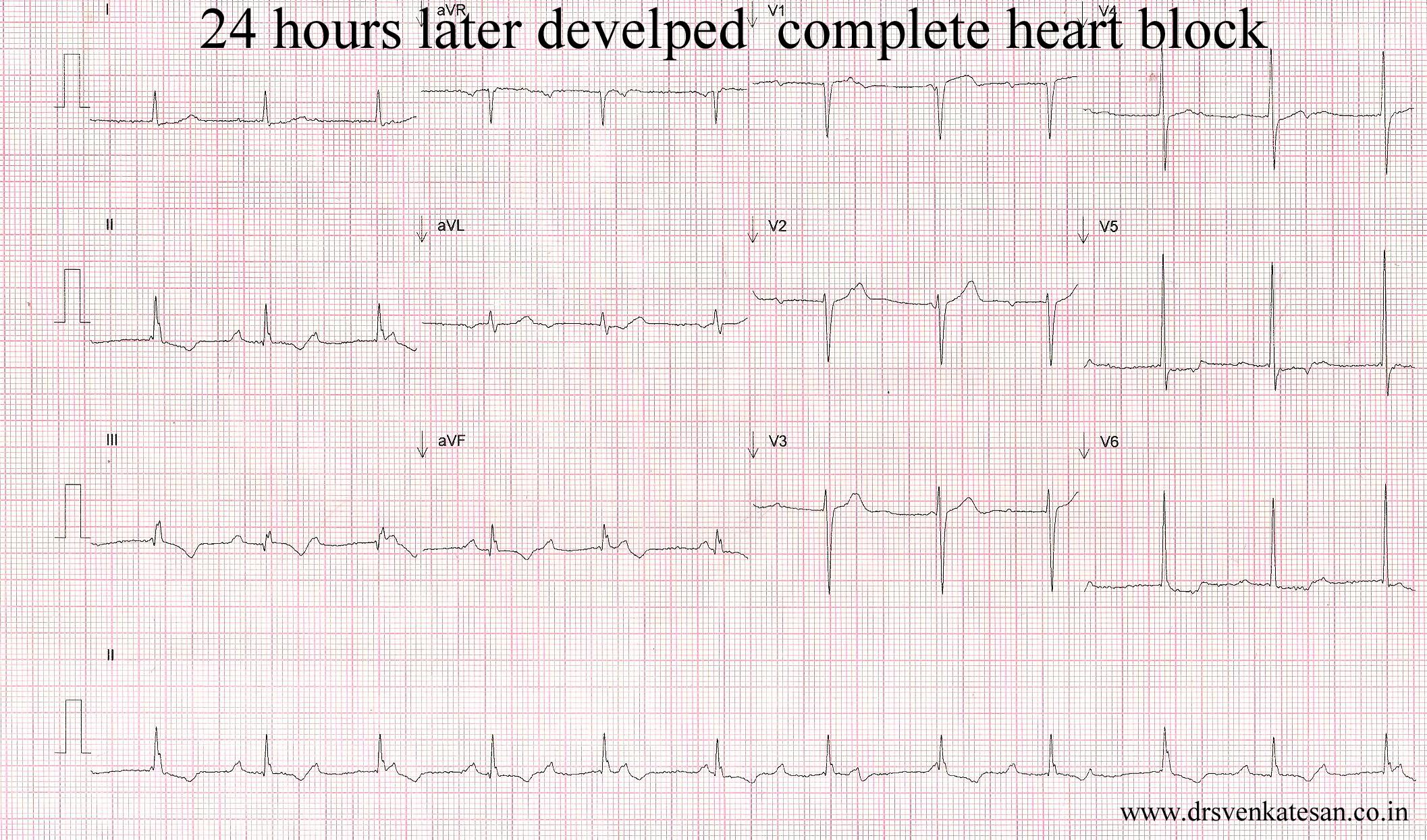
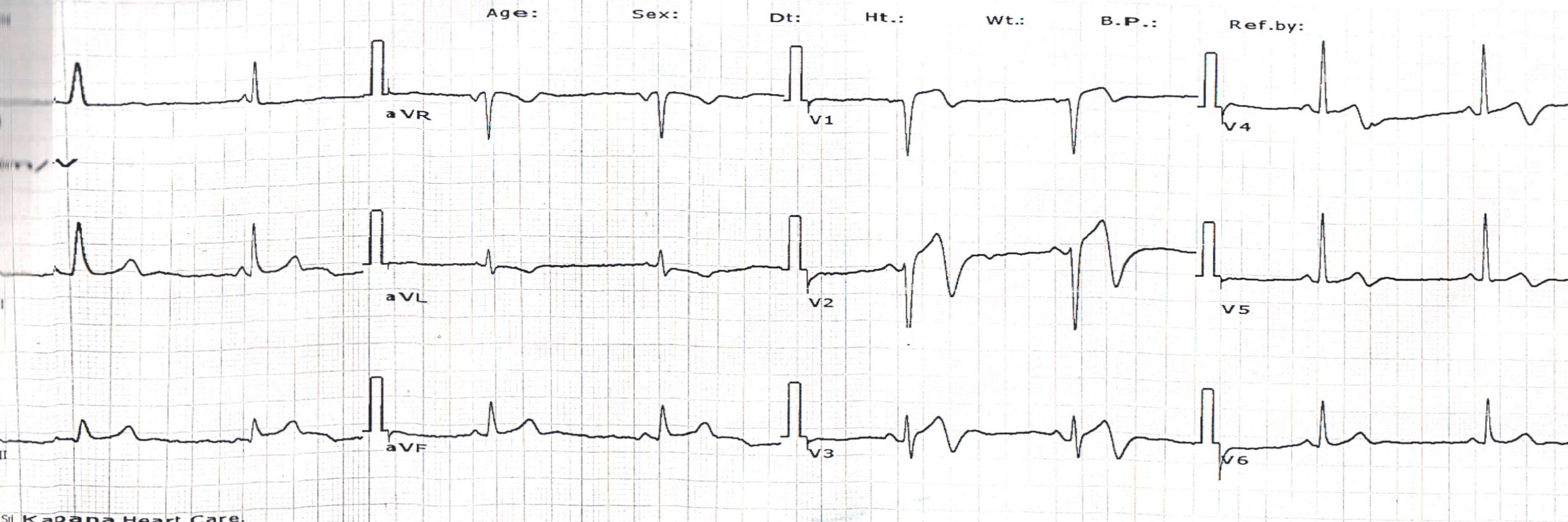
A patient with extensive anterior STEMI presented 18 hours after onset of chest pain . He was other wise stable and free from angina but had persistent ST elevation (5mm in V 1 to V 5 ). He had a total occlusion of LAD with TIMI zero flow . He had a tight PDA lesion as well . A bed side echo revealed LV EF of 50% . The septum was hypo-kinetic but did not appear severely dysfunctional .
So , it was decided to open up the LAD. The moment LAD was opened he developed severe acute LVF / flash pulmonary edema . Even after a 30 minutes of heart (Fire ) fighting he could not be resuscitated .
What is the mechanism of death here ? Expert STEMI interventionist from core labs may answer this !
An acute ischemic MR with myocardial disruption was suggested . Why it was triggered after opening the IRA ?
Three mechanisms were discussed
- Re-perfusion injury
- Collateral damage
- Physiological de-stabilisation of Contra -Lateral lesion (Remote lesions )
Re-perfusion Injury ? How relevant it is in cath lab ?
Is re-perfusion injury electrical , mechanical or both ?
In this particular patient even though there was a total LAD occlusion , the segments supplied by the LAD was partially functional and it was contributing to LV pump function. The moment a trickle of flow was established , some thing happened and the whatever little mechanical function his LV had was also interrupted . The LV came to standstill and the patient died .
If re-perfusion Injury is simply an electrical event like VF , it can be resuscitated . If it is mechanical outcome is bad ! This is not a new concept . It is part of the once famous concept called myocardial stunning . There are lots of reasons for stunning to be a clinically relevant phenomenon .Unfortunately if any cardiologist talks about it in 2012 , he is at risk of labeled as old fashioned !
Collateral damage.
One more mechanism which we feel that might have contributed to death here is the “collateral damage” .(This is not cross fire !)
We know collaterals can be recruited within 12 hours in many STEMI patients . In some it can even salvage significant mass of myocardium . The acute collaterals to LAD may be interrupted during primary PCI . Once you poke the lesion the coronary vascular bed which had dilated (as a response to total occlusion ) may react with inappropriate vasoconstriction . This raises the local hydrostatic pressure (Myocardial edema) and further impede the incoming micro collateral flow . This a very critical time for the myocardium where antegrade and retrograde flow are kept in a fine balance .
Interference with remote lesion Hemodynamics .
Another possibility is the opening the LAD lesion some how impact on remote lesional flow as well (PDA in this patient )
Please remember ,
Even a transient hypo- tension can have devastating effect in the hemo -dynamics of non IRA territory especially if it harbors a critical lesion !
Final message
Coming to the title question , Is no – flow better than slow- flow in late presenters of STEMI ?
Common sense dictates whenever an artery is obstructed just get rid of it. When it comes to the heart it must be done in an urgent basis That is the essence of primary angioplasty . . . agreed . But in this patient I believe , the common sense was proved wrong !
Truths are always hidden. The science of myocardial re-perfusion is a perfect example . We need to learn a lot still !
This I call as Para cardiology : Heart facts without evidence !
Counter point
One may argue this is an exceptional case in STEMI intervention. Don’t hype exceptions and undermine the importance of a great concept ! Exceptions and rules are directly related to our experience we have accrued. Exceptions are the great knowledge substrates and help crack medical mysteries !







TRANSFER-AMI study : Transfer with caution . . . bumpy roads ahead !
Posted in Cardiology -Interventional -PCI, cardiology -Therapeutics, Cardiology -unresolved questions, cardiology journal club, cardiology journals, Uncategorized, tagged comments about transfer ami, facilitated pci, FAILED THROMOLYSIS, journal watch transer ami, letters to the editor transfer ami, nejm transfer ami, REACT STUDY, rescue pci, routine early pci, stemi, tenecteplase failure, time window for pulmoanry thromolysis, TRANSFER -AMI STUDY on January 14, 2011| Leave a Comment »
Preamble
The much published TRANSFER -AMI study has few important queries to ponder about.It was supposed to test the role of routine PCI following thrombolysis. In other words it compared rescue only strategy with routine strategy.The caveat is , even among failed thrombolysis, the rescue strategy has not convincingly proven superior to medical management (if the time is lapsed ) as much of the damage is done .
Will the investigators share their experience ?
Finally
Why the title of the paper says it is about “Routine angioplasty” and the conclusion emphasizes it is indeed “high risk subsets ofangioplasty” (While the study itself involves a 92 % least risk Killip class 1 ) . Why this double dose of confusion ? (Is it deliberate ! Which i think is unlikely )
NEJM please take note of this . . .
All that glitters are not natural glitter . . .some are made to glitter !
Rate this:
Read Full Post »