Feeds:
Posts
Comments

Archive for 2012

Irregular  wide qrs tachycardia is a fairly common clinical entity in any cardiac emergency room. The moment you ask about  such tachycardia ,  9/10  fellows will  come out with a  prompt answer   ” AF with WPW syndrome” even before you complete the question !  It is not that common  as we perceive .The problem is with  our traditional teaching methods and the attraction of human brains to  rare and exotic disorders.

traditionally   SVT with aberrancy  is   diagnosed  mainly  in the setting of regular tachycardia .

We often  forget  “AF with aberrancy”  is equally common  , and  it presents   with a  irregular  wide qrs tachycardia . 

I  wonder whether  this phenomenon  can be termed as  orthodromic aberrancy .This can directly compete  in the differential diagnosis  of  antidromic AF  with  WPW !

It should also be mentioned antidromic  AF can run into very high rates  as accessory pathways do not check the incoming signals while orthodromic aberrancy the ventricular rates can not exceed 220 or so at least theoretically . (This simple clue can clinch the issue in favor of  WPW )

There is no proper  published data available for the true  incidence of AF with orthodromic aberrancy in general population

In fact , there are  many  electrical  environments for AF  to  become a  wide qrs AF

1. AF  with  Antidromic conduction through accessory WPW pathway.

2. AF with Orthodromic aberrancy ( Non WPW – Similar to  any SVT with aberrancy )

3. AF with pre existing LBBB

4. AF  with Amiodarone effect. (Especially with DCM and cumulative load of Amiodarone )

5. AF with electrolytic /  especially excess  intra-cellualr  potassium

6. Finally , even  Atrial based pacing (DDD)  can cause wide qrs irregular tachycardia when  mode switching  fails .Here the  ventricles  may track the  atrial irregularity  and respond with a  wide qrs  bizarre tachycardia .

Final message

There are many causes for  wide qrs tachycardias  in  Atrial fibrillation . WPW with anti-dromic conduction is just  one of them .We need to approach the issue with an open mind .Please  be reminded , once contemplated  WPW syndrome  can be a powerful thought blocker  !

Note : *We are not including   polymorphic ventricular tachycardia here .It is an  important subset of  wide qrs irregular  tachycardia.

** VT can co-exist with AF .This is not   surprising  as  many of the diffuse cardiomyopathies  involve  both atria and ventricle  with extensive scarring and fibrosis  a perfect trigger for  both atrial and ventricular arrhythmias .

Read Full Post »

Interventions in Eisenmenger  syndrome  or severe PAH in  left to right shunt continues to be a major diagnostic issue.The challenge lies   not only in  assessing whether the progression of PAH can be prevented by  blocking the left  to right shunt , but also  to assess  it’s impact  on  survival.

The factors  involved are

  1. Pulmonary artery pressures
  2. Pulmonary blood flow
  3. Pulmonary vascular  resistance
  4. RV function
  5. Co-morbid /general condition of the patient

While cardiologists worry more about LV , surgeons have different issue .  In left to right  shunts with PAH  RV function bothers them more , as the high pulmonary artery pressure may never allow the surgeons to come off the pump , once the decompression provided by ASD/ VSD  is removed

How relevant is Ohm’s Law in complex shunt with leaky valves and bidirectional shunting ?

The fundamental hemodynamic equation  is derived from  Ohm’s law .How relevant  is  Ohm’s law in Eisenmenger  is not clear.  For decades we have been using complicated calculations with many presumed  and assumed parameters.  The calculation of effective pulmonary blood flow in bidirectional shunt may be most complex equation in clinical  cardiology. One can only imagine how one error could amplifies the other.

The hemodynamic equivalent of  Ohm’s law states

R = Pressure / Flow .The current thinking is  If the PVR is between 6-8 it is operable .

Is it really that simple ?

We know pressures  can be measured with a fair degree of accuracy . Flow  and resistance are  subjected to change in a  moment  to moment basis  .They are  determined by a gamut of  neural and humoral factors.

Ironically , we are not yet clear , whether flow determines  the pressure or pressure determine  the flow .

The right heart blood flow can get complicated by not only bi-directional shunt but also  by pulmonary  and tricuspid regurgitation ,

There is a huge perception problem here .  We are tuned  to think ,  reversibilty of PAH is  same as operability  of shunt lesion . Definitively not !  This is the reason why there is  a vast difference in  ultimate outcome  with  little correlation with PVR !

In  Eisenmenger   physiology  , critical decisions  regarding surgery  are made outside  the cath lab 

  • Good clinical  acumen,
  • A meticulous echocardiography
  • Hard parameters  like  pulmonary  artery diastolic pressure and pulse pressure
  • Above all a  harmonious  Cardiologist – Cardiac surgeon team is vital to plan  this  complex surgery

So, now it would seem  cath studies  are  primarily done for  academic pursuit ,  and  it  rarely helps  in genuine decision-making process.

The following table  synthesized in our hospital (Mainly with  clinical data ) can be a useful tool.

Reference: Learnt in the bedside from poor children of India

We had a situation like this   . A patient was  in class 3 or 4  and calculated PVR was less than 6 Wood units what will you do ?

Never give importance to numbers .  These  patients  will 99% of times won’t survive a shunt closure surgery.

Future development

With  the availability of modern drugs like Nitric oxide, prostocyclins, Sildenafil  analogues  medical management has a potential to improve upon surgical results. Unfortunately large studies are not possible in these population . In the surgical front, fenestrated  VSD closures peri-operative intensive nitric oxide   show some promise.

 Final message

I think  we are about to say a  final   good-bye* to oxymetry  ( or even cath study )  in  the  work up of  PAH  due to shunts.

*Still, pressures of  right heart chambers and pulmonary artery  is vital .Echo can not be expected to provide accurate measure of PA pressure .(Even though there some echo studies  available to calculate  qp/qs and PVR non invasive)

Reference

Pulmonary artery pulse pressure : A simple parameter to assess reversibility  of PAH

Read Full Post »

We know prompt reperfusion of infarct related artery( IRA) by any means  constitute the specific management of  STEMI .However, It needs  to be emphasized ,  treatment process of STEMI  is not over after  primary  PCI or thrombolysis .Early hours after a PCI or thrombolysis  is vital as well .The ill-fated coronary arteries are as  vulnerable as before.  In the setting of multi-vessel CAD  (Which usually is the case) the unpredictability is still more.

Image courtesy New york times , January 5 , 2009

When a patient complaints of chest pain  24 hours after a STEMI . Think about any of the possibilities and act accordingly.

  1. Infarct related pain ( Dull aching pain from residual neural signals from infarct zone,  till type C  un-medullated  nerve endings  die of hypoxia )
  2. Post infarct angina –From IRA zone (Residual ischemia)
  3. Post infarct angina-From Non IRA zone(New Remote ischemia)
  4. Re-Infarction
  5. Infarct expansion/ Extension /mechanical stretch
  6. Pericarditis
  7. Intra coronary dissection adjoining  a plaque (Plaque fissures  are same as dissections if they extend into media ! But plaque fissures are painless since they lack nerve endings  )
  8. Myocardial tear /Rupture (Generates  severe pain , usually transmit to back , patient often become violent and poorly respond  even to narcotics)
  9. Post resuscitation/DC shock / chest wall contusion . ( I know at least one patient  who was rushed to cath lab for a  suspected  acute stent thrombosis  ,  it was indeed   a rib fracture during an  earlier resuscitation at ER  on his arrival !)
  10. Finally ,when the  pain is refractory and atypical   non cardiac chest pain which might have been pre existing to be considered as remote possibility .

Read Full Post »

Sons  are too glad to  inherit wealth from their father .  But destiny  maintains  a fine  balance . It makes sure  they do  inherit adverse  biological events as well .

A 68 year old man who had a TIA and was completely evaluated . Except for a mild elevation of systolic bl0od pressure and   dyslipidemia (Hgh TGL)  other  parameters were normal. Carotid vertebral  Doppler study  were normal even though the  Intimal-medial  thickness was  borderline.  His  CRP was normal . His neurologists warned him about possibility of  recurrent  TIA or cardiac events and prescribed  statins /Amlodipine .

Even as every one was worried about their  father  his eldest  son aged 44 developed a full fledged stroke just a month later !

What is the inference and final message ?

The vascular risk is a continuum .The risk  is transmitted vertically to the family members.  After all , the father and son share at least 30 % of vascular endothelium by means of structural and genetic blue print.

 “Father’s  Aorta  could continue as   son’s carotid artery !  (What   a  crazy  statement ! )

So ,  whenever you have an elderly man with a vascular  event ,  screen  entire family and preferably start  vascular prophylaxis. The problem with vascular inheritance is  ,  the children  may be conferred  more  or less  risk . The exact   quantum can not be predicted.

Final message

Beware , children  can  inherit  diseases form their  parents  even before  the parent manifest the  full expression of the index disease.It  was  an  example of  instantaneous inheritance here  .

The irony is complete  as the father develops   warning shots (TIA)  and the son suffers permanent damage (Stroke )

We can’t  expect genes to behave in rational way .  More   importantly   genes do get modified with environment in a significant fashion. What is preventing two  biological system created by same  genes one goes for full-blown vascular event other escapes  with a minor event .  One simple  explanation is  , while vascular aging is physiological  , the younger vascular system faces much more stress and strain due to altered  living  conditions.

Read Full Post »

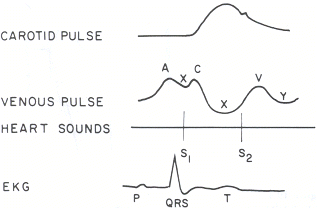
Jugular vein is a natural non invasive right heart catheter inserted permanently in the right atrium . It faithfully reflects the right heart hemo-dynamics  during  every heart beat.

The information you gather is dependent upon the time you spend and mind you you apply on this biological catheter.Wenke back did so nicely he was able to identify progressive a and c interval and a drop of c wave  before even the ECG machine was invented.

The following table  illustrates  the difference

Read Full Post »

A  72 year old man in  terminal heart failure with  three previous admissions in  last one year  comes with severe breathlessness . He was  exhausted with  rigorous  drug regimens  for refractory heart failure in the past few months. Since he  was always feeling better after an infusion of Dobutamine he demanded it . Doctors were very clear  , ” Repeated  Dobutamine infusion will  hasten  the LV dysfunction and longevity is  will shorten”

The family began to think . While they  wished  for him to   live longer , the sick man  insisted  on  early  relief from his  symptoms .

How often in medicine ,   there is a trade off  between  symptoms and survival ?

It is a more common situation than we believe , especially in many  chronic  disorders like terminal organ failure and malignancies. .  So we need a simple scale to  asses the quality of life and survival  outcome for our patient. The following table  could help us . I  learnt this from   the great teacher Valentine Fuster’s  lecture  which  I attended in New Delhi recently !

Final message

Let us  attempt to  make a patient’s  life ” feel  good “ ,  if  he is going to live shorter .  Let us avoid  prolonging  a  life ,  if the treatment is making him feel  bad  , when the  life  expected  is  short !

Read Full Post »

You are asked to see a patient with a pulse rate of 45 /mt .  Is it sinus bradycardia  or  complete heart block  ? 

Only one condition , . . .  you must conclude in the bed side !

  • Heart rate  may give a clue ( HR of  30-40 is common in CHB . Less common in sinus bradycardia.)
  • Pulse volume is large in both (More so in CHB )
  • JVP  shows occasional cannon waves hitting the neck  in CHB. Cannon wave can never occur in sinus rhythm
  • S 1 intensity may vary in CHB (As  Marching through  of  P waves  occur in CHB  ,  when it falls close to QRS  , it results in a  short PR interval  and a  loud S1   . Since marching through is a intermittent phenomenon S 1 intensity also varies.)
  • A short systolic murmur may be  heard intermittently due to   trivial MR/TR in CHB  ( Competitive AV valve movement )
  • A  simple bed side test  . Ask the patient  to exert for a minute -Sinus bradycardia raises  the HR with a fair regularity  to 80-90/mt  or so. CHB doesn’t  (Note :  CHB with  junctional rhythm can  sometimes increase the HR  significantly )
  • Finally response to Atropine   is prompt with sinus bradycardia.

Final message

Bed side skills in recognising cardiac arrhythmias are still relevant even in the current  era of carto and 3d electro anatomic mapping .

After all ,  the 19th century clinical wizard Wenke back recognised the second degree  AV  block at the bed side  well before  the ECG machine  was invented. He meticulously observed progressive prolongation of a-c interval and subsequent drop of c wave in the jugular  vein !

Read Full Post »

Read Full Post »

International Astronomical Union  in the year 2006  removed Pluto from the solar system for a simple reason ,  the so-called Pluto never revolved around  Sun , hence it ceased to be a planet of the solar system , it was more of an asteroid !

So, an astronomical fact engraved in our brains for so long  became a fairy tale. It is very hard  to erase  a  myth however solid the new evidence are against it.

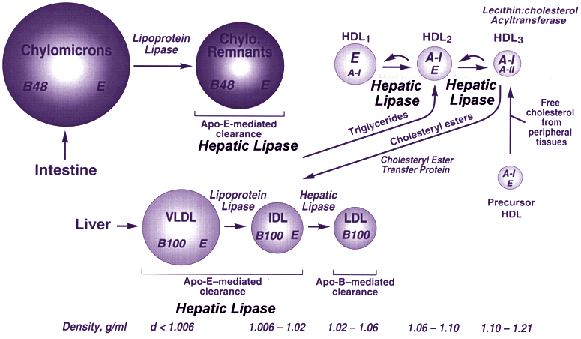
The concept of HDL as good cholesterol has been etched deep in physician as well as our  patients.

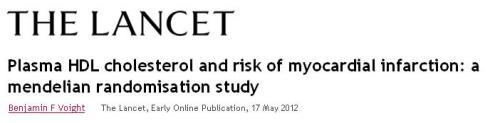
Now comes the shocker from Lancet

How are we so sure ,  about these  Invisible spheres of  lipids that  move  around  our “Bio-system” in a presumed fashion .  .  .  even huge visible planets  fool us easily !

The Link to lancet study

It is  a wonderfully done study where  thousands of patients  who exhibited  genetically high HDL levels , never showed any advantage in terms of CAD prevention.  A stunning blow to a belief.

Incidentally ,  few years back  the failure of  drug Torcetrapib proved the same point  .  (The drug which elevates  HDL  proved useless in preventing CAD  ) but the  medical world failed to interpret it properly.

I am sure, still sections of physician  community would continue to believe HDL is great molecule for CAD protection !

Science is  often what we presume . . . but the fact usually turns out to be some thing  else !  but the journey towards truth  must continue !

                      When  a  million tonne  Pluto  suddenly disappear from Solar system . . . it is not a  big deal for  a  “miniscule medical myth”   to get shattered !

Read Full Post »

An  article , I stumbled upon recently  discusses why American health care is  in deep trouble. There is a huge variation in the health care costs across the country. The article goes on to reveal  ,   a  simple  Appendicectomy can  cost  anywhere between 7500   to 1,70000 $  in different hospitals in USA.  (In India it costs  1000 $  in  any  star hospital !)

The fundamental flaw is   treatment  being the same ,   it is delivered in such a  fashion ,  the cost incurred is  kept ridiculously high.

It is akin to comparing  a 10 dollar  lunch to a 1000 dollar feast , both  ultimately  fulfills a  purpose ,   relive the hunger effectively

while , the later can  damage the country’s economy  in a variety of ways !

https://www.massdevice.com/blogs/massdevice/anatomy-walletectomy

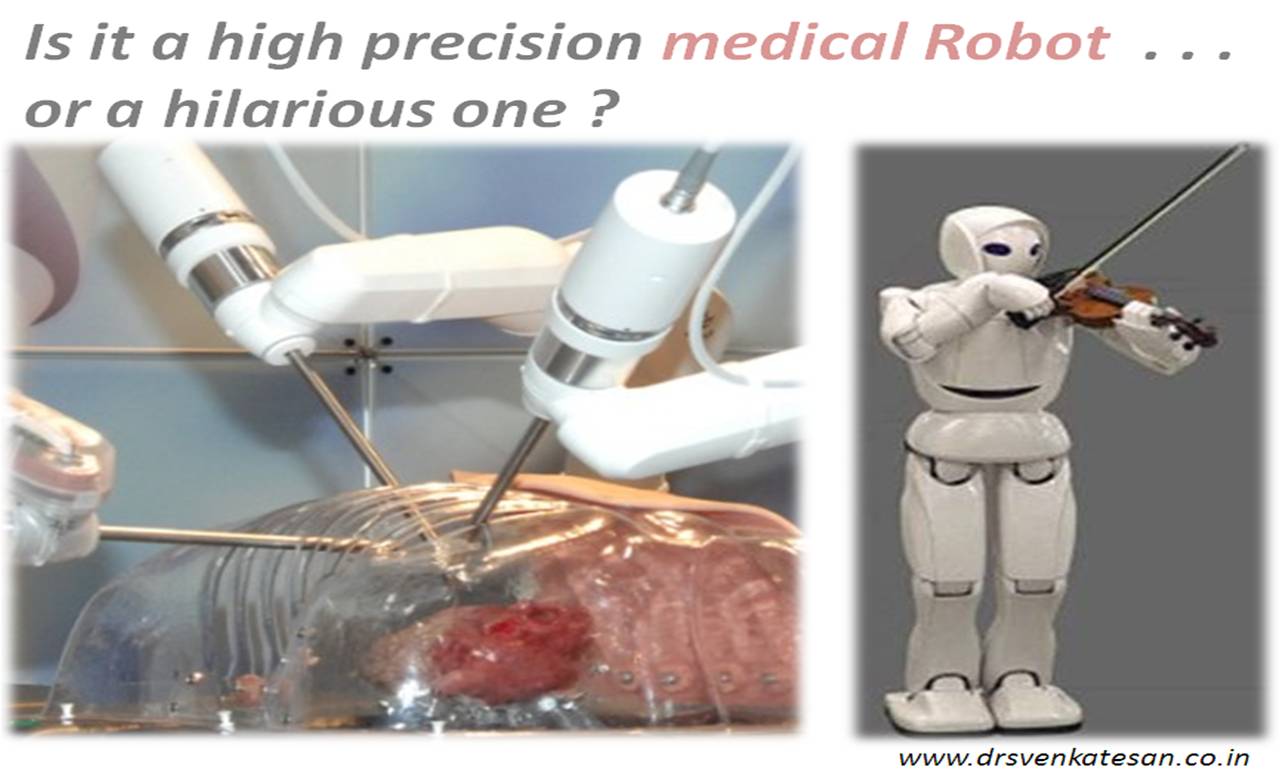
Car makers automate the industry with Robots to   reduce  the  human labor and  cost of a vehicle ,  while medical industry does the opposite   . . .  privileged few get their appendix removed with a help of metal hand  !

Final message

Modern medicine must  aim to improve the quality  of  care  with a   positive impact  at a reasonable cost . In the name of cutting edge technologies ,  it  should not raise  the medical bill in a meaningless  fashion .This is meager exploitation of  human suffering.

It is  hilarious to note  certain medical  Robots* are primarily  made to assist  surgeon  for which  no assistance is required at all !  (I heard a story about a  Robot  which responds  to voice command   and pass on a   knife  for cutting and a gauze for wiping ! What a great medical discovery !)

Disclaimer

*  Of course  Robots (Cyber knifes )   may have a role  in some rare surgeries which require high precision  cutting  especially in  Neuro  ,  Vascular ,  oncological  surgeries.

Read Full Post »

« Newer Posts - Older Posts »