Feeds:
Posts
Comments

Archive for the ‘cardiology -Therapeutics’ Category


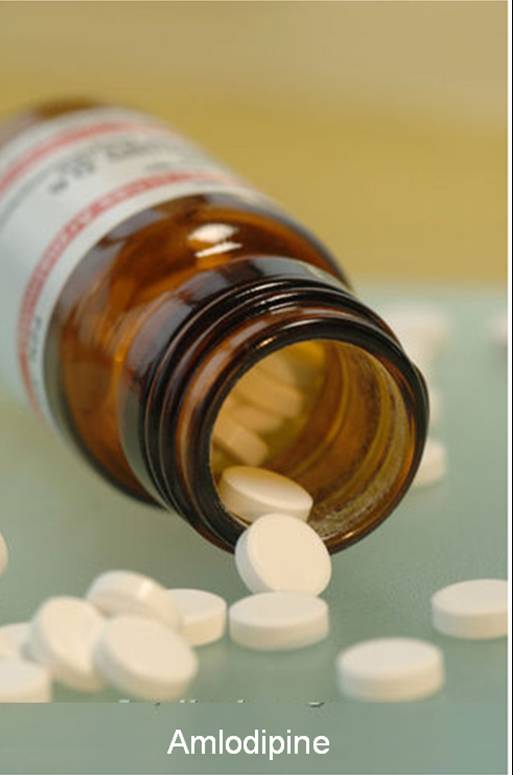
                            Amlodipine , the most popular anti hypertensive drug  used world wide has an very important action on coronary blood flow.When nifedipine was introduced three decades ago it was  known for it’s powerful anti anginal properties. Subsequently  amlodipine was introduced with almost similar action. But over the years, amlodipine was projected primarily as anti hypertensive drug and gradually many of the physicians are made to believe it is a drug that  should be used only if the blood pressure is high.The fear of reflex tachycardia in few was exaggerated.


                              In fact a cross section of  today’s general physicians were queried  about amlodipine  and none of them acknowledged  using this drug as an anti anginal drug. And few of them went to the extent of withdrawing amlodipine if it was used for the purpose of angina relief !

Why amlodipine’s  anti anginal action is in doldrums ?

The single word answer is unfortunate!   Marketing bias ,coupled with  the fact  that mainstream cardiology texts have ignored this aspect.

Final message

                                    Amlodipine , can still be used as a antianginal drug especially  in a patient who has angina with associated bradycardia  , significant LV dysfunction . Some reserve amlodipine and nifedipine exclusively for vasospastic angina where beta blockers alone are theoretically contraindicated .
Read Full Post »


Chronic renal failure and CAD are common companions.Severe CAD  in patients with renal failure  pose an imposing task on the treating physicians.CABG  and kidney transplantation  both are major interventions.When a patient  requires both the decision making becomes much more difficult.

The possible  choices are

A. Do CABG first follow it with renal transplant .

B. Do  renal transplant first follow it with CABG.

C. Do CABG first  and  defer transplant &  advice life long dilaysis

D.Do  renal transplant and offer medical management / PCI for CAD if feasible.

E.Simultaneous CABG & renal transplant is a remote possibility .

F.In terminally ill , combined cardiac and renal transplantation is the ultimate option. (Possible in very few centres in the world)   

G.In severe co-morbid condtions avoid both and support life. Success is not in completing   the procdeures but in providing useful life !

Among the options the most prefered worldwide is option no 1. This has a caveat. If angina is dominant  CABG should precede transplant. If cardiac failure is dominant the issue need further scrutiny.

Given a situation ( DCM & End stage renal disese) , your patient could  undergo only one procedure,  which will you prefer ?

              This again is highly emprical but logic could still be applied. Never do  CABG with a sole  aim of improving severe LV dysfunction in ischemic DCM .It happens only in  journal articles & major clincal trials!.Of course mitral valve correction and LV reduction surgery might help.But in a patient with  renal failure prolonging the CABG on table time , with add on surgery is highly risky. So it would be logical to think intensively  for  postponement of  the CABG in a patient with class 4 cardiac failure and renal failure. Do only the transplant .

 What is the impact of end stage renal failure  on LV dysfunction ?

 End stage renal failure has a great adverse impact on LV function. Many times it is reversible.We will never ever know, if you do a CABG first on them. So always think twice or even thrice before voting  on this vital issue . Correction of renal impairment can improve the cardiac status dramatically in some.

Read Full Post »

Recurrent myocardial infarction following an ACS is a fairly common clinical problem. Many times this is not recognised because it is difficult to establish the diagnosis.

The issues relevant here is

When does the first infarct (Index infact) process end ? and when the second infarct process start ?

Can the first infarct be a STEMI and the reinfarct be NSTEMI ? ( Dual acute coronary syndrome )

The only way to confirm a diagnosis of reinfarction is to document raising titres of cardiac enzymes and second peaking of CPK MB . New fresh ST elevation after a succesful thrombolysis is also a useful sign. But ST elevation in a q lead simply reflects a wall motion defect . So it requires enzymes to confirm it.

When there is tachycardia the ST segments tend to elevate following MI.

Other confounders are Infarct expansion and infarct extension .

These are macropathological entities almost impossible to dignose with surface ECG. What we diagnose as re-infarction could be an infact a infarct expansion.The modern terminology for infarct expansion is ventricle remodeling .The extreme remodeling results in ventricular aneurysm .Adverse acute ventricular remodeling can closely mimic a reinfarction .

What is clinical relevance of diagnosing reinfarction ?

Nothing great !

In modern day cardiology it is not a bother whether the infarct is expanding, extending or reinfarcting !All one has to do in a patient with chest pain ,showing a fresh ST elevation following STEMI is to take him/her to cath lab .

The only issue here one has to remember there are mechanical cause also for ST elevation following STEMI .

Dr.S.Venkatesan,Madras medical college, Chennai.

Read Full Post »

Peer review of an article even in major journals never scrutinise the “Aim of  a study ” . However big is the journal,  they seem to bother only about the authors, materials, methods, and statistical analysis.  If only they peer review an article , right from the “Aim of the study” like ,

  • Who asks the research questions?
  • Who  defines the aim of the study ?
  • Who decides which drug to be compared with which drug ?
  • Who steers the steering commitee of a trial ?

If only , we could answer these questions without bias , pharma industry and their  regulators  would have ,  far more better image than what they have now !

A typical example for , the aim of the study  to be  wrong  , is  the “ONTARGET’ study on telmisartan.

Here they ( Who ? ) raised an inappropriate  question of     “Non inferiority” of one drug with other  without any  valid reason to compare these two drugs that will benefit the man kind !

Read Full Post »

CCU’S can also save  patients with cardiogenic shock

Many of us would say ” never” or some may say “rarely” but in reality the answer is “yes it can ” slightly lower than  Primary PCI . One could save atleast  few  lives every month by  intensive medical  management alone (Inotrope, vasodilator,pacing if needed ) in any coronary care unit.

So the message here is, not offering or doing  a primary PCI in a patient with cardiogenic shock is not  synonymous with  inferior treatment or death.  After all, in the much hyped SHOCK  trial a significant no of patients survived in medical limb .

Read Full Post »

Salvaging lung tissue is not the aim in pulmonary embolism , Hence Time window is a myth !

There is a time window for thrombolysis in myocardial infarction ( STEMI). This time window is to salvage myocardium before it dies.The average time window in STEMI is 12 hours. When does the lung start dying in Pulmonary embolism ?.Is salvaging lung tissue an aim in the management of pulmonary embolism ?. Not really .Lung parenchymal death occurs only in minority of patients with pulmonary embolism .

The bronchial artery continue to supply the lungs.

So the aim here is to restore pulmonary circulation and oxygenation. Hence there is no strict time window in the management of pulmonary embolism.

The General consensus is , one can attempt thrombolysis up to 7 days after diagnosing pulmonary embolism.

Beyond this time, it is believed thrombus gets organised and thrombolytic agents may be ineffective.

But this is only an assumption, in an individual patient thrombolysis may be done even beyond this period if warrented by clinical intuition .

Dr .S.Venkatesan .Madras medical college, Chennai.India .

Read Full Post »

Aspirin confusion spreads to clopidogrel !

It all started with 75 mg clopidogrel in CURE study  and others.

It went up to 150, 300, 600, and in some centres 900 mg.

No body knows how much clopidogrel optimally inhibits the platelet.

Aspirin had the same story three decades ago. It started from 40mg went up to 1200mg

and finally settled at 162mgs.

Why this confusion?

 It is because there is no simple platletlet function tests available in bedside.

and also the wide safety margin of this drug.At what level  clopidogrel  is unsafe

is also not clear !

Answers are expected soon .


Read Full Post »

Infective endocarditis  remains a  major cardiac emergency.

Medical management has an initial role and  the many will require some form of surgery

( Mainly valve  replacement). But the surgeons request a realtively stable patients to operate upon as

surgical mortality is high in patients with uncontrolled infection and destabilsed CHF.

Even though there are battery of antibiotics, and volumes of texts written on the medical management

of infective endocarditis the medical therapy fails in bulk of the patients.

We have observed  emprical (Scientific guess work ) therapy has helped many patients .

While rifampicin according to scientific worls it’s useful only in prosthetic valve endocardtis

we have found it quiet useful in all resistant IE patients.

IE being a chronic inflammatory state rifampicin might work 

also as an anti inflammatory or immune   modulator.

This paper was presented in Cardiological society of India , Annual scientific sessions at  Mumbai 2005 . Download PPT


Read Full Post »

« Newer Posts
