Feeds:
Posts
Comments

Archive for the ‘Infrequently asked questions in cardiology (iFAQs)’ Category

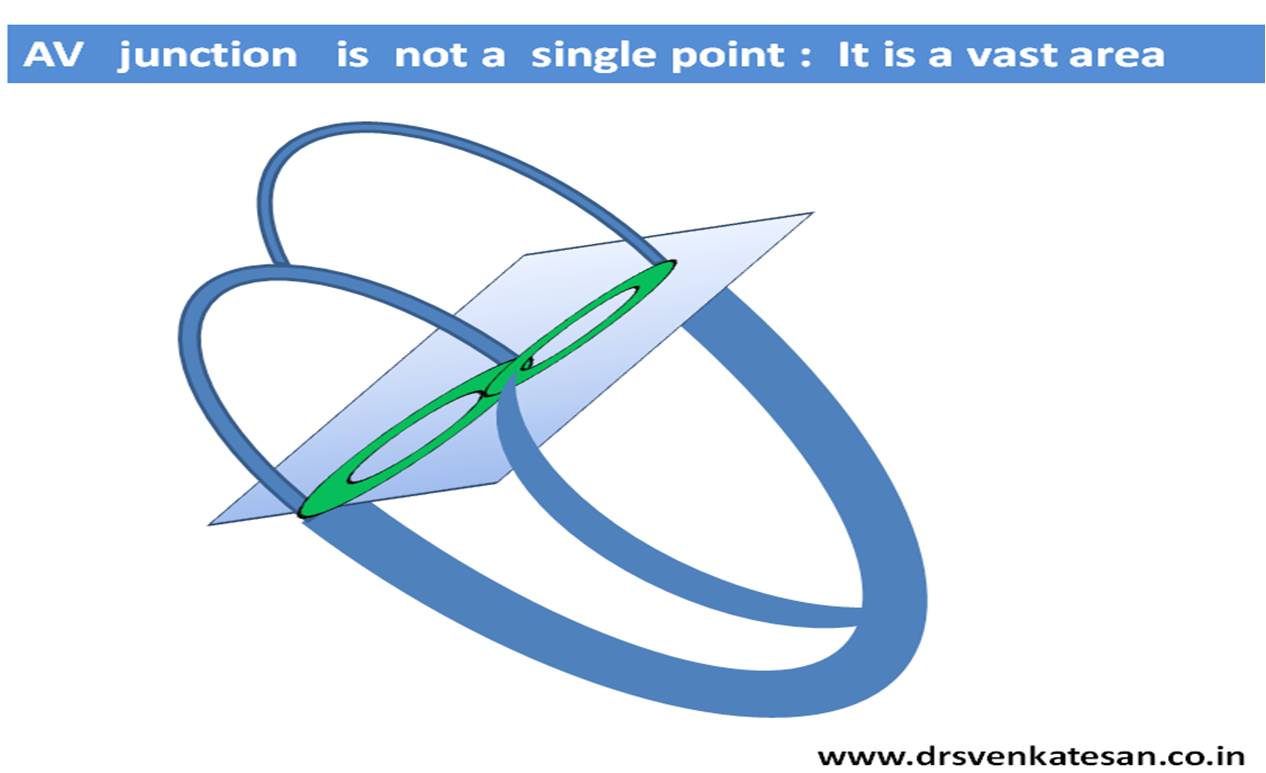
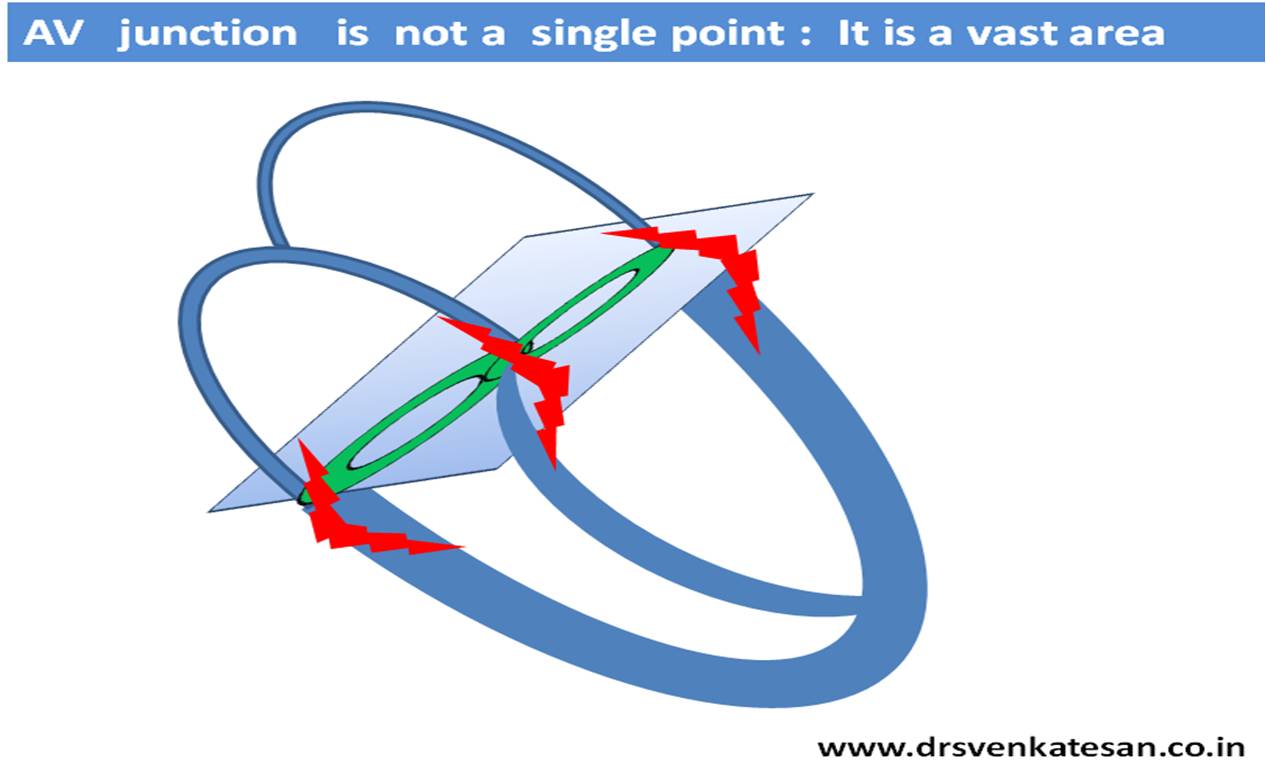
Why Junctional rhythm has huge variation in P wave morphology ?

P waves in junctional rhythm can be

  1. Upright
  2. Iso-electric
  3. Inverted
  4. or  even absent

It depends upon the origin of junctional focus

  1. Site of  entry into RA
  2. Ability to capture inter -nodal pathways  and inter -atrial pathways ,
  3.  VA conduction velocity

Further ,the appearance and timing of P waves will be determined by the underlying structural heart disease also.

Final message

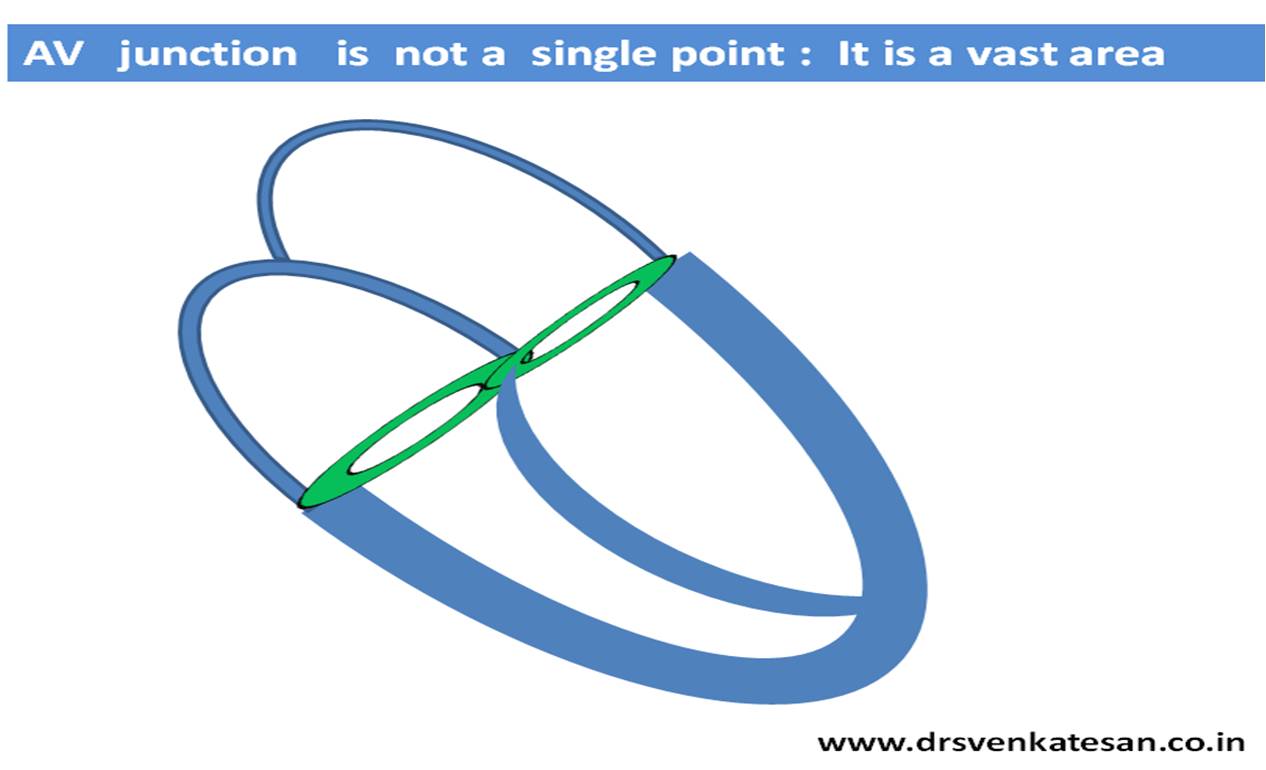
Medical  students  have  grown  up with the belief that  AV junction is a single  focused point .It is  true  in terms  of electrical circuitry  of  normal AV conduction .However  during pathological electrical disorders ( Which arise often because of structural disorder) it should be realised   the AV junction is a huge plane   .   Arrhythmia can occur anywhere from this plane .The entire plane  can become electrically active which may also  acquire the  ability to conduct bi-directionally .

Read Full Post »

Hypothyroidism is  a classical example of  generalised edema formation .  The mechanism of which is extensively studied  .Still we are  not clear  about  it .

Content of edema fluid

  • Mucopolysacharides -Hyalinorunic acid
  • Albumin

Mechanism

  • Albumin leak into interstitial and extra cellular space  due to capillary dysfunction.
  • Reduced lymph clearance – probably due to poor lymphatic tone  .

Why hypothyroid  edema  does not pit on pressure ?

For pitting to occur tissue should be compressed and retain the elasticity .This means  the fluid can escape into the cell when mechanically compressed and comes back when the  elasticity of skin  brings  it back to its original status. For this to occur the skin and subcutaneous matrix should be normal in texture.

In cardiac failure and renal  failure   edema is   primarily due to  altered hydrostatic forces and skin  is intrinsically normal .So  some amount of pitting  is retained . In hypothyroidsim and lymphedema  where there is  an intrinsic  pathology  of the  skin   pitting  is rare.

Why constriction and  cardiac tamponade are rare with hypothyroid pericardial effusion ?

Like the generalised slow response of hypothyroid individuals  the effusion is  also very slow forming and is rarely large so tamponade is rare .

The hypothyroid infiltrates which  collects within  the pericardial space it rarely infilitrates  the fibrinous pericardium (The thick outer shell ) .Unless fibrinous pericardium is inflamed or infiltrated constriction is exceedingly rare .Simple epicardial infiltration may cause some restrictive  physiology but not constriction .

Reference

Lancet. 1975 Mar 8;1(7906):564-6.Effusions into body cavities in hypothyroidism.  http://www.ncbi.nlm.nih.gov/pubmed/47029

Read Full Post »

That’s how  one of   the patient  presented  to our hospital .  An echo documented  severe aortic stenosis with a  peak aortic gradient of 80mmhg  and  a  bounding  systolic blood pressure of  180 mmhg . Is that an exception ?

I recall the early days of medical school when  we are fervently   taught  that  systolic  blood pressure is primarily determined by stroke volume and LV contractility .

The above example clearly proves this  is  explicitly wrong  .

Now , we understand  systolic blood pressure have many determinants   . Stroke volume is  just one of them .

The tone  , distensibility  of major blood vessels arising from aorta determine how a pressure wave is going to get amplified .

If you  say stroke volume is not  major determinate of systolic blood pressure   . . . .  does it  imply ,   the antique  bed side cardiac sign  Pulsus parvus  et- tardus  a myth ?

No ,  it still holds good . But it is not a hard sign .  We realise now , a patient with a well felt carotid can have a severe Aortic stenosis .

  • Pre- existing systemic hypertension is a  valid explanation.
  • The other popular explanation for  loss of systolic decapitation due to associated  aortic  regurgitation   may be  acceptable . (Not really proven though ! )

What will be the central aortic  pressure  in critical Aortic stenosis ?

It is definitely lower than brachial cuff pressure .This will explain the systolic blood pressure is actually an amplified signal .

Read Full Post »

The right to left shunt  in TOF  occurs by  which of the the following route ?

  1. RV- VSD- LV -Aorta

  2. RV-  Aorta

  3. RV – VSD- Aorta

  4. All of the above can occur

    Answer : 2   Most shunting occur by direct streaming of RV blood into Aorta . If the aortic  override  is near 50 %  it need not even cross the VSD in it’s  circuit. (Although theoretically all of the above can occur)


Read Full Post »

An awkward  argument for routine EST following primary PCI

Please remember,  primary PCI is not the end of the management of STEMI. Primary PCI is an IRA focused intervention. We need to study other lesions and their the flow pattern as well. Logically we need to do a test for adequacy of  baseline vascularity and the current revascularisation . Simple deployment of  a stent in IRA (without documentation of good flow during exertion ) is not acceptable to believers of  scientific medicine  . Resting TIMI 3 flow conveys no meaning for a patient who is going to be ambulant and active. A stress test will come in handy .

The micro-vascular integrity and resistance following an extensive STEMI is best studied by the adequacy of exercise induced  coronary hyperemia (This is physiologically equivalent to the much fancied FFR in cath lab ) . One can consider EST following a primary PCI as an non invasive substitute for the collective FFR of all three vessels including the IRA that is stented .

Does any cardiologist have guts to do a pre- discharge EST after a successful primary PCI ?

Typical responses would be

  • Why the hell I should do it ?
  • Do you know how risky it is to do a EST early after a primary PCI ?
  • If at all I have any doubt , I would prefer a non invasive PET or Thallium to study the adequacy of revascularisation.

If you think , it is too risky to exert a successfully revascularised patient early after a STEMI . . .   at the same time   argue  to do it in non revascularised patient routinely .  Do we not see a huge irony here ?

Other inference could be . . . we are still suspecting the quality of our revascularisation during PCI !

If  EST is contraindicated after a primary PCI , are we going to advice  these patients against indulging in any activity requiring moderate exertion fearing a stent occlusion ?

. . . What a way to interpret the aftermath  of a   ‘state of the art ‘ procedure called primary PCI !

In science ,  correctness is more important than politeness !

Read Full Post »

When do you call a infected heart as healed ?

Should the vegetation disappear to call it a cure ?

Vegetation’s rarely disappear following treatment . Very small vegetation may dissolve – 20% . Many times it regress in size .

Often  our aim should be  restricted  to sterilise the vegetation. This invariably happens in most of the patients who receive complete course of antibiotic. But healing and sterilizing is not enough in many vulnerable patients.If the vegetation is large the embolic risk is still there even with a healed vegetation.

So if there is a relatively large  (>1.5cm) vegetation it is always better to remove by surgery.

Interventional  techniques may   soon  allow  capturing these vegetation by basket catheters .When technology is there to retrieve small bits of a thrombus inside a coronary artery it should be possible to remove a large vegetation with temporary aortic filters in place.

Also read

https://drsvenkatesan.wordpress.com/2011/01/12/what-is-the-natural-history-of-infective-endocarditis-vegetation/

Read Full Post »

AVRT is  a second commonest cause of  narrow qrs tachycardia.  While , all narrow qrs tachycardia in AVRT must be  ortho-dromic. wide qrs tachycardia in WPW  can either be ortho-dromic or anti-dromic ,

The classical one is the much popular and fancied Antidromic  AVRT . Please be reminded  AVRT can conduct  orthodromically  through AV nodal tissue  but still  become  aberrant , as it travel downwards thorough the bundles   and result in a wide qrs tachycardia .

Among the two which  is more common ?

My observation is  ortho-dromic  wide qrs  AVRT  is  more  prevalent . Do you agree ?

Final message

Not all wide qrs tachycardia  in WPW  is anti-dromic !

Read Full Post »

The fundamental difference between  accessory pathways (APs) and AV nodal tissue is the former lacks decremental properties . That is  , APs continue  to conduct whatever the  impulse   it receives. (Unlike  the AV node which has a filtering  mechanism , A heart rate sinker / Dampener) . This is what we were taught and we believe in that .

If it is true  , every episode of   atrial fibrillation should conduct with 400-600 ventricular responses . In reality it does not happen .  The usual ventricular rate in AF with WPW is  250-300 /mt .

What happens to the rest of atrial impulses ?

I am sure it must  get   blocked in APs . Of course it is possible the block need not be in a fixed ratio  .It  changes in a  dynamic   manner with  reference to the   refractory period . (Please note , blocks and increased refractory  periods  can be  used inter changeably in most  physiological situations .

Final message

All APs are not dangerous .They do have a   restrictive mechanism in place .This is evident in every patient with AF and WPW syndrome with a fairly controlled ventricular  response  . Hence  one can conclude   APs in WPW syndrome do have a physiological block in most episodes of  Antidromic AF . The cut off  for safe  refractory period is defined empirically as > 250 ms.

Coming to the title  question , Is  there a physiological  2 : 1  block  in accessory pathway  during AF and WPW syndrome  ?

Yes . It seems so !  A WPW  patient who has  just recovered from a  well tolerated AF ,  is  sort of a natural screening test which effectively rules out a future SCD .(Unless of course he has multiple APs with varying RPs  , one for AF other for VF !)

Is that a correct way of reasoning ?  Experts may provide further  input .

Read Full Post »

A 32 year old unmarried female with rheumatic heart disease   presented with class  3 dyspnea . She had severe mitral  stenosis with significant calcification , subvalvular fusion , and  a LA appendage clot . She had an aortic valve  which showed mild to moderate AR*  was  and  mild  Aortic stenosis ( Peak  Aoric gradient 30mmhg ).LV diastolic dimension was 40mm and systolic 26 mm .LA was huge 48 X 56 mm  EF was 66 % .

* The patient was having three echo reports done in various parts of the state ranging from mild  to severe  AR . I did the echo myself and I  was convinced  ,  it can at best termed as Mild AR . Let us take it as moderate AR for discussion  

To my surprise  , this patient  was   being planned for double valve replacement . (MVR  and AVR ) .

I agreed with MVR since the valve was completely  damaged and neither PTMC or mitral valve repair  is possible.

However  , I was taken aback   , how can  one  plan for a  AVR for mild aortic valve disease ? I  asked the surgeon  ?

The answer was even more a shocker to me .

Since we are  opening the chest for MVR it is better to replace Aortic valve as well . Since  repeat surgery can be avoided .

The surgeon seemed to be very much convinced about this argument .

I asked him ,   is the mortality /morbidity due to DVR is too high  to take a risk .

The LV dimension is absolutely  normal (In fact it is less than normal !)  so  the AR is definitely not significant .

The surgeon was in no mood to leave me . He argued ,  Since the mitral stenosis is severe , the AR is  probably underestimated .   ” We have quiet a few experience of AR worsening after MVR” ? he asserted !

I still fail to  understand  the reasoning of the surgeon .

How is that ,  indication for AVR could vary if it is  accompanied by  mitral valve disease . If the same patient has  isolated moderate AR  AVR is  forbidden  . Poor patient !

By the way , we have problems with our patients as well .I recall an event ,   a  disappointed  patient’s  spouse  arguing  with his the doctor for not fulfilling his Initial  promise of  replacing two valves . We are living in difficult times , I agreed with the surgeon !

Do we have  alternate solutions ?

  1. Assess on table after MVR by TEE if the AR seems worsen proceed with  AVR .
  2. Modern technology might answer .Let us dream  TAVR for rheumatic valve . . . not too far ?

*Transcutananeous Aortic vale replacement .

Final message

Cardiologists and cardiac surgeons should take extra care before finalizing a decision on DVR in any combined valve disease. It may seem  easier to replace two valves . Please spend few moments silently and think about these young men and women  . Valve replacements are  not like replacing  worn tires of your car.  Do not  burden the heart with multiple artificial valves without a real need for it !

The rate of progression of Aortic valve disease following MVR  can be slower than we think . With surgical techniques and  expertise   improving every year ,   repeat aortic surgery may be done safely in selected few ,  in case it becomes necessary !

Read Full Post »
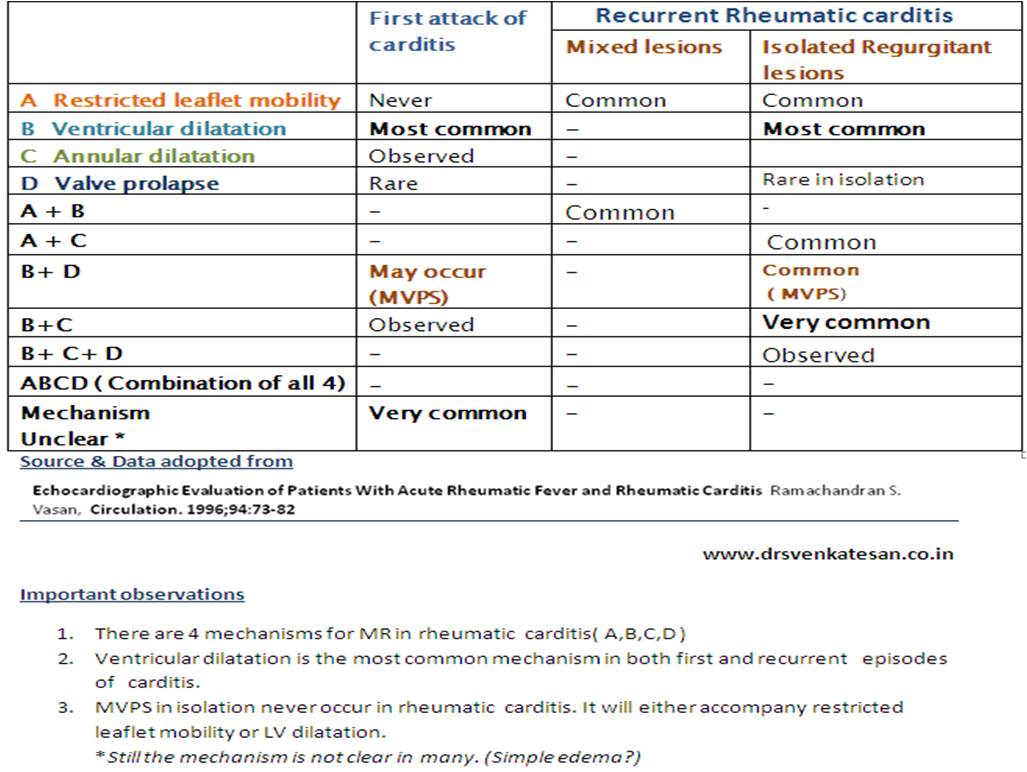
Rheumatic valvulits , Valvular inflammation and edema  is the traditional answer .A detailed Echocardiographic study from All India Institute of medical sciences New Delhi  ,India  which was published in circulation 1996 answers this question most authentically .

From a meticulous  Echocardiographic  study of about 70 patients  (with both first and recurrent episodes of carditis ) the following findings were observed.

After reading this article one should be able to answer variety of  questions in RHD  such as

  • How common is MVPS in RHD ?
  • How often MR dissapear with Aspirin etc ?
  • Echocardiographic correlates  for care -coombs murmur ?

Reference

http://circ.ahajournals.org/content/94/1/73/T5.expansion.html

Read Full Post »

« Newer Posts - Older Posts »