Feeds:
Posts
Comments

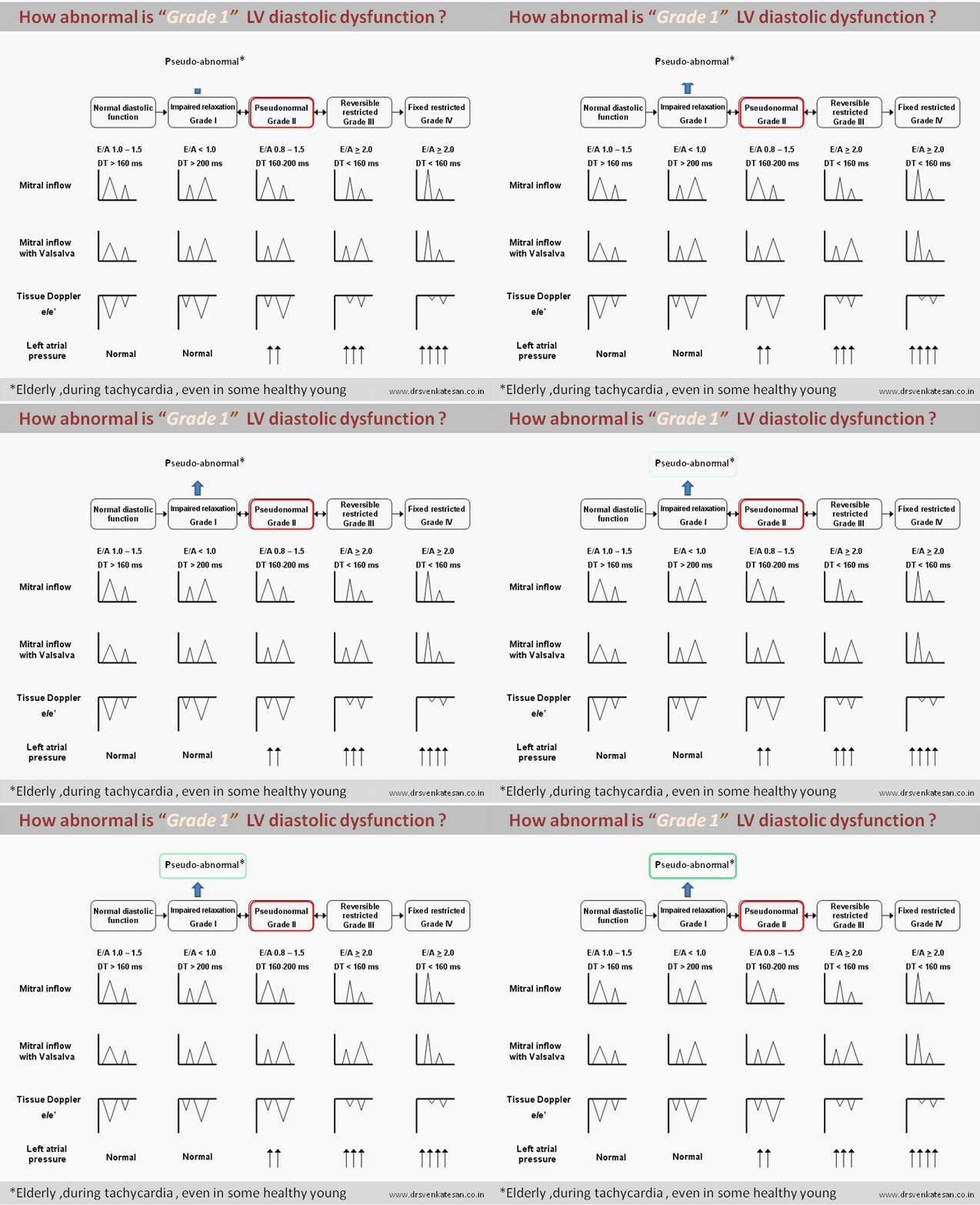
The diastolic mitral filling pattern has been  named and  graded  umpteen times in the last  decade. We believe it has  reached some semblance of clarity.I beg to differ.

pseudo abnormal relaxation grade 1 003

Image template taken  from  http://www.learntheheart.com

There need to be one more  grade between Grade 1 and grade 2 .Grade 1  is defined as A velocity > E velocity . This is the  commonest abnormal pattern and is often  man made.We can’t help it . We have to report it  anyway. Significant number of elderly show this pattern  without any pathology. It simply represents augmented atrial contribution  at times of apparent ventricular stress .

I wish a good chunk  of  grade 1  pattern ,  especially  in elderly or during tachycardia should be labelled  as physiological  grade 1 pattern  (or simply as  normal variant ) . However I would prefer it to be named as  pseudo abnormal pattern* !

* In my experience , currently medicine is taught in a complex manner .Facts that are told  in simple terms are rejected  straightaway . It would seem,too much clarity is not good for  science So,let us get confused one more  time  for the sake of our patients !

Coronary artery disease (CAD)  is man-kind’s  greatest threat in modern times.CAD ,diabetes ,Hypertension, obesity, mental illness  has become an epidemic  even among the young !


Lifestyle diseases cad risk smoking alcohol

There is a simple solution for  lifestyle diseases !

Just  . . .  Remove style from your life !

lifestyle diseases coroanry cardiology medical ethics inappropriate stents over treatment excess medical care , bio ethics,

Instead . . . try to live like these  Tibetian villagers

life purpose of living

Final message

One study which researched all lives who crossed 100 Years  concluded something like this !

“To live a longer and healthy life* ,Get up early  , have a purposeful daily chore that must include a physical component , work with conscience ,love every one sync with the nature and  lastly and most importantly remove style from your life !

Choose  your life . . . It is simply there in your hand for grabs !

Post-amble.

* Please note , Doctors  are never listed in the top with relevance to health of mankind  ! They simply cure some illness !

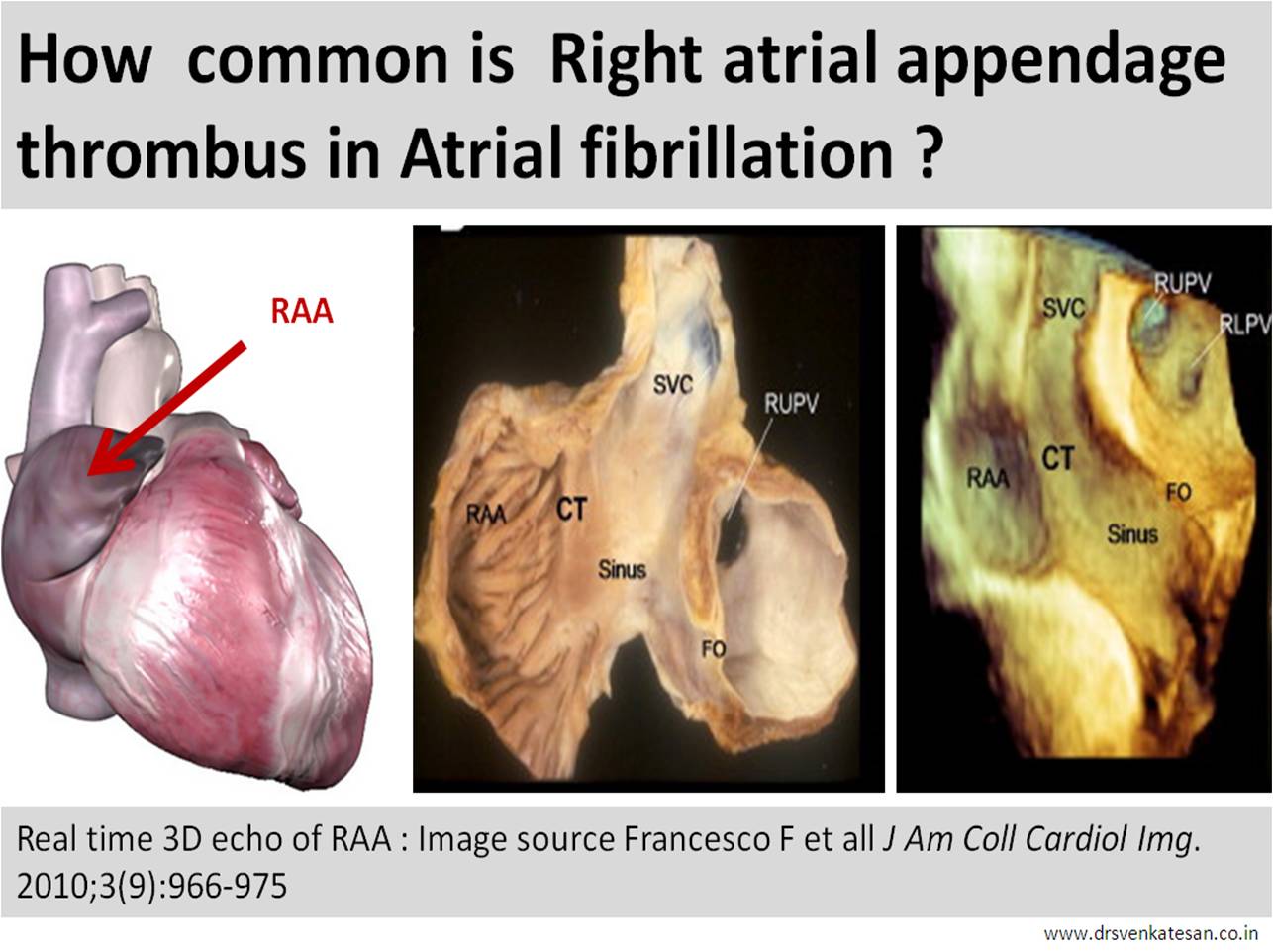
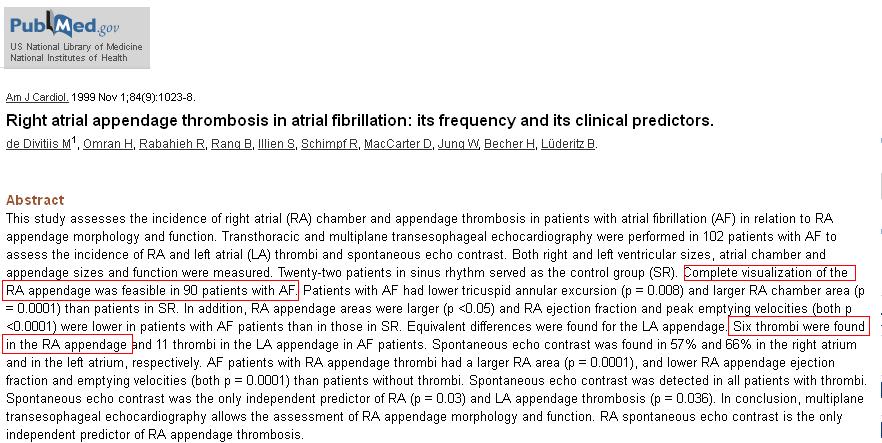
Answer  is question is wrong : RAA clot do occur in AF and severe right heart failure.It is less often recognised , since echo views are difficult and clinical events are silent.

RAA right atrial appendage clot tee echocardiographyBrief account of RAA clot formation

  • RAA is broad flat ,thin ,  chamber comparable to elephant’s ear.The ostium is not that distinct as the body as it  blends  with crista  terminalis .
  • Rough pectinate muscles  should make it prone for thrombus.Further , RAA has more sluggish flow than LAA  increasing the propensity for thrombus.However , the flat nature of the chamber , absence of tortuous tracts , constant  SVC flow which is abutting the  RAA can counteract this.
  • RAA clots are  less recognised as echo views are difficult .TEE is often required.
  • Overall RAA clot is 50% less common than LAA.
  • RAA clot should be specifically looked  for  in chronic AF and any severe right heart failure. (Unlike MR jet TR jet has less efficiency in flushing the  Right atrium )
  • Finally,clinical events from RAA clot are less conspicuous as the emboli reaches the pulmonary  bed silently.Unlike its colleague on the left side it  neither triggers TIA nor a stroke !

Reference

right atrial appendage clot raa clot in af atrial fibrillation

1. Buğan B, Baysan O, Demirkol S, Güngör M, Yokuşoğlu M. Right atrial appendage thrombus in a heart failure patient with sinus rhythm. Gulhane Med J. 2011; 53(3): 214-215.


2.Subramaniam B, Riley MF, Panzica PJ, Manning WJ. Transesophageal echocardiographic assessment of right atrial appendage anatomy and function: comparison with the left atrial appendage and implications for local thrombus formation. J Am Soc Echocardiogr.; 2006; 19(4):429-33.

3.Sahin T, Ural D, Kilic T, Bildirici U, Kozdag G, Agacdiken A, Ural E. Right atrial appendage function in different etiologies of permanent atrial fibrillation: a transesophageal echocardiography and tissue Doppler imaging study. Echocardiography;2010; 27(4):384-93

4 .Ozer O, Sari I, Davutoglu V. Right atrial appendage: forgotten part of the heart in atrial fibrillation. Clin Appl Thromb Hemost; 2010; 16(2): 218-20


The news that wasn’t . It is January 1 st 2016 .

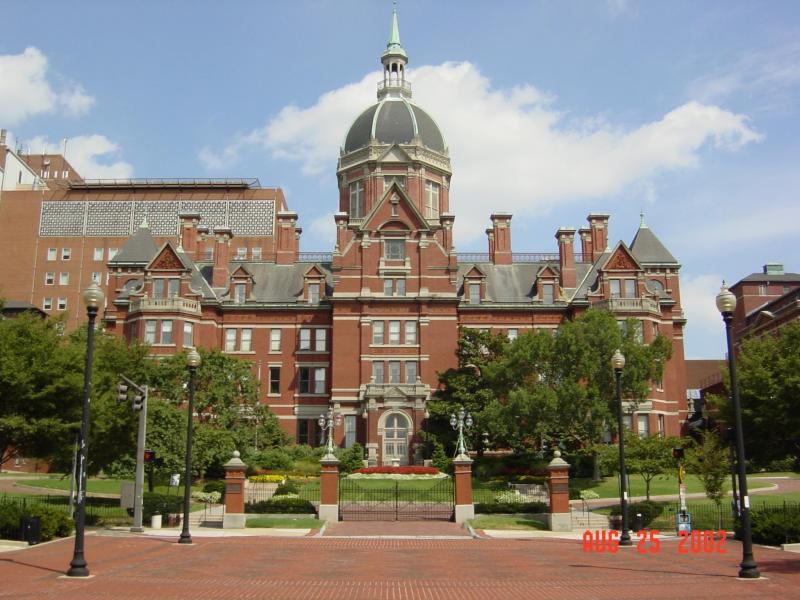
NBC reports from Karolinska ,Sweden , Heparin  the wonder drug  has been reclassified as a thrombolytic agent and Jay Maclean  who doscovered this drug in 1916  is awarded the Nobel prize in Medicine posthumously on the 100th  anniversary of  discovery  of  the glorius drug ! The entire Hopkins  campus at Baltimore has erupted into a  non stop party tonight !
Hopkins_hospital

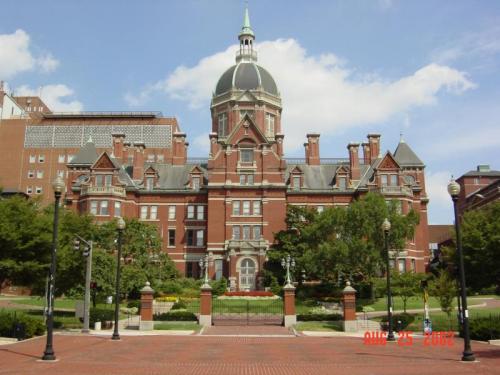
The Majestic Hopkins at Baltimore  : This  monumental hospital is home to 18 Nobel Laureates in Medicine and Jay Maclean is the most famous for missing it !


And now to the True story

Heparin   the wonder  drug  was discovered by Medical student Jay Maclean in 1916 at the Jhon Hopkins when the rest of the world was   fighting the  world war 1 . It was separated from the cannine liver and the name Heparin was coined by Maclean’s Guide at Hopkins  William Henry Howell . Even though it was invented early  it was available for human use only in 1936  when Swedish company Vitrum AB produced it .Since then   It has a very distinguished career and still going strong after 100 years.

The only regret is Dr Maclean  narrowly missed  the  Noble prize for this great invention .I still believe he should  get it on its 100th   anniversary  in 2016.

A partial  “curriculum vitae”  of Heparin.

Heparin is an  Anti-thrombin 3 agonist .It blocks the pro thrombotic cascade and hence a powerful anticoagulant. Further ,it completely tilts the balance towards fibrinolytic  system.Hence the natural forces take over and  start dissolving the thrombus  in due course.

So Heparin is an indirect thrombolytic agent .No second thoughts on this.

But a century old teaching  goes like this  . . .

Heparin prevents fresh clot formation . . . but it do not have any action on already formed clots “

What do you infer from this statement . Do you agree ?

Role of Heparin in real clinical scenario

Heparin is the key drug in all acute coronary syndromes when the  coronary artery goes for sudden thrombosis . An un estimated one  million prescriptions are done every day world wide for this indication alone.

(*And mind you it does have a  significant  impact  on already formed thrombus as well ! Ref : HEAP Pilot  study  )

Apart from this.

1. Heparin dissolves post MI LV  apical clot over a period of  few  weeks.
2.Heparin is very effective in most cases of sub-massive pulmonary embolism
3.Heparin infusion has opened up many near total coronary occlusion
4.Heparin clears the micro vascular from thrombotic debri in lungs in CTEPH.
5.Heparin dissolves  deep vein thrombosis
6.Heparin almost result in complete cure and clears cortical venous thrombosis

7.Heparin is exceedingly successful in clearing   thrombosis in placental micro-circulation (APLS) which  threatens the  fetus with IUGR.

Al these clinical events are well documented and well appreciated.

Still we feel awkward to call the heparin as thrombolytic agent

Why ?
It is almost a  scientific non- sense .We think a thrombolytic should  show it’s action in vivo in the lab and it should shrink the clot on a petri dish !  What a wrong  mind set ! We have  tell-tale evidence  for heparin’s  magic act of vanishing clots   inside the human vascular tree (However organized  it may be ! ) .

I struggle to understand  , why  our scientific  mind does not want to give credit to a drug  which does a neat job of  dissolving  clots  through its  indirect action . Is it a curious bias  ?  or is it an act of  ignorance  or  just a nomenclature  error  in the  foundations of therapeutic  pharmacology ?

At this point one should  realise  streptokinase  too does not act directly on the clot.It acts indirectly through a TPA-enzyme complex.So can we call it an  non thrombolytic agent ?

Final message

  • Heparin is indeed a thrombolytic agent , through  a chain  of action and reaction  which  it confers to the naturally occurring lytic system.
  • In vivo ,this  indirect  lytic action can be  powerful than some of the direct acting thrombolytic agents .Not only that, it lacks the side effects  vested with direct  lytics.
  • The only issue is  , heparin is a slowly acting indirect thrombolytic it has to be given long-term or on an infusion .
  • It is right time the pharmacologists  and nomenclature authorities  include heparin as indirect thrombolytic drugs.

Read further

Heparin a forgotten Hero


Reference

1.High Dose Bolus Heparin as Initial Therapy Before Primary Angioplasty for Acute Myocardial Infarction: Results of the Heparin in Early Patency (HEAP) Pilot Study Freek W.A Verheugt,  Aylee Liem, Felix Zijlstra,J Am Coll Cardiol. 1998;31(2):289-293.

3.Esteves  FP, Braga  JC, Latado  A; Confirmation that heparin is an alternative to promote early reperfusion in acute myocardial infarction. the CHEAPER study [abstract]. Circulation. 94 (Suppl I) 1996:I-553
 

Reperfusion arrhythmia was described originally  in the thrombolytic era .

It can be any of the the following .

  • AIVR(Accelerated Idio Ventricular rhythm)
  • Sinus bradycardia (In Infero posterior MI )
  •  VF can occur as  Re-perfusion  arrhythmia.

Does these arrhythmia occur following primary PCI ?

It should  isn’t ? 

In fact it  must be  more pronounced  as we  believe PCI is far superior modality for reperfusion !

Busy Interventional  cardiologists  of the current era  either do not  look for it or fail to document it . These arrhythmias occurs only  with early Primary PCI (Say less than 2-3 hours) .If re-perfusion arrhythmias are  really less common with primary PCI , are we missing some thing ?


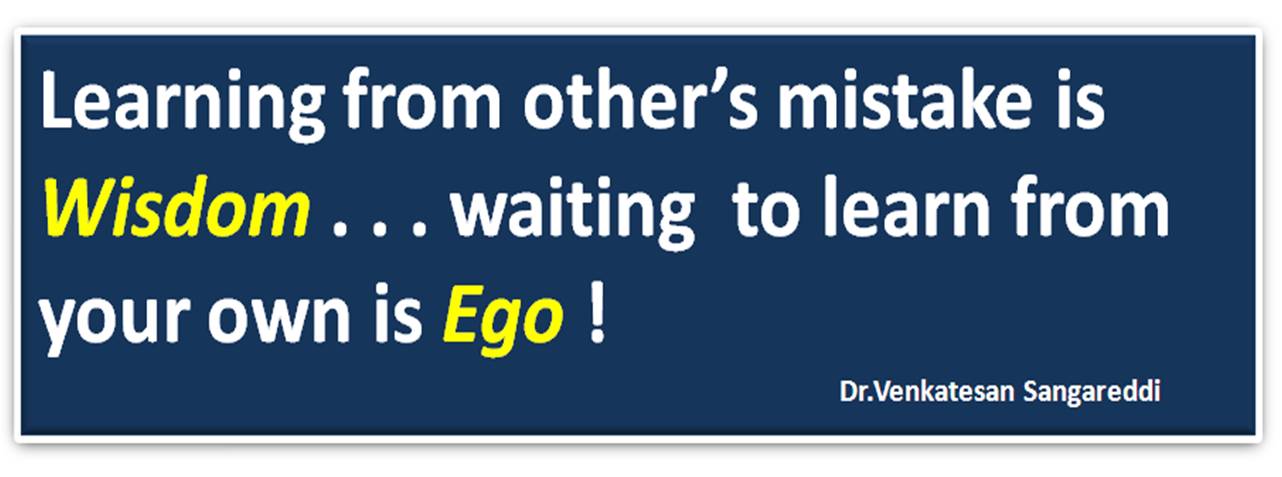
As we practice this Noble  (&  Delicate )  profession ,we often tend to Ignore the  warnings  even from our learnt colleagues , Why ?

Wisdom ego quotes brainy best dr s venkatesan top inspirational


A STEMI patient arrives late after 48 hours with chest pain .There is  persistent ST elevation.

What is the likely mechanism of this chest pain ?

  • Index infarct pain continuing . . .
  • Post infarct Angina-IRA territory
  • Re-infarction following intermittent re-perfusion  and re-occlusion
  • Remote  ischemia from a branch of IRA
  • Ischemia from a possible  non IRA lesion in a multivessel CAD

If this patient  comes to a non PCI eligible centre. Will you lyse him  ?

If post infarct angina is  unstable angina  . Isn’t  thrombolysis  contraindicated in UA  ?

How to differentiate Post Infarct Angina from Re-Infarction ?

A very tricky issue indeed.

Unless fresh ST elevation with fresh enzyme peak is documented these entities  cannot be differentiated.

(Even  fresh ST elevation can be related to infarct expansion ,stretch or early acute remodeling.Fresh enzyme  release or new peak  may not represent new infarct always .It can be due to intermittent re-perfusion of IRA .It may  simply represent a  enzyme  flush from the index infarct zone)

What is the practical , realistic , (Unscientific !)  solution  ?

Why break our head ? Never bother to differentiate PIA   from Reinfarction  etc . Let  it  be any thing . Do a emergency CAG .Stent  whichever  lesion looks good  for the same . Of course , make sure he has enough insurance coverage .


This  query often  evokes  confusion  among fellows and General physicians .

              The answer is simple .Yes ,  you can.(With few conditions)

  • Thrombolysis  or PCI  is  done  with reference to  the  presence  or absence of ST elevation and chest pain.
  • If there is ongoing chest pain  and  significant new onset ST elevation  thrombolysis or PCI is indicated whether there is associated q  waves or not.

Clinical situations 

 Ischemic  q waves: Q wave can occur  with transmural ischemia which result in electrical stunning and loss of R waves . (Many of them  regenerate this R within few days after STEMI ,  indicating the q  waves can be  ischemic  in origin)

Reinfarction : Patients with  old  MI can develop fresh ST elevation  in q leads due to tachycardia and dyskinetic infarct segment .This group  of patients  should be carefully evaluated before labeling them as  re-infarction

* q RBBB in early hours of  anterior STEMI is fairly common which  may revert later. qRBBB is not a contraindication for re-perfusion .

Final  message

Presence of q waves does not  imply one should not  entertain  thrombolysis or PCI .The decision  to reperfuse  , rather  goes with  presence of  chest pain , ST elevation and  of course  within the  acceptable   time window!

The right ventricle  is considered as a docile cardiac chamber with passive filling and  emptying  properties .

This belief  was reinforced when Fontan  in early 1970s suggested a principle in the management of  cyanotic heart disease  when  the right side of the heart is underdeveloped. He  proved  RV can be by-passed safely , with  great veins  (IVC/SVC)  by  themselves  take care of filling the pulmonary circulation  without the need of RV pumping function.

While it is true for few complex cyanotic heart disease, largely this a misleading  concept. In clinical cardiology practice  ,sudden or non sudden  RV deaths happen every day in the form of . . .

  • RV Infarction
  • Acute RV dysfunction in massive pulmonary embolism
  • COPD with RV dysfunction
  • Most cases dilated cardiomypathy  the terminal event is due to RV  failure.

So , RV function can never be dispensable in day to day cardiac hemodynamics.

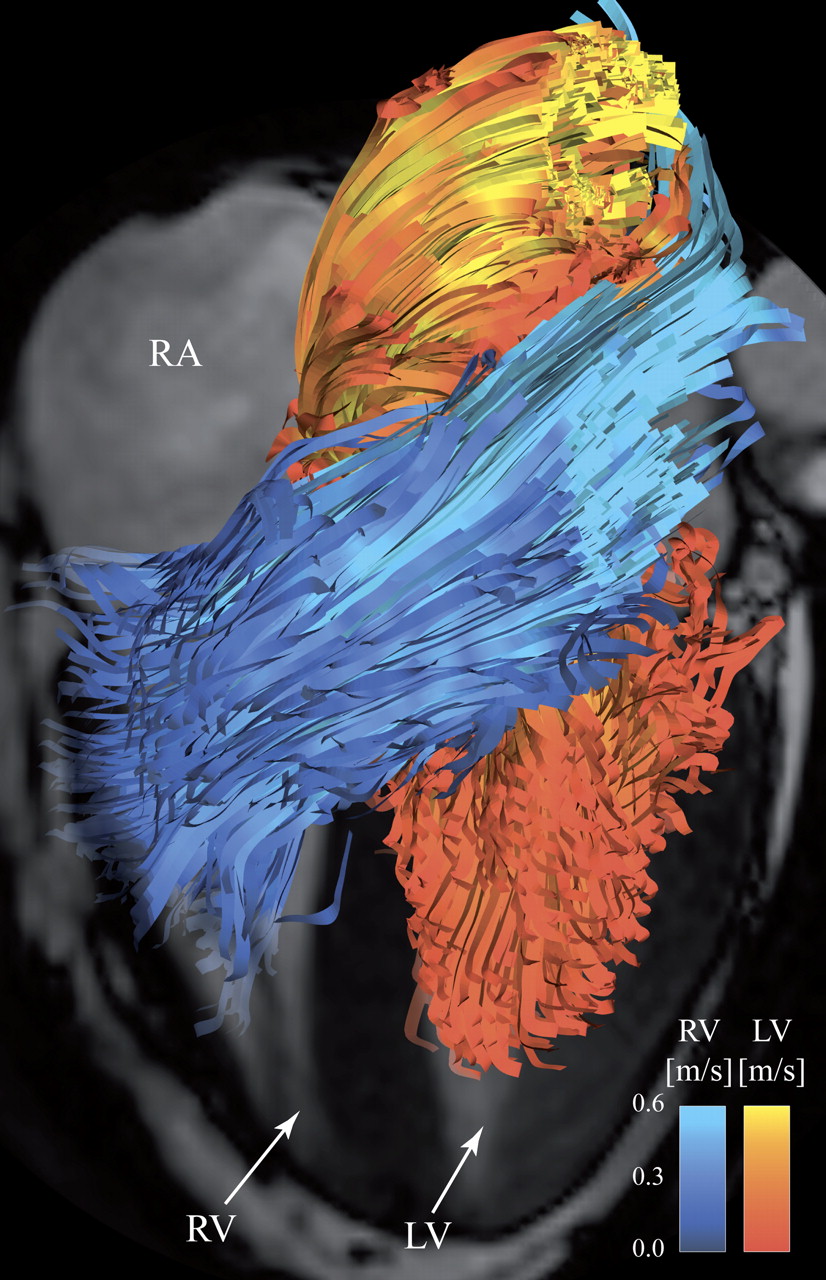
RV has some unique properties in terms of shape , size and  hemodynamics . We are getting more insights from  modern blood pool imaging by MRI , about  how the RV handles the blood volume .

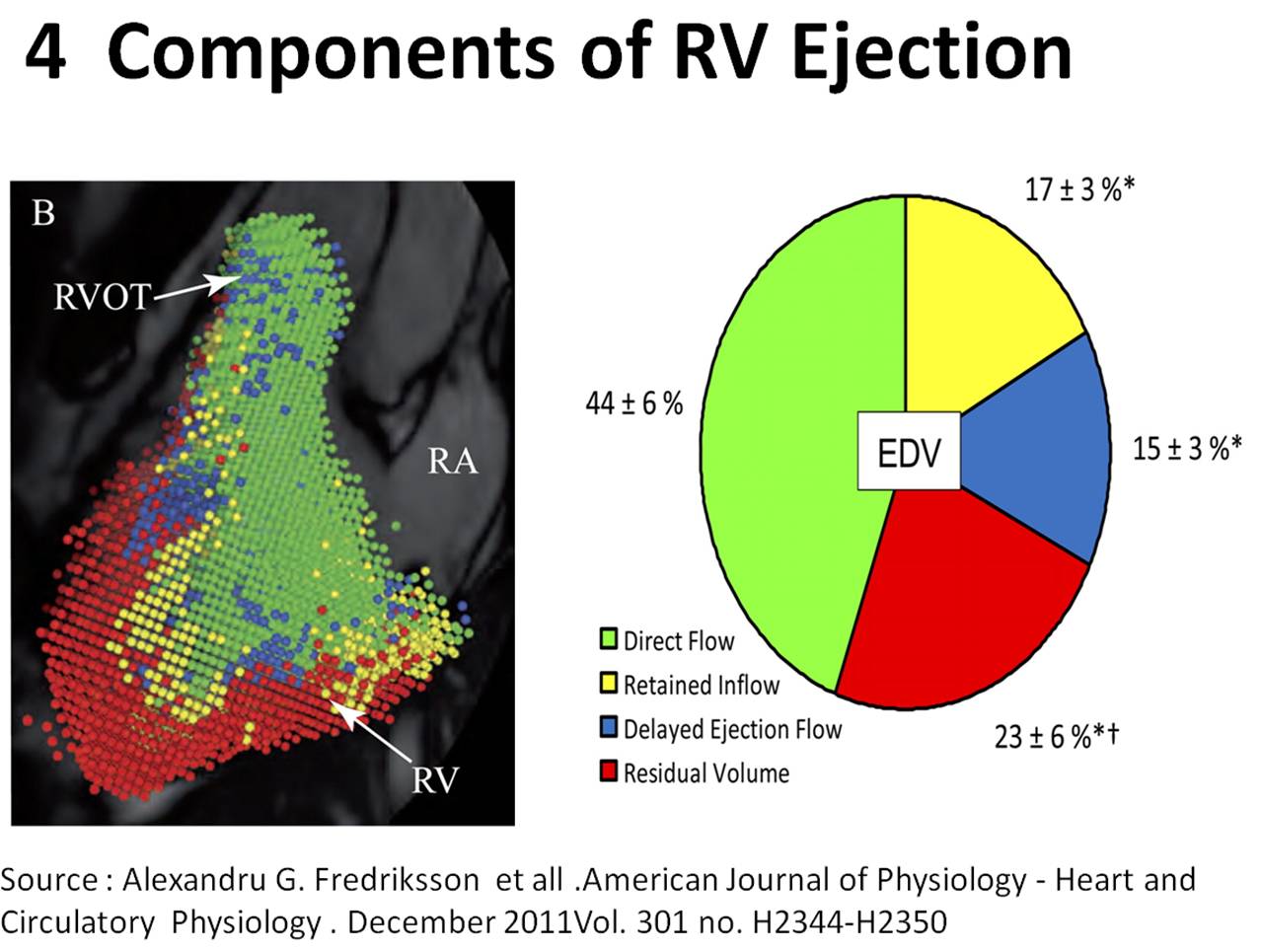
We know RV has a unique shape  triangular ( partially  pyramidal ) . It can be inferred the RV cavity is formed by fusion of  many  eccentric spacial planes. We have always believed  RV handles the blood it receives from right atrium in a unique way .Now we are beginning to understand it .It is now documented the RV segregates the blood it receives into 4 components.


right ventricle physiology anatomy hemodynamics

It is curious  to know  RV inflow is connected to the outflow by an invisible   physiologic Bridge . About 44% of  blood traverse the RV in this fashion.


RVOT blood flow right ventricle

Note : RV blood flow preferentially enters the RVOT with out transiting RV body and apex.Image courtesy http://ajpheart.physiology.org/


Which is the most important part in RV ? (Among Inflow, Body, Apex, Out flow)

After reading this article it seems to me , the mechanical  function of RVOT could be most  vital. If it fails to handle the first increment  which  comes directly from  RV inflow, stasis  is likely in RV body and apex , elevating RVEDP and later promoting stasis leading to clinical events.

Clinical implication of this study

  • Differential dilatation RV chambers to pressure or volume  overload is observed .
  • We need to analyse why RV dilates in some   but   goes for hypertrophy in others when confronted with pressure overload (VPS vs PAH)
  • RV apical clot in restrictive cardiomyopathy  is a direct consequence of stasis  of blood  in RV apical zone .
  • RVOT pacing  may have a hemodynamic advantage  over RV apical pacing  . However , for anatomical reasons RV apical pacing  is  far safer than RVOT pacing where the lead  is subjected to constant life long strain due to this busy RV inflow to outflow express  high way !

Final message

Traditionally we have labeled  RV  as a  passive venous chamber .It is clearly a misnomer.It  has to handle both the venous and pumping function beat to beat with precision  without  back log .Obviously ,  RV has to think and work  more than it’s  big brother !

Reference

I wonder , if  there is  any other site other than APS . . . to  find crucial  answers in cardiac physiology  !


Right ventricle physiology blood flow  3d 4d analysisAfter thought

  • There is huge gap between physiologists  who work in research labs and the physicians at bed side .
  • I appeal all young cardiologists  to visit  APS  once in a while ,between your busy cath lab schedule and help narrow this gap.
  • Without understanding the physiology properly how are we going to intervene the pathology ?


I frequently  refer to one of the most famous  medical quotes made in last century by a Harvard professor Dr Herbert Lay  in 1969.


medical quote herbert lay fda modern medicine Five  decades have gone since this observation was made by Dr Ley .Mind you ,Dr Ley is not a lay person , he was heading the same FDA  which  he targeted ! I guess when Dr Ley made this  statement  there was  little commercialization in  pharma Industry . Now along with it  an entirely  new field of medical device industry has grown to gargantuan proportions !

I  wonder what Dr Herbert Ley would have to say as on 2014 !

Many modern  medical  professionals would   shrug these views  as controversial , pessimistic and negative forces of science !

Here I borrow my own quote from venkat@thoughts

medical quotes venkatesan ethics