Feeds:
Posts
Comments

Primary VF is the arrhythmia that occurs within minutes to few hours after acute coronary ischemia .This is most common fatal arrhythmia following STEMI accounting for 90% of all pre hospital deaths.

It  occurs within  4 hours after onset of symptom and the risk rapidly fade as the hours go by.One variant of primary VF is the re-perfusion arrhythmia after thrombolysis  .This  can occur up to 12 hours or so.Primary VF responds  well to prompt defibrillation.Follow  up anti arhythmic drugs are not required in most situations.

What is secondary  VF ?

  • As a rule secondary VF is  not related* to  index event of ischemia but to the anatomical substrates of Infarcted myocardium or pump failure
  • It generally occurs after 24 hours .Response to defibrillation is less favorable .Continued anti- arrhythmic  drug therapy  is required.
  • Few of them may end up with ICD.

(*However,a role for ongoing ischemia can never be disproved ! What about a small re-infarct  trigggering another episode of primary VF ? )


A STEMI patient arrives late after 48 hours with chest pain .There is  persistent ST elevation.

What is the likely mechanism of this chest pain ?

  • Index infarct pain continuing . . .
  • Post infarct Angina-IRA territory
  • Re-infarction following intermittent re-perfusion  and re-occlusion
  • Remote  ischemia from a branch of IRA
  • Ischemia from a possible  non IRA lesion in a multivessel CAD

If this patient  comes to a non PCI eligible centre. Will you lyse him  ?

If post infarct angina is  unstable angina  . Isn’t  thrombolysis  contraindicated in UA  ?

How to differentiate Post Infarct Angina from Re-Infarction ?

A very tricky issue indeed.

Unless fresh ST elevation with fresh enzyme peak is documented these entities  cannot be differentiated.

(Even  fresh ST elevation can be related to infarct expansion ,stretch or early acute remodeling.Fresh enzyme  release or new peak  may not represent new infarct always .It can be due to intermittent re-perfusion of IRA .It may  simply represent a  enzyme  flush from the index infarct zone)

What is the practical , realistic , (Unscientific !)  solution  ?

Why break our head ? Never bother to differentiate PIA   from Reinfarction  etc . Let  it  be any thing . Do a emergency CAG .Stent  whichever  lesion looks good  for the same . Of course , make sure he has enough insurance coverage .


This  query often  evokes  confusion  among fellows and General physicians .

              The answer is simple .Yes ,  you can.(With few conditions)

  • Thrombolysis  or PCI  is  done  with reference to  the  presence  or absence of ST elevation and chest pain.
  • If there is ongoing chest pain  and  significant new onset ST elevation  thrombolysis or PCI is indicated whether there is associated q  waves or not.

Clinical situations 

 Ischemic  q waves: Q wave can occur  with transmural ischemia which result in electrical stunning and loss of R waves . (Many of them  regenerate this R within few days after STEMI ,  indicating the q  waves can be  ischemic  in origin)

Reinfarction : Patients with  old  MI can develop fresh ST elevation  in q leads due to tachycardia and dyskinetic infarct segment .This group  of patients  should be carefully evaluated before labeling them as  re-infarction

* q RBBB in early hours of  anterior STEMI is fairly common which  may revert later. qRBBB is not a contraindication for re-perfusion .

Final  message

Presence of q waves does not  imply one should not  entertain  thrombolysis or PCI .The decision  to reperfuse  , rather  goes with  presence of  chest pain , ST elevation and  of course  within the  acceptable   time window!

The right ventricle  is considered as a docile cardiac chamber with passive filling and  emptying  properties .

This belief  was reinforced when Fontan  in early 1970s suggested a principle in the management of  cyanotic heart disease  when  the right side of the heart is underdeveloped. He  proved  RV can be by-passed safely , with  great veins  (IVC/SVC)  by  themselves  take care of filling the pulmonary circulation  without the need of RV pumping function.

While it is true for few complex cyanotic heart disease, largely this a misleading  concept. In clinical cardiology practice  ,sudden or non sudden  RV deaths happen every day in the form of . . .

  • RV Infarction
  • Acute RV dysfunction in massive pulmonary embolism
  • COPD with RV dysfunction
  • Most cases dilated cardiomypathy  the terminal event is due to RV  failure.

So , RV function can never be dispensable in day to day cardiac hemodynamics.

RV has some unique properties in terms of shape , size and  hemodynamics . We are getting more insights from  modern blood pool imaging by MRI , about  how the RV handles the blood volume .

We know RV has a unique shape  triangular ( partially  pyramidal ) . It can be inferred the RV cavity is formed by fusion of  many  eccentric spacial planes. We have always believed  RV handles the blood it receives from right atrium in a unique way .Now we are beginning to understand it .It is now documented the RV segregates the blood it receives into 4 components.


right ventricle physiology anatomy hemodynamics

It is curious  to know  RV inflow is connected to the outflow by an invisible   physiologic Bridge . About 44% of  blood traverse the RV in this fashion.


RVOT blood flow right ventricle

Note : RV blood flow preferentially enters the RVOT with out transiting RV body and apex.Image courtesy http://ajpheart.physiology.org/


Which is the most important part in RV ? (Among Inflow, Body, Apex, Out flow)

After reading this article it seems to me , the mechanical  function of RVOT could be most  vital. If it fails to handle the first increment  which  comes directly from  RV inflow, stasis  is likely in RV body and apex , elevating RVEDP and later promoting stasis leading to clinical events.

Clinical implication of this study

  • Differential dilatation RV chambers to pressure or volume  overload is observed .
  • We need to analyse why RV dilates in some   but   goes for hypertrophy in others when confronted with pressure overload (VPS vs PAH)
  • RV apical clot in restrictive cardiomyopathy  is a direct consequence of stasis  of blood  in RV apical zone .
  • RVOT pacing  may have a hemodynamic advantage  over RV apical pacing  . However , for anatomical reasons RV apical pacing  is  far safer than RVOT pacing where the lead  is subjected to constant life long strain due to this busy RV inflow to outflow express  high way !

Final message

Traditionally we have labeled  RV  as a  passive venous chamber .It is clearly a misnomer.It  has to handle both the venous and pumping function beat to beat with precision  without  back log .Obviously ,  RV has to think and work  more than it’s  big brother !

Reference

I wonder , if  there is  any other site other than APS . . . to  find crucial  answers in cardiac physiology  !


Right ventricle physiology blood flow  3d 4d analysisAfter thought

  • There is huge gap between physiologists  who work in research labs and the physicians at bed side .
  • I appeal all young cardiologists  to visit  APS  once in a while ,between your busy cath lab schedule and help narrow this gap.
  • Without understanding the physiology properly how are we going to intervene the pathology ?


I frequently  refer to one of the most famous  medical quotes made in last century by a Harvard professor Dr Herbert Lay  in 1969.


medical quote herbert lay fda modern medicine Five  decades have gone since this observation was made by Dr Ley .Mind you ,Dr Ley is not a lay person , he was heading the same FDA  which  he targeted ! I guess when Dr Ley made this  statement  there was  little commercialization in  pharma Industry . Now along with it  an entirely  new field of medical device industry has grown to gargantuan proportions !

I  wonder what Dr Herbert Ley would have to say as on 2014 !

Many modern  medical  professionals would   shrug these views  as controversial , pessimistic and negative forces of science !

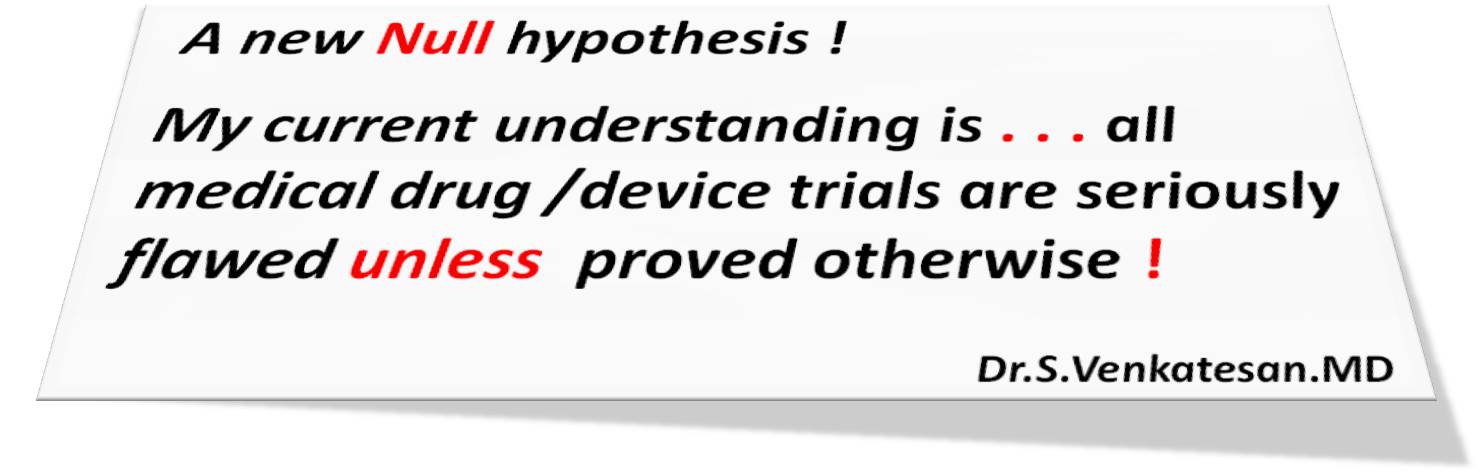
Here I borrow my own quote from venkat@thoughts

medical quotes venkatesan ethics


We  traditionally believe  LV enlargement  results in dilatation of mitral annulus  from below  and  result in functional MR.
A lesser known  concept is , LA enlargement dilating the  mitral annulus from above and cause MR   !
Can atrial enlargement per se dilate mitral annulus ?

We often find  some degree of MR   associated with chronic  atrial fibrillation.What is the mechanism ?We also know MR begets MR.Is it because of progressive LV or LA enlargement ?

When the literature is searched  we have convincing proof that  LA enlargement can lead to significant  mitral annular dilatation and MR as well .
left atrial enlargement and mitral annuluseffect of la enlargement on mitral annulus
Reference

Spontaneous closure of VSD is  a well recognised  phenomenon, than ASD  though both happen in equal frequency.The simple reason being VSD is a noisy disease , ironically the smaller the size of VSD  more noisy it is . Hence  it is rarely  missed  while ASD is largely silent in children. For this reason  it is  possible ASD may be the most common congenital disease .

Natural history of ASD(OS) closure

  • ASDs of size 3-4 mm 100 % will close by 3  years
  • Bulk of the ASD < 8  mm close spontaneously by 5 years.
  • ASD> 10mm is unlikely to close

Factors that determine spontaneous closure

  • Apart from size and location
  • Closure  is accelerated by remnant of flap of foramen  ovale
  • Fenestrations and  Septal  aneurysms also  favor spontaneous closure.
  • Margins  of the defect if rough  triggers fibrotic reactions

spontaneous closure of asd

Why SVC and primum defect do not close easily ?

Plane of ASD  secundum is single and  bridging of tissue is possible .

Sinus venous and  primum defects exhibit  holes which run in multiple planes hence approximation not possible . They also do not  have a valve mechanism.

Un-natural history of ASD

In the current era, one more  force interferes  with spontaneous closure of ASD . It  comes from the  hyper trained aggressive Interventional cardiologists who compete with the nature and easily prevail over it !

Reference

asd spontaneous closure

IVC filter usage has increased many fold in recent years.Please note , it is not indicated in every case of recurrent DVT/or PE. There are specific indications.

Permanent IVC filters

  1. Patients at risk for DVT /PE  with  absolute contraindication to anti-coagulants.
  2. Recurrent DVT/PE in spite of adequate  anti-coagulation

Temporary /Retrievable filters*

  1. It is used during high risk periods  for DVT following major trauma or Bariatric/Spinal /Neuro surgery (PREPIC 2 study ) .*Some of the retrievable filters can be kept for months ,years or even permanently. (If the risk period extends or it has trapped a huge clot.)


indication for IV filter prepic study

Outcome  of IVC filter (PREPIC  -8  year follow up study )

  • Reduces risk of PE
  • Increases risk of DVT
  • No impact on long term  survival
  • Clogging of IVC remain  an important Issue

Reference

Fractional flow reserve(FFR) is an  Intra coronary hemodynamic  parameter  promoted recently to assess the physiological impact of a coronary lesion . Though it sounds logically attractive the concept  is sailing in rough seas  .I am afraid FFR is drowning  a fairly useful tool of IVUS  along with it  !

Read this large study on FFR (JAMA June 2014) .It seems to suggest  FFR is a costly and unnecessary accessory in cath lab

Image

Critical thoughts on FFR

It adds time , money , and procedural risk*  to any given patient .The only possible use is to reduce the proliferating stent usage !But the  irony  is complete as we do our daily business in  modern cath suits .To negate  one indulgence we need to  need to indulge  in  another ! (Junk begets Junk !)

It reflects lack of courage on the part of cardiologists to advice medical management even in obvious low risk lesions !

It is unfortunate ,we need a scientific or  a pseudo scientific tool to lift up our sagging medical intellect !


* crossing  delicate and often complex lesions  without any major purpose is bad wisdom !
Continue Reading »

Shall I begin with a provocative quote (My own !)

Inability to think beyond  self , family, private life  reflects a backward and immature  state of human mind

How to eradicate this backwardness  we all suffer from !

I stumbled upon a book which made me wonder , whether  eradication of  backwardness is little to  do with education ! It lies much, much deeper in our cortical thinking influenced by  inheritance , evolution , culture and economy .

The stunning truth was exemplified  by  American political  scientist  Edward C. Banfield  .A must read for every one who have mind for society , community and the humanity !

In this book he introduced a new term to describe this self centered thinking as “Amoral familism”

“Banfield concluded that  human  plight was rooted in the distrust, envy and suspicion displayed by  them in  relations with each other. Fellow citizens would refuse to help one another, except where one’s own personal material gain was at stake. Many attempted to hinder their neighbors from attaining success, believing that others’ good fortune would inevitably harm their own interests”

Banfield theroy  and  “Moral Bankruptcy in Modern medical care

I am afraid  there is a  compelling link between Banfield’s observation in a remote Italian village  to the current  medical  community   mind set who care only for their patients who pay them and keep them happy !

If you  think  education will eradicate social backwardness ,Why ?  one of the most highly educated community that form the noble profession remain backward in their thinking !

How do you explain  innumerable instances of hospitals ,  doctors shutting doors for  lesser humans  even in dire emergencies ! ?

Why do many of them  join hands with powers that can be detrimental to the overall health of the society ?

The stunning irony is , they do it  unashamed (with pleasure  at times!)  in  violation of the oath they take when they join the Noble profession. Shall we call it  as ” Moral Bankruptcy in medical care ?

Read further

Moral Basis of a Backward Society 
 
Moral basis of a backward society banfield

Highlights of this book  (Text from Wikipedia)

The Moral Basis of a Backward Society is a book by Edward C. Banfield, a political scientist who visited Montegrano, Italy . He observed a self-interested, family centric society which sacrificed the public good for the sake of nepotism and the immediate family. Banfield as an American was witnessing what was to become infamous as the “mafia” or families that cared only for its own “members” at the expense of their fellow citizens. Banfield postulated that the backwardness of such a society could be explained ‘largely but not entirely’ by ‘the inability of the villagers to act together for their common good or, indeed, for any end transcending the immediate, material interest of the nuclear family’.


Link to this book in PDF