Feeds:
Posts
Comments

Archive for the ‘Cardiology -Interventional -PCI’ Category

Trans catheter  aortic valve implantation(TAVI )  is gaining acceptance  as an alternative to surgical aortic valve replacement  .It has successfully negotiated the  initial hurdles and entered the clinical domain . More and more patients receive this modality as the expertise and hardware show consistent  improvement.

Although  TAVI  is   limited to patients in high risk category for surgery , it is expected to make in roads into  intermediate  risk patients  as well  and pose a  real threat to cardiac surgeons  in the years to come .

The only  point surgeons  can rejoice is ,  it cannot be  implanted in patients with aortic regurgitation  as of now.

This video is posted  free by NEJM ,  is stunningly clear in conveying concept of TAVI !

Thank you NEJM .

And this one from  Siemens  seems to  beat the NEJM .

And  now a Hybrid  imaging  creates a virtual aorta in the  cath lab

Read Full Post »

Even as we make rapid strides in  conquering coronary atherosclerosis by all those fancy gadgets , the  fundamental coronary  hemodynamic principle   is poorly understood . Hence  there is no surprise  for the  “perennial ambiguity”  in the indication  and effectiveness of  coronary revascularization .

Why the hell ,   reliving  a  coronary obstruction  may  not provide the   expected hemodynamic benefit  or do not prevent future  heart attack  in many ?    One of my patients  asked ?

I told him . Wait , do not get  excited , we also do not know  . . .We are just beginning to understand mysteries of coronary  circulation.

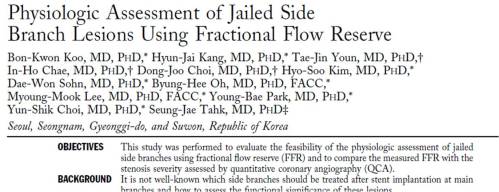
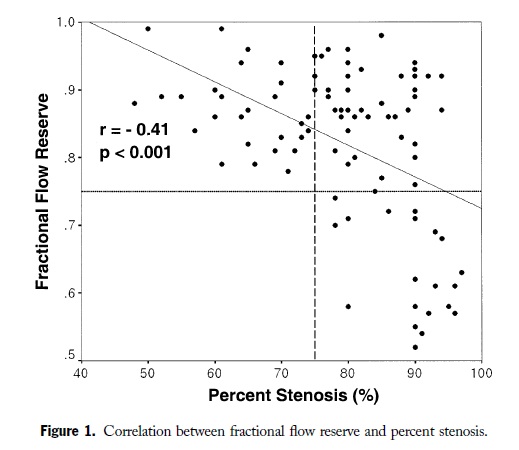
It is a well documented fact  ( but a  debatable )   that  lesser the  severiity of a  lesion more likely it is prone for an acute coronary  event .( Vulnerability , shearing stress or is it a simply a statistical mirage !) While the  vulnerability aspect is  complex , the hemodynamic  impact of  coronary  lesions  is   relatively better  understood. Here is  an important  documentation from Dr B . K  Koo from  Seoul , South Korea  who has elegantly shown the behavior of  fractional flow reserve (FFR ) in various grades of  stenosis  .This study was done in jailed side branches following PCI.

FFR  shows a surprise   relationship  with severity of coronary stenosis  . Even severe lesions showed equal if not more flow  reserve ?

and mild lesions might have lost all its reserve.

 How is it possible ?  Can it be true ?

Yes , it is indeed a  fact . God generally  keeps a stong link between anatomy and physiology  , structure and function . But he adds a rider and keeps  a reserve in every  human cell   meant for  emergency  back up . FFR is  one aspect of this , we have  partially discovered .  When we fail to understand this we are bound to get confused and make a wrong decision in cath lab.

Simply stated ,  flow across a coronary  artery is much more depedent on the status of microvascualture  than the hurdles they face in the epicardial highways !

Link to this original article from JACC .

How to do the FFR procedure ?

http://www.sjmprofessional.com/Clinical-Solutions/Intl/Radi-FFR.aspx

Soon to follow . . .  If less severe lesions are more  dangerous why we are ignoring it in cath lab ?

Read Full Post »

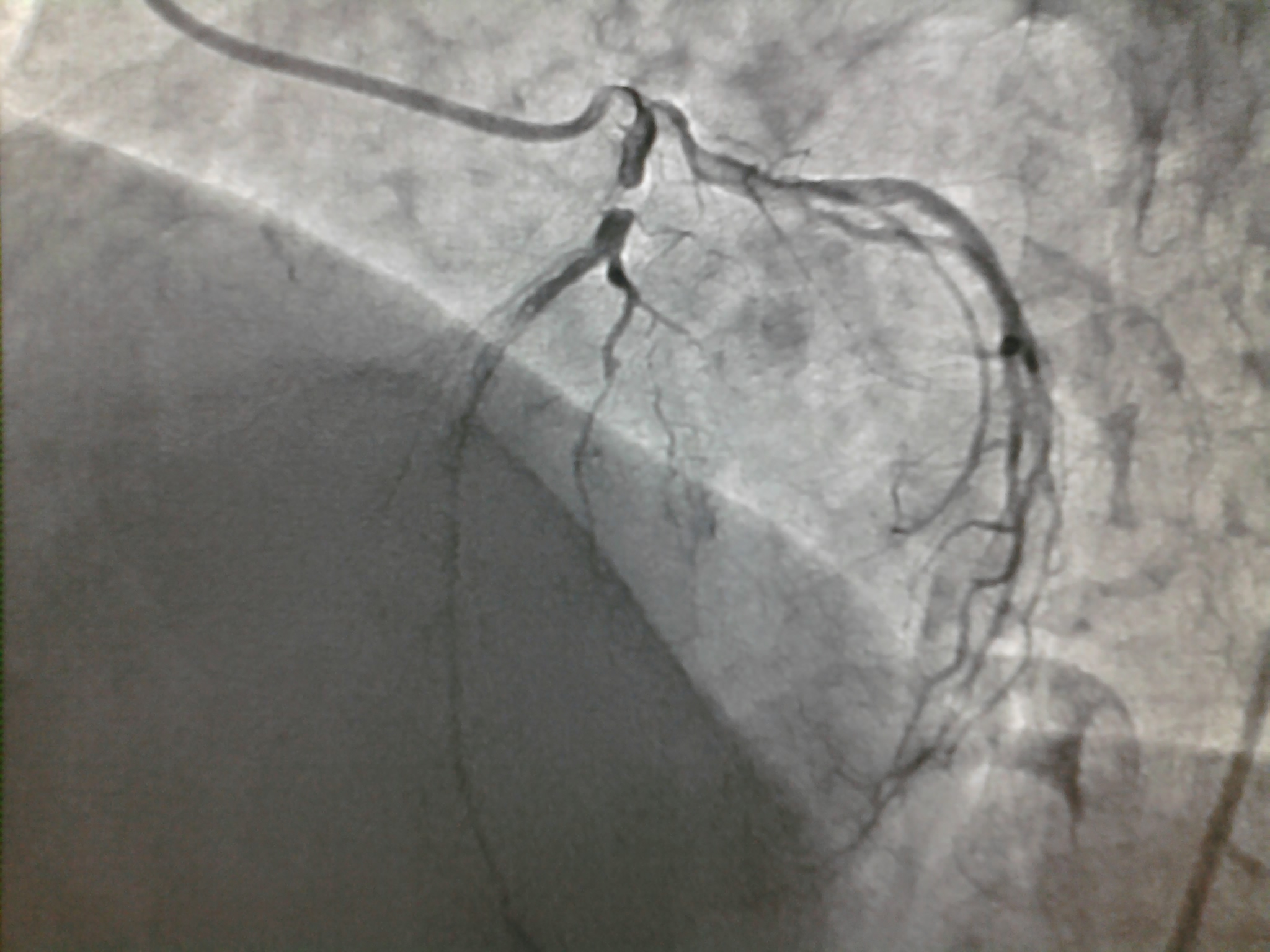
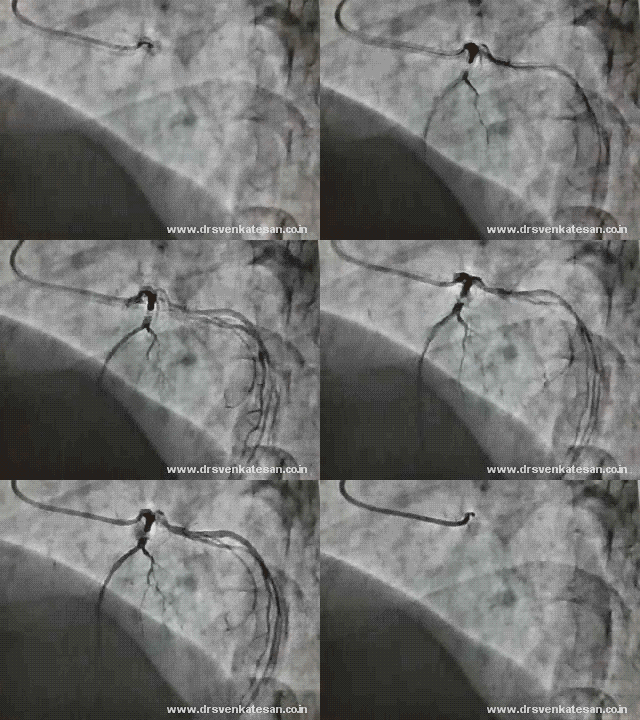
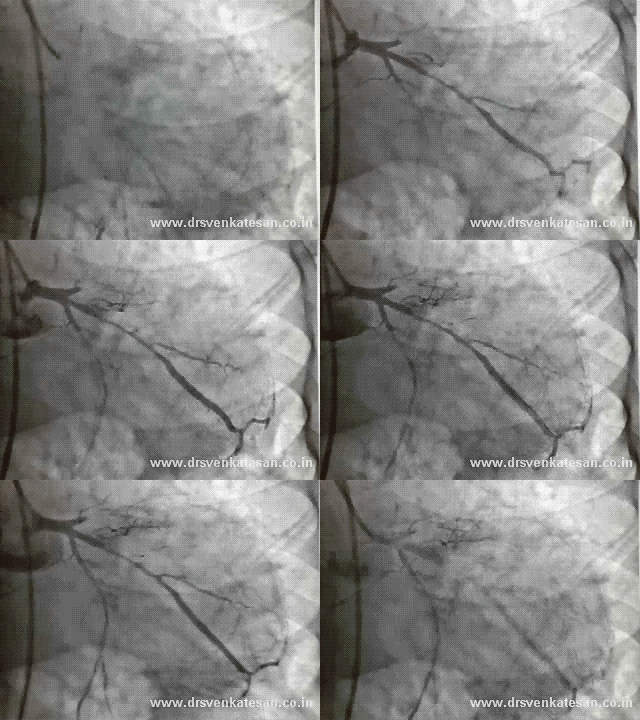
Thousands of  coronary angiograms are done every day. Cardiologist no longer get excited to see exotic coronary lesions .Still , some images can be striking and dramatic. Here is an angiogram from a middle aged man  with stable angina  , who was  one among the routine early morning diagnostic studies  in our cath lab.

Who chopped the neck of this LAD ?

How this man was able to fill up the distal LAD almost completely? (With a complete cut off  right in the neck of LAD )

Are you sure there is antegrade flow ?

Do you get any clue ?

  • Can a trickle of  ante grade flow  sustain  a  TIMI 3 FLOW  ?
  • Or is it a  very efficient  instant collaterals  from LCX ?

Yes . The first one is right . An almost invisible antegrade channel  doing a exemplary job !

How is it possible ?

Realize an important fact . The distal flow beyond an obstruction  is not primarily dependent on degree of obstruction but the status of the distal vascular  bed .  If it is normal  even a hair-line patency  can  profusely perfuse the distal myocardial segment. This is what is happening to this man with a stable angina and perfectly normal micro vascular bed.

Lessens  from this Image.

Do not get fooled by the lay man’s logic. Realise there is  no simple relation  between  the degree of obstruction and degree of  blood flow impediment.It can be linear , curvilinear , or even inverse depending upon   the evolution and timing of obstruction  ,  number of lesions , presence or absence of collateral support , finally and  most importantly  the integrity of microvascular bed .

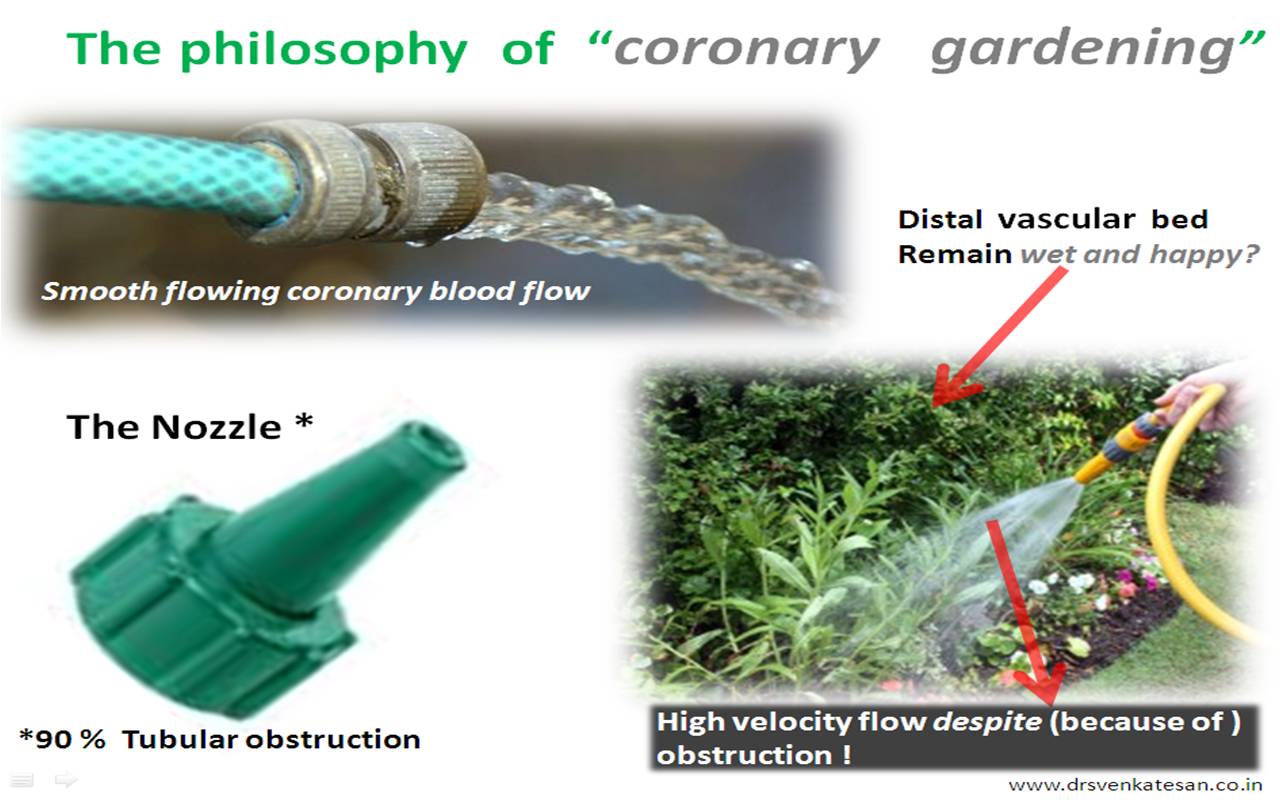
The  distal vascular bed drops its resistance drastically  once it senses  the problem in  proximal segment . This is based on Bernoulli principle and  is akin to how a  garden hose pipe  can simply increase  the velocity  by tightening the nozzle.*


* The garden hose analogy is a gross simplification of   complex factors that determine coronary blood flow.But it effectively clarifies a point ie  coronary blood flow is least dependent on coronary  stenosis (until  very late stages)

**Note further : This  hemodynamic  principle may not apply in acute occlusion as in STEMI  , where   acute  obstruction  often has a linear relationship with the quantum of blood flow.

By the way what happened to the above patient ?

Since he had significant angina there were no debates regarding management.  He  is posted for elective PCI this week-end .(We  can’t  get a stent just like that unless it is a real emergency  .Ours is a  Govt hospital !)

What is your take . Is it a going to be tough cross ?

I feel so , but my colleague Dr Gnanavelu   strongly  differs !

Let me post  our experience during PCI shortly.

Read Full Post »

                                                     Every day thousands of  hearts  end their life   due to terminal heart failure . Much more  lives are  confined  to their bed rooms.In refractory cardiac failure and severe LV dysfunction the only  long-term option is cardiac transplantation.

Medical therapy has reached its saturation point.  Neuro- humoral modulation shows some promise. The other modalities like cardiac resynchronisation ,LV assist devices ,  ventricular  reduction surgeries ,  restriction devices , mitral valve splinting  are  still experimental .

Simply watch this Image : Your heart will get Energy

Modern day  cardiology is trying to add life to these dying  hearts  .

There are two aims

  • To prolong survival
  • Improve functional capacity (Make them at least take care of daily activities and live a fairly independent live)

This is the purpose of the  mushrooming heart failure clinics all over the  world . These clinics , though started with  good intention , ultimately   become  feeding  centres for so many experimental  bridge modalities  , sometimes  with an  infinite wait for  a potential donor  or at the mercy of their insurance companies  . (Many time it turns out to be a  bridge to heaven as the patient fails to cross it !) .

Even though there is strict criteria for terminal  heart failure ,  in practical terms it has many issues .Temporary functional deterioration is misinterpreted   often .

Premature  dependence on LV assist devices and  indulgence  in inappropriate  mitral valve reconstructive  procedures are the currently most important pseudo cardiac interventions .( Myosplint/AV groove tying etc)   Some where along   the  academic  corridors ,   we failed to realise many patients can bridge themselves  to a  transplant (or even   self de-list  from transplant programme  )  provided we are willing to wait and take few   risks  .

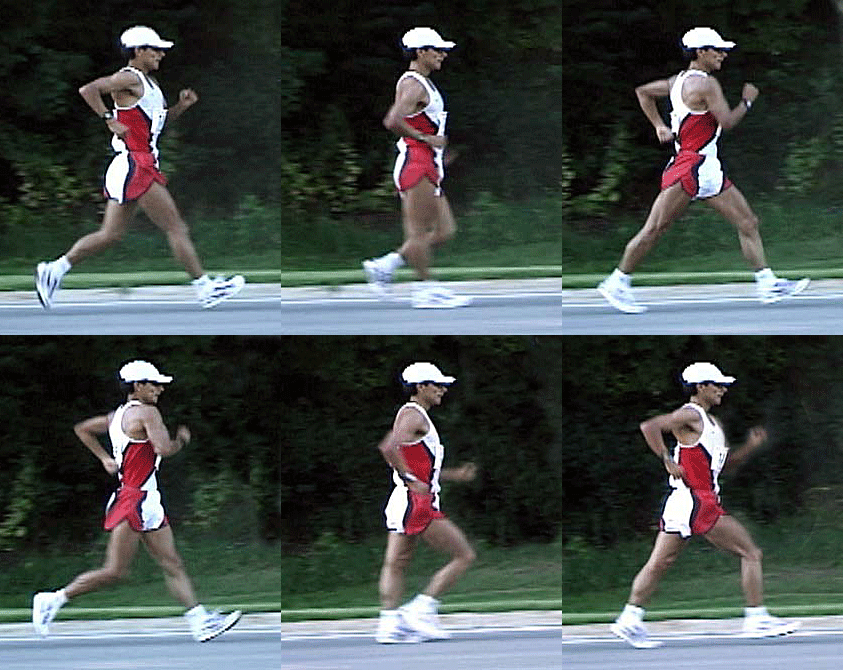
It is observed exercise training  programme is awfully inadequate in most centres  who deal with late stages of cardiac failure.

The hidden link  between skeletal muscle and  cardiac muscle

Skeletal muscle  function is impaired in cardiac failure . This impairment is attributable  to both  dis-use and low cardiac output.  Proper training of these muscles can not only improve the functional capacity  but also  sets in  a positive hemodynamic cycle  that   ultimately improves cardiac function as well.
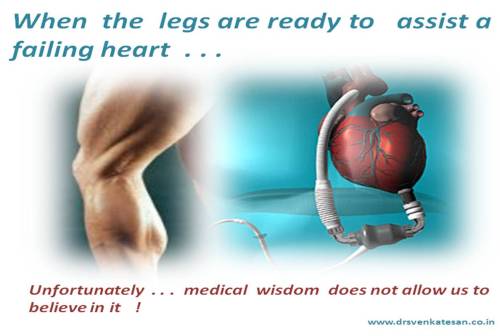
In  our  country we have data  of  thousands of patients  with severe LV dysfunction living with the much ridiculed  digoxin   ,   diuretics ,  ACEI  and minimal exercise living a comfortable life for over 10 years .  It is often said in  cardiology class rooms ,  do not whip a tired horse  as the   failed heart needs rest  .This statement  has  truth  in it even in  this  space age cardiology !

Whipping  a failing heart with electrodes in the name of CRT   could be as  bad as  whipping with inotropic agents . This is not a  personal joke ! This fact has been repeatedly  proved by various inotropic  studies in terminal heart failure(Dobutamine to be specific ) Even CRT  is a suspect .These patients walk for 30 meters  further  with  no convincing survival  benefits .(Of course it requires a ICD -Combo to prevent sudden deaths ) Zero impact in non sudden deaths ?

Can  we propose a  new therapeutic  concept to our  patients   ?

Do you  want to   live with a  low functional capacity (Restricted  life   still  happy  )    for 5 years   or live  apparently unrestricted  life   and die prematurely ?

                         In simple terms,  for all those patients with severe  grades of  heart failure   the  best advice could be . . .to  avoid the levels  of exertion that cause dyspnea / Modern gadgets  may help relieve  exertion for a short  while  , but it  can cut short your longevity * (* This is not a threatening message. This applies to near terminal stages of cardiac failure .All other minor grades of CHF are encouraged to exert up to 70 % of their limits.)

Peripheral mechanism in cardiac failure.

We know cardiac  failure is not a simple  mechanical failure of heart , it activates a complex neuro endocrine system which makes it a systemic disorder .Many of the current research is aimed at favorably modify this. It is now certain Skeletal muscle function is a  major determinant of  cardiac failure outcome and hence a therapeutic target .

If you have good muscle mass ,  good diaphragm and intercostal muscles one can  compensate the compromise inflicted by the heart to a large extent.  We know,   the entire vascular tree has a mechanical function  to do . The stiffness and compliance of aorta , other  major vessels, the muscles  through which these vessels  traverse determine the  ultimate  efficiency  of  circulation.We know  the pulse wave , as it  travels to the periphery , gets amplified. This amplification is not without any significance. It aids in muscle  blood flow . This agumnetation is missing in poorly trained cardiac failure patients. Further muscle respiration is synonymous with  functional capacity . Numerous defects (Both structural and functional )  in skeletal muscle mitochondria are reported.

This is why meticulous  exercise training  becomes an important   intervention in  cardiac failure . There are very good studies that document   muscle respiration defects  getting reverted  with  proper exercise training and  muscle  care  .  Among all muscles the   calf  and thigh muscles show great promise.   We have observed  cardiac failure patients  with good calf muscles ,  outperform others with identical ejection fraction.(Will be published shortly )

Strangely there is no comparative  studies between calf muscle  efficiency   and other available modalities  in cardiac failure .

The concept of  Venous pump vs  Arterial pump

Skeletal muscle mass acts not only as venous pump  it also has a modulating  effect on the arterial pulse transmission .A good venous  pump will activate  vascular  tone . In congestive heart failure  a the RV filling pressure is raised,  blood tends  to  move sluggishly  in right heart chambers .  A proper venous tone  can alleviate this . Well trained  calf muscle  can exactly do this  by a controlled elevation  of  IVC pressure at times of exertion . 

 Dyspnea  of muscular  origin (Peripheral dyspnea)

The symptomatology of cardiac failure has an intimate  realtionship with skeletal muscle integrity  !

Lactate in blood and  hypoxia  in   exercising muscles  can trigger   non hemodynamic dyspnea . Further , there is strong reason to believe  the sensation of dyspnea   is perceived at the chest muscle level  (By muscle spindle length/tension   mismatch ) .It is not known whether lower limb  muscles can generate a feeling of dyspnea  !

But , one thing is certain   by altering the tone of the muscle  spindle and the  optimising the  stretch signals the peripheral component of cardiac dyspnea can be significantly neutralised . This  is what  happens in well-trained   cardiac  failure patients .

How to train the skeletal muscles ? ( In to heart friendly  muscle )

  • Passive stretch
  • Simple 6 minute walking three times a day will help .
  • Muscle massage and toning
  • Drugs like Trimetazidine may improve muscle metabolism by better ATP utilisation
  • Diligent use of diuretics (Excess diuretic can make your muscle exhausted )
  • Chest exercise for improving intercostal muscle function


Final message

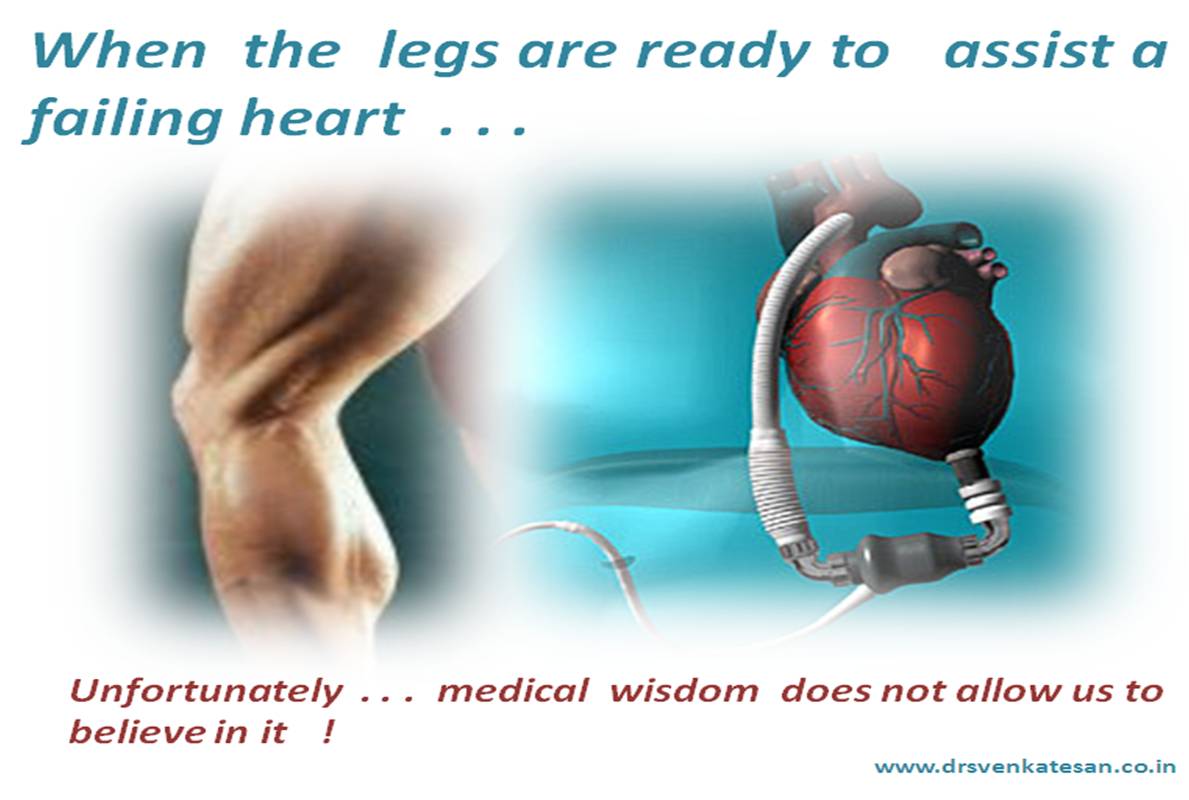
Skeletal muscle training  in cardiac  failure  could be as important as  the  digoxins  , diurteics   and ACEI .When a 300 grams of heart muscle is struggling  , God  is willing to  help  it with huge muscle mass that lies elsewhere , we should read the silent  signals of nature . Many cardiac failure patients  realise this and live  a happy live without artificial assistance .This applies  in all grades of cardiac failure .

For  all those physicians  out there in modern hospitals who treat cardiac  failure , spend at least  few minutes  for prescribing a good exercise  program with a specific  mention about calf muscle function  . After all , it  may turn out be the most efficient  RV/LV assist device !

References
                                                                     http://content.onlinejacc.org/cgi/content/abstract/30/7/1758
 http://www.uptodate.com/contents/skeletal-muscle-dysfunction-and-exercise-intolerance-in-heart-failure

Read Full Post »
Left bundle branch block (LBBB)   has a curious but important relationship with  STEMI . LBBB inflicts a dramatic change in qrs morphology   with  a diagonally  opposite   polarity of ventricular activation . This masks    the initial qrs vector  and  makes it a difficult task  to diagnose acute MI in this setting. The ST segment which is of primary importance  in STEMI is   lifted  up due to altered repolarization .

LBBB can be associated  with  STEMI in the following ways

  • Acute necrotic LBBB  with massive myocardial damage – Impending shock
  • Chronic LBBB with acute STEMI
  • Transient ischemic LBBB during STEMI
  • Rate dependent  LBBB (Usually tachycardic  ,  rarely bradycardic  )
  • STEMI in pacemaker rhythms

While every one of the above can be experienced ,  the most common diagnostic conundrum  occurs ,  when a patient   comes with acute  chest pain and LBBB . There has been many criterias  suggested to diagnose STEMI in the presence  of LBBB.

The criteria  proposed  by Sgarbosa  (A  GUSTO   off shoot )  in 1996  caught our imagination .One prime reason for this is ,  it came from the prestigious NEJM and Duke university combine. Suddenly this became the de- facto standard to diagnose  STEMI 

In the  past 15  years  ,  our experience in one of largest coronary  care units in India , we have   found this criteria   to have  little utility value  in STEMI and LBBB  . Most of the time  a correct diagnosis was made  by   simple clinical guessing .

Next to  clinical assessment, we found cardiac enzymes (Troponin and CPK ) were reliable in diagnosing  STEMI with LBBB.

Surprisingly ,echocardiography  was as unreliable as ECG .( The paradoxical  septal motion invariably confuses the already  confused  cardiology fellow who usually does the emergency echo  !) 

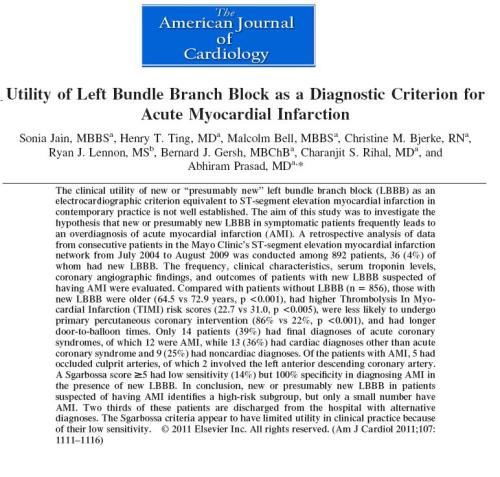
Even as our  CCU documentation was  far from satisfactory  , now this article from Mayo exactly reflect  our observation.

Sorry   Sgarbosa . . . the criteria was  based  on  sound observation and a  good  electrical principle  . . . still LBBB is able to beat   it convincingly ! ( Very low sensitivity !)

Read Full Post »

What do you advice a patient with single vessel  CAD  with milder forms of angina or no angina ?

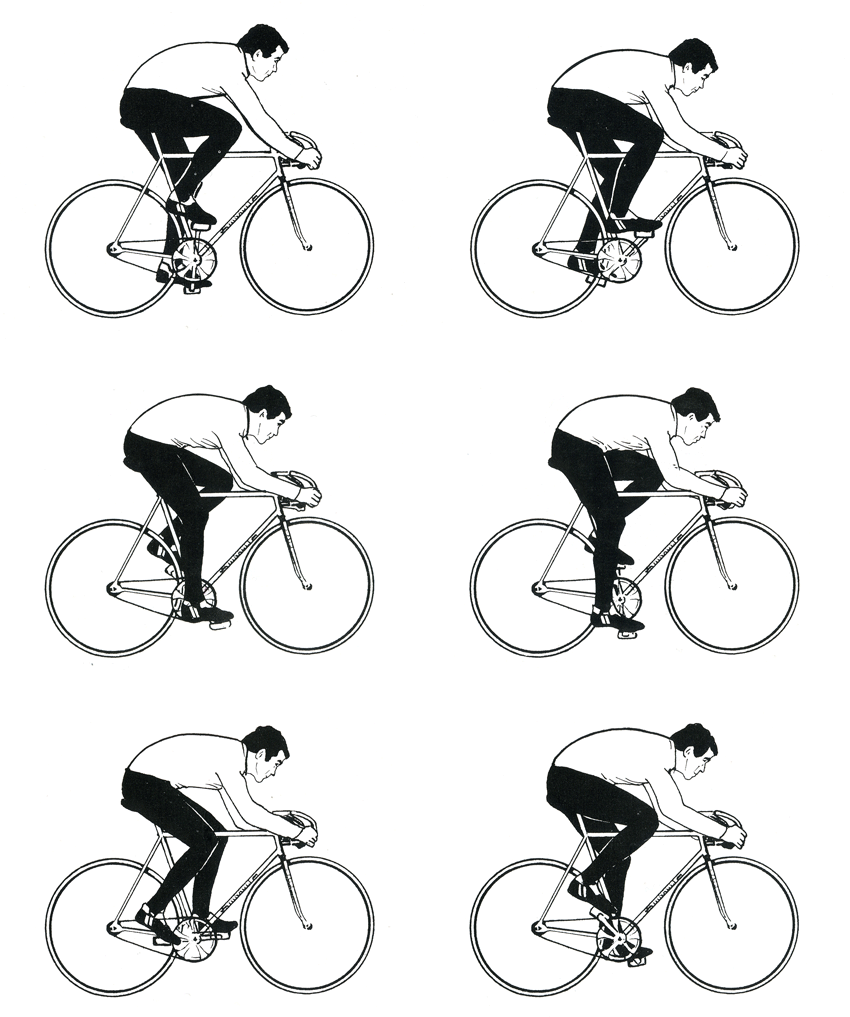
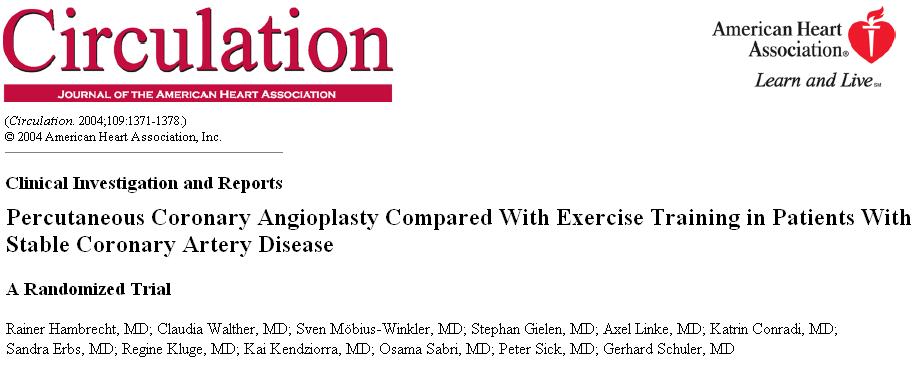
Medical management ?  May be you are right . But most of us do not  follow this  correct advice.  Why ?  We have a inherent bias against  medical management  . Cath labs exude  unmatched glamor and  attraction in various forms  to both cardiologists and their patients.   Now , here is a   surprise  finding  , unpalatable though , for many of  us !  Simple jogging or bicycling can have equal if not  more relief  than even a angioplasty . This study which came in 2004  was made sure , not to  gain a prominent place in cardiology literature.

http://circ.ahajournals.org/cgi/content/full/109/11/1371?linkType=FULL&resid=109/11/1371&journalCode=circulationaha

Let me pedal faster . . . cardiologists are after me !

The circulation article

How does exercise help in reversing CAD  ?

We know the prerequisite for plaque formation is the endothelial  injury along with lipid accumulation. Further ,  high local adrenergic(vasomotor) tone ,   growth factors and inflammatory activity would accelerate the plaque formation.

Regular exercise  has been  convincingly  shown to improve  the endothelial function. It  restores  the optimal adrenegric tone in the coronary micro circulation so the blood flow is brisk and pro-coagulant  activity is reduced .

It is easy to accept  the fact ,   exercise  can  prevent   progression of plaque   . . .A question that lingers in many including  many  cardiologists is this   . . .How  is it possible   for exercise to  regress well  established plaques ?

When   exercise  can   dissolve  huge  fat loaded  abdominal  tummy  in matter of weeks ,   there need not be any doubt  about the efficacy  of   exercise  in regressing   minute  lipid laden  coronary tummies (also called as plaques) .

(Of course , the  above statement  is supported by  documented  angiographic evidence  as well !)  Read below and  also the AVERT study .

Final message

Attention  all CAD patients ,  empower yourself , you  can become your own  cardiologist . You can perform angioplasties with bicycle  at zero  cost ,  of course  you have to pay for the bicycle !

This article “hypes up” the importance of physical activity in the management of CAD. But , it has to be  combined with optimal anti anginal drugs, good lipid control , blood pressure and diabetes  control  if present  , stress reduction  and good  sleep  to keep the CAD and cardiologists  at bay !

Read Full Post »

Interventional  cardiologists should revere  few  names for ever  . . .

They are

  1. Werner Forssman
  2. Masan Sones
  3. Andreas  Gruentzig
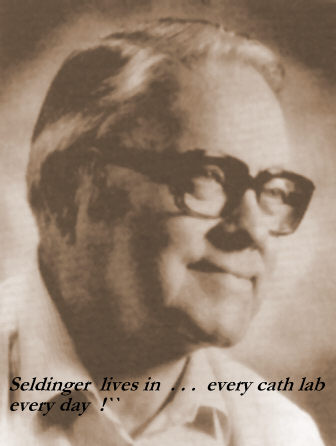
  4. Sven-Ivar   Seldinger

Sweden's Pride and cardiologist's ultimate Hero !

The  other men  in the  above  list  gave us insight  to enter the heart and do cardiac catheterization  and selective  angiograms

Ironically ,   the  man who  provided an easy access* to cardiovascular  system  from the  periphery is less often  remembered.  Still , it is because of him millions of procedure  are done every  year .

Every cardiologist should  read the life history of this great man.

*Previously all interventions are done in laborious  arterial or venous cut down

How the invention came about ?

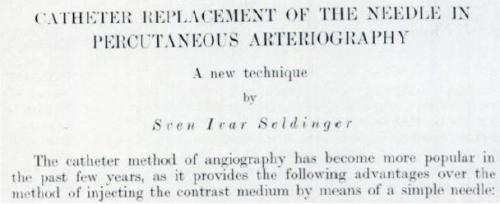
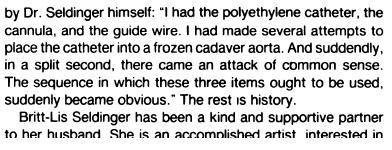
“It is a  sudden attack of common sense”   That  is how seldinger described in his own words

Why not a Nobel prize for  Seldinger’s  sense which was so  uncommon to others  ?

If common sense has to be rewarded Nobel price ,  Seldinger’s    would probably will rank   first  among  all !

Reference

  1. http://ww.ajronline.org/cgi/reprint/142/1/8
  2. http://www.ajronline.org/cgi/reprint/142/1/8.pdf

Read Full Post »

We  are at the mercy  of  the three major coronary arteries (LAD,LCX,RCA) that sustain our life . Their  job is clear cut  .It has to perfuse   about 300 Grams of   live bundle of energy  for  an average of 6-7 decades.

What are the hurdles it  faces ,  how it overcomes these obstacles  forms the fascinating story of   “survival  of  human heart”

When coronary blood supply is confronted with a sudden compromise  as in ACS  ,  often the heart has little  time to respond . Hence the damage  and risk of death is  more. Even here there are lots of safety mechanisms and natural lytic process that limit the loss of life to less than 30 %  of all STEMIs. This implies nature protects against the death in 70 % of individuals and help  them  to reach hospital.*

*Among those  who reach hospital , we  the cardiologists  try to reduce the  mortality to about 6-7 % (20% without treatment ) with all  those hi-tech gadgets .It is a  different story and will be addressed elsewhere .

When it comes to  chronic insults ,  the heart has a unique potential to  stage  long haul battles. It has many tricks  under its  sleeves when challenged in a slow fashion.

The main weapons are two

1. Coronary collateral circulation.

2. Ischemic preconditioning.

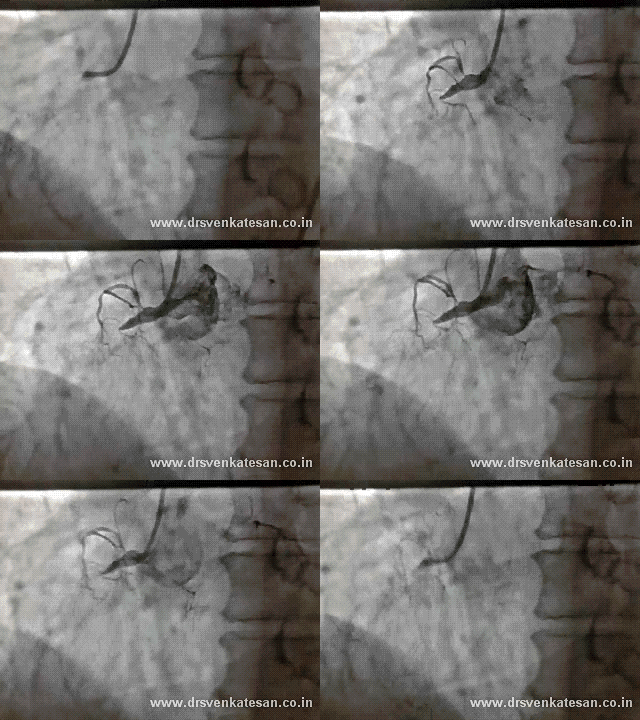
Here is a patient who fights his life even after all his  three coronary arteries   totally blocked and surviving with one of the branches of left main -Ramus intermedius .

If you have thought his RCA was the savior  you are  mistaken  .

To every one’s   surprise  his  RCA was awful  as well !

He had angina which was  troublesome  but manageable .Was able to live a life with acceptable standards (Indian standard )  After the angiogram he  received  CABG.  A turbulent post operative course ensued  due to various reasons . He  struggled but   fully recovered  . . .  and  ultimately  reached the  previous  standard  of life !

Final message

Modern cardiology is all about not trusting  powers of nature .

But youngsters should realise the enormous potential of those invisible powers.It may sound philosophical , but please  remember  . . .after all . . .  philosophy  is nothing but  search for truths. Atleast believe in them  once in a while !

Read Full Post »

Newtons third law of motion  says for every  action  there is  an equal and opposite  reaction .

In vascular hemodynamics  whenever there is a an obstruction , there tend to be a dilatation of   the same blood vessel  somewhere distally.

It may not be linked to newtons law but it is  observed in many .It is more common in large vessels than small ones.

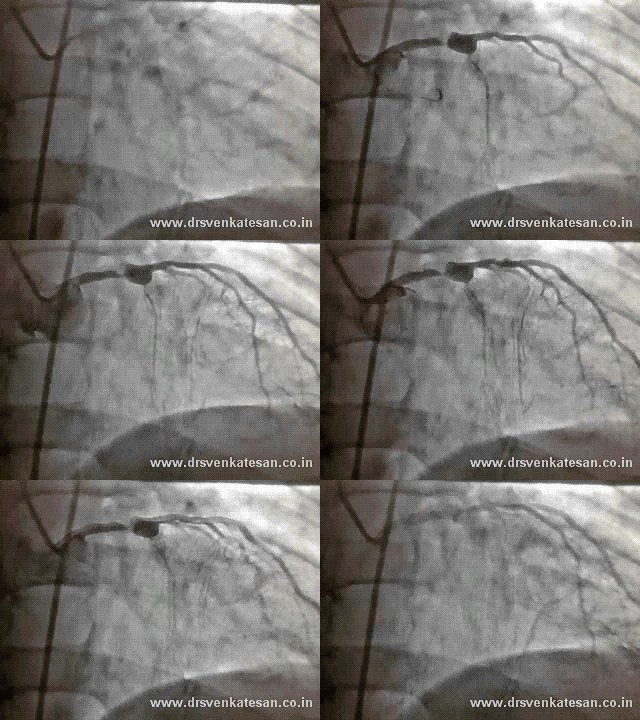
Here is a patient with a tight LAD lesion with a significantly  dilated segment located immediately beyond the  obstruction.This can be considered as a post stenotic dilatation. Coronary ectasia is  also a  possibility but since it is related to site of obstruction the former is likely .


What determines the post stenotic dilatation ?

The exact mechanism is not clear. There is  a definite ,sudden  pressure drop distal to  the  obstruction. This  pressure drop  recovers beyond a certain distance . At this point ,  the rate of increment in  velocity of   peaks .This somehow has an effect on the  distending  pressure  and the adjacent vessel wall gets radially stressed and begins to dilate. (Opposite of what is expected in Bernoulli effect ?)

Is there a anatomical defect in  post stenotic dilatation ?

Not every  one goes for post stenotic dilatation.There is a possibility it occurs only in genetically susceptible individuals .

Significance in  interventional cardiology

The post stenotic segment has a potential to misbehave in the period following  PCI . If the distal instent stenosis  occur (even if it is minor ! ) it can induce a cycle of post stenotic eversion of normal segment and risk of edge effect or stent thrombosis is more.

Read also Glagovian phenomenon – A form of  intra stenotic coronary artery dilatation

Read Full Post »

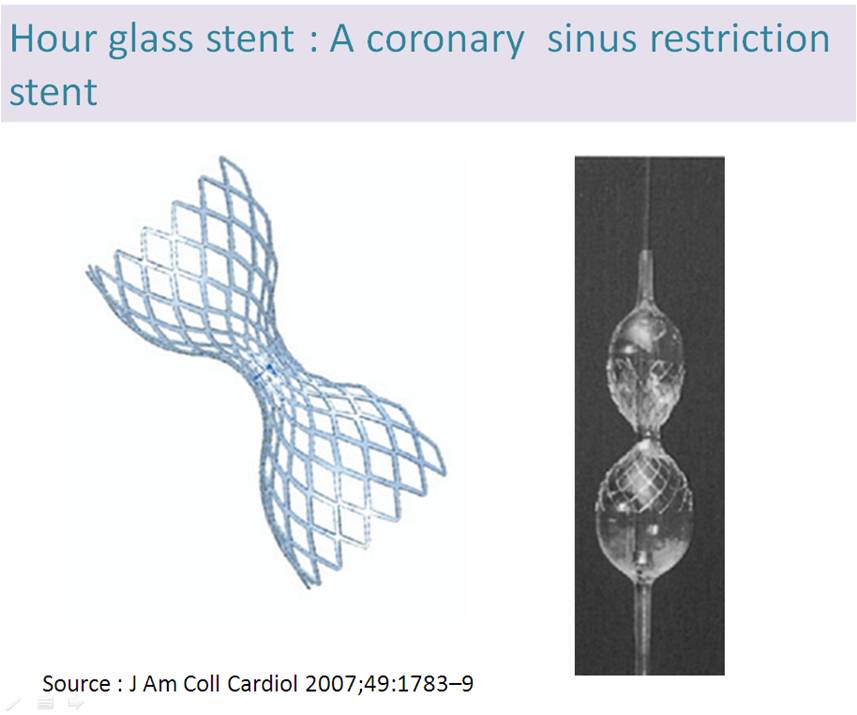
When LV fails the  lung gets congested and flooded with blood . Similarly when coronary sinus  ,  the major draining outlet of coronary  circulation resists  the incoming blood  flow . . .  myocardium  will  get congested !

This is  the concept  of  retrograde perfusion  in treating refractory CAD with angina . It is a double-edged concept. If the coronary  sinus  pressure is  excessive it may interrupt even  the normal  flow .It should be optimal so that it prolongs coronary micro-circulation time without compromising ante-grade flow. .

Picture courtesy : http://www.dartmouth.edu

Clinical example

We know cardiac failure patients rarely complain of  angina .

Why ? . . The myocardial congestion due to coronary sinus pressure is the most likely explanation.This goes well with the back flow concept in treating refractory angina.

While surgeons tried to link artery to vein  , Interventional cardiologists were smart enough to occlude the coronary sinus partially , that will result in stasis of blood in coronary micro-circulation and hence facilitates oxygen extraction .

Final message

God is a master craftsman. Do not think  there is only  one access to coronary micro circulation.Apart form LCA and RCA there is  a vast network of coronary  veins  traversing  the delicate surfaces and grooves of the heart .

Remember ,they also reach the same micro vascular  bed but in a different direction !

If we  can exploit  them  for myocardial arterial  perfusion we have a real breakthrough   in our hands. . After all , why should we take a vein  from a far way from legs (saphenous veins )  for by-pass surgery  when venous channels are  simply there beside  every branch of a  coronary  artery !

Let us be quixotic , we shall attempt to   congest the myocardium with blood for refractory angina by whatever means ! Mean while let us also remember  what happened to  TMR (Trans myocardial laser  revascularisation ) the biggest technology failure in cardiology in recent times !

Reference

Read Full Post »
« Newer Posts - Older Posts »