Feeds:
Posts
Comments

*ISCHEMIA trial breaks not in NEJM or Lancet but in Washington Post and Wall street Journal

After three decades into cardiology profession, one thing is very clear. We work so hard to create pseudo-knowledge and struggle with it for so long and feel awkward and guilty to come out of the mess. But we have to  . . .  in the overall interest of mankind, isn’t?

We aptly call the whole process as continuing medical education, but in the melee, often we ditch some of the precious gems as obsolete. (This tempts me to suggest discontinuing false education is also an option for medical knowledge seekers !)

Confucius has something to say about this issue , which appears more relevant to the medical profession in current times.

Postamble 

We don’t know what’s in store for 2020

I have never found it difficult to retrogradely cross a dangerous epicardial collateral in complex CTO. Delivering a twin stent in a partial culotte strategy for a bifurc lesion has never tested my talents. Stenting a left main across the LAD, jailing the LCX with OCT support is my favorite time pass. Crushing a calcium infested diffuse long lesion with diamond-tipped ablator appear as breezy as shopping in a mall.

But this one is really challenging 

What is that?

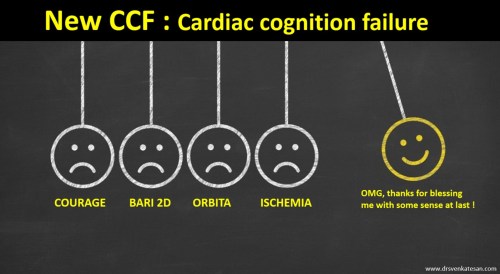
Understanding these four studies (Ref 1-4 ). They dogmatically say medical management confers definitive protection in chronic coronary syndromes. It stretches our limits of Imaginary Intelligence! How can a near tight coronary obstruction sitting right across your eyes, be left untouched? The latest one seems to suggest we can even ignore FFR positive lesions.

COURAGE BARI 2D ORBITA ISCHEMIA DRSVENKATESAN SHD CHRONIC STABLE HEART DISEASE PTCA PCI ACC ESC SCAI 2GUIDLEINES

It requires 4 negative forces . . . to bring one big positive Impact!

I don’t understand who is funding these negative trials and glorify it, and trying to defame the talents in me. All these studies have a huge lacuna. They conveniently exclude high-risk cases and allowed liberal cross over to PCI later on. Even the just-released ISCHEMIA trial had 38 % patient with no angina. (But why they received PCI ?) How to Interpret these trials and extract the true conclusion? .One consolation is, I know these negative trials have a very short memory and expiry date. Very soon I shall be liberated from the clutches of this negativism.

Even as I scribble this, my inner conscious is telling a completely different story. I agree we do Indulge a lot in stable Ischemic Heart disease. (SIHD).  I am yet to be clear what exactly we mean by SIHD. How is that near 90 % mid LAD guy ran 12 met exercise with negligible perfusion defect and still FFR was .7 ?

OMG, save me from this academic conundrum and help to acquire true wisdom.

Reference

1.Weintraub WS, Spertus JA, Kolm P, Maron DJ, Zhang Z, Jurkovitz C, et al. For the COURAGE Trial Research Group. Effect of PCI on quality of life in patients with stable coronary disease. N Engl J Med. 2008;359(7):677–687. [PubMed[]

2.BARI 2D Study Group. Frye RL, August P, Brooks MM, Hardison RM, Kelsey SF, MacGregor JM, et al. A randomized trial of therapies for type 2 diabetes and coronary artery disease. N Engl J Med. 2009;360(24):2503–2515. [PMC free article] [PubMed[]

3.Al-Lamee R, Thompson D, Dehbi HM, Sen S, Tang K, Davies J, et al. ORBITA Investigators Percutaneous coronary intervention in stable angina (ORBITA): a double-blind, randomised controlled trial. Lancet. 2018;391(10115):31–40. [PubMed[]

4. International Study of Comparative Health Effectiveness With Medical and Invasive Approaches – ISCHEMIA


LV dysfunction is one of the most commonly used terminology by cardiac professionals.It can be systolic, diastolic or global, regional etc. But, before dysfunction sets in, the heart fights. The Left ventricle can behave in many different ways when confronted with stress. It increases the force of contraction, elevates it’s Intra cavitary filling pressure and still accomplishes its task of pumping adequately. Further, It can build fresh muscle (LVH). It can double up with more heartbeats. (All these factors are referred to as cardiac reserve mechanisms)

These reserve mechanisms can be activated in the short or long term. In the long term, autonomic activation with neuroendocrine factors joins the compensation process.  These will work for some time till the circulatory system settles down to new homeostasis. However, they become counterproductive and becomes decompensated, ultimately heart failure sets in(Unless Intervened)


Is LV dilatation a mechanism of cardiac reserve ?

No one calls LV dilatation as a reserve or compensatory mechanism. (I wonder, why not ?) I think like RV ,  LV too has some potential to reversibly dilate . The quantum of which we are unable to estimate.This happens usually in response to chronic  volume stress* like regurgitant valves or high output states. Though cardiomegaly and a huge heart convey a sinister outcome, many hearts shrink if the primary issue is corrected.(Typically in Anemia, Beri Berri. We also know LV may transiently dilate in response to some toxic /pregnancy-related cardiomyopathy.

* Mind you LV poorly tolerates acute volume stress as in Acute AR/MR

The critical gap in our understanding is about this question.

When does LV dilate physiologically and when pathological persistent LV dilation sets in (The absolute state of irreversibly lost cardiac elasticity.) We also know dilated LV will consume more oxygen due to enhanced wall stress (Laplace law) and hence its possible LV dilatation begets further dilatation. Optimal timing of mitral and aortic valve replacement in patients with AR and MR directly depend on this knowledge.

Final message

We need clarity in the following queries

  • Is LV dilatation (with normal EF ) a sign of LV dysfunction?
  • If so at what level of dilatation?
  • Since LV dilatation  occurs in diastole can we fit this entity “Isolated LV dilatation” in the already confused spectrum of diastolic dysfunction?

Let us wait for the knowledge to evolve. Young cardiologists could take up this area for research.

Assessment of LV diastolic function primarily depends on the Doppler flow profile across the mitral valve and also to be noted are the 2D features of LA and LV for associated abnormality like LVH, LAE etc.

Why diastolic dysfunction assessment difficult in AF ?

Since most diastolic doppler mitral inflow parameters involve analysis of atrial contraction A wave, atrial fibrillation makes it difficult to assess diastolic dysfunction. Since we have only early diastolic velocity to assess, the changes confined to this E velocity is of paramount importance. This E velocity again is subjected to cycle length dependent alteration in both its acceleration and deceleration time , making things still more complex.

However, the following features help diagnose diastolic dysfunction in AF

  1. Lack of significant  E velocity variation (<20%)  Inspite of significant RR interval change.(This implies mean LAP is kept high irrespective of cycle length suggesting elevated baseline LAP)
  2. E deceleration time (<140ms) (In long cycle)
  3. Propagation velocity in color M Mode(Vp)  <45cm/sec might help (RR interval dependent, measure in the long cycle)
  4. E/e” in a single beat by dual doppler probe (Ref 1)  > 10 indicate diastolic dysfunction that correlate with PCWP> 15mmhg (Ref 1)
  5. Finally (and curiously ) presence of AF by itself may imply significant LV diastolic dysfunction. It could be due to an increase in atrial strain and afterload of LA (ie pre A-LVEDP) (Of course, It should be in the absence of mitral valve disease)
  6. LA dimension in AF*

*LA dimension is a very good sign of chronic elevation of LAP and diastolic dysfunction in the absence of mitral valve disease. However, AF can dilate the LA making it a less useful parameter. But, it should be noted in AF both RA and LA dilate together.So,  a disproportionate LA>RA (or if RA is normal size ) could still be a marker of baseline LV diastolic dysfunction.


Reference

  1. Kusunose K.Yamada H.,  Nishio S.et al.  Clinical utility of single-beat E/e′ obtained by simultaneous recording of flow and tissue Doppler velocities in atrial fibrillation with preserved systolic functionJ Am Coll Cardiol Img 2009 2:11471156


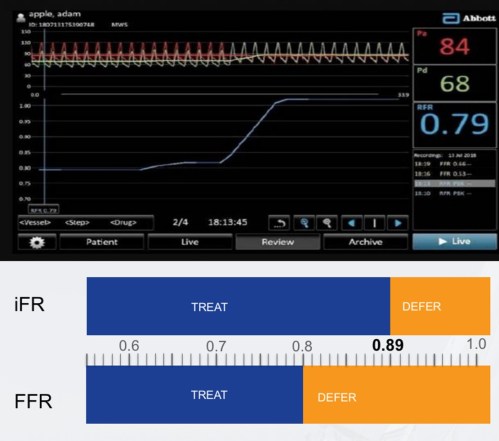
FFR is the ultimate hemodynamic test that measures the physiological Impact of lesions. Just pass a manometer tipped wire across the lesion and note the pressure drop (with or without Adenosine) All you have to remember is two cut off values  .8 for FFR and .9 for IFR. Abracadabra . . . yes you got the answer , whether to proceed with PCI or not? It’s as simple as that. We are no longer blind to physiology to which many coronary purists often criticize us.

ffr ifr fame study

Coronary physiology simplified

Now , answer this question.

Is FFR heart rate dependent? If yes, how significant it is?

This simple question on coronary physiology caused the maximum distress  to  a large expert cardiologist group

Some of the answers

  1. No, it doesn’t.
  2. I think it may be affected.
  3. Yes for sure, but it’s not significant
  4. Yes, it’s an important limitation

My Answer

It has to be yes, right, however minimal it may be. My interpretation of truth in FFR is, it can have a massive influence* . (*Unless you are sure (we can never be ) about achieving maximum hyperemia or this hyperemia is the same as physiological exercise.) In fact, the whole concept of FFR lies in the fact that it should induce enough HR raise that should be used as a surrogate marker for maximum hyperemia. Ideally, like stress testing, we need to test FFR at maximum heart rate and minimal heart rate. The difference could be documented as FFR max-min. This will throw new light into the physiology of microcirculation.

Should we need to create a heart rate corrected FFR?

Yes , I think we need to do it or else should report at what HR we are reporting the FFR. If FFR falls at a high heart rate and maintains at low it implies a significant lesion. So don’t get fooled with FFR of .9 measured at an inadequate heart rate.

IFR to replace FFR : On what basis?

Meanwhile, new generation coronary flow quantification tool IFR jettisoned Adenosine and simply measure diastolic instantaneous flow at resting state. This makes a mockery of coronary physiology, without a true debate about heart rate dependence of trans-lesional flow.

Impact on clinical practice

Even as we struggle to answer the fundamental question of the influence of Heart rate on FFR, many landmark studies had been done. They have ratified FFR as the most physiological modality to assess coronary lesion. Important guidelines have been written based on these studies. No one will ever know, the true impact on the current cardiology care,  had we included heart rate adequacy /correction as an essential criteria in those FAMEd studies we hype about.

Counterpoint.

All is well with FFR.It has been tested with various heart rates.

FFR at peak hyperemia means there is no further HR rate induced potential microvascular reserve. So a properly administered optimal Adenosine augmented FFR should not bother the HR variability. (But its only theory)

If FFR is ok . . . IFR should not be ok is it not?, For the simple reason, there is no hyperemia in IFR , what is the use of knowing resting flow reserve (RFR)

Reference


Postamble with a slice of History 

FFR is as old as the concept of PTCA. In fact, the original balloons used by the great Gruentzig’s * had a central port for pressure recording through which he measured both proximal and distal pressure curves to guess the significance of obstruction. After each inflation, he checked  whether both curves are drawn together which he speculated to indicate a successful procedure physiologically.

*What a stunning scientific mind the father of Interventional cardiology was blessed with, still inadequate for the Nobel committee to get convinced.

Caution : Non-Academic stuff

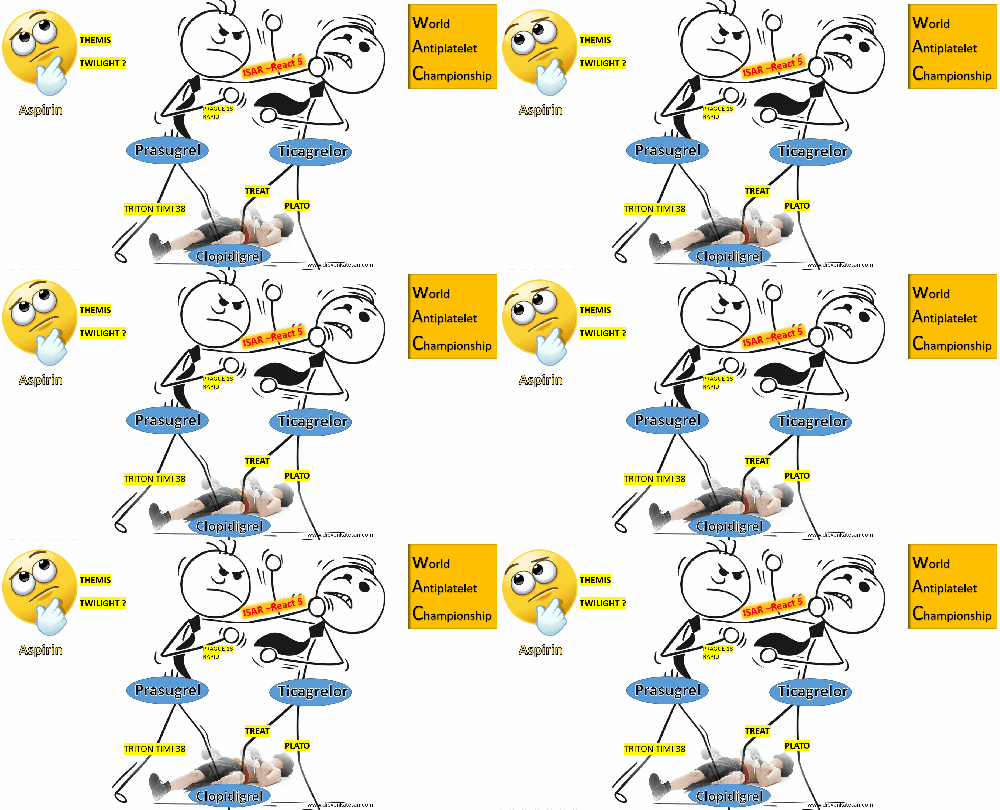
Anti hypertensives, lipid-lowering drugs along with antiplatelet drugs always find a proud place in most cardiac prescriptions. The toxic rivalry between various drugs and their creators is a well-known secret. However, the current fight among the antiplatelet agents is reaching comical proportions. The punches and reverse punchs on and off the podium is there for everybody to see.

It all started with clopidogrel two decades ago which was crowned after conquering then-popular Ticlopidine. It was followed by Prasugrel and Ticagrelor. Ticagrelor seems to taste its own medicine from Prasugrel, which brought back memories of the same knock out punches both of them gave to clopidogrel in the past. I guess the ISAR bruised Ticagrelor is just taking a time out, expected to REACT with fresh vigor in the next bout vs Prasugrel.

While these financial heavyweights struggle to keep the bull run, in the multi-billion-dollar stent maintenance market . Aspirin, the aged warrior is enjoying the theatrics silently. While Aspirin is repeatedly shown ( shown literally means shown: Mind you, It is not a synonym for a proven fact ) that it is inferior in stented patients.For stable CAD Aspirin still in the very much in the reckoning. Let the Twilight shine soon. Don’t get a shock of your life, if Aspirin regains the championship one day.


Final message

Let us hope the fight gets over till another Grelor  crash lands from nowhere. Meanwhile, we shall strive hard as professional physicians to increase the per-capita antiplatelet drug consumption in  every acute and chronic coronary syndrome (with or without PCI). This will help keep Homosapien’s coronary artery eternally patent.


For pure Academics  (Conclusions in science is a misnomer . . . )


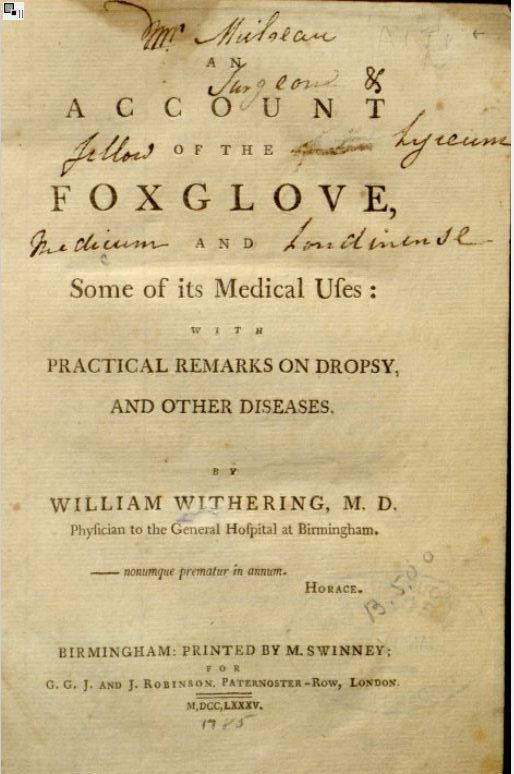
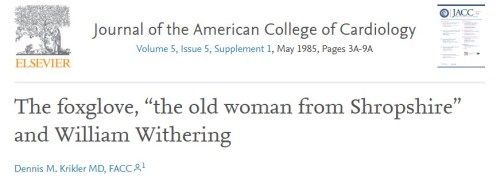
William Withering the British Botanist of 18th century now laid to rest in the St Barthomlew Churchyard ,Edgbaston is known for his astonishing isolation of the wonder moelcule Digoxin from Foxglove. (Of course, let us not forget original old lady Ms. Hutton from Shropshire who was treating epidemic dropsy with a concoction of herbal Tea ) He reported this in the seminal paper “An account of Foxglove’ in the year 1750 and subsequently became a fellow of Royal college of science.

(The story of Withering and Digoxin is extensively researched and written by Dr Dennis M, Krikler in a classic review article of 1985 JACC )

Near-death experience of Digoxin

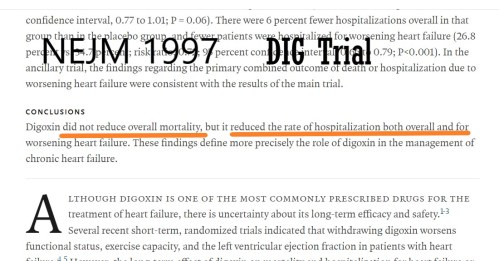
After 250 years , saving millions of life, modern science has killed this warrior (inadvertently ?) by a minuscule study with serious flaws called DIG trial *published in NEJM 1997. It exposed the truth that science in flimsy forms can misrepresent fact. Actually many wouldn’t agree its a bad study. But , everyone realised , the conclusion was misinterpreted and disproportionately given weight to one aspect.The conclusion was worded in such a fashion, which sort of implied a negative bias.

*Yes , flaws were discussed in one of our detailed journal club meeting .

DIG trial

This one study was good enough to smear this drug with a knockout punch as if we are administering poison to a patient with heart failure.Thus a grand old drug became an object of ridicule in academic forums. Subsequent offline real-world scrutiny clearly indicated reduced hospital rate admissions and preventing worsening of HF was directly improving the mortality for which there were no takers. At least occasionally we need to realize there is foolish face for statistics. Now we are beginning to restore some lost sense.

What’s happening in 2019

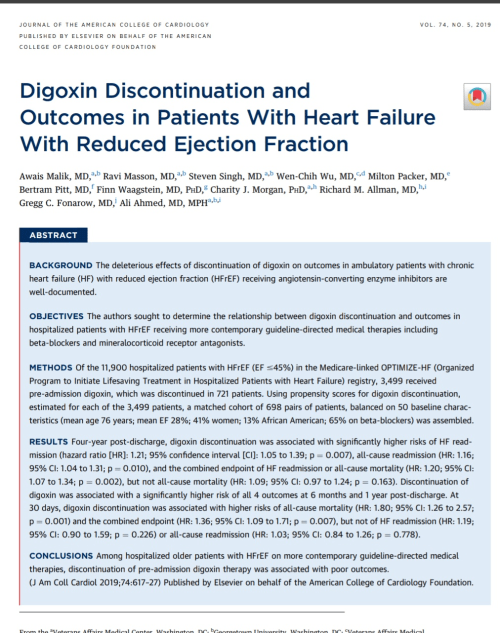
The same scientific methodology finds Digoxin to have great value . JACC. Awais Malik from Veterans Affairs Medical Center, Washington DC and others try to dig out a truth.

screenshot_2019-08-24-23-37-54-789_com1423849373.png

Whoever is blaming this as a withdrawal study are requested to go through the basics of how adding a drug doesn’t help but stopping it worsens. Another group has a different issue. There is a tendency among the scientific community, to look down on studies done in VA hospitals as if they have lesser academic value. I strongly object to that if it’s true. Never have preformed opinion about a study by its source.

How does Digoxin act?

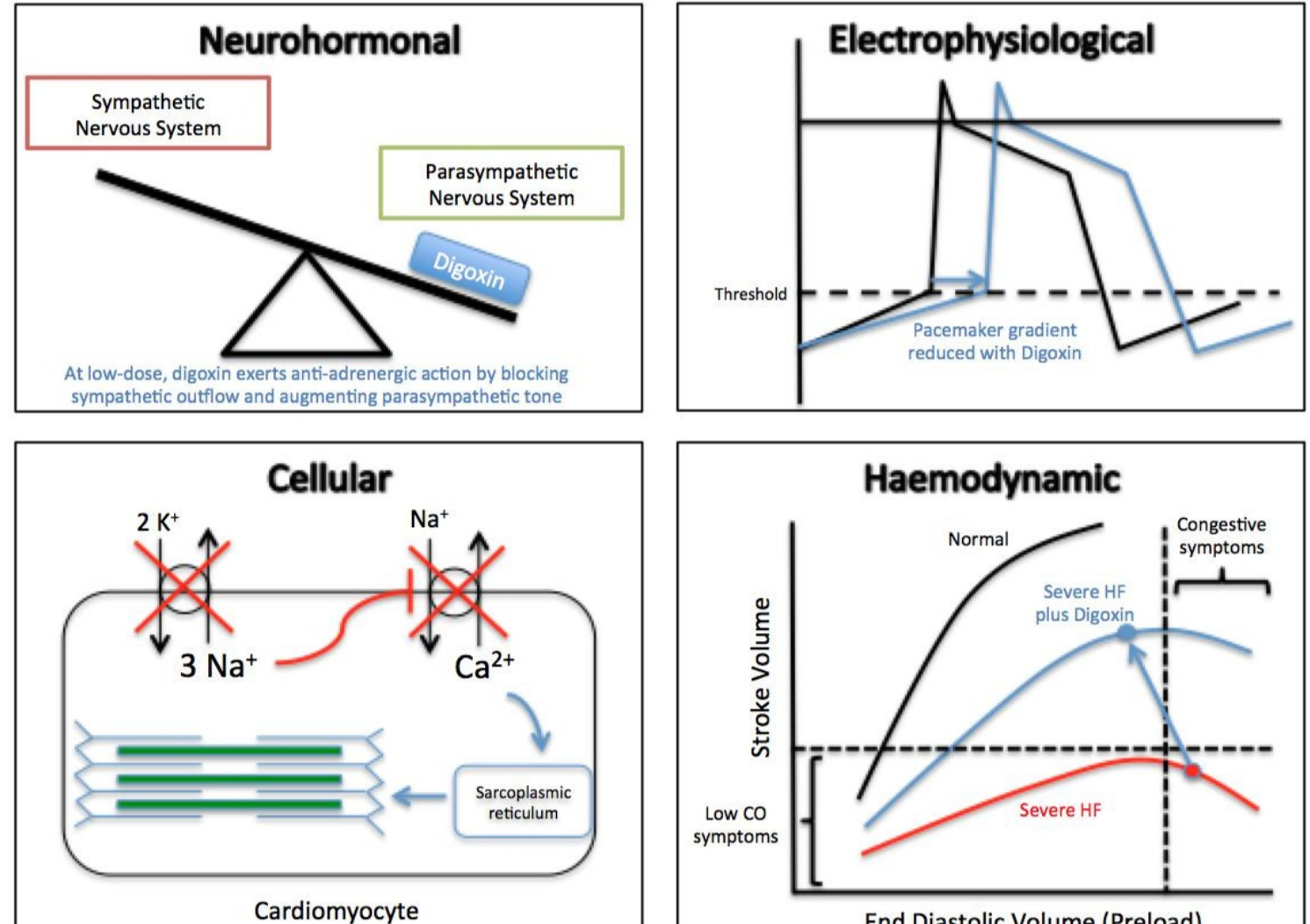
Mind you, Digoxin was working all alone in CHF in the past without the help of all-powerful loop diuretics which was discovered 200 years later, This adds more credit to Digoxin since it has a combined the action of diuretic, anti sympathetic and vagal modulating action, and AV nodal regulation. The only issue with Digoxin could be its safety profile, which if carefully taken care can be overcome. (Afterall, we are trained for this job ) One may call it a most comprehensive drug amongst others in cardiac failure.

Final message

Ignore the greatness of old drugs at your own peril. Foxglove blossoms again, after a gap of 30 years. Please don’t crush it this time! Let Willaim Withering smile from deep inside his resting place at Barthomlew Church along with millions of heart failure patients.

ESC 2020 Update

RATE-AF study reinforces value of Digoxin in AF rate control.

https://www.acc.org/latest-in-cardiology/clinical-trials/2020/08/28/15/59/rate-af

Reference

1.

2.History of William Withering

3.Ahmed A, Rich MW, Love TE, et al. Digoxin and reduction in mortality and hospitalization in heart failure: A comprehensive post hoc analysis of the DIG trial. Eur Heart J. 2006;27(2):178-186

Postamble

A funny business Idea

I guess Parke Davis those days had wholesome rights for Digoxin. May I suggest few tips for the industry how to capitalise this newly generated enthusiasm. Please ensure this drug sounds anything other than Digoxin which seems to have a stigma attached for the modern guys.

Try renaming this drug , a sodium-potassium ATPase blocker, as DiNaKatban and patent it as a unique weekly depot Injection with an attractive 499$ price tag. Another option is to add Digoxin ,Neprilysin and Frusemide, possibly an ARB ( Dinephrimab) and project it as polypill for HFrEF . Publish it in NEJM with a huge non Inferiority trial,break it in ESC or ACC .Consider selling it on all heart failure clinics with a special launch. I am sure, the same guys who ridiculed this drug for so long, will ask their patients to stand first in the queue. Call me, if this new generation Digoxin doesn’t vanish like hot cakes from these pharma malls.

Background STEMI knowledge check : Evidence-based Ignorance

I think , It is unfortunate, In the management of STEMI , the two popular strategies of myocardial reperfusion is made to fight with each other as if they are perennial enemies for over two decades. Suddenly, someone with a rare coronary insight thought, why fight each other , they can have a friendly hug and work together. That brought the concept of pharmco -Invasive approach or strategy(PIA) backed up by STREAM, FAST-MI, and TRANSFER AMI studies.Yes, it appears to work well and devoid of all the early adverse events of pPCI. (Much to the dismay of ardent fans of Primary PCI )

*May I add one more shocker of a fact . Deep subset data mining from the above trials did show very early lysis may even act as a perfect stand-alone therapy negating the need for acutely one pharmaco Invasive PCI altogether.(Which was never published) Don’t get alarmed the concept is nothing but , the good old lysis , followed by leisure & elective Ischemia guided PCI in all uncomplicated STEMI.
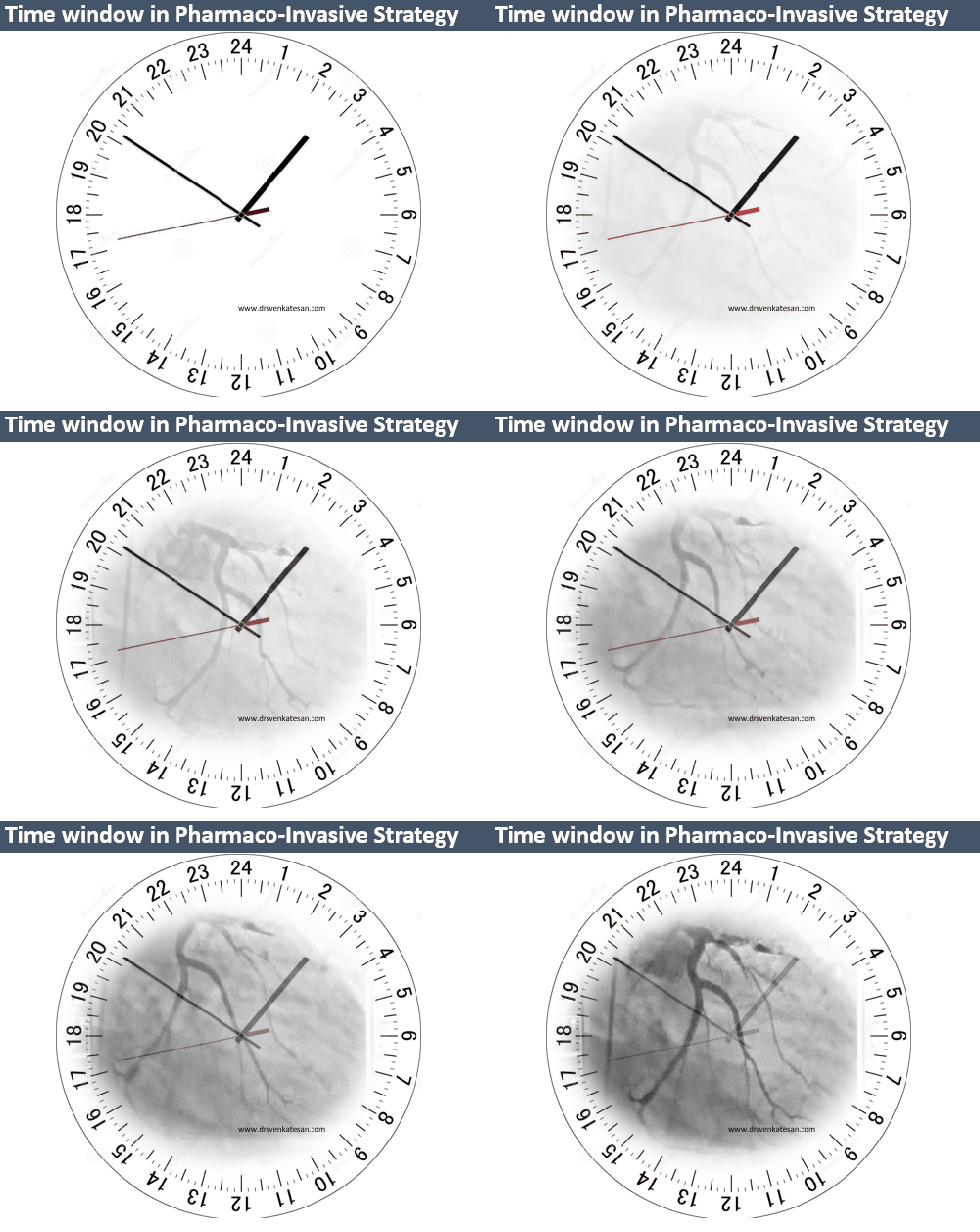
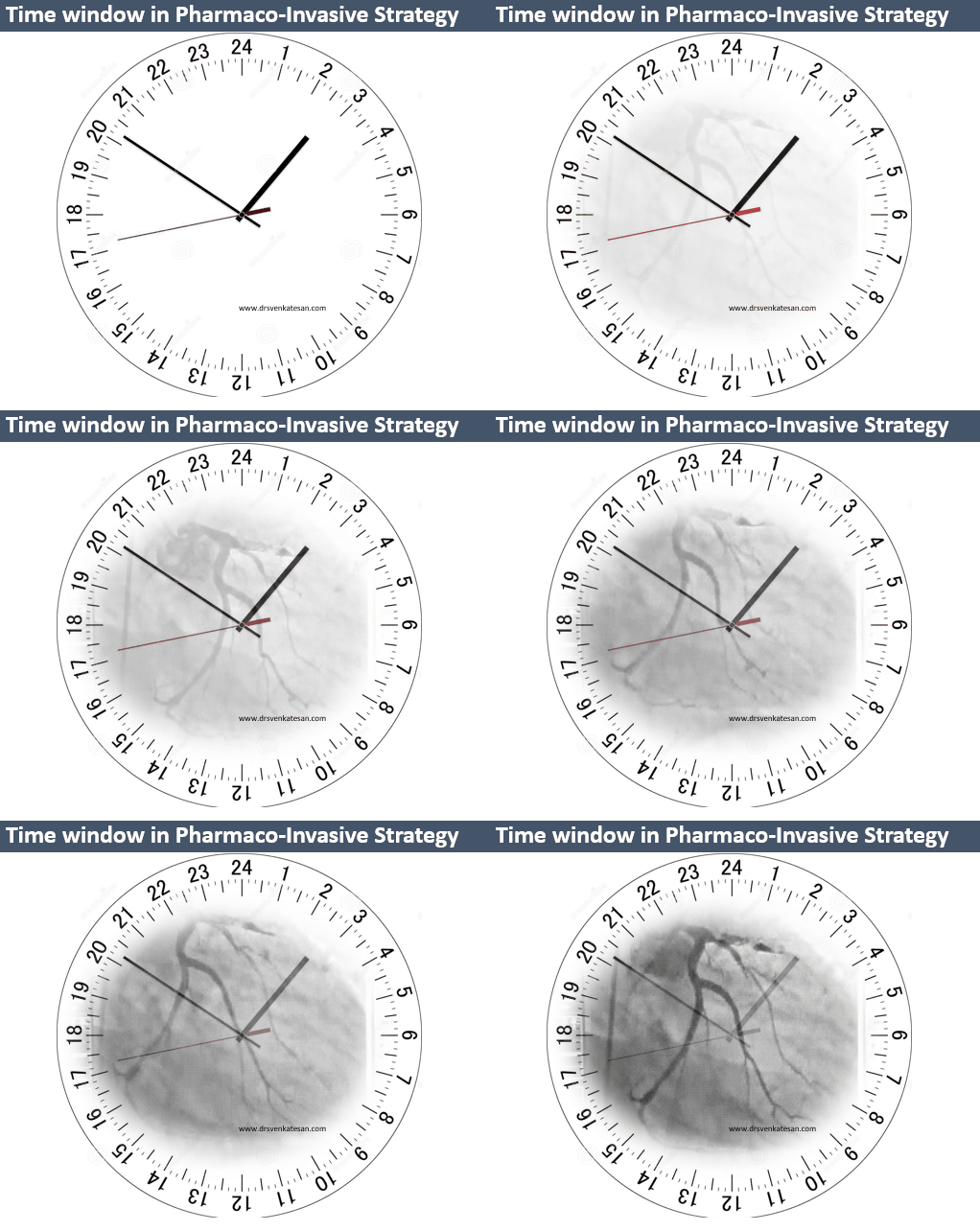
Now coming to the FAQ in Cardiology Boards: Why is the time window for PIA is 3 to 24 hrs ?

The simple answer for an uncomplicated fellow is “published studies have shown benefit only in this time window. If you do PCI early (,<3h) after lysis paradoxically both bleeding and pro-thrombotic complication over the stented lesions are more common. The upper limit is 24 hrs , since by that time we lose all the potential for myocardial salvage”

End-

Larger version of the answer

(Advanced readers who are willing to get confused, may read further)

1. Lysis and immediate PCI doesn’t go well at least in trial world. (FINESSE study, by Ellis et all NEJM 2008) Though cardiologists tend to blame lysis (effect of) to Interfere with their hand skills, it can very well be the opposite. The PCI undo the true benefit of lysis. For cardiologists to accrue maximum benefit in the early time window, they need to be too fast, in the process, they accelerate and fuse adverse events of both modalities.

2. The time window 3 to 24h could simply be evidence-based empiricism. In the major STREAM trial, invasive limb happened between 6 and 16 hours only. We stretched both in the top and bottom in the time clock and made it 3 to 24 hours with other trial data.

3. One realistic reason could be this. It requires a minimum of three hours for a patient to reach a place of coronary Invasion after lysis. So one may argue its time allowance for transport .It comes in handy at times.

4 .If the patient reaches earlier, we need to delay the PCI intentionally to please the evidence based medicine. Mind you, every minute delay increases the chance of no reflow as the microvasculature goes for edematous and porous death.

5. Please note, the time window for pharmaco Invasive strategy will go for a tail spin if the initial lysis is failed. Here, we have to rush I guess. Mind you, In this situation, the evidence based blaming that early PCI increases the adverse events immediately following lysis goes topsy turvy . This is where , we should recall old studies of routine rescue PCI (without clinical criteria) rarely succeeded to correct failed thrombolysis (SWIFT trial)

6.Now, why not PCI after 24hrs? The game can be played reversed if you document ongoing Ischemia in IRA or Non IRA, one may do it . The problem arises when the flawed thought process of a cardiologist could legally justify all PCI beyond 24 h /class 3 Indication after STEMI.The argument goes like this. I think this patient has residual silent Ischemia in- spite of severe LV dysfunction (Suspicion is the justification, to which ,unfortunately no one can dispute) It only suggests open artery hypothesis is still trying to raise from the graveyard more than a decade after its near burial.

Final message

To all those energetic, evidence-based cardiac physicians, we all know coronary care is all about time. In fact, we need to be blessed much more than a sense of time. There is something called medically( or spontaneously )stabilized ACS.  Please realise , “timely and safe intervention” for your patients could simply mean either playing the time button slow/ fast / slow or fast forward / pause or simply shutdown the cath lab, reach home early and enjoy some music or movie in your favorite streaming player.

Reference
1.Ellis SG, Tendera M, De Belder MA, FINESSE Investigators Facilitated PCI in patients with ST-elevation myocardial infarction. N Engl J Med. 2008;358(21):2205–2217. [PubMed]

2. Armstrong PW, Gershlick AH, Goldstein STREAM Investigative Team Fibrinolysis or primary PCI in ST-segment elevation myocardial infarction. N Engl J Med. 2013;368(15):1379–1387. [PubMed]

3. Danchin N, Puymirat E, Steg PG, T, on behalf of the FAST-MI 2005 investigators Five-year survival in patients with ST-segment-elevation myocardial infarction according to modalities of reperfusion therapy: the French Registry on Acute ST-Elevation and Non-ST-Elevation Myocardial Infarction (FAST-MI) 2005 Circulation. 2014;129(16):1629–1636. [PubMed]

4. Cantor WJ, Fitchett D, Borgundvaag B, TRANSFER-AMI Trial Investigators Routine early angioplasty after fibrinolysis for acute myocardial infarction. N Engl J Med. 2009;360(26):2705–2718.. [PubMed]
5.. Bonnefoy E, Steg PG, Boutitie F, , CAPTIM Investigators Comparison of primary angioplasty and pre-hospital fibrinolysis in acute myocardial infarction (CAPTIM) trial: a 5-year follow-up. Eur Heart J. 2009;30(13):1598–1606. . [PubMed]

The mechanism of MR in ischemic /Functional is complex. Technically, pure ischemic MR should have a structurally normal leaflet and the subvalvular mechanism dominates But,the combination of the two is also prevalent. In fact, a degenerative component is added to this in many elderly patients.

Mechanism of Ischemic mitral regurgitation

Any of the following may contribute either alone or in in different combinations.

  • Global LV dilatation with or without annular dilatation
  • Spherical left ventricle
  • Altered inter papillary muscle distance (Degree and direction of  posterior vs apical displacement of pap muscle)
  • Chordal shortening /Lengthening/Abnormal tethering
  • Leaflet tenting distance and volume
  • Basal LV dysfunction and Local LV (Sub-mitral) remodeling

We have come a long way ,  since the days of  Carpentier and Duran who did pioneering work .It involved partial or complete mitral annular stabilization with surgical ring technology that  helped us to change the shape of the annulus. Advanced imaging, with 3 D printing will enable us to procure perfectly matched designer valve rings and (may be leaflets also) in the near future. Percutaneous mitral valve Interventions, with clips , valve, are going to dominate the mitral valve therapeutics.

Still, we are largely ignorant about Individual contribution from various components in the genesis of  ischemic /functional MR. This becomes important because the preservation of native valve is better on any day than replacing.  One thing is very clear, even though left ventricle forms part of mitral valve apparatus, the degree of LV dysfunction has no linear correlation with the severity of MR . Its a well-known fact, even severe LV dysfunction (Say < 25 % )may enjoy the company of a perfectly competent mitral valve. It’s interesting to note uniform global LV dysfunction cause more of central MR , while dispropotinate basalLV dysfunction especially the posteroinferior pap muscle cause eccentric jet. One more curiosity is mitral regurgitation improving with worsening disease as contractile force weakens.(Functional MR depends on LV function you know !)

We have witnessed at least two patients who had a significant MR following an inferior posterior MI which was managed medically, showed dramatic regression in the degree of MR  when he had anterior MI later*.The pleasant irony was apparently due balanced dysfunction of anterolateral pap muscle that happened in countering the original postero-medial pap muscle dysfunction.(*Allowing second MI to happen is of course a treatment failure !)

Image source -Christos G. Mihos  Journal of Thoracic disease Vol 8, No 1 (January 2016)

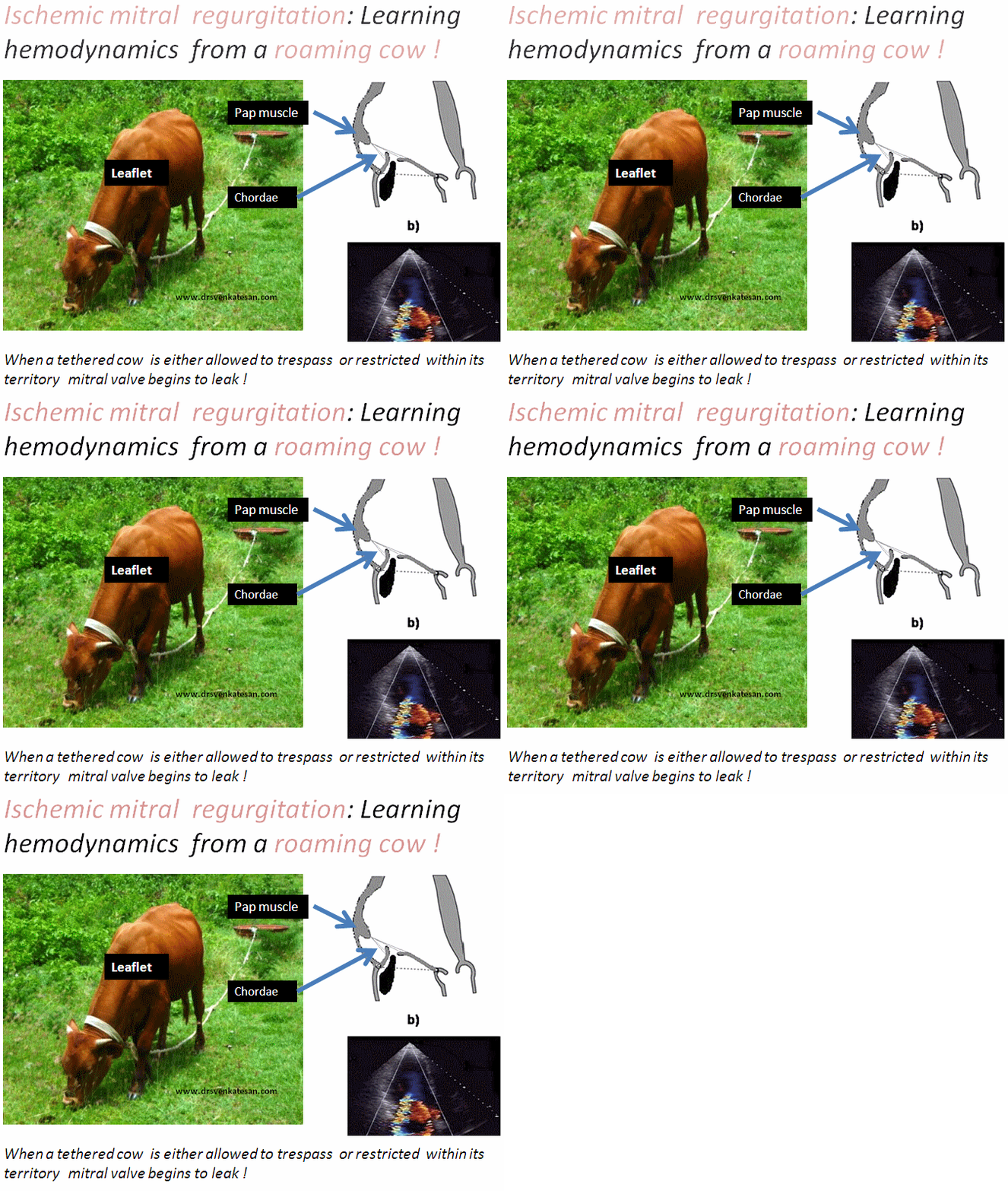
Mitral valve is essentially avascular structure, Still, ischemia affects this valve not by valve necrosis but by other sub valvular mechanisms .Note the MR here is due to poor motion of PML due to ischemic LV dysfunction.


Ischemic MR in early hours following STEMI (also NSTEMI) is still a nightmare. We realized in a harsh way, it’s rarely corrected fully even with a successful IRA plasty. (Especially LCX and posteromedial pap muscle that is in extreme distress) In fact , many of the mechanical complications that lead to flash pulmonary edema would need emergency CABG rather than primary PCI. (What to do for Ischemic MR ? An excellent review article( Elsayed Elmistekawy Curr Opin Cardiol 2013, 28:661–665) 

Mitral valve, though looks like an obedient, innocuous structure that  silently does its job , only in special times, it makes us realize, its the most critical part in the entire heart.(Guarding the lung against flooding when the left ventricle experiences turbulent ischemic times during ACS.) Note -Acute MR often kills , not the ACS as such.ischemic mitral regurgitation functional carpentier drsvenkatesan venkatesan madras medcial college 002The  mechanism of MR in various pathologies is comparable to the behavior of a cow grazing in an arc tethered to a poll. Normally its expected to follow a set pattern. If it behaves wayward, one may need to tighten the rope(Chordae), or loosen it, strengthen or move the poll(Pap muscle) . . . still more options like whipping (clipping ) the cow(Leaflet) may be tried. Of course ,ultimately one may need to replace the cow (MVR). EP guys do  have an electrical solution to tame this cow , called CRT to regress Ischemic MR .


Reference

1.Yiu S.F.,Enriquez-Sarano M.,Tribouilloy C.,Seward J.B.,Tajik A.J.Determinants of the degree of functional mitral regurgitation in patients with systolic left ventricular dysfunction: a quantitative clinical study. Circulation 2000;102:14001406

2.Mitral valve repair over five decades  Ann Cardiothorac Surg. 2015 Jul; 4(4): 322–334 

GettyImages-865142952-5b5eef884cedfd0050112fa6

Charles river esplanade ,Boston* : A healthy middle-aged man who was jogging quietly, while his heart was under intense scrutiny by the bionic eyes of Apple i-watch’s smart patch electrode. Suddenly, it detected some bizarre ST segment fragmentation (Seems it can predict in advance , Ischemic signals 10 minutes prior to onset of ACS ) The built-in cosmos direct GPS instantly alerted & summoned a titanium powered Space X drone that pulled the patient from the riverside to the nearest human wellness port .

EHANG 184

It dropped him through a remotely accessed split glass roof right inside the hybrid heart lab, to find , men and women chatting with flattish Artificial intelligence panels who readily allowed the robotic arms to hug the patient which engaged the coronary artery pushing radiation free magnetic gas found nothing inside and what would become a perfectly normal human coronary artery .

An amused resident robot gently plucked the patient from the cath table with sheepish laughter and called for another drone to drop the patient exactly in the same place from where he was picked up.The healthy hearted patient thanked the doctors profusely and continued his routine evening jog across the Charles of course with a 16-minute delay!

Next day . . .

Event auditing firm medi-logic mind congratulated the entire cardiac team and its digital health hub for the quality of the network and completing this daring coronary rescue mission in 16 minutes. While the drone to hospital roof time was 3 minutes, the coronary artery visualisation time was perfect.The auditing team had a special mention about the astonishing capability of Apple time watch algorithm that made sure that the patient’s evening routine was unaffected in spite of this life-threatening non cardiac pseudo-emergency. The crowning glory was, the entire expenses amounting to 250000 dollors (after a special money back discount coupon for the first false alarm) were taken care by the patient’s virtual insurance blockchain payment gateway.

*You have just read the news that wasn’t – January 2030 AD

Now, back to reality,

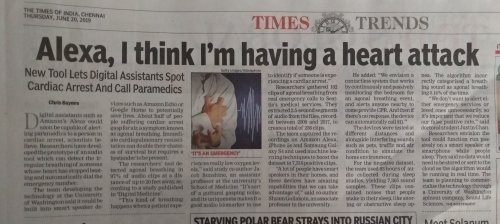
Stumbled on this news clip from pages of Times of India, (20-6-2019) months after I wrote the above piece. I wondered the chase between fact and fiction is becoming  really a close race.