Feeds:
Posts
Comments

Implantable cardiovertor defibrillator(ICD)  is one of the major revolution in cardiology practice  that happened last century. We know , the number one killer of mankind is the ventricular fibrillation induced by acute or chronic CAD.

In the  later half of 20th century we  learnt  that , the only way to prevent a sudden cardiac death is the defibrillating   the  heart as soon as the deadly killer arrhythmia strikes !

Whenever cardiac arrest happens  in  a susceptible population , following  things are possible.

  • Call 911 /108  start CPR .
  • Have  Automatic external defibrillator AED at home
  • ICD implantation -Percutaneous trans-venous approach

And now new mode of defibrillation

Transvenous implantation  becomes  technically complex in many  .Abandoning the procedure  or using subcutaneous pads are necessary in few . Then , this question was asked

Why not the entire ICD implantation be in  subcutaneous plane ?

Yes , it is possible . After all , current can reach the  place where  it is needed ,  irrespective of the site it is delivered. The aim of this technique is to  simplify the ICD implantation  , so that it can be practiced in a wider clinical set up Preliminary  results  of subcutaneous ICD are available and was published  recently in NEJM.

The issues that need to be tackled are

  • Amount of energy required
  • Battery life

http://www.cameronhealth.com/product-info.htm

Coronary artery disease  can be termed  as   “New age plague” afflicting the mankind  !  It  probably has killed ( or Killing ) as  many lives  as   most other diseases  put together.  Why  only a section of  our  population is vulnerable is  not fully  understood .

We are familiar with coronary risk factors for too long  . . . still  . . .

We do not understand why 50% CAD occur in people who have no known coronary risk factor !

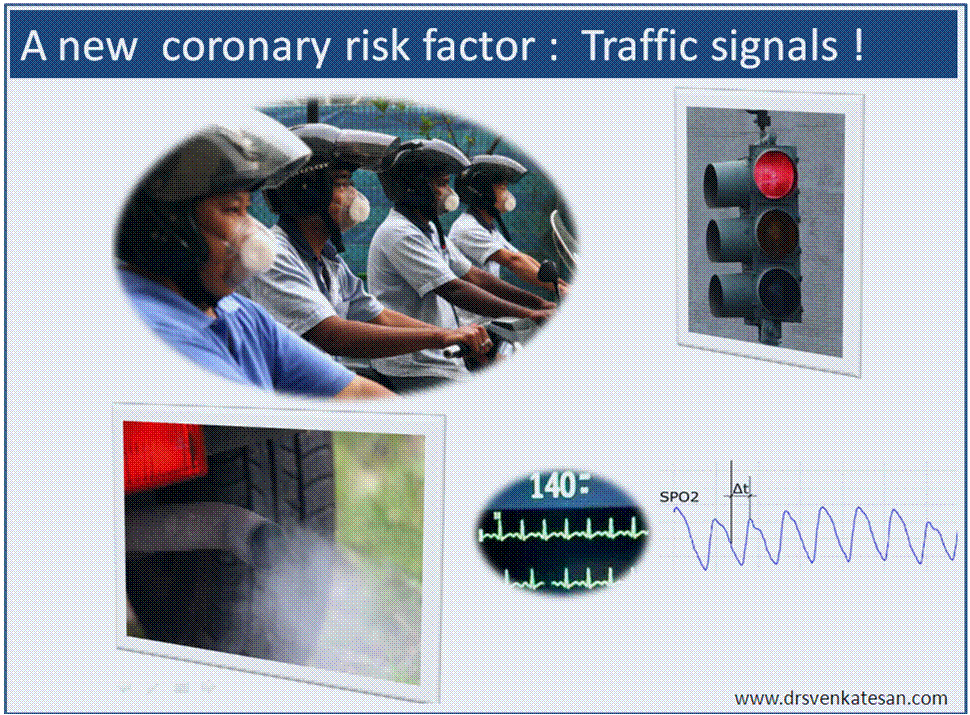
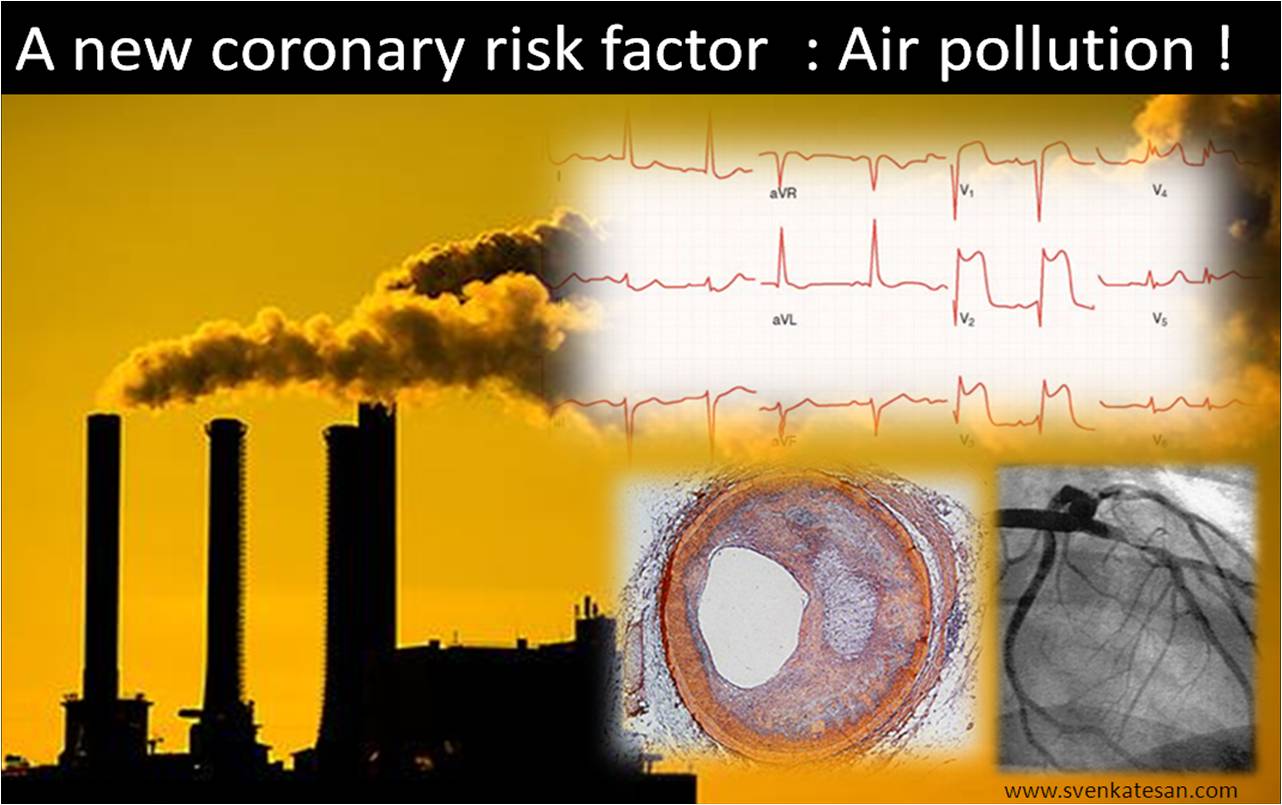
There has been propositions and dispositions  of various risk factors .  The latest one is  the  Air pollution. This is quiet interesting,  as air is the staple food of human survival . We  eat , drink ,  (Rather inhale )  about 500 ml /of  air every   3  to 4 seconds  for 24 hours a day for 365 days  , for our life time !

Does the air we breath reach the  largest cardiovascular  organ namely the vascular endothelium ?

Yes definitely  ,  not only it  reaches   the endothelium but also injures it  (When it contains gases other than oxygen  )  .While tobacco  is a well established  endothelium  destroyer , it is no surprise   community smoking ( Air pollution !)  will do the same job  with perfection .

What are the proposed toxins in the air pollution that harm the endothelium ?

It is a mixed  masala gas out there  over  our   polluted cities ! .(Atmosphere,  Industrial, Automative ,Domestic, Human , and other invisible  sources ) We need to analyse further to answer this question authentically .

Though , common sense  is  enough   to establish the  link between air pollution and CAD. We have  lots of evidence coming up  . . .

Reference

http://ajrccm.atsjournals.org/cgi/reprint/173/4/432?maxtoshow=&hits=10&RESULTFORMAT=&titleabstract=coronary&searchid=1&FIRSTINDEX=0&resourcetype=HWCIT

Further research

We will be shortly reporting our experience with endothelial  function assessment  in traffic police population of our city Chennai  ,India .

Thrombolysis is specifically indicated when there is  ST elevation in ECG. ST elevation is a surrogate marker for  total coronary occlusion. It occurs due to current of injury flowing   towards* the lead  facing the  infarct territory . There is only one situation where you can safely and effectively administer thrombolysis in the presence of ST depression ie

Note : There is no accepted terminology  to label a MI as  ST depression MI . Here it is used to emphasise ST elevation is not the only indication for thrombolysis .In posterior MI there is infact ST elevation but it is failed to pick up by standard 12 lead ECG.

NSTEMI is a different entity altogether and  thromolysis is never indicated.

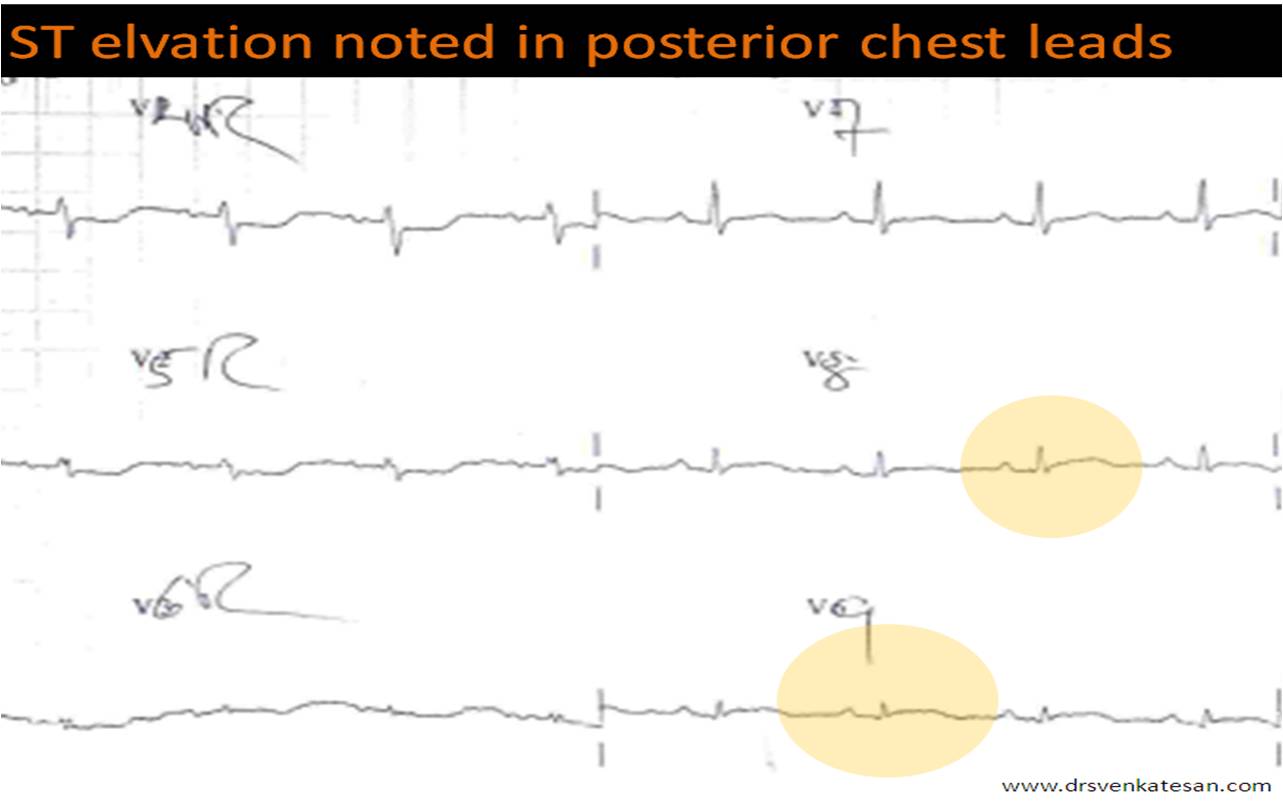
Isolated ST depression in V1 V2 V3 .It almost always indicate isolated posterior STEMI. This can be confirmed by posterior chest ECG leads V7-V10 .

*One will be surprised, to know  the mechanism of ST elevation in STEMI is still not fully elucidated .Technically speaking the net movement of current is away from electrode as  there is only a baseline  diastolic shift  which  gets neutralised in systole  mimicking an ST elevation .(Electro-optical illusion !)

How sensitive is these leads to detect isolated posterior STEMI  ?

Fairly sensitive. Both scapula and  para spinal muscles can be a  significant electrical  barrier that can prevent ST elevation from inscribed .In case of doubtful ST elevation in posterior leads , mit is always better to rely on the clinical presentation.Acute chest pain , consistent with ACS and a new onset ST depression >2mm V1 to v3 is a definite indication for thrombolysis .

Link between posterior MI and RV MI ?

They are closely linked entities .In fact posterior surface of heart is contributed significantly by RV.

What is the angiographic correlation of  isolated ST depression in V1 to V3 ?

It almost always localise the lesion to left circumflex artery . If it is dominant , it can involve lateral and RV territories.

Is isolated posterior MI  less dangerous ?

May be yes , but only after the patient reaches the hospital as electrical risk is same in every STEMI .

The area of infarct  is less , LV failure is less common. While conduction disorders and ischemic mitral regurgitation   can occur  significantly.

Also read ,  Why thrombolysis is contraindicated in UA/NSTEMI ? in this blog

Mitral valve can be termed as  the most important valve of heart . The reason  for this  : It is the only valve that is dependent on the  Left ventricular function (The  parameter  which   determines the  ultimate outcome in any form CAD ! )

So , indirectly mitral valve function will invariably be affected by some degree  at least in  most  patients with LV dysfunction. (After all LV free wall , is a component of mitral valve apparatus.)

While , we have numerous modalities to assess mitral valve function  ,  the one that has fascinated the surgeons during  mitral  valve surgery is the intra operative TEE.

Many believe TEE provides live  images  of mitral valve   which are not possible  even under  direct vision ! The eye of the  TEE sees the mitral valve  from a  posterior location , (of -course It can see at any angle !)   while surgeon can see in one angle . The  types of repair , the adequacy  of repair, the annulus status,  even a trial mitral run ,  can be done with the help of TEE.

The TEE probe silently does  this job sitting inside the esophagus   , without  obstructing the surgeon’s operative field .

The success of TEE as an investigative tool did not come easy.Decades of  observation , innovation and learning( Especially from  department of cardiac science  Mayo clinic USA , where they standardized the views. )  are involved .

Now we have omni plane, real time 3D TEE probes .

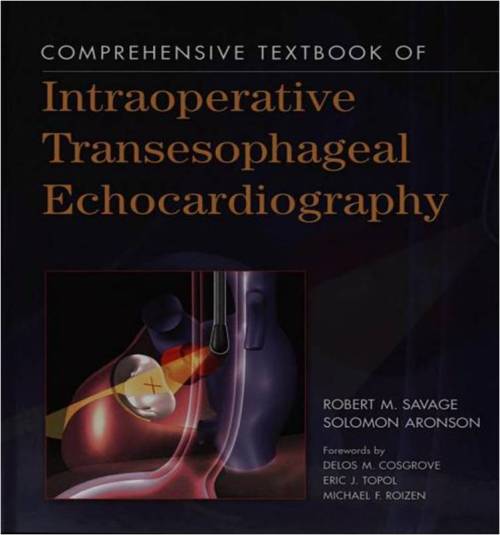
The books  which are  considered the best for  TEE aspects of mitral valve  and it’s  repair are

Cardiac myxomas are rare tumors. But they present in a dramatic way. It can have  severe  systemic symptoms and present even as  fever of unknown origin ! While , physicians  of  previous era were struggling to make a ante-mortem diagnosis we are blessed  to make a instant  diagnosis with echocardiography !

Want answers  for all these  from the original researchers ?

  • What is the pathology  myxoma ?
  • What  are the  classical Locations ?
  • Difference between Sessile Vs pedunculated
  • Soft vs Hard
  • Benign vs malignant / Locally invasive
  • Recurrent myxomas
  • Vascularity  of myxoma
  • Calcification (RA myxoma> La Myxoma)
  • Non atrial  myxomas(Valvular  papillary myxoma)
  • The  Cell of origin (Stellate , polyhydral )

You  will not get a better reference than the following article , including extensive illustrations . An 1980 article from  Mayo clinic published in American journal of pathology

http://www.ncbi.nlm.nih.gov/pmc/articles/PMC1903582/pdf/amjpathol00223-0227.pdf

LA myxoma  : A Video

A case reported from my hospital Hosted as Video presentation  Follow the link

http://www.youtube.com/watch?v=SD2LrK1mdic&feature=related

Belgium SOAP  wants a  knock out punch to  Dopamine in shock !

Vaso constrictors are  the mainstay  drugs  in the management of shock  syndrome. While ,the ultimate outcome depends on the primary  cause for shock, these vaso- constrictors  have  a critical role in sustaining life , till the organ function is recovered.

The physicians world  over,  differ  in their choice of  vasoconstrictor support .They  are almost divided   equally in their usage between  dopamine and norepinephrine  .

Surprisingly,  there  has been no one to one comparison trial till  this study   in 2010 .This trial  is called SOAP 2 published from  Brussels , BELGIUM .It  compared the usage of these two drugs in variety of shock  syndromes. It favors norepinephrine use ,  that includes  cardiogenic shock as well.

The disadvantages of dopamine noted in this trial was

  • Increased  risk of arrhythmias
  • Increased rate of death  in cardiogenic shock

The implication of this trial may force the ACC/AHA guidelines , which  advices  dopamine as the first choice in shock syndromes especially in cardiogenic cause.

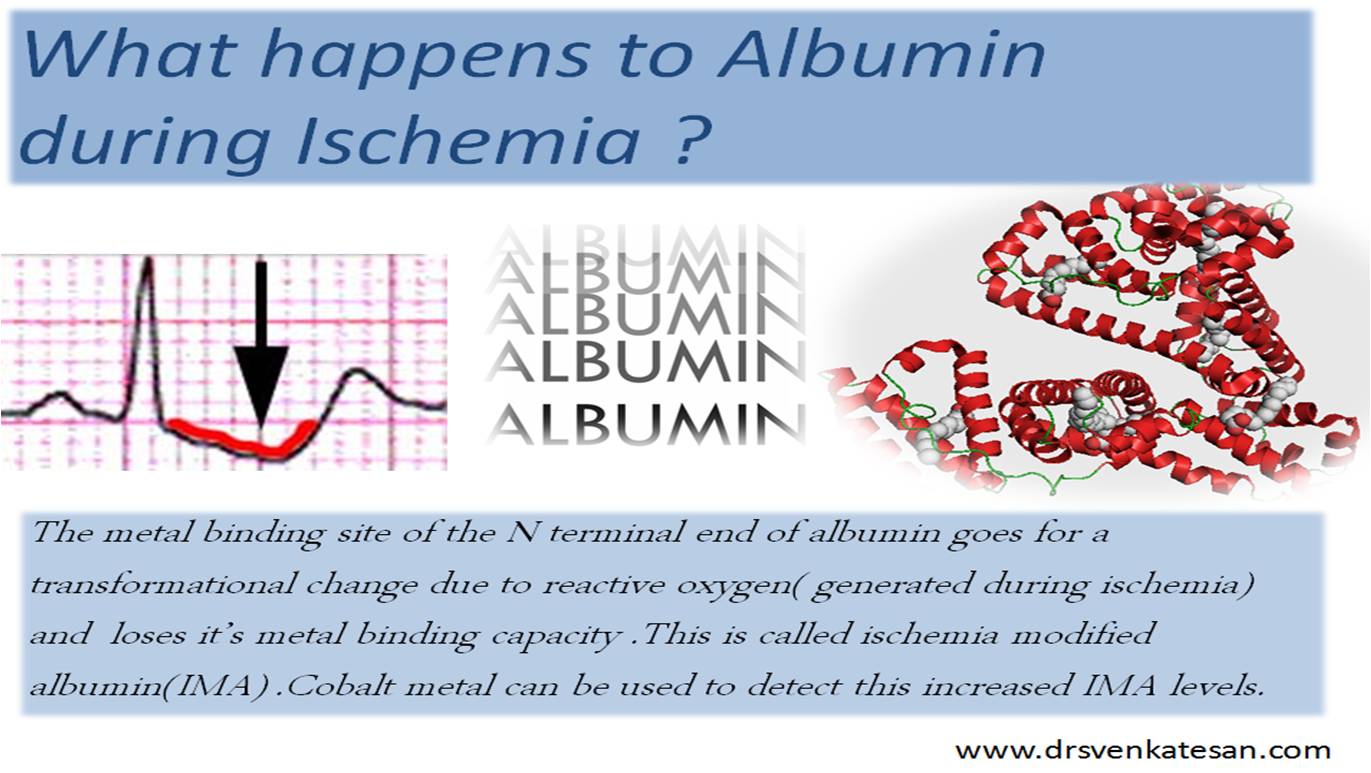
In the diagnosis of ACS, we have definite bio  markers for acute MI . Further, ECG  has a good  spcecificity  for STEMI . While ,clinical and ECG features of ischemia are not perfect. A bio marker for ischemia is the ultimate dream of cardiologists  and  emergency room physicians. . In this context , the IMA -ischemia modifed albumin  has come  with   great expectation .

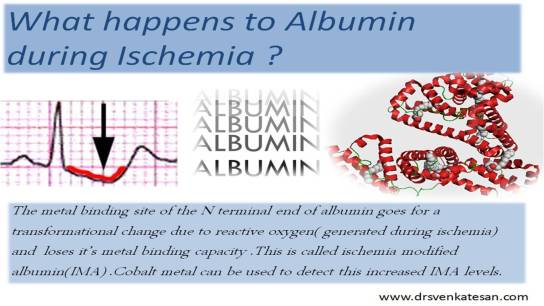
Ischemia modifies what ?

Normal albumin moleule has  a metal binding site (Copper ) .There are few free binding sites available .During ischemia this metal binding capacity  reduces .  A cobalt containing  reagent when added to ischemic blood  finds binding sites scarce , and hence  excess free  cobalt  will color the sample  and a  posiitve test for  ischemia is diagnosed.

*Normal human albumin  may contain  2%  of ischmia modifed albumin which is expected to increase up to 6% during ischemia

IMA raises not only during ischemia it can also  raise during oxidative stress

  1. Stroke, 
  2. Chronic kidney disease 
  3. liver disease,
  4. Maligancy

It can also  be elevated following

  • Routine coronary angiogram
  • PCI
  • DC shock

Increased lactic acid for example in sepsis may reduce the IMA level and can miss an episode of true ischemia

Final message

IMA can be a useful tool to identify  ischemia early .But lacks senstiivty . New improved immunoassays may be more sensitive and specific

Reference

1 .Medscape review  

2. Circulation article

3. PRIMA study which  was done in ER in risk stratifying ACS proved IMA is not vey useful  http://emj.bmj.com/content/23/10/764.abstract

A drug with a peculiar mode of action is recently making waves across the globe (At least some parts of it !) Basically , when the world was looking for an  anti anginal drug without much hemodynamic effects Trimetazidine fitted this slot .While it’s popularity soared  in Europe and Japan , the Americans thought there was a  need for a similar drug but supposedly  different mechanism of action . Thus  Ranalozine was born.It is a piperazine derivative.

How does Ranalozine act ?

There are three important actions for Ranlozine  (  4th one a real surprise !)

  • Antianginal
  • Anti arrhythmic
  • Possible lusiotropic effect
  • Anti diabetic*

*It is  surprising to note Ranalozine was  reducing Hb A1 c . This is incidental or a simple statistical fairy tale we do not know !

Anti anginal

  • It acts on the late Na ion channel  in phase  2 of action potenial .
  • This facilitates  excess Ca  to be removed from the cells by the NA/Ca exchanger
  • Calcium exit improves  ischemic  myocyte’s   metabolic performance as  cell injury is prevented .

This makes this drug an effective anti anginal.

The MERLIN TIMI 36 in NSTEMI  population became a  big dampener against the enthusiasm for this drug.But it did not affect much the sale of the drug !

Antiarrhythmic

A drug , which acts on phase  2  Na channel , it is not at all a  surprise to have anti  arrhythmic properties .

It can reduce phase 2 reentry like EADS

pro-arrhythmic action

Paradoxically  by blocking Na channels it stretches  the phase 2 and hence  QT interval is prolonged

Lusiotropic action

By preventing  the calcium from accumulating  from the cytosol it has a  theoretical ! lusiotropic action.

It is funny , even  theoretical action  is  enough ,  for  many drugs  to enter  the standard cardiology literature !

What is major advantage of  Ranalozine  over other drugs ?

It virtually has no hemodyanmic effects .

Unlike other anti-arrhythmic drugs it acts , only  if the late Na channels are abnormally active .

(Which is a case during episodes of ischemia .)  This prevents  QT interval to prolong in normal persons

In spite of all these meaningful actions and less side effects , FDA approval why cardiologists in the back of the  mind think this drug is not  based on strong scientific principles , and it could  simply  represent  an industry sponsored  placebo ?

I do not know the  answer  to this question ,  but I do share the same feeling.

Will it succeed the test of time ?

In this context , I recall a famous statement   by my professor “A drug , which has least side effects , is very unlikely to have any desired effect also”

But  with  world  ,  taking a commercial avatar  a success of a  drug  lies ,  not in  having a desired action but in  how many million packs are ultimately   sold  in the market. It is akin to a bad movie succeeding  phenomenally  in box office while  a good one lying silently   unnoticed
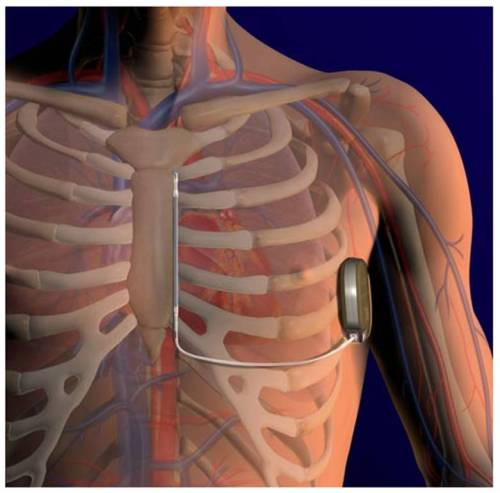
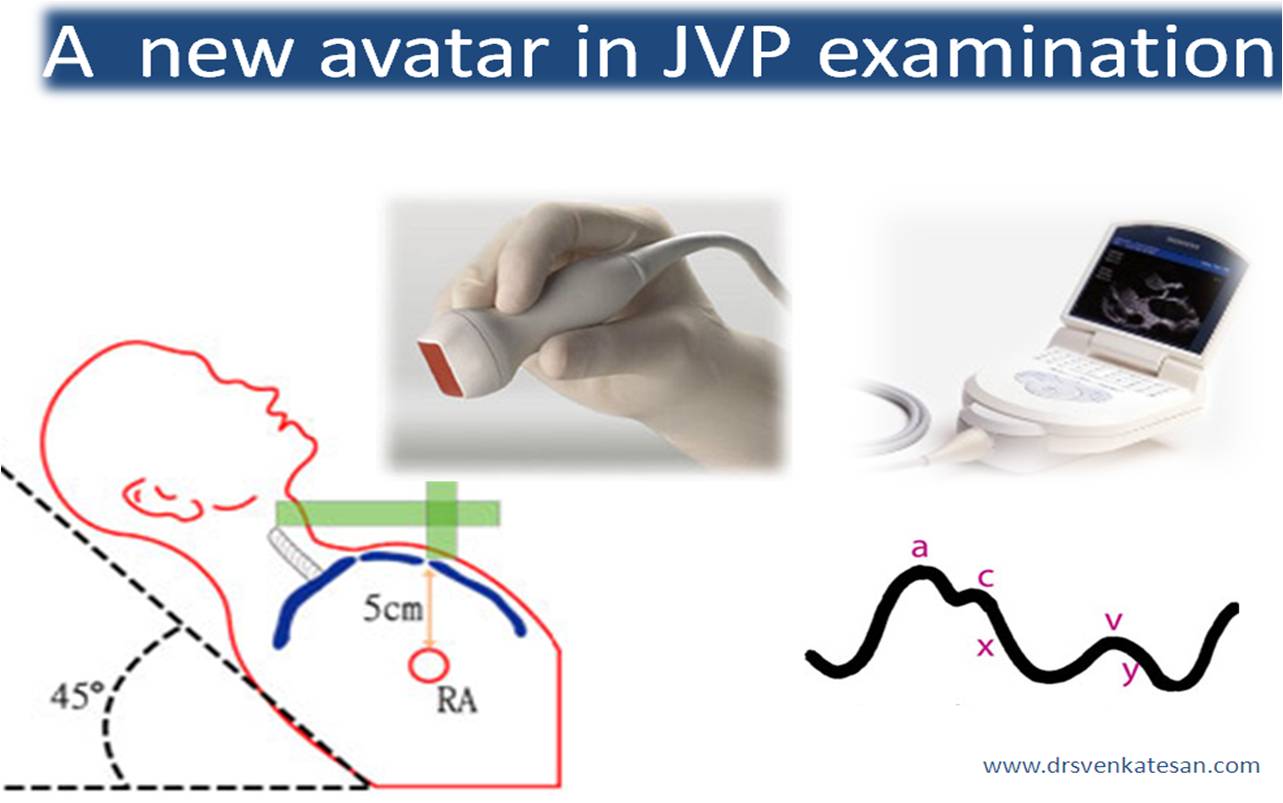
Looking at the neck veins for hours  together  has been a favorite pastime of our cardiology ancestors.Thanks to those sharp intellect , that has led us to this height of cardiovascular revolution. Measuring JV pressure by itself was considered a big science. Putting a patient in 45 degrees , marking the sternal angle, identify the  oscillating venous column,  measuring   the vertical distance  etc . . .

Now in 2010 , with bedside hand-held echo one can rapidly  rule out an elevated  central venous pressure by imaging the jugular vein directly . Here is an article from American heart  journal

http://www.ncbi.nlm.nih.gov/pubmed/20211304

Simon MA, Kliner DE, Girod JP, et al. Detection of elevated right atrial pressure
using a simple bedside ultrasound measure. Am Heart J 2010; 159:421–427.

Soon , your mobile will double up as ultra-portable  echocardiogram

Read this related article in this blog .

Coronary care in your pocket

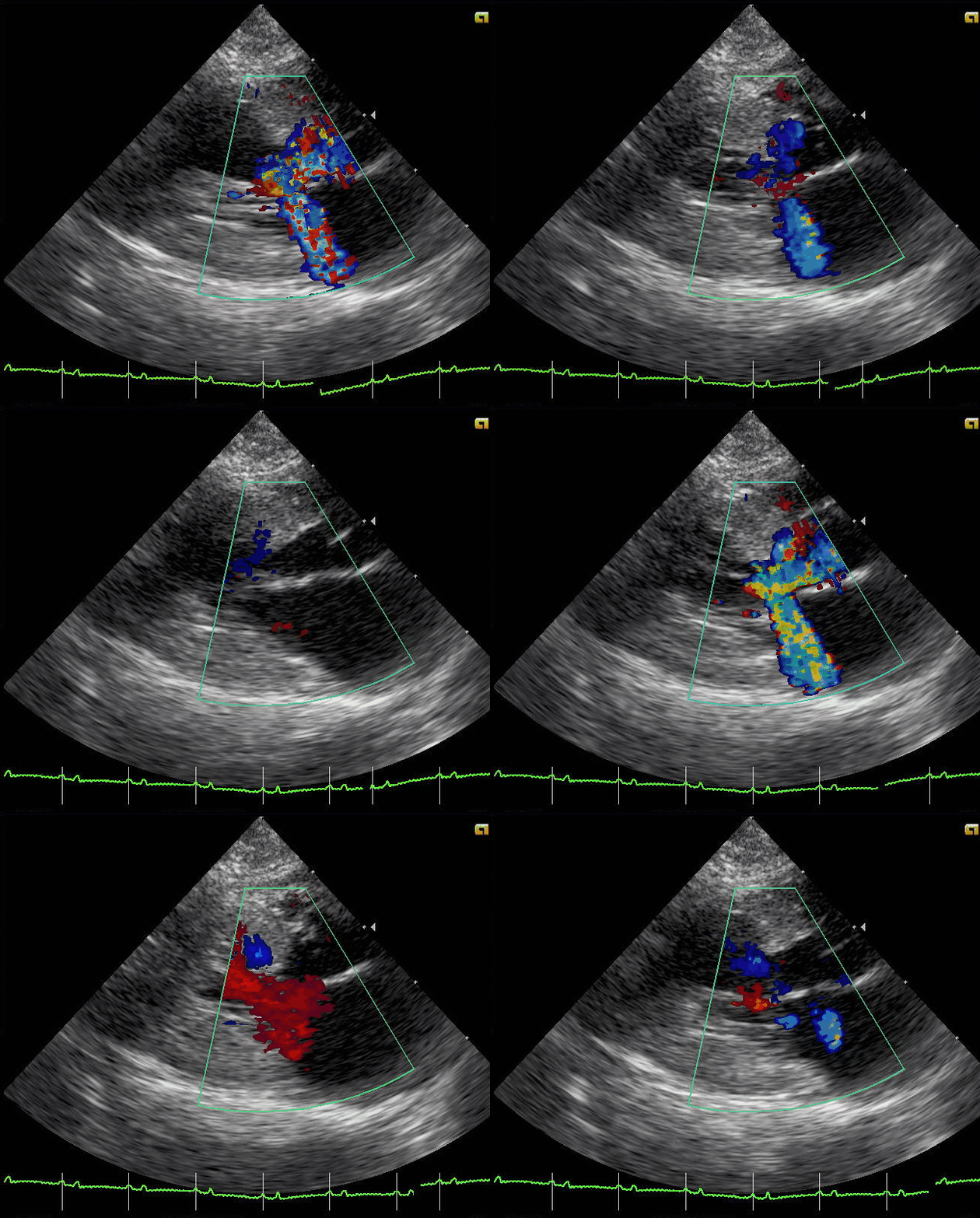
Hypertrophic cardiomyopathy (HCM) manifests   with or without obstruction. Obstructive HCM ,  (ie HOCM)  is more often symptomatic .However , the risk of arrhythmias, sudden death, and some degree of diastolic dysfunction are common in both.

ECG, clinical examination are generally  not sensitive to identify obstruction in HCM  .Echocardiogram is the easiest  way to identify  the obstruction (gradients> 3o mmhg across LVOT are considered significant ).LV angiogram ,MRI, CT scans are rarely necessary today.

However , the following clinical clues will help us  to suspect significant obstruction in HCM

History

  • Class  2 or  3 dyspnea.
  • Exertional syncope
  • Exertional angina

Pulse

  • Pulsus bisferiens (Two peaks in systole )

LV apex

  • Sustained , double apical impulse  often indicate obstruction.
  • Presence of Mitral regurgitation ( 20% can have  MR without obstruction due to intrinsic abnormalities of  mitral valve )

* It should  be realised , valsalva induced MR /LVOTO  may occur in many of the non obstructive HCM.

What happens to  clinical signs of obstruction with medical therapy(Beta blockers etc)

One would expect these signs to regress or disappear, but it rarely happens. The pulse , the  murmur show  little change .  This implies , the main mechanism of beneficial effect could be in  heart rate  reduction , and  improvement in the   diastolic properties of left ventricle.