Feeds:
Posts
Comments

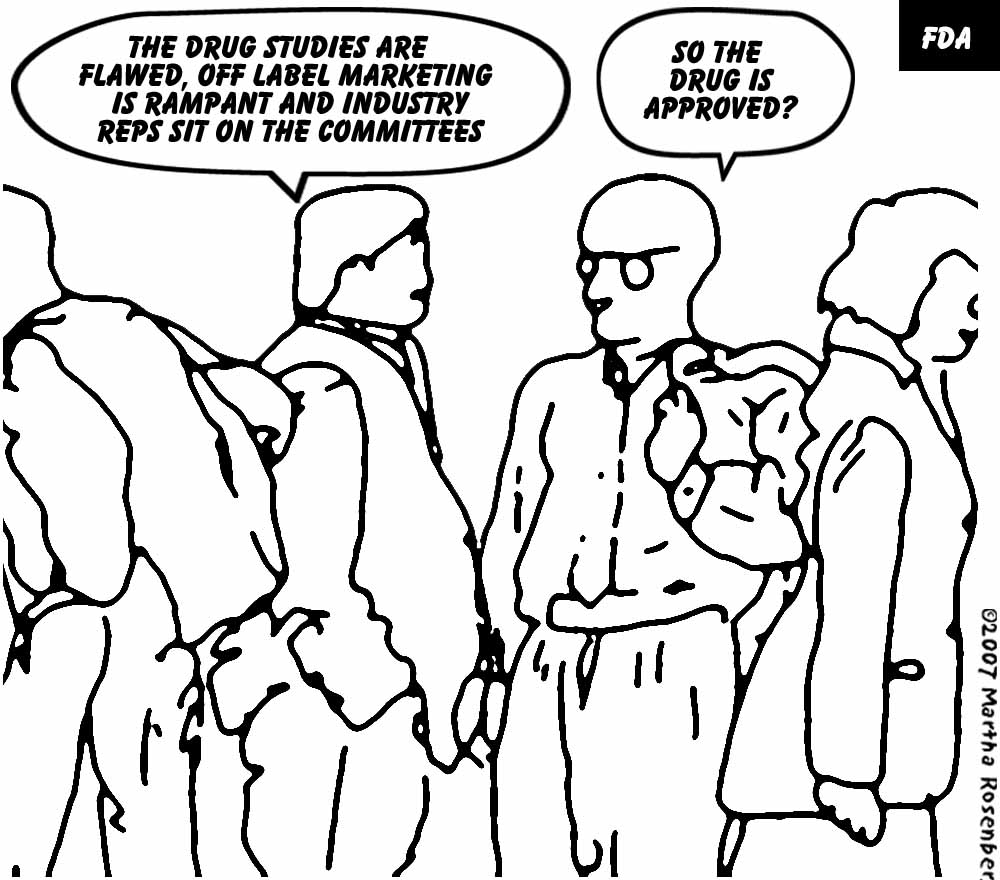
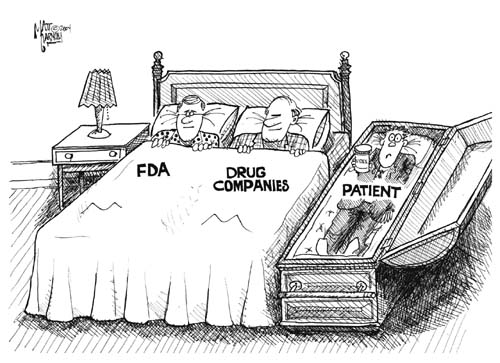
The world of  medical science is  moving in a alarming speed.In any field , speed is always dangerous ! That’s why we have speed breakers , traffic police , speed cameras , etc etc . The medical world  is flooded with new devices, drugs , procedures . Though the mankind is benefited with many of them , a equal number could do the opposite.

How to identify which is causing benefit and which doing harm ?

It is a horrible fact , this is the most difficult exercise  for the  medical academia   . . . Still worse , harm will masquerade as benefit ! Further ,  beneficial concepts are  often buried alive if  it lacks  glamor  or  commercial value (Eg: The Digoxins,)

Lay public (as well as )  the physicians   are fed with half-baked ( Often quarter baked !) medical information .Many  of the medical journals,  guidelines , sponsored  seminars  ,  some times  even text books do a clandestine  campaign  . Even after a completion of major trial,  real truths rarely  come out . Funnily ,  they call them aptly , as blinded study ! Who is blinding whom is a different issue .

So ,  in  this  new millennium , thousands of innovations are on the pipeline. These pipes are often  infested with trivial , duplicate or even  harmful  concepts waiting for a grand release into human domain.
Take the story of coronary stents

In 1977 , Gruntzig mastered the  opening  of  the obstructed coronary  arteries with a simple balloon without any add ons . That patient is still alive  without  angina  . In the next 30 years we have ridiculed (Rather , we were compelled  to ridicule it ! * Read the related article  Is  there a role for  plain balloon angioplasty ?

Technology made  it  possible to introduce a  gamut of intra coronary  devices .We used (?abused ) all sort of anticancer drugs within the tender human coronary arteries .In 2002 , we claimed to  have climbed the summit and conquered  the restenosis with DES. And in 2010 , every one knows  what is happening to DES .

The malaise is  deep rooted  in every specialty . Next  came the  Stem cell fiasco ? and more  recently huge  conflicts of interest exposed  in the  vaccines  against H1NI

Final message

Who is going to regulate the menace ?  Hmm . . . . then  . . . Who will regulate the regulators ?

Is there a way out for our patients ?  or  they  have to suffer with it  along with the disease . The later is  more realistic option !

In 1960 , exactly 50 years ago , a group of doctors from Jhon Hopkins published their observation in 20 cases. It went on to become , one of the most remarkable discovery  in the history of cardiology .

They taught us how to use  a pair of hand  ,  as an  artificial  heart and save lives

They are . . .

  1. Dr Kouwenhoven*
  2. Dr  James R. Jude, and
  3. Dr G. Guy Knickerbocker .

* He was not a medical doctor but an electrical engineer at Hopkins but he worked in the medical school as well .

They meticulously documented , each patient’s case history ,  whom they were able to successfully revive , (It was in the same  period , the  AC/DC shock was also invented  in the  Hopkins ) .One of  the  highlights of their paper was ,  with each chest compression  they were  able to elevate the carotid pressure  up to 90mmhg and was recorded in a pressure tracing .

We have to thank the  JAMA (Journal  of American medial   association )  for  making this  original  article   available  free in their website .

Must read for every cardiologist

http://jama.ama-assn.org/cgi/reprint/173/10/1064?ijkey=33bb40fe3062331bae50e10c8a04263f3e26b317

In this era of  technology hype , cardiology  journals are flooded with interventional   articles. Congenital heart disease has been pushed to the back ground .  CTGV* is a   fascinating  congenital heart disease (Of course ,not so fascinating  for the patient !)

*TGV and TGA are used interchangeably  .

It is a complex disorder of ventricular looping (L Looped ventricle LTGA )

This can occur in three forms

  • Isolated CTGV
  • CTGV with VSD or PS
  • CTGV as a part of complex  cyanotic heart disease.

The irony of this disorder is , it has two errors in development that tend to  neutralise  the hemodynamic  abnormality .

 ventricular connection is abnormal (Discordant) . RA is  connected to LV and LA connected to RV . Still nothing alarming  happens  as LV is connected to  Pulmonary artery and RV is connected to Aorta .(Ventriculo arterial discordance)

In spite of this natural  hemodynamic  correction , one can not ignore this entity  ! as it is  anatomically  uncorrected  for the rest of the life.

Since morphologic RV acts as a systemic ventricle it is bound to  have difficulty in tackling the systemic pressure in later in  life .

Further , the two  complex  defects called  (also called as  ventricular inversion ) make sure that the conduction tissue and the AV valves   are distorted and  squeezed in the AV junctional arena with it’s unique double looping defect  .The his bundle inverses, the left AV valve often regurgitates .Complete heart block often ensues.

Management

  • Isolated CTGV are best left alone .
  • When VSD /PS are associated corrections are adviced
  • It is not simple surgery , one may require a technique called double switch .(I always wonder such surgeries are ever indicated in other  wise asymptomatic population with isolated CTGV)

Here is an article from “The  Heart”  that deals with the problem of CTGV , may be  . . . in a manner no other journal  has ever done !

 Congenitally corrected transposition of the great arteries Heart 2010;96:14 1154-1161

You need some  luck  to  get a live full text link here

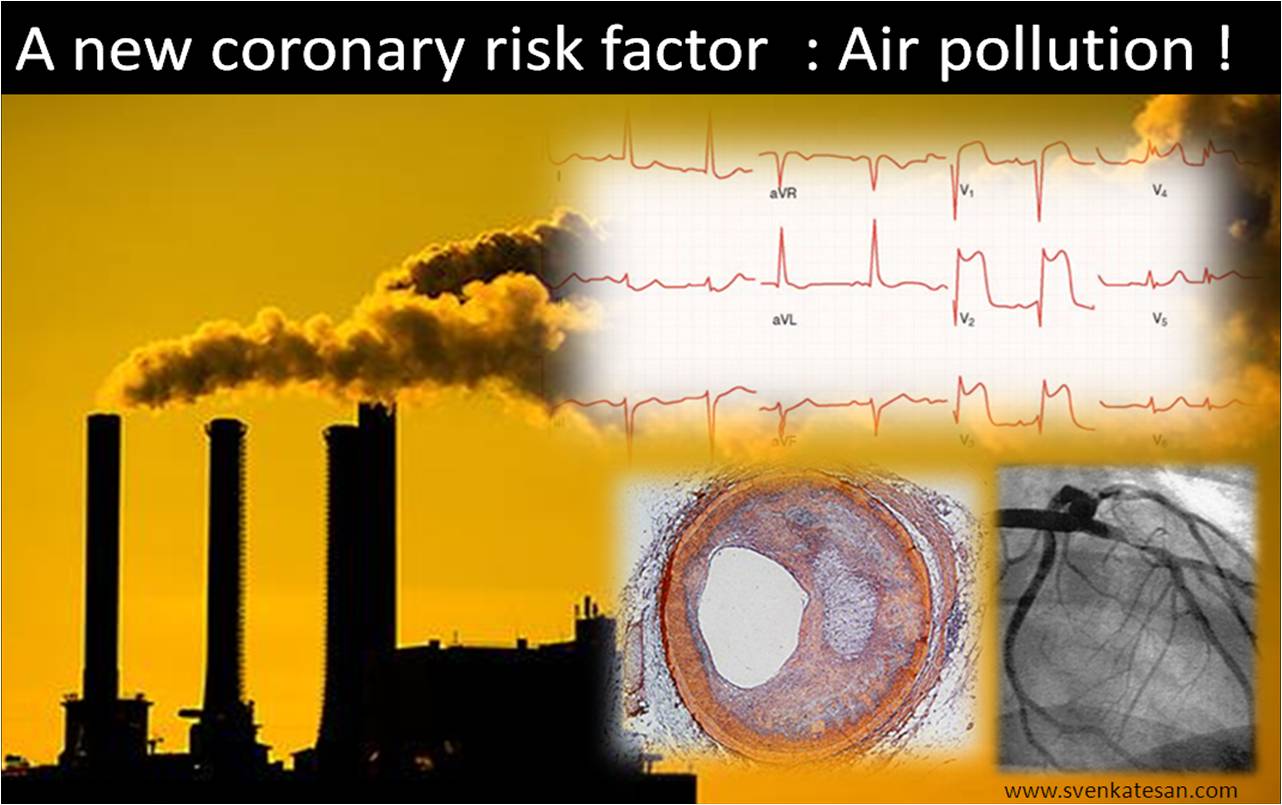
Coronary artery disease  can be termed  as   “New age plague” afflicting the mankind  !  It  probably has killed ( or Killing ) as  many lives  as   most other diseases  put together.  Why  only a section of  our  population is vulnerable is  not fully  understood .

We are familiar with coronary risk factors for too long  . . . still  . . .

We do not understand why 50% CAD occur in people who have no known coronary risk factor !

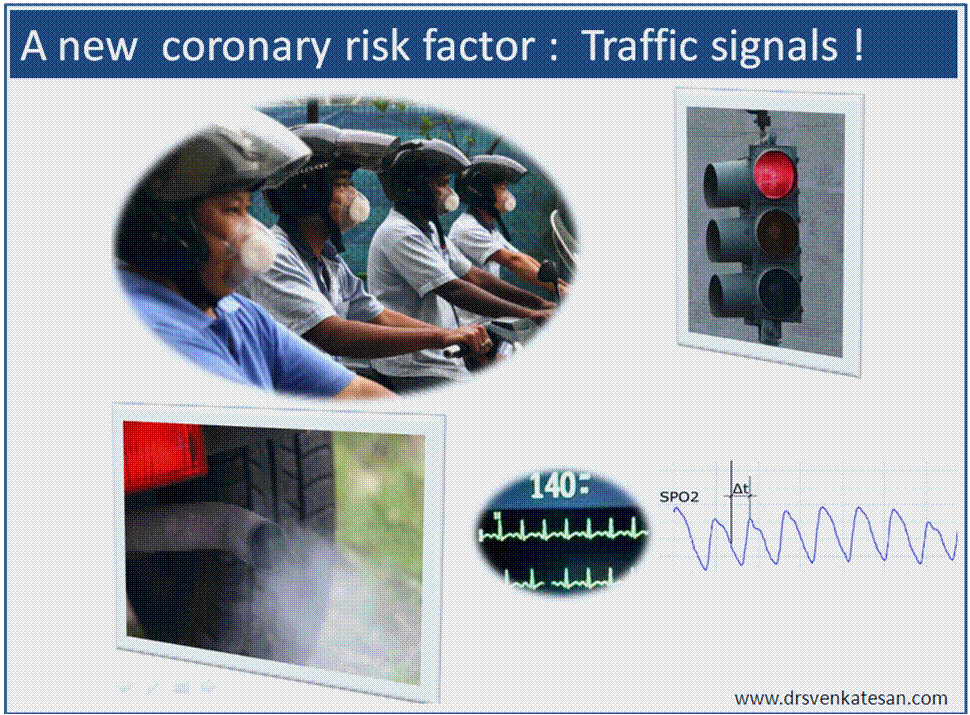
There has been propositions and dispositions  of various risk factors .  The latest one is  the  Air pollution. This is quiet interesting,  as air is the staple food of human survival . We  eat , drink ,  (Rather inhale )  about 500 ml /of  air every   3  to 4 seconds  for 24 hours a day for 365 days  , for our life time !

Does the air we breath reach the  largest cardiovascular  organ namely the vascular endothelium ?

Yes definitely  ,  not only it  reaches   the endothelium but also injures it  (When it contains gases other than oxygen  )  .While tobacco  is a well established  endothelium  destroyer , it is no surprise   community smoking ( Air pollution !)  will do the same job  with perfection .

What are the proposed toxins in the air pollution that harm the endothelium ?

It is a mixed  masala gas out there  over  our   polluted cities ! .(Atmosphere,  Industrial, Automative ,Domestic, Human , and other invisible  sources ) We need to analyse further to answer this question authentically .

Though , common sense  is  enough   to establish the  link between air pollution and CAD. We have  lots of evidence coming up  . . .

Reference

http://ajrccm.atsjournals.org/cgi/reprint/173/4/432?maxtoshow=&hits=10&RESULTFORMAT=&titleabstract=coronary&searchid=1&FIRSTINDEX=0&resourcetype=HWCIT

Further research

We will be shortly reporting our experience with endothelial  function assessment  in traffic police population of our city Chennai  ,India .

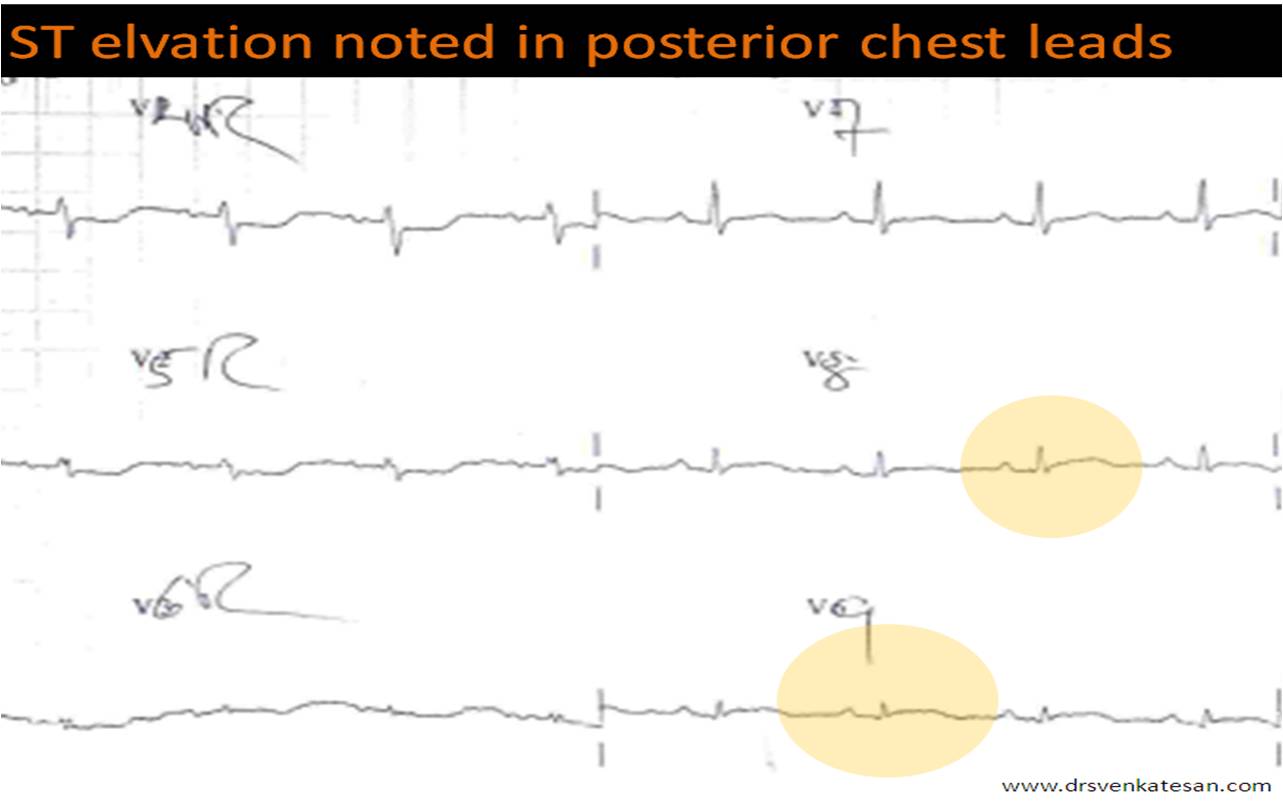
Thrombolysis is specifically indicated when there is  ST elevation in ECG. ST elevation is a surrogate marker for  total coronary occlusion. It occurs due to current of injury flowing   towards* the lead  facing the  infarct territory . There is only one situation where you can safely and effectively administer thrombolysis in the presence of ST depression ie

Note : There is no accepted terminology  to label a MI as  ST depression MI . Here it is used to emphasise ST elevation is not the only indication for thrombolysis .In posterior MI there is infact ST elevation but it is failed to pick up by standard 12 lead ECG.

NSTEMI is a different entity altogether and  thromolysis is never indicated.

Isolated ST depression in V1 V2 V3 .It almost always indicate isolated posterior STEMI. This can be confirmed by posterior chest ECG leads V7-V10 .

*One will be surprised, to know  the mechanism of ST elevation in STEMI is still not fully elucidated .Technically speaking the net movement of current is away from electrode as  there is only a baseline  diastolic shift  which  gets neutralised in systole  mimicking an ST elevation .(Electro-optical illusion !)

How sensitive is these leads to detect isolated posterior STEMI  ?

Fairly sensitive. Both scapula and  para spinal muscles can be a  significant electrical  barrier that can prevent ST elevation from inscribed .In case of doubtful ST elevation in posterior leads , mit is always better to rely on the clinical presentation.Acute chest pain , consistent with ACS and a new onset ST depression >2mm V1 to v3 is a definite indication for thrombolysis .

Link between posterior MI and RV MI ?

They are closely linked entities .In fact posterior surface of heart is contributed significantly by RV.

What is the angiographic correlation of  isolated ST depression in V1 to V3 ?

It almost always localise the lesion to left circumflex artery . If it is dominant , it can involve lateral and RV territories.

Is isolated posterior MI  less dangerous ?

May be yes , but only after the patient reaches the hospital as electrical risk is same in every STEMI .

The area of infarct  is less , LV failure is less common. While conduction disorders and ischemic mitral regurgitation   can occur  significantly.

Also read ,  Why thrombolysis is contraindicated in UA/NSTEMI ? in this blog

Mitral valve can be termed as  the most important valve of heart . The reason  for this  : It is the only valve that is dependent on the  Left ventricular function (The  parameter  which   determines the  ultimate outcome in any form CAD ! )

So , indirectly mitral valve function will invariably be affected by some degree  at least in  most  patients with LV dysfunction. (After all LV free wall , is a component of mitral valve apparatus.)

While , we have numerous modalities to assess mitral valve function  ,  the one that has fascinated the surgeons during  mitral  valve surgery is the intra operative TEE.

Many believe TEE provides live  images  of mitral valve   which are not possible  even under  direct vision ! The eye of the  TEE sees the mitral valve  from a  posterior location , (of -course It can see at any angle !)   while surgeon can see in one angle . The  types of repair , the adequacy  of repair, the annulus status,  even a trial mitral run ,  can be done with the help of TEE.

The TEE probe silently does  this job sitting inside the esophagus   , without  obstructing the surgeon’s operative field .

The success of TEE as an investigative tool did not come easy.Decades of  observation , innovation and learning( Especially from  department of cardiac science  Mayo clinic USA , where they standardized the views. )  are involved .

Now we have omni plane, real time 3D TEE probes .

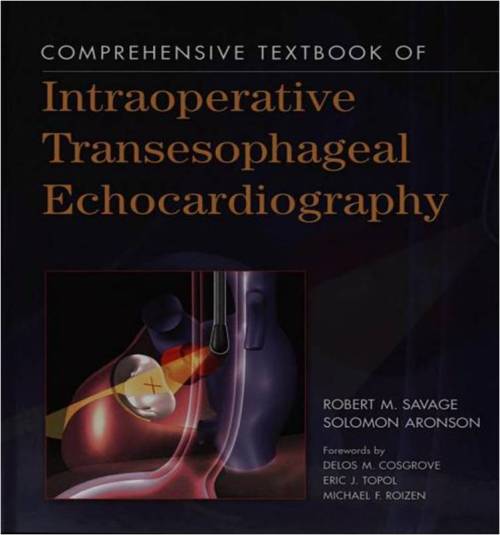
The books  which are  considered the best for  TEE aspects of mitral valve  and it’s  repair are

Cardiac myxomas are rare tumors. But they present in a dramatic way. It can have  severe  systemic symptoms and present even as  fever of unknown origin ! While , physicians  of  previous era were struggling to make a ante-mortem diagnosis we are blessed  to make a instant  diagnosis with echocardiography !

Want answers  for all these  from the original researchers ?

  • What is the pathology  myxoma ?
  • What  are the  classical Locations ?
  • Difference between Sessile Vs pedunculated
  • Soft vs Hard
  • Benign vs malignant / Locally invasive
  • Recurrent myxomas
  • Vascularity  of myxoma
  • Calcification (RA myxoma> La Myxoma)
  • Non atrial  myxomas(Valvular  papillary myxoma)
  • The  Cell of origin (Stellate , polyhydral )

You  will not get a better reference than the following article , including extensive illustrations . An 1980 article from  Mayo clinic published in American journal of pathology

http://www.ncbi.nlm.nih.gov/pmc/articles/PMC1903582/pdf/amjpathol00223-0227.pdf

LA myxoma  : A Video

A case reported from my hospital Hosted as Video presentation  Follow the link

http://www.youtube.com/watch?v=SD2LrK1mdic&feature=related

A drug with a peculiar mode of action is recently making waves across the globe (At least some parts of it !) Basically , when the world was looking for an  anti anginal drug without much hemodynamic effects Trimetazidine fitted this slot .While it’s popularity soared  in Europe and Japan , the Americans thought there was a  need for a similar drug but supposedly  different mechanism of action . Thus  Ranalozine was born.It is a piperazine derivative.

How does Ranalozine act ?

There are three important actions for Ranlozine  (  4th one a real surprise !)

  • Antianginal
  • Anti arrhythmic
  • Possible lusiotropic effect
  • Anti diabetic*

*It is  surprising to note Ranalozine was  reducing Hb A1 c . This is incidental or a simple statistical fairy tale we do not know !

Anti anginal

  • It acts on the late Na ion channel  in phase  2 of action potenial .
  • This facilitates  excess Ca  to be removed from the cells by the NA/Ca exchanger
  • Calcium exit improves  ischemic  myocyte’s   metabolic performance as  cell injury is prevented .

This makes this drug an effective anti anginal.

The MERLIN TIMI 36 in NSTEMI  population became a  big dampener against the enthusiasm for this drug.But it did not affect much the sale of the drug !

Antiarrhythmic

A drug , which acts on phase  2  Na channel , it is not at all a  surprise to have anti  arrhythmic properties .

It can reduce phase 2 reentry like EADS

pro-arrhythmic action

Paradoxically  by blocking Na channels it stretches  the phase 2 and hence  QT interval is prolonged

Lusiotropic action

By preventing  the calcium from accumulating  from the cytosol it has a  theoretical ! lusiotropic action.

It is funny , even  theoretical action  is  enough ,  for  many drugs  to enter  the standard cardiology literature !

What is major advantage of  Ranalozine  over other drugs ?

It virtually has no hemodyanmic effects .

Unlike other anti-arrhythmic drugs it acts , only  if the late Na channels are abnormally active .

(Which is a case during episodes of ischemia .)  This prevents  QT interval to prolong in normal persons

In spite of all these meaningful actions and less side effects , FDA approval why cardiologists in the back of the  mind think this drug is not  based on strong scientific principles , and it could  simply  represent  an industry sponsored  placebo ?

I do not know the  answer  to this question ,  but I do share the same feeling.

Will it succeed the test of time ?

In this context , I recall a famous statement   by my professor “A drug , which has least side effects , is very unlikely to have any desired effect also”

But  with  world  ,  taking a commercial avatar  a success of a  drug  lies ,  not in  having a desired action but in  how many million packs are ultimately   sold  in the market. It is akin to a bad movie succeeding  phenomenally  in box office while  a good one lying silently   unnoticed

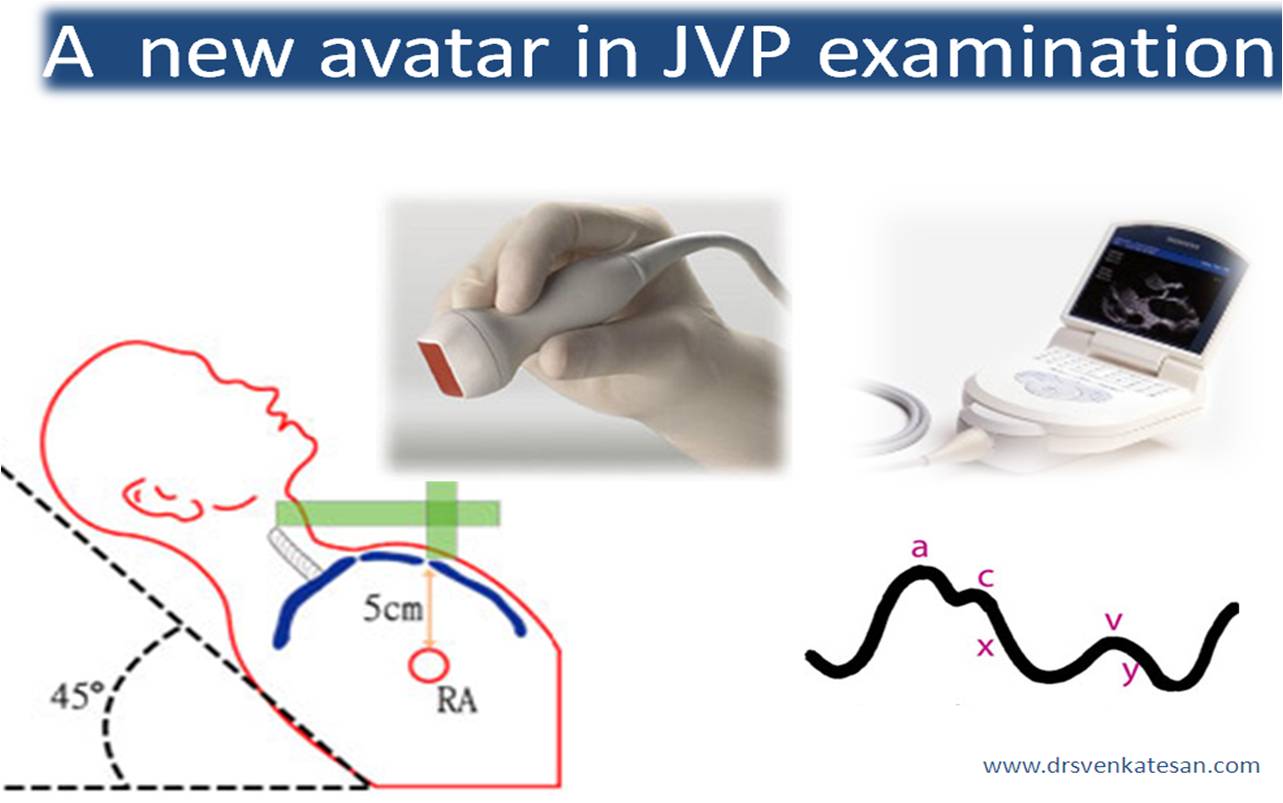
Looking at the neck veins for hours  together  has been a favorite pastime of our cardiology ancestors.Thanks to those sharp intellect , that has led us to this height of cardiovascular revolution. Measuring JV pressure by itself was considered a big science. Putting a patient in 45 degrees , marking the sternal angle, identify the  oscillating venous column,  measuring   the vertical distance  etc . . .

Now in 2010 , with bedside hand-held echo one can rapidly  rule out an elevated  central venous pressure by imaging the jugular vein directly . Here is an article from American heart  journal

http://www.ncbi.nlm.nih.gov/pubmed/20211304

Simon MA, Kliner DE, Girod JP, et al. Detection of elevated right atrial pressure
using a simple bedside ultrasound measure. Am Heart J 2010; 159:421–427.

Soon , your mobile will double up as ultra-portable  echocardiogram

Read this related article in this blog .

Coronary care in your pocket

A related article in this blog

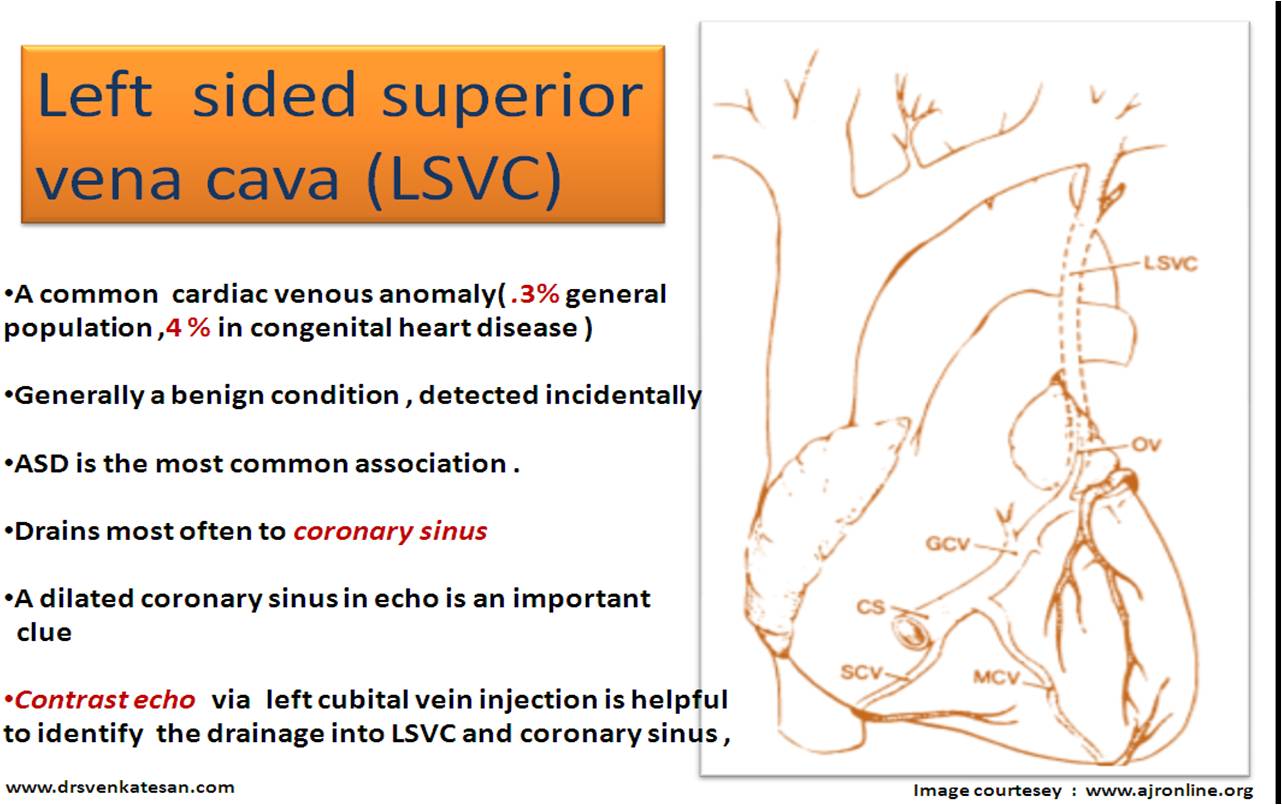
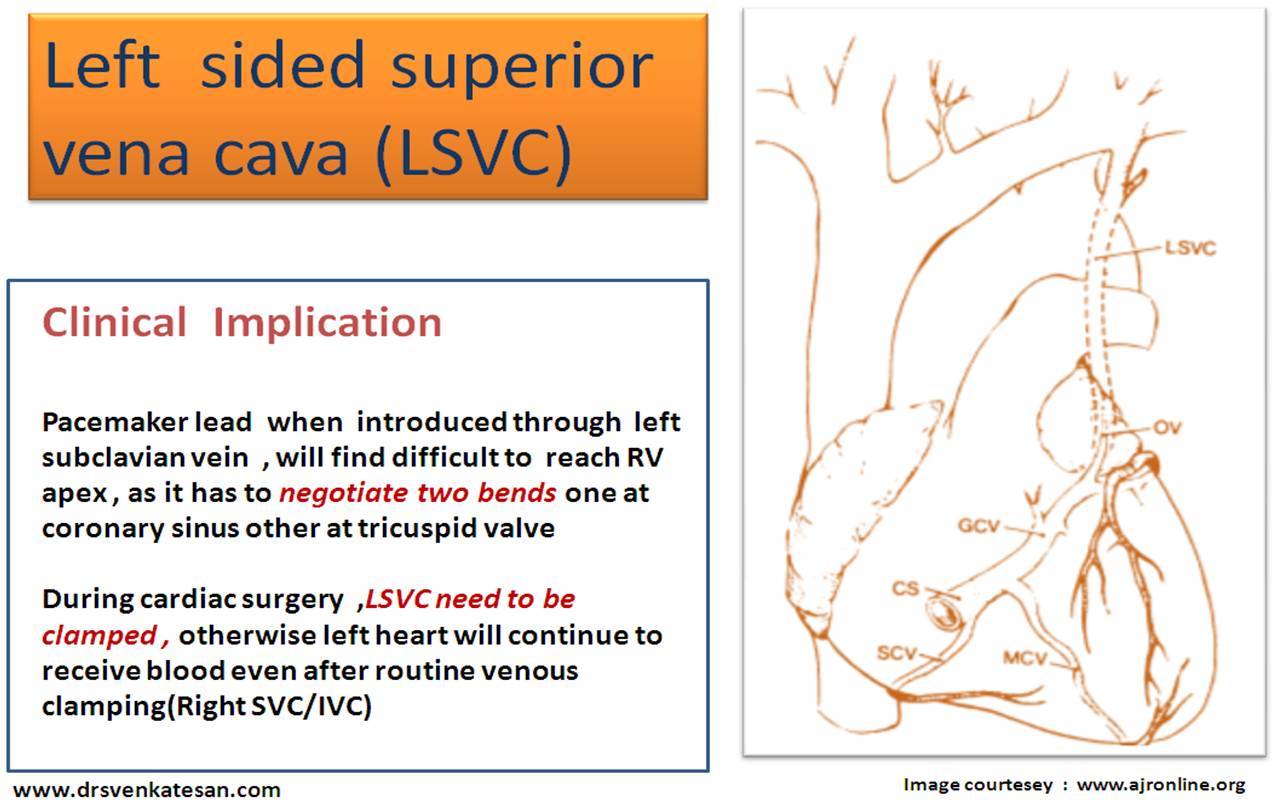
Un-roofed coronary sinus

Further reading :

A rare comprehensive review article on Thoracic venous anomalies

Fr0m American journal of  Roentgenology