Feeds:
Posts
Comments

This is a true story  . . . happened  many years  ago under my direct  vision.

A  48 year old women came with significant breathlessness and catchy  sub -sternal chest pain .

“I  was exerting too much in recent days  doctor” , she said .

Her ECG  showed  a tachycardia and dramatic ST depression in most leads .

The ER in charge promptly texted the cardiologist .
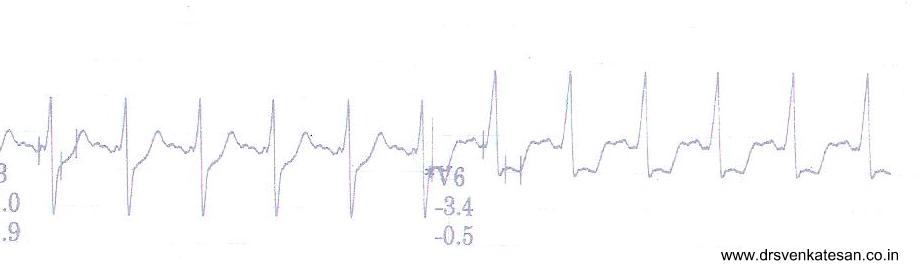
The moment he saw the ECG ,he  had no hesitation , to order for an emergency angioplasty  (  How can he plan a angioplasty  , without even  knowing the coroanry anatomy . some one murmured  . May be   . . what he probably  meant was emergency angiogram   the other explained )    Further , he was telling his    fellows  . . . that  this is going top be  tough case and a possible  left main PCI .

An emergency  angiogram was done .  On table  it was a huge  surprise for every one ,  it was a  a classical  text book   look alike normal coronary arteries !

The moment normal CAG was  visualized  the consultant  concealed his momentary  surprise    and went on to say  it is classical case of syndrome  X   with severe micro- vascular disease causing ECG changes !

As  the patient did not give any opportunity to poke her coronaries   she was wheeled out of  wheeled out of cath lab.

Meanwhile ,  first year  fellow came rushing with the blood reports and biochemistry .

Is everything  alright ?   Yeh sir ,  except her Hb %  . . .  it is  5.6  Grams !

The bewildered  consultant *  realized   the  high  coronary drama , that is  been enacted  over the  past 2 hours !  and  learnt  (and taught) a most important  lesson to their fellows !
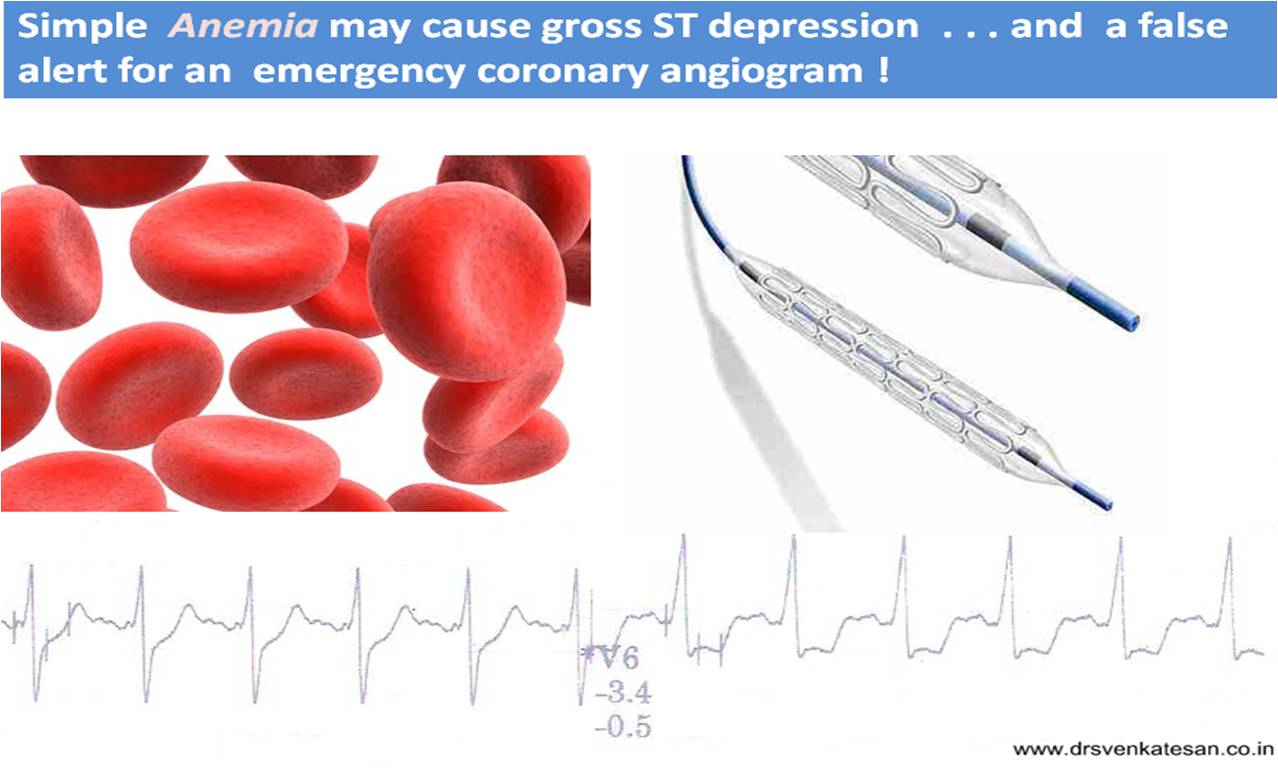
Hi guys , this is neither  a NSTEMI nor  a microvascular syndrome X  . . . this is simply anemia related  extreme  ECG changes !  We have erred in our reasoning and  our pre cath clinical scrutiny has  gone awry ! 

He went on to say  ,  don’t worry  many times medicine is learnt in  hard ways  . After all nothing adverse has  happened here .

The women was subsequently investigated and handed over to  gynecologist for a probable hysterectomy .

Final message

Please be reminded  , anemia  can produce  variety  of  ECG changes.  In extreme anemia  global ST depression is  common especially if  tachycardia is associated .

The lesson here  is ,  whenever  gross  ST depression is witnessed  with vague chest pain  check the hemoglobin first . This is an unusual story of a women  ,  with simple  anemia  (due to   chronic mennorhagia )   landed in cath table in an acute fashion .  Luckily  she  did not have any  incidental coronary  lesions  that prevented her becoming a  greater cath lab  victim !

* The bewildered consultant is none other than the author  of this blog.

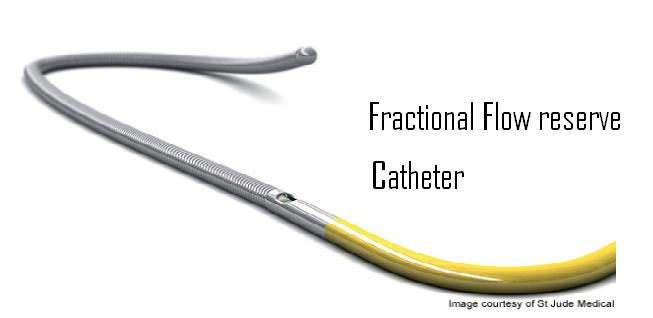
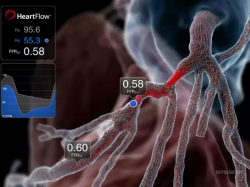
Fractional flow reserve is  a new coronary hemo-dynamic para meter used to assess physiological impact of border line lesions in coronary artery disease. The calculation is simple

FFR is  a terrible concept * for two reasons .

One ,  it never bothers about flow * across   a lesion. It simply  relies upon  pressure drop. We  know  there  is an intricate relationship   between pressure and flow . Simple pressure drop can never be  expected to translate into incremental flow in biological systems .

(FFR anology  in co-arctation of aorta . Can you take difference between upper limb  BP and lower  limb BP as a most accurate   Index of severity of co-arctation of aorta ?  )

How crude it would be   . . .  to  believe so ?

Two   it  ignores the  morphology of the lesion . We know an eccentric soft  lesion with a  good distal   FFR  is  live  coronary explosive .

The  FAME 1 and FAME 2 studies  glorified  FFR  !  I differ in many ways .

Some of  the  observations made about FFR.

  • FFR is to be  done only in discrete ,  safe looking  , intermediate lesions .(Do not ever attempt it in a eccentric lesion )
  • FFR wire is a  stiff ( stainless steel ) wire .  Careful maneuvering is necessary . Lesion crossing  and pull back  FFR wire require some expertise.
  • FFR / OCT  combo,   increase  not only the  fluroscopy time  ,  this procedure can be  more complex than  the intended   PCI .
  • My colleagues tell me FFR measurements are not often  reproducible .(I have little experience in this )
  • Adenosine induced vasodilatation  is not natural physiological model . Further it has  a potential for  a coronary steal if there is near critical lesion in contra lateral artery.
  • There are many occasions   FFR wire has caused  dissection  and  subsequent stenting was necessary  .(The very thing  the cardiologist wanted to avoid !)
  • Bifurcation lesion FFR measurement is prone for errors
  • FFR in two tandem lesions cannot be assessed   accurately
  • Post PCI FFR is not practiced routinely in may centers  the fear of  status quo of FFR.

Final message

This post is not to defame the FFR as a concept . Just to make you think  . . .  how often ,  we  are entrapped  in a  pseudo -intellectual  game in  the cath lab ! FFR  as a tool , can still  be valuable to assess coronary hemo-dynamics in a selected lesion population especially,  discrete,  single vessel ,  or left main disease  with around 70 % narrowing . But never go with FFR alone .Consider the morphology , location   of the lesion .

Finally do not forget  ,  the   good old  EST  can  give a stiff  fight  for supremacy over FFR  in terms of assessing physiological impact of a coronary stenosis (Especially in single vessel disease ) 

Reference

Fractional Flow Reserve versus Angiography for Guiding Percutaneous Coronary Intervention . http://www.nejm.org/doi/full/10.1056/NEJMoa0807611

Hi all ,

I get frequent comments about my blog. I do try to answer many of them . This is a very unique one , and it is making me think further.Since he has specifically wished his clinical data could be eye opener for others ,  I am jut posting it here . The comment was in response to my article  Who said coronary collateral circulation will not support exercise ?   here is  the extract

Dr. Venkatesan,

I read your blog with great interest and I think I may have something useful to contribute from my own personal experience. I am a 68 year old male with a long history of smoking (for fifty years), and a history of uncorrected hypertension over the years (it has been corrected to normal with medication for many years now). I am a non-smoker now for the past 18 months. I have PAD and a moderate aortic aneurysm of about 3.5CM (ascending and descending) which is being watched with regular vascular scans.
The common femoral arteries in both of my legs are nearly 100% occluded between my thighs and my knees, and yet my ankle and toe blood pressures (and my circulation in my ankles and feet) is almost normal. The reason for that is that according to the vascular scan, my deep femoral arteries are much larger caliber than normal with extensive vascular collateralization by passing the common femoral occlusions.
About twenty years ago before the PAD diagnosis, I realized that I had claudication in both of my calves when I walked a short distance. I expected this was being caused by an arterial blockage in my legs, so I went to the gym every day for about three years, and walked through the pain every day. I believe this contributed to the formation of the collaterals that have perhaps saved my legs and feet.
I also have heart disease, and had a fairly minor heart attack in 1999. No stents were placed nor angioplasty performed at that time. I recently had an arteriogram and cardiac stress MRI which showed that two of the three coronary arteries are now 100% occluded (apparently I had another cardiac event and did not know it). The cardiologist says that the LAD is in extremely good condition and has numerous collaterals branching from it. I have no symptoms whatever from all of this, except that my LVEF is low (about 35%). I walk at a very brisk pace six miles per day, five days per week, and I monitor my pulse rate with a pulse monitor when I walk. I keep my pulse between 115 and 120 which I calculate to be 80% of maximum for my age. I believe this cardio exercise / walking has also helped with the collateral formation, and I am hoping to bring the LVEF back up to a reasonable number with this exercise regimen.
My cardiologist has recommended an ICD, but I have decided against that since I have never had VT or VF or any other type of cardiac arrythmia (except for non-symptomatic PVC’s which I was born with).
I believe that I am the lucky recipient of good genetics to begin with, but also I am highly motivated now to take better care of myself, and know as much as I can about the conditions that I have. I plan to have an echocardiogram in six months to see if the LVEF numbers have improved, and I fully expect that they will have. I give credit to the smoking history for the vascular problems that I have including the cardiac problems. I am a lucky person I think, and suspect that not everyone has the fortunate ability to heal themselves the way I have.
I have asked for copies of my arteriogram and stress MRI records. If you are interested in looking at these I would be happy to share them with you.

The letter ends .

Dear Mr Weigel

Yours is an extremely interesting story  told in a most scientific manner.Thank you .

It gives me great insight  ,  how a  human vascular system  can  transform when confronted with  natural disasters like multiple blocks on its way .A flowing river will definitely reach its destination  however bizarre the path it takes . Human biology is vested with vast reserves of genetic building blocks put on sleep  mode. While billions of dollars are being pumped into do research in human angiogenesis we have tuned a  blind eye to the vast net work of natural collaterals.

Our clinical experiences also tell the same thing . In chronic total occlusion  majority of patients would develop good collaterals if only we do not  tamper  the  main vessel  .None of scientific studied available has proven opening CTOs (Chronic total occlusions) has improved the clinical outcome .

Regarding  the guidelines  for revascualrisation ,  I am yet to come across a standard scientific guidelines that includes the extent of collateral circulation  as one of the determinant for need for revascularisation !

I will definitely use your case study for the benefit of so many patients !  I always feel , a properly interpreted experience  , even from a  single patient   can make a tremendous impact in the growth of science .

Thanks again for sharing your personal health issues !

Dr Venkatesan
Chennai .India .

For ruling out  acute coronary syndrome in   in  men less than 40 years , here is  30 second protocol !

All you require is an ECG and  some degree of common sense ! ( A flattish  T wave is acceptable )

Please note cardiac  enzymes are not required  to R/O ACS in this group !

Vancouver chest pain rule is  a glorified  clinical sense !

http://emed.wustl.edu/images/journal_club/2006/September_2006/Vancouver_Chest_Pain_Rule.pdf

http://onlinelibrary.wiley.com/doi/10.1111/j.1553-2712.2012.01399.x/abstract?systemMessage=Wiley+Online+Library+will+be+disrupted+on+25+August+from+13%3A00-15%3A00+BST+%2808%3A00-10%3A00+EDT%29+for+essential+maintenance

Under physiological condition ,  pre-load , after load , and cardiac  contractility should be a sequentially matching parameters . After load mismatch is an important concept , where myocardial contractility is temporarily  depressed due to  lack of adequate pre-load for a given level of after load .

This is also  referred to as descending limb LV function paradox .

The three  common clinical situation  AL mismatch  occurs

  1. Critical Aortic stenosis              (High aortic after load )
  2. Acute Hypertension                   (High after Load -Normal and  low pre-load)
  3. Severe diastolic dysfunction  (Pre-load is high -After load is normal )

If it happens acutely the myocardium becomes dyfunctional  due to  mechanical non ischemic stunning .Once the after load comes down the contractility improves .

What  is the chronic adoptive response to after load mismatch ?

LVH is the major  chronic adoptive response to AL mismatch.

LVH reduces the wall stress which will reduce the after load  indirectly .

So LVH neutralises the   high  after load .Laplace law at work . (Wall stress is equal to  2 times the radius divided by thickness of the wall )

Here  is the Link to the great lecture by John Ross Jr  in LA Jolla , California in one of the annual scientific session of AHA   more than 25 years ago . http://www.ncbi.nlm.nih.gov/pubmed/966366 .The concept is alive and kicking even today .I am sorry to  note   this  important physiological concept   never received the attention it deserves .  I would vouch , it  can be as   important as Frank starling  principle .

Reference :

https://content.onlinejacc.org/data/Journals/JAC/22702/04186.pdf

//

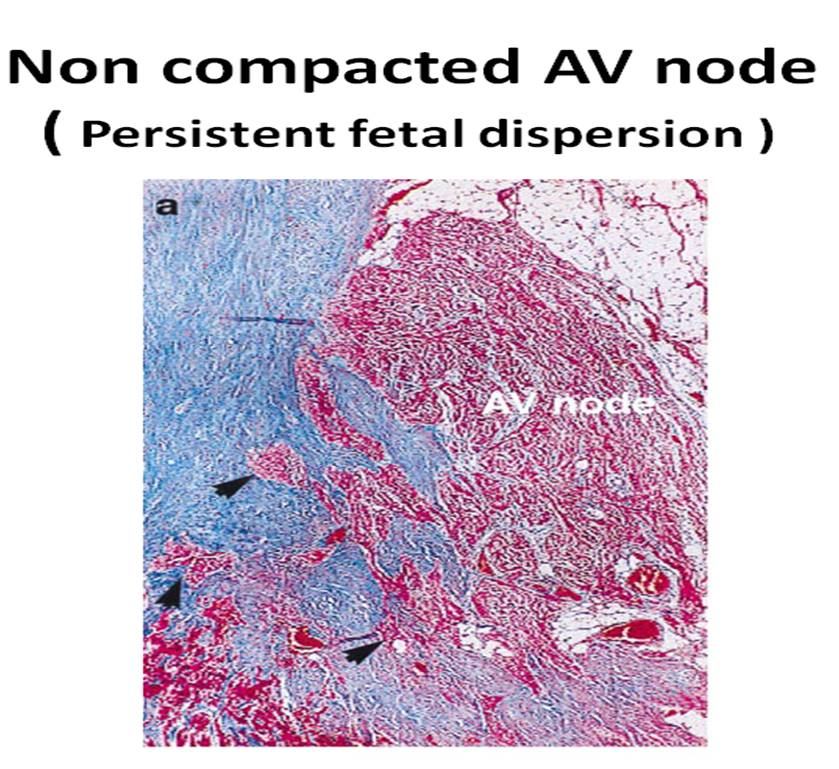
AV nodal tissue is a not compact structure as we would be believe  . But it is a fact ,  AV  node  do attempt  to compact after birth.

It is never complete.

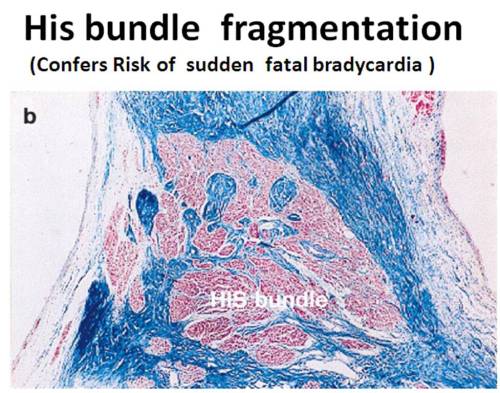
Note the islands of his bundle entrapped .   Image source : M. Paz Sua´rez-Mier J Am Coll Cardiol 1998;32:1885–90 From the Section of Histopathology, Institute of Toxicology and †Department of Pathology, La Paz Hospital, Madrid, Spain.

All specialised cells should coalesce  to form the compact zone .This fails to happen in many . Failure of AV nodal compaction  results  in islands of slow conducting cells in around AV node . Some of them can mutate  , and   acquire fast conducting properties as well . (Accessory pathway )

This failure of AV nodal compaction is termed as  persistent fetal dispersion of AV node .

In the his bundle  same phenomenon is called as his bundle  de-fragmentation .These abnormalities are noted in pathological  specimens  of  Pokkuri sudden death in Asians .

Unexplained sudden deaths and instant bradycardias and complete heart blocks are related to these dispersion of  AV nodal cells downstream . This also explains some of patients with infra hisian escape show junctional characteristics.

Many cardiac pathologists have observed this . Still  there is a  missing  link  .

References

M. Paz Sua´rez-Mier,Carlos Gamallo  J Am Coll Cardiol 1998;32:1885–90) Atrioventricular Node Fetal Dispersion and His Bundle Fragmentation  of the Cardiac Conduction System in Sudden Cardiac Death

Kirschner RH, Eckner FAO, Baron RC. The cardiac pathology of sudden,unexplained nocturnal death in Southeast Asian refugees. JAMA 1986;256:2700–5.

Hudson REB. The conducting system: anatomy, histology and pathology in acquired heart disease. In: Silver MD, editor. Cardiovascular Pathology. New York: Churchill Livingstone, 1991:1367– 427.

James TN. Normal variations and pathologic changes in structure of the cardiac conduction system and their functional significance. J Am Coll Cardiol 1985;5:71B– 8B.

James TN, Marshall TK. De Subitaneis Mortibus XVIII. Persistent fetal dispersion of the atrioventricular node and His bundle within the central  fibrous body. Circulation 1976;53:1026 –34.

Persistent Fetal Dispersion of the Atrioventricular Node  Association With the Wolff-Parkinson-White Syndrome Claude Brechenmacher, MD; Jean-Paul Fauchier, MD; Thomas N. James, MD Arch Intern Med. 1980;140(3):377-382.

Why Junctional rhythm has huge variation in P wave morphology ?

P waves in junctional rhythm can be

  1. Upright
  2. Iso-electric
  3. Inverted
  4. or  even absent

It depends upon the origin of junctional focus

  1. Site of  entry into RA
  2. Ability to capture inter -nodal pathways  and inter -atrial pathways ,
  3.  VA conduction velocity

Further ,the appearance and timing of P waves will be determined by the underlying structural heart disease also.

Final message

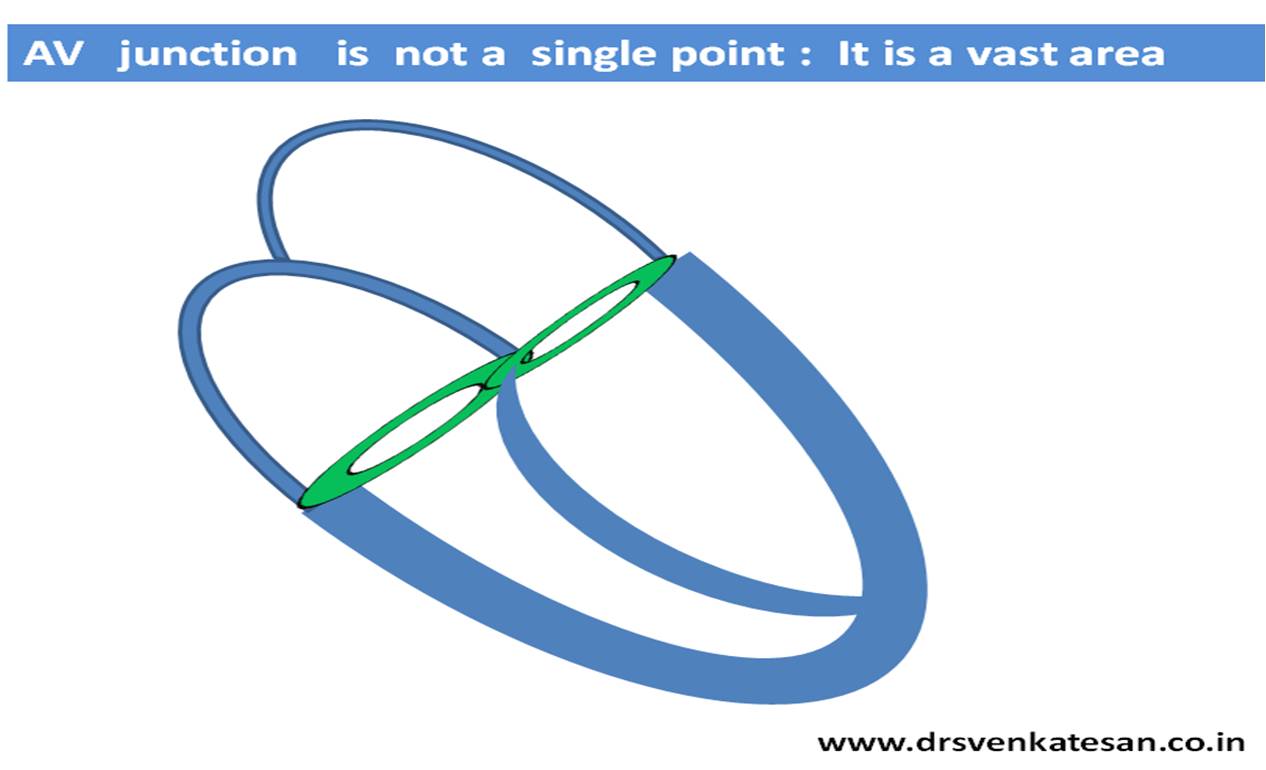
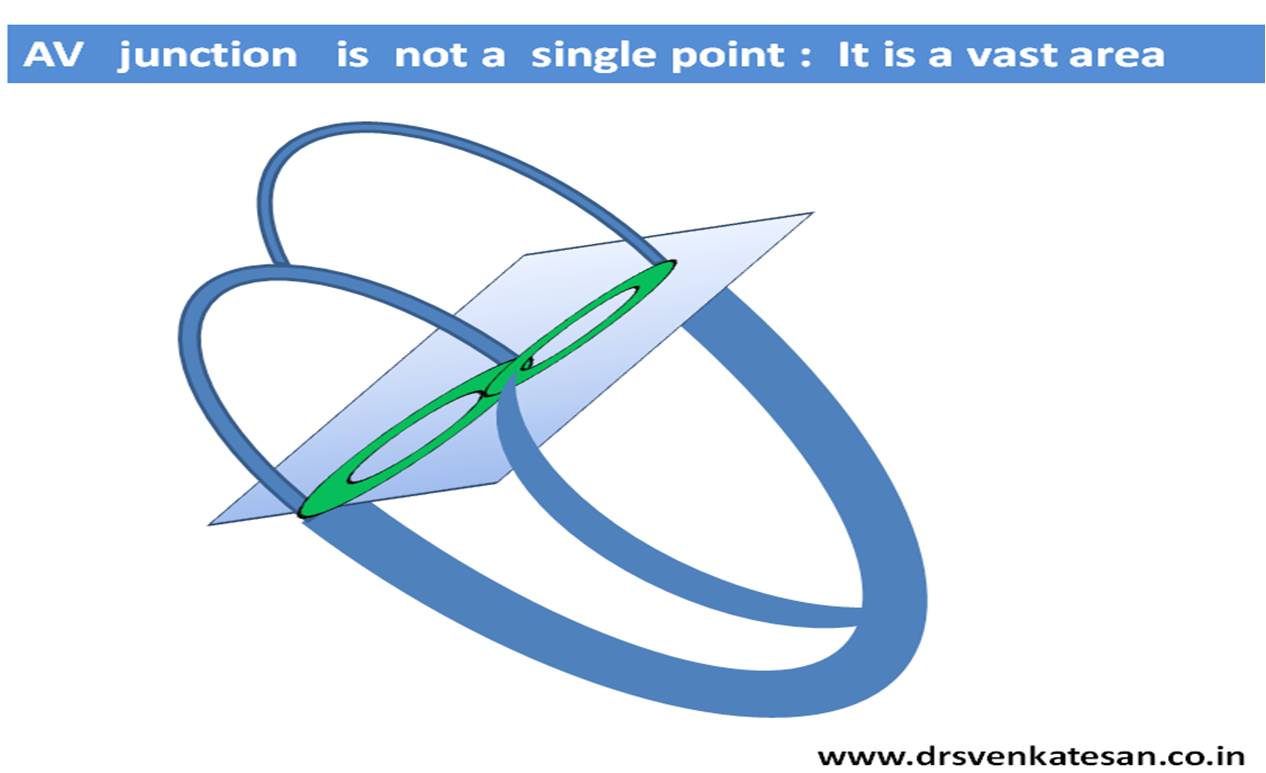
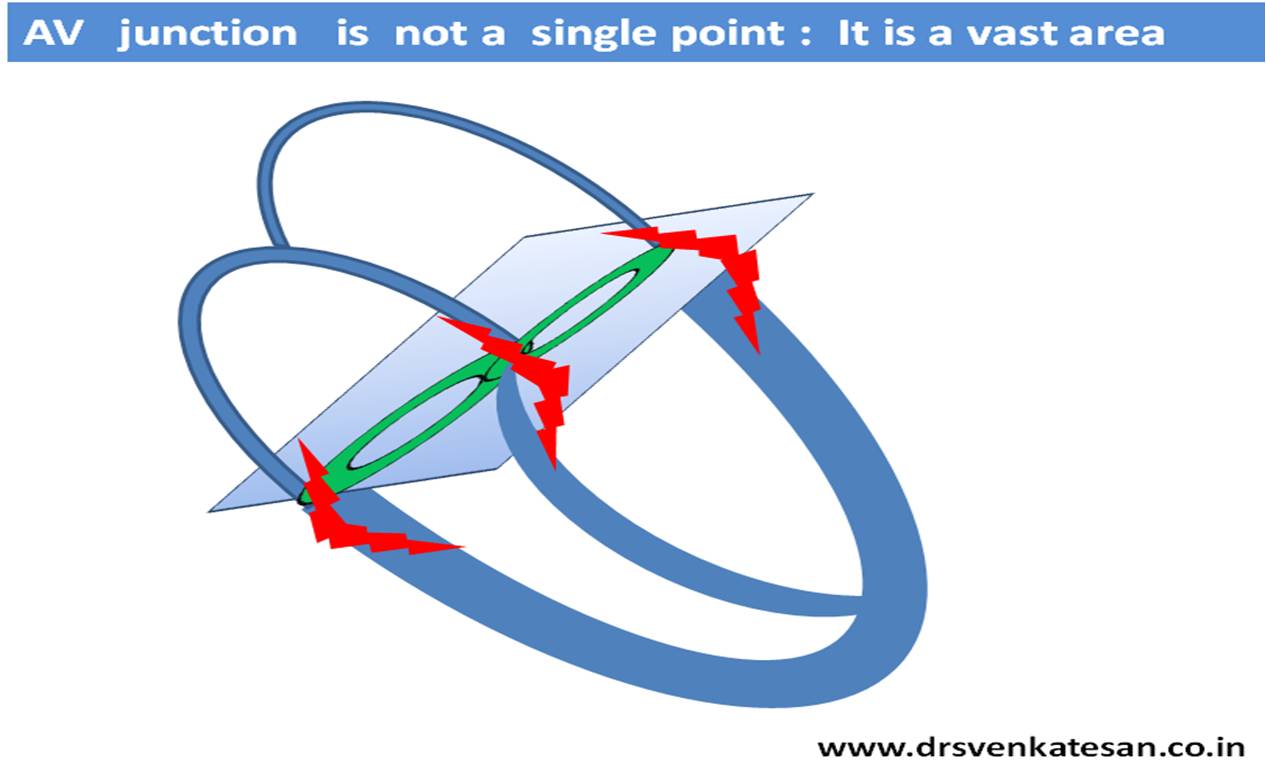
Medical  students  have  grown  up with the belief that  AV junction is a single  focused point .It is  true  in terms  of electrical circuitry  of  normal AV conduction .However  during pathological electrical disorders ( Which arise often because of structural disorder) it should be realised   the AV junction is a huge plane   .   Arrhythmia can occur anywhere from this plane .The entire plane  can become electrically active which may also  acquire the  ability to conduct bi-directionally .

Hypothyroidism is  a classical example of  generalised edema formation .  The mechanism of which is extensively studied  .Still we are  not clear  about  it .

Content of edema fluid

  • Mucopolysacharides -Hyalinorunic acid
  • Albumin

Mechanism

  • Albumin leak into interstitial and extra cellular space  due to capillary dysfunction.
  • Reduced lymph clearance – probably due to poor lymphatic tone  .

Why hypothyroid  edema  does not pit on pressure ?

For pitting to occur tissue should be compressed and retain the elasticity .This means  the fluid can escape into the cell when mechanically compressed and comes back when the  elasticity of skin  brings  it back to its original status. For this to occur the skin and subcutaneous matrix should be normal in texture.

In cardiac failure and renal  failure   edema is   primarily due to  altered hydrostatic forces and skin  is intrinsically normal .So  some amount of pitting  is retained . In hypothyroidsim and lymphedema  where there is  an intrinsic  pathology  of the  skin   pitting  is rare.

Why constriction and  cardiac tamponade are rare with hypothyroid pericardial effusion ?

Like the generalised slow response of hypothyroid individuals  the effusion is  also very slow forming and is rarely large so tamponade is rare .

The hypothyroid infiltrates which  collects within  the pericardial space it rarely infilitrates  the fibrinous pericardium (The thick outer shell ) .Unless fibrinous pericardium is inflamed or infiltrated constriction is exceedingly rare .Simple epicardial infiltration may cause some restrictive  physiology but not constriction .

Reference

Lancet. 1975 Mar 8;1(7906):564-6.Effusions into body cavities in hypothyroidism.  http://www.ncbi.nlm.nih.gov/pubmed/47029

Intra cardiac foreign bodies are frequent occurrences  in clinical cardiology practice. The common ones  are intra chamber clots , vegetations  and rarely tumors. Some of these masses are very mobile are  precariously attached to the cardiac strutures  . It becomes a cardiac emergency as a major embolic event  is imminent .

While surgery  remains the  mainstay approach in such situations ,   now it seems possible to trap these mobile  masses with help of catheter and retrieval devices   safely.

The only  issue is , while retrieving  these masses   it  should not be let into the circulation and result in  embolisation  . For this we can develop a   porous net (Fishing net like ) that can be  blown in the distal  chamber or Aorta .

Devices can be structured in way  that a single catheter can be used with different  ports  to capture and  filter  and retrieve  the mass . (  vacuum  enabled suction catheters can be additional option  ) .The whole procedure can  be  accomplished with fluroscoy and fluroscopic guidance . Intra cardiac echocardiography might also contribute .

This innovation will    be  a great  value addition  to the  interventional  cardiology   armamentarium   ,would be   be appreciated by clinical  cardiologists . We in our tertiary  teaching hospital   have  felt  the need for a such a device quiet often  .Currently many patients land up  in  surgical tables  for the sole purpose of removing these clots and vegetations  .Similarly left atrial clots becomes  a contraindication for percutaneous   mitral  commissurotomy(PTMC)   . Such capture devices can be very useful.

Learning and sharing of  knowledge is one of essential qualities of  that make the man kind unique.

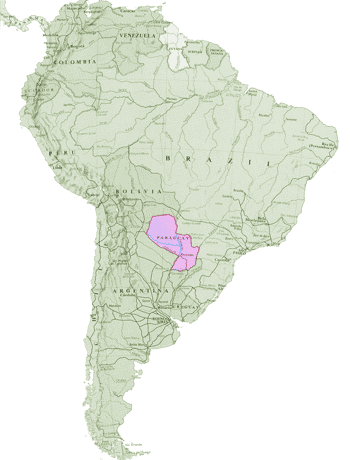
But not everyone is ready to do that . A cardiologist from Paraguay shows the way .  . .

Probably a model web site for all academicians .It exemplifies ,  how a medical web site is  to be created and presented .This one is for learning echocardiography .

Though the author calls  , it as  basics it has fairly advanced contents , so it should be useful at levels .

With  due  courtesy  to   Dr  Derliz Mereles I am linking his web site  in my blog .

http://www.echobasics.de/tte-en.html