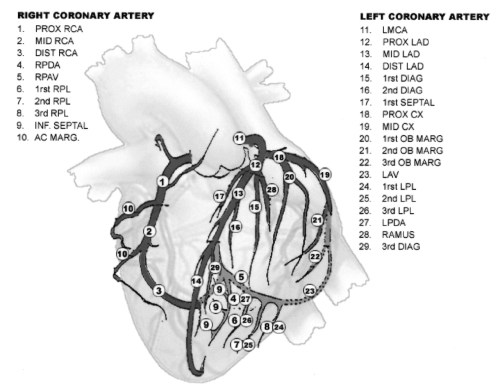
Coronary arteries are the major site for human atherosclerosis .CAD is considered the ultimate determinant of cardio vascualr health of our global population.Coronary atherosclerosis has a predilection for proximal sites and branching points.Typically it occurs in leftmain, LAD ostium, LCX ostium, proximal LAD, diagonal origins, OMs RCA and its branches .
Septal branches , even though divide very early from the LAD , it is uncommon to get affected by coronary atherosclerosis. Even for an experienced interventional cardiologist , it would be very rare to have performed a PCI for septal disease.
Why septal branches of LAD is rare to suffer from atherosclerosis ?
We don’t know the answer yet.
But , it is thought,septal branches are near perpendicular branches .The branching angle and incidence of atherosclerosis has a peculiar relationship.IAt any bifurcation point , the atherosclerosis tend to occur , if the angle is more acute , and is less common in abtuse angles .It is almost rare , if branching happens at exact 90 degree angle or so !
The other reason for septal branches being immune to atherosclerosis is , it runs within the muscle in its major course. The constant squeezing action(. . . and possibly bridging also) makes it difficult for the process of atherosclerosis to sustain and grow .
Can you still get a septal CAD ?
Yes, usually as a component of bifurcation or trifurcation lesion. Some times a diagonal and septal are very close together and atherosclerosis involves both ostia.
What is the implication for the cardiologist to perform a PCI with stenting in a septal branch of LAD ?
PCI and stenting in the septal branches are more prone for crushing and fracture as it is constantly exposed to the mechanical effects of muscle contraction.
Any other significance for septal branches of LAD ?
Isolated septal myocardial infarction can occur.This could be even a embolic manifestation.
Septal branches of LAD are potential target for therapeutic embolisation (By injecting alcohol) in patients with hypertrophic obstructive cardiomyopathy(HOCM) .This manover aims to produce a controlled septal myocardial infarction and thus paralysing the left ventricular outflow tract and reduce the dynamic LVOT gradient. This form of treatment, was glorified till recently now considered experimental !
Aortic dissection is a complex cardiac problem and a killer disease .Even though it is a fancier to make a diagnosis of aortic dissection in any intractable chest (or back )pain the most common error committed by physicians is failure to recognise it .
Is it possible to diagnose or atleast suspect aortic dissection by a rapid screening biochemical test ?
Yes, it seems so,
D Dimer , a product released consequent to intravascular thrombosis is elevated by >500ng in most of the patients with dissection.
Aortic smooth muscle heavy chain estimation is the other option.
What happens once a diagnosis of aortic dissection is made ?
It is not a great achievement to make a diagnosis of aortic dissection.It is only, a beginning of a long and often tedious decision making process . A real tough task , on hand for the cardiothoracic surgeons. It is a team work , needs the interaction of cardiologists, radiologists and cardiac surgeons to bring an optimal outcome.
The major issues are
Never try to manage this problem in a small hospital or facility. Always send the patient to a teaching hospital ( of course , not all teaching hospital can tackle this either , so enquire about their expertise ! )
No credits for making a simple diagnosis of dissection.One has to exactly locate the entry point and exit points if any.
Aortic root and arch involvement is of major importance in determining the modality of therapy.
Debaky classification is not of academic interest ! it has a purpose . Generally type A dissection(Proximal ) require emergency surgery
Differentiating true lumen from false lumen is of critical importance , it needs a meticulous transesophageal echocardiogram.( Some times one may , never be sure which is true and which is false lumen , funnily .in descending aortic dissection it may never matter for the patient !) Self healing of many dissections with thrombus is possible.
Controlling hypertension with powerful parentral antihypertenive drugs (Labetalol . . . ideally ) is vital.
Side branch involvement (spiral dissections) especially arch vessels and renal arteries make this entity much more complex
Isolated distal dissections and some low risk proximal dissections can indeed be managed conservatively(Also called non surgical ! ) Some cardiologists or even institutions hesitate to put a aortic dissection with medical management .They feel it is inferior form of treatment . . . but realise , it is not necessarily so !)
What is the other bichemical marker for disscetion ?
The aortic smooth Muscle Myosin Heavy Chain was proposed as a useful marker for diagnoisng dissection.
Diagnostic Implications of Elevated Levels of Smooth-Muscle Myosin Heavy-Chain Protein in Acute Aortic Dissection: The Smooth Muscle Myosin Heavy Chain Study Toru Suzuki, MD; Hirohisa Katoh, PhD; Yasuhiro Tsuchio, MD; Annals of internal medicine 3 October 2000 | Volume 133 Issue 7 | Pages 537-541
The abstract from annlas of internal medicine follows Readers from India can get the full text article free
Contrary to popular belief ,great things happen only rarely in medicine . It takes only few months of training or workshops , for a wrong or inappropriate concept to percolate our brains ! But , it would require, decades of time , energy and efforts , for correcting that wrongly assimilated concept in medicine!
Interventional cardiologists are among the rare breed of physicians, who always believe in evidence ! But , the quality of the evidence is rarely questioned ! 30 years of PCI & 20 years of stenting has failed our common senses ! Fortunately , today, we have 135 pages of new evidence ( Not really new , old evidence interpreted with sound logic !)
Hats off to ACC and associates for bringing out this much belated appropriateness guidelines for the interventional cardiologists.
ACCF/SCAI/STS/AATS/AHA/ASNC 2009 Appropriateness Criteria for Coronary Revascularization
A Report of the American College of Cardiology Foundation Appropriateness
Criteria Task Force, Society for Cardiovascular Angiography and Interventions,
Society of Thoracic Surgeons, American Association for Thoracic Surgery,
American Heart Association, and the American Society of Nuclear Cardiology
Endorsed by the American Society of Echocardiography, the Heart Failure Society of America, and the
Anginal pain is a type of visceral pain.It is carried by type C unmylinated nerve fibres.The perception of angina is a complex process.It is a combination of visceral and cutaneous referral pain.
How often is angina silent in diabetes mellitus ?
Presence of diabetes per se does not make an angina silent. In fact, if one takes 100 patients with diabetes , if angina occur in them , it is more often , manifest than silent. So , only few of the diabetic patients who develop diabetic autonomic neuropathy fail to have angina.The exact incidence is not known.It could be around 20%.
If angina can be silent in diabteics , can they have anginal equivalents ?
This again is not answered in literature. Among the anginal equivalents , the most common is dyspnea , which can occur in diabetics.But now , we know dyspnea also needs thoracic nerve signals from the intercostal muscle spindle and colgi organs.This can also be impaired in diabetics.
Can silent and mainfest episodes occur in a same patient ?
Yes.
Once silent does not mean always silent, and similarly once angina is felt it does not mean he is going to feel the next episode as well !
This strongly reminds us medical science is much a complex subject and what we know is very little in pain perception.
How is silent ischmia different from silent angina ?
There is considerable overlap between silent ischemia and silent angina
The questions to be answered are
Which is silent ? Is it the angina or is it the ischemia or both ?
Silent ischemia can occur in any individual , this is also called as silent CAD . When ischemia occurs but fails to generate pain it is silent ischemia .Undiagnosed CAD in asymptomatic individuals is also called silent ischemia or CAD.In this population Exercise stress testing detects CAD which was otherwise silent and masked.These patients may develop angina during EST.
During exercise stress testing many times patient has significant ST depression more than 2mm but still chest pain may not occur.These episodes may either be silent ischemia or ngina. Many times the EST is terminated before angina is manifest .( Chest pain is the last to occur in the chain of events following ischemia- Concept of ischemic cascade )
What are the other situations where angina can be silent ?
Pain perception and threshold level is high , so patient indeed has anginal signals but fails to feel it .
Patients on antianginal medication , fail to feel the angina.
Chronic betablocker therapy can exactly mimic autonomic neuropathy
Is it a blessing for the patient to have painless episodes of angina ?
When their ischemic colleagues , suffer a lot with chest pain it is tempting to think these diabetic patients are blessed!
Scientifically , this could be true in at least in some especially in a patients who’s coronary anatomy is known and devoid of any critical proximal lesions. For example a small PDA lesion can produce severe angina , but may be silent in diabetic and be comfortable .This lesion is insignificant other wise * !
It should also be recalled , pain relief has been an important goal for treatment of CAD .In olden days, thoracic sympathectomy was done for angina . In fact , even in CABG , one of the the mechanisms for angina relief is attributed to cardiac denervation.
Caution: Even a small episode of ischemia can trigger an electrical event .But it is rare.
How common is silent infarct (STEMI) in diabetic patients ?
In a simple questionnaire we asked the diabetic patients in our CCU how they felt their pain during MI.Most felt it normally as do other non diabetic . Diabetes does not make all anginal episodes silent. Severe episodes of ischemia may be painful while less severe episodes may be painless. Diabetic autonomic neuropathy is a least recognized and poorly understood complication of diabetes.Diabetes , involves the vasanervorum of the autonomic nerves.
The other mechanisms postulated in diabetic neuropathy are
Reduction in neurotrophic growth factors.
deficiency of essential fatty acids .
Reduced endoneurial blood flow and
Nerve hypoxia .
Is diabetic autonomic neuropathy treatable ?
Very difficult problem indeed.Controlling diabetes may partially correct the neural dysfunction.Many add on neuro vitamins and aminoacids are having a good market !
If you successfully treat diabetic autonomic neuropathy will my patient start feeling the hitherto silent episodes of angina ?
We don’t know.Logic would answer ” YES”
What is the ultimate effect of cardiac autonomic neuropathy.
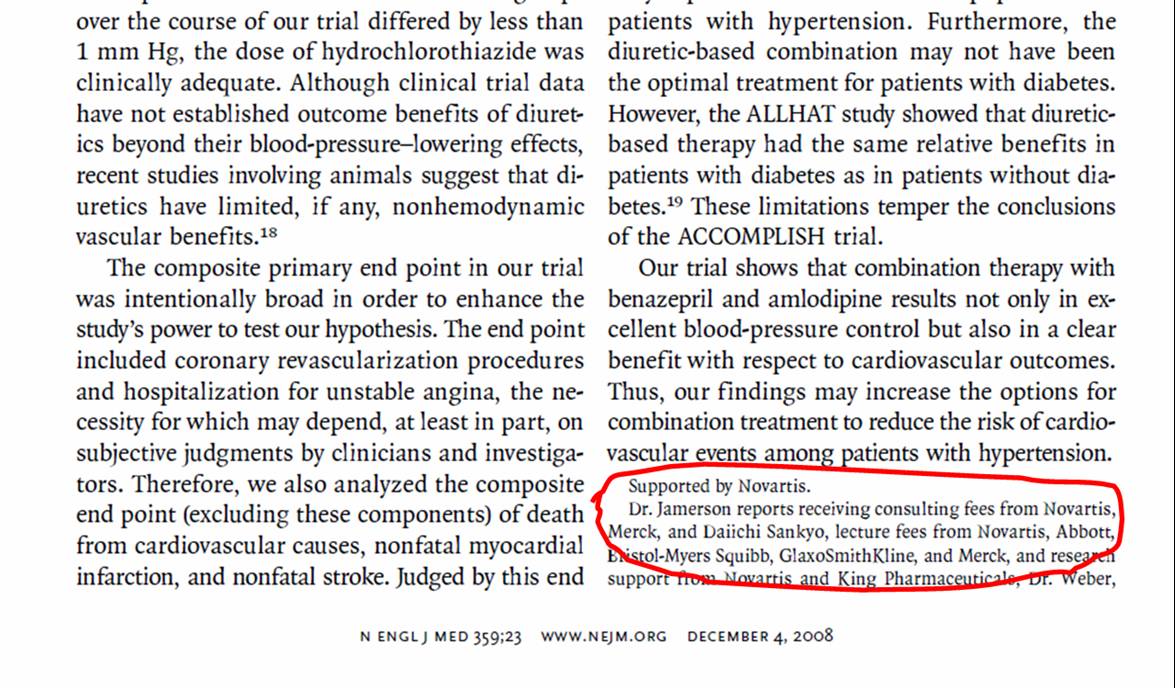
It is now mandatory for all journals to declare the conflict of interest by the authors who are involved in medical research .The purpose apparently is to make all transactions or links between the researchers and their funding agencies transparent .Even major journals do not go beyond this . Some ensure it , to appear in the first page of the article.
What does the the journals tend to convey to the reader by publishing the conflicts of interest ?
Does it mean the article in question may have a bias or indeedhave a bias ? and readers are warned hereby !
Do they send across a message that the article may not be really a genuine one and the judgement is left to the the consumers of the articles ?
How often a journal article is rejected purely on the basis of conflicts of interest ?
Most of journal articles are rejected for poor methodology, statistical analysis and so forth .We don’t know how often a paper is rejected due to a conflict issue per se.If this could happen ,bulk of drug trials would face a torrid time from the editors.
Why , even the leading scientific journals never indulge in grading the significance of the conflict ?
Here is an example .
The much hyped drug trial on Hypertension “ACCOMPLISH” was published in the world’s most prestigious medical journal recently .It left it to the readers to have their own assessment on the conflict issue.
The consequence of not , grading and investigating about the conflicts could have serious global health implications both financially and academically .
This study was designed, formulated, completed and published with a single hidden aim of neutralising the land mark trial of ALLHAT which recommended diuretics as a first line drug in HT.Apparently diuretics are very cheap , effective generic drugs.
Is it a scientific rule that the latest evidence , should always prevail over the older evidence ?
No.Science can never have such a rule ! The question is how good and genuine is the evidence.Just because an evidence is current , it does not attain a scientific sanctity !
The science of medicine has evolved over 2000 years since the stone age days.It has currently reached a glorious era with cutting edge scientifc technology .Today one can map the entire human genetic blue print and intervene in the disease even before they manifest .One can keep dying people alive for years with multi organ transplantation. Modern medicine has taught us how human sufferings can be prevented and life can be prolonged (with or without purpose !)
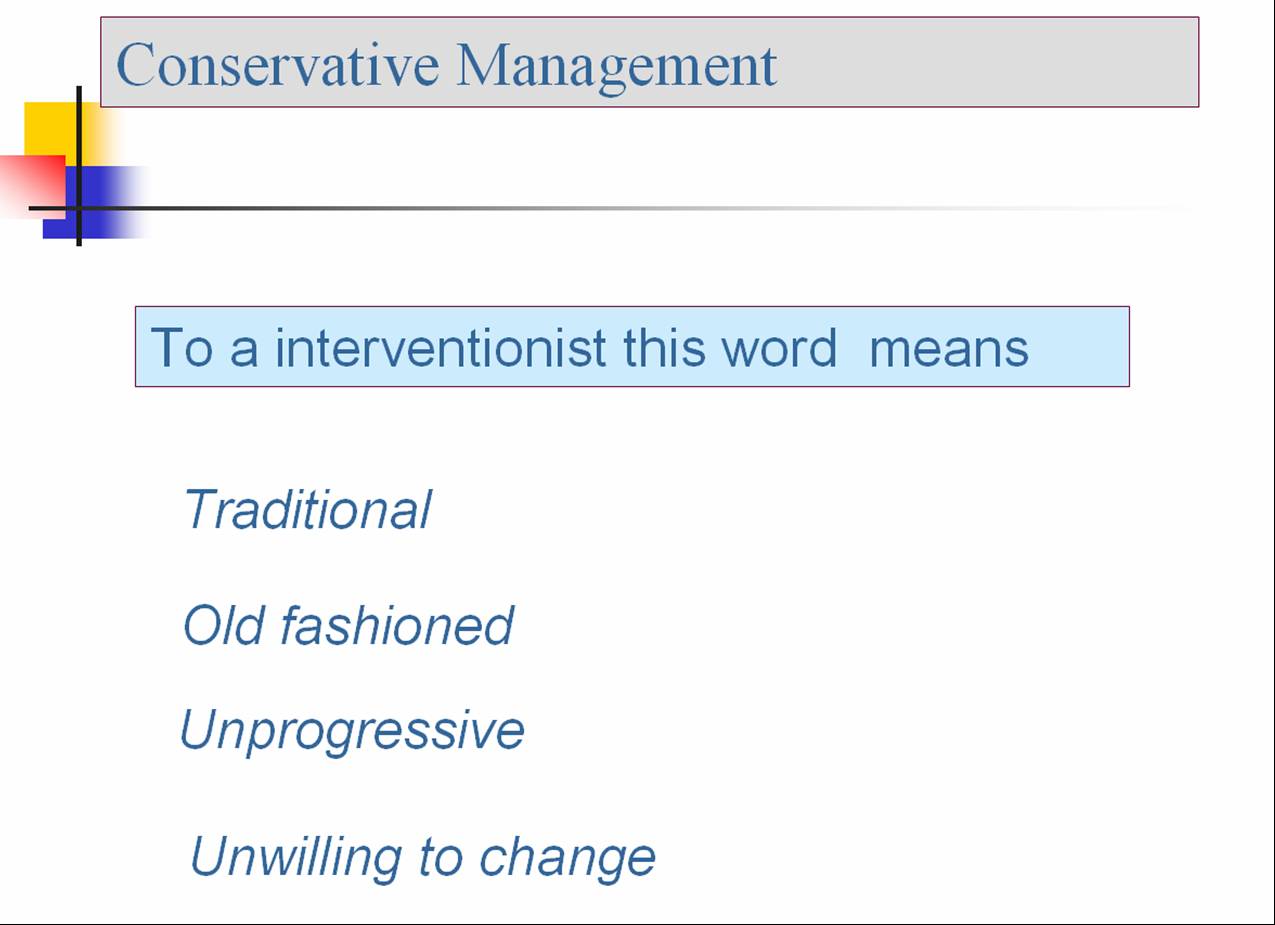
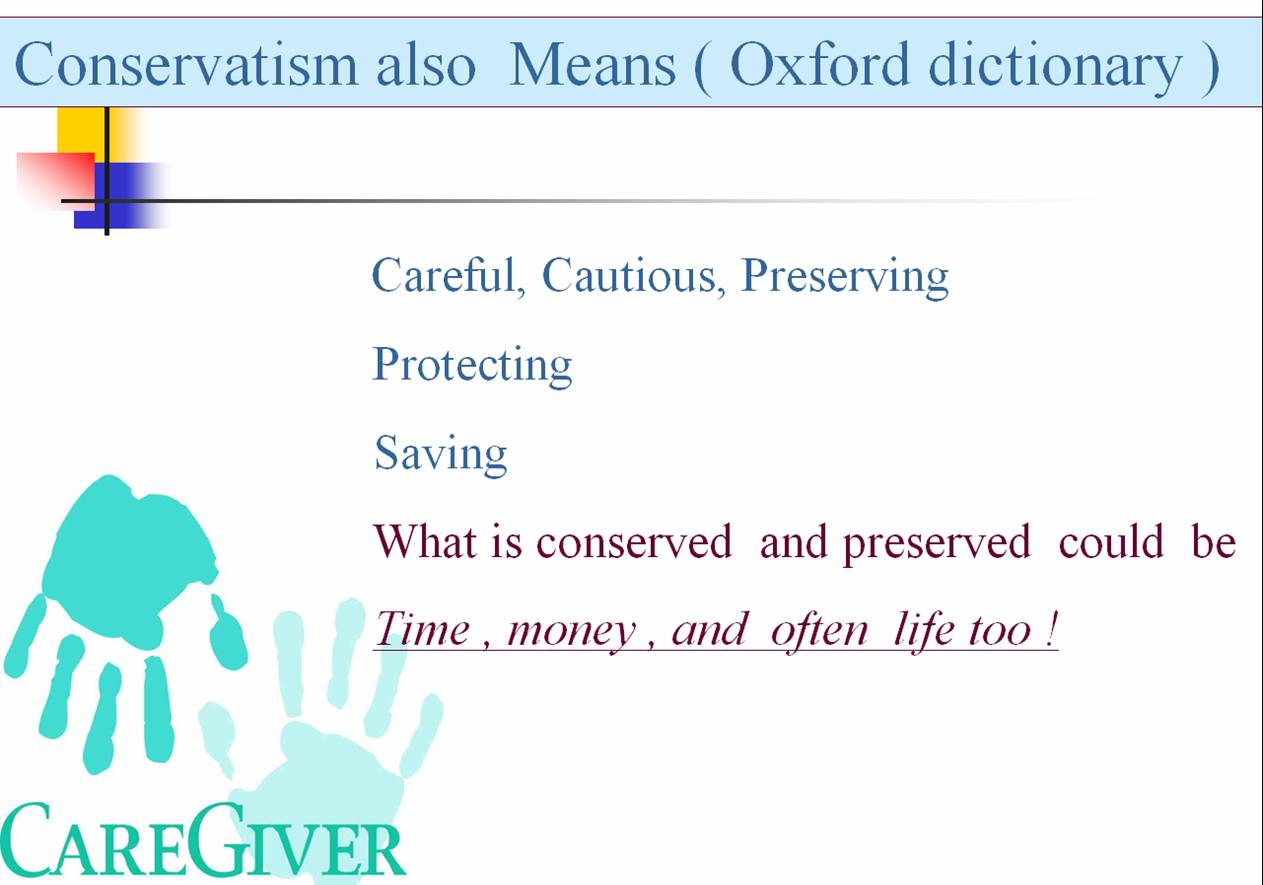
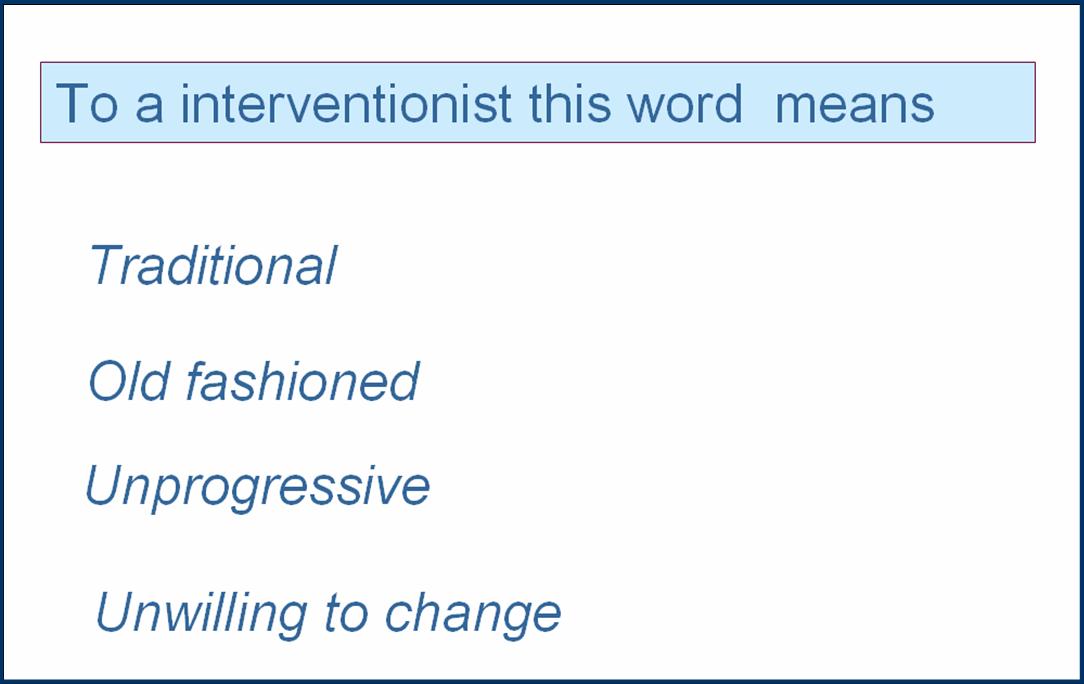
The term conservative management conveys two different
meanings for medical professionals.
For other group of physicians
Ever since the days of application of leech over the head for treating migraine and a crude knife abdominotomy for emergency exit of babies from pregnant mothers in distress , healer’s mind has always perceived “something has to be done urgently when some body suffers” this sort of reaction is probably inherited and is related to the primitive flight or fight response .
This may be true in some of the emergencies but it is untrue in many of the non emergencies.
Unfortunately , our mind finds it difficult to differentiate between these situations . With constant exposure to dramatic medical breakthroughs , modern day physician is made to believe “Some thing is always better than nothing when illness strikes. Human body is a wonderful machine which has it’s own service station ! in the form autoregulation and the meticulous homeostatic mechanisms. Only if the disease process overwhelms, it needs intervention.( Typical example:In the routine viral fever , you don’t adminster Acyclovir or other antiviral for all of them !)
The problem with early aggressive approach is, it fails to give an oppurtunity for the body’s natural defence forces to respond. Further , we will never ever knowhow the administered treatment is going to fare vis a viz the natural response.( With due respects to RCTs). While the field of medicine has so much evolved , our thought process, especially the aspect of clinical reasoning has always been lagging behind .It is now considered as inferior or even unscientific treatment if some one follows a conservative approach to a problem even if it provides same outcome of that of an invasive or aggressive approach ( The classical example is PCI for chronic stable angina The COURAGE study).
The other major issue is the hazards of unwarrnted invesitigations , drugs and procedures
Classical example:No one knows how much morbidity or mortality the routine Swan ganz catheter caused when it was rampantly used for over two decades to monitor central venous pressure .It is estimated that in modern medicine there are at least few drugs or devices in each speciality waiting for the same fate as that of the swan ganz catheter.
No body knows when it will be exposed .Our EBM will take it’s own time . . .Till that time humanity need to suffer.
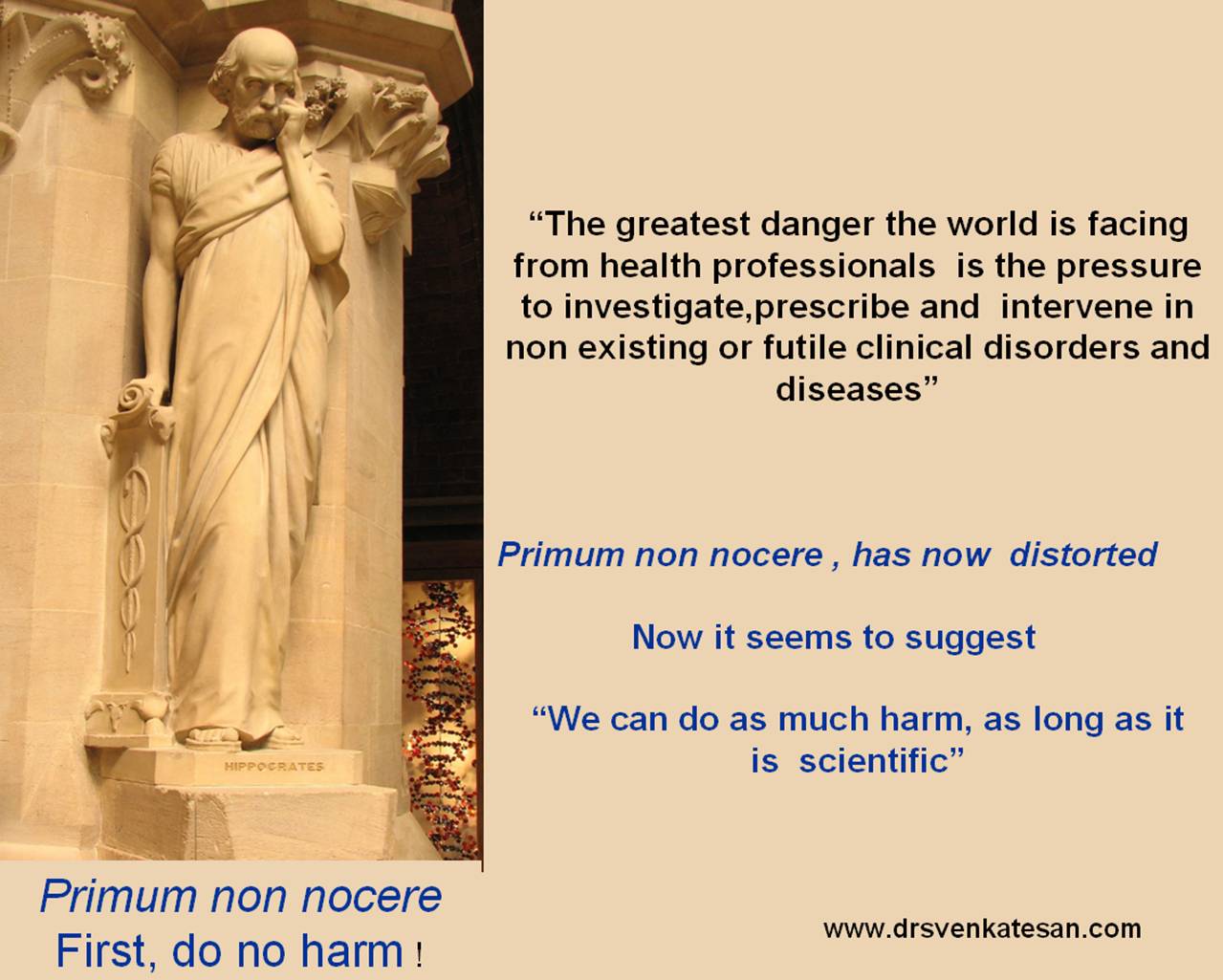
This thinking is not new The concept “First do no harm is over 2000 years old”
Questions in search of answers
Does law of conservation of energy applicable to human body and medicine ?
Can we defy death with modern medicine ?
Final message
Conservative management is still a great medical concept in many situations and one should not allow it to die by the whims and fancies of the modern scientific forces.
Whatever you do on the patent’s body do it , only if it is going to helpful for him /her. If you are unsure Whether a given treatment is going to help or not ask this question to an expert .
The widely prevailing dogma of aggression is always better than non aggression has absolutely no evidence.
So approach a clinical issue disease by disease , individual by individual.
Now , in this era high tech medicine , It is lot more tougher to choose a conservative path as the pressure to do more and more looms larger ! It is easier to follow the crowd than a path of your own .
Always remember it needs a stronger mind to act according to our conscience !
A normally functioning circulatory system is vital for our survival . We have about 6000 ml of blood, circulating all over the body in an approximate time of 15-20 seconds.The pressure at which this blood moves across the body is called the blood pressure . Hypertension or simply , high blood pressure is an undesirable hemodynamic disturbance in human circulatory system.Systemic hypertension is the most common type of hypertension. The blood pressure is primarily dependent on the status of the blood vessel(vascular resistance) and cardiac contractility. This regulation is under many neural and hormonal factors.Further the blood pressure varies depending upon the blood vessel calibre, and the local milieu.There is a progressive drop in blood pressure from major arteries to the small arteries .The pressure drop is maximum across the arterioles to reach the venules .The venous circulation has the lowest pressure, it ends up at right atrium with a mean pressure of 0- 5mmhg.
Importance of regional variation of blood pressure.
It should be realised , each organ has it’s own regulated blood pressure.The brain perfuses by the intracerebral pressure .The lungs decide how much should be the pulmonary arterial pressure.The kidney not only controls it’s own pressure but also has a major regulatory role in systemic pressure by rennin angiotensin system.The examples are numerous, portal system has it’s unique pressure controlling hepatic hemodynamics. The retinal blood vessels regulate intra ocular pressure. While the human circulatory system has a wide variation of blood pressure across the breadth and length of vascular system, it is ironical a single snap shot BP with a brachial cuff is used to define the normality and if it is normal every thing is thought to be hunky dory !
It is widely acknowledged now , aging of humanity is nothing but aging of our vascular system
So we should have new parameters to assess individual organ’s vascular health as well as the currently popular systemic vascular health.The single important factor that determine coronary endothelial damage is the intra coronary pressure.It is never taken into account in any of the cardivascular mortality studies. This is the prime reason for the widely prevalent conflict in the cardiology literature , namely : Controlling systemic blood pressure has poor correlation with cardiovascular outcome. Many of the so called normotensive individuals have serious hemodynamic injury in their coronary arteries.This was made apparent in the ASCOT LLA study , in which patients with near normal blood pressure also benefited from statin therapy , implying endothelial damage could occur at any level of systemic blood pressure.
What is the normal intracoronary pressure ? When do you diagnose intracoonary hypertension?
The normal intracoronary pressure is around 40mmhg . Intra coronary hypertension as a clinical entity is yet to be recognised . There is no defintion available for intracoronary HT , intracerebral hypertension as well.
It’s still a long way to go , for the cardiology and neurology community to assess non invasively intracoronary pressures and intra cerebral arterial pressure to prevent coronary events ant strokes.
Final message
Simple risk prediction using brachial cuff blood pressure is a grossly unscientific method (Sorry, i really mean it ) to assess one’s vascular health.There has been few attempts like vascular endothelial health assessment by fore arm blood flow , central aortic pressure (Instead of brachial cuff pressure) as an index for risk predictment and assessment for hypertension is suggested.
Angina pectoris , classically occur on exertion and gets relieved on rest .This is called typical chronic stable angina as described by Heberden (CSA ) . Unstable angina(UA), the term originally described by Noble O Fowler in early 1970s. ( Also being referred as intermediate coronary syndrome , preinfarction angina etc).The definition for unstable angina has evolved over the years and currently refers to .
1.All new onset angina of any degree*Some include severe angina only ! New onset angina of very mild degree on exertion could be the onset of the first episode of stable angina.
2.Rest angina of more than >30 mts not relieved by taking sublingual nitroglycerine.
3.All Post MI angina
4.Any angina in patients who have been stented by PCI.
How to recognise a patient who is shifting from stable angina to UA ? UA is to be suspected when a patient develops. 5.More frequent episodes than usual6.Angina occurring at lesser level of exertion than before7.Angina radiating to new site ( Example : Chest pain radiating to jaw rather than to the usual left arm or vice versa)
Why the first episode of angina is given a special status and often considered critica ?
Angina is the clinical expression of myocardial ischemia.The course of the first episode of angina , can not be predicted.It could be a the beginning of a chronic disease process, or it could be a progressive coronary occlusion as in unstable angina /NSTMEI , or the onset of even a STEMI.
In contrast a patient with chronic stable angina has a predictable chest pain , at a particular level of exertion, radiation to same site, same character, and the patient knows for sure the pain would promptly dissappear when he takes rest or nitroglycerine tablets.
What is the underlying pathology in UA ?
Generally it is very rare for a stable plaque to produce a serious episode of unstable angina .It requires an unstable plaque* to precipitate an unstable angina !
Unstable plaque refers to any plaque which is eroded, fissured, ruptured or hanging eccentrically , with
an active thrombus.
What is the significance of post PCI angina?
It is an irony, any angina following PCI is to be considered unstable as sudden occlusion of stent is quiet common.This is a paradox of sorts as one would wonder in a patient with CSA who undergoes PCI with stenting of left anterior descending coronary artery (LAD) all his subsequent episodes of angina will be labelled as UA even if a stable angina occur in his other coronary artery.And these patients would go for early invasive approach and potentially inappropriate interventions even if they are at low risk !
Is all angina at rest can be termed as unstable angina ?
No, but many times , rather most of the times cardiologist believe all rest angina to be unstable.
What are the situations where stable angina can occur at rest?
An episode of angina during mental stress, or post prandial* state are very common in patients with CSA. This gets relieved after the stress. Some times patients with CSA during episodes of fever may get angina at rest .These are considered variants of stable angina.
Post prandial angina , may be considered by some as unstable
How often a diagnostic confusion occur between CSA and UA ?
Generally, this issue is rarely addressed in cardiology literature , for the simple reason it is never considered an issue at all !
According to Canadian cardiovascular society grade 4 stable angina is almost similar to unstable angina , as it denotes angina occurs with minimal effort or even at rest. In fact CCSC grade 4 should be termed as UA.
Can ECG be useful to identify stable angina from unstable angina ?
ECG will some times come to our rescue when one is confused between stable and unstable angina even though resting ST depression can occur in both stable and unstable angina . Statistically , if ST depression is noted during an episode of angina it is more likely to be UA rather than CSA. . Apart from ECG , Troponin T or I levels may be elevated in some of the patients with unstable angina. Rarely stable angina can also show elevated troponin.
In patients with systemic hypertension and LVH or cardiomyopathy resting ST depression may not indicate UA
So differentiation between, stable and unstable angina even though appear simple and straight forward, it requires a diligent appraisal of history , physical examination (Aortic stenosis /HCM may cause stable angina) and ECG, enzyme evaluation.
Final message
In any coronary care unit , admissions with initial diagnosis of ACS/UA/NSTEMI , subsequently turn out to be simple stable coronary artery disese . This error happens because the chest pain or ECG changes are aggravated by non cardiac factors like a mental stress or a post operative stress or fever etc.
There could be another school of thought, that is to err on the side of safety, and manage all rest angina as UA .But the hazards of unwarranted therapy might exceed the risks of leaving these patients alone.
In this context ,there is a need for a new definition for unstable angina .
One ideal version could be . . .
Any angina , of any degree which is caused mainly by the supply side defect (By a acute thrombotic /disruptive plaque occluding the coronary lumen with a imminent danger of myocardial infarction is to termed as real UA.
All post MI and post PCI angina are unstable angina
Rest angina which occurs due to increased demand situations need not be labelled as unstable angina for the simple reason there is neither an active plaque nor a fresh thrombus likely in these patients. They rarely develop recurrent angina or MI . The mechanism of angina at rest here is most often due to a tachycardia and resultant increase in MVO2 .(myocardial oxygen consumption) .Currently they are called as secondary unstable angina.In fact , anti thrombotic drugs are misused in these situations as they satisfy the criteria of UA/NSTEMI.
Is it true , once a patient is labelled as a hypertensive he remains hypertensive life long ? Is it possible to withdraw antihypertensive drugspermanently ?
Systemic hypertension is the most common clinical entity and it forms the bulk of the physician consultations world over.
The anti hypertensive drugs are one of the most commonly prescribed medication by the medical professionals .
It is estimated , the major chunk of revenue to pharma industry is contributed by antihypertensive drugs.
SHT , is being maintained as a major , global cardiovascular risk factor , by periodically refixing the target blood pressure to lower levels by various committees.
The terminology of pre hypertension for blood pressure between 120-140 was hugely controversial and some societies refused to accept this entity.
Is there a case for withdrawal of anti hypertensive agents among our patients ?
Yes , in fact there is a strong case for it.
While on the one hand there is a sustained effort ( By whom !) to increase the drug usage , very early in the course of hypertension , there is also a silent progress in our knowledge , regarding withdrawl of anti hypertensive agents in all those undeserving patients .
What are the situations where we can successfully with draw anti hypertensive drugs?
The most common group of patients are the ones, where the anti hypertensive drugs are started prematurely , with out giving an option for non drug life style approach.These patients and their physicians continue to believe , anti HT drugs are sacred and essential !
There is another major group of patients who have had a temporary elevation of BP due to a stressful environment.These patients get drugs permanently for a temporary problem . These patients need to be reassessed.
Some of the elderly patients, with the onset of age related autonomic dysfunction ,these drugs are poorly tolerated and even have disastrous effects .In this population it is desirable , to wean off the anti HT drugs and switched over to life style medication whenever possible.
Final message
Essential or primary hypertension is not a permanent disease, in bulk of our population. It reflects the state of the blood pressure on a day to day basis and is a continuous variable. All patients who have been labelled as hypertensives( Either by us or others) should be constantly reviewed and considered for withdrawal of the drugs if possible.
* Note this rule does not apply in all secondary hypertensions, during emergencies, uncontrolled hyper tension with co existing CAD /diabetes /dyslipidemias etc .
The study shows that antihypertensive medication can be safely withdrawn in older persons without clinical evidence of cardiovascular disease who do not have diastolic pressure > or = 150/90 mm Hg at withdrawal, providing that good BP control can be maintained with nonpharmacologic therapy
Some of the references for successful withdrawl of antihypertenive drugs
1.Nelson, M; Reid, C; Krum, H; McNeil, J. A systematic review of predictors of maintenance of normotension after withdrawal of antihypertensive drugs. Am J Hypertens. 2001;14:98–105. [PubMed]
2.
Wing, LMH; Reid, CM; Ryan, P; Beilin, LJ; Brown, MA; Jennings, GLR, et al. Second Australian nationalbloodpressure study (ANBP2): Australian comparative outcome trial of ACE inhibitor- and diuretic-based treatment of hypertension in the elderly. Clin Exp Pharmacol Physiol. 1997;19:779–791.
3.
Lee, J. Odds ratio or relative risk for cross-sectional data. Int J Epidemiol. 1994;723:201–203. [PubMed]
4.
Lin, D; Wei, L. The robust inference for the Cox proportional hazards model. J Am Stat Assoc. 1989;84:1074–1079.
5.
Veterans Administration Cooperative Study Group on Antihypertensive Drugs. Return of elevated blood pressure after withdrawal of antihypertensive drugs. Circulation. 1975;51:1107–1113. [PubMed]
6.
Medical Research Council Working Party on the Management of Hypertension. Course of blood pressure in mild hypertensives after withdrawal of long term antihypertensive treatment. BMJ. 1986;293:988–992. [PubMed]
7.
Alderman, MH; Davis, TK; Gerber, LM; Robb, M. Antihypertensive drug therapy withdrawalin a general population. Arch Intern Med. 1986;146:1309–1311. [PubMed]
8.
Blaufox, MD; Langford, HG; Oberman, A; Hawkins, CM; Wassertheil-Smoller, S; Cutter, GR. Effect of dietary change on the return of hypertension after withdrawal of prolonged antihypertensive therapy (DISH). J Hypertension. 1984;2(suppl 3):179–181.
9.
Mitchell, A; Haynes, RB; Adsett, CA; Bellissimo, A; Wilczynski, N. The likelihood of remaining normotensive following antihypertensive drug withdrawal. J Gen Intern Med. 1989;4:221–225. [PubMed]
10.
Myers, MG; Reeves, RA; Oh, PI; Joyner, CD. Overtreatment of hypertension in the community? Am J Hypertens. 1996;9:419–425. [PubMed]
11.
Stamler, R; Stamler, J; Grimm, R; Gosch, F; Dyer, R; Berman, R, et al. Trial of control of hypertension by nutritional means: three year results. J Hypertens. 1984;2(suppl 3):167–170.
12.
Takata, Y; Yoshizumi, T; Ito, Y; Ueno, M; Tsukashima, A; Iwase, M, et al. Comparison of withdrawing antihypertensivetherapy between diuretics and angiotensinconverting enzyme inhibitors in essential hypertensives. Am Heart J. 1992;124:1574–1580. [PubMed]
13.
Whelton, PK; Appel, LJ; Espeland, MA; Applegate, WB; Ettinger, WH; Kostis, JB, et al. Sodium reduction and weight loss in the treatment of hypertension in older persons: a randomised controlled trial of nonpharmacological interventions in the elderly (TONE). JAMA. 1998;279:839–846. [PubMed]
14.
Heart Outcomes Prevention Evaluation Study Investigators. Effects of an angiotensin-converting-enzyme inhibitor, ramipril, on death from cardiovascular causes, myocardial infarction, and stroke in high-risk patients. N Engl J Med. 2000;342:145–153. [PubMed]
15.
Howes, L; Krum, H. Withdrawing antihypertensive treatment. Curr Therapeutics. 1988;November:15–20.
16.
Fotherby, MD; Harper, GD; Potter, JF. General practitioners’ management of hypertension in elderly patients. BMJ. 1992;305:750–752. [PubMed]
17.
Jennings, GL; Reid, CM; Sudhir, K; Laufer, E; Korner, PI. Factors influencing the success of withdrawal of antihypertensive drug therapy. Blood Press Suppl. 1995;2:99–107. [PubMed]
The contents of the this blog is being published as Kindle E book , as per the request of many of the readers. Every article will continue to be open source in this site. Again I shall reiterate the book format is not aimed at any commercial intent. It is only to facilitate learning in a single book format Here is the link to book https://amzn.in/d/euhL5vu
Click below to see who is watching this website live !
This site will never aim for profit. Still ,this donation link is added at the request of few visitors who wanted to contribute and of-course that will help make it sustainable .
Please Note
The author acknowledges all the queries posted by the readers and wishes to answer them .Due to logistic reasons only few could be responded. Inconvenience caused is regretted.



 A normally functioning circulatory system is vital for our survival . We have about 6000 ml of blood, circulating all over the body in an approximate time of 15-20 seconds.The pressure at which this blood moves across the body is called the blood pressure . Hypertension or simply , high blood pressure is an undesirable hemodynamic disturbance in human circulatory system.Systemic hypertension is the most common type of hypertension. The blood pressure is primarily dependent on the status of the blood vessel(vascular resistance) and cardiac contractility. This regulation is under many neural and hormonal factors.Further the blood pressure varies depending upon the blood vessel calibre, and the local milieu.There is a progressive drop in blood pressure from major arteries to the small arteries .The pressure drop is maximum across the arterioles to reach the venules .The venous circulation has the lowest pressure, it ends up at right atrium with a mean pressure of 0- 5mmhg.



 Dr.S.Venkatesan MD