Archive for the ‘cardiology -Therapeutics’ Category
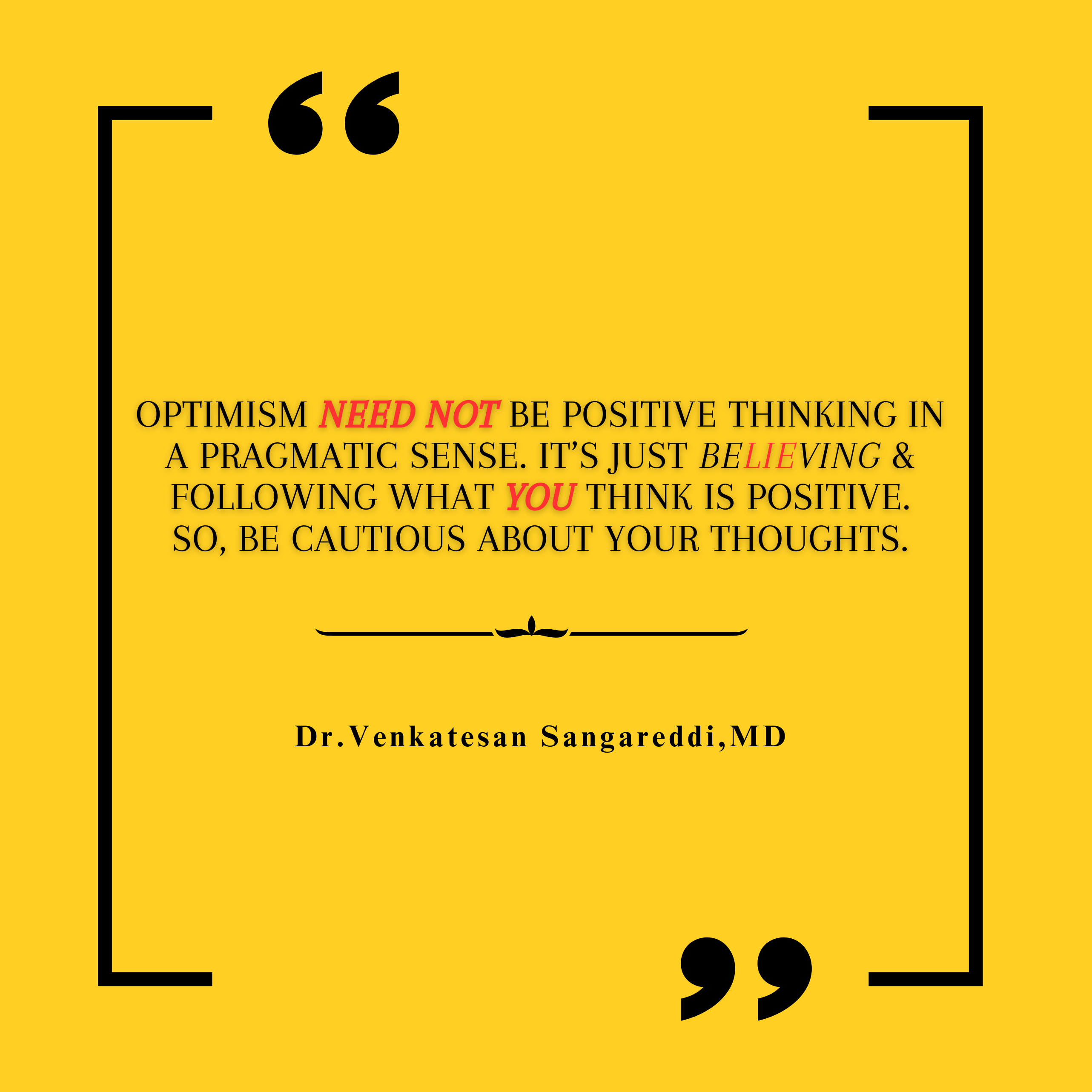
Defining optimism is not an easy task in science.
Posted in cardiology -Therapeutics, Ethics in Medicine, tagged dr s venkatesan, dr venkatesan sangareddi, ethics, optimism, optimism vs pessimism, optimist, positive vs negative thinking, venkat quotes, venkatesan sangareddi, widom quotes on April 9, 2025|
Glorifying FAME 3, is an academic mischief ! “PCI, in isolation can’t beat CABG, but with FFR it can”
Posted in Cardiology - Clinical, Cardiology -Interventional -PCI, cardiology -Therapeutics, Cardiology therapeutics on April 9, 2025|
Cardiologists have been trying for the last two decades to prove PCI is superior or at least equal, to CABG in multivessel CAD. We desperately needed studies to prevail over FREEDOM and SYNTAX which favored CABG.
FAME series , though never had an intention to compare PCI vs CABG , now we have used the platform to upend it to take on the CABG in multivessel CAD. ( FAME 3)
FAME 1 (Fractional Flow Reserve Versus Angiography for Multivessel Evaluation)
Purpose
The FAME 1 study aimed to compare the efficacy of FFR-guided PCI versus angiography-guided PCI in patients with multivessel coronary artery disease (CAD). The goal was to determine whether using FFR to identify functionally significant stenoses (FFR ≤ 0.80) for stenting, rather than relying solely on angiographic appearance.
Inference
Established that FFR-guided PCI is superior to angiography-guided PCI in multivessel CAD, reducing unnecessary revascularizations and improving outcomes.
FAME 2
Purpose
FAME 2 sought to evaluate whether FFR-guided PCI plus optimal medical therapy (OMT) was superior to OMT alone in patients with stable CAD and at least one functionally significant stenosis (FFR ≤ 0.80).
The study concluded that FFR-guided PCI is beneficial in stable CAD when ischemia is present, reducing the need for subsequent urgent revascularizations compared to OMT alone, though it did not significantly reduce rates of death or MI
FAME 3
Purpose
FAME 3 aimed to determine whether FFR-guided PCI using contemporary drug-eluting stents was non-inferior to CABG in patients with three-vessel CAD. The study sought to compare these two revascularization strategies in terms of clinical outcomes, testing the hypothesis that FFR-guided PCI could achieve similar results to CABG by targeting only functionally significant lesions.
Conclusion
At 1 year, FFR-guided PCI did not meet the criterion for non-inferiority compared to CABG for the primary endpoint of MACE (death, MI, stroke, or repeat revascularization), with event rates of 10.6% for PCI vs. 6.9% for CABG.
5 years later in 2025
FAME 3 : 5 year follow up data , released in 2025, tries to confirm the non inferiorty of PCI over CABG in a larger sense.
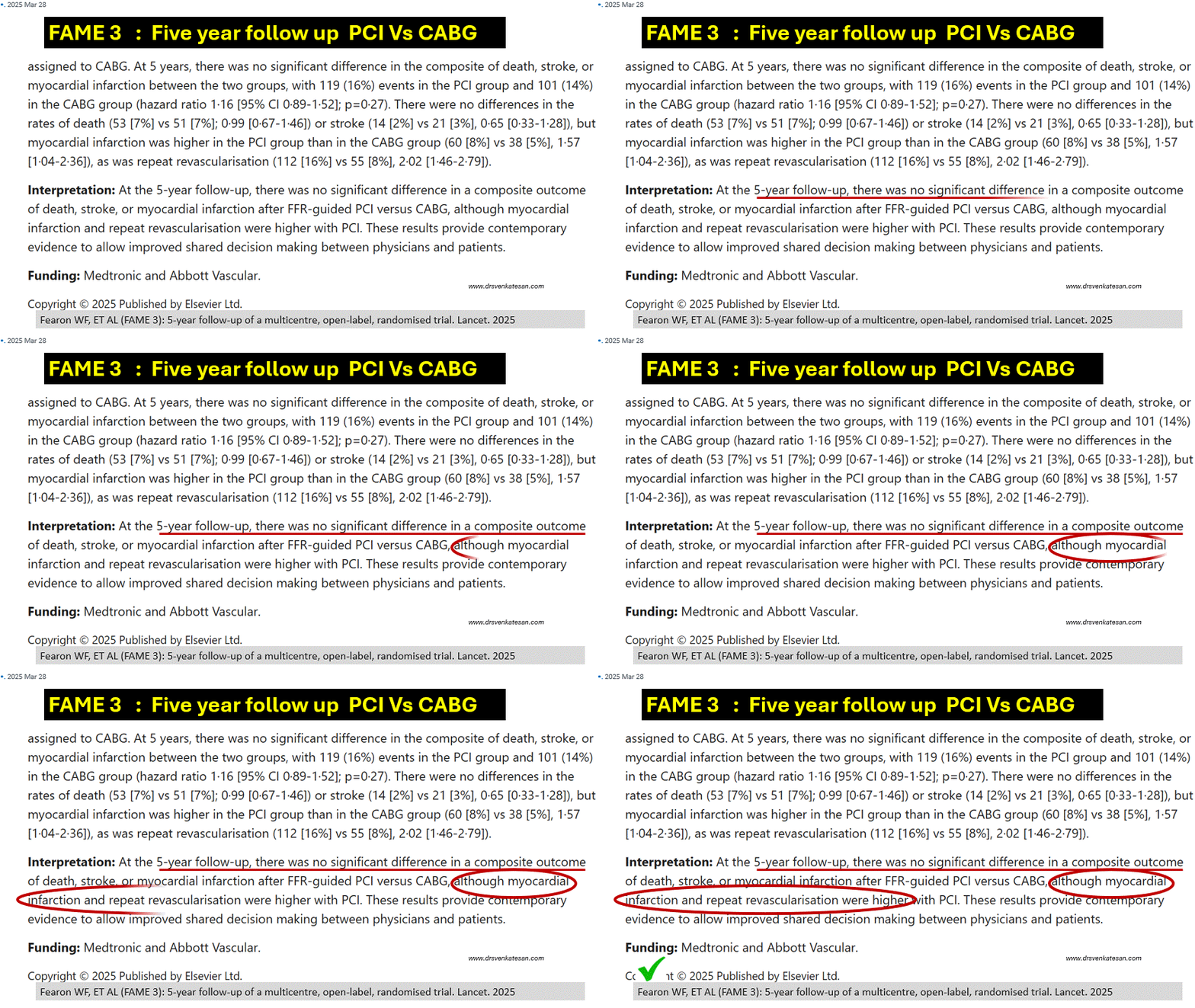
The study concluded that in patients with three-vessel CAD, FFR-guided PCI is not non-inferior to CABG, with CABG remaining superior for reducing MI and repeat revascularization. However, FFR guidance still refined PCI by limiting interventions to functionally significant lesions.
Did the FAME 3 study compare FFR guided CABG vs FFR guided PCI ?
No, none of the FAME studies (FAME 1, FAME 2, or FAME 3) directly compared FFR-guided CABG versus FFR-guided PCI. Each study had a distinct focus involving FFR-guided PCI, but none incorporated FFR guidance into CABG as a primary comparator. Here’s why this comparison could be meaningless.
Final message
Truths express themselves. We can’t force it to happen.
Reference
Curve of wisdom in ACS : Open Cath lab doors may mean nothing , if the windows are closed !
Posted in acute coroanry syndrome, acute coronary syndrome, Cardiology -Criteria, Cardiology -guidelines, cardiology -Therapeutics, Cardiology -unresolved questions, tagged acc aha esc scai gudilines, acs, acs management, evidence based cardiology, open artery hypothesis, primary PCI vs thrombolysis, reperfusion, reperfusion injury, stemi, time window in acs on February 1, 2022|
“We have a 24/7 cath lab with an open door policy. Our cardiologist arrives at 15 minutes’ notice. Door to balloon time is less than 60-90 minutes”,
“Great, so, you can always offer a successful treatment for STEMI”
“No, that we can never guarantee.”
“Oh, It Is not the answer, I expected”
“I agree, it sounds disappointing, but. truths are less pleasing. What I am trying to say is, there are a number of factors other than the availability of a grand cath lab and agile and effortless hands, that try to reperfuse the myocardium in distress. I agree, we do save lives occasionally in a dramatic fashion. Recently we resuscitated an almost dead man with CPR and ECMO-guided PCI. But, most times it turns out to be just a customary ritual that takes us to the legal and therapeutic endpoint* of STEMI management”
*Both salvage & non-salvage
“I didn’t get you, Can you explain further?
See this curve and try to understand it yourself. (I would say, this is the ultimate curve to understand in the entire field of coronary care)

Can you guess what will be the outcome for C to B, or B to A ? In the real world, a substantial number of interventions take place at an Invisible point E beyond A Source: Gersh BJ, Stone GW, White HD, Holmes DR Jr. Pharmacological facilitation of primary percutaneous coronary intervention for acute myocardial infarction: is the slope of the curve the shape of the future? JAMA. 2005;293:979–86
Knowledge check in Brugada syndrome : A rapid fire session
Posted in cardiac electrophysiology, cardiology -Therapeutics, Cardiology -unresolved questions, Cardiology-Arrhythmias, early repolarisation syndrome, Electro physiology, Electrocardiography-ECG, ICD and Pacemakers, tagged amiodarone for brugada, brugada syndrome on January 5, 2022|
A 5-minute session: Answers are my own. Please cross-check.

1. Is Brugada syndrome clinical or ECG diagnosis?
Always clinical. Never get confused on this.
2. Spontaneous type 1 vs Induced Type 1 (from type 2) which carries more risk?
Both are risky since they are close cousins. But, spontaneous type 1 is the dreaded devil.
3. Is Brugada primarily a defect of myocardial depolarization or repolarisation?
Not clear. Often in both. In fact a mismatch between them. (Don’t ask how Na+ Channel defect affects repolarisation !)
4. Is Brugada VT is monomorphic, polymorphic?
Both. What determines morphology is not clear though. (All de-nova monomorphic VT will degenerate to polymorphic en route to cardiac arrest)
5. Should Fever induced Brugada pattern be investigated further?
Better, it is not to be reported in ECG. May not be important in the majority if there is no adverse family history. (If the patient is well educated and afflicted by Dr.Google and cardiologists can’t escape from ordering sophisticated tests)
6. What is the overlap between ERS and Brugada?
It is all about the Idiosyncrasy of the K+ channel phenotypes ( Transmural dispersion heterogeneity )
7. Is a benign Brugada better than a malignant ERS?
Yes, it would seem so. (Inferior or Infero -lateral ERS prone for primary VF in case they develop ischemic / ? also non-ischemic stress)
8. How important is the link between Brugada and Long QT 3 syndrome?
A rare entity, but It is double jeopardy for VT risk. The entire action potential width is vulnerable right from phase 0 to 3 or 4 A case report Sandhu A Clin Case Rep. 2017;5(8):1315-1319.
9. Is Amiodarone really contraindicated in VT?
Not really. Though Amiodarone unmasks Brugada, it can still be used during episodes of VT in patients with manifest or unmanifest Brugada. Maybe in Long QT 3 overlap, it may perpetuate the VT.
10. How important is the structural myocardial defect in Brugada?
Not important in the majority. Though localized RVOT abnormalities are noted in some..RV abaltion can be succesful in odd case.
11. What happens to the ST segment in Brugada during exercise stress?
ST-segment may normalize in some. A stress test can help to risk stratify. Subramanian M, J Cardiovasc Electrophysiol. 2017 Jun;28(6):677-683.0
12. Which drug is probably best for Brugada as of now?
Quininde , A fairly specific blocker of Ito current. However, it needs to be used diligently. Management of Brugada Syndrome: Belhassen B, Rahkovich M, Michowitz Y, Glick A, Viskin S Circ Arrhythm Electrophysiol. 2015 Dec; 8(6):1393-402.
13. Is ICD definitive therapy?
Obviously not. But, definitely life-saving in high-risk survivors. I guess definitive therapy is possible for future generations through the science of genetic reprogramming of Na+ channels. (Of course, our planet shouldn’t succumb to man-made climatic arrhythmia, by then )
14. Does widespread genetic testing & screening of families help in the management and reduce anxiety?
Cracking the genomic code of cardiac ion channels is the ultimate sophistication (Blueprint of fate ?) However, there is no guarantee this information is going to ease out the family members who harbor a genocopy with or without a phenocopy.
15. Is Brugada getting undue attention in cardiology literature compared to many other common arrhythmias?
You can answer this …………………………………….
Further reading

Cardiac failure Info desk :Diuretics never save lives, while Dapagliflozin does it in style !
Posted in cardiac failure, Cardiology -guidelines, cardiology -Therapeutics, cardiology wisdom, cardiology-ethics, Cardiology-Land mark studies, Ethics in Medicine, evidence based cardiology, tagged acc aha esc guidelines on heart failure, bumatanide, Cardiac failure therapeutics, dapa hf, dapaglyflozin, does diuretic save lives in heart failure, flaws of evidence based medicine, history of frusemide, meta analysis of diuretics in cardiac failure, toresemide vs frusemide on December 17, 2021|
An Interaction in IMCU
How is Mr. K, who was shifted from ward 102 ?
Yes sir, It was acute decompensated LV failure, Patient was in impending pulmonary edema. In fact, he developed. He is fine now,
How did he come around? He was too sick I thought.
“Just pushed 60 mg Frusemide IV, luckily he also had good BP, so with an infusion of NTG, titrated Carvedilol a little bit, he came out nicely. I guess it is Ischemic DCM”.
“Good, You have done a nice job”
“Don’t make me embarrassed sir. It is such a routine in our ER.
To make him curious, I asked “Which drug do you think that saved him”?
“Obviously, Frusemide sir. He was frothing out. I thought he will require a ventilator. It was a matter of 20 minutes, sort of flushing out 500 ml lung fluid through the urine”.
“No, you are wrong. As a professor and cardiologist, I need to tell you this. Diuretics never save lives heart failure.
Sir, I guess, you are not kidding. Does this statement apply to acute heart failure? We have saved 100s of lives with Frusemide, both in acute, acute on chronic, and even in chronic cardiac failures with metolazone.
Hmmm, I agree with you my dear student, Frusemide has saved not hundreds but lakhs of lives in the past decades in all forms of heart failure. It continues to do this fabulous job even now. But, don’t say it in exams or scientific forums. It has no evidence to show survival benefits. You can’t credit a drug without evidence. Also realize, saving lives by unscientific means by a cheap generic is not something to boast upon. We need the blessings of RCTs, or Kaplans Mayer curves, or Forrest blobbograms. Unfortunately . that is the current principle of practice of medicine.
But sir, who is preventing whom, to do such studies. Why they are not comparing diuretics one to one with these modern drugs of inotropes, calcium modulators, or SGLTis, etc?
I am not sure. My guess is, there are no good friends in the cardiac failure research community for this old warrior drug.
Loop diuretics
Till 1960s, toxic mercurial compunds was the only option to drain water in heart failures. The Invention of Na+/K+ /Cl channel blocker Frusemide, ( In the thick ascending limb of the loop of Henle) is the single most important event, that changed the way we manage cardiac failure in both acute and chronic settings. Still, the current evidence creators hesitate to call it a life-saving drug,
The meteoric rise of SGLT-2 Inhibitors
Meanwhile, a few micrometers down the hairpin bend of Henle, drugs called phlorizin are doing wonders. These Apple root barks derivatives were since been invaded by Glyflozins Industry. They are made into a powerful glycosuric drug that drags water out of the system along with glucose. This seems to be the biggest revolution in cardiac pharmacology ever since DaVinci drew the heart and Harvey made it functional. I think we need a supercomputer to count the number of papers and analyze the data from Dapa & Empaglyflosin. It is now concluded officially, as an evidence-based life saver in HF.
I asked one Gen X Pharma-geek, “How do these magic drugs perform this miracle in heart failure”? He said beamingly, It is not merely Glyco-diuresis, as you academicians think, it is some mystery action from heaven, still not decoded. What a revelation I thought.

Continuing Medical Education: Choosing the correct path is never easy!
Final message
Loop diuretics are powerful drugs that aid the failing heart to reduce both pre and after-load. It is a fact, indiscriminate use of these drugs leads to some electrolytes and metabolic issues. But, hiding behind a hazy and shaky evidence base, and trying to ridicule these life-sustaining drugs, is the height of senselessness in cardiac failure literature.
Reference
(There is a tug of war of evidence between benefits and risks. I guess someone will bring out the truth, which is written clearly on the walls)
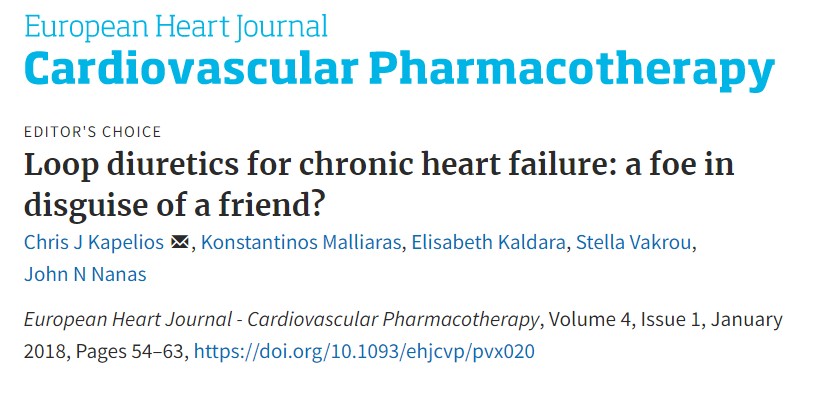
1. Chris J Kapelios, Konstantinos Malliaras, Elisabeth Kaldara, Stella Vakrou, John N Nanas, Loop diuretics for chronic heart failure: a foe in disguise of a friend?, European Heart Journal – Cardiovascular Pharmacotherapy, Volume 4, Issue 1, January 2018, Pages 54–63, https://doi.org/10.1093/ehjcvp/pvx020
Postamble
It is to be noted,Eplerenone (EPHESUS trial ) & Finerinone (FIDELIO-DKD trial) are new generation K + sparing diuretics and mineralocorticoid antagonists may have better cardioprotection in cardiac failure.(Part of RAAS blockade)
Why ISCHEMIA trial conclusions often make us nervous ?
Posted in Cardiology -Criteria, cardiology -Therapeutics, Cardiology -unresolved questions, Comparative efficacy, tagged acc aha esc csa, Chronic stable cad, courage orbita bari 2d ISCHEMIA, ISCHEMIA trial on July 6, 2021|
Why ISCHEMIA trial conclusions often make us nervous?
Because, we know we can’t follow the lessons from it with true intent, as many of us are near slaves to Invisible Interventional forces in some form or other.
I would think, ISCHEMIA trial in one sense was a wasted effort. We always knew OMT is superior to any sort of PCI in stable CAD (Backed up with COURAGE /BARI 2D/and of course the deadly exposure by ORBITA )
Anyway, we did ISCHEMIA for the sake of deniers, with huge public funding to prove the truth as truth.
Still, I am sure ISCHEMIA will be looked down, by most elite Intervenionlists. For the rest, it becomes a tough fight with their conscience.
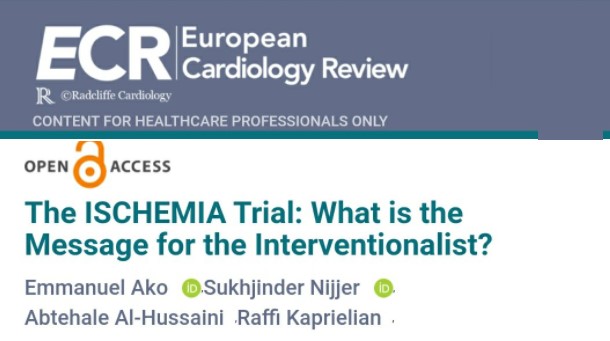
A recent review on European cardiology review
Final message
I don’t know, how many more trials would be required to tell us the same story all over again. Hope we grow enough COURAGE to follow the ISCHEMIA lessons. Let us (try to ) make a full stop on this issue.
Heart disease in pregnancy: Overview & management
Posted in cardiology -pregnancy, Cardiology -Therapeutic dilemma, cardiology -Therapeutics, Cardiology -unresolved questions, Pregnancy and heart, pregnancy and heart disease, tagged cardiac disease in pregnancy, esc aha pregnancy heart disease, fetal aortic blood pressure, fetal autoregulation, fetal hypotension, Heart disease in pregnancy ppt, heparin bridge in pregnancy, heparin protocol in pregnancy lmwh, lscs or vaginal delivery in heart disease, prosthetic valve in pregnancy, utero placental insufficiency, warfarin embryopathy, warfrain 5mg in preganancy safe ? on April 2, 2021|
Some of the questions addressed in this presentation
1.What happens to fetal blood pressure during maternal hypotension how good is fetal autoregulation?
2.Why is LSCS increasingly preferred mode of delivery in heart disease complicating pregnancy challenging the traditional scientific concept?
3.What is likely hood of patients with moderate mitral stenosis developing pulmonary edema during prolonged 2nd stage of labor?
3.What is the missing link between PIH and PPCM? How prepartum cardiomyopathy differs from postpartum?
4.Is Eisenemneger really an absolute contraindication for pregnancy?
5. How can we continue VKAs warfarin or Acitrom throughout pregnancy? What are the potential problems of double switching one at 6th week from VKA to Heparin and again from heparin to VKA at 12th week?
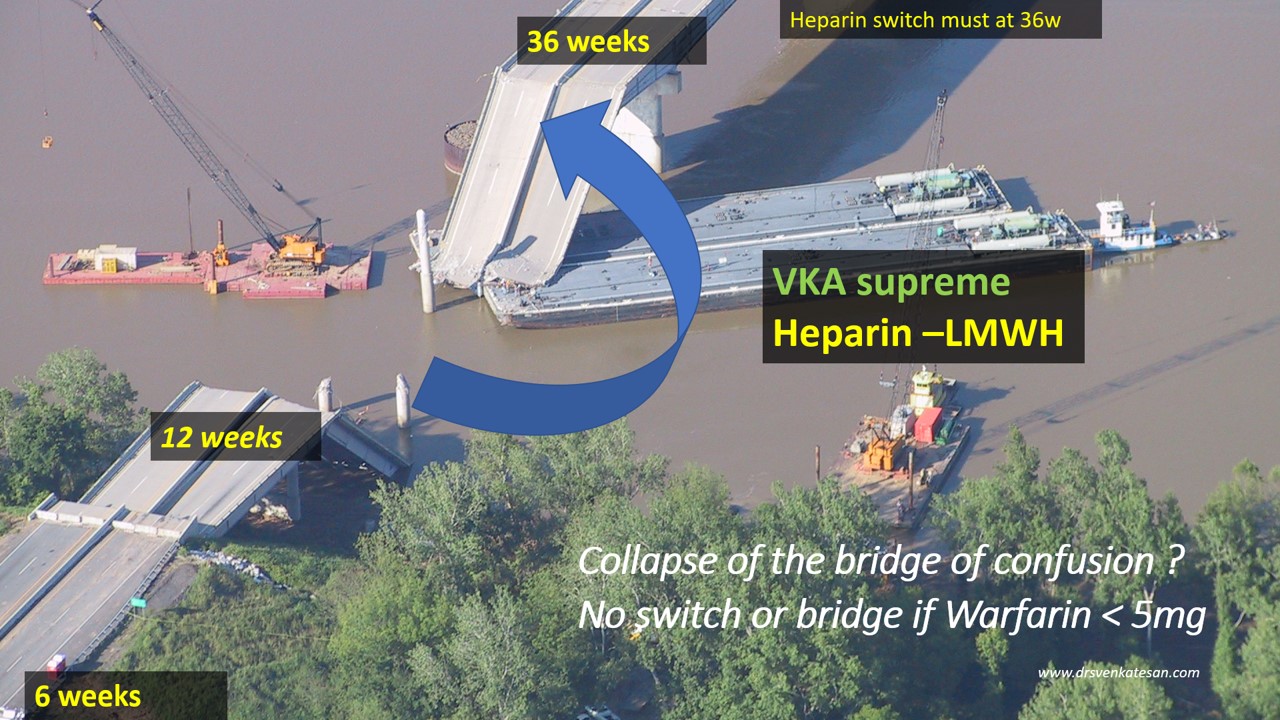
Hope, the man-made hematological bridge in pregnancy has been finally liberated from confusion (Who is saying not yet?)
6. On what evidence base the safety margin of 5mg cutoff for Warfarin and 3mg for Acitorm was decided?
7. Who is insisting on us to do Anti-Xa monitoring for LMWH in pregnancy? Is it really needed? What does the American society of hematology say? (ASH guidelines for VTE in pregancy 2018) Why we don’t insist on Xa estimation in acute coronary syndrome?
8. What is the inflection point of at which risk of termination is almost at equipoise with continuing pregnancy in various heart diseases.
A GIF run-through of the presentation.
PDF & video version will be posted
The ultimate reference

Sailing the Osler’s ship of medicine in the third millennium
Posted in bio ethics, Cardiology -Patient page, cardiology -Therapeutics, Clinical cardiology, general medicine, Medical education, Medical ethics, medical quotes, Two line sermons in cardiology, tagged clinical acumen, dr venkat quotes, ethics in medicine, evidence based medicine, guidelines protocols, principles of practice of medicine, rcts in medicine, william osler on March 31, 2021|
Arrhythmia basics: How often we need to know the mechanism of arrhythmia ?
Posted in Basic science -Physiology, Brugada syndrome, cardiac electrophysiology, cardiology -Therapeutics, Cardiology-Arrhythmias, tagged brady dependent vt, brugada syndrome, eads dads, early and late after depolarisation, enhanced automaticity vs triggerred activity vs reentry, mechanism of cardiac arrhythmais, phase 2 reentry, phase dependent vt on November 2, 2020|
How many times you have treated cardiac arrhythmia in both emergency & non-emergency situations?
Infinite times.
How many times did you really bother to know the mechanism of a given arrhythmia before ordering medication or shocking?
Hmm,.. let me think. (Except for AVNRT/ AVRT, and few VTs, very rarely I have worried about the mechanism !)
Why is it so? because treatment takes priority and we are able to tame the arrhythmia even without knowing the real mechanism.
The following slide is a gross summary of the cardiac arrhythmia mechanism

Understanding cardiac arrhythmia is vitally important for a few reasons in a few settings.
- In acute settings, we need to know automatic tachycardias will not respond to shocks. Reentry tachycardias will respond more promptly. (Of course, we may not know it till we shock ) Calcium blockers like verapamil might block triggered activity in MAT. Overdrive pacing is the answer for many automatic tachycardias and some refractory reentrant tachycardias (ATP protocols in ICD has taught us this )
- In the chronic setting when you contemplate mapping, locating, and ablating arrhythmias, mechanisms are important. The task here is locating slow conduction paths and decoding the diastolic circuit around the scar (If you plan ICD, knowledge about mechanism becomes redundant again)
- Finally, knowing the mechanism of arrhythmia is a fascination by itself to help understand the great subject called cardiac electrophysiology, where 100s of ion channels work nonstop drawing the action potential on a moment to moment basis sustaining our life.
A challenge
Can you localize a VT and find the mechanism in a patient who is Ischemic /hypoxic and acidotic? You can never do it. Please note, most polymorphic VTs can’t be localized. The mechanism is either automaticity, trigger activity, or even micro-reentry. You need to shock and look for the causes.(Link to How does the treatment of monomorphic VT differ from Polymorphic VT? )
Final message
Should we need to know about the mechanism of arrhythmia we treat? Definitely yes, if you have that passion to know the truth, or else just order Amiodarone or shock and check out of CCU. (Of course, we have a very good option of calling EP consult the next day.)
A review article on mechannism of cardiac arrhymias
Rev Esp Cardiol. 2012;65(2):174–185
Stable CAD strategies : Why a 90 % LAD lesion needs much attention … while a 100% doesn’t ?
Posted in cardiology -Therapeutics, tagged chronic stable angina, chronic total occlusion, collateral circulation, csi stable angina guidelines, cto, cto epicardail collaterals, euro cto, ISCHEMIA trial, open vs closed artery hypotheis, ORBITA trial on September 3, 2020|
Practice of cardiology is simple as long we don’t dwell deep into coronary physiology.
One of my patients asked, why he was told his total occlusion in LAD appears safer now, which was subtotal a few months ago.I told him, it is indeed true. It is the fear of subtotal disease that’s prone to a fresh coronary event. In total occlusion, chances of that happening are less or nil.
How can you say 100% block is safe? Is that always true?
No, it’s not always true. He was surprised when I said it is not 100 %, even 90% lesion can be safe if it’s not causing significant angina and responding to OMT. Of course, It is the morphology and stability of the lesion that will dictate* the outcome in the subtotal occlusion. If the lesion is stable, FFR is good >.8 (TMT is poor man’s FFR equivalent ) you can leave it as it is. Doing OCT /Virtual histology /NIR spectroscopy to define the vulnerability of plaque is neither practical nor desirable (Extreme academics is injurious to health)
So it is not the degree of the block that’s going to matter, but the effects of that block on distal circulation that will decide the rules of the myocardial revascularisation game. But unfortunately, both you, (the patients) we (the cardiologist) are finding it so difficult to come to terms with this basic truth in spite of multiple guidelines.
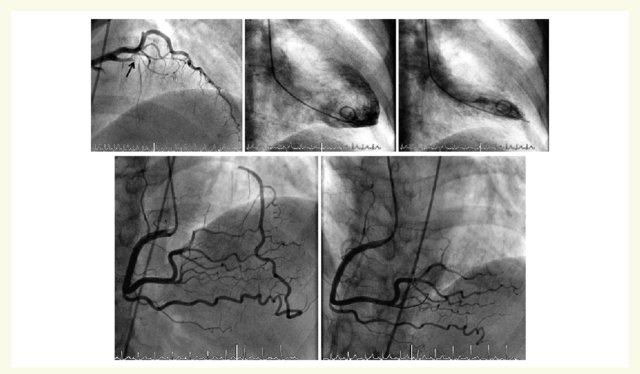
Meanwhile, CTO however makes it much easier to make a decision. One need not bother the content of CTO unless you plan an Intervention. I guess there is no FFR for CTO. Are we aware of any studies that have quantified antegrade flow across a 10% patent LAD and compare it with the Collateral flow in LAD in 100% CTO?
We have long glorified a concept of the open artery hypothesis. (Mainly in Post STEMI though) No one has dared to test and compare a hypothesis that a closed artery might still score over the open in at least some of the subsets of stable CAD. Such a study can never be ethically forbidden after all its a well-observed truth in the real world.
Reference
Trials on CTO revascularisation DECISION CT (Not useful ) EURO-CTO (May be useful)
Categories
-

-
The contents of the this blog is being published as Kindle E book , as per the request of many of the readers. Every article will continue to be open source in this site. Again I shall reiterate the book format is not aimed at any commercial intent. It is only to facilitate learning in a single book format Here is the link to book
https://amzn.in/d/euhL5vu Archives
- April 2026 (1)
- March 2026 (9)
- February 2026 (8)
- January 2026 (8)
- December 2025 (11)
- November 2025 (7)
- October 2025 (8)
- September 2025 (7)
- August 2025 (9)
- July 2025 (10)
- June 2025 (8)
- May 2025 (9)
- April 2025 (7)
- March 2025 (10)
- February 2025 (4)
- January 2025 (9)
- December 2024 (11)
- November 2024 (8)
- October 2024 (10)
- September 2024 (5)
- August 2024 (5)
- July 2024 (6)
- June 2024 (5)
- May 2024 (4)
- April 2024 (7)
- March 2024 (4)
- February 2024 (8)
- January 2024 (6)
- December 2023 (8)
- November 2023 (13)
- October 2023 (14)
- September 2023 (5)
- August 2023 (6)
- July 2023 (10)
- June 2023 (5)
- May 2023 (5)
- April 2023 (4)
- March 2023 (5)
- February 2023 (2)
- January 2023 (7)
- December 2022 (3)
- November 2022 (5)
- October 2022 (5)
- September 2022 (4)
- August 2022 (3)
- July 2022 (9)
- June 2022 (2)
- May 2022 (1)
- April 2022 (2)
- March 2022 (1)
- February 2022 (3)
- January 2022 (7)
- December 2021 (3)
- November 2021 (5)
- October 2021 (8)
- September 2021 (4)
- August 2021 (6)
- July 2021 (6)
- June 2021 (7)
- May 2021 (5)
- April 2021 (4)
- March 2021 (3)
- February 2021 (6)
- January 2021 (8)
- December 2020 (4)
- November 2020 (5)
- October 2020 (7)
- September 2020 (7)
- August 2020 (10)
- July 2020 (6)
- June 2020 (9)
- May 2020 (9)
- April 2020 (5)
- March 2020 (7)
- February 2020 (3)
- January 2020 (4)
- December 2019 (4)
- November 2019 (6)
- October 2019 (3)
- September 2019 (6)
- August 2019 (3)
- July 2019 (1)
- June 2019 (3)
- May 2019 (2)
- April 2019 (2)
- March 2019 (2)
- February 2019 (4)
- January 2019 (2)
- December 2018 (2)
- November 2018 (2)
- October 2018 (2)
- September 2018 (1)
- August 2018 (2)
- July 2018 (3)
- June 2018 (1)
- May 2018 (3)
- April 2018 (1)
- March 2018 (3)
- February 2018 (3)
- January 2018 (1)
- December 2017 (3)
- November 2017 (3)
- October 2017 (3)
- September 2017 (2)
- August 2017 (2)
- July 2017 (2)
- June 2017 (2)
- May 2017 (4)
- April 2017 (3)
- March 2017 (3)
- February 2017 (5)
- January 2017 (3)
- December 2016 (2)
- November 2016 (5)
- October 2016 (4)
- September 2016 (3)
- August 2016 (5)
- July 2016 (3)
- June 2016 (4)
- May 2016 (3)
- April 2016 (6)
- March 2016 (4)
- February 2016 (3)
- January 2016 (5)
- December 2015 (6)
- November 2015 (5)
- October 2015 (8)
- September 2015 (2)
- August 2015 (5)
- July 2015 (7)
- June 2015 (4)
- May 2015 (6)
- April 2015 (5)
- March 2015 (7)
- February 2015 (15)
- January 2015 (8)
- December 2014 (5)
- November 2014 (9)
- October 2014 (7)
- September 2014 (9)
- August 2014 (5)
- July 2014 (11)
- June 2014 (5)
- May 2014 (4)
- April 2014 (5)
- March 2014 (8)
- February 2014 (8)
- January 2014 (5)
- December 2013 (7)
- November 2013 (7)
- October 2013 (14)
- September 2013 (12)
- August 2013 (15)
- July 2013 (15)
- June 2013 (15)
- May 2013 (15)
- April 2013 (15)
- March 2013 (15)
- February 2013 (15)
- January 2013 (15)
- December 2012 (15)
- November 2012 (15)
- October 2012 (15)
- September 2012 (15)
- August 2012 (15)
- July 2012 (15)
- June 2012 (15)
- May 2012 (15)
- April 2012 (15)
- March 2012 (15)
- February 2012 (15)
- January 2012 (15)
- December 2011 (15)
- November 2011 (17)
- October 2011 (17)
- September 2011 (17)
- August 2011 (21)
- July 2011 (20)
- June 2011 (17)
- May 2011 (15)
- April 2011 (17)
- March 2011 (25)
- February 2011 (20)
- January 2011 (20)
- December 2010 (18)
- November 2010 (21)
- October 2010 (21)
- September 2010 (25)
- August 2010 (20)
- July 2010 (10)
- June 2010 (11)
- May 2010 (19)
- April 2010 (16)
- March 2010 (14)
- February 2010 (22)
- January 2010 (18)
- December 2009 (20)
- November 2009 (20)
- October 2009 (3)
- September 2009 (21)
- August 2009 (19)
- July 2009 (12)
- June 2009 (12)
- May 2009 (11)
- April 2009 (15)
- March 2009 (21)
- February 2009 (4)
- January 2009 (12)
- December 2008 (13)
- November 2008 (9)
- October 2008 (22)
- September 2008 (20)
- August 2008 (16)
- July 2008 (14)
- June 2008 (7)
Blog Stats
- 6,642,913 hits
Please give your feed back .
Click below to see who is watching this website live !

- This site will never aim for profit. Still ,this donation link is added at the request of few visitors who wanted to contribute and of-course that will help make it sustainable .

Please Note

 Dr.S.Venkatesan MD