Hunting for treasures in medical jungle is no easy job
There are thousands of websites for learning radiology and then ,
This one . . .
Hats off to William Herring, MD,
http://www.learningradiology.com/toc/tocorgansystems/toccardiac.htm
Hunting for treasures in medical jungle is no easy job
There are thousands of websites for learning radiology and then ,
This one . . .
Hats off to William Herring, MD,
http://www.learningradiology.com/toc/tocorgansystems/toccardiac.htm
Posted in Uncategorized | Tagged best websites in cardiology, learning radiology | Leave a Comment »
Even though it is a great vein , often the imaging pulmonary veins by echocardiography is a not a pleasant excercise.
This is due to the following facts
Hence no fixed imaging angle can be advised . But generally a pattern is observed.
Other modalities for imaging pulmonary veins
TEE : Can be very useful since it is brings the vein closer to the probe .But needs more expertice.
Contrast echo :Probably a simple and best modality often underutilised.
Very useful to clinch the diagnosis when PVs take abnormal course as in PAPVC .
MDCT , Spiral CT, MRI are the new age modalities that can provide us with dramatic 3d images of PVs.
The echocardiogram will always prevail over these sophisticated gadgets for its simplicity and also it’s ability to give us the physiology of pulmonary venous flow which is vital in many diseases(Constriction, Diastolic function etc)
The following illustration is a gross attempt to simplify the imaging of PVs.Please note the rules may not be applicable in all.
Left upper and lower pulmonary veins in short axis view will be posted shortly .
Reference
The images are based on personal observations and an excellent insight on the topic from Department of Cardiovascular Medicine, Guangdong Provincial People’s Hospital, Guangzhou , China
Posted in Cardiology - Clinical, cardiology -congenital heart disease, echocardiography, Uncategorized | Tagged echocardiography, left atrium, papvc, pulmonary vein imaging, pulmonary veins, pulmonary venous ostium, pv, right lower pulmonary vein, right upper pulmonary vein, tapvc | Leave a Comment »
Posted in Cardiology - Clinical, Uncategorized | Tagged stent | Leave a Comment »
Human body is a collection of trillions of cells. Life is nothing but , a bundle of energy flowing across each of these cells .Every organ has a specailised mode of communication among themselves and others. When a cell is in an excited state , there is a likelihood of spontaneous electrical activity.This can happen in nerve cells, cardiac cells , GI tract, or virtually in any cell which has a porous cell membrane and ionic fluxes across it .
Thus , membrane stabilising action can be termed as “membrane sedating” action
Posted in Cardiology - Clinical, cardiology -Therapeutics, Infrequently asked questions in cardiology (iFAQs) | Tagged action potential, cell membrane, lignocaine, local anesthetics, magnesium, membrane stbillising action, phase 0, resting membrane potential, sodium channel | Leave a Comment »
Cardiology is among the top medical specialty in the current era. It deserves this special status as it is probably the a specialty which is based on maximum scientific evidence and involves , the most advanced diagnostic and treatment modalities.
As on today , a cardiologist can deliver a stent anywhere along the coronary tree and even implant a valve percutaneously . A surgeon can put multiple grafts in a beating heart with a patient totally awake !
A person can live with an artificial heart for months and a cadaver heart can give fresh lease of life to a terminal heart failure patient .
Why such a glorious filed of cardiology should often evoke a pessimistic reaction in the minds of public and media ?
This is because for a simple reason , in the name of technology , we tend to indulge in scientific excesses.
This article in Circulation is not a surprise then . . . Click on the link, Thanks to AHA this comes free of cost !
For pdf article click on the image
Note : Non adherence , inappropriate therapy, Class 2b indications , are simply semantics in stage play !
Actually these terminologies are synonymous with
Posted in Uncategorized | Tagged ethics in cardiology | Leave a Comment »
We generally believe drugs and devices are prescribed by physicians with strong scientific basis .Unfortunately it is not true in many instances. A drug which is approved for one disease is assumed to be useful in a similar disease (But not tested in clinical trials ) and it becomes an unapproved indication .This is often termed as off label use (A decent terminology for unscientific usage !) .But ,there are pros and cons to this type of physician behavior .
Pros
The best example is the role of sildanafil in pulmonary arterial hypertension(PAH) . A drug which was introduced for erectile dysfunction , was found to very useful in regressing pulmonary arteriolar pressure (Mistaking pulmonary arteriole for penile vasculature !?) . A new therapeutic concept was born for a hither to difficult problem of PAH. This successful discovery was attributed to off label usage of a drug .
Cons
But this is a rare success story of off label therapy. In real world , we tend to overuse this in many situations and harm is anticipated.
Drug eluting stents was used extensively in off label situation ( Acute MI in a thrombotic milieu, very small vessels , in close proximity to bare metal etc all these are non label or off label use of coronary stents which resulted in many deaths )
Who gave the freedom and liberty for the physicians to use a drug or device off label ?
No body gave it , we assumed , we have it .
When somebody uses a drug for an unapproved indication is it not unscientific and guideline violation ?
It is a violation , but we can afford to do it because every body does so !
Is there any scientific body to sanction and desanction off label usage ?
Unfortunately not !
So what is the solution ?
Self regulation . . . Can it be a fool-proof method ?
or Is it foolish to expect it so in this era of commerce ?
Related video in youtube hosted by me.
http://www.youtube.com/watch?v=d2WfLrTiUks
Related article
Guideline violation in cardiology practice
Posted in Uncategorized | Tagged ethics in cardiology | 1 Comment »
Common sense would indicate medical care is meant for the sick and ill . Relieving the mankind from all those suffering with a healing hand has made the medical profession noble and sacred .Medical science grew with this sole aim many centuries ago .Some times we succeeded and many times we failed and the journey is continuing .
In those days ,scientists were dedicated , inventions were genuine and were driven by a need to conquer a diseases .Some where along the line, (May be in the last 2-3 decades?) our quest for money power exceeded commonsense . Commerce entered every walk of life and medical science became the biggest causality.
The purpose of noble profession was forgotten . Simultaneously public awareness and quality if life vastly improved in many of the developed countries . So the traditional illnesses either disappeared or reduced to a great extent . Then came the life style diseases.The cost of treating an illness spiraled too much especially in the scientifically advanced countries . What was perceived as great health care system became the most ridiculed health system in the planet ?
Why ? The simplest answer to this q is
In the name of science and modernity , medical treatment was glorified beyond the level it deserves , and hence the cost of treatment is kept at artificially & foolishly high (This often involves diagnostic exploration of human body with modern gadgets without any meaningful purpose ) .
ie , In a nutshell of modern medicine is often a medical mirage than a miracle . We know , the chances of success as we try to chase it. If we think the world is waking on this issue .
We are in for a surprise ! Even as every one is asking for outcome analysis in modern health care
more and more countries just imitate the failed ( Scientific and moral failure ) western models of health care .
When major illness are reducing in a society what will the health care providers do ?
Feel happy ? Yes that’s what a sane mind would do . In a capital rich , health conscious , knowledge driven society the opposite happens .
When the patient input into a top hospital reduces , the MBAs in them plan strategies to bring increase the bed occupancy rate and maintain patient parity.
If sufficient patients are not there in a community what shall we do ?
Create more patients
Creating new patients is a too dangerous game , what shall we do ?
In the name of preventive screening let us label normal persons as patients .
How to do it ?
The following examples are personal observation made in huge city of educated elite in a developing country . Excuse me if it offends a few . . .
Define, redefine all criteria that define the disease (There are
The list is endless . . .
Final message
We are in a era , where even a simple illness ( common cold ? ) can be converted into a billion dollar industry . ( Are you aware of H1N1 fiasco , The role of WHO and mystery labeling of pandemic !)
While the above misadventure with scientific excesses goes on merrily , lest we forget , millions of children and adults suffer in misery for want of live saving investigations and drugs in any country .
When a person with a head injury dies due a missed subdural hematoma for want of CT scan in one hospital , ” in the adjacent hospital” a wealthy and healthy man ( who got admitted for master health check up ) undergoes a series of scans all over the body even as he is watching the satellite TV in the comfort of a five star suite !
God will never forgive the noble professionals if they are part of this negative health care forces
Finally ending with a very positive note !
The new initiative by Obama , ” Health care for the uninsured ” is to be welcomed as great move and will do a world of good .
But , our only request to WHO ( or related bodies ) is to create a forum or authority to impeach all fancy diseases from the medical literature !
Posted in bio ethics | Tagged 64 slice ct scan, bio ethics, cardiologist, cardiology, coronary care, ethics in cardiology, fibroid uterus, hippocrates, master health check up, noble profession, non ulcer dyspepsia, osteoporosis, preventive medicine, preventive screening, stemi | 1 Comment »
The same channels , that create the deadly prolonged QT interval by delaying the repolarisation in the heart is responsible in the for the deafness as it interfere with inner ear
Mechanotransduction of sound into neural signals .
For proper auditory function , the cochlear hair cells needs a continuous flow of endolymph which maintain a voltage gradient for nerve signal transmission .The lymph secretion is is regulated by potassium channels KCNQ1 and KCNE1 . Mutations of this gene impairs the K + content of the endolymph. It results in a compromised endocochlear potential (Difference between peri lymph and endolymph potenial ) .This result in irreversible deafness .
Link to a good illustration from Medical physiology
Posted in Uncategorized | Tagged congenital deafness, DEAFNESS IN LONG QT SYNDROME, Jervell Lange Nielsen syndrome, LONG QT SYNDROME, LQT1, LQT2, LQT3, NEURAL DEAFNESS, pottasium channels and deafness | Leave a Comment »
Cannon Sound
A loud first heart sound (S 1) which is heard intermittently in patients with complete heart block (CHB) is often referred to as cannon sound .
What is the mechanism of loud S1 in CHB ?
We know , the intensity of S 1 is mainly determined by the relative position of mitral leaflet (To be precise, the anterior mitral leaflet(AML) ) at the onset of systole. We also know the PR interval has an intricate relationship to mitral leaflet position .
The shorter it is , wider the leaflet separation and a longer PR interval makes a mitral leaflet assume a almost closed position by the time the ventricle contracts.this happens because a long drawn PR interval fills the ventricle more completely and LVEDV reaches the maximal levels and LV blood column lifts up the mitral leaflets , and hence the LV contraction which follows does not close it with a bang. In a short PR interval the opposite happens and hence a loud S1 .
In CHB we have variety of PR intervals ranging between very short to long ( falling just before the qrs complex) It is not difficult to understand this , as P waves are totally dissociated with the QRS complex in CHB.In fact p waves have a liberty to fall any where in the ECG tracing , some call this as marching through the qrs complex !.
Hence typically the S1 is variable in intensity , varying between loud to soft. When P wave falls just behind a QRS complex , it generates a very loud S 1 that is called cannon sound .This happens intermittently.
Cannon wave
This is entirely different phenomenon except that it shares the word cannon . Cannon a wave is a visual finding on the jugular venous pulse.(JVP) .It is a systolic event . It is also seen in CHB as like a cannon sound
This is a giant a wave in JVP when the right atrium contracts against a closed tricuspid valve. In physiological situations atrium contracts with an open AV valves , so that ventricle gets filled . So atrial contraction does not does not cause any reflux of blood back into vena cava.
But, when the atrium contracts and finds , the AV valve closed there is no other option for the incoming blood to reflux back into the neck veins. This is seen as giant a waves called as cannon ” a “waves
With reference to ECG location , this cannon” a” wave occurs whenever p wave falls within the ventricular systole ie the QT interval .The cannon waves also occur intermittently like the cannon sounds.
What is the peculiar relationship between cannon a wave and sound ?
In fact , it is a non- relationship. Though , both the sound and wave can occur in a given patient with CHB , they can not occur simultaneously .This is because , for cannon sounds to occur the P wave has to fall before QRS and for cannon waves to occur the p waves must fall after QRS ie with QT interval .
Clinical significance of cannon wave
Complete heart block is the most common situation for cannon waves to occur.
Ironically ,the VVI pacemaker which is used to treat CHB does not prevent the cannon waves , and atrial contractions continue to occur at random , causing various degrees of intermittent venous reflux into the veins .This may produce, worrisome venous palpitation in some (Usually settles down after few weeks !)
Some attribute , the so called pacemaker syndrome ie giddiness, dizziness to this abnormal venous waves triggering the carotid baroreceptors (Venous -artery spillover )
Will DDD pacemakers eliminate venous cannon waves ?
We hoped so , it does in fact . But, it really happens only if the A sense V pace mode . A pace V pace mode with programmed PR interval is not a realiable way to produce AV synchrony. It is common , many of the DDD pacemakers fall back to VVI mode either intentionally or by mode switching for various reasons.
//
Posted in Cardiology - Clinical, cardiology -ECG, Clinical cardiology -JVP, Infrequently asked questions in cardiology (iFAQs), Uncategorized | Tagged cannon sounds, cannon waves, cardiac auscultation, clinical cardiology, ECG, giant a waves, heart sounds, high pitched sound, jugular venous pulse, long pr and muffled s1, loud first heart sound, loud s1, neck viens, pr interval, pr interval and heart sound, pr interval in s 1, relation of pr interval to heart sound, s1 vs s2, short pr and loud s1 | 1 Comment »
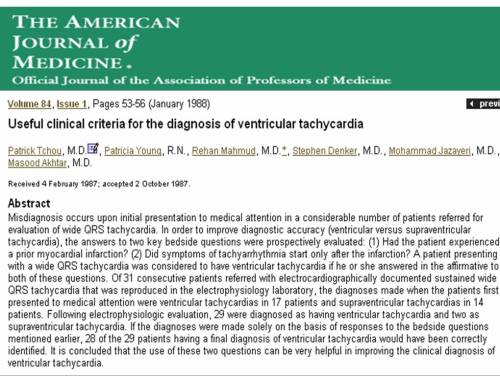
There are many cardiology journals we read , trust , and celebrate . . .
Many of us are not aware of few other excellent journals
This is one is different
It is from Scandinavia & deserves a special status.
Posted in Uncategorized | Tagged cardiology, cardiology journals, Scandinavian journal | Leave a Comment »